

Reseña de Pulsar: ventajas, desventajas, características y precios
Pulsar destaca por ofrecer información precisa sobre los clientes, lo que la convierte en una opción sobresaliente para los equipos que buscan perfeccionar su estrategia de segmentación.

Revisamos las herramientas de manera independiente, y las comisiones ayudan a financiar nuestras pruebas. Consulta nuestra política de transparencia, nuestra metodología o sugiere una herramienta.
Pulsar is a customer segmentation tool built on social and audience intelligence, designed for teams that need to understand not just who their customers are, but what they care about and why. I'd consider it over Audiense if your team wants to combine segmentation with real-time trend tracking and content strategy insights. Pulsar's visual audience mapping and cultural analysis features give you a richer picture of audience behavior than a more survey- or CRM-focused tool typically provides.
Pulsar Evaluation Summary

4.3/5
- Pricing upon request
- Free demo available
Por qué confiar en nuestras recomendaciones de software
6,700+
Reviews
20
Industry experts
16+
Evaluation factors
14
Years
Nuestro equipo lleva probando y evaluando software desde 2012. Como líderes de CX, sabemos lo difícil —y lo importante— que es elegir el software adecuado.
Para esta guía, evaluamos las herramientas mediante pruebas prácticas e investigación independiente, puntuando las herramientas según nuestros criterios de selección.
Nuestras reseñas reflejan nuestro criterio editorial humano, no un discurso de ventas.
 Gui DrusinaCreative Director
 Tim FisherVP of AI
Pulsar Overview
From my perspective, Pulsar excels in providing valuable audience insights, making it a solid choice for teams focused on audience segmentation. Its intuitive and user-friendly interface, and reliable core features set it apart, but its onboarding could be smoother.
While it offers a good balance of features for the price, support could be more responsive. In my opinion, Pulsar is best for businesses that prioritize detailed audience analytics and have a team ready to handle some initial setup challenges. If you're seeking a platform that integrates well and offers competitive insights, Pulsar is worth considering.
Pros
- The onboarding process is excellent.
- Intuitive UI makes it easy to manage multiple resources.
- Reports provide valuable insights from sales and operations.
Cons
- Not great if you're trying to reduce the number of tools you use.
- Integrations can fail or not update at times.
- No financial-related features like budgets and expenses.
Is Pulsar Right For Your Needs?
Who Would be a Good Fit for Pulsar?
Pulsar is ideal for marketing teams and businesses focused on actionable insights harnessed via data science. If your work revolves around understanding audience behavior, Pulsar's robust analytics and social listening tools offer valuable insights. Its features are particularly beneficial for brands aiming for scalability, enhancing their engagement strategies, and improving social media management by analyzing trends and sentiment in real-time.
- Marketing AgenciesUse Pulsar for its comprehensive social listening capabilities that help craft targeted campaigns for your digital audiences.
- Retail BrandsPulsar’s analytics platforms aid in understanding customer sentiment, driving better product decisions.
- Public Relations TeamsMonitor brand reputation and respond to crises with Pulsar’s real-time data insights.
- Media CompaniesUtilize Pulsar to track trending topics and audience preferences for content creation.
- NonprofitsLeverage the Pulsar platform to gauge public opinion and interest, and improve outreach efforts with data-driven strategies.
- Event PlannersPlan successful events by using Pulsar to analyze public sentiment and adjust your messaging accordingly.
Who Would be a Bad Fit for Pulsar?
Pulsar may not be ideal for small businesses or startups. Its comprehensive feature set could be overwhelming for teams with limited resources or those seeking a straightforward, budget-friendly solution. If your team prefers simplicity and minimal setup time, Pulsar's complex functionalities might not align with your needs.
- Small StartupsPulsar's extensive features may overwhelm small teams, making it a poor choice if you're looking for simplicity.
- Low-Budget TeamsThe cost of Pulsar might not justify its use for teams with tight budgets, as it offers more than basic needs.
- Non-Technical StaffIf your team lacks technical expertise, navigating Pulsar's complex features could be challenging.
- Single-Person OperationsFor solo entrepreneurs, Pulsar's collaborative features are unnecessary and could be cumbersome.
- Simple ProjectsPulsar's advanced segmentation tools aren't needed for straightforward projects, making it excessive.
- Industries with Minimal DataIf your work involves little customer data, Pulsar’s segmentation capabilities may not be fully utilized.
Core Features
Advanced Customer Profiling: Pulsar gives you a detailed view of your customer base by analyzing demographics, behavior, and preferences to create data visualizations. This lets your team tailor marketing strategies effectively.
Automated Segmentation: The software automatically groups customers into segments based on data analysis, saving you time and ensuring workflow optimization. This means you can focus on crafting personalized campaigns based on relevant conversations and interactions.
Real-Time Analytics: With Pulsar's real-time analytics, your team can track customer interactions and trends as they happen. This insight helps you make timely decisions to maximize engagement.
Predictive Insights: The predictive insights feature forecasts customer behavior, allowing you to anticipate needs and act proactively. This can boost customer satisfaction and retention.
Customizable Dashboards: You can create dashboards that highlight the metrics most important to your business. This customization ensures that your team stays focused on key performance indicators.
Data Integration: Pulsar integrates seamlessly with your existing data sources, providing a comprehensive view of customer information. This integration ensures that you have all necessary social data in one place.

Ease of Use
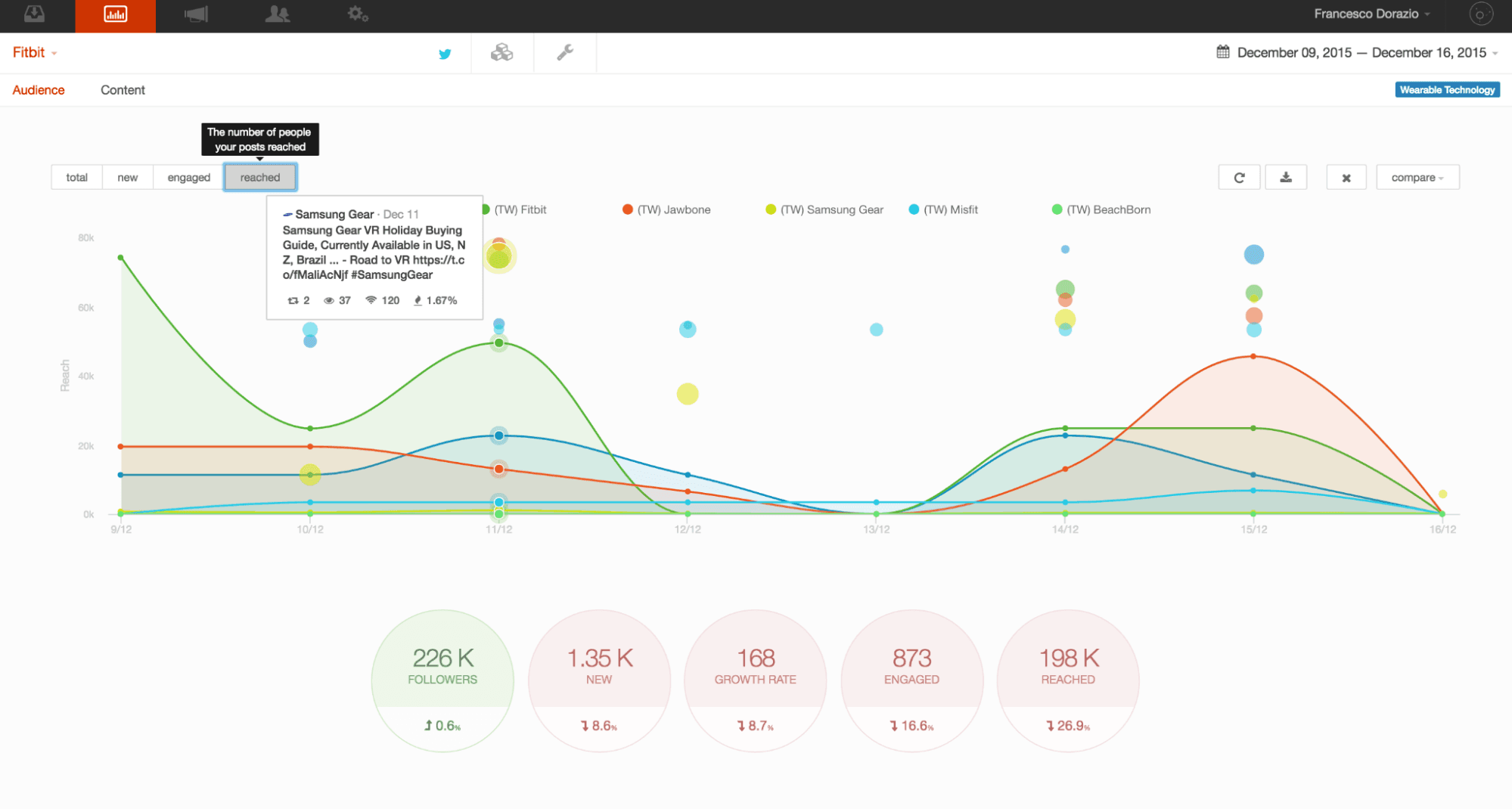
Pulsar is an incredibly user-friendly audience intelligence platform, making navigation straightforward with its intuitive interface. The left navigation menu allows you to easily switch between features, and the clear layout ensures smooth transitions within projects. You’ll find navigating between high-level views and detailed project screens intuitive, thanks to the well-placed hamburger menu icon and top-right ‘X’ for returning to previous views. This setup ensures that you and your team can efficiently manage and streamline customer segmentation tasks without hassle.
Integrations
Pulsar integrates with Tiktok.

Pulsar Specs
- Analytics: Yes
- API: Yes
- Approval Workflows: No
- Audience Targeting: Yes
- Brand Management: Yes
- Calendar Management: No
- Campaign Management: Yes
- Collaboration Support: Yes
- Conversion Tracking: No
- Custom Reports: Yes
- Dashboard: Yes
- Data Export: Yes
- Data Import: Yes
- Data Visualization: Yes
- External Integrations: Yes
- Feedback Management: Yes
- Keyword Tracking: Yes
- Knowledge Base: No
- Landing Pages: No
- Link Tracking: No
- Marketing Automation: No
- Multi-Account: Yes
- Multi-User: Yes
- Notifications: Yes
- Review Monitoring: Yes
- Scheduling: No
- Sentiment Analysis: Yes
- Social Media Monitoring: Yes
- Social-Media Integration: Yes
- Third-Party Plugins/Add-Ons: Yes
- Workflow Management: No


