

Recensione di Confluent: vantaggi, svantaggi, funzionalità e prezzi
Confluent eccelle nello streaming dei dati in tempo reale, offrendo al tuo team una flessibilità senza pari nella gestione efficiente dei dati dei clienti.

Recensiamo gli strumenti in modo indipendente e le commissioni aiutano a finanziare i nostri test. Consulta la nostra politica di trasparenza, la nostra metodologia o suggerisci uno strumento.
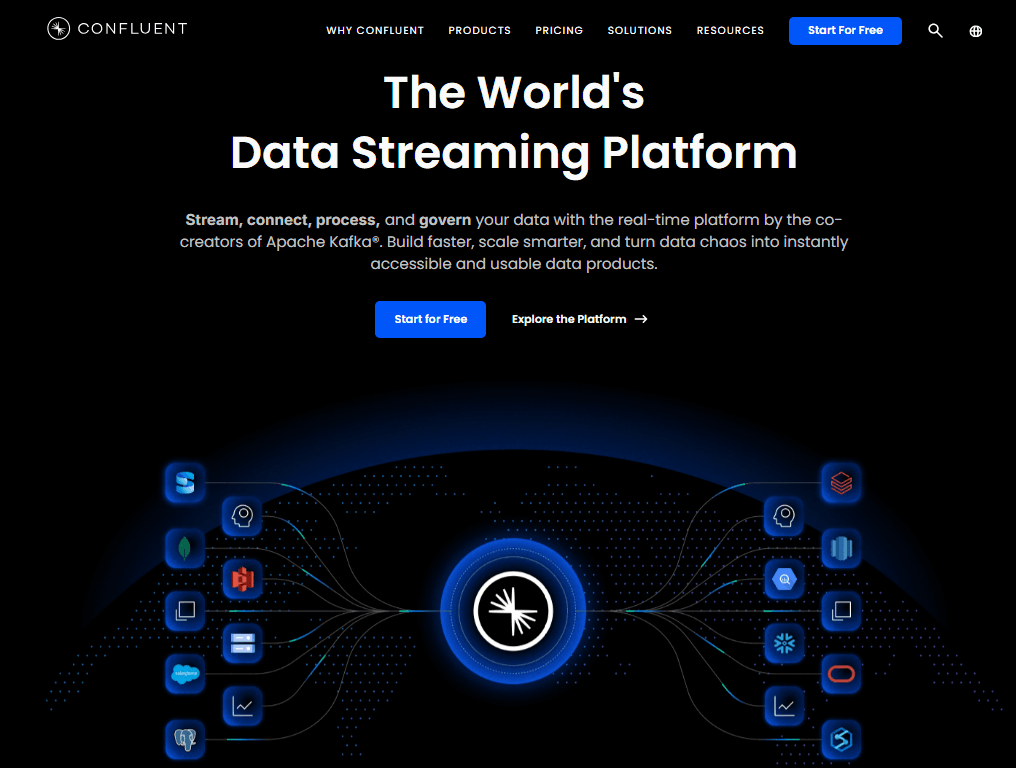
Confluent is a data streaming platform that enables businesses to stream, connect, process, and govern data in real-time, built on Apache Kafka. It best serves industries that require robust data handling capabilities, such as finance, retail, and technology, where real-time analytics and data integration are crucial. Confluent delivers a unified platform for managing continuous data streams, enhancing operational efficiency.
Confluent addresses common pain points like data silos and integration challenges for IT and data teams, enabling seamless data flow across systems. In this article, I'll cover Confluent's features, pros and cons, use cases, and pricing to help you decide if it aligns with your data management needs and organizational goals.
Confluent Evaluation Summary
0/5
- Starts at $1.75/hour
- Free forever plan available
Perché fidarsi dei nostri consigli sui software
6,700+
Reviews
20
Industry experts
16+
Evaluation factors
14
Years
Il nostro team testa e recensisce software dal 2012. In quanto leader CX noi stessi, sappiamo quanto sia difficile — e importante — scegliere il software giusto.
Per questa guida, abbiamo valutato gli strumenti attraverso test pratici e ricerche indipendenti, assegnando un punteggio agli strumenti in base ai nostri criteri di selezione.
Le nostre recensioni riflettono il nostro giudizio editoriale umano, non un discorso di vendita.
 Gui DrusinaCreative Director
 Tim FisherVP of AI
Confluent Overview
In my opinion, Confluent serves as a solid customer data streaming platform with notable strengths and some room for improvement. Its standout features, like real-time data streaming, set it apart in the market. However, the onboarding process could be more intuitive compared to competitors. While the platform offers good value for money, its customer support might not be as responsive as some users would prefer. If your team values real-time data capabilities and robust integrations, Confluent could be a great match. However, if ease of onboarding and immediate support are priorities, you might want to explore other options.
Pros
- You can handle real-time data streams with ease.
- It supports a wide range of connectors for different data sources.
- Your team can rely on its strong security features.
Cons
- You might find the learning curve steep.
- It can be resource-intensive for your systems.
- Your team might need time to fully leverage its capabilities.
Is Confluent Right For Your Needs?
Who Would be a Good Fit for Confluent?
Confluent is ideal for businesses that need to handle large volumes of real-time data. It's particularly suited for industries like financial services and telecommunications, where instant data processing is crucial. If your team relies on event-driven microservices or needs robust data streaming capabilities, Confluent's advanced features and deployment options can support your goals effectively.
- Financial ServicesConfluent excels in real-time data streaming, making it perfect for financial services needing immediate transaction processing.
- Retail AnalyticsRetailers benefit from Confluent's data integration features, which enhance inventory management and customer insights.
- TelecommunicationsConfluent supports the massive data flows in telecoms, optimizing network performance and customer service.
- Event-Driven MicroservicesConfluent’s platform enables seamless integration and communication between microservices, improving application responsiveness.
- AI ApplicationsFor AI-driven businesses, Confluent facilitates data processing that powers AI insights and decision-making.
- Fraud DetectionConfluent offers real-time data processing capabilities essential for detecting and preventing fraudulent activities.
Who Would be a Bad Fit for Confluent?
If your team doesn't handle real-time data streams, Confluent might not be the best choice. It's designed for managing and integrating data streams, which can be overkill for businesses focused solely on batch data processing or less complex data needs. For example, small businesses or departments that don't require complex data integration might find Confluent's capabilities excessive and its setup unnecessarily complicated.
- Small RetailersConfluent's robust data streaming capabilities are too advanced and costly for small retailers who don't need real-time data analytics.
- Non-Tech StartupsNon-tech startups without a dedicated IT team might struggle with Confluent's complexity, making simpler tools a better fit.
- Local Government OfficesThese offices often have simple data needs and might find Confluent's advanced features unnecessary.
- Traditional ManufacturingManufacturing sectors focused on physical production rather than data-centric processes won't benefit from Confluent's streaming services.
- Basic Customer Support TeamsTeams handling straightforward customer inquiries don't need Confluent's data integration and streaming abilities.
- Educational InstitutionsUnless involved in tech research, educational institutions may not leverage Confluent's full capabilities, making it an inefficient choice.
Come Testiamo e Valutiamo gli Strumenti
Abbiamo passato anni a costruire, perfezionare e migliorare il nostro sistema di valutazione e testing dei software. Il nostro schema è progettato per cogliere tutte le sfumature nella selezione del software e per valutare ciò che rende uno strumento efficace, concentrandosi sugli aspetti critici nel processo decisionale. Qui sotto puoi vedere esattamente come funziona il nostro processo di testing e valutazione su sette criteri. Ci permette di offrire una valutazione imparziale del software basata su funzionalità principali, caratteristiche distintive, facilità d’uso, onboarding, supporto clienti, integrazioni, recensioni clienti e rapporto qualità/prezzo.
Funzionalità Principali (25% del punteggio finale)
Il punto di partenza della nostra valutazione sono sempre le funzionalità fondamentali dello strumento. Possiede le funzioni di base che un utente si aspetta? Alcune di queste funzionalità sono disponibili solo con piani più costosi? In sostanza, ci aspettiamo che uno strumento sia competitivo rispetto ai suoi concorrenti principali.
Caratteristiche Distintive (25% del punteggio finale)
Successivamente, valutiamo le funzionalità particolari e distintive che vanno oltre le funzionalità standard solitamente presenti in strumenti simili. Un punteggio elevato riflette funzionalità specializzate o uniche che rendono il prodotto più veloce, efficiente o che offrono valore aggiunto all’utente. Valutiamo anche quanto sia facile integrare lo strumento con altri strumenti tipicamente presenti nel tech stack, per ampliare le funzionalità e l’utilità del software. Ottengono il punteggio migliore gli strumenti che offrono numerose integrazioni native, connessioni di terze parti e accesso API per creare integrazioni personalizzate.
Facilità d’Uso (10% del punteggio finale)
Consideriamo quanto sia rapido e intuitivo eseguire le attività core usando lo strumento. Un software con un alto punteggio è ben progettato, intuitivo all’uso, offre app mobili, mette a disposizione modelli e semplifica attività relativamente complesse.
Onboarding (10% del punteggio finale)
Sappiamo quanto sia importante l’adozione rapida da parte del team per una nuova piattaforma, quindi valutiamo la facilità di apprendimento e utilizzo dello strumento con una formazione minima. Valutiamo quanto velocemente un membro del team può iniziare a usare lo strumento senza esperienza. Le soluzioni con punteggio elevato richiedono poco o nessun supporto.
Supporto Clienti (10% del punteggio finale)
Valutiamo quanto sia semplice ricevere assistenza via telefono, chat dal vivo o knowledge base. Gli strumenti e le aziende che offrono supporto in tempo reale ottengono il punteggio migliore, mentre i chatbot hanno il punteggio più basso.
Recensioni Clienti (10% del punteggio finale)
Oltre alla nostra valutazione interna, prendiamo in considerazione il net promoter score dei clienti attuali e passati. Analizziamo la probabilità che, potendo scegliere, selezionino di nuovo lo strumento per le sue funzionalità core. Un software con punteggio elevato riflette un alto net promoter score dai clienti attuali o passati.
Rapporto Qualità/Prezzo (10% del punteggio finale)
Infine, tenendo conto di tutti gli altri criteri, analizziamo il prezzo medio dei piani entry level rispetto alle funzionalità principali e consideriamo il valore delle altre metriche di valutazione. Il software che offre di più, a meno, otterrà un punteggio maggiore.
Core Features
Real-Time Data Processing: Confluent lets you process data as it's generated, so your team can react instantly. This capability is crucial for businesses needing immediate insights from customer interactions.
Event Streaming: This feature allows you to stream events from various sources, maintaining a continuous flow of data. Your team can build real-time applications that respond to customer actions as they happen.
Scalable Architecture: Confluent's platform is built to grow with your business, handling increasing amounts of data effortlessly. You won't need to worry about performance drops as your customer base expands.
Data Integration: With Confluent, you can connect disparate data sources into a unified view. This helps your team make informed decisions by having all necessary data at their fingertips.
Security and Compliance: The platform includes built-in security features to protect sensitive customer data. Your team can ensure compliance with industry standards, giving peace of mind regarding data privacy.
Data Transformation: Confluent provides tools to transform raw data into actionable insights. This means your team can tailor data outputs to fit specific business needs quickly.

Ease of Use
Confluent's user interface can be complex, making it difficult for new users to navigate. Despite this, its robust features and extensive integration capabilities make it a powerful tool for managing customer data. The platform's detailed customer support can help you overcome usability challenges. If your team is tech-savvy, Confluent's feature set will likely be beneficial, but expect a learning curve compared to other platforms.

Integrations
Confluent integrates with popular platforms and services including Salesforce, AWS Lambda, Microsoft Azure Blob Storage, MongoDB Atlas, Google BigQuery, Snowflake, Oracle Database, Elasticsearch, IBM MQ, and Datadog.
Confluent also offers an API and connects with third-party integration tools. For more detailed information, users can explore the Confluent Hub.

Confluent Specs
- 2-Factor Authentication: No
- A/B Testing: No
- Analytics: Yes
- API: Yes
- Calendar Management: No
- Contact Management: No
- Dashboard: Yes
- Data Export: Yes
- Data Import: Yes
- Data Mining: No
- Data Visualization: Yes
- External Integrations: Yes
- Forecasting: No
- Keyword Tracking: No
- Multi-User: Yes
- Notifications: Yes
- Scheduling: No
- SEO: No


