

Recensione di Document360: vantaggi, svantaggi, funzionalità e prezzi
Document360 offre al tuo team una gestione intuitiva della conoscenza, distinguendosi per la sua interfaccia facile da usare e gli aggiornamenti continui delle funzionalità.

Recensiamo gli strumenti in modo indipendente e le commissioni aiutano a finanziare i nostri test. Consulta la nostra politica di trasparenza, la nostra metodologia o suggerisci uno strumento.
Document360 is a helpdesk knowledge base built for teams that need to create, organize, and publish documentation for customers and internal staff. If you've tried managing documentation inside a general collaboration tool like Confluence, you'll notice the difference quickly—Document360 keeps knowledge base creation as the core function, not a secondary feature buried inside a broader workspace. That focus shows up in things like structured category management, content versioning, and built-in analytics that tell you which articles are actually helping customers.
Document360 Evaluation Summary
4.7/5
- Pricing upon request
- Free demo available
Perché fidarsi dei nostri consigli sui software
6,700+
Reviews
20
Industry experts
16+
Evaluation factors
14
Years
Il nostro team testa e recensisce software dal 2012. In quanto leader CX noi stessi, sappiamo quanto sia difficile — e importante — scegliere il software giusto.
Per questa guida, abbiamo valutato gli strumenti attraverso test pratici e ricerche indipendenti, assegnando un punteggio agli strumenti in base ai nostri criteri di selezione.
Le nostre recensioni riflettono il nostro giudizio editoriale umano, non un discorso di vendita.
 Gui DrusinaCreative Director
 Tim FisherVP of AI
Document360 Overview
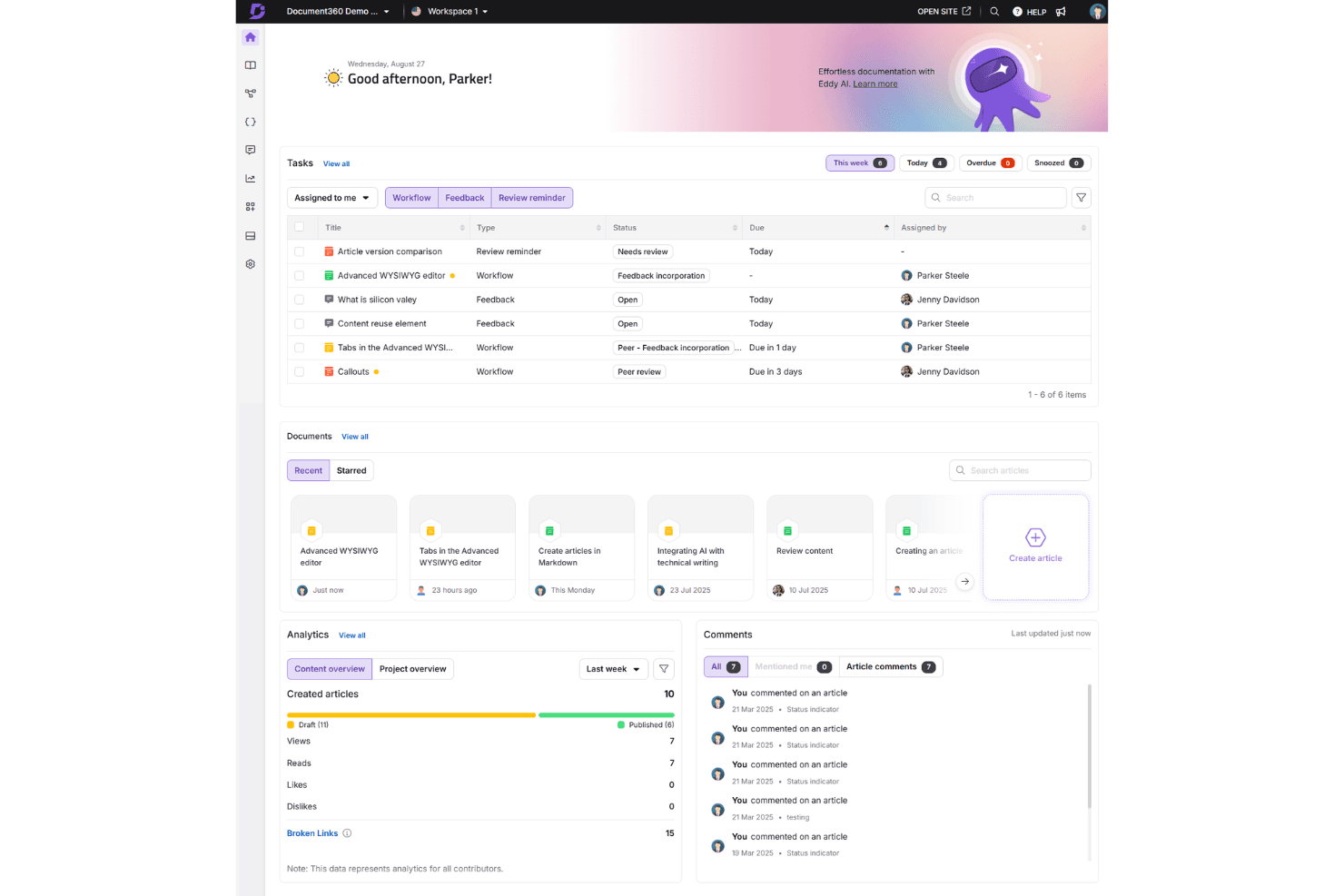
In my opinion, Document360 excels as a Helpdesk Knowledge Base Software by offering a user-friendly interface and a strong feature set. It competes well with others by providing continuous updates and excellent ease of use. However, its value for money may not be as competitive for larger enterprises with complex needs. It suits small to medium-sized tech companies and startups looking for reliable knowledge management. If you're deciding on a tool, consider Document360 for its standout features and ease of onboarding, but weigh it against your specific budget and support needs based on user reviews and verified reviewer feedback.
Pros
- Intuitive and user-friendly interface with formatting options.
- Fully customizable knowledge base utilizing CSS and HTML.
- Frequent updates keep features fresh and relevant for your work.
Cons
- Search functionality lacks depth compared to competition.
- User management options for larger teams.
- Some users report that analytics features lack depth.
Is Document360 Right For Your Needs?
Who Would be a Good Fit for Document360?
Document360 is ideal for small to medium-sized tech startups and SaaS companies looking for a straightforward knowledge management tool and knowledge base platform. Your team will appreciate its intuitive user interface and the ability to customize the knowledge base to reflect your brand using markdown and formatting tools. Its frequent updates ensure you have access to current features that meet your evolving needs with versioning and version control. Its frequent updates ensure you have access to current features that meet your evolving needs with versioning and version control. If your team values ease of use and flexibility in managing information through docs, Document360 could be a great choice for your operations as a knowledge base platform and self-service solution.
- Tech StartupsDocument360 suits your startup with its easy setup, markdown editor, and intuitive navigation, helping your team manage knowledge efficiently from day one with technical documentation and API documentation capabilities.
- SaaS CompaniesYou can rely on Document360's customization options to align your knowledge base with your brand, enhancing client interactions through self-service portals and end-user resources for your software product.
- Customer Support TeamsYour support team will benefit from its simple interface, making it easier to access and share information quickly while deflecting support tickets and reducing support ticketing volume.
- Product Management TeamsDocument360 helps your team organize product documentation, keeping it accessible and up-to-date for all stakeholders using version control and versioning features.
- Remote TeamsWith Document360, remote teams can easily collaborate and access knowledge through workflows, ensuring everyone stays informed and connected across locations.
- IT DepartmentsYour IT department can utilize Document360's frequent updates and robust search function to manage technical documentation effectively with API documentation and docs for end users.
Who Would be a Bad Fit for Document360?
Document360 might not suit large enterprises with complex documentation needs or extensive user management requirements. Your team could find its search functionality lacking depth if your organization relies heavily on intricate searches using search engines. If you require detailed analytics, you might feel Document360's capabilities fall short. Companies that require advanced user permissions or highly detailed data insights may need to look elsewhere for a solution that meets their comprehensive needs beyond what this provider offers.
- Large EnterprisesYour large-scale operations may find Document360's user management and analytics capabilities insufficient for complex needs when multiple providers are involved.
- Financial InstitutionsFinancial institutions might require more advanced search and security features than Document360 offers for sensitive document management.
- Healthcare OrganizationsHealthcare organizations could need more robust compliance and data handling features than what's available on Document360 for technical documentation.
- Legal DepartmentsYour legal team might find Document360's search functionality inadequate for handling intricate legal documents and documents requiring complex methodologies.
- Manufacturing CompaniesManufacturing companies may require more detailed analytics and reporting than Document360 provides for their documentation processes, which tend to be extensive.
- Government AgenciesGovernment agencies often need higher security tiers and more extensive control over user permissions than Document360 currently supports for document management.
Come Testiamo e Valutiamo gli Strumenti
Abbiamo passato anni a costruire, perfezionare e migliorare il nostro sistema di valutazione e testing dei software. Il nostro schema è progettato per cogliere tutte le sfumature nella selezione del software e per valutare ciò che rende uno strumento efficace, concentrandosi sugli aspetti critici nel processo decisionale. Qui sotto puoi vedere esattamente come funziona il nostro processo di testing e valutazione su sette criteri. Ci permette di offrire una valutazione imparziale del software basata su funzionalità principali, caratteristiche distintive, facilità d’uso, onboarding, supporto clienti, integrazioni, recensioni clienti e rapporto qualità/prezzo.
Funzionalità Principali (25% del punteggio finale)
Il punto di partenza della nostra valutazione sono sempre le funzionalità fondamentali dello strumento. Possiede le funzioni di base che un utente si aspetta? Alcune di queste funzionalità sono disponibili solo con piani più costosi? In sostanza, ci aspettiamo che uno strumento sia competitivo rispetto ai suoi concorrenti principali.
Caratteristiche Distintive (25% del punteggio finale)
Successivamente, valutiamo le funzionalità particolari e distintive che vanno oltre le funzionalità standard solitamente presenti in strumenti simili. Un punteggio elevato riflette funzionalità specializzate o uniche che rendono il prodotto più veloce, efficiente o che offrono valore aggiunto all’utente. Valutiamo anche quanto sia facile integrare lo strumento con altri strumenti tipicamente presenti nel tech stack, per ampliare le funzionalità e l’utilità del software. Ottengono il punteggio migliore gli strumenti che offrono numerose integrazioni native, connessioni di terze parti e accesso API per creare integrazioni personalizzate.
Facilità d’Uso (10% del punteggio finale)
Consideriamo quanto sia rapido e intuitivo eseguire le attività core usando lo strumento. Un software con un alto punteggio è ben progettato, intuitivo all’uso, offre app mobili, mette a disposizione modelli e semplifica attività relativamente complesse.
Onboarding (10% del punteggio finale)
Sappiamo quanto sia importante l’adozione rapida da parte del team per una nuova piattaforma, quindi valutiamo la facilità di apprendimento e utilizzo dello strumento con una formazione minima. Valutiamo quanto velocemente un membro del team può iniziare a usare lo strumento senza esperienza. Le soluzioni con punteggio elevato richiedono poco o nessun supporto.
Supporto Clienti (10% del punteggio finale)
Valutiamo quanto sia semplice ricevere assistenza via telefono, chat dal vivo o knowledge base. Gli strumenti e le aziende che offrono supporto in tempo reale ottengono il punteggio migliore, mentre i chatbot hanno il punteggio più basso.
Recensioni Clienti (10% del punteggio finale)
Oltre alla nostra valutazione interna, prendiamo in considerazione il net promoter score dei clienti attuali e passati. Analizziamo la probabilità che, potendo scegliere, selezionino di nuovo lo strumento per le sue funzionalità core. Un software con punteggio elevato riflette un alto net promoter score dai clienti attuali o passati.
Rapporto Qualità/Prezzo (10% del punteggio finale)
Infine, tenendo conto di tutti gli altri criteri, analizziamo il prezzo medio dei piani entry level rispetto alle funzionalità principali e consideriamo il valore delle altre metriche di valutazione. Il software che offre di più, a meno, otterrà un punteggio maggiore.
Core Features
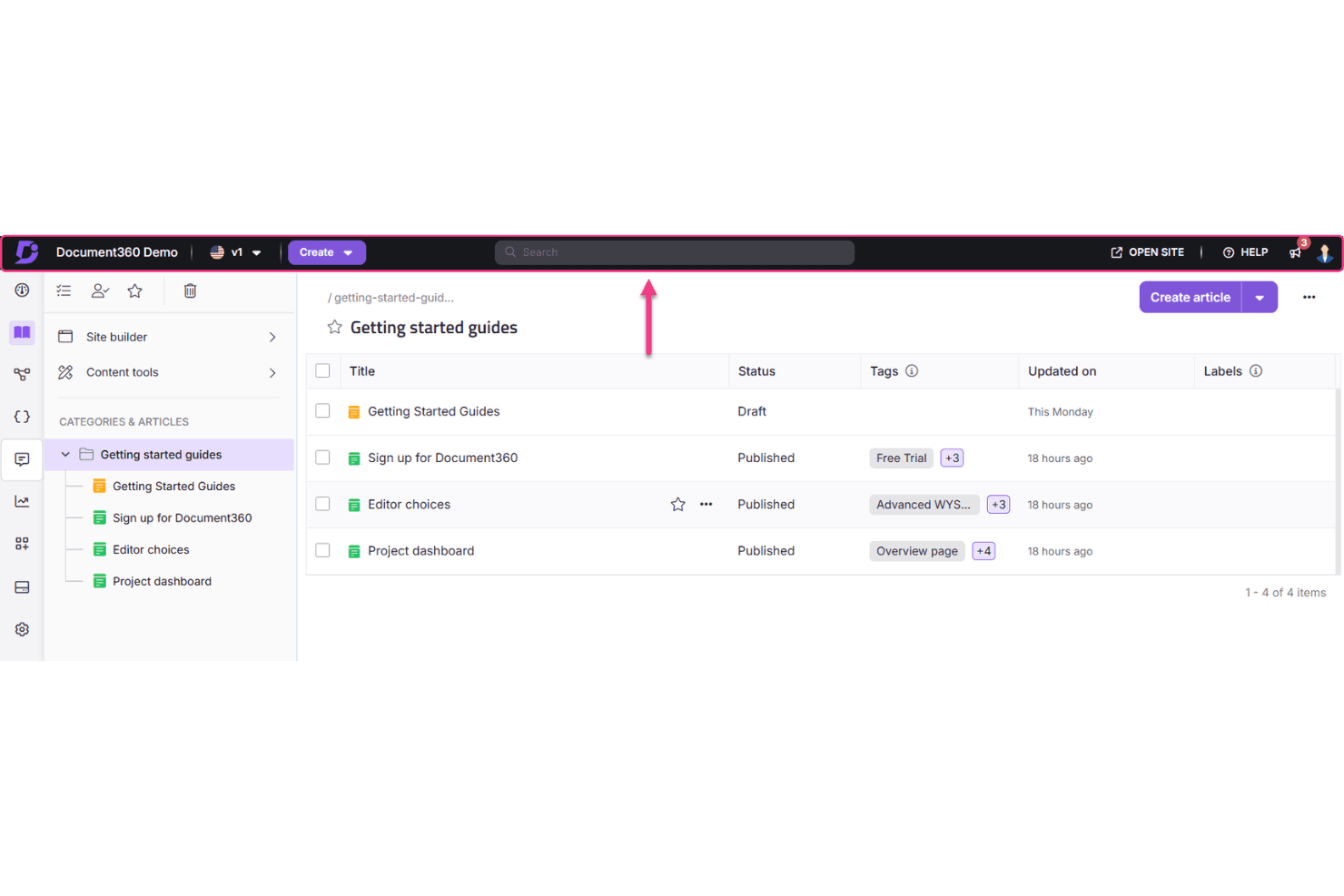
Knowledge Base Management: Document360 lets your team create, organize, and manage content easily through workflows, ensuring information is always accessible. Its intuitive user interface makes updating and categorizing articles a breeze with docs and markdown support.
Version Control: You can track changes with versioning and version control, reverting to previous versions if needed, and maintaining documentation accuracy. This feature helps prevent errors by keeping a history of changes for your docs.
Customizable Templates: Your team can use and modify templates to match your brand's style, ensuring consistency across documents with formatting options. This saves time and ensures a professional look using the markdown editor or WYSIWYG editor.
Search Functionality: Users can quickly find information with Document360's search function. Though the search functionality may lack depth for complex queries, it's designed to help you locate content efficiently using the search engine.
Analytics and Reports: Get insights into how your knowledge base is used with Document360's analytics, though some users might find it lacking in detail. This helps you understand what content is most valuable to end users.
Collaboration Tools: Your team members can collaborate in real-time through workflows, making it easy to work together on content creation and updates. This fosters teamwork and ensures everyone is on the same page.

Ease of Use
Document360 stands out for its user-friendly design and ease of use, making it easy for your team to navigate and manage content using the markdown editor or WYSIWYG editor. The intuitive user interface ensures that even new users can quickly get up to speed without a steep learning curve. Features like customizable templates, markdown support, formatting tools, and real-time collaboration simplify your work process. Compared to other software, Document360's ease of use is a strong point, allowing your team to focus on content rather than figuring out how to use the tool.
Integrations
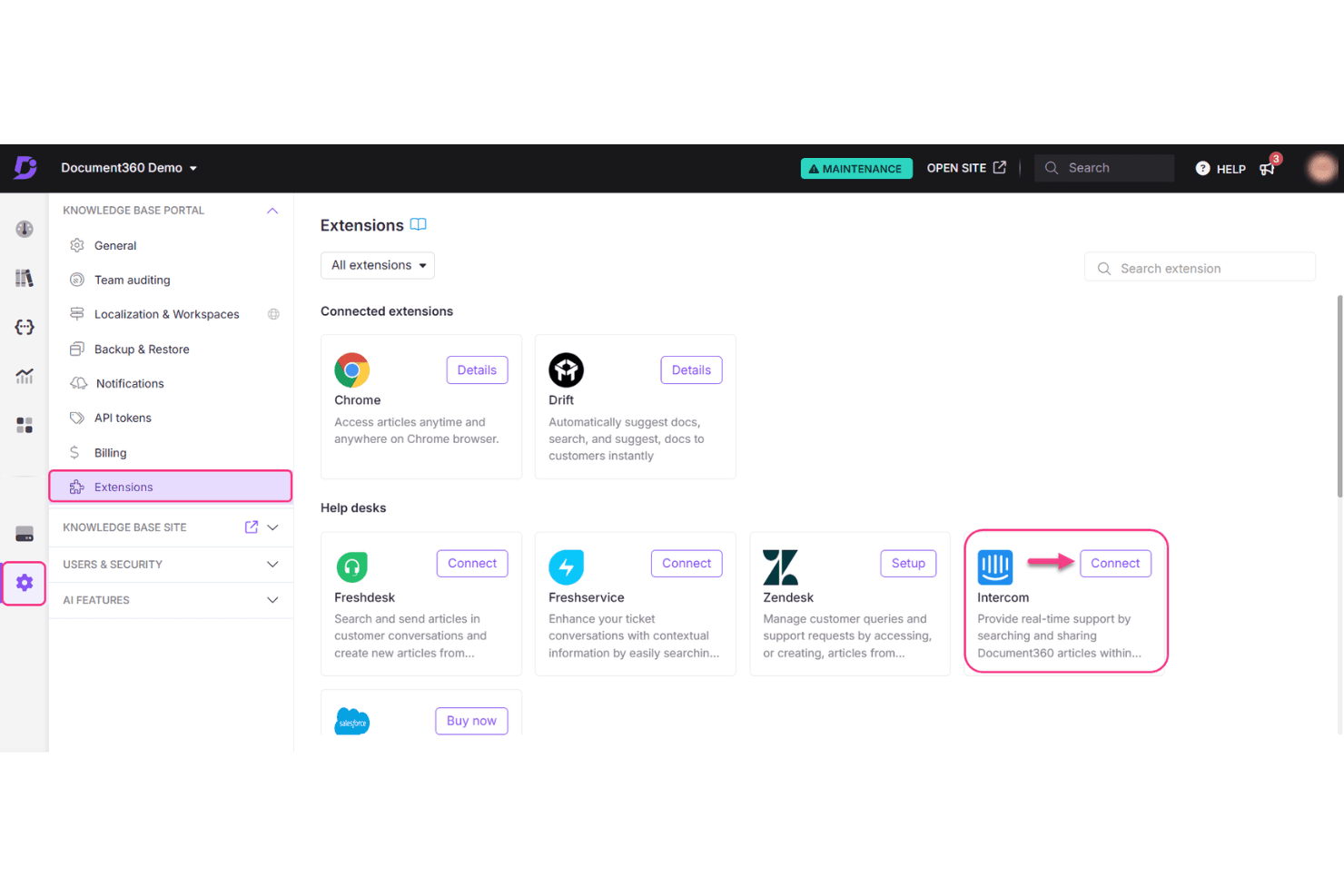
Document360 integrates with Zendesk, Intercom, Drift, Slack, Microsoft Teams, Crowdin, Google Analytics, Hotjar, Freshdesk, and Zapier, facilitating seamless workflows and automation across your tech stack.
Document360 also provides API support for API documentation and document management, allowing you to connect with third-party integration tools through the API for enhanced functionality and automation capabilities.
Document360 Specs
- API: Yes
- Chat: Yes
- Contact Management: Yes
- Contact Sharing: No
- Data Export: Yes
- Data Import: Yes
- Document Comparison: Yes
- Email Integration: Yes
- External Integrations: Yes
- File Sharing: Yes
- File Transfer: Yes
- History/Version Control: Yes
- Multi-User: Yes
- Notifications: Yes
- Project Management: Yes


