

Peak season hits all retailers differently. And it doesn't just raise your order volume; it raises the stakes for every customer interaction. Between Black Friday and the January rush, shoppers are spending more, buying gifts against hard deadlines, and watching their tracking pages like hawks. Which is why it’s the period where customer trust is easiest to win and easiest to lose.
The moment of highest anxiety isn't at checkout. It's in the gap between "order confirmed" and "order delivered." That's the gap Aircall's AI Agents are built to close, and there are five things CX and ops leaders can do now to protect trust before the rush hits.
Why does customer trust wobble the moment an order ships?
Once a customer pays, control passes to you and your carriers. The customer can't do anything but wait, so they check their order status instead, sometimes several times a day. Every unclear update, silent delay, or long hold time reads as a signal that you've dropped their order.
That anxiety climbs with the price and the emotion attached to the purchase. A $40 impulse buy can slip a day without much fuss; a $600 gift that has to land before a December birthday can't. For considered-purchase retailers (furniture, electronics, jewelry, premium apparel), the in-transit window is where loyalty is won or lost. Aircall's AI Agents answer that anxiety the moment it surfaces, day or night, before it turns into a lost customer.
How much of your peak volume is really just "where is my order"?
A large share of it! Industry estimates put WISMO questions at up to 40% of inbound support contacts, and that share climbs during peak as more orders are in flight at once. These are simple, repetitive questions, but at volume they swamp queues and bury the harder cases that genuinely need a person. This is exactly the volume Aircall's AI Agents absorb, resolving routine status questions autonomously so your team never has to.
And it shows plainly in the numbers, too. US holiday retail sales topped $960 billion in 2023, according to the National Retail Federation. More orders mean more status checks, more delay questions, and more pressure on a support team that's the same size it was in October. If your only answer to that spike is "hire more seasonal agents," you're paying premium rates to answer the same three questions hundreds of times a day. AI Voice Agents handle those calls at any volume, without the seasonal headcount.
What do long wait times actually cost you at peak?
The fact is that long wait times will cost you a lot more than a lower CSAT score. When hold times stretch, three things happen in sequence:
- First, anxious customers call back or open a second channel, which inflates your volume even further.
- Then some give up and take the frustration public, in a review or a social post that outlasts the season.
- Finally, the ones who do reach an agent arrive already annoyed, which lengthens every call and drags down your team's morale (and numbers) on the busiest days of the year.
None of that shows up on a single dashboard, which is exactly why it's easy to underestimate. Wait time is a leading indicator, not a lagging one. If your queue is growing at 9pm on a Tuesday in December, the trust damage is already happening, whether or not the survey scores have caught up yet. But AI Agents keep that queue from forming in the first place.

Five ways to protect trust before the rush hits
1. Answer order status in seconds, day or night, with an AI Voice Agent
Peak shoppers don't wait for business hours to worry about a gift. If a customer can get an accurate status update in under a minute at 11pm, using nothing more than an order number, or an email plus ZIP code, the anxiety won’t turn into a complaint. AI Voice Agents resolve routine status questions without a queue and deliver a confident answer on first contact, every time.
2. Get ahead of delays instead of waiting for the call
Delays happen, and customers often understand this. If you’re the first to flag a delay, that’s a service moment. But if you leave it to your customers to find this out for themselves, that impacts trust. Set a trigger: when a carrier reports a delay, AI Agents reach out with the new estimate and clear next steps before the customer has to chase you. They can offer a text update, delivery instructions, or a human agent if they want one. Proactive beats apologetic every time.
3. Protect agent time for the calls that need a human
Your best agents shouldn't spend December reading tracking numbers aloud. Aircall routes the repetitive, high-volume questions (status, delivery windows, store hours) to an automated first line, and reserves human attention for the emotional, complex, or high-value cases where empathy and judgment matter. That's how you keep quality high without doubling headcount.
4. Connect the conversation to your order data
An answer is only as good as the data behind it. Aircall’s AI Agents read status updates, fulfillment stage, and delivery estimates all live in your eCommerce platform, like Shopify, in real time. When the conversation is wired into your order system, nobody's guessing and nobody's asking the customer to repeat their order number three times.
5. Watch the peak-season signals that actually matter
Don't wait for your CSAT to crater in January. Track first-contact resolution on status questions, average wait time during your busiest hours, and the share of contacts handled without escalation. Those three numbers tell you, in real time, whether your peak plan is holding or failing.
How Aircall’s AI Agents fit in with peak season for eCommerce
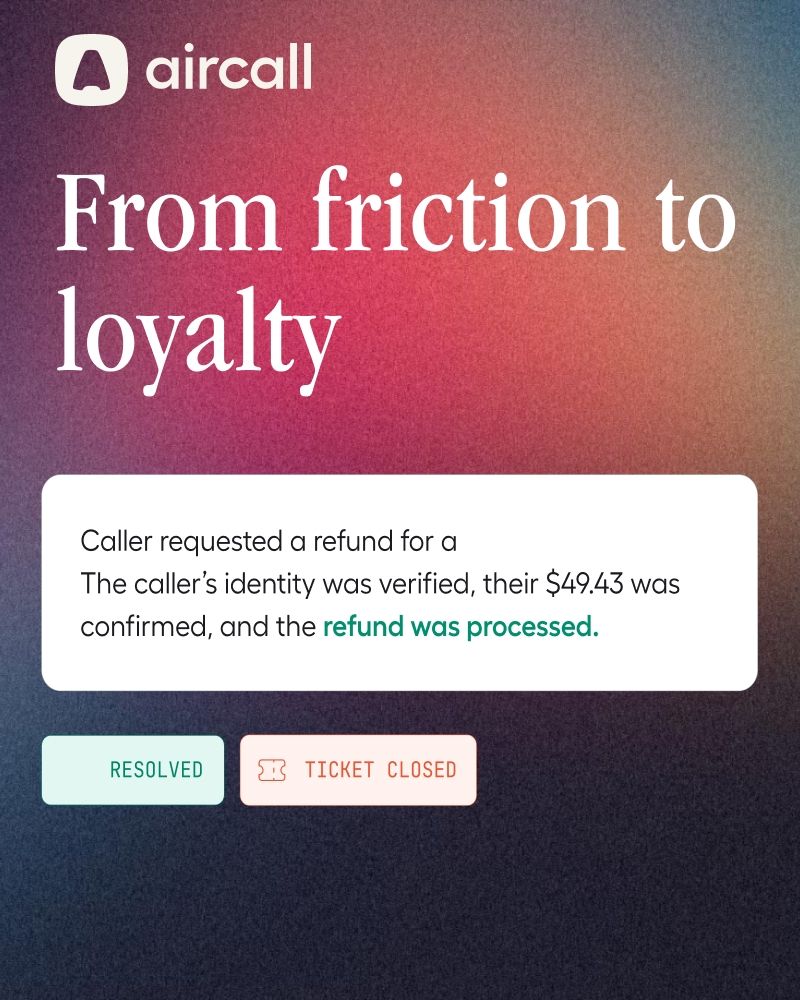
Retailers are all experiencing the same shift in calls, and most agree that routine status questions shouldn't cost you a live agent or a customer's patience. Aircall's AI Voice and Messaging Agents handle those high-volume calls and texts around-the-clock, pull live order context straight from platforms such as Shopify, and hand off to your team with the full picture attached when a human is needed. That's how considered-purchase retailers walk into peak season with shorter queues, calmer customers, and agents free for the moments that matter.
Want to see how AI Agents can handle your busiest call drivers? Book a demo today.
Frequently asked questions
What is WISMO, and why does it spike during peak season?
WISMO stands for “where is my order.” It covers order status, tracking, and delivery-delay questions. It spikes during peak season because more orders are in transit at once and shoppers are buying against firm deadlines, so they check in more often and more urgently.
How can retailers reduce order-status calls without adding headcount?
Automate the answer. Aircall’s AI Voice Agents routine status and delivery questions to a self-serve or AI-powered first line that reads live data from your ecommerce platform, and keep human agents focused on complex or high-value cases. This cuts queue times without seasonal hiring.
When should a customer conversation be escalated to a human?
Escalate when the case involves emotion, high value, or a decision an automated system shouldn’t make alone, for example a lost high-ticket gift or a complaint that needs a goodwill gesture. Aircall passes the full order context to the right person automatically, so the customer doesn’t have to repeat themselves.
How far ahead should retailers prepare their peak-season support plan?
Start at least a quarter out. Automating routine call drivers, wiring your front line into live order data, and testing your escalation paths all take time to set up and tune. Teams that wait until November are stuck reacting to volume instead of getting ahead of it.