

Spiceworks Review: Pros, Cons, Features and Pricing
Spiceworks shines with its free core features, making it a go-to for small IT teams looking for efficient cloud-based ticket management without breaking the bank.

We review tools independently, and commissions help fund our testing. See our transparency policy, our methodology, or suggest a tool.
Spiceworks is a free cloud helpdesk software built for IT teams managing internal support requests without a dedicated software budget. It covers ticket tracking, a self-service portal, and basic asset management at no per-agent cost. I'd mainly consider it if your team needs a functional IT help desk quickly and affordably—especially compared to paid tools like Jira Service Management, where the pricing and setup complexity can be overkill for teams that don't need full ITSM workflows.
Spiceworks Evaluation Summary

4.3/5
- From $5/seat/month (billed annually)
- Free plan available
Why Trust Our Software Recommendations
6,700+
Reviews
20
Industry experts
16+
Evaluation factors
14
Years
Our team has been testing and reviewing software since 2012. As CX leaders ourselves, we know how difficult—and important—it is to choose the right software.
For this guide, we evaluated tools using hands-on testing and independent research, scoring tools using our selection criteria.
Our reviews reflect our human editorial judgment, not a sales pitch.
 Gui DrusinaCreative Director
 Tim FisherVP of AI
Spiceworks Overview
In my opinion, Spiceworks is a solid choice for small to midsize businesses that need a functional and cost-effective Cloud Helpdesk Software. It excels in customer support and onboarding, making it easier for your team to get started quickly. While its ease of use could improve, the platform offers strong value for money, especially if budget constraints are a concern. Spiceworks might not have all the bells and whistles of higher-end competitors, but it serves as a reliable option for teams prioritizing affordability and essential features. If your team needs a straightforward helpdesk solution with dependable support, Spiceworks could be the right fit.
Pros
- Spiceworks offers excellent customer support that quickly addresses your team's issues.
- The software's onboarding process is straightforward, helping your team get up to speed fast.
- It provides substantial value for money, making it ideal for budget-conscious teams.
Cons
- The user interface might feel outdated compared to other modern helpdesk solutions.
- Spiceworks can lack some advanced features that larger teams may need.
- Customization options are limited, which might not meet all your team's specific requirements.
Is Spiceworks Right For Your Needs?
Who Would be a Good Fit for Spiceworks?
Spiceworks is a great fit for small to midsize businesses looking for cost-effective helpdesk solutions. If your team values strong customer support and needs an easy onboarding process, Spiceworks delivers these strengths. Its straightforward interface ensures your team can quickly adapt to its functionalities. Businesses in industries like retail or small IT departments will appreciate its value for money and essential feature set. If your team doesn’t require highly advanced features, Spiceworks provides a reliable and efficient helpdesk experience.
- Small IT DepartmentsSpiceworks offers essential tools without overwhelming your team with unnecessary features.
- Retail BusinessesThe software's straightforward support features align well with retail operations.
- Non-ProfitsBudget-conscious organizations benefit from Spiceworks's cost-effective solutions.
- Education InstitutionsSchools and universities can use its user-friendly interface for managing support requests.
- Healthcare ClinicsClinics can efficiently handle IT support with Spiceworks’s reliable features.
- FreelancersIndependent professionals find Spiceworks easy to use for managing client queries.
Who Would be a Bad Fit for Spiceworks?
Spiceworks might not be the best option for large enterprises or teams needing highly advanced or customizable features. If your organization relies on complex integrations and advanced analytics, Spiceworks's limited customization might not meet your needs. Industries like tech startups or large-scale financial firms, which require robust data handling and intricate reporting, may find Spiceworks lacking. If your team demands cutting-edge technology and highly scalable solutions, you might want to consider alternatives that cater better to these needs.
- Large EnterprisesBig companies often need more advanced reporting features that Spiceworks doesn’t offer.
- Tech StartupsStartups requiring cutting-edge technology might find Spiceworks too basic.
- Financial FirmsFirms needing robust data analytics and reporting will find Spiceworks insufficient.
- Manufacturing GiantsLarge-scale operations may require more scalable solutions than Spiceworks provides.
- Advanced IT DepartmentsTeams needing high customization and integration capabilities may find Spiceworks limiting.
- Media AgenciesAgencies requiring complex project management features might need more than Spiceworks offers.
How We Test & Score Tools
We’ve spent years building, refining, and improving our software testing and scoring system. The rubric is designed to capture the nuances of software selection and what makes a tool effective, focusing on critical aspects of the decision-making process.
Below, you can see exactly how our testing and scoring works across seven criteria. It allows us to provide an unbiased evaluation of the software based on core functionality, standout features, ease of use, onboarding, customer support, integrations, customer reviews, and value for money.
Core Functionality (25% of final scoring)
The starting point of our evaluation is always the core functionality of the tool. Does it have the basic features and functions that a user would expect to see? Are any of those core features locked to higher-tiered pricing plans? At its core, we expect a tool to stand up against the baseline capabilities of its competitors.
Standout Features (25% of final scoring)
Next, we evaluate uncommon standout features that go above and beyond the core functionality typically found in tools of its kind. A high score reflects specialized or unique features that make the product faster, more efficient, or offer additional value to the user.
We also evaluate how easy it is to integrate with other tools typically found in the tech stack to expand the functionality and utility of the software. Tools offering plentiful native integrations, 3rd party connections, and API access to build custom integrations score best.
Ease of Use (10% of final scoring)
We consider how quick and easy it is to execute the tasks defined in the core functionality using the tool. High scoring software is well designed, intuitive to use, offers mobile apps, provides templates, and makes relatively complex tasks seem simple.
Onboarding (10% of final scoring)
We know how important rapid team adoption is for a new platform, so we evaluate how easy it is to learn and use a tool with minimal training. We evaluate how quickly a team member can get set up and start using the tool with no experience. High scoring solutions indicate little or no support is required.
Customer Support (10% of final scoring)
We review how quick and easy it is to get unstuck and find help by phone, live chat, or knowledge base. Tools and companies that provide real-time support score best, while chatbots score worst.
Customer Reviews (10% of final scoring)
Beyond our own testing and evaluation, we consider the net promoter score from current and past customers. We review their likelihood, given the option, to choose the tool again for the core functionality. A high scoring software reflects a high net promoter score from current or past customers.
Value for Money (10% of final scoring)
Lastly, in consideration of all the other criteria, we review the average price of entry level plans against the core features and consider the value of the other evaluation criteria. Software that delivers more, for less, will score higher.
Core Features
Ticket Management
Spiceworks helps your team organize and track open tickets efficiently while maintaining a clear workflow for prioritizing, assigning, and reducing response times.
Knowledge Base
This feature allows you to create a library of solutions for common issues. Your team can quickly access information to solve problems faster.
Reporting and Analytics
Spiceworks offers basic reporting tools to track your team's performance. You can identify trends and make informed decisions.
User Portal
Your users can submit and track their requests through a simple interface. This transparency improves user satisfaction.
Asset Management
Spiceworks helps you keep track of your IT assets. You can manage inventory and ensure everything’s up-to-date.
Alerts and Notifications
Spiceworks uses automation to notify your team of new tickets, updates, and priority changes in real-time through its mobile app, helping you respond faster without manual follow-ups.

Standout Features
Community Support
Spiceworks connects you with a large user community. You can share experiences and get advice from peers.
Customizable Dashboard
You can tailor the dashboard to fit your team’s needs. This flexibility helps you focus on what matters most.
Ease of Use
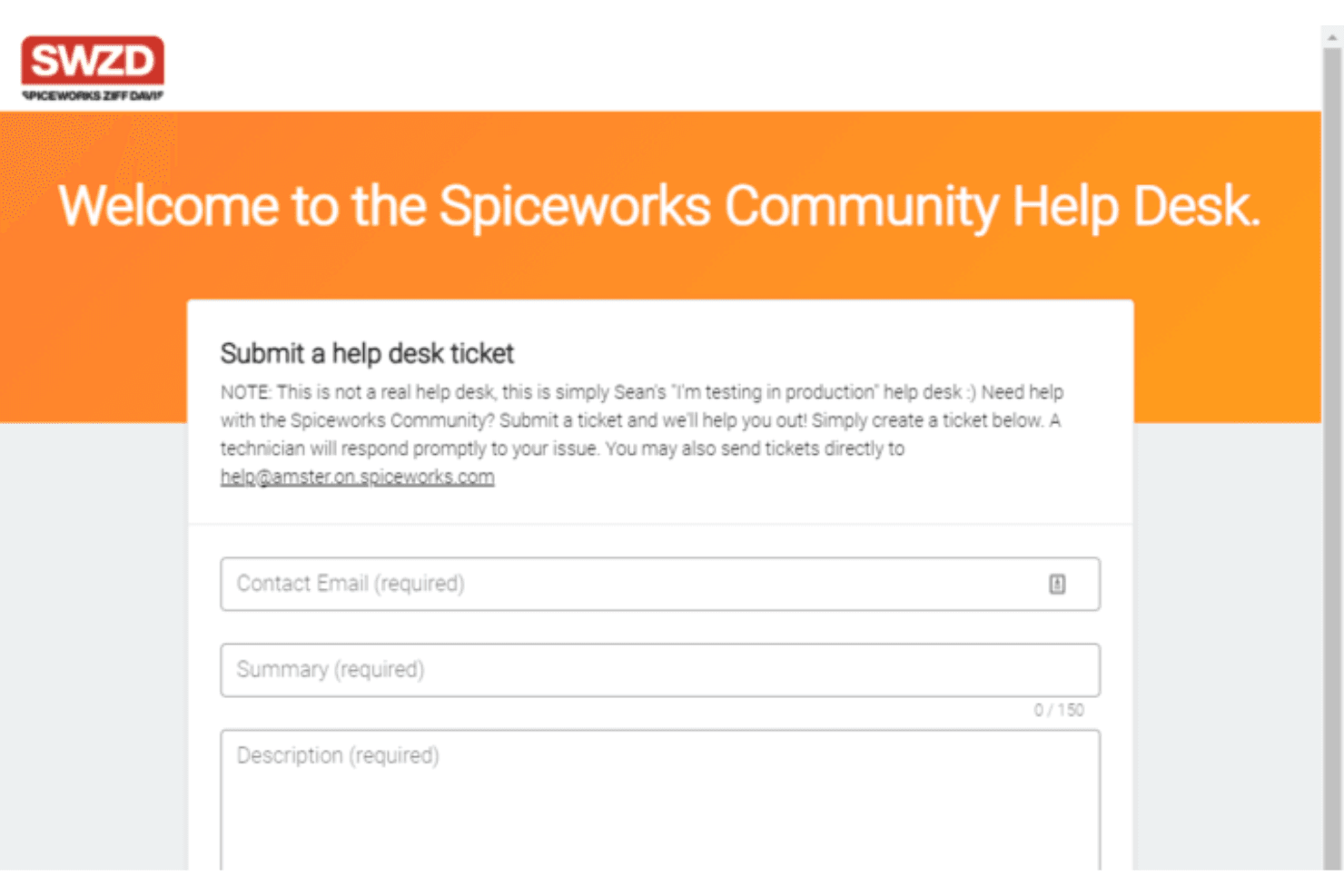
Spiceworks is generally user-friendly, but some find the interface a bit dated compared to other options. Your team will appreciate its straightforward navigation and simple setup, which makes getting started easy. However, if they're used to more modern designs, they might find it lacking. Despite this, the platform's core functionalities are accessible, allowing your team to manage tasks without a steep learning curve. For smaller teams prioritizing simplicity, Spiceworks remains an effective choice.

Onboarding
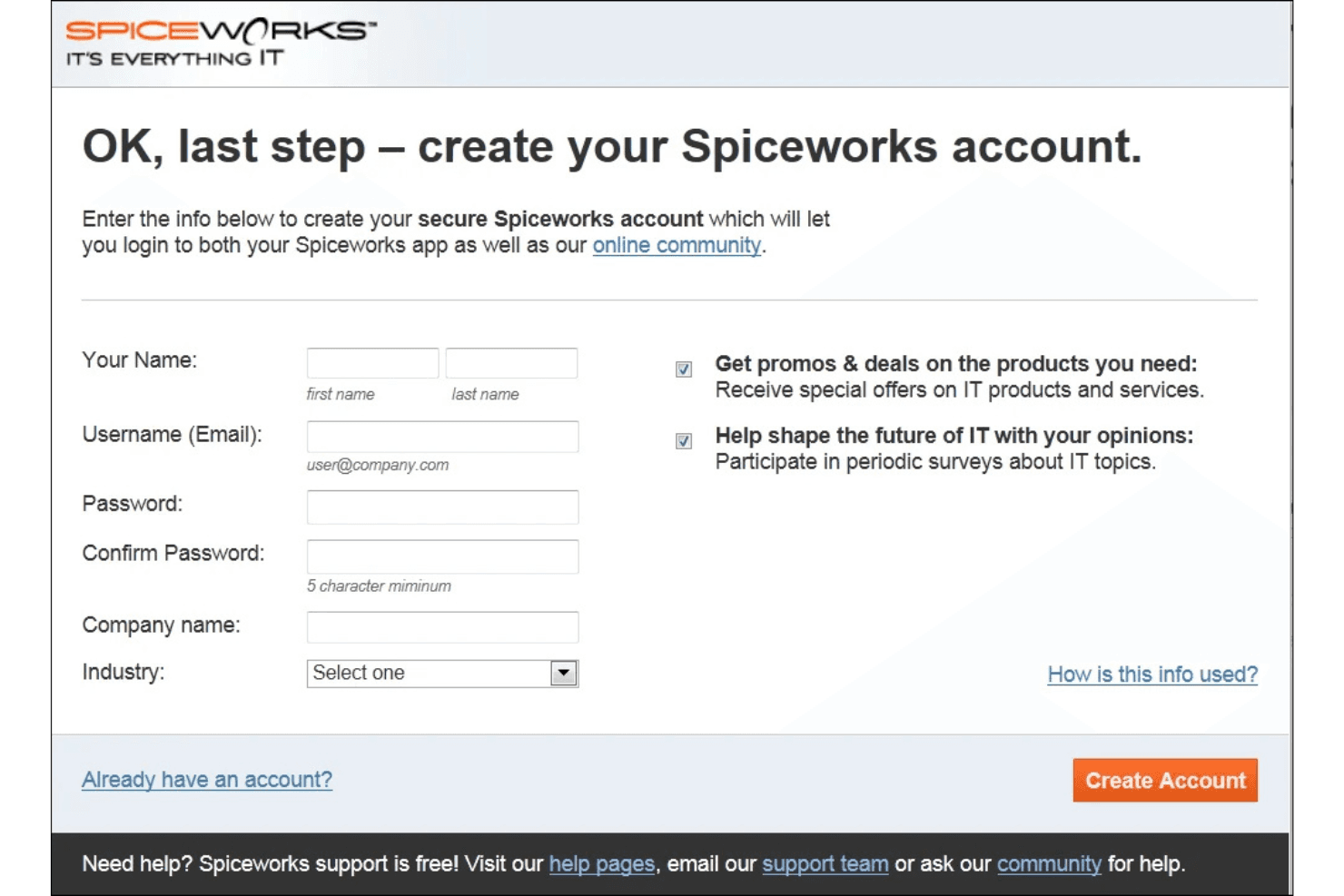
Spiceworks offers a smooth onboarding experience, making it easy for your team to get started quickly. The setup process is straightforward, and the available resources, such as tutorials and community support, help your team learn the ropes efficiently. Users often find that Spiceworks provides a quick time to value, allowing your team to begin managing support requests effectively without delay. This is particularly beneficial for smaller teams that need to hit the ground running with minimal fuss.
Customer Support
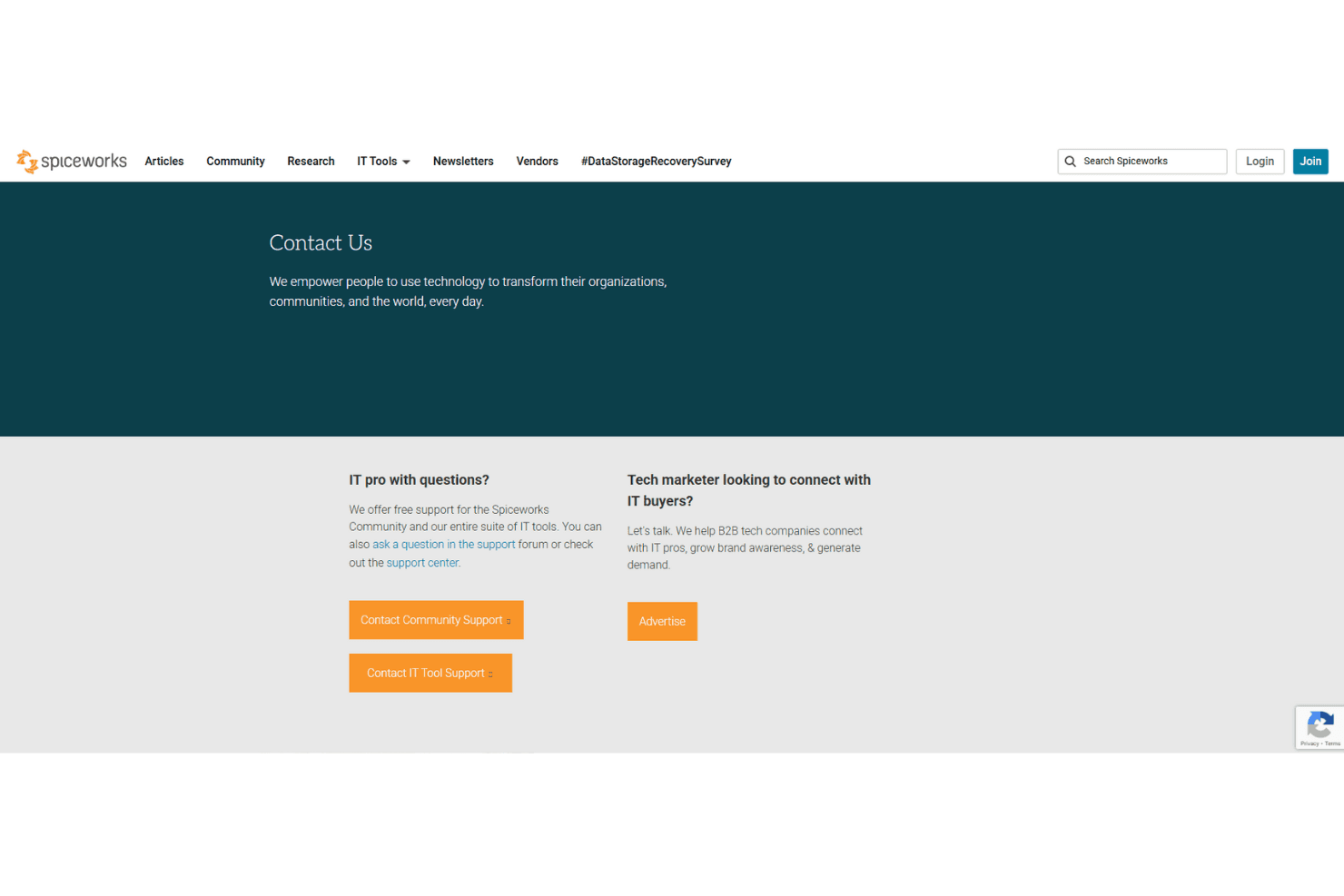
Spiceworks excels in customer support, providing your team with responsive and helpful assistance. Users appreciate the prompt responses and the knowledgeable support staff who address issues effectively. The platform also offers a vibrant community where you can exchange tips and solutions, adding another layer of support. These resources ensure your team can resolve issues quickly, keeping your operations running smoothly. This level of support makes Spiceworks a reliable choice for teams needing dependable assistance.
Integrations
Spiceworks integrates with Dropbox, Teamviewer, LogMeIn Rescue, NetFlow, OneLogin, Zabbix, Zoho, AlertOps, AlienVault, Customer Thermometer, or Cherwell Support. Spiceworks does not have a public API or third-party integration tools available for extending its functionality beyond the native integrations.

Value for Money
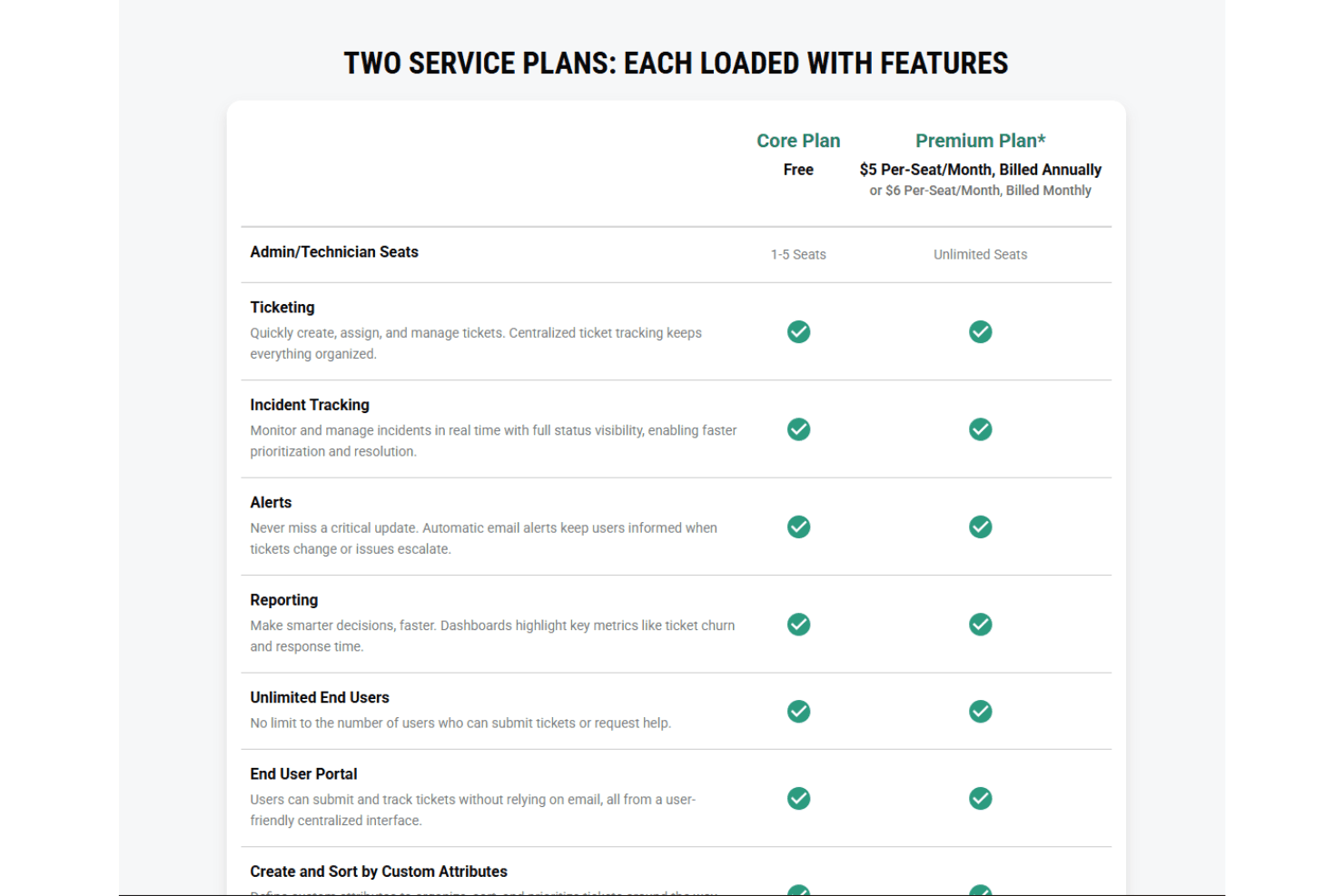
Spiceworks offers significant value as it provides a free version that includes essential help-desk ticketing and asset tracking, making it an attractive option for budget-conscious teams. Users appreciate the cost-effectiveness, noting that while the Premium plan, priced at $5 per seat per month billed annually, removes ads and adds features, the free version already covers many needs.
- Core Plan (Free): Basic help-desk ticketing, asset tracking, alerts, reporting, and unlimited end users, but contains ads.
- Premium Plan: $5 per seat per month, billed annually; removes ads and includes extra features beyond the free tier.
Spiceworks Specs
- API: No
- Bug Tracking: Yes
- CI/CD Integration: Yes
- Cloud Deployment: Yes
- Code Review: Yes
- Code Transformation: Yes
- Collaboration Support: Yes
- Data Export: Yes
- Data Import: Yes
- Developer Tools: Yes
- External Integrations: Yes
- Git Integration: Yes
- History/Version Control: Yes
- IDE Plugins: Yes
- Local Deployment: Yes
- Multi-User: Yes
- Notifications: Yes
- Project Management: Yes
- Release Management: Yes
- Static Analysis: Yes
- Task Scheduling/Tracking: Yes
- Testing: Yes
Spiceworks FAQs
Spiceworks Company Overview & History
Spiceworks, founded in January 2006, is headquartered in Austin, Texas. The company specializes in IT management software and has a significant user base of over six million IT professionals. Spiceworks collaborates with around 3,000 technology vendors and was acquired by Ziff Davis in September 2019. It generates revenue primarily through advertising and is known for hosting the annual conference, SpiceWorld.
Spiceworks Major Milestones
- 2006: Spiceworks was founded in Austin, Texas.
- 2011: Raised $25 million in a funding round.
- 2012: Opened European headquarters in London.
- 2014: Secured $57 million in funding.
- 2016: Laid off 12% of its workforce despite expansion plans.
- 2019: Acquired by Ziff Davis.