

Supermetrics Review: Pros, Cons, Features and Pricing
Supermetrics excels in providing actionable insights with its intuitive UI, making it a top choice for teams seeking efficient data management.

We review tools independently, and commissions help fund our testing. See our transparency policy, our methodology, or suggest a tool.
Supermetrics Evaluation Summary
4.4/5
- From $39/user/month (billed annually)
- Free demo + 14-day free trial
Why Trust Our Software Recommendations
6,700+
Reviews
20
Industry experts
16+
Evaluation factors
14
Years
Our team has been testing and reviewing software since 2012. As CX leaders ourselves, we know how difficult—and important—it is to choose the right software.
For this guide, we evaluated tools using hands-on testing and independent research, scoring tools using our selection criteria.
Our reviews reflect our human editorial judgment, not a sales pitch.
 Gui DrusinaCreative Director
 Tim FisherVP of AI
How We Test & Score Tools
We’ve spent years building, refining, and improving our software testing and scoring system. The rubric is designed to capture the nuances of software selection and what makes a tool effective, focusing on critical aspects of the decision-making process.
Below, you can see exactly how our testing and scoring works across seven criteria. It allows us to provide an unbiased evaluation of the software based on core functionality, standout features, ease of use, onboarding, customer support, integrations, customer reviews, and value for money.
Core Functionality (25% of final scoring)
The starting point of our evaluation is always the core functionality of the tool. Does it have the basic features and functions that a user would expect to see? Are any of those core features locked to higher-tiered pricing plans? At its core, we expect a tool to stand up against the baseline capabilities of its competitors.
Standout Features (25% of final scoring)
Next, we evaluate uncommon standout features that go above and beyond the core functionality typically found in tools of its kind. A high score reflects specialized or unique features that make the product faster, more efficient, or offer additional value to the user.
We also evaluate how easy it is to integrate with other tools typically found in the tech stack to expand the functionality and utility of the software. Tools offering plentiful native integrations, 3rd party connections, and API access to build custom integrations score best.
Ease of Use (10% of final scoring)
We consider how quick and easy it is to execute the tasks defined in the core functionality using the tool. High scoring software is well designed, intuitive to use, offers mobile apps, provides templates, and makes relatively complex tasks seem simple.
Onboarding (10% of final scoring)
We know how important rapid team adoption is for a new platform, so we evaluate how easy it is to learn and use a tool with minimal training. We evaluate how quickly a team member can get set up and start using the tool with no experience. High scoring solutions indicate little or no support is required.
Customer Support (10% of final scoring)
We review how quick and easy it is to get unstuck and find help by phone, live chat, or knowledge base. Tools and companies that provide real-time support score best, while chatbots score worst.
Customer Reviews (10% of final scoring)
Beyond our own testing and evaluation, we consider the net promoter score from current and past customers. We review their likelihood, given the option, to choose the tool again for the core functionality. A high scoring software reflects a high net promoter score from current or past customers.
Value for Money (10% of final scoring)
Lastly, in consideration of all the other criteria, we review the average price of entry level plans against the core features and consider the value of the other evaluation criteria. Software that delivers more, for less, will score higher.
Core Features
Automated Data Transfers
Schedule recurring transfers of marketing data into spreadsheets or dashboards with no manual export required. This keeps your reports up to date without extra steps.
Custom Data Mapping
Map and transform fields from multiple sources within a single pipeline. This lets you standardize metrics and dimensions even if source naming differs.
Query-Based Data Filtering
Apply detailed filters when pulling data so you only fetch what matters. Filter by campaign, platform, or custom parameters for tailored datasets.
Historical Data Retrieval
Import large volumes of historical data from connected platforms. You get a complete view for trend and performance analysis.
Data Source Monitoring
Track the status and performance of every connected data source. Get alerts if a data pull fails so you can react quickly.
Pre-Built Reporting Templates
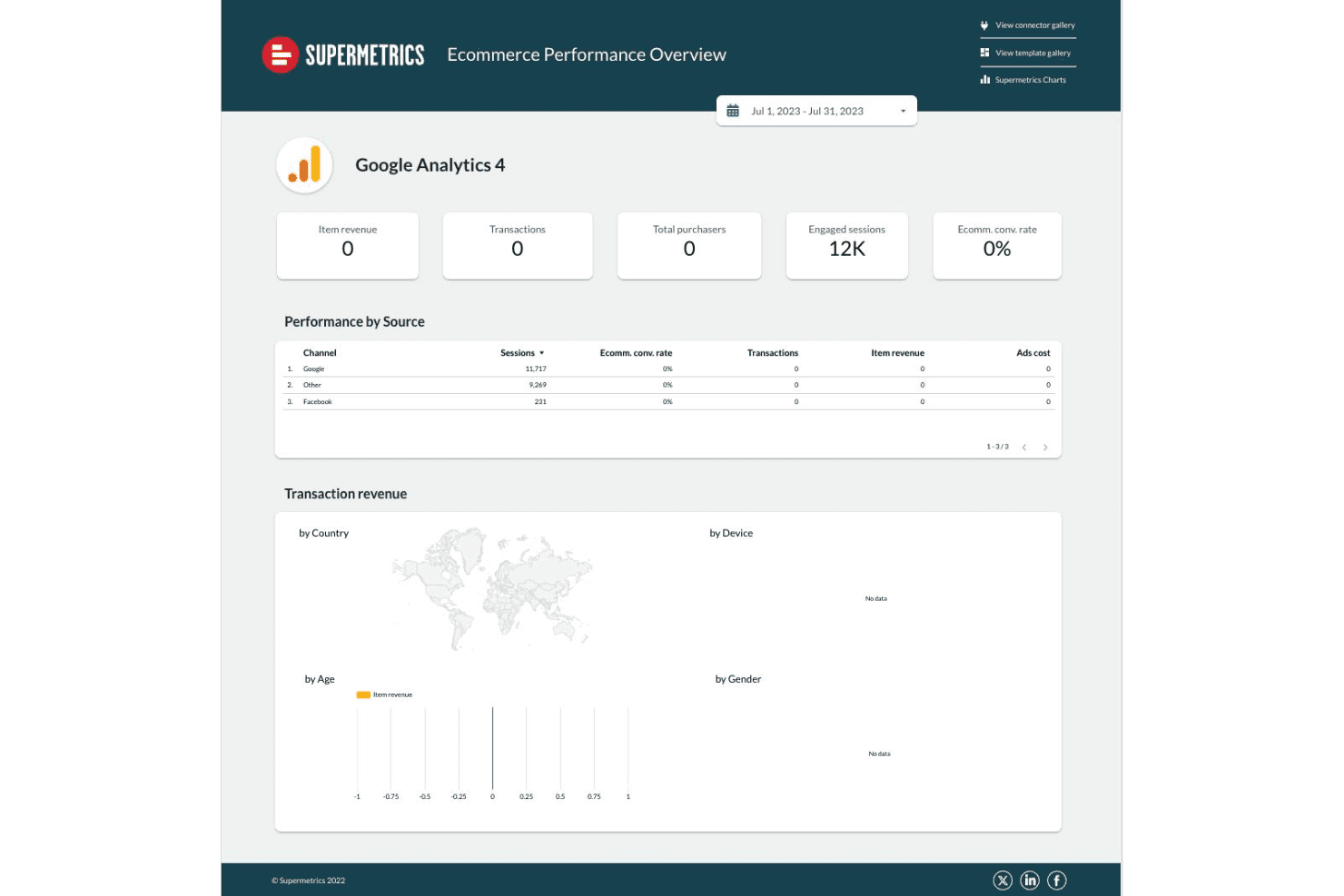
Use ready-made templates for popular marketing and analytics reports. This accelerates adoption and helps visualize data without building dashboards from scratch.

Standout Features
No-Code Data Routing
Route data from any source to your chosen storage or analytics environment with no technical setup needed. Even non-technical users can send data to BigQuery or Snowflake.
Marketing Platform Focus
Supermetrics is built specifically for marketing and advertising data connectors. This focus enables quicker setup, accurate field mapping, and seamless support for ampaign metrics.
Ease of Use
Supermetrics is user-friendly for non-technical teams, thanks to a clean interface and no-code setup for data pipelines. I think the report scheduling, template library, and step-by-step data connection guide let most users skip manual data pulls or SQL. Most user reviews agree that setup is fast and daily use requires little support.

Onboarding
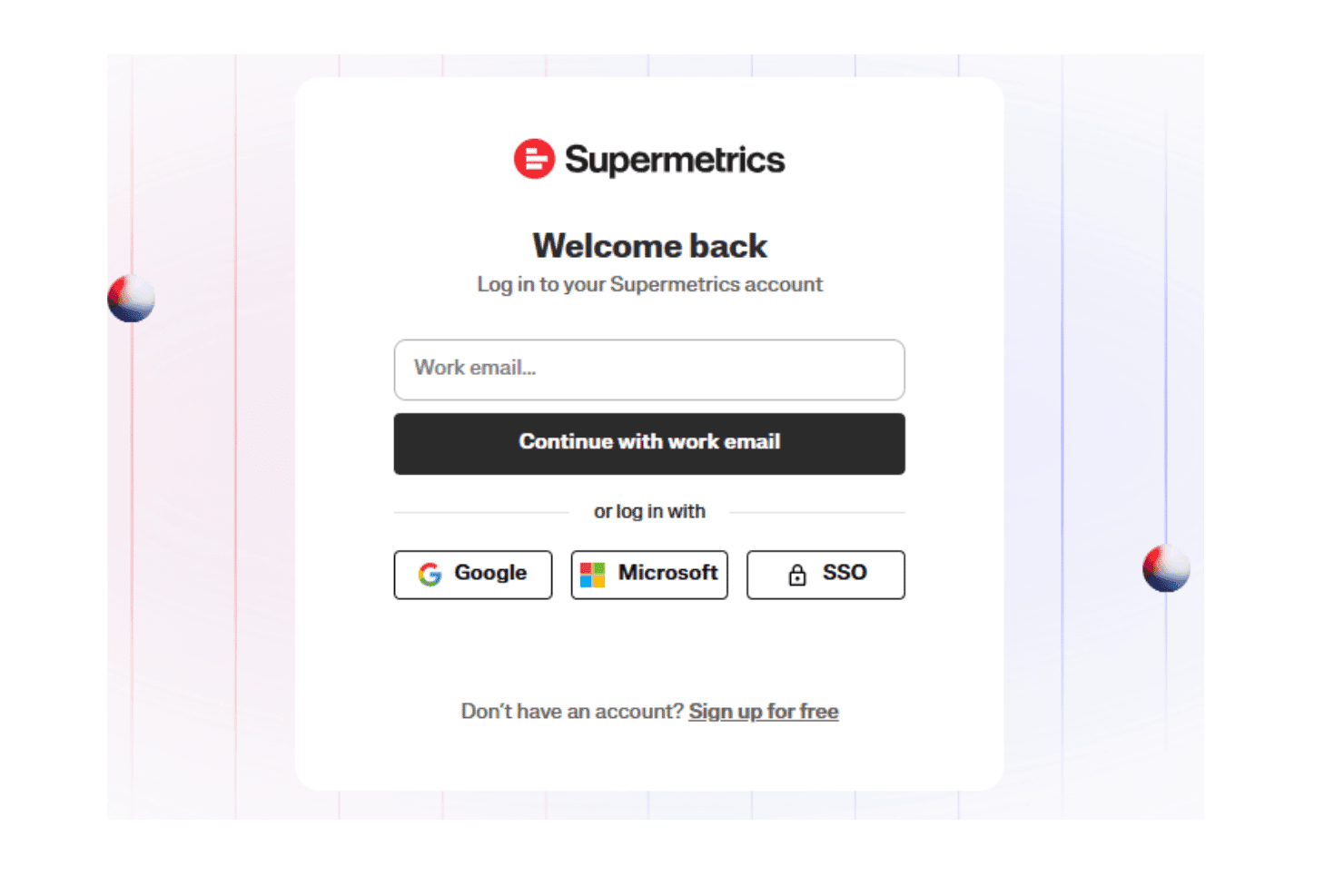
Supermetrics’s onboarding is fast and straightforward, with guided setup flows and clear documentation helping most users launch their first automated reports within minutes. New users get lots of value from live chat support, detailed knowledge base articles, and pre-built templates that remove initial confusion and shorten ramp-up time.
Customer Support
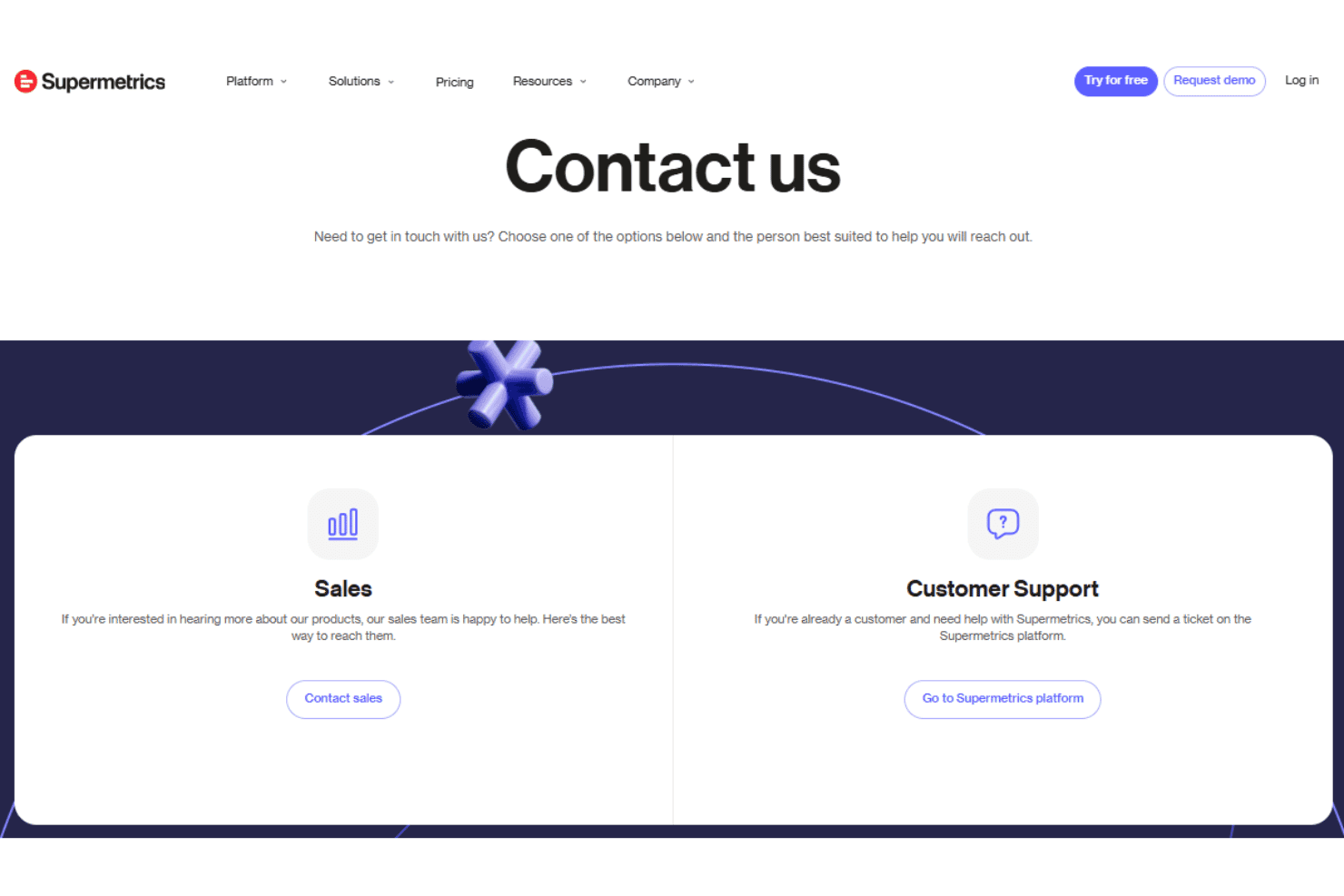
Supermetrics offers responsive live chat, email support, and a deep help center, which most users rate positively for quick, informed answers. I’ve seen support tickets get resolved within a business day, and the product’s strong self-help resources help users solve many issues on their own without waiting.
Integrations
Supermetrics integrates with Ahrefs, Marketo, Google Analytics 4, Google Ads, Facebook Ads, Shopify, and HubSpot, among many others.
Supermetrics also offers an API and connects with data warehouses and cloud storage platforms.

Value for Money
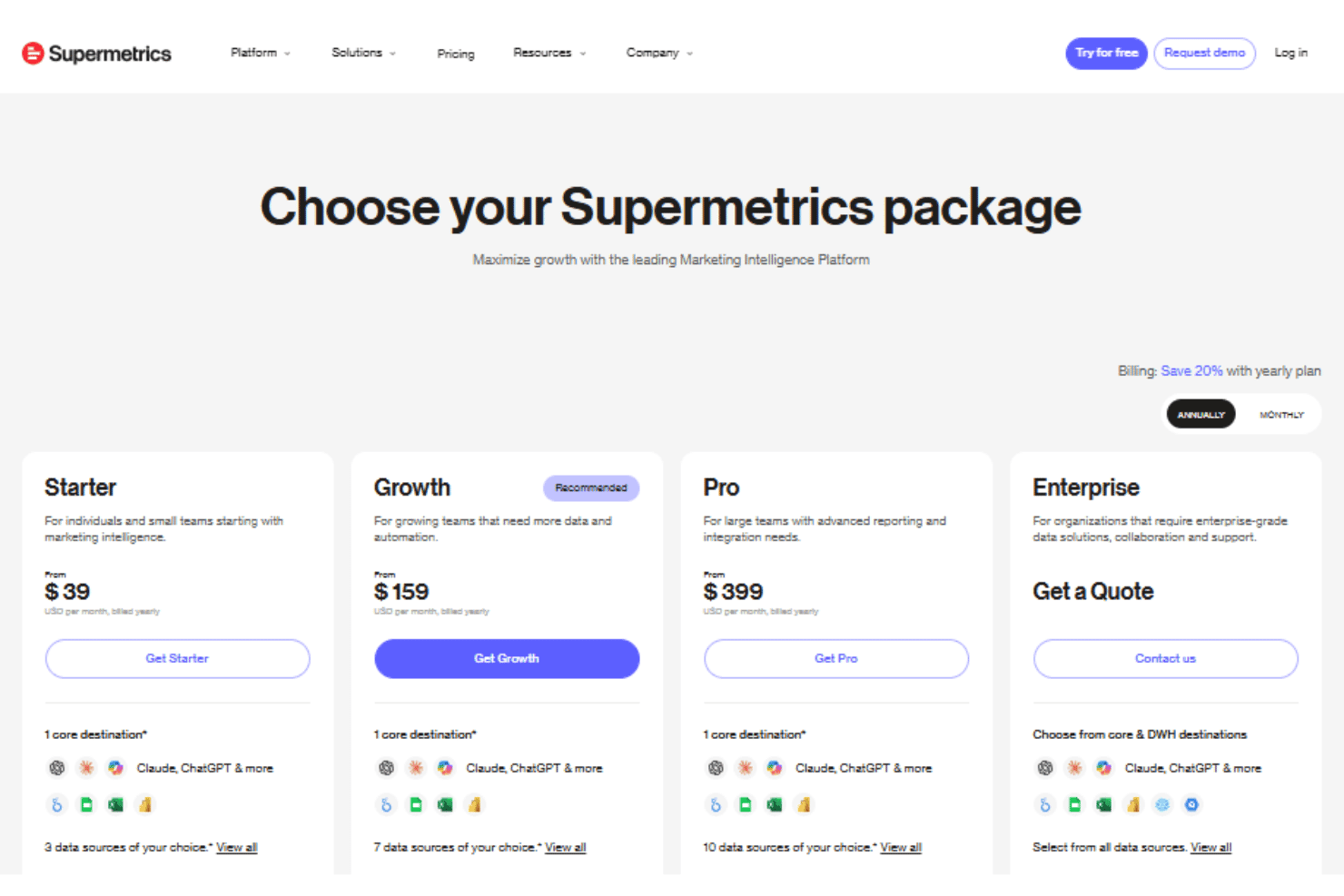
Supermetrics offers strong value for teams automating marketing data, but many users find the cost adds up fast as you add connectors or need high data limits. I think the flat-fee and per-source pricing is predictable, yet can become expensive for larger teams with diverse data needs.
- Starter: Includes one user, three accounts per data source, dashboards, and data API access.
- Growth: Adds two users, seven accounts per data source, and connections to six data sources.
- Enterprise: Offers maximum data volume, priority support, and all connectors, designed for large teams or enterprises.
Supermetrics Specs
- API: Yes
- Audience Targeting: Yes
- Brand Management: Yes
- Conversion Tracking: Yes
- Data Export: Yes
- Data Import: Yes
- External Integrations: Yes
- Keyword Tracking: Yes
- Lead Management: Yes
- Lead Scoring: Yes
- Link Tracking: Yes
- Marketing Automation: Yes
- Multi-User: Yes
- Net Promoter Score: Yes
- Notifications: Yes
- Social-Media Integration: Yes