

Sigorta müşteri etkileşimi platformları, satış, işe alım, hizmet, yenileme ve müşteri elde tutma süreçlerinde poliçe sahipleriyle gerçekleştirilen etkileşimleri koordine eder. Çözümleri karşılaştırıyorsanız doğru seçim, ekibinizin acente iş akışlarına, yaşam döngüsü mesajlaşmasına, self-servis hizmetlere veya müşteri yolculuğu orkestrasyonuna ihtiyaç duyup duymadığına bağlıdır. Bu liste, güçlü yönlerine göre 10 seçeneği karşılaştırır; böylece müşteri yolculuklarınıza, kanallarınıza ve mevcut süreçlerinize uygun platformları kısa listeye alabilirsiniz.
Why Trust Our Software Recommendations
6,700+
Reviews
20
Industry experts
16+
Evaluation factors
14
Years
Our team has been testing and reviewing software since 2012. As CX leaders ourselves, we know how difficult—and important—it is to choose the right software.
For this guide, we evaluated tools using hands-on testing and independent research, scoring tools using our selection criteria.
Our reviews reflect our human editorial judgment, not a sales pitch.
 Gui DrusinaCreative Director
 Tim FisherVP of AI
Karşılaştırma Tablosu: Sigorta Müşteri Etkileşimi Platformları
Kısa listeme giren sigorta müşteri etkileşimi platformlarının fiyatlarını ve teknik özelliklerini yan yana karşılaştırın.
Score legend (out of 5)
- Excellent4.5–5
- Good4–4.4
- Average3–3.9
- Below average2–2.9
- Poor1–1.9
Sorted by: Default
| Tool | Starting Price | Website | |||||||
|---|---|---|---|---|---|---|---|---|---|
Best for AI-driven policyholder retention | 3.3 out of 5 | 4 | 3 | 1 | 4 | 4 | 4 | Pricing upon request 14-day free trial | Website |
Best for no-code insurance lifecycle automation | 3.3 out of 5 | 3 | 4 | 2 | 3 | 4 | 4 | $15/user/month Not available | Website |
Best for WhatsApp-led policyholder lifecycle automation | 3.2 out of 5 | 4 | 1 | 4 | 4 | 2 | 4 | Pricing upon request Free demo available | Website |
Best for multi-channel insurance sales workflows | 3.3 out of 5 | 4 | 3 | 2 | 4 | 3 | 4 | Pricing upon request Free demo available | Website |
Best for AI-driven renewal and retention outreach | 3.3 out of 5 | 4 | 3 | 3 | 3 | 2 | 5 | $110/agent/month Free demo available | Website |
Best for omnichannel policyholder lifecycle messaging | Not rated | 4 | 4 | Not rated | 4 | 5 | 5 | Pricing upon request Free demo available | Website |
Best for AI-driven policyholder data unification | 3.3 out of 5 | 4 | 4 | 3 | 3 | 3 | 3 | $325/user/month 30-day free trial + free demo available | Website |
Best for AI-driven next-best-action at scale | 3.7 out of 5 | 4 | 3 | 1 | 5 | 4 | 5 | Pricing upon request Free demo available | Website |
Best for journey-led policyholder retention at scale | 4.0 out of 5 | 4 | 4 | 2 | 5 | 4 | 5 | Pricing upon request Free demo available | Website |
Best for agency book-of-business engagement | 3.7 out of 5 | 4 | 4 | 4 | 3 | 3 | 4 | $118/user/month. 14-day trial available. | Website |


Sigorta Müşteri Etkileşimi Platformu İncelemeleri
Aşağıda, kısa listeme giren en iyi sigorta müşteri etkileşimi platformlarına ilişkin ayrıntılı özetlerimi bulabilirsiniz. İncelemelerim, sizin için en uygun seçeneği bulmanıza yardımcı olmak amacıyla her platformun özelliklerine ve kullanım alanlarına ayrıntılı bir bakış sunuyor.
 Best for AI-driven policyholder retention
- 14-day free trial
- Pricing upon request
Visit WebsiteCustomer Rating:4.6/5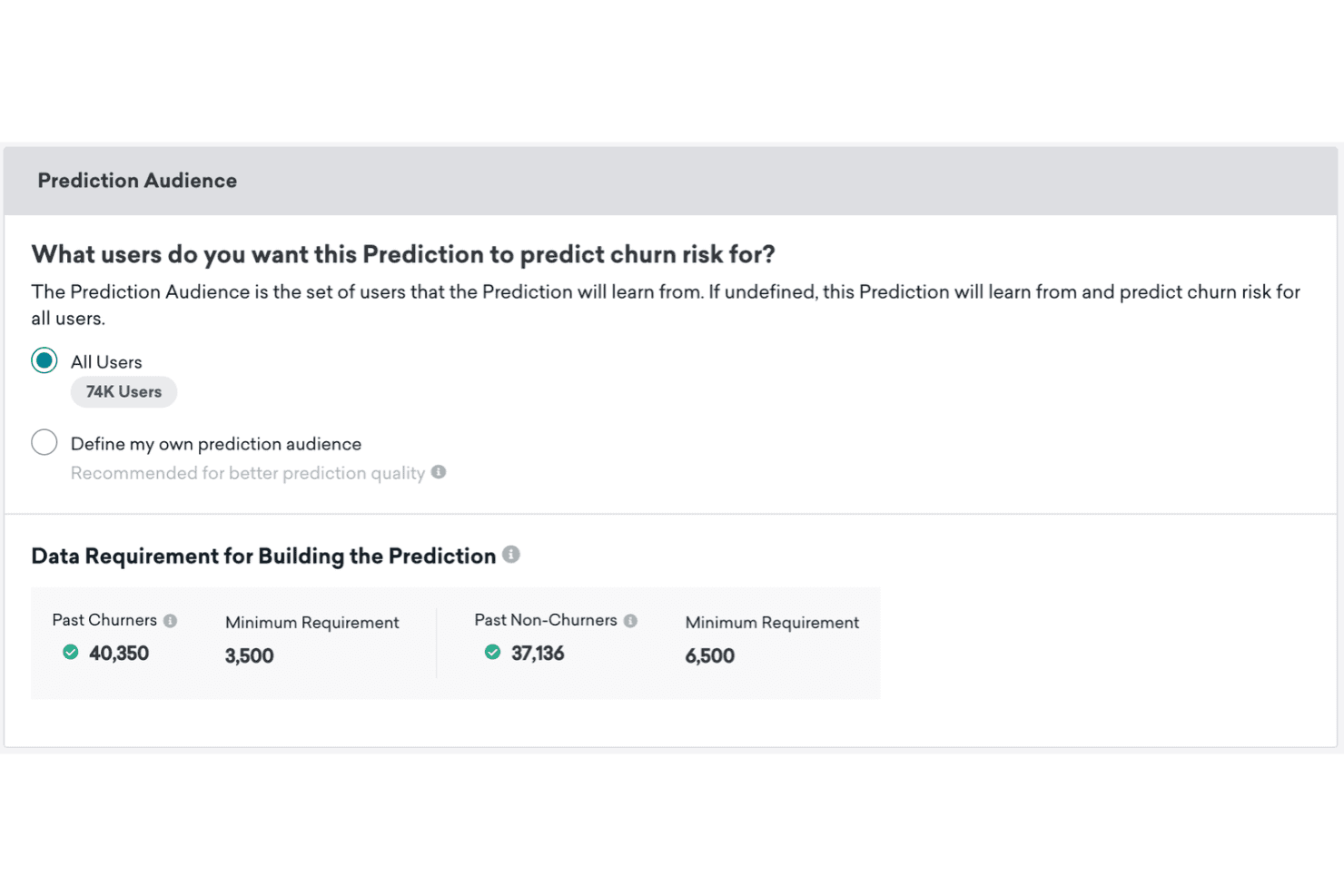
Braze predicts user churn risk using historical audience data. Braze is a cross-channel customer engagement platform that brings together omnichannel messaging, AI-driven decisioning, lifecycle journey automation, and behavioral segmentation to help insurance carriers manage policyholder communications across email, SMS, push, WhatsApp, and in-app channels.
Who Is Braze Best For?
Braze is a strong fit for insurance carriers and fintechs with dedicated marketing or CX teams that need to orchestrate personalized, multi-channel policyholder communications at scale.
Why I Picked Braze
I picked Braze because of its AI-driven approach to customer retention, particularly for insurers managing renewal and re-engagement campaigns. Decisioning Studio Pro helps teams optimize the channel, offer, timing, and frequency of outreach, while the separately purchased Predictive Churn feature identifies customers at risk of disengagement. Together, these capabilities help insurance teams target at-risk policyholders with more relevant, timely communications before they lose touch.
Braze Key Features
- Canvas journey builder: A drag-and-drop tool for building multi-step, event-triggered policyholder journeys with up to 200 steps, including API-based entry points for policy events like renewals or billing updates.
- Connected Content: Pulls live data from an external API into a message at send time, so policyholders receive up-to-date information without manual campaign updates.
- Cloud Data Ingestion (CDI): Syncs custom policyholder data from warehouses like Snowflake, BigQuery, and Redshift into Braze on a schedule as frequent as every 15 minutes.
- Frequency capping and quiet hours: Controls how often a policyholder receives messages across channels, preventing over-messaging during sensitive claim or renewal periods.
Braze Integrations
Braze documents integrations with Snowflake, BigQuery, Redshift, Databricks, Microsoft Fabric, Zendesk, Front, and Dixa. It supports REST APIs, webhooks, and SDKs for custom connections, but no Guidewire or Duck Creek integrations are documented.
Pros and Cons
Pros:
- Event-triggered journeys support renewal communications
- Cross-channel messaging includes frequency controls
- Predictive churn flags at-risk policyholders
Cons:
- No insurance-specific data model or KPIs
- No policyholder portal or claims tools
 Best for no-code insurance lifecycle automation
- Not available
- From $15/user/month
Visit WebsiteCustomer Rating:4.7/5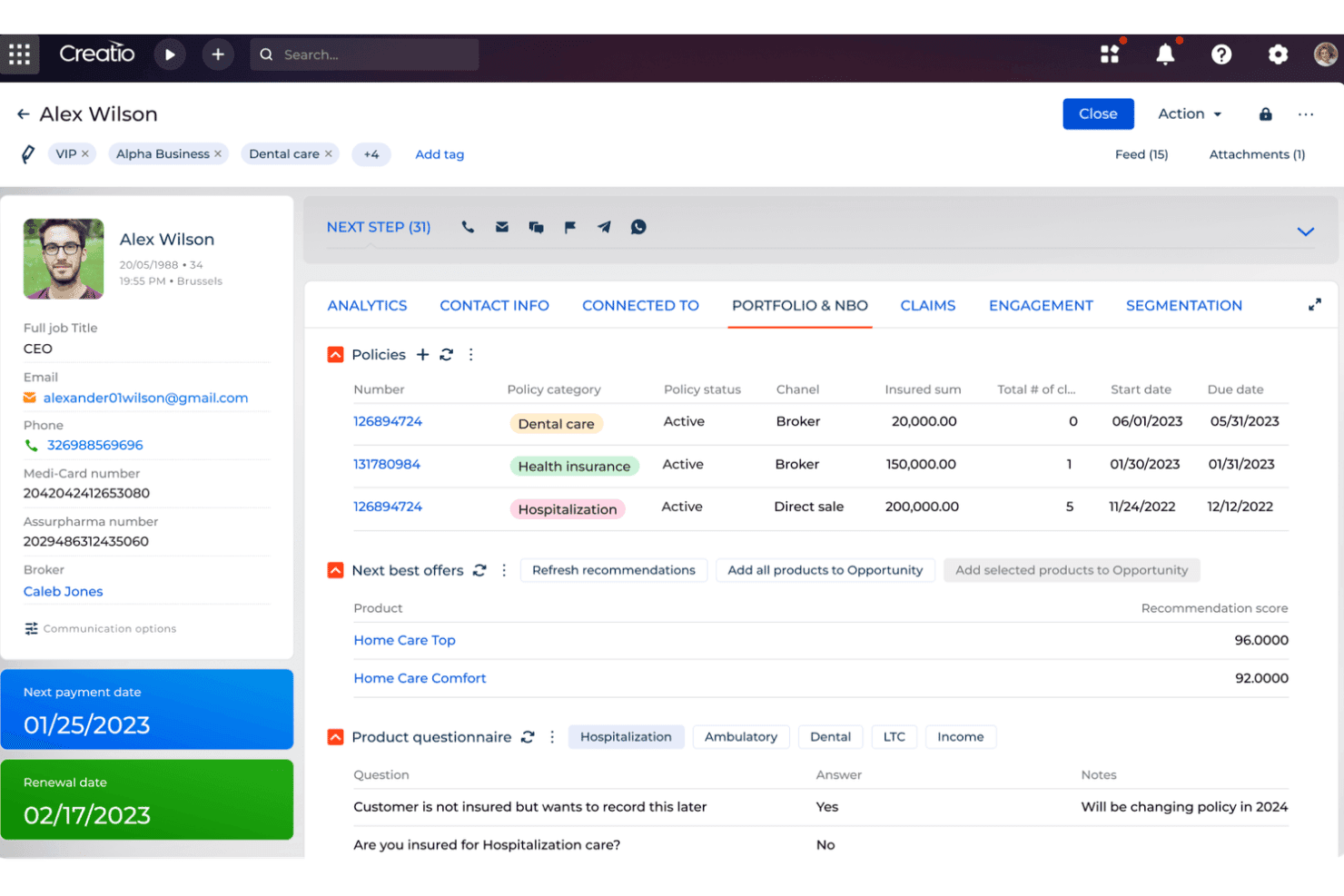
Creatio tracks customer insurance policies and product recommendations. Creatio is a no-code CRM and workflow platform that covers insurance marketing, service, policy administration, claims, and omnichannel policyholder engagement in a single configurable system.
Who Is Creatio Best For?
Creatio is a strong fit for insurers undergoing digital transformation who need a configurable, no-code platform to build custom policyholder engagement workflows rather than rely on prebuilt templates.
Why I Picked Creatio
I picked Creatio as one of the best because its no-code BPM engine lets insurance teams build custom policyholder engagement workflows without touching a line of code. I particularly like the drag-and-drop Campaign Designer, which triggers behavior-based messages across email, SMS, and digital ads based on lifecycle events like renewals or claims status changes. Pair that with dynamic customer segments that update continuously based on policyholder behavior, and you get targeted outreach that's built to your exact process rather than a generic template.
Creatio Key Features
- Customer 360 profile: Centralizes policyholder demographics, channel preferences, behavior history, and policy records in a single unified contact view with automatic duplicate merging.
- AI agent library: Includes prebuilt agents for case resolution, case classification, knowledge base queries, and next best action guidance for service and claims workflows.
- Dynamic customer segmentation: Automatically updates segments in real time based on policyholder behavior, intent signals, and lifecycle stage to support cross-sell and upsell targeting.
- Self-service policyholder portal: Lets policyholders initiate and participate in business processes, access documents, and submit cases without agent involvement.
Creatio Integrations
Creatio offers 700+ Marketplace integrations, including Facebook, LinkedIn, Google Ads, Google Analytics, and Matomo. It supports API and middleware connectivity for custom integrations; native Guidewire or Duck Creek connectors aren't documented.
Pros and Cons
Pros:
- Dynamic segments target retention campaigns
- Unified policyholder history supports service context
- Custom lifecycle workflows span policy stages
Cons:
- Renewal templates require custom configuration
- Payment self-service remains unconfirmed
Learn more about Creatio: Best for WhatsApp-led policyholder lifecycle automation
- Free demo available
- Pricing upon request
Visit WebsiteCustomer Rating:4.5/5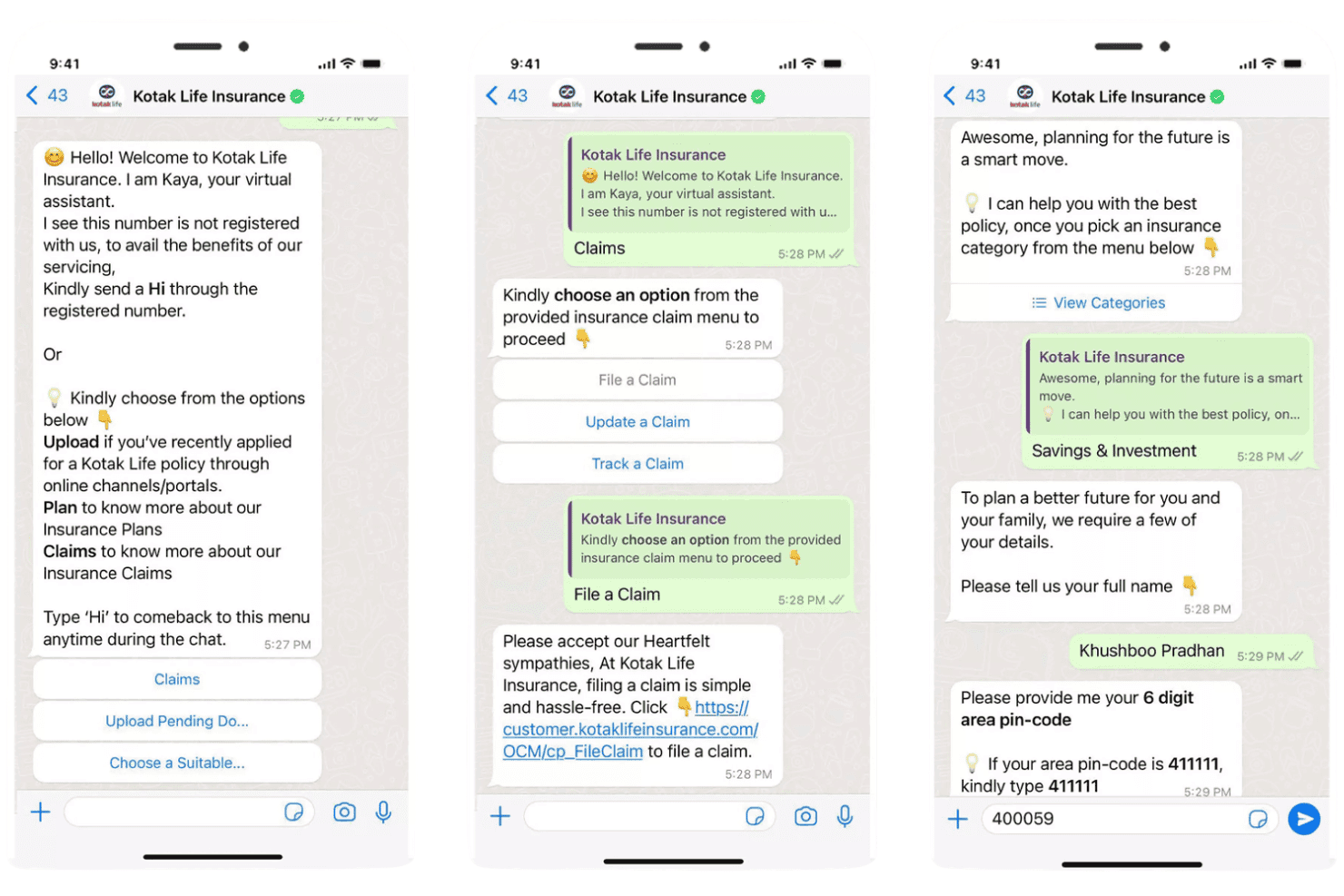
Haptik powers WhatsApp insurance chatbots for claims and policy queries. Haptik is a conversational AI platform for insurance that combines chat and voice AI agents, a WhatsApp campaign tool, and an omnichannel agent inbox to manage policyholder interactions across buying, renewals, claims, and support.
Who Is Haptik Best For?
Haptik is a strong fit for insurance carriers that run high-volume policyholder engagement through WhatsApp and voice, particularly those operating in markets where messaging-led service is the primary digital channel.
Why I Picked Haptik
I picked Haptik as one of the best because of how far it takes WhatsApp as a policyholder engagement channel. Interakt, Haptik’s separate WhatsApp messaging and campaign automation product, triggers event-based renewal reminders and payment completions directly inside a WhatsApp thread, while outbound voice campaigns kick in automatically when a missed-payment flag fires. I also like that Haptik runs coordinated cross-channel sequences: a WhatsApp nudge goes first, and a voice call follows based on how the policyholder responded.
Haptik Key Features
- AI agent builder studio: A no-code/low-code builder for creating conversation flows and AI agents deployable across chat, voice, and WhatsApp from a single build.
- Omnichannel agent inbox: A shared inbox where human agents can pick up policyholder conversations from any channel, with AI co-pilot tools including sentiment detection, suggested replies, and SLA management.
- Conversational self-service workflows: 100+ pre-built conversation flows covering claims submission, policy status, payment scheduling, beneficiary changes, and document requests.
- Engagement performance dashboards: Custom dashboards tracking CSAT, NPS, first-contact resolution, campaign open and click-through rates, and agent SLA performance, with export to Tableau and Power BI.
Haptik Integrations
Haptik documents 100+ out-of-the-box integrations, including Salesforce, Zendesk, Genesys, NICE CXone, Zoho SalesIQ, Freshdesk, HubSpot, PayU, Razorpay, and Stripe. REST APIs and webhooks support custom connections to policy administration, CRM, and claims systems.
Pros and Cons
Pros:
- Tracks campaign and agent outcomes in dashboards
- Recognizes policyholder intents across claims and payments
- Coordinates WhatsApp renewal nudges with voice follow-ups
Cons:
- Offers no email campaign channel
- Full policy records require external system integration
Learn more about Haptik: Best for multi-channel insurance sales workflows
- Free demo available
- Pricing upon request
Visit WebsiteCustomer Rating:4.4/5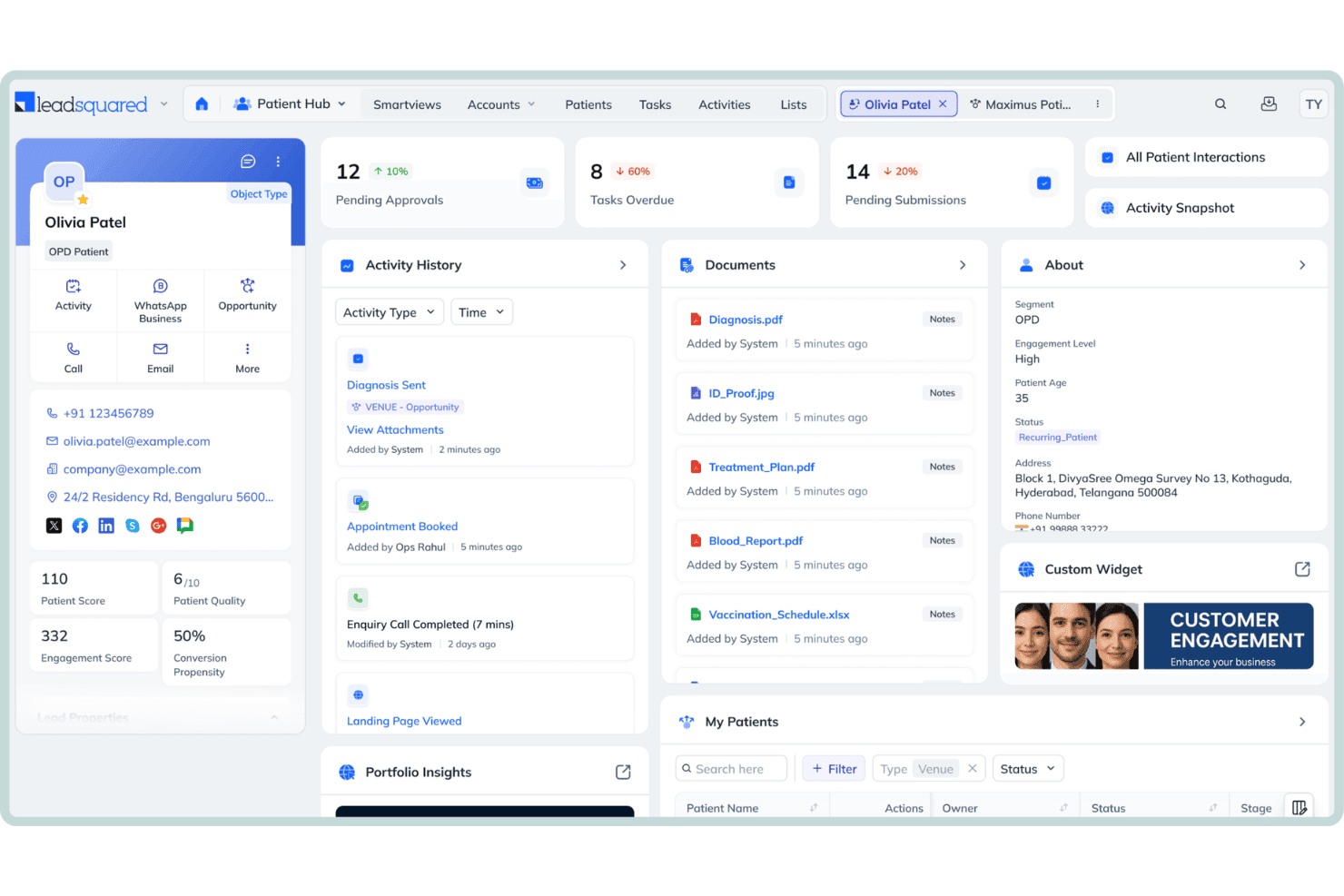
LeadSquared records calls, emails, WhatsApp interactions, and follow-ups. LeadSquared is a CRM and marketing automation platform built for high-volume insurance sales that combines omnichannel outreach, lead management, automated lifecycle workflows, and a service desk across agency, broker, bancassurance, and direct distribution channels.
Who Is LeadSquared Best For?
LeadSquared is a strong fit for insurance organizations running high-volume sales across multiple distribution channels, such as agencies, brokers, bancassurance, and call centers.
Why I Picked LeadSquared
I picked LeadSquared because it helps insurance companies manage sales across agencies, brokers, bancassurance, and call centers. Its Converse workspace brings WhatsApp and supported SMS conversations into the CRM, allowing agents to review messages alongside each lead's history. I also like its visual automation builder, which lets teams route leads, schedule follow-ups, and trigger policy renewal reminders without writing code.
LeadSquared Key Features
- 360° customer view: Combines contact, sales, marketing, and support interaction data into a single lead record so agents have full context before responding.
- AI chatbot builder: A no-code bot builder supports menu-driven, FAQ, and document-based chatbot types across WhatsApp, web, and mobile SDK channels.
- Lead scoring and distribution: Scores leads based on quality and engagement, then routes them automatically using configurable distribution rules across agents, brokers, or channels.
- Engagement performance reporting: Tracks email, WhatsApp, chatbot, and automation performance through customizable reports, dashboards, and a built-in report scheduler.
LeadSquared Integrations
LeadSquared integrations include WhatsApp Cloud API, WATI, Gupshup, Kaleyra, Gmail, Outlook, Ameyo, CallTrackingMetrics, Google Ads, and Acuity Scheduling. Open REST APIs and LAPPS support custom connections to policy administration, claims, and billing systems.
Pros and Cons
Pros:
- Reviewers praise lead tracking and reporting
- Automations support renewal and quote workflows
- Handles multi-channel insurance lead routing
Cons:
- Large datasets can slow CRM performance
- Customer 360 requires separately paid features
Learn more about LeadSquared: Best for AI-driven renewal and retention outreach
- Free demo available
- From $110/agent/month (proactive AI extra)
Visit WebsiteCustomer Rating:4.3/5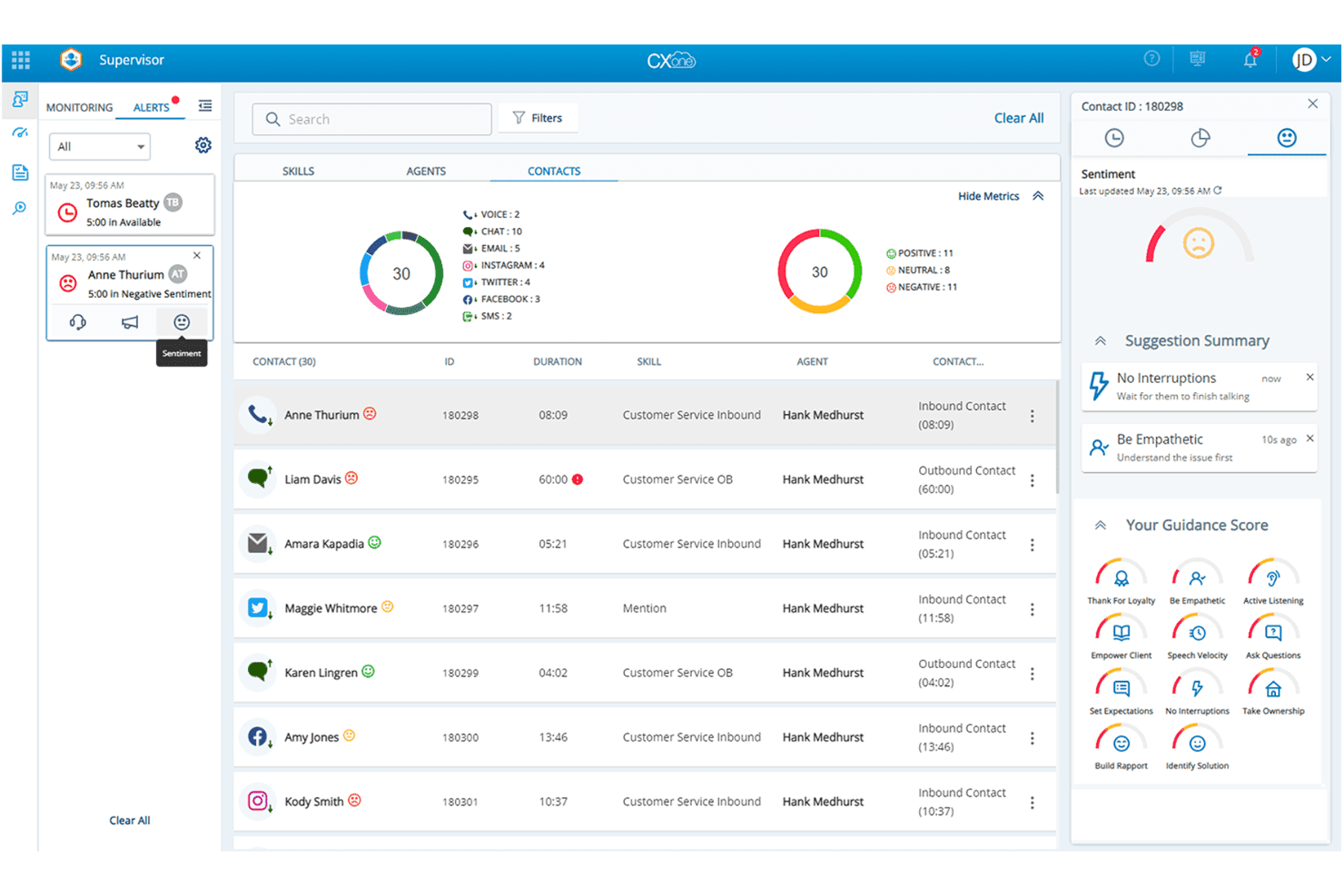
NICE CXone lets supervisors monitor agent sentiment and contacts in real time. NiCE CXone is a cloud-based contact center platform that combines omnichannel routing, AI-driven outbound engagement, self-service automation, and interaction analytics to manage policyholder communications across voice, chat, SMS, email, and messaging apps.
Who Is NiCE CXone Best For?
NiCE CXone is a strong fit for mid-market and enterprise insurers running high-volume contact centers who need AI-driven outbound renewal and retention outreach across voice, SMS, and digital channels.
Why I Picked NiCE CXone
I picked NiCE CXone as one of the best because its proactive AI agents are purpose-built to catch policyholders before they lapse, not just respond after they call in. The agents monitor CRM and billing events in real time, then trigger personalized renewal conversations across voice, SMS, or WhatsApp based on each policyholder's profile and risk history. NiCE publishes a concrete result from this: cancellation rates dropped from 14% to 6%, with over 90% of those conversations fully automated.
NiCE CXone Key Features
- Omnichannel routing: Directs policyholder interactions across voice, chat, email, SMS, WhatsApp, and 30+ digital channels to the right agent or AI agent in a single console.
- Agent Workspace Advanced: Gives agents a unified view of customer profiles, cross-channel interaction history, and click-to-contact options from one desktop interface.
- Interaction analytics: Analyzes recorded voice and digital conversations to surface sentiment trends, compliance gaps, and quality insights across policyholder interactions.
- No-code AI Studio: Lets operations teams build and deploy AI agents from plain-language prompts without writing code.
NiCE CXone Integrations
NiCE CXone offers 200+ pre-built integrations, including Salesforce, Microsoft Dynamics, ServiceNow, Zendesk, and Pega, plus connections to policy administration and claims systems. REST APIs, SDKs, Connection Hubs, Snowflake, Kafka, and Kinesis support custom connectivity.
Pros and Cons
Pros:
- Users value real-time performance reporting
- Reviewers praise unified channel handling
- Proactive AI agents target at-risk renewals
Cons:
- Reviewers report call drops and lag
- Policy and claims records rely on core-system integrations
Learn more about NiCE CXone: Best for omnichannel policyholder lifecycle messaging
- Free demo available
- Pricing upon request
Visit WebsiteCustomer Rating:4.5/5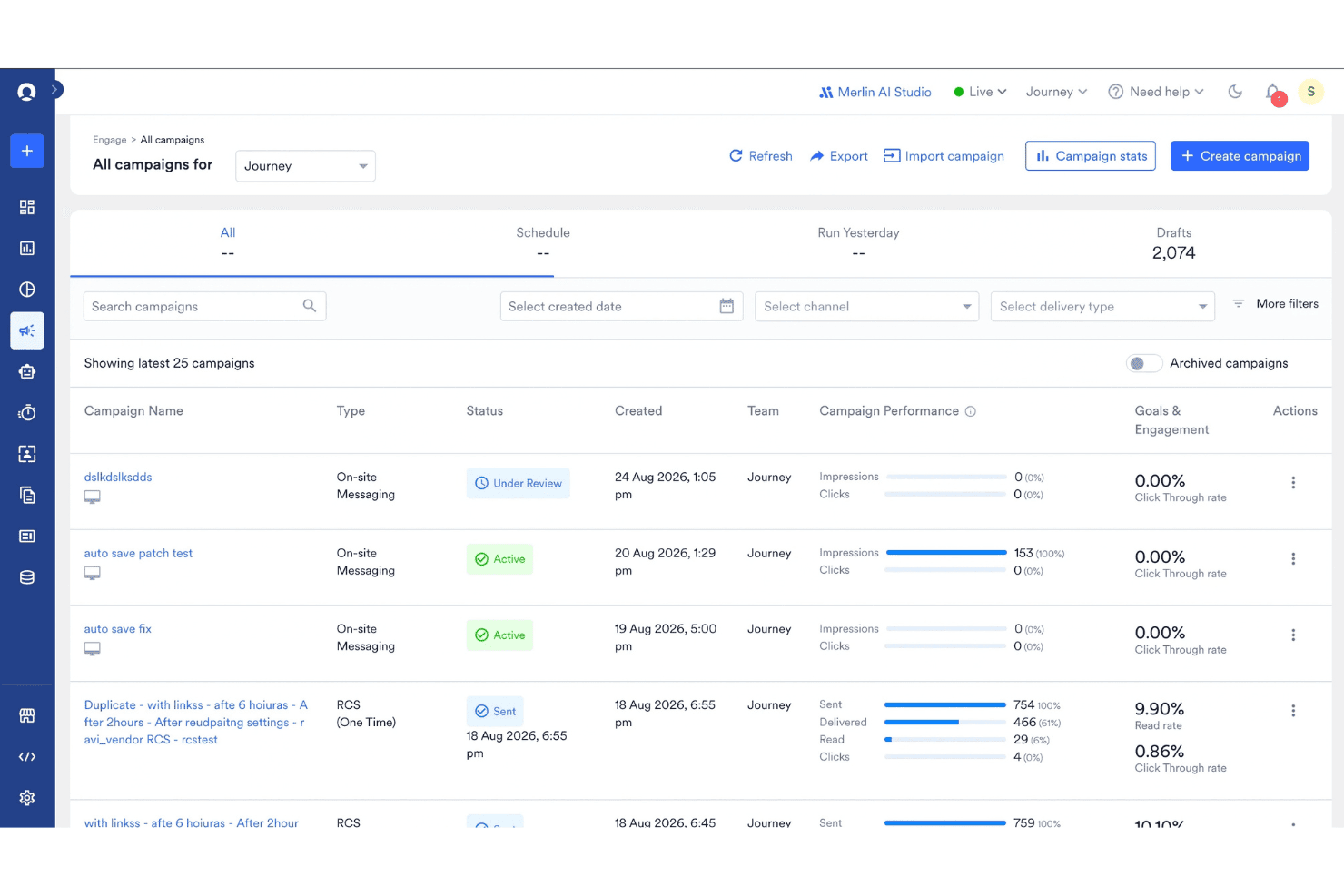
MoEngage lets users monitor all campaign performance from one dashboard. MoEngage is an omnichannel customer engagement platform that combines lifecycle journey automation, AI-driven segmentation, unified policyholder profiles, and cross-channel messaging across email, SMS, push, WhatsApp, and 12+ additional channels.
Who Is MoEngage Best For?
MoEngage is a strong fit for insurance marketing and CX teams that run high-volume, multi-channel policyholder engagement across email, SMS, push, and WhatsApp.
Why I Picked MoEngage
I picked MoEngage because it helps insurance teams coordinate lifecycle messaging across multiple channels. Its MoEngage Inform add-on supports transactional alerts through 30+ service providers, with automatic fallback when a delivery channel fails. I also like its Flows journey builder, which can trigger renewal reminders based on policy expiry dates and guide policyholders toward payment or renewal steps.
MoEngage Key Features
- Dynamic segmentation: Build and update audience segments in real time using behavioral data, RFM scores, policy attributes, and warehouse data synced from Snowflake, Databricks, or BigQuery.
- Merlin AI predictions (add-on): Uses predictive models to identify customers at risk of churn, dormancy, or app uninstall and helps teams target them with re-engagement campaigns.
- Unified policyholder profiles: Combine app behavior, web activity, offline policy data, and CRM records into a single profile per customer, including deduplication across changed contact details.
- Campaign performance analytics: Track delivery rates, CTR, conversions, and funnel drop-offs with control groups and attribution models across every channel in one reporting view.
MoEngage Integrations
MoEngage's app marketplace includes integrations with Salesforce, Microsoft Dynamics 365, Snowflake, Databricks, BigQuery, Amazon S3, Twilio Segment, Power BI, and Tableau. Custom connections can use APIs, SFTP, warehouse syncs, or Zapier.
Pros and Cons
Pros:
- Unifies offline and digital policyholder profiles
- Builds renewal journeys linked to payment screens
- Coordinates 16+ channels with transactional fallback
Cons:
- Policy and claims data require custom event modeling
- No built-in policyholder self-service or claims tools
Learn more about MoEngage: Best for AI-driven policyholder data unification
- 30-day free trial + free demo available
- From $325/user/month (billed annually)
Visit WebsiteCustomer Rating:4.3/5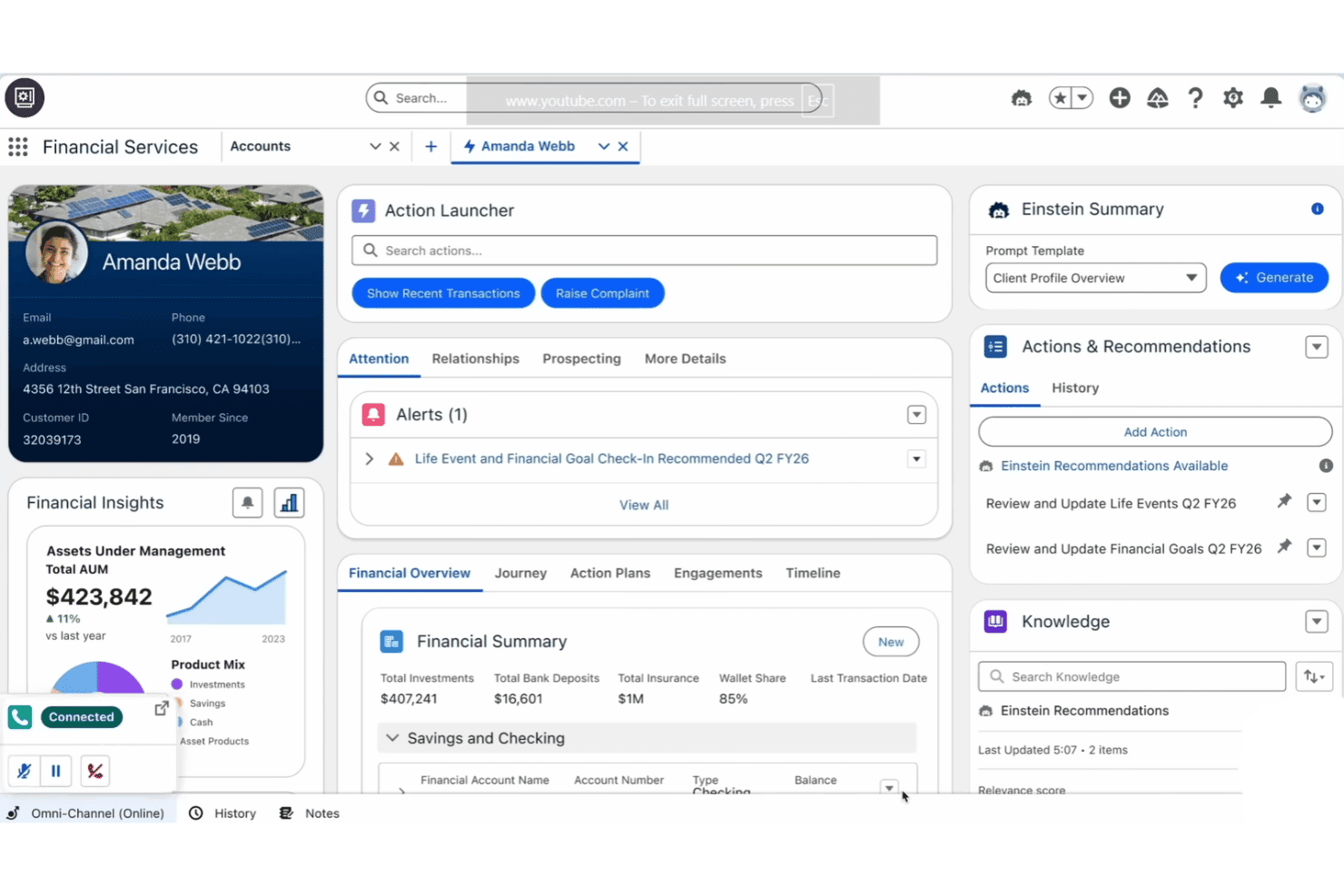
Salesforce Financial Services Cloud tracks client financial data and AI insights. Salesforce Financial Services Cloud is an insurance CRM platform that unifies policyholder data, automates policy and claims lifecycle workflows, and supports omnichannel service across web, mobile, contact center, and chat.
Who Is Salesforce Financial Services Cloud Best For?
It's a strong fit for enterprise insurers and large brokerages that need a single, AI-enriched view of every policyholder across complex, multi-line operations.
Why I Picked Salesforce Financial Services Cloud
I picked Salesforce Financial Services Cloud as one of the best because its AI-driven policyholder data unification is genuinely best-in-class. The Insurance Service Console pulls policy history, claims activity, and interaction records into a single profile, with a secure data framework that surfaces records from external core systems without copying them into Salesforce. Agentforce AI then layers on top of that unified data, flagging churn risk and summarizing policy details mid-call to cut hold times.
Salesforce Financial Services Cloud Key Features
- Service Process Studio: A low-code workflow builder with a prebuilt library of financial services processes for automating policy changes, cancellations, and claims handling.
- Action Plans: Repeatable task templates that guide agents through regulated, multi-step service processes like renewals or FNOL intake.
- Agentforce AI chatbots: Insurance-specific AI agents that handle routine policyholder questions and claims inquiries, then hand off to a human agent when needed.
- Data 360 segmentation: With Salesforce Data 360, teams can combine policy, claims, and behavioral data to create audiences for cross-sell, upsell, and retention campaigns. Data 360 requires separate licensing and may incur additional usage costs.
Salesforce Financial Services Cloud Integrations
Salesforce Financial Services Cloud integrates with Guidewire, Snowflake, Databricks, Slack, and Tableau. MuleSoft Anypoint and open APIs support custom connections to core insurance systems.
Pros and Cons
Pros:
- AI summarizes policies and flags churn
- Action Plans guide regulated claims workflows
- Unified policyholder profiles surface interaction history
Cons:
- Initial setup can demand substantial resources
- Campaign journeys require separate products
Learn more about Salesforce Financial Services Cloud: Best for AI-driven next-best-action at scale
- Free demo available
- Pricing upon request
Visit WebsiteCustomer Rating:4.4/5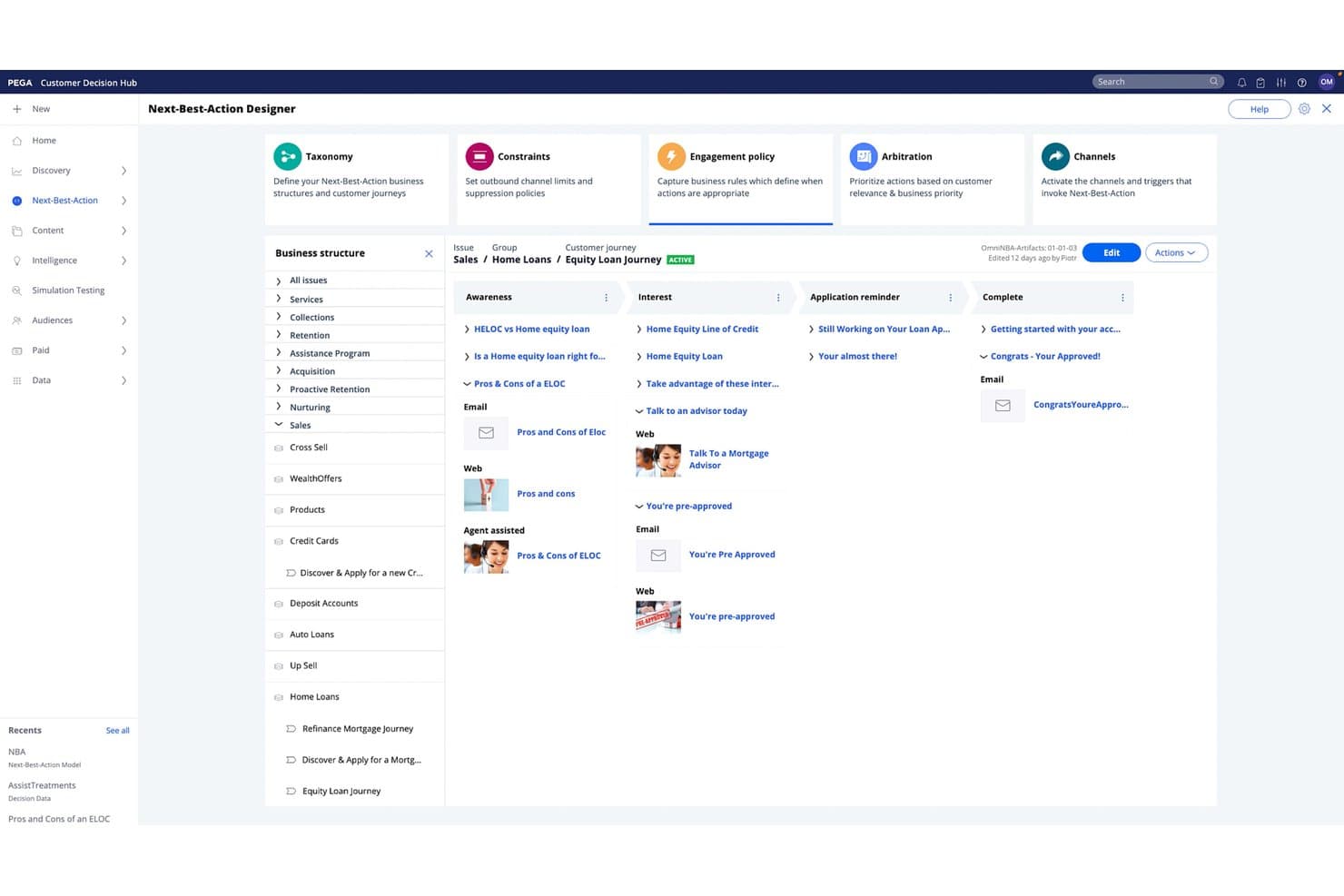
Pega Customer Decision Hub maps personalized customer journeys across channels. Pega Customer Decision Hub is a real-time AI decisioning engine that orchestrates next-best-action recommendations across 20+ channels, including email, SMS, web, mobile, and contact center, using predictive and adaptive models to drive policyholder engagement across the full policy lifecycle.
Who Is Pega Customer Decision Hub Best For?
Pega Customer Decision Hub is built for large insurers with dedicated marketing and technology teams who need AI-driven decisioning across multiple channels at scale.
Why I Picked Pega Customer Decision Hub
Pega Customer Decision Hub earns its spot on my shortlist because no other tool I've evaluated matches its ability to orchestrate AI-driven next-best-action decisions across 20-plus channels at true enterprise scale. I'm particularly impressed by its Next-Best-Action Designer, which lets marketing teams build and adjust offer libraries without involving IT, and its adaptive models that continuously learn from policyholder behavior to replace static, calendar-driven campaigns with real-time, event-triggered outreach tied to policy and claims milestones.
Pega Customer Decision Hub Key Features
- Impact Analyzer: A built-in A/B testing tool that measures the effect of next-best-action strategies across channels before and after deployment.
- Value Finder: Identifies underserved customer segments to surface engagement opportunities your current strategies may be missing.
- Scenario Planner: Simulates how strategy changes will perform so you can model outcomes before making them live.
- 1:1 Operations Manager: A business-user tool for monitoring and adjusting individual-level engagement strategies without IT involvement.
Pega Customer Decision Hub Integrations
Pega Customer Decision Hub integrates with Pega Customer Service for Insurance, Pega Platform, Pega Cloud, Pega Sales Automation, and Pega Blueprint. Guidewire and Duck Creek connectivity is available through a partner solution, not a documented native connector.
Pros and Cons
Pros:
- Shared recommendations guide agents and digital channels
- NBA Designer supports marketer-built retention offers
- Real-time decisions trigger policyholder outreach
Cons:
- Implementation demands specialist skills and governance
- Portal self-service requires separate Pega products
Learn more about Pega Customer Decision Hub:
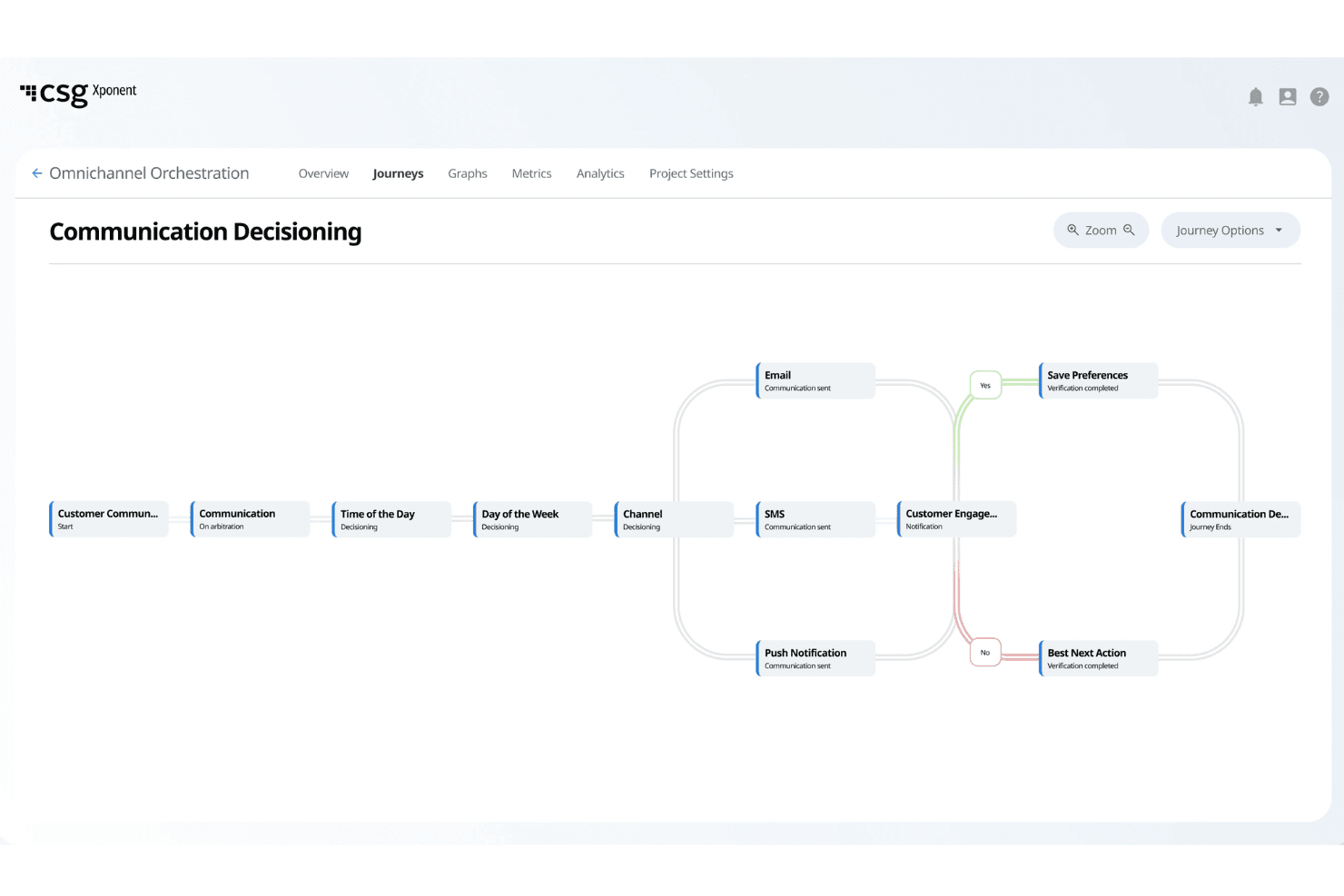
CSG maps omnichannel customer journeys across email, SMS, and push. CSG Xponent is a customer engagement platform built for insurers that combines journey orchestration, real-time policyholder profiles, omnichannel communication management, AI-driven decisioning, and journey analytics.
Who Is CSG Best For?
CSG Xponent is a strong fit for large insurers that need to coordinate policyholder outreach across a high volume of channels and lifecycle events from a single platform.
Why I Picked CSG
I've included CSG Xponent because it helps large insurance companies coordinate outreach across multiple policyholder touchpoints. Its journey orchestration layer can trigger communications around renewals, claims milestones, and lapse signals, while real-time decisioning helps determine the next best action. Separately, CSG reports that its work with a P&C insurer supported more than 30 targeted outbound campaigns and an estimated $70–100M in annual retained revenue.
CSG Key Features
- Dynamic customer profiles: Real-time policyholder profiles pull in CRM, billing, service, and behavioral data, updating automatically with each interaction.
- AI agent builder: Build task-specific AI agents for payment recovery and proactive retention, with automatic human handoff and full action logging.
- Consent and preference management: Track and enforce channel preferences, communication consent, and suppression rules across every active journey.
- Print and mail orchestration: Coordinates printed notices with digital communications. CSG's print-and-mail services support postal tracking and QR codes that direct policyholders to online portals or payment flows.
CSG Integrations
CSG Xponent has 150+ native connectors, including Salesforce, Adobe, and Twilio, plus billing and contact center tools. Open APIs support connections to policy administration, billing, and claims systems.
Pros and Cons
Pros:
- Reviewers praise responsive account support
- One decisioning layer coordinates print and digital
- Claims and renewal events trigger timely outreach
Cons:
- Reviewers report data inaccuracies and call failures
- No documented claims filing or policy-change portal
Learn more about CSG: Best for agency book-of-business engagement
- 14-day trial available.
- From $118/user/month.
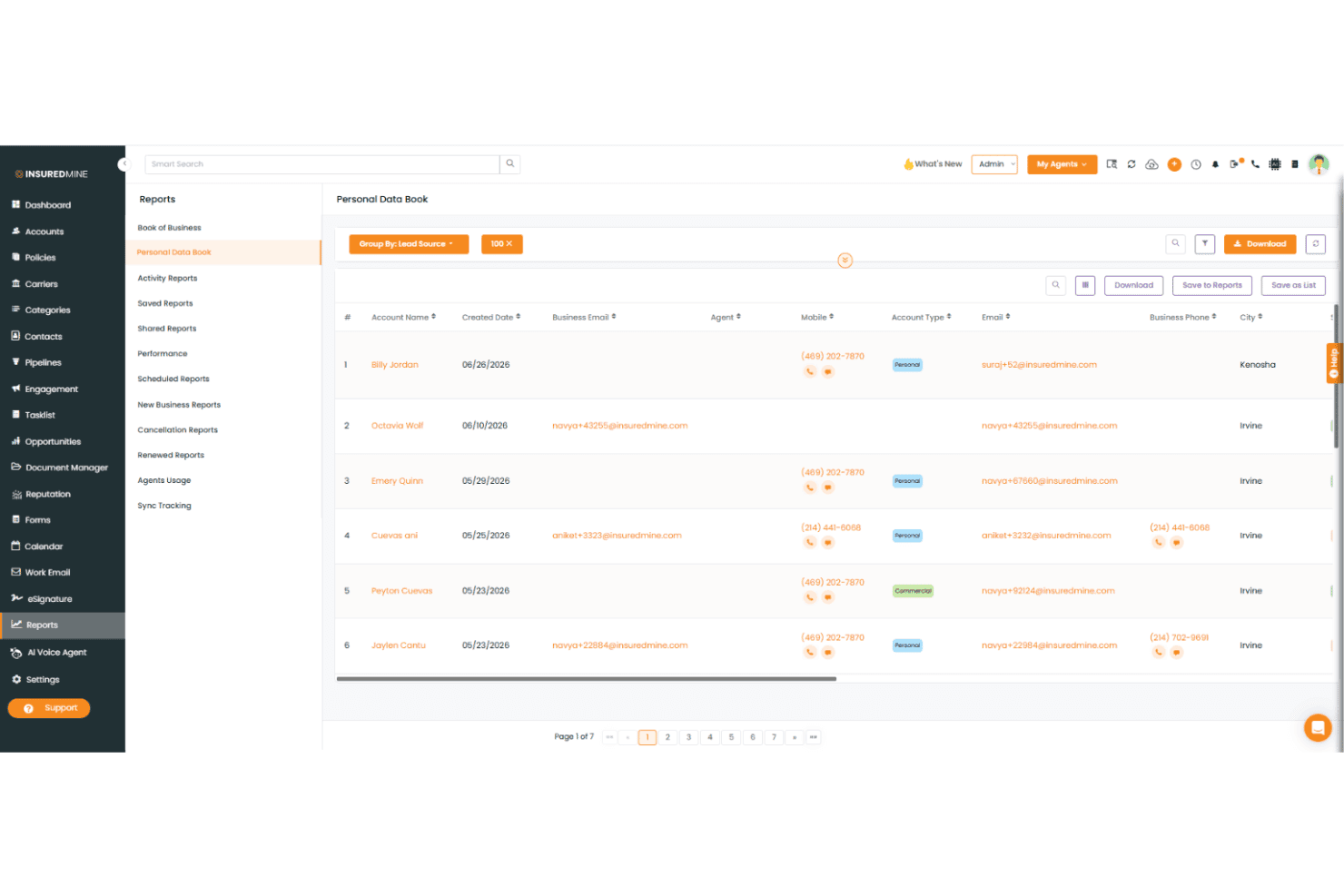
InsuredMine lets users view and export personal data book reports. InsuredMine is an AI-powered insurance CRM built for independent agencies that combines omnichannel communication, lifecycle automation, policyholder self-service tools, and a unified account view with two-way AMS sync.
Who Is InsuredMine Best For?
InsuredMine is built for independent insurance agencies that want to manage client relationships and renewals on top of their existing AMS.
Why I Picked InsuredMine
I picked InsuredMine as one of the best because it's purpose-built around agency book-of-business engagement in a way generic CRMs simply aren't. The Account 360 view pulls together every policy, premium, document, and interaction in one profile, and two-way AMS sync means that data stays current without manual entry. I especially like the lifecycle workflow engine, which fires multi-channel sequences on X-dates, renewal expirations, and Client Turning 65 triggers, filtered by policy category and carrier.
InsuredMine Key Features
- Client mobile app: Policyholders can view ID cards, report claims, request quotes, update their information, and pay bills directly from a co-branded mobile app.
- AI voice agent: Answers missed calls, books appointments, and places automated outbound follow-up calls, logging everything to the account record.
- E-signature: Built-in electronic signing with audit logs, IP tracking, and signature status monitoring. Monthly usage allowances vary by plan.
- NPS surveys: Sends net promoter score surveys to clients, alerts the assigned agent or CSR on responses, and tracks results alongside Google Reviews in the dashboard.
InsuredMine Integrations
InsuredMine lists integrations with 11 AMS platforms, including Applied Epic, AMS360, Sagitta, HawkSoft, NowCerts, EZLynx, Nexsure, and BenefitPoint, plus Stripe, Twilio, and Canopy Connect. It also supports API access, webhooks, custom integrations, and Zapier.
Pros and Cons
Pros:
- Policyholder app supports ID cards and payments
- Account profiles unify policy and interaction history
- Renewal triggers match insurance lifecycle events
Cons:
- No visual journey builder for complex campaigns
- AMS integrations unavailable during trial
Learn more about InsuredMine:
Diğer Sigorta Müşteri Etkileşimi Platformları
Kısa listeme girmeyen ancak yine de incelemeye değer birkaç ek seçenek şunlardır:
- 11Applied EpicBest for independent agency policyholder self-service
- 12SPLICE SoftwareBest for insurance lifecycle messaging via AI voice
- 13Genesys Cloud CXBest for contact center-led claims engagement
- 14Quadient InspireBest for compliance-driven policyholder correspondence
- 15FintechOSBest for legacy PAS modernization with data unification
- 16SapiensBest for legacy insurer self-service modernization
- 17EISBest for core-system-led self-service engagement
- 18Smart CommunicationsBest for regulated insurer communications at scale
- 19EngageOne RapidCXBest for governed omnichannel policyholder comms
- 20bolttechBest for embedded insurance partner engagement
How I Evaluate Insurance Customer Engagement Platforms
I split my evaluation into three parts. Core functionality carries the most weight: I look for tools that engage policyholders across channels and unify policy and interaction data. Then I assess standout features like predictive churn modeling, plus what vendors offer beyond features—onboarding support and pricing value.
Core Functionality (Table Stakes for This List)
When I'm selecting tools for my list, I score each one on a scale from 0 (does not offer the functionality) to 5 (excels in this area) for each core functionality listed below. I then convert the total into a percentage to help assess each tool's overall fit, with extra weight on any functionalities I've deemed essential.
- Omnichannel Communication (Essential): I check whether the platform coordinates messaging across email, SMS, portals, and apps with shared context between channels.
- Policyholder Data Unification (Essential): I look for a single profile that pulls together policy details, contact info, and interaction history to inform every touchpoint.
- Automated Lifecycle Messaging: Platforms should trigger communications around key policy events like renewals, missed payments, and claims milestones without manual effort.
- Segmentation and Targeting: I evaluate how flexibly you can group policyholders by attributes like policy type, tenure, or behavior to tailor outreach campaigns.
- Self-Service Policyholder Tools: I look for portals or apps where policyholders can check claims status, download documents, or make payments without calling an agent.
- Engagement Performance Analytics: Reporting should go beyond delivery counts to show open rates, response rates, and channel-level breakdowns that inform your next campaign.
Once I have a list of tools that meet the criteria, I consider what sets each platform apart.
Differentiating Factors (What Sets Vendors Apart)
Here's how I compare and contrast different vendors:
Standout Features
Predictive churn modeling is a big differentiator. I look for platforms that flag at-risk policyholders weeks before renewal, giving your retention team time to act rather than react. No-code journey builders also matter because they let CX teams launch and adjust lifecycle campaigns without waiting on IT. I evaluate how easily a business user can build a renewal reminder sequence or a post-claim check-in flow using drag-and-drop logic. Agent collaboration tools round this out—I check whether a human agent can step into an automated journey mid-conversation with full context, which is essential during complex claims.
Beyond Features
I check whether a platform connects natively to policy administration systems like Guidewire or Duck Creek, since gaps there force teams into manual data re-entry across departments. Regulatory compliance matters just as much—I look for built-in audit trails and configurable consent management, especially for carriers operating across multiple lines with different communication rules. I also evaluate onboarding support, because migrating from fragmented legacy tools without dedicated vendor guidance tends to stall adoption across both marketing and service teams.
Sigorta Müşteri Etkileşimi Platformları Nasıl Seçilir?
Bir platform seçerken poliçe sahibi yolculuklarınızı destekleyip desteklemediğini, veri ve izin gereksinimlerinize uyup uymadığını ve ekiplerin otomasyon ile insan takibi arasında uygulanabilir bir denge kurmasını sağlayıp sağlamadığını test edin.
| Önceliğiniz … ise | Şunları arayın … |
|---|---|
| Önceliğiniz … iseKanallar arasında tutarlı iletişim | Şunları arayın …E-posta, SMS, portallar ve uygulamalar arasında paylaşılan bağlam |
| Önceliğiniz … iseYenileme ve hasar taleplerinde daha az manuel takip | Şunları arayın …Acenteye devir içeren, etkinlikle tetiklenen yaşam döngüsü yolculukları |
| Önceliğiniz … isePoliçe ayrıntılarına dayalı ilgili iletişim | Şunları arayın …Birleştirilmiş poliçe sahibi profili ve esnek segmentasyon |
| Önceliğiniz … iseRutin işlemler için daha az hizmet çağrısı | Şunları arayın …Hasar durumu, belgeler ve ödemelere self-servis erişim |
Kısa Listeniz Nasıl Değerlendirilir?
- Bir yolculuk denemesi gerçekleştirin: Satıcıdan örnek poliçe etkinliklerini kullanarak bir yenileme dizisi ve hasar durumu kontrolü oluşturmasını isteyin; kurulum adımlarını ve gereken devirleri kaydedin.
- Bir poliçe sahibi kaydını takip edin: Poliçe ayrıntılarının, iletişim bilgilerinin ve etkileşim geçmişinin iki kanal genelinde birlikte göründüğünü doğrulamak için tek bir örnek profil kullanın.
- Entegrasyon kanıtı isteyin: İlgili olması durumunda Guidewire veya Duck Creek de dahil olmak üzere poliçe yönetim sisteminizi kapsayan güncel bir entegrasyon belgesi isteyin ve manuel veri aktarımlarını belirleyin.
- İzin denetimlerini inceleyin: Örnek bir denetim izi ve izin yönetimi belgesi isteyin, ardından bir poliçe sahibinin iletişim tercihinin kanallar arasında nasıl değiştiğini test edin.
- Kararınızı belirleyen ödünleşimi kullanın: Merkezi kampanyalar için kapsamlı müşteri yolculuğu orkestrasyonu ile günlük portföy hizmetleri için acente odaklı iş akışları arasında seçim yapın.
Sigorta Müşteri Etkileşimi Platformları Nedir?
Sigorta müşteri etkileşimi platformları, sigortacıların poliçe sahibi yaşam döngüsü boyunca iletişimleri ve hizmetleri koordine etmesine yardımcı olan yazılımlardır. Bu araçlar poliçe ve etkileşim verilerini birbirine bağlayabilir, yenilemeler veya hasar talepleri etrafında mesajları tetikleyebilir ve e-posta, SMS, portallar ve uygulamalar gibi kanalları destekleyebilir. Ekiplerin otomatik iletişim ile insan desteğini dengelerken tutarlı müşteri deneyimlerini yönetmesine yardımcı olurlar.
Özellikler
Bir sigorta müşteri etkileşimi platformunda aradığım başlıca özellikler şunlardır:
- Çok kanallı iletişim: E-posta, SMS, portallar ve uygulama mesajlarını ortak bağlamla koordine eder. Bu, poliçe sahiplerinin bilgileri tekrarlamak zorunda kalmadan bir etkileşimi başka bir kanalda sürdürmesine yardımcı olur.
- Poliçe sahibi verilerinin birleştirilmesi: Poliçe ayrıntılarını, iletişim bilgilerini ve etkileşim geçmişini ortak bir profilde bir araya getirir. Ekipler bir hizmet talebine yanıt verirken veya iletişim planlarken bu bağlamı kullanabilir.
- Otomatik yaşam döngüsü mesajları: Yaklaşan yenileme, kaçırılan ödeme veya hasar talebi güncellemesi gibi poliçe olaylarına göre mesajları tetikler. Ekipler mesajların ne zaman gönderileceğine ve ne zaman bir kişinin takip gerçekleştirmesi gerektiğine ilişkin kurallar belirleyebilir.
- Segmentasyon ve hedefleme: Poliçe sahiplerini poliçe türü, poliçe süresi veya davranış gibi özelliklere göre gruplandırır. Ekipler herkese aynı mesajı göndermek yerine kampanyaları her gruba göre uyarlayabilir.
- Kendi kendine hizmet araçları: Poliçe sahiplerine bir portal veya uygulama üzerinden hasar talebi durumunu kontrol etme, belgeleri indirme veya ödeme yapma gibi işlemlere erişim sağlar. Açık kendi kendine hizmet seçenekleri, müşterilerin rutin ihtiyaçlarını bir acenteyle iletişime geçmeden karşılamasına yardımcı olur.
- Etkileşim analitiği: Açılma, yanıt ve kanal düzeyindeki etkinlik gibi ölçümleri izler. Ekipler poliçe sahiplerinin nasıl yanıt verdiğini görmek ve gelecekteki iletişimleri düzenlemek için bu raporları kullanabilir.
Avantajlar
Deneyimlerime göre sigorta müşteri etkileşimi platformları aşağıdakiler de dahil olmak üzere çeşitli avantajlar sunabilir:
- Kanallar arası tutarlı iletişim: E-posta, SMS, portallar ve uygulamalar arasındaki ortak bağlam, poliçe sahiplerinin bilgileri tekrarlamadan görüşmelere devam etmesine yardımcı olur.
- Daha ilgili poliçe sahibi iletişimi: Birleştirilmiş profiller ve segmentasyon, ekiplerin mesajları poliçe ayrıntılarını, poliçe süresini ve etkileşim geçmişini kullanarak uyarlamasına olanak tanır.
- Zamanında yaşam döngüsü takipleri: Otomatik yolculuklar, poliçe olaylarına göre yenileme hatırlatıcılarını, kaçırılan ödeme bildirimlerini ve hasar talebi güncellemelerini tetikleyebilir.
- Daha fazla rutin kendi kendine hizmet: Portallar ve uygulamalar, poliçe sahiplerinin bir acenteyle iletişime geçmeden hasar talebi durumunu kontrol etmesine, belgeleri indirmesine ve ödeme yapmasına olanak tanır.
- Etkileşim hakkında daha iyi görünürlük: Açılma, yanıt ve kanal düzeyindeki analitik veriler, ekiplerin poliçe sahiplerinin nasıl yanıt verdiğini görmesine ve gelecekteki iletişimleri düzenlemesine yardımcı olur.
- Daha koordineli insan desteği: Görüşme bağlamının aktarıldığı acente devirleri, poliçe sahibinin otomatik bir yolculuğun ötesinde yardıma ihtiyaç duyduğu durumlarda personelin devralmasına yardımcı olur.
Maliyetler ve Fiyatlandırma
Maliyetler özelliklere, poliçe sahibi sayısına, ekip büyüklüğüne ve entegrasyonlara göre değişir. Sigorta odaklı platformlar genellikle özel fiyat teklifi kullandığından, bu aralıkları standart ücretler yerine genel bütçeleme tahminleri olarak değerlendirin.
Sigorta Müşteri Etkileşimi Platformları İçin Plan Karşılaştırma Tablosu
| Plan Türü | Ortalama Fiyat | Yaygın Özellikler |
|---|---|---|
| Plan TürüÜcretsiz Plan | Ortalama Fiyat$0 | Yaygın ÖzelliklerSınırlı kişi sayısı, temel e-posta mesajlaşması ve kendi kendine hizmet desteği. |
| Plan TürüKişisel Plan | Ortalama Fiyat$25–$100/user/month | Yaygın ÖzelliklerKişi profilleri, e-posta ve SMS kampanyaları, temel segmentasyon ve standart raporlar. |
| Plan Türüİşletme Planı | Ortalama Fiyat$100–$500/user/month | Yaygın ÖzelliklerYaşam döngüsü otomasyonu, poliçe sahibi verisi entegrasyonları, gelişmiş segmentasyon ve etkileşim analitiği. |
| Plan TürüKurumsal Plan | Ortalama Fiyat$1,000–$10,000+/month | Yaygın ÖzelliklerÖzel entegrasyonlar, gelişmiş izinler, denetim kayıtları ve özel destek. |
SSS
Sigorta müşteri etkileşimi platformları hakkında sık sorulan sorulara bazı yanıtlar:
Bir sigorta müşteri etkileşimi platformu, poliçe yönetim sisteminin yerini alır mı?
Hayır. Müşteri etkileşimi platformu iletişimleri ve hizmet süreçlerini yönetirken poliçe yönetim sistemi, poliçe düzenleme ve zeyil işlemleri gibi kayıtları ve süreçleri yönetir. İki sistem veri alışverişinde bulunabilir, ancak farklı amaçlara hizmet eder. Bir platform seçmeden önce her veri alanının hangi sisteme ait olduğunu ve güncellemelerin sistemler arasında nasıl aktarıldığını doğrulayın. Bu netlik, çelişkili poliçe bilgilerinin müşteri mesajlarında veya çalışan iş akışlarında görünmesini önlemeye yardımcı olur.
Uygulama ne kadar sürer?
Sabit bir takvim yoktur; uygulama, veri kalitesine, entegrasyonlara ve başlatmayı planladığınız süreçlerin sayısına bağlıdır. Tek bir poliçe branşı ve birkaç mesajla gerçekleştirilen odaklanmış bir uygulama, genellikle birden fazla branşı kapsayan bir uygulamaya kıyasla daha az bağımlılık içerir. Tedarikçilerden veri bağlantısı, izin testleri, süreç yapılandırması ve çalışan eğitimi için kilometre taşlarını haritalandırmalarını isteyin. Başlatma öncesinde nelerin hazır olması gerektiği konusunda anlaşın ve müşterilere mesaj göndermeden önce örnek poliçe olaylarıyla test yapın.
Uygulamadan önce neleri hazırlamalıyız?
Müşteri veri kaynaklarının, iletişim kanallarının ve mesajları tetiklemesi gereken poliçe olaylarının net bir envanterini hazırlayın. Her veri alanının sahibini, ne sıklıkla değiştiğini ve ekibinizin test amacıyla bu verilere erişip erişemeyeceğini belirleyin. İzin kurallarını ve iletişimi etkileyen müşteri tercihlerini belgeleyin. Ayrıca yenileme hatırlatıcıları gibi ilk sürümde kullanılacak küçük bir süreç kümesi seçin. Bu, uygulama ekibinize belirli bir kapsam sunar ve eksik verileri veya süreç boşluklarını fark etmeyi kolaylaştırır.
Platformun çalışıp çalışmadığını nasıl ölçebiliriz?
Ölçütleri başlatmadan önce belirleyin ve bunları belirli müşteri süreçleriyle ilişkilendirin. Bir yenileme dizisi için teslimatı, yanıtları, tamamlanan yenilemeleri ve iletişim tercihinden çıkışları takip edin. Hasar güncellemelerinde, müşterilerin mesajlarda zaten yer alan bilgiler için destek ekibiyle iletişime geçip geçmediğini inceleyin. Sonuçları ilgili bir başlangıç değeriyle karşılaştırın ve hacim veya poliçe karmasındaki değişiklikleri hesaba katın. Ölçütleri hizmet ve operasyon ekipleriyle de gözden geçirin; bir mesaj iyi performans gösterirken başka bir yerde ek iş yükü oluşturabilir. Bulguları zamanlamayı, içeriği veya devir süreçlerini düzenlemek için kullanın.