

Yogi-anmeldelse: Fordele, ulemper, funktioner og priser
Yogi skiller sig ud ved at tilbyde intuitiv dataintegration og indsigtsfulde analyser, hvilket gør det til et solidt valg for teams, der ønsker at udnytte kundedata effektivt.

We review tools independently, and commissions help fund our testing. See our transparency policy, our methodology, or suggest a tool.
Yogi is a customer feedback software built for consumer brands that need to analyze product reviews across retail channels at scale. It uses AI to surface themes and trends from reviews on platforms like Amazon, Walmart, and Target—cutting out manual tagging entirely. I'd consider it over something like Qualtrics if your feedback challenge centers on retail review data rather than a broad VoC program. Yogi's retail-specific focus makes those insights more directly usable for product and CX teams.
Yogi Evaluation Summary

4.6/5
- Pricing upon request
- Free demo available
Why Trust Our Software Recommendations
6,700+
Reviews
20
Industry experts
16+
Evaluation factors
14
Years
Our team has been testing and reviewing software since 2012. As CX leaders ourselves, we know how difficult—and important—it is to choose the right software.
For this guide, we evaluated tools using hands-on testing and independent research, scoring tools using our selection criteria.
Our reviews reflect our human editorial judgment, not a sales pitch.
 Gui DrusinaCreative Director
 Tim FisherVP of AI
Yogi Overview
In my opinion, Yogi serves as a solid customer data platform. It offers a strong set of core features and standout capabilities, such as NLP dashboards, summaries, and generative AI-powered analysis, making it a competitive choice. However, the onboarding process and customer support seem to lag behind some competitors. If your team values integration, optimized workflows, and a user-friendly interface, Yogi might be worth considering. It’s particularly well-suited for organizations that prioritize data consistency, real-time dashboards, and scalable insights across product pages. Overall, Yogi offers good value for money, but if onboarding and support are important to you, you might want to consider other options.
Pros
- Yogi simplifies data analysis with its intuitive interface.
- You can quickly access customer insights and sentiment summaries.
- Yogi offers reliable customer support.
Cons
- You might find that the platform demands a learning curve initially.
- Customization options are limited.
- Some users report that the platform can be slow during peak usage times.
Is Yogi Right For Your Needs?
Who Would be a Good Fit for Yogi?
Yogi suits data-driven teams and customer-focused businesses. It offers powerful analytics and customer insights through AI-driven sentiment analysis, helping you make informed decisions. If your team values integration with existing tools and needs a platform to centralize customer data from shoppers, gamers, or niche audiences, Yogi is a smart choice. It supports collaboration across departments, ensuring everyone stays aligned with customer needs across e-commerce and retail channels.
- E-commerce BusinessesYogi helps you track customer behavior and preferences across marketplaces such as Amazon, improving your product offerings and product page performance.
- Marketing TeamsUse Yogi to analyze campaign performance and refine your strategies based on real-time NLP insights and feedback trends.
- Customer SupportYogi centralizes customer interactions, making it easier for your team to address issues promptly using unified dashboards.
- Product DevelopmentGather feedback and insights with Yogi to prioritize features that matter to your users and guide product innovation decisions.
- Retail CompaniesYogi helps you understand in-store and online customer interactions, enhancing your sales strategies and retailer relationships.
- Small BusinessesEven with limited resources, Yogi's integration and data management tools support your growth efforts, especially for teams exploring AI analytics for the first time.
Who Would be a Bad Fit for Yogi?
Yogi might not be ideal for small businesses or startups with limited budgets because of its higher cost. Also, if your work demands extensive customization and deep integration with niche tools, Yogi's limited customization options could be a roadblock. Teams requiring advanced financial features or robust, sophisticated collaboration tools might find Yogi lacking.
- Small StartupsIf you're a small startup, Yogi's pricing can strain your budget without offering the essential features you might need.
- Finance DepartmentsFinance departments won't find Yogi suitable because it lacks financial features such as budgets and expense tracking.
- Highly Niche IndustriesHighly niche industries, such as board game publishers, that need tailored solutions will struggle with Yogi's limited customization capabilities.
- Large EnterprisesLarge enterprises needing extensive collaboration tools might find Yogi's team functionality too basic.
- Project Management TeamsProject management teams requiring robust integrations may find Yogi's integration capabilities to be limited.
- Tech-Heavy CompaniesTech-heavy companies looking for deep tech stack integration might find Yogi's offerings insufficient.
How We Test & Score Tools
We’ve spent years building, refining, and improving our software testing and scoring system. The rubric is designed to capture the nuances of software selection and what makes a tool effective, focusing on critical aspects of the decision-making process.
Below, you can see exactly how our testing and scoring works across seven criteria. It allows us to provide an unbiased evaluation of the software based on core functionality, standout features, ease of use, onboarding, customer support, integrations, customer reviews, and value for money.
Core Functionality (25% of final scoring)
The starting point of our evaluation is always the core functionality of the tool. Does it have the basic features and functions that a user would expect to see? Are any of those core features locked to higher-tiered pricing plans? At its core, we expect a tool to stand up against the baseline capabilities of its competitors.
Standout Features (25% of final scoring)
Next, we evaluate uncommon standout features that go above and beyond the core functionality typically found in tools of its kind. A high score reflects specialized or unique features that make the product faster, more efficient, or offer additional value to the user.
We also evaluate how easy it is to integrate with other tools typically found in the tech stack to expand the functionality and utility of the software. Tools offering plentiful native integrations, 3rd party connections, and API access to build custom integrations score best.
Ease of Use (10% of final scoring)
We consider how quick and easy it is to execute the tasks defined in the core functionality using the tool. High scoring software is well designed, intuitive to use, offers mobile apps, provides templates, and makes relatively complex tasks seem simple.
Onboarding (10% of final scoring)
We know how important rapid team adoption is for a new platform, so we evaluate how easy it is to learn and use a tool with minimal training. We evaluate how quickly a team member can get set up and start using the tool with no experience. High scoring solutions indicate little or no support is required.
Customer Support (10% of final scoring)
We review how quick and easy it is to get unstuck and find help by phone, live chat, or knowledge base. Tools and companies that provide real-time support score best, while chatbots score worst.
Customer Reviews (10% of final scoring)
Beyond our own testing and evaluation, we consider the net promoter score from current and past customers. We review their likelihood, given the option, to choose the tool again for the core functionality. A high scoring software reflects a high net promoter score from current or past customers.
Value for Money (10% of final scoring)
Lastly, in consideration of all the other criteria, we review the average price of entry level plans against the core features and consider the value of the other evaluation criteria. Software that delivers more, for less, will score higher.
Core Features
Unified Customer Profiles: Yogi consolidates customer data from various sources, providing a comprehensive view of each customer. This helps your team understand customer behavior and preferences in real-time, enhancing decision-making.
Real-Time Analytics: Yogi offers analytics tools that process data instantly, allowing you to make informed decisions quickly. This feature stands out because it supports immediate adjustments to marketing strategies based on current sentiment analysis insights.
Segmentation and Targeting: You can create detailed customer segments based on specific consumer groups, such as shoppers, gamers, or repeat buyers, which help personalize marketing efforts. This feature enhances targeted campaigns, improving engagement and conversion rates.
Privacy and Compliance Management: Yogi ensures that data handling aligns with privacy regulations, keeping customer information secure. This feature is crucial for maintaining trust and avoiding legal issues, especially with GDPR and CCPA compliance.
Data Integration and Management: Yogi efficiently manages and integrates data from multiple platforms, ensuring consistency and accuracy. This capability is essential for businesses looking to streamline their NLP workflows without losing valuable insights.
Predictive Insights: With predictive analytics and generative AI capabilities, Yogi helps forecast customer behavior and trends, allowing proactive strategy development. This feature empowers your team to stay ahead of market changes and customer needs.

Integrations
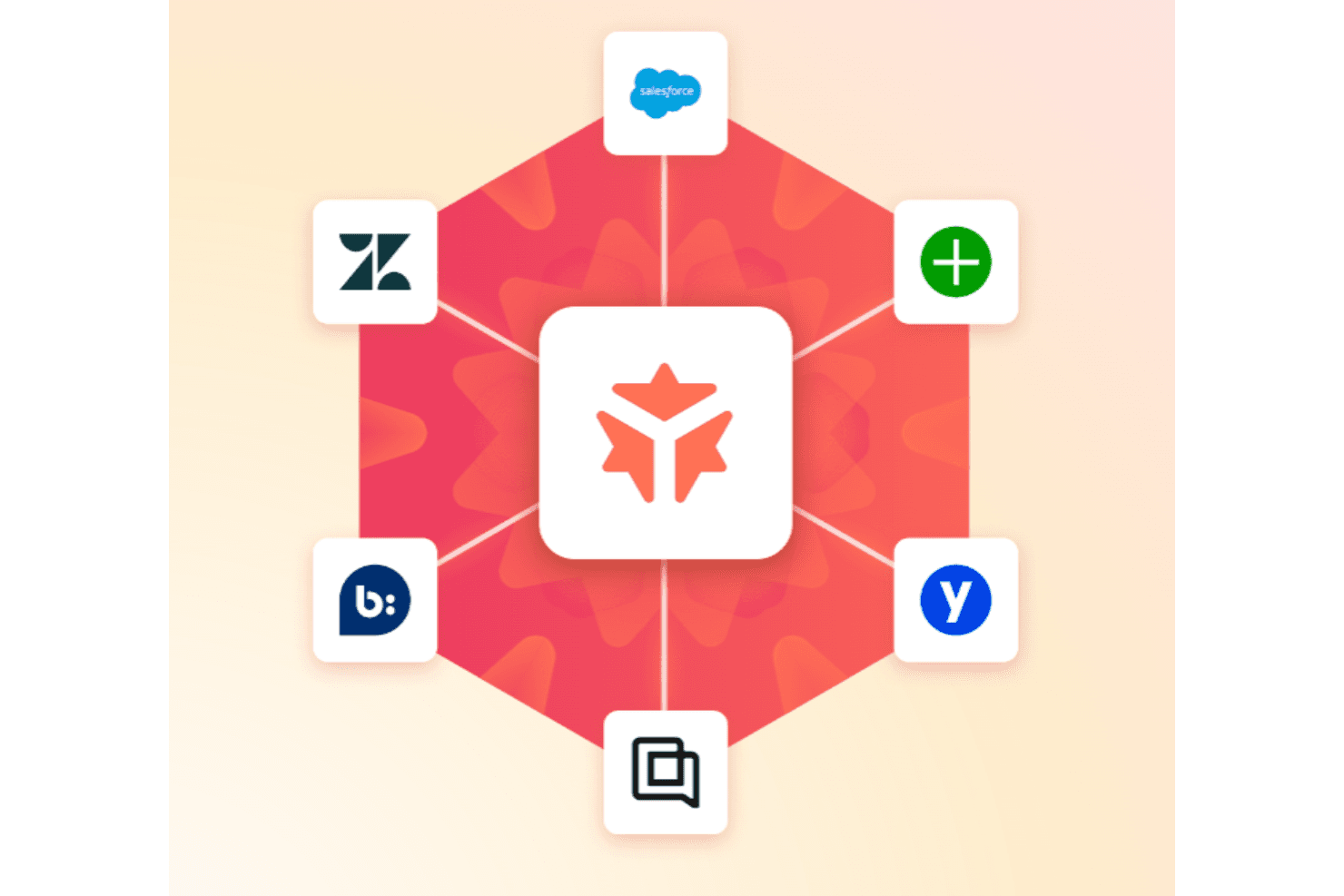
Yogi integrates with platforms such as Salesforce, Zendesk, Qualtrics, Gladly, Bazaarvoice, Sprout Social, WhatsApp, and Instagram.
Yogi also provides an API for integration and connects with third-party integration tools, allowing users to export data and insights into their preferred platforms.
Yogi Specs
- Analytics: Yes
- API: Yes
- Batch Permissions & Access: No
- Call Integration: No
- Chat: No
- Contact Management: No
- Contact Sharing: No
- CRM Integration: Yes
- Customer Management: No
- Customer Service: Yes
- Dashboard: Yes
- Data Export: Yes
- Data Import: Yes
- Data Visualization: Yes
- Email Integration: No
- Escalation Management: No
- External Integrations: Yes
- Instant Chat Integration: No
- Knowledge Base: No
- Lead Management: No
- Lead Scoring: No
- Multi-User: Yes
- Notifications: Yes
- Real-time Alerts: Yes
- Scheduling: No
- Self-service Portal: No
- Social Media Integration: No
- Support Forum: No
- Third-Party Plugins/Add-Ons: No
- Ticket Management: Yes
- Workflow Management: No


