

Statsig-Test: Vor- und Nachteile, Funktionen und Preise
Statsig zeichnet sich durch seine intuitive Benutzeroberfläche und wertvolle Erkenntnisse aus und ist damit eine erstklassige Wahl für Teams, die mehrere Ressourcen effizient verwalten.

Wir bewerten Tools unabhängig; Provisionen helfen, unsere Tests zu finanzieren. Siehe unsere Transparenzrichtlinie und unsere Methodik.
Statsig is an A/B testing tool built for product and engineering teams that need to run experiments, manage feature flags, and analyze results in one place. I'd consider it if your team wants statistically rigorous experimentation without the implementation complexity of a tool like Optimizely—Statsig is more developer-native and connects directly to your data warehouse, which makes it a stronger fit for teams that already own their data pipeline and want experimentation to live closer to their infrastructure.
Statsig Evaluation Summary
0/5
- From $150/month
- Free plan available
Warum Sie unseren Software-Empfehlungen vertrauen können
6,700+
Reviews
20
Industry experts
16+
Evaluation factors
14
Years
Unser Team testet und bewertet Software seit 2012. Als CX-Führungskräfte selbst wissen wir, wie schwierig – und wichtig – es ist, die richtige Software auszuwählen.
Für diesen Leitfaden haben wir Tools mithilfe von praktischen Tests und unabhängiger Recherche bewertet und dabei unsere Bewertungskriterien angewendet.
Unsere Bewertungen spiegeln unser menschliches redaktionelles Urteilsvermögen wider, keine Verkaufsstrategie.
 Gui DrusinaCreative Director
 Tim FisherVP of AI
Statsig Overview
In my opinion, Statsig is a strong option for teams seeking an A/B testing platform with powerful visualization features and straightforward usability. Its strengths in experimentation and feature flagging make it stand out from many competitors. The onboarding experience is generally smooth, although customer support responsiveness could be improved.
With intuitive integrations and a clean interface, Statsig is well suited for agile teams that want efficiency without added complexity. However, organizations that need extensive customization or depend heavily on hands-on support may find other platforms more fitting. Overall though, Statsig delivers solid value, particularly for teams that prioritize advanced experimentation capabilities.
Pros
- You can easily set up experiments with its intuitive interface.
- It offers powerful built-in analytics that are accessible and user-friendly.
- The platform is designed to be developer-friendly, making it a good choice for tech teams.
Cons
- It might require specific configurations to get the best results.
- Some users may find the initial setup process challenging without prior experience.
- There can be a learning curve for teams new to data-driven testing.
Is Statsig Right For Your Needs?
Who Would be a Good Fit for Statsig?
If your team thrives on data-driven decisions and rapid feature deployment, Statsig could be a perfect match. Its advanced targeting and real-time diagnostics are ideal for product and engineering teams that need to test and release features quickly. The platform’s easy integrations and comprehensive analytics make it a smart choice for businesses aiming to enhance product performance and collaborate more effectively across departments.
- Product ManagersYour product team can leverage Statsig's feature flags and experiments to roll out new features selectively and measure their success, helping you improve product iterations.
- Software EngineersStatsig’s real-time diagnostics and robust SDKs support rapid feature deployment, making it a valuable tool for engineering teams focused on performance and functionality optimization.
- Data AnalystsWith Statsig’s product analytics, your data team can track user behavior and core metrics, providing insights that drive business and product decisions.
- StartupsIf you're a startup launching a product or service for the first time, Statsig’s scalable pricing and ease of use allow you to test ideas and iterate quickly.
- E-commerce BusinessesFor e-commerce, Statsig’s advanced targeting capabilities enable personalized user experiences, boosting engagement, retention, and conversion rates.
- Gaming IndustryIn gaming, Statsig’s infrastructure supports smooth feature releases and experimentation, helping you maintain an engaging user experience.
Who Would be a Bad Fit for Statsig?
Statsig might not be the best choice for small businesses or startups that don't require advanced analytics. If your team doesn't rely on data-driven decision-making or doesn't have the resources to interpret complex data, Statsig's sophisticated features might be overwhelming. Businesses in industries like manufacturing or agriculture, where real-time data analytics isn't crucial, might find Statsig's capabilities excessive.
- Small BusinessesIf you're a small business with limited needs, Statsig's advanced product experimentation tools could be overkill.
- Budget-Conscious TeamsStatsig might strain your budget if you're looking for cost-effective solutions without heavy analytics.
- Non-Tech IndustriesIndustries like agriculture may not benefit from Statsig's data-centric approach.
- Individual UsersIf you're a solo user, Statsig's features might be too complex for simple task tracking.
- Basic Data NeedsFor teams needing only basic analytics, Statsig's comprehensive data tools could be unnecessary.
- Traditional WorkflowsConventional industries with static workflows may not need Statsig's advanced experimentation tools.
Wie wir Tools testen & bewerten
Wir haben jahrelang unser System zur Softwarebewertung entwickelt, verfeinert und verbessert. Unser Bewertungsraster ist darauf ausgelegt, die Nuancen der Softwareauswahl und Merkmale eines effektiven Tools abzubilden, wobei der Fokus auf den entscheidenden Aspekten des Entscheidungsprozesses liegt. Nachfolgend sehen Sie, wie unser Test- und Bewertungssystem anhand von sieben Kriterien funktioniert. Es ermöglicht uns, eine unabhängige Bewertung der Software basierend auf Kernfunktionen, besonderen Merkmalen, Benutzerfreundlichkeit, Onboarding, Kundensupport, Integrationen, Kundenbewertungen und Preis-Leistungs-Verhältnis zu geben.
Kernfunktionen (25% der Gesamtnote)
Der Ausgangspunkt unserer Bewertung ist immer die grundlegende Funktionalität eines Tools. Verfügt es über die Basisfunktionen, die ein Benutzer erwarten würde? Sind einige dieser Kernfunktionen nur in teureren Preisplänen verfügbar? Im Kern erwarten wir, dass ein Tool mit den Grundfunktionen seiner Konkurrenten mithalten kann.
Besondere Merkmale (25% der Gesamtnote)
Anschließend bewerten wir außergewöhnliche Funktionen, die über die üblichen Kernfunktionen hinausgehen. Eine hohe Punktzahl spiegelt spezialisierte oder einzigartige Features wider, die das Produkt schneller, effizienter oder für den Endnutzer besonders wertvoll machen. Wir prüfen außerdem, wie einfach es ist, das Tool mit anderen typischerweise verwendeten Programmen zu integrieren, um die Funktionalität und den Nutzen zu erweitern. Tools mit vielen nativen Integrationen, Verbindungen zu Drittanbietern und API-Zugang für eigene Integrationen erhalten die besten Bewertungen.
Benutzerfreundlichkeit (10% der Gesamtnote)
Wir berücksichtigen, wie schnell und einfach sich Aufgaben ausführen lassen, die zur Kernfunktionalität gehören. Software mit hoher Punktzahl ist gut gestaltet, intuitiv zu bedienen, bietet mobile Apps, stellt Vorlagen bereit und erleichtert auch relativ komplexe Aufgaben erheblich.
Onboarding (10% der Gesamtnote)
Wir wissen, wie wichtig eine schnelle Team-Akzeptanz einer neuen Plattform ist. Deshalb bewerten wir, wie leicht sich ein Tool mit minimalem Training erlernen und benutzen lässt. Wir prüfen, wie schnell ein Teammitglied ohne Vorkenntnisse eingerichtet ist und das Tool nutzen kann. Lösungen mit hoher Bewertung erfordern wenig oder keine Unterstützung.
Kundensupport (10% der Gesamtnote)
Wir beurteilen, wie schnell und einfach man telefonisch, per Live-Chat oder Wissensdatenbank Unterstützung erhält. Tools und Anbieter mit echtem Echtzeit-Support bekommen die besten Bewertungen, während Chatbots am schlechtesten abschneiden.
Kundenbewertungen (10% der Gesamtnote)
Neben unseren eigenen Tests berücksichtigen wir den Net Promoter Score von aktuellen und ehemaligen Nutzern. Wir prüfen, ob sie sich wieder für das Tool entscheiden würden. Software mit hoher Bewertung weist auch einen hohen Net Promoter Score auf.
Preis-Leistungs-Verhältnis (10% der Gesamtnote)
Schließlich bewerten wir unter Berücksichtigung aller anderen Kriterien den durchschnittlichen Preis der Einstiegspläne in Bezug auf die Kernfunktionen und vergleichen den Nutzen der anderen Bewertungskriterien. Software, die mehr für weniger bietet, erhält eine höhere Bewertung.
Core Features
Experimentation
Statsig enables your team to run A/B and multivariate tests at scale, helping you validate product ideas with real user data. This ensures each release is backed by measurable results.
Gates & Rollouts
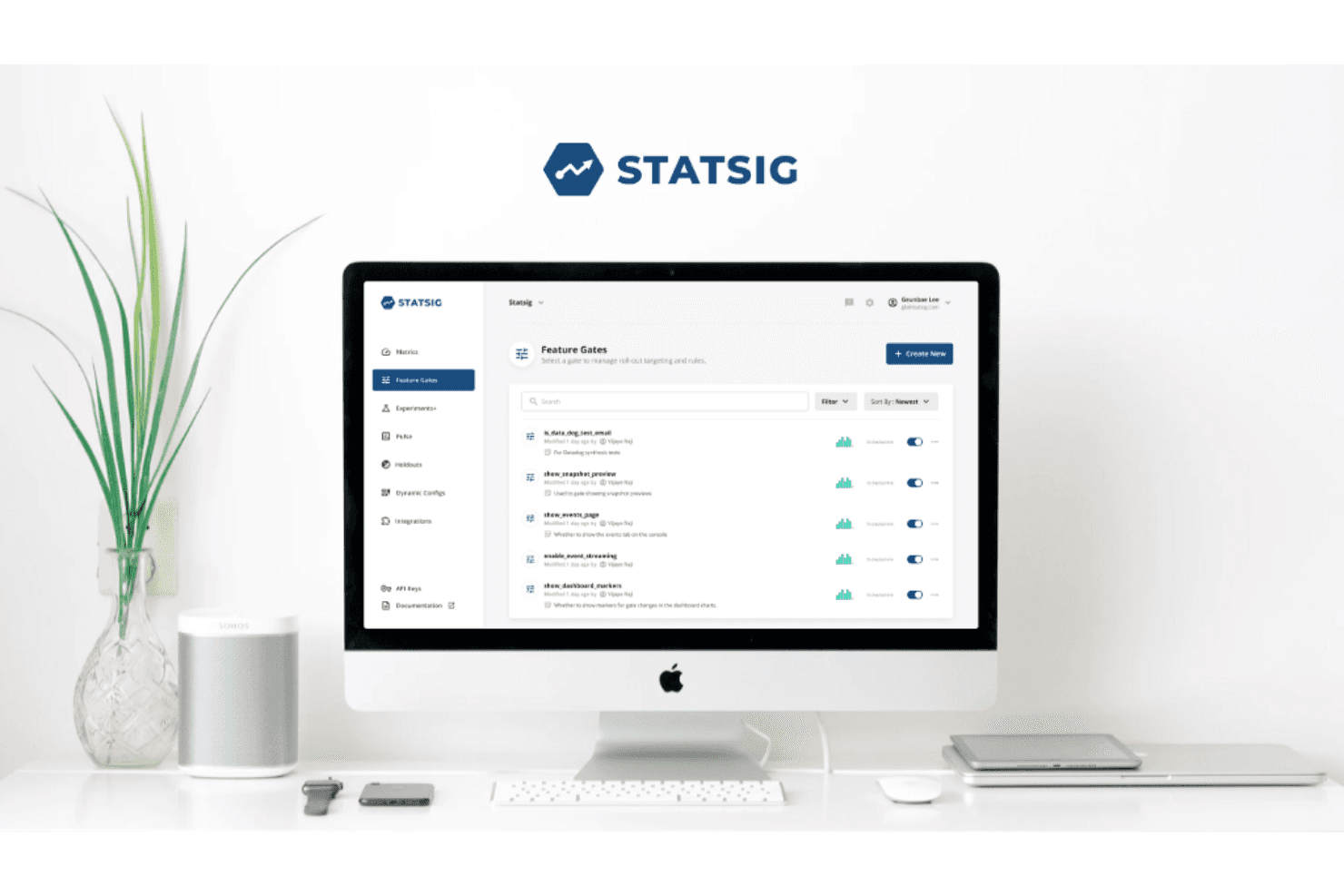
Control feature exposure with gradual rollouts, segmentation, and kill switches. This helps your team ship safely and adjust instantly without code redeployments.
Unified Product Analytics
Statsig centralizes metrics like conversions, engagement, and retention into a single dashboard. This gives your team a clearer view of product performance in real time.
Automated Monitoring
The platform automatically flags anomalies, experiment collisions, and unintended changes. This helps your team detect and resolve issues before they impact users.
Data Warehouse Integrations
Statsig connects with major data tools to keep experiment and analytics data clean and reliable. This ensures your team works with accurate, real-time insights.
Collaboration Workspace
Shared dashboards, experiment logs, and decision summaries help align product, engineering, and growth teams. This supports consistent decision-making across the organization.
Ease of Use
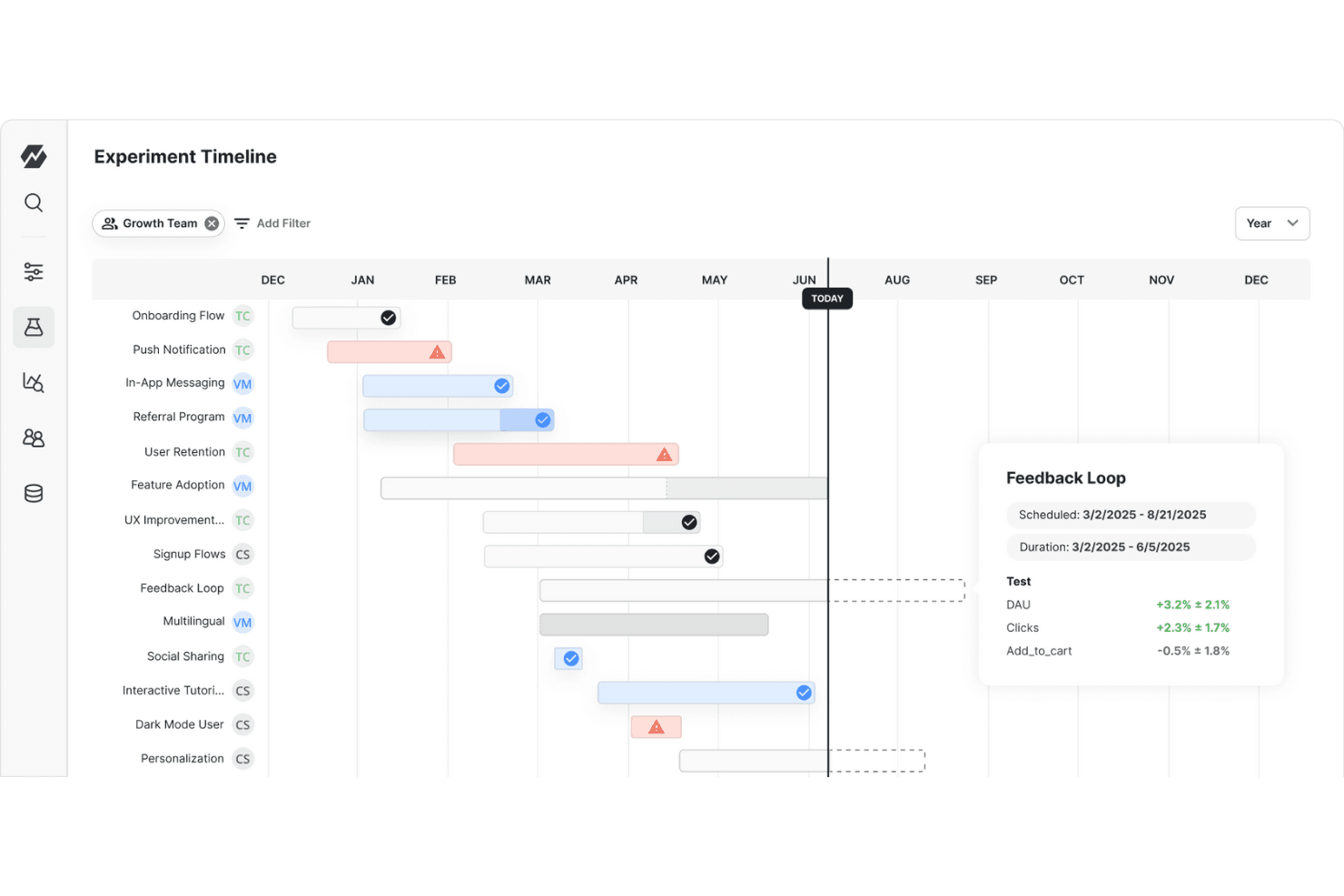
Statsig offers a straightforward interface that makes navigating its features intuitive for you and your team. While some users find the initial setup a bit complex, the platform's extensive documentation and support make it manageable. Its real-time data tracking and feature flagging capabilities are easy to implement, allowing you to focus on your work without getting bogged down by technical hurdles. It’s also relatively easy to learn, making it accessible even if you're not tech-savvy.
Integrations
Statsig integrates with Vercel, Amplitude, Bugsnag, Census, Datadog, Discord, Fastly, Fivetran, GitHub, Google Analytics, Heap, Jira, LogDNA, Microsoft Teams, Mixpanel, mParticle, Pulumi, RevenueCat, Rudderstack, Segment, Slack, Stitch, Visual Studio Code, and Webhooks. Statsig also provides an API for additional connectivity with third-party tools.

Statsig Specs
- A/B Testing: Yes
- AI Integration: No
- Analytics: Yes
- API: Yes
- Automated Testing: No
- Bug Tracking: No
- Campaign Management: No
- Conversion Tracking: No
- Custom Reports: Yes
- Dashboards: Yes
- Data Export: Yes
- Data Import: Yes
- Data Visualization: Yes
- Design Templates: No
- External Integrations: Yes
- Feedback Management: No
- Form Builder: No
- History/Version Control: No
- Multi-Site: No
- Multi-User: Yes
- Notifications: Yes
- Performance Testing: No
- Referral Tracking: No
- Regression Testing: No
- Release Management: No
- Reports: Yes
- Scenario Planning: No
- SEO: No
- Test Management: Yes
- Visualization: Yes
- Workflow Management: No


