

Reseña de New Relic: ventajas, desventajas, características y precios
New Relic destaca por ofrecer una visibilidad profunda de las aplicaciones, lo que lo convierte en una de las principales opciones para organizaciones impulsadas por la tecnología que buscan datos de rendimiento confiables.

Revisamos las herramientas de manera independiente, y las comisiones ayudan a financiar nuestras pruebas. Consulta nuestra política de transparencia, nuestra metodología o sugiere una herramienta.
New Relic is a digital experience platform for engineering and operations teams that need to monitor application performance, infrastructure health, and end-user experience in one place. I'd consider it if you want a more unified observability setup than Datadog offers—particularly if your team is tired of stitching together separate tools for APM, logs, and infrastructure monitoring and wants a single platform with one consistent data model underneath everything.
New Relic Evaluation Summary

4.3/5
- From $10/user/month
- Free plan available
Por qué confiar en nuestras recomendaciones de software
6,700+
Reviews
20
Industry experts
16+
Evaluation factors
14
Years
Nuestro equipo lleva probando y evaluando software desde 2012. Como líderes de CX, sabemos lo difícil —y lo importante— que es elegir el software adecuado.
Para esta guía, evaluamos las herramientas mediante pruebas prácticas e investigación independiente, puntuando las herramientas según nuestros criterios de selección.
Nuestras reseñas reflejan nuestro criterio editorial humano, no un discurso de ventas.
 Gui DrusinaCreative Director
 Tim FisherVP of AI
New Relic Overview
In my opinion, New Relic is a solid choice for tech-driven teams needing deep insights into digital performance. It excels with its advanced monitoring tools and integrations, but its pricing might deter smaller businesses. Compared to competitors, New Relic offers superior data visualization but can be complex for new users. It's best for large enterprises that value detailed analytics and have the resources to manage its comprehensive capabilities. If your team prioritizes thorough data analysis and performance tracking, New Relic should be on your shortlist.
Pros
- Detailed insights into application performance.
- AI-driven alerts, helping teams address the root cause of incidents automatically.
- Visual dashboards make monitoring data easy to understand.
- Automated workflows help streamline issue detection, notification, and remediation.
Cons
- Your team might find the interface overwhelming at first.
- It can be complex for new users to set up.
- You may experience occasional delays in customer support response.
Is New Relic Right For Your Needs?
Who Would be a Good Fit for New Relic?
New Relic is ideal for tech-driven companies that need deep, real-time visibility into their digital experiences. If your team relies on live data to spot and fix issues quickly, New Relic delivers exactly that. Its clear, detailed dashboards make it easy for IT and DevOps teams to understand what’s happening across their systems, making it especially useful for larger organizations that depend on data-driven decision-making.
If your team needs real-time data and AI-driven insights to quickly identify and fix issues, New Relic fits well. Its detailed dashboards help IT and DevOps teams visualize performance metrics effectively, making it suitable for large enterprises that prioritize data-driven decision-making.
- Large EnterprisesLarge-scale operations benefit from New Relic’s comprehensive monitoring, detailed analytics, and strong debugging capabilities. The platform makes it easier to track performance across complex systems, so you can quickly identify error rates and bottlenecks that could impact users.
- IT DepartmentsYour IT team can leverage New Relic’s real-time alerts to identify and resolve issues efficiently.
- E-commerce BusinessesYou can track user interactions and performance to improve conversion rates.
- Healthcare ProvidersYour organization can monitor application performance to streamline patient experiences.
- DevOps TeamsDevelopers and software engineers benefit from New Relic’s network monitoring tools, deep insights, and AI-driven alerts for rapid problem-solving.
- Financial ServicesYou can use New Relic to ensure secure and reliable transaction processing.
Who Would be a Bad Fit for New Relic?
New Relic might not be suitable for small businesses or startups with limited budgets, since the platform can be both complex and costly. And if your team lacks technical expertise, you might find the setup and interface overwhelming. Industries that don't rely heavily on digital platforms or real-time data may also not need New Relic's extensive monitoring capabilities, making it an unnecessary expense.
- Small BusinessesYour small team might find New Relic’s cost and complexity more than you need.
- Non-Tech IndustriesIf your work doesn’t rely on digital platforms, New Relic’s features may be excessive.
- StartupsYour early-stage company may struggle with New Relic’s pricing and steep learning curve.
- Low-Tech DepartmentsDepartments with minimal tech needs might not benefit from New Relic’s advanced capabilities.
- FreelancersIf you work independently, New Relic’s features could be too extensive and costly.
- Basic Web ServicesIf your services don’t require deep monitoring, New Relic’s capabilities might be unnecessary.
Cómo Probamos y Evaluamos Herramientas
Hemos pasado años construyendo, refinando y perfeccionando nuestro sistema de evaluación y puntuación de software. La rúbrica está diseñada para capturar los matices de la selección de software y lo que hace que una herramienta sea eficaz, centrándose en los aspectos críticos del proceso de toma de decisiones. A continuación, puedes ver exactamente cómo funcionan nuestras pruebas y puntuaciones en siete criterios. Esto nos permite ofrecer una evaluación imparcial del software basada en funcionalidad principal, características destacadas, facilidad de uso, incorporación, soporte al cliente, integraciones, opiniones de clientes y la relación calidad-precio.
Funcionalidad Principal (25% de la puntuación final)
El punto de partida de nuestra evaluación siempre es la funcionalidad principal de la herramienta. ¿Tiene las funciones básicas que un usuario esperaría? ¿Alguna de esas funciones principales está bloqueada en planes de precios más altos? Consideramos que una herramienta debe estar a la par de las capacidades básicas de sus competidores.
Características Destacadas (25% de la puntuación final)
A continuación, evaluamos aquellas características poco comunes y destacadas que superan la funcionalidad principal típica de herramientas de ese tipo. Una puntuación alta refleja funciones especializadas o únicas que hacen que el producto sea más rápido, eficiente o que aporte un valor adicional al usuario. También evaluamos lo fácil que es integrar la herramienta con otras que típicamente se utilizan en el ecosistema tecnológico para ampliar la funcionalidad y utilidad del software. Las herramientas que ofrecen abundantes integraciones nativas, conexiones de terceros y acceso a API para integraciones personalizadas obtienen la mejor puntuación.
Facilidad de Uso (10% de la puntuación final)
Consideramos lo rápido y sencillo que es ejecutar las tareas definidas en la funcionalidad principal usando la herramienta. El software que puntúa alto está bien diseñado, es intuitivo, ofrece aplicaciones móviles, proporciona plantillas y hace que tareas relativamente complejas parezcan sencillas.
Incorporación (10% de la puntuación final)
Sabemos lo importante que es la rápida adopción del equipo en una nueva plataforma, así que evaluamos lo fácil que es aprender y usar una herramienta con poca formación. Evaluamos cuán rápido un miembro del equipo puede configurarse y comenzar a usar la herramienta sin experiencia. Las soluciones mejor puntuadas requieren poco o ningún soporte.
Soporte al Cliente (10% de la puntuación final)
Revisamos lo rápido y sencillo que es salir de un atasco y encontrar ayuda por teléfono, chat en vivo o una base de conocimientos. Las herramientas y empresas que brindan soporte en tiempo real obtienen la mejor puntuación, mientras que los chatbots obtienen la peor.
Opiniones de Clientes (10% de la puntuación final)
Más allá de nuestras propias pruebas, consideramos el puntaje neto del promotor de los clientes actuales y anteriores. Revisamos la probabilidad de que elijan la herramienta nuevamente para la funcionalidad principal. Un software con alta puntuación refleja un alto puntaje neto del promotor por parte de clientes actuales o anteriores.
Relación Calidad-Precio (10% de la puntuación final)
Por último, considerando todos los demás criterios, analizamos el precio promedio de los planes de nivel inicial frente a las funciones principales y valoramos el resto de los criterios de evaluación. El software que ofrece más por menos obtiene una mayor puntuación.
Core Features
Application Performance Monitoring: You can track the performance of your applications in real-time. This helps team members spot and fix issues quickly.
Real User Monitoring: Your team can see how actual users interact with your site. This feature provides insights into user experience and potential bottlenecks.
Synthetic Monitoring: You can simulate user interactions to test and monitor your application's performance. This helps you make sure your site functions well for users at go-live.
Infrastructure Monitoring: Your team gains insights into your servers and hosts. This helps you maintain optimal infrastructure performance.
Alerts and AI Insights: You receive instant alerts when issues arise. AI-driven insights help your team prioritize and resolve problems quickly.
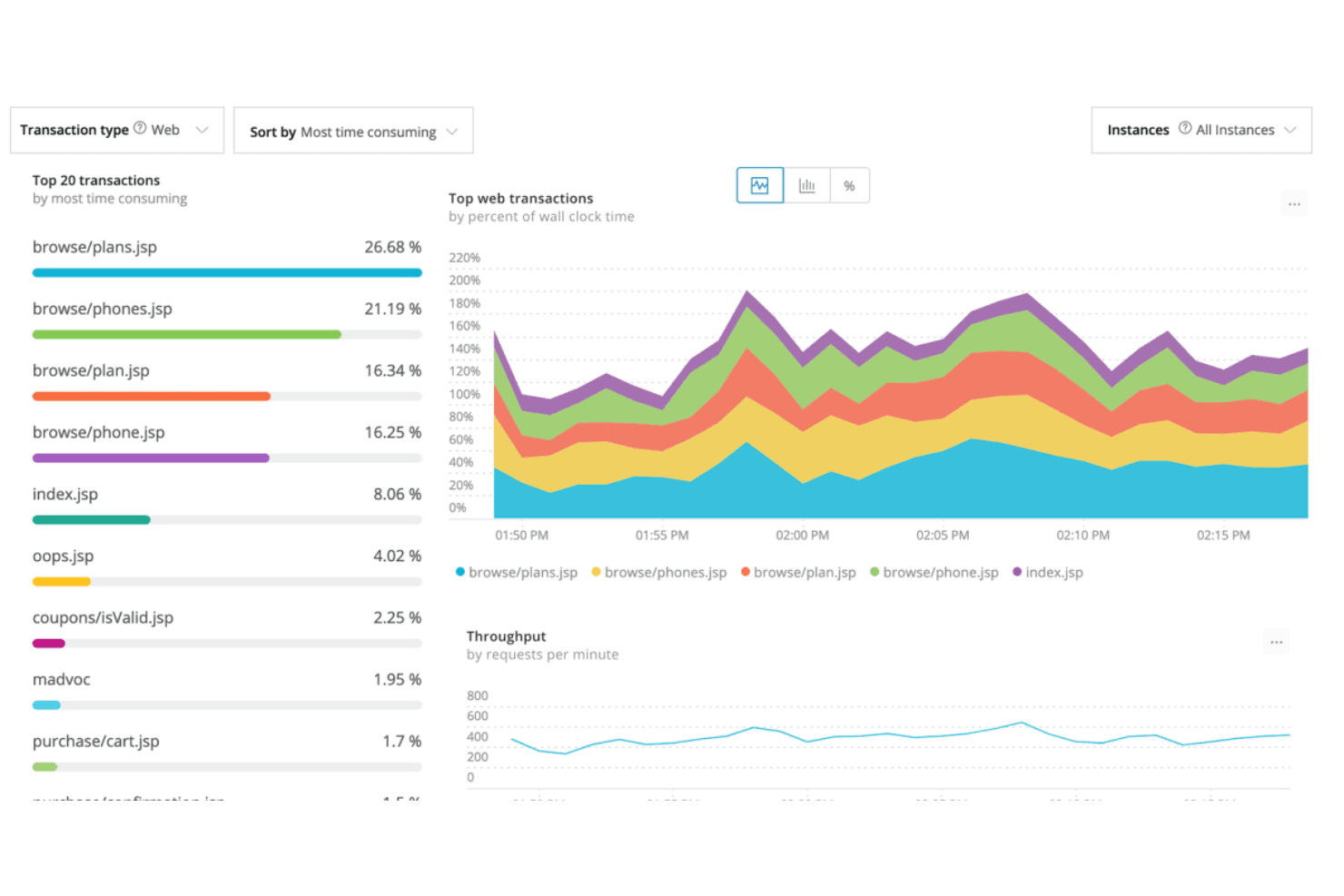
Dashboards and Visualizations: You can create custom dashboards to visualize data. This makes it easier for your team to understand and act on performance metrics.
Ease of Use
New Relic offers a wealth of features, but its interface can be overwhelming for new users. You might find the initial setup complex, especially if your team lacks technical expertise. However, once you get the hang of it, the intuitive dashboards and visualizations make monitoring straightforward. Compared to other platforms, New Relic does come with a learning curve, but its powerful insights and real-time data make it worth the effort for those who need detailed performance tracking.

Integrations
New Relic integrates with AWS, Microsoft Azure, Google Cloud Platform, Kubernetes, PagerDuty, Slack, ServiceNow, Atlassian Jira, and Prometheus.
New Relic also offers an API for custom integrations and connects with third-party integration tools.

New Relic Specs
- AI Integration: Yes
- API: Yes
- Automated Testing: No
- Browser Compatibility Testing: No
- Bug Tracking: No
- Code Review: No
- Custom Reports: Yes
- Data Export: Yes
- Data Import: Yes
- Developer Tools: Yes
- External Integrations: Yes
- Malware Protection: No
- Multi-User: Yes
- Notifications: Yes
- Performance Testing: No
- Process Reporting: Yes
- Static Analysis: No
- Status Notifications: No
- Workflow Management: No


