


SentiSum-arvostelu: hyvät puolet, huonot puolet, ominaisuudet ja hinnoittelu selitettynä


SentiSum is a customer intelligence platform that uses AI-driven tagging to turn support tickets, reviews, and survey responses into granular sentiment and topic insights. I'd reach for it when your CX team is drowning in unstructured feedback across Zendesk, Intercom, Trustpilot, and post-purchase surveys, and you need to know exactly which issues drive churn or CSAT drops. Compared to a broader analytics suite like Medallia, SentiSum is quicker to deploy and more focused on auto-tagging accuracy for support conversations, so smaller CX and product teams can act on themes without a dedicated insights analyst.
SentiSum Evaluation Summary
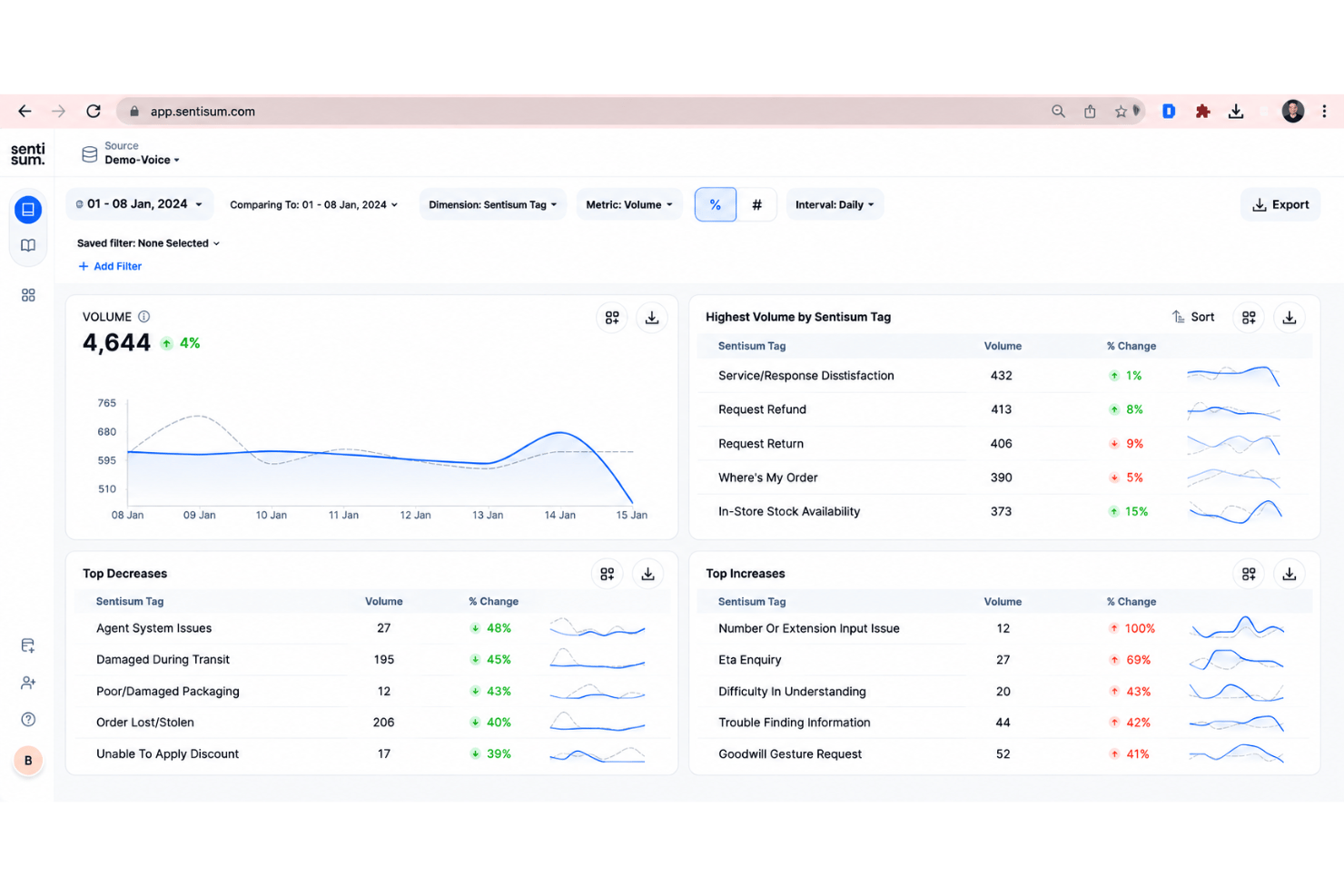
- Pricing upon request
- 30-day free trial
Why Trust Our Software Recommendations
Our team has been testing and reviewing software since 2012. As CX leaders ourselves, we know how difficult—and important—it is to choose the right software.
For this guide, we evaluated tools using hands-on testing and independent research, scoring tools using our selection criteria.
Our reviews reflect our human editorial judgment, not a sales pitch.
SentiSum Overview
I think SentiSum is ideal if you want clear, actionable insights from messy support data without a steep learning curve. Its AI-driven tagging, natural language processing, and quick deployment set it apart for CX teams with limited analytics resources. The auto-tagging is accurate, onboarding is fast, and integrations cover essentials like Zendesk and Intercom. Pricing can stretch smaller budgets, but for teams prioritizing speed to insight over deep analytics customization, SentiSum is a smart pick. You’ll get real-time trend spotting and root cause analysis with minimal manual setup, though teams needing broader or more customizable reporting might want to compare options.
pros
-
Accurately auto-tags high volumes of unstructured customer feedback
-
Identifies granular sentiment drivers without manual setup
-
Real-time trend detection highlights urgent issues quickly
cons
-
Dashboard reporting options are basic compared to peers
-
Lacks configurable analytics for deeper, custom insights
-
Pricing may be high for small or early-stage teams
-

SupportYourApp
Visit WebsiteThis rating combines scores from multiple user review sites to reflect overall customer sentiment about the product.4.7 -
Tidio
Visit WebsiteThis rating combines scores from multiple user review sites to reflect overall customer sentiment about the product.4.7 -
Freshdesk
Visit WebsiteThis rating combines scores from multiple user review sites to reflect overall customer sentiment about the product.4.4





How We Test & Score Tools
We’ve spent years building, refining, and improving our software testing and scoring system. The rubric is designed to capture the nuances of software selection and what makes a tool effective, focusing on critical aspects of the decision-making process.
Below, you can see exactly how our testing and scoring works across seven criteria. It allows us to provide an unbiased evaluation of the software based on core functionality, standout features, ease of use, onboarding, customer support, integrations, customer reviews, and value for money.
Core Functionality (25% of final scoring)
The starting point of our evaluation is always the core functionality of the tool. Does it have the basic features and functions that a user would expect to see? Are any of those core features locked to higher-tiered pricing plans? At its core, we expect a tool to stand up against the baseline capabilities of its competitors.
Standout Features (25% of final scoring)
Next, we evaluate uncommon standout features that go above and beyond the core functionality typically found in tools of its kind. A high score reflects specialized or unique features that make the product faster, more efficient, or offer additional value to the user.
We also evaluate how easy it is to integrate with other tools typically found in the tech stack to expand the functionality and utility of the software. Tools offering plentiful native integrations, 3rd party connections, and API access to build custom integrations score best.
Ease of Use (10% of final scoring)
We consider how quick and easy it is to execute the tasks defined in the core functionality using the tool. High scoring software is well designed, intuitive to use, offers mobile apps, provides templates, and makes relatively complex tasks seem simple.
Onboarding (10% of final scoring)
We know how important rapid team adoption is for a new platform, so we evaluate how easy it is to learn and use a tool with minimal training. We evaluate how quickly a team member can get set up and start using the tool with no experience. High scoring solutions indicate little or no support is required.
Customer Support (10% of final scoring)
We review how quick and easy it is to get unstuck and find help by phone, live chat, or knowledge base. Tools and companies that provide real-time support score best, while chatbots score worst.
Customer Reviews (10% of final scoring)
Beyond our own testing and evaluation, we consider the net promoter score from current and past customers. We review their likelihood, given the option, to choose the tool again for the core functionality. A high scoring software reflects a high net promoter score from current or past customers.
Value for Money (10% of final scoring)
Lastly, in consideration of all the other criteria, we review the average price of entry level plans against the core features and consider the value of the other evaluation criteria. Software that delivers more, for less, will score higher.
Core Features
AI-Driven Auto-Tagging
SentiSum uses trained AI models to automatically tag support tickets and feedback with granular topics and sentiment in real time. This cuts down manual work and highlights recurring pain points across thousands of conversations.
Sentiment Analysis Across Channels
SentiSum analyzes text from email, chat, reviews, and surveys to surface positive, neutral, and negative sentiment. This lets teams quickly spot shifts in customer mood by channel or topic.
Real-Time Trend Detection
The platform proactively highlights surges in complaint types or new issues as they appear. Teams get notifications about emerging themes so they can respond before problems escalate.
Root Cause Analysis
SentiSum helps teams trace negative customer sentiment or churn risk back to specific product bugs or service failures. You get clear explanations of what’s driving spikes in dissatisfaction.
Simple, Focused Dashboard
The reporting dashboard summarizes top issues, sentiment trends, and urgent insights in a clean, no-clutter layout. You don’t need analytics expertise to find actionable takeaways.
Fast Onboarding and Setup
SentiSum streamlines setup with built-in templates and instant integrations for common tools like Zendesk and Intercom. Most teams can start acting on insights within days instead of weeks.

Ease of Use
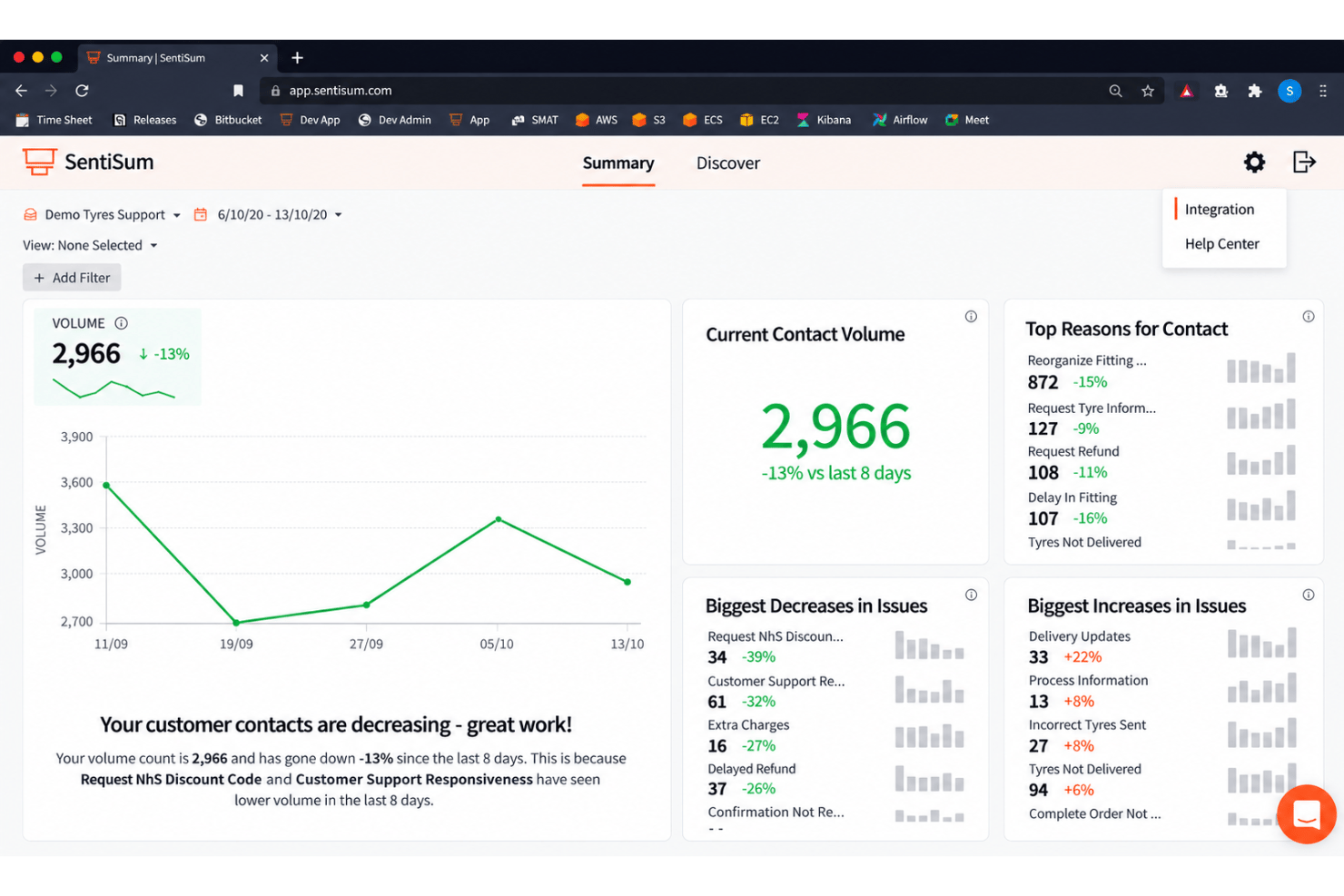
SentiSum is easy to navigate—even for teams with little analytics experience. The dashboard uses simple visuals and clear category breakdowns. Most users say setup takes just days, not weeks, and the auto-tagging works without heavy manual rules. Busy CX teams like that they get instant, actionable insights from tickets and reviews, and don’t have to dig for key trends or explanations, which saves time and reduces training needs.
Integrations
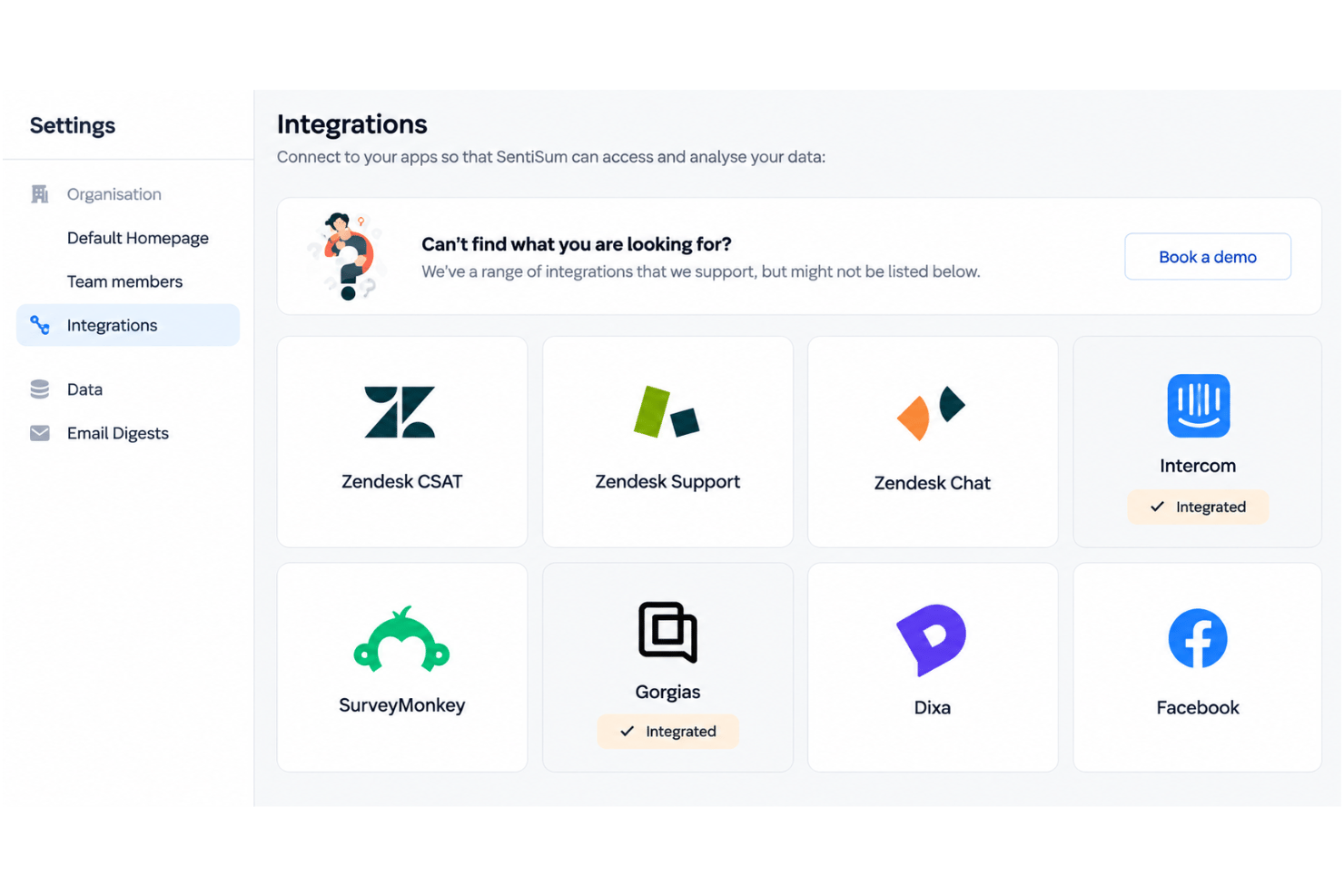
SentiSum integrates with Zendesk, Intercom, Freshdesk, Salesforce, SurveyMonkey, Gorgias, Dixa, Help Scout, Sprinklr, and AWS Connect, among others.
SentiSum also offers an API and connects with third-party integration tools.
SentiSum Specs
- A/B Testing
- AI Integration
- Analytics
- API
- Comparative Reporting
- Conversion Tracking
- Custom Reports
- Dashboard
- Dashboards
- Data Export
- Data Import
- Data Mining
- Data Visualization
- External Integrations
- Feedback Management
- Forecasting
- Historical Data Analysis
- Keyword Tracking
- Link Tracking
- Multi-Site
- Multi-User
- Notifications
- Process Reporting
- Real-time Alerts
- Referral Tracking
- Reports
- Scenario Planning
- SEO
- Time Series Modeling
- Visualization
- Workflow Management