

Recensione di Customer.io: vantaggi, svantaggi, funzionalità e prezzi
Customer.io eccelle grazie alla sua interfaccia intuitiva e alla solida automazione, rendendolo una scelta eccellente per i team che desiderano migliorare le proprie strategie di messaggistica ai clienti e automazione delle email.

Recensiamo gli strumenti in modo indipendente e le commissioni aiutano a finanziare i nostri test. Consulta la nostra politica di trasparenza, la nostra metodologia o suggerisci uno strumento.
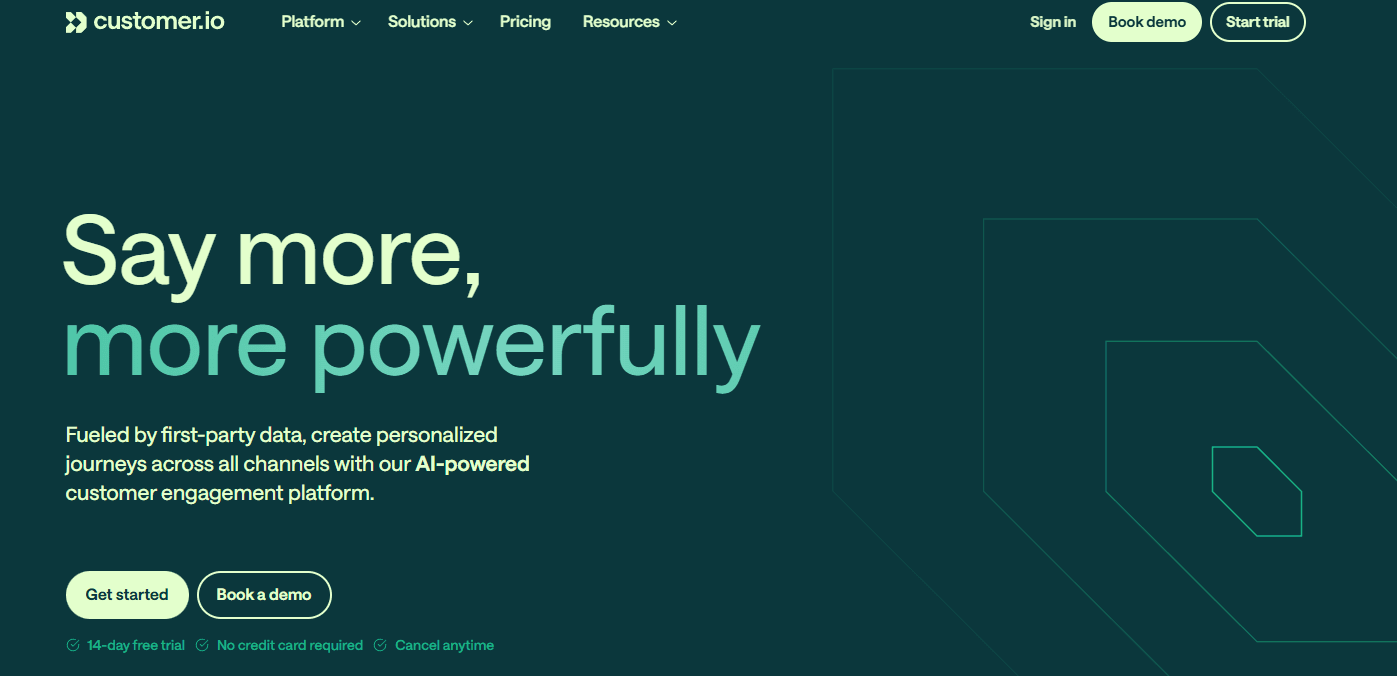
Customer.io is a customer data platform for teams that need to trigger personalized emails, SMS, and push notifications from real-time behavioral data. I'd mainly consider it over Braze if you want that same level of event-driven messaging flexibility. It's a better fit for mid-market teams that don't need Braze's enterprise-scale complexity or pricing.
Customer.io Evaluation Summary
4.2/5
- From $100/month
- 14-day free trial + free demo available
Perché fidarsi dei nostri consigli sui software
6,700+
Reviews
20
Industry experts
16+
Evaluation factors
14
Years
Il nostro team testa e recensisce software dal 2012. In quanto leader CX noi stessi, sappiamo quanto sia difficile — e importante — scegliere il software giusto.
Per questa guida, abbiamo valutato gli strumenti attraverso test pratici e ricerche indipendenti, assegnando un punteggio agli strumenti in base ai nostri criteri di selezione.
Le nostre recensioni riflettono il nostro giudizio editoriale umano, non un discorso di vendita.
 Gui DrusinaCreative Director
 Tim FisherVP of AI
Customer.io Overview
In my opinion, Customer.io is a solid choice for teams looking for a Customer Data Platform with robust automation capabilities. While it offers a set of comprehensive features, the interface could be more intuitive, which might be a hurdle for new users. However, the platform shines with its detailed customer journey mapping and segmentation tools. Compared to competitors, it provides a good balance between functionality and price, making it ideal for medium-sized businesses. Customer support is reliable, though it could be more responsive. If your team values customization and has the technical know-how, Customer.io is worth considering.
Pros
- You can easily create personalized messages with its user-friendly interface and thoughtfully designed templates.
- Your team can automate workflows without needing technical skills via a visual builder and a centralized dashboard.
- It offers real-time analytics and deliverability insights to improve your email marketing strategies.
Cons
- You might find the learning curve steep if you're new to marketing automation.
- Your team could experience occasional lags with larger data sets.
- It lacks some advanced segmentation features compared to its competitors, like Braze, Mailchimp, and ActiveCampaign.
Is Customer.io Right For Your Needs?
Who Would be a Good Fit for Customer.io?
Customer.io is ideal for marketing teams in small to medium-sized businesses. Its strength lies in its robust automation capabilities, allowing you to send targeted messages based on user behavior throughout the lifecycle. For companies focused on personalized customer engagement, Customer.io offers features like email automation, in-app messages, landing pages, and A/B testing, ensuring your campaigns are both effective and efficient. If your company's goal is to improve customer retention through personalized communication, Customer.io's dynamic segmentation and workflow automation tools can significantly aid your efforts.
- E-commerceCustomer.io helps you automate personalized email marketing campaigns and transactional messages based on customer shopping behavior, boosting sales and customer loyalty.
- SaaS CompaniesWith Customer.io, you can nurture leads and engage users through automated onboarding and retention emails, tailored to user interactions, or send targeted customer messaging via push, in-app, or email automation.
- Marketing AgenciesIts automation features allow you to manage multiple client campaigns efficiently, delivering personalized communication at scale and collaborating via Slack updates or Zapier actions..
- StartupsActing as a flexible email marketing tool within a broader marketing automation platform, Customer.io provides tools to engage and retain users for startups looking to grow, without needing a large marketing team.
- RetailCustomer.io's real-time messaging based on customer actions can drive in-store visits and improve customer satisfaction. Teams can quickly publish updates using templates and review deliverability metrics.
- NonprofitsCustomer.io helps communicate effectively with donors and volunteers, sending timely updates and calls to action (CTAs) and organizing user reviews or testimonials collected via forms.
Who Would be a Bad Fit for Customer.io?
If your business relies heavily on real-time data processing or requires extensive integration with diverse platforms, Customer.io might not be the best choice. Its integration stack is broad but may still require other programs like Zapier or webhooks to bridge highly customized systems, which can hinder workflows that are dependent on seamless data exchange across multiple systems. Additionally, organizations that need advanced financial features or budget management may find Customer.io lacking, as it doesn't support cater to financial operations.
- Large EnterprisesIf your company needs complex, scalable solutions with robust integration capabilities, Customer.io may not meet your needs without additional service providers or custom engineering work, thereby increasing costs and complexity..
- Financial ServicesFor businesses that require detailed financial analytics and budget management, Customer.io doesn’t offer relevant features.
- Manufacturing IndustryIf your operations depend on real-time data and extensive system integrations, Customer.io's limitations might impede efficiency.
- Healthcare SectorHealthcare organizations that require strict HIPAA workflows will prefer platforms purpose-built for clinical data that can validate compliance and deliverability needs carefully.
- Small Non-ProfitsIf your team needs a straightforward, cost-effective communication tool, Customer.io's feature set might be more than you need compared to simpler email marketing options.
- Event Planning TeamsFor teams focused on real-time updates and dynamic scheduling, Customer.io's integration limitations could be a drawback and require teams to deploy apps from Zapier and Slack.
Come Testiamo e Valutiamo gli Strumenti
Abbiamo passato anni a costruire, perfezionare e migliorare il nostro sistema di valutazione e testing dei software. Il nostro schema è progettato per cogliere tutte le sfumature nella selezione del software e per valutare ciò che rende uno strumento efficace, concentrandosi sugli aspetti critici nel processo decisionale. Qui sotto puoi vedere esattamente come funziona il nostro processo di testing e valutazione su sette criteri. Ci permette di offrire una valutazione imparziale del software basata su funzionalità principali, caratteristiche distintive, facilità d’uso, onboarding, supporto clienti, integrazioni, recensioni clienti e rapporto qualità/prezzo.
Funzionalità Principali (25% del punteggio finale)
Il punto di partenza della nostra valutazione sono sempre le funzionalità fondamentali dello strumento. Possiede le funzioni di base che un utente si aspetta? Alcune di queste funzionalità sono disponibili solo con piani più costosi? In sostanza, ci aspettiamo che uno strumento sia competitivo rispetto ai suoi concorrenti principali.
Caratteristiche Distintive (25% del punteggio finale)
Successivamente, valutiamo le funzionalità particolari e distintive che vanno oltre le funzionalità standard solitamente presenti in strumenti simili. Un punteggio elevato riflette funzionalità specializzate o uniche che rendono il prodotto più veloce, efficiente o che offrono valore aggiunto all’utente. Valutiamo anche quanto sia facile integrare lo strumento con altri strumenti tipicamente presenti nel tech stack, per ampliare le funzionalità e l’utilità del software. Ottengono il punteggio migliore gli strumenti che offrono numerose integrazioni native, connessioni di terze parti e accesso API per creare integrazioni personalizzate.
Facilità d’Uso (10% del punteggio finale)
Consideriamo quanto sia rapido e intuitivo eseguire le attività core usando lo strumento. Un software con un alto punteggio è ben progettato, intuitivo all’uso, offre app mobili, mette a disposizione modelli e semplifica attività relativamente complesse.
Onboarding (10% del punteggio finale)
Sappiamo quanto sia importante l’adozione rapida da parte del team per una nuova piattaforma, quindi valutiamo la facilità di apprendimento e utilizzo dello strumento con una formazione minima. Valutiamo quanto velocemente un membro del team può iniziare a usare lo strumento senza esperienza. Le soluzioni con punteggio elevato richiedono poco o nessun supporto.
Supporto Clienti (10% del punteggio finale)
Valutiamo quanto sia semplice ricevere assistenza via telefono, chat dal vivo o knowledge base. Gli strumenti e le aziende che offrono supporto in tempo reale ottengono il punteggio migliore, mentre i chatbot hanno il punteggio più basso.
Recensioni Clienti (10% del punteggio finale)
Oltre alla nostra valutazione interna, prendiamo in considerazione il net promoter score dei clienti attuali e passati. Analizziamo la probabilità che, potendo scegliere, selezionino di nuovo lo strumento per le sue funzionalità core. Un software con punteggio elevato riflette un alto net promoter score dai clienti attuali o passati.
Rapporto Qualità/Prezzo (10% del punteggio finale)
Infine, tenendo conto di tutti gli altri criteri, analizziamo il prezzo medio dei piani entry level rispetto alle funzionalità principali e consideriamo il valore delle altre metriche di valutazione. Il software che offre di più, a meno, otterrà un punteggio maggiore.
Core Features
Data Segmentation: With Customer.io, you can segment your audience based on real-time user behavior and attributes, helping you target your marketing efforts precisely. This means your messages reach the right people, enhancing engagement and conversion rates.
Automation Workflows: You can automate repetitive tasks with ease, allowing your team to focus on strategic activities. This feature helps in sending timely, personalized messages without manual intervention, improving efficiency across customer journeys in your marketing automation platform.
Behavioral Tracking: By tracking user interactions across various channels, Customer.io provides insights into customer behavior. This data helps you understand user preferences, tailor your strategies accordingly, and execute by employing reusable templates.
A/B Testing: Test different versions of your campaigns to see which performs best. This feature allows you to optimize your messaging based on user reviews and performance metrics, enhancing your marketing effectiveness.
Dynamic Content: Personalize content in real-time based on user data, ensuring relevance and increasing engagement across email marketing and in-app experiences.
API Access: Seamlessly integrate Customer.io with your existing systems to ensure a seamless data flow. This connectivity facilitates comprehensive data management using APIs, webhooks, and connections triggered via Zapier or Slack notifications.

Ease of Use
Customer.io is generally user-friendly, but beginners may find its learning curve a bit steep. The platform's visual workflow builder and detailed documentation can help your team get up to speed. However, the complexity of some features might require a bit of trial and error. Users appreciate the ability to create personalized campaigns, including landing pages, in-app messages, and email automation, but navigating the interface could take some getting used to. Once familiar, however, you can efficiently manage customer messaging and communications across channels, making it a powerful tool for your team.

Integrations
Customer.io integrates with Amazon S3, Amplitude, Branch, Salesforce, Facebook Lead Ads, Google Ads, Mixpanel, Snowflake, Twilio, and Typeform.
Customer.io also has APIs, including the Pipelines API, Track API, and App API, which allow integration with third-party tools. The platform supports mobile SDKs for iOS, Android, and more, enhancing its integration capabilities.

Customer.io Specs
- A/B Testing: Yes
- Analytics: Yes
- API: Yes
- Audience Targeting: Yes
- Automated Conversion: No
- Batch Permissions & Access: No
- Behavioral Tracking: No
- Brand Management: No
- Campaign Management: Yes
- Contact Management: Yes
- Contact Sharing: No
- Conversion Tracking: No
- CRM Integration: Yes
- Customer Management: Yes
- Dashboards: No
- Data Export: Yes
- Data Import: Yes
- Email Integration: Yes
- External Integrations: Yes
- Keyword Tracking: No
- Landing Pages: No
- Lead Management: No
- Lead Scoring: No
- Link Tracking: No
- Marketing Automation: Yes
- Multi-User: Yes
- Notifications: Yes
- Password & Access Management: No
- Social-Media Integration: Yes


