

Recensione di New Relic: vantaggi, svantaggi, funzionalità e prezzi
New Relic eccelle nel fornire una visibilità approfondita sulle applicazioni, diventando una scelta di primo livello per le organizzazioni tecnologiche alla ricerca di dati affidabili sulle prestazioni.

Recensiamo gli strumenti in modo indipendente e le commissioni aiutano a finanziare i nostri test. Consulta la nostra politica di trasparenza, la nostra metodologia o suggerisci uno strumento.
New Relic is a digital experience platform for engineering and operations teams that need to monitor application performance, infrastructure health, and end-user experience in one place. I'd consider it if you want a more unified observability setup than Datadog offers—particularly if your team is tired of stitching together separate tools for APM, logs, and infrastructure monitoring and wants a single platform with one consistent data model underneath everything.
New Relic Evaluation Summary

4.3/5
- From $10/user/month
- Free plan available
Perché fidarsi dei nostri consigli sui software
6,700+
Reviews
20
Industry experts
16+
Evaluation factors
14
Years
Il nostro team testa e recensisce software dal 2012. In quanto leader CX noi stessi, sappiamo quanto sia difficile — e importante — scegliere il software giusto.
Per questa guida, abbiamo valutato gli strumenti attraverso test pratici e ricerche indipendenti, assegnando un punteggio agli strumenti in base ai nostri criteri di selezione.
Le nostre recensioni riflettono il nostro giudizio editoriale umano, non un discorso di vendita.
 Gui DrusinaCreative Director
 Tim FisherVP of AI
New Relic Overview
In my opinion, New Relic is a solid choice for tech-driven teams needing deep insights into digital performance. It excels with its advanced monitoring tools and integrations, but its pricing might deter smaller businesses. Compared to competitors, New Relic offers superior data visualization but can be complex for new users. It's best for large enterprises that value detailed analytics and have the resources to manage its comprehensive capabilities. If your team prioritizes thorough data analysis and performance tracking, New Relic should be on your shortlist.
Pros
- Detailed insights into application performance.
- AI-driven alerts, helping teams address the root cause of incidents automatically.
- Visual dashboards make monitoring data easy to understand.
- Automated workflows help streamline issue detection, notification, and remediation.
Cons
- Your team might find the interface overwhelming at first.
- It can be complex for new users to set up.
- You may experience occasional delays in customer support response.
Is New Relic Right For Your Needs?
Who Would be a Good Fit for New Relic?
New Relic is ideal for tech-driven companies that need deep, real-time visibility into their digital experiences. If your team relies on live data to spot and fix issues quickly, New Relic delivers exactly that. Its clear, detailed dashboards make it easy for IT and DevOps teams to understand what’s happening across their systems, making it especially useful for larger organizations that depend on data-driven decision-making.
If your team needs real-time data and AI-driven insights to quickly identify and fix issues, New Relic fits well. Its detailed dashboards help IT and DevOps teams visualize performance metrics effectively, making it suitable for large enterprises that prioritize data-driven decision-making.
- Large EnterprisesLarge-scale operations benefit from New Relic’s comprehensive monitoring, detailed analytics, and strong debugging capabilities. The platform makes it easier to track performance across complex systems, so you can quickly identify error rates and bottlenecks that could impact users.
- IT DepartmentsYour IT team can leverage New Relic’s real-time alerts to identify and resolve issues efficiently.
- E-commerce BusinessesYou can track user interactions and performance to improve conversion rates.
- Healthcare ProvidersYour organization can monitor application performance to streamline patient experiences.
- DevOps TeamsDevelopers and software engineers benefit from New Relic’s network monitoring tools, deep insights, and AI-driven alerts for rapid problem-solving.
- Financial ServicesYou can use New Relic to ensure secure and reliable transaction processing.
Who Would be a Bad Fit for New Relic?
New Relic might not be suitable for small businesses or startups with limited budgets, since the platform can be both complex and costly. And if your team lacks technical expertise, you might find the setup and interface overwhelming. Industries that don't rely heavily on digital platforms or real-time data may also not need New Relic's extensive monitoring capabilities, making it an unnecessary expense.
- Small BusinessesYour small team might find New Relic’s cost and complexity more than you need.
- Non-Tech IndustriesIf your work doesn’t rely on digital platforms, New Relic’s features may be excessive.
- StartupsYour early-stage company may struggle with New Relic’s pricing and steep learning curve.
- Low-Tech DepartmentsDepartments with minimal tech needs might not benefit from New Relic’s advanced capabilities.
- FreelancersIf you work independently, New Relic’s features could be too extensive and costly.
- Basic Web ServicesIf your services don’t require deep monitoring, New Relic’s capabilities might be unnecessary.
Come Testiamo e Valutiamo gli Strumenti
Abbiamo passato anni a costruire, perfezionare e migliorare il nostro sistema di valutazione e testing dei software. Il nostro schema è progettato per cogliere tutte le sfumature nella selezione del software e per valutare ciò che rende uno strumento efficace, concentrandosi sugli aspetti critici nel processo decisionale. Qui sotto puoi vedere esattamente come funziona il nostro processo di testing e valutazione su sette criteri. Ci permette di offrire una valutazione imparziale del software basata su funzionalità principali, caratteristiche distintive, facilità d’uso, onboarding, supporto clienti, integrazioni, recensioni clienti e rapporto qualità/prezzo.
Funzionalità Principali (25% del punteggio finale)
Il punto di partenza della nostra valutazione sono sempre le funzionalità fondamentali dello strumento. Possiede le funzioni di base che un utente si aspetta? Alcune di queste funzionalità sono disponibili solo con piani più costosi? In sostanza, ci aspettiamo che uno strumento sia competitivo rispetto ai suoi concorrenti principali.
Caratteristiche Distintive (25% del punteggio finale)
Successivamente, valutiamo le funzionalità particolari e distintive che vanno oltre le funzionalità standard solitamente presenti in strumenti simili. Un punteggio elevato riflette funzionalità specializzate o uniche che rendono il prodotto più veloce, efficiente o che offrono valore aggiunto all’utente. Valutiamo anche quanto sia facile integrare lo strumento con altri strumenti tipicamente presenti nel tech stack, per ampliare le funzionalità e l’utilità del software. Ottengono il punteggio migliore gli strumenti che offrono numerose integrazioni native, connessioni di terze parti e accesso API per creare integrazioni personalizzate.
Facilità d’Uso (10% del punteggio finale)
Consideriamo quanto sia rapido e intuitivo eseguire le attività core usando lo strumento. Un software con un alto punteggio è ben progettato, intuitivo all’uso, offre app mobili, mette a disposizione modelli e semplifica attività relativamente complesse.
Onboarding (10% del punteggio finale)
Sappiamo quanto sia importante l’adozione rapida da parte del team per una nuova piattaforma, quindi valutiamo la facilità di apprendimento e utilizzo dello strumento con una formazione minima. Valutiamo quanto velocemente un membro del team può iniziare a usare lo strumento senza esperienza. Le soluzioni con punteggio elevato richiedono poco o nessun supporto.
Supporto Clienti (10% del punteggio finale)
Valutiamo quanto sia semplice ricevere assistenza via telefono, chat dal vivo o knowledge base. Gli strumenti e le aziende che offrono supporto in tempo reale ottengono il punteggio migliore, mentre i chatbot hanno il punteggio più basso.
Recensioni Clienti (10% del punteggio finale)
Oltre alla nostra valutazione interna, prendiamo in considerazione il net promoter score dei clienti attuali e passati. Analizziamo la probabilità che, potendo scegliere, selezionino di nuovo lo strumento per le sue funzionalità core. Un software con punteggio elevato riflette un alto net promoter score dai clienti attuali o passati.
Rapporto Qualità/Prezzo (10% del punteggio finale)
Infine, tenendo conto di tutti gli altri criteri, analizziamo il prezzo medio dei piani entry level rispetto alle funzionalità principali e consideriamo il valore delle altre metriche di valutazione. Il software che offre di più, a meno, otterrà un punteggio maggiore.
Core Features
Application Performance Monitoring: You can track the performance of your applications in real-time. This helps team members spot and fix issues quickly.
Real User Monitoring: Your team can see how actual users interact with your site. This feature provides insights into user experience and potential bottlenecks.
Synthetic Monitoring: You can simulate user interactions to test and monitor your application's performance. This helps you make sure your site functions well for users at go-live.
Infrastructure Monitoring: Your team gains insights into your servers and hosts. This helps you maintain optimal infrastructure performance.
Alerts and AI Insights: You receive instant alerts when issues arise. AI-driven insights help your team prioritize and resolve problems quickly.
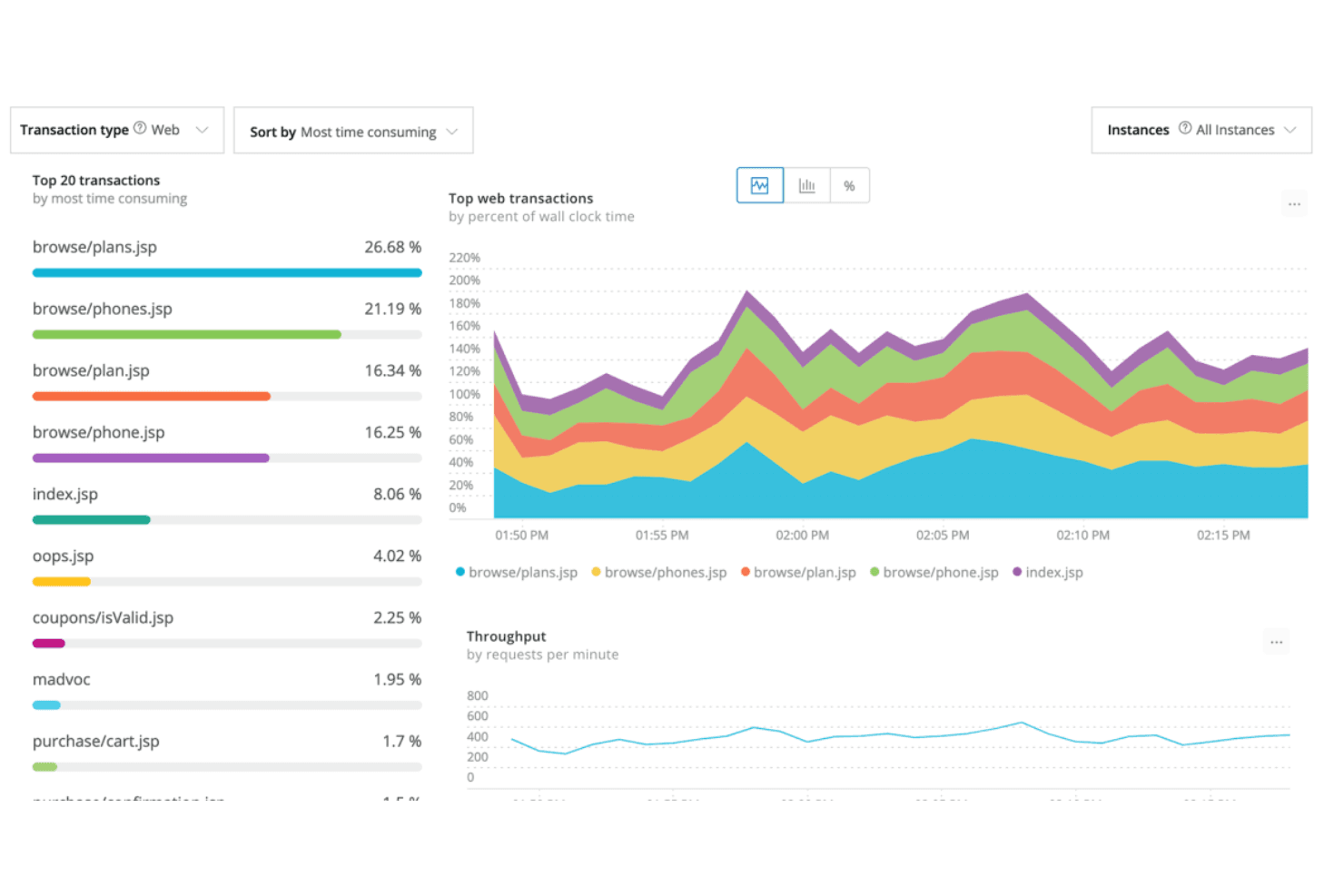
Dashboards and Visualizations: You can create custom dashboards to visualize data. This makes it easier for your team to understand and act on performance metrics.
Ease of Use
New Relic offers a wealth of features, but its interface can be overwhelming for new users. You might find the initial setup complex, especially if your team lacks technical expertise. However, once you get the hang of it, the intuitive dashboards and visualizations make monitoring straightforward. Compared to other platforms, New Relic does come with a learning curve, but its powerful insights and real-time data make it worth the effort for those who need detailed performance tracking.

Integrations
New Relic integrates with AWS, Microsoft Azure, Google Cloud Platform, Kubernetes, PagerDuty, Slack, ServiceNow, Atlassian Jira, and Prometheus.
New Relic also offers an API for custom integrations and connects with third-party integration tools.

New Relic Specs
- AI Integration: Yes
- API: Yes
- Automated Testing: No
- Browser Compatibility Testing: No
- Bug Tracking: No
- Code Review: No
- Custom Reports: Yes
- Data Export: Yes
- Data Import: Yes
- Developer Tools: Yes
- External Integrations: Yes
- Malware Protection: No
- Multi-User: Yes
- Notifications: Yes
- Performance Testing: No
- Process Reporting: Yes
- Static Analysis: No
- Status Notifications: No
- Workflow Management: No


