

O software de centro de contacto de seguros é uma tecnologia concebida especificamente para ajudar as equipas de seguros a gerir pedidos de informação dos tomadores de seguros, sinistros, renovações e conformidade em vários canais. Se está à procura das melhores plataformas para modernizar as suas operações, já sabe como é difícil acompanhar volumes elevados de chamadas, regulamentação em constante evolução e expectativas cada vez maiores dos clientes. Desde o envolvimento omnicanal até aos fluxos de trabalho automatizados para sinistros e à conformidade orientada por IA, vou apresentar-lhe as principais opções que podem ajudar a sua equipa a criar experiências responsivas, fiáveis e consistentes — para que se possa concentrar em proporcionar valor real em cada ponto de contacto.
Why Trust Our Software Recommendations
6,700+
Reviews
20
Industry experts
16+
Evaluation factors
14
Years
Our team has been testing and reviewing software since 2012. As CX leaders ourselves, we know how difficult—and important—it is to choose the right software.
For this guide, we evaluated tools using hands-on testing and independent research, scoring tools using our selection criteria.
Our reviews reflect our human editorial judgment, not a sales pitch.
 Gui DrusinaCreative Director
 Tim FisherVP of AI
Tabela comparativa de software de centro de contacto de seguros
A tabela abaixo compara os detalhes de preços das minhas principais escolhas de software de centro de contacto de seguros.
| Tool | Best For | Trial Info | Price | ||
|---|---|---|---|---|---|
| 1 | Best for AI-assisted FNOL intake and routing | Free trial available | From $15/user/month (billed annually) | Website | |
| 2 | Best for AI call scoring on a budget | Free plan + 14-day trial + free demo available | From $25/user/month (billed annually) | Website | |
| 3 | Best for scalable, cloud-based deployments | Free plan available | Pricing upon request | Website | |
| 4 | Best for omnichannel policyholder engagement | Free trial available | From $75/user/month (billed annually) | Website | |
| 5 | Best for AI-driven compliance monitoring | Free demo available | From $110/agent/month (proactive AI extra) | Website | |
| 6 | Best for insurance claims workflow automation | Free demo available | Pricing upon request | Website | |
| 7 | Best for AI-assisted call summaries in insurance | 14-day free trial + free demo available | Pricing upon request | Website | |
| 8 | Best for outbound insurance campaign management | Free demo available | Pricing upon request | Website | |
| 9 | Best for deep policy system integrations | Free demo available | From $119/seat/month | Website | |
| 10 | Best for regulatory call recording features | Free demo available | Pricing upon request | Website |


Análises de software de centro de contacto de seguros
Abaixo encontrará os meus resumos detalhados do melhor software de centro de contacto de seguros que integrou a minha lista restrita. As minhas análises apresentam uma visão detalhada das funcionalidades, dos melhores casos de utilização e das integrações de cada plataforma, para o ajudar a encontrar a melhor opção para si.
 Best for AI-assisted FNOL intake and routing
- Free trial available
- From $15/user/month (billed annually)
Visit WebsiteCustomer Rating:4.5/5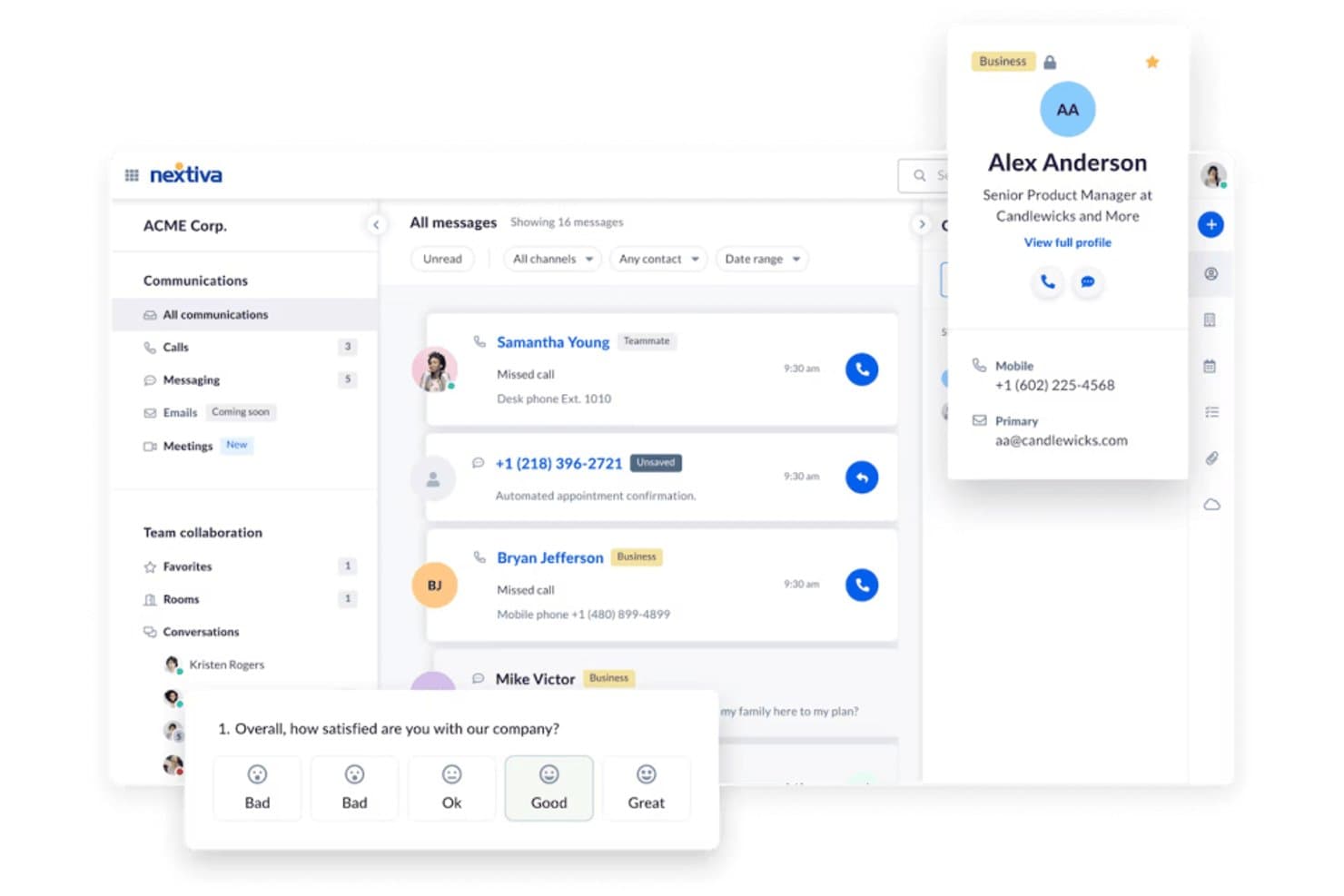
Nextiva centralizes calls, messages, and contacts in one platform. Nextiva is a cloud-based contact center and AI agent platform that combines omnichannel call handling, IVR, skills-based routing, compliance recording, and an AI agent (XBert) built to manage inbound insurance inquiries including FNOL intake, claims routing, and policyholder communications.
Who Is Nextiva Best For?
Nextiva is a strong fit for insurance contact center managers who need a single platform to handle inbound FNOL intake, policyholder inquiries, and claims routing across voice, SMS, and chat.
Why I Picked Nextiva
I picked Nextiva as one of the best because its XBert AI agent handles the full FNOL intake conversation, capturing loss details and routing the claim to the right agent based on urgency and line of business, before a human ever picks up. I particularly like how sentiment analysis runs in real time, so a distressed policyholder gets escalated immediately rather than waiting in a standard queue. When a live agent does take over, they receive the full transcript and AI summary, which cuts the time spent recapping and keeps the conversation moving.
Nextiva Key Features
- Omnichannel agent interface: Handles voice, SMS, web chat, email, and messaging apps in a single agent view with unified conversation history across channels.
- Call Flow Builder: A drag-and-drop tool for designing claims, quote, and service routing paths with IVR and speech recognition built in.
- Automatic PII and PCI redaction: Scrubs sensitive data from voice recordings, transcripts, screen recordings, and chat logs automatically across all channels.
- Skills-based routing: Directs inbound calls to agents based on line of business, availability, and urgency without requiring manual queue management.
Nextiva Integrations
Nextiva offers documented integrations with AgencyBloc, EZLynx, Salesforce, HubSpot, Zoho, Microsoft Dynamics, Zendesk, ServiceNow, Microsoft Teams, and Google Workspace. It also provides a REST API for custom integrations.
Pros and Cons
Pros:
- Agents receive transcripts and summaries immediately
- Sentiment flags distressed callers for escalation
- AI captures FNOL details before handoff
Cons:
- Advanced quality management requires an add-on
- Insurance workflows remain largely general-purpose
 Best for AI call scoring on a budget
- Free plan + 14-day trial + free demo available
- From $25/user/month (billed annually)
Visit WebsiteCustomer Rating:4.2/5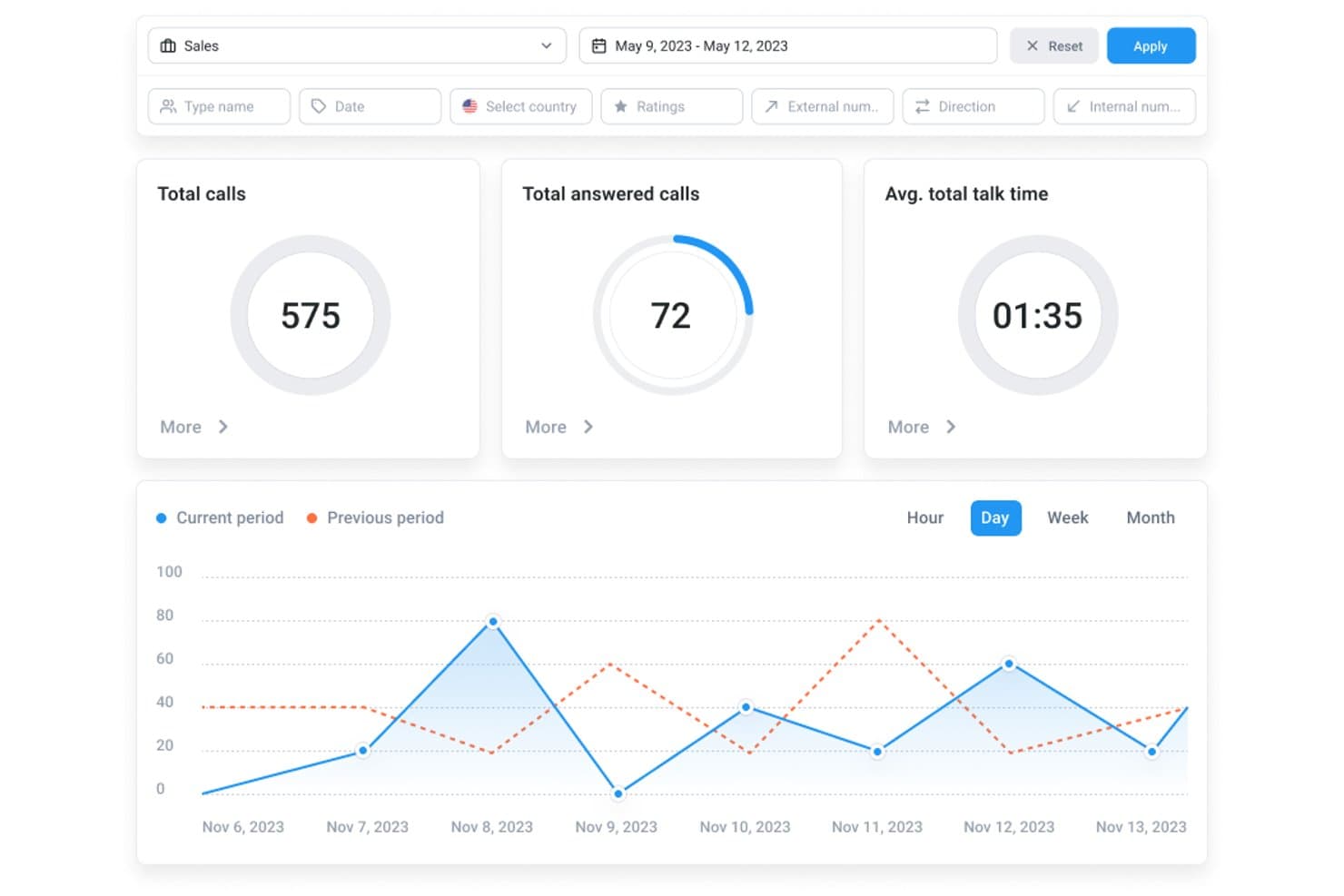
CloudTalk tracks call volume and talk time for insurance sales teams. CloudTalk is a cloud-based call center platform that handles inbound and outbound voice calls, SMS/MMS, and WhatsApp, with AI conversation intelligence, multi-mode dialers, and skill-based routing built in.
Who Is CloudTalk Best For?
CloudTalk is a strong fit for small to mid-sized insurance agencies that want AI-powered call scoring and quality monitoring without paying enterprise-tier prices.
Why I Picked CloudTalk
I picked CloudTalk as one of the best because its AI Conversation Intelligence add-on brings real call scoring capability to agencies that can't justify enterprise pricing. At just €9/user/month, you get automatic sentiment analysis, AI-generated call summaries, and topic tagging across every recorded call, so QA reviewers can spot coaching opportunities without manually listening to hours of audio. I also like that AI call scoring pairs directly with live monitoring tools like listen, whisper, and barge, making it practical for supervisors to coach agents on policyholder calls in real time.
CloudTalk Key Features
- Skill-based routing: Directs inbound calls to agents based on defined skills, so policyholders reach the right person without unnecessary transfers.
- Power Dialer: Runs automated outbound call campaigns with scripts, notes, and voicemail drop built in, useful for renewals and premium collection follow-ups.
- IVR and Call Flow Designer: A drag-and-drop builder lets you configure multi-level menus, time-based routing, and queue callbacks without developer support.
- Real-time call monitoring: Supervisors can listen, whisper, or barge into live calls, giving managers a direct way to support agents during complex policyholder interactions.
CloudTalk Integrations
CloudTalk offers 100+ native integrations, including Salesforce, Microsoft Dynamics 365, HubSpot, Zendesk, and Freshdesk. It also supports an open API, webhooks, Dataddo, Make, and Zapier, but no documented native connectors for insurance policy administration or claims platforms.
Pros and Cons
Pros:
- Variety of outbound dialer options available
- Fast setup without hardware or installation
- AI call scoring highlights coaching moments
Cons:
- Lacks automated TCPA and DNC compliance tools
- No insurance-specific call routing attributes
 Best for scalable, cloud-based deployments
- Free plan available
- Pricing upon request
Visit WebsiteCustomer Rating:4.5/5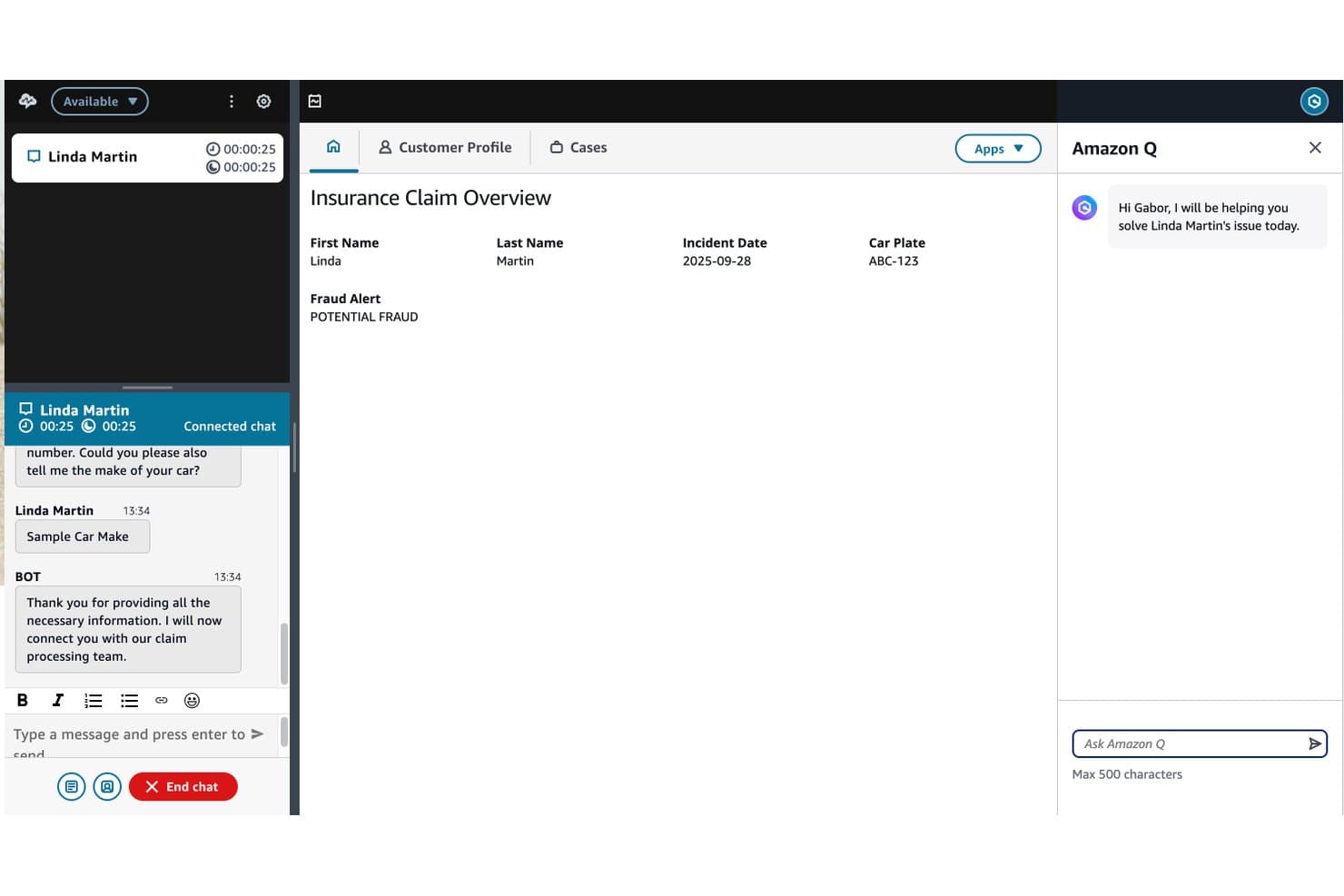
Amazon Connect enables real-time chat with insurance claim details, fraud alerts, and Amazon Q agent assistance. Amazon Connect is an AWS-native cloud contact center platform with AI-driven voice, chat, email, and SMS handling, skills-based routing, built-in IVR and voicebots, compliance recording with PII redaction, and speech analytics.
Who Is Amazon Connect Best For?
Amazon Connect suits mid-size to enterprise insurance carriers with in-house AWS or technical expertise who need a highly customizable, scalable contact center.
Why I Picked Amazon Connect
Amazon Connect earns its spot on my shortlist because its pay-as-you-go infrastructure scales instantly, which matters during open enrollment or post-storm claims surges when call volume can spike without warning. I particularly like the ML-powered forecasting and scheduling tools, which let my team right-size staffing in real time rather than overprovisioning for peaks. The AI Agent Designer also lets us deploy pre-built AI agents for claims status and FNOL intake without months of build time.
Amazon Connect Key Features
- Unified agent desktop: Agents handle voice, chat, email, and SMS interactions in a single interface with contextual customer data.
- Contact Lens analytics: Analyze 100% of calls and chats for sentiment, compliance, and keyword trends with automated transcription.
- Automated compliance tools: Includes PII redaction, call and screen recording, and encrypted storage to support insurance regulations.
- Salesforce Service Cloud Voice integration: Connects telephony, digital channels, and CRM data for insurance contact centers.
Amazon Connect Integrations
Amazon Connect offers native integrations with Salesforce Service Cloud Voice, EIS, Microsoft Teams, Amazon Lex, and AWS Lambda for backend connections. An API is available for custom integrations.
Pros and Cons
Pros:
- Pay-per-use billing suits variable claim volumes
- Customizable voicebot interaction flows
- Native cloud data repositories
Cons:
- No pre-built insurance call flows included
- Requires significant AWS technical expertise to configure
Learn more about Amazon Connect: Best for omnichannel policyholder engagement
- Free trial available
- From $75/user/month (billed annually)
Visit WebsiteCustomer Rating:4.4/5
Genesys Cloud CX unifies customer chat history and segments in one view. Genesys Cloud CX is an AI-powered cloud contact center platform that unifies voice, digital channels, workforce engagement management, IVR, outbound campaigns, and real-time analytics in a single interface.
Who Is Genesys Cloud CX Best For?
It's well-suited to mid-market and enterprise insurance carriers running multi-channel contact centers that need to manage high volumes of policyholder interactions across voice and digital.
Why I Picked Genesys Cloud CX
I picked Genesys Cloud CX as one of the best because its Architect flow designer lets insurance teams build voicebot-driven FNOL intake flows that connect to backend systems via Data Actions. Predictive routing then matches callers to licensed agents by product line or state automatically. On top of that, speech and sentiment analytics run across 100% of interactions, giving supervisors visibility into claim conversations without manual call sampling.
Genesys Cloud CX Key Features
- Unified agent desktop: Agents manage calls, email, SMS, chat, and social interactions from one interface with full conversation history.
- Screen recording: Supervisors capture and review agent desktop activity alongside call audio for compliance and quality assurance.
- AppFoundry marketplace: Access a range of prebuilt connectors and apps for integrating policy admin, CRM, and claims platforms.
- Workforce engagement management: Tools for agent forecasting, scheduling, coaching, and gamification tailored to contact center operations.
Genesys Cloud CX Integrations
Genesys Cloud CX offers native integrations with Salesforce, ServiceNow, Microsoft Teams, Zendesk, Microsoft 365, Amazon Lex, Google Dialogflow, and Zoom. Additional marketplace integrations are available through AppFoundry, and an API is provided for custom integrations.
Pros and Cons
Pros:
- Native FNOL voicebot flows configurable without coding
- Speech analytics covers 100% of interactions
- AI-driven routing matches callers to licensed agents
Cons:
- Requires manual campaign pausing
- Lacks automated failover protocols
Learn more about Genesys Cloud CX: Best for AI-driven compliance monitoring
- Free demo available
- From $110/agent/month (proactive AI extra)
Visit WebsiteCustomer Rating:4.3/5
NICE CXone lets users configure quality plans by channel and sentiment. NiCE CXone is an enterprise cloud contact center platform that combines omnichannel routing, AI-powered workforce management, quality monitoring, compliance recording, and self-service automation across voice and digital channels.
Who Is NiCE CXone Best For?
It's a strong fit for enterprise insurance carriers and claims operations running large, multi-channel contact centers with strict regulatory oversight.
Why I Picked NiCE CXone
NiCE CXone earns its spot on my shortlist because of how it approaches compliance monitoring at scale. Its Enlighten AI automatically scores every interaction for vulnerability, distress, fraud, and policy exposure, not just a sampled subset. I also like that the same audit controls, escalation rules, and scoring criteria that govern human agents apply equally to AI agents, which matters when your contact center runs automated workflows alongside live agents.
NiCE CXone Key Features
- Omnichannel agent desktop: Offers a unified inbox for voice, email, chat, SMS, and social channels.
- Skills-based AI routing: Directs interactions to agents based on product line, license, state, or language proficiency.
- Prebuilt CRM integration: Connects natively with platforms like Salesforce for real-time customer context.
- Configurable IVR and bots: Supports automated workflows for claim status, policy lookups, and payments.
NiCE CXone Integrations
NiCE CXone offers native integrations with Salesforce, Microsoft Teams, Zendesk, Oracle Service Cloud, and ServiceNow. An API is available for custom integrations.
Pros and Cons
Pros:
- Integrated workforce management suite
- Predictive dialling includes built-in DNC scrubbing
- Prebuilt automated workflow templates
Cons:
- Lacks embedded scheduling widget
- Lacks custom transcription dictionary
Learn more about NiCE CXone: Best for insurance claims workflow automation
- Free demo available
- Pricing upon request
Visit WebsiteCustomer Rating:4.4/5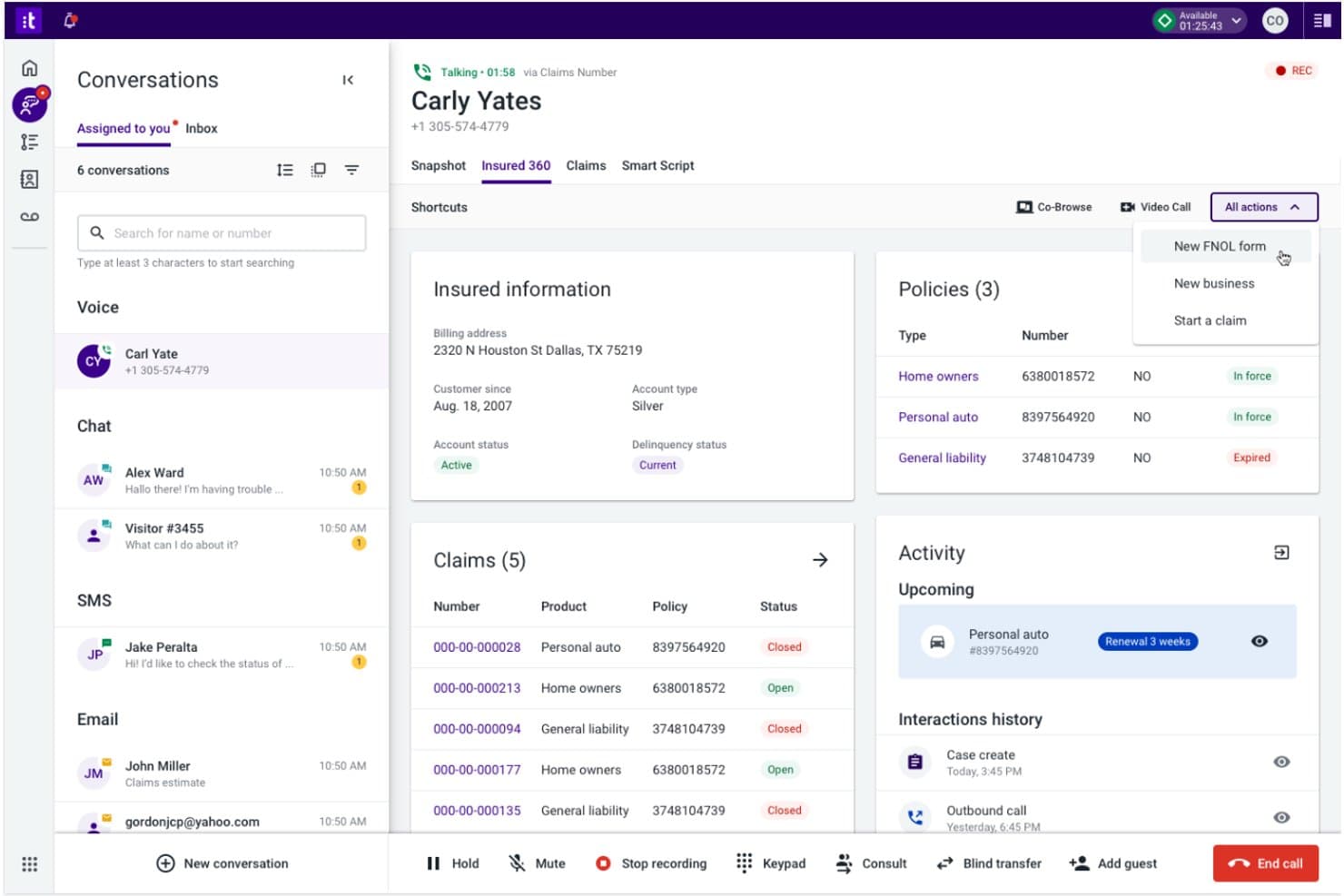
Talkdesk offers an Insured 360 view displaying customer policy details, claims history, and quick-action menus like New FNOL form and Start a claim for insurance call center agents. Talkdesk is a cloud-based contact center platform built for insurance carriers and agencies, combining agentic AI automation, omnichannel engagement, and pre-built integrations with core policy administration and claims systems.
Who Is Talkdesk Best For?
Talkdesk suits mid-to-large insurance carriers and claims operations teams running high-volume contact centers that need purpose-built AI and compliance tooling.
Why I Picked Talkdesk
I picked Talkdesk as one of the best because of Autopilot for Insurance, which autonomously handles FNOL intake, claim opening and closing, and general liability processing without agent involvement. I also like that the Insurance Agent Workspace surfaces a unified policyholder view mid-call, so adjusters aren't toggling between systems during a live claim. That combination of autonomous intake and in-call context is what makes Talkdesk the strongest pick for claims workflow automation specifically.
Talkdesk Key Features
- Omnichannel agent desktop: Agents can manage inbound and outbound calls, email, SMS, chat, and social messages in one interface.
- Native Guidewire and Duck Creek integrations: Connects directly to leading policy and claims administration systems for real-time policyholder context.
- AI-driven skills-based routing: Assigns inbound interactions based on attributes like license, product line, and geographic region.
- Automated speech analytics: Monitors sentiment, script adherence, and regulatory compliance on every recorded call.
Talkdesk Integrations
Talkdesk offers native integrations with Guidewire, Duck Creek, Salesforce, Microsoft Teams, Slack, Zendesk, ServiceNow, and Shopify. An API is available for custom integrations.
Pros and Cons
Pros:
- Compliance monitoring across 100% of recorded calls
- Integrated workforce optimization tools
- Purpose-built FNOL automation for insurance carriers
Cons:
- Lacks native gamification module
- Limited outbound caller masking
Learn more about Talkdesk: Best for AI-assisted call summaries in insurance
- 14-day free trial + free demo available
- Pricing upon request
Visit WebsiteCustomer Rating:4.3/5
Dialpad's AI automatically summarizes calls and lists action items. Dialpad is an AI-native cloud contact center platform that combines omnichannel voice, chat, and messaging handling with real-time transcription, automated call summaries, live agent coaching, and AI-driven quality management.
Who Is Dialpad Best For?
Dialpad is a strong fit for insurance contact center managers who need AI-generated call summaries and automated quality scoring across high volumes of policyholder interactions.
Why I Picked Dialpad
I picked Dialpad as one of the best because its DialpadGPT-powered AI Recaps generate automatic call summaries and action items the moment a policyholder conversation ends, so agents move to the next call instead of writing notes. I also rely on AI Scorecards, which grade 100% of calls without manual review, giving supervisors full performance visibility at scale. Dialpad's recording also auto-pauses when sensitive information is detected, a practical safeguard for health and life insurance calls.
Dialpad Key Features
- Unified omnichannel agent desktop: Handle voice, SMS, live chat, WhatsApp, and Apple Business Chat within a single platform.
- CRM and ticketing integrations: Connect with Salesforce, HubSpot, Zendesk, Microsoft Dynamics, and Zoho CRM for real-time policyholder context.
- Live sentiment analysis: Track caller sentiment in real time with AI-powered prompts for agent supervisors.
- Drag-and-drop chatbot builder: Build custom IVR and self-service flows for claims, payments, or policy status without coding.
Dialpad Integrations
Dialpad offers native integrations with Salesforce, HubSpot, Zendesk, Microsoft Dynamics, Zoho CRM, and ServiceNow. An API is available for custom integrations.
Pros and Cons
Pros:
- Live coaching cues appear during active calls
- Native directory synchronization tools
- Automatic post-call summaries on every call
Cons:
- Limited bulk user export
- No native insurance policy system connectors
 Best for outbound insurance campaign management
- Free demo available
- Pricing upon request
Visit WebsiteCustomer Rating:4.4/5
Convoso’s advanced analytics dashboard details contact rates by area code, call attempts, answered rates, and AMD performance metrics. Convoso is a cloud-based outbound contact center platform built for high-volume insurance sales teams, featuring a predictive dialer, state-based licensed agent routing, TCPA compliance tools, and multichannel outreach across voice, SMS, and email.
Who Is Convoso Best For?
Convoso suits mid-to-large insurance agencies and outbound sales contact centers running high-volume dialling campaigns across Medicare, ACA, life, or auto insurance product lines.
Why I Picked Convoso
I've included Convoso in my top picks because of how specifically it's built for outbound insurance dialling at scale. StateTracker is the only campaign management tool designed for Mini-TCPA compliance, letting my team dial across state lines without manually tracking calling-time rules per state. On top of that, state-based licensed agent routing automatically connects prospects to agents licensed in their state, a genuine operational requirement for insurance outbound campaigns.
Convoso Key Features
- Multichannel outreach: Agents can engage leads over voice, SMS, and email from a unified interface.
- Open API for CRM integration: Lets you connect the dialer with CRMs and lead vendors for data sync.
- Dynamic scripting: Automatically adapts call scripts based on campaign or state requirements.
- ClearCallerID management: Monitors and rotates outbound numbers to help prevent spam labelling.
Convoso Integrations
Native integrations are not clearly documented. The tool supports integrations via an open API for custom integrations.
Pros and Cons
Pros:
- Real-time campaign dashboards for outbound teams
- Built-in state-level TCPA compliance tools
- Strong predictive dialer for high-volume campaigns
Cons:
- Lacks multilingual audio transcription
- Limited inbound claims handling capabilities
Learn more about Convoso: Best for deep policy system integrations
- Free demo available
- From $119/seat/month
Visit WebsiteCustomer Rating:4.1/5
Five9 offers a web chat interface that allows insurance agents to receive and review customer-submitted photos, such as insurance cards and vehicle damage images, in real time. Five9 is a cloud contact center platform that combines omnichannel routing, AI-powered virtual agents, predictive dialing, workforce management, and deep CRM integration across voice, chat, email, SMS, and social channels.
Who Is Five9 Best For?
Five9 is a strong fit for mid-to-large insurance carriers and brokerages running formal call center operations with high inbound or outbound call volumes.
Why I Picked Five9
I've included Five9 in my top picks because its integration layer reaches deeper into backend systems than most contact center platforms. Using its open APIs and SDKs, you can connect to policy admin systems, ERP platforms, and billing tools. That puts live policyholder context in front of agents on every call. I also like List Sync Plus, which pulls member or policyholder data from your CRM into the dialer automatically, keeping renewal and enrollment campaigns precise.
Five9 Key Features
- Omnichannel agent desktop: Agents handle voice, chat, email, SMS, and social channels from a single unified interface.
- Advanced compliance toolkit: Includes PCI/PII redaction, call and screen recording, HIPAA-ready controls, and region-specific consent management.
- Customizable IVR designer: Drag-and-drop IVR builder lets you deploy self-service flows for claims or policy inquiry.
- Speech analytics suite: Analyzes every recorded call for compliance, sentiment, and script adherence with automated QA scoring.
Five9 Integrations
Five9 offers native integrations with Salesforce, ServiceNow, Microsoft Dynamics 365, Oracle, and Zendesk. An API and SDK are available for custom integrations.
Pros and Cons
Pros:
- Embedded quality management suite
- Real-time agent assist on live calls
- Deep policy system integration capabilities
Cons:
- Analytics dashboards lack insurance-specific KPI templates
- Limited custom metadata tags
Learn more about Five9:
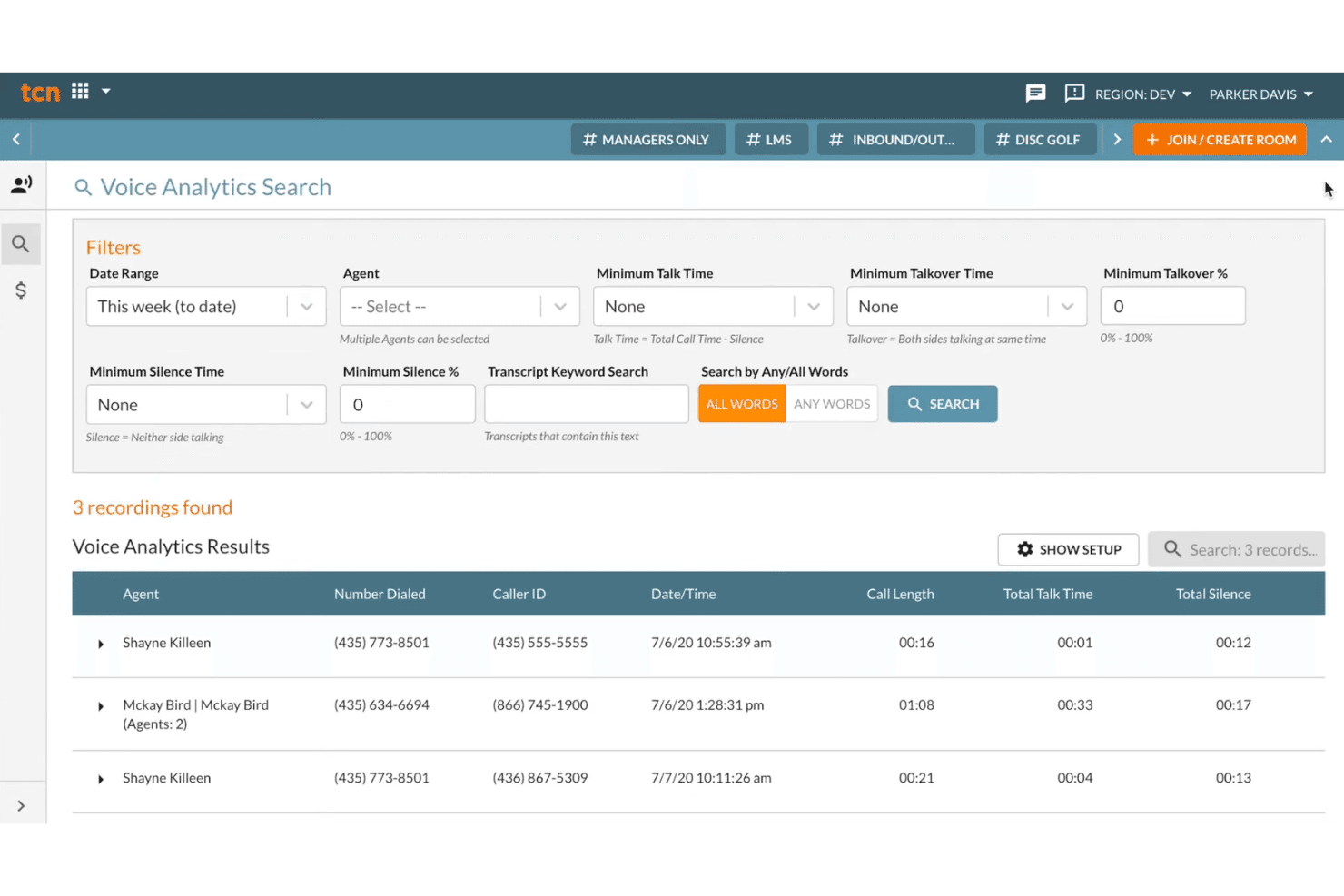
TCN lets users search and filter call recordings by talk time, silence, and keywords. TCN is a cloud-based contact center platform that combines omnichannel communication (voice, SMS, email, and chat), compliance management, IVR, workforce engagement, and speech analytics for high-volume call center operations.
Who Is TCN Best For?
TCN is a strong fit for mid-to-large enterprise contact centers and BPOs operating in regulated industries that require strict compliance tooling.
Why I Picked TCN
TCN earns its spot on my shortlist because of how seriously it takes compliance recording. I particularly like the Manually Approved Calling tool, which navigates TCPA restrictions by requiring explicit agent action before connecting calls. TCN also layers in a Reassigned Numbers Database check and Natural Language Compliance rule-building, meaning every recorded call sits within a verifiable, audit-ready framework that holds up under insurance regulatory scrutiny.
TCN Key Features
- Omnichannel agent interface: Manage voice, SMS, email, and chat interactions from a single unified desktop.
- Skills-based call routing: Direct calls to agents based on pre-set attributes like language, product, or region.
- Workforce engagement tools: Monitor agent activity and performance with real-time dashboards and historical analytics.
- Configurable IVR and self-service: Set up automated call flows for policy lookups, payment processing, and claim status updates.
TCN Integrations
TCN offers native integrations with Salesforce, ServiceNow, Dynamics 365, Zendesk, Zoho, and Finvi. An API is available for custom integrations.
Pros and Cons
Pros:
- Predictive, progressive, and preview dialling modes
- Built-in natural language compliance rule-building
- Strong TCPA and compliance recording tools
Cons:
- Excludes internal agent messaging
- No local call recording
Learn more about TCN:
Outros softwares de centro de contacto de seguros
Eis algumas opções adicionais de software de centro de contacto de seguros que não integraram a minha lista restrita, mas que ainda vale a pena consultar:
- 11Vonage Contact CenterBest for unified voice and messaging channels
- 12Nextiva Contact CenterBest for prebuilt insurance workflows
- 13RingCXBest for supported multi-location contact centers
- 14AgentTechBest for real-time agent licensing verification
- 15Freshdesk Contact CenterBest for CRM integration via open APIs
- 16JustCallBest for automating call activity logging
- 17Zendesk TalkBest for ticket-based inbound call workflows
- 188x8 Contact CenterBest for advanced omnichannel queue management
Related Reviews
- Software para centros de atendimento telefónico de chamadas efetuadas
- Software de gestão da força de trabalho de centros de atendimento
- Software de centro de atendimento
- Software de centro de contacto baseado na nuvem
- Software para centros de atendimento de chamadas recebidas
- Software de gestão de horários de centros de atendimento
How I Evaluate Insurance Call Center Software
I split my evaluation into two layers: the core capabilities every platform must cover—compliance recording, skills routing, integrations—and the differentiators that separate good from great.
Core Functionality (Table Stakes For This List)
When I'm selecting tools for my list, I rank each one on a scale from 0 (does not offer the functionality) to 5 (excels in this area) for each core functionality listed below. I then calculate the tool's total score into a percentage, using 65% as a benchmark to help assess its overall fit for the list.
- Omnichannel Contact Handling: I look for a unified agent desktop that brings voice, email, SMS, and chat into one view so agents aren't toggling between tools mid-conversation with a policyholder.
- CRM/Policy System Integration: Prebuilt connectors to insurance platforms like Guidewire, Duck Creek, or Applied Epic matter here—agents need policy context on screen the moment a call arrives.
- Skills-Based Call Routing: I evaluate whether routing accounts for agent licensing, state jurisdiction, product line, and claim type so callers reach someone qualified to help.
- Compliance Recording & Redaction: Each platform should offer call and screen recording with automated PCI/PII redaction and consent management aligned to TCPA and HIPAA requirements.
- IVR & Self-Service Automation: I check for configurable IVR flows that let policyholders handle common tasks like claim status checks, payment processing, and FNOL intake without waiting for an agent.
- Quality Management & Analytics: Speech analytics, automated call scoring, and dashboards that track insurance-specific KPIs like first-call resolution on claims help me gauge how well a platform supports ongoing coaching.
Once I have a list of tools that meet the criteria, I consider what sets each platform apart.
Differentiating Factors (What Sets Vendors Apart)
Here's how I compare and contrast different vendors:
Standout Features
AI-powered claims triage is a major differentiator. I look for platforms that use NLP to detect claim urgency and route callers to the right adjuster queue without manual intervention. Real-time agent assist matters just as much, especially when agents need policy details and compliance scripts surfaced mid-call to avoid errors. I also evaluate automated speech analytics to see whether a platform can monitor every interaction for sentiment shifts and compliance breaches rather than relying on random sample reviews.
Beyond Features
Deployment and scalability are top of mind. I check whether a platform can elastically scale during CAT event surges so your team doesn't drop calls when policyholders need you most. Insurance-specific compliance is equally important—I evaluate how each vendor handles TCPA consent management, HIPAA safeguards, and state-level recording laws. Implementation support also shapes my assessment, particularly whether a vendor offers prebuilt call flows for P&C, life, and health lines that shorten time to deploy.
Como escolher software de centro de contacto de seguros
Como pode associar rapidamente a plataforma de centro de contacto de seguros certa às necessidades mais urgentes da sua equipa em matéria de conformidade, integração e fluxos de trabalho?
| Se a sua prioridade é... | Procure... |
|---|---|
| Se a sua prioridade é...Encaminhar chamadas para agentes licenciados por estado | Procure...Encaminhamento de chamadas baseado em competências, com vários atributos e em função das licenças |
| Se a sua prioridade é...Suportar pontos de contacto omnicanal com os tomadores de seguros | Procure...Ambiente de trabalho unificado para agentes, com voz, SMS, chat e e-mail |
| Se a sua prioridade é...Garantir a conformidade com a regulamentação dos seguros | Procure...Ferramentas integradas de gravação, ocultação de dados e consentimento TCPA |
| Se a sua prioridade é...Associar chamadas a sistemas de apólices e sinistros | Procure...Integrações pré-configuradas com CRM de seguros e plataformas de apólices |
| Se a sua prioridade é...Gerir de forma fiável a procura acrescida provocada por eventos CAT | Procure...Escalabilidade elástica na nuvem e suporte para equipas remotas |
Como avaliar a sua lista restrita
- Peça uma demonstração do encaminhamento: Peça aos fornecedores que mostrem o encaminhamento dinâmico de agentes com base no estado da licença, no produto e no idioma — veja-o em ação antes de avançar.
- Teste os fluxos de trabalho de conformidade: Execute um cenário de chamada simulado com PHI ou dados de pagamento; verifique em tempo real como funcionam a ocultação de PII e os avisos de conformidade.
- Ligue um sistema de sinistros de teste: Peça ao fornecedor para apresentar os detalhes da apólice ou o estado do sinistro a partir da sua plataforma de seguros principal durante um teste de chamada em direto.
- Obtenha por escrito a política relativa às leis de consentimento: Peça uma política documentada sobre TCPA, HIPAA e gravação de chamadas específica de cada estado, para confirmar a cobertura regulamentar.
- Compromisso — profundidade vertical versus extensibilidade: Decida se precisa de fluxos e integrações específicos para seguros ou de uma plataforma mais personalizável e flexível para necessidades futuras.
O que é software de centro de contacto de seguros?
O software de centro de atendimento para seguros é uma tecnologia que centraliza e gere as interações com os clientes através de voz, e-mail, SMS e chat para agências e seguradoras. Estas plataformas disponibilizam ferramentas para encaminhamento de chamadas com base nas competências, gravação para fins de conformidade, integração com sistemas de apólices e sinistros e automatização do autoatendimento — tudo adaptado às necessidades regulamentares e de fluxo de trabalho específicas das operações de seguros. Isto garante que os tomadores de seguros recebem apoio atempado e preciso de agentes e equipas devidamente licenciados.
Funcionalidades do software de centro de atendimento para seguros
Ao selecionar software de centro de atendimento para seguros, procure as seguintes funcionalidades principais:
- Gestão omnicanal de contactos: Gira chamadas, e-mails, SMS e chat em direto a partir de um único ambiente de trabalho do agente, para que as equipas possam interagir com os tomadores de seguros onde quer que estes entrem em contacto.
- Encaminhamento de chamadas com base nas competências: Encaminhe os interlocutores para agentes que possuam as licenças, os conhecimentos sobre produtos ou as competências linguísticas adequadas, com base no estado e no tipo de apólice.
- Gravação e ocultação de dados para fins de conformidade: Grave automaticamente as chamadas e oculte dados PCI/PII para cumprir regulamentações do setor, como a TCPA e a HIPAA.
- Integração com CRM de seguros: Apresente informações sobre tomadores de seguros, sinistros e pagamentos em tempo real, estabelecendo ligação com CRMs de seguros e plataformas de administração de apólices.
- URA e automatização do autoatendimento: Implemente resposta interativa de voz e robôs de voz que permitam aos tomadores de seguros consultar o estado dos sinistros, efetuar pagamentos ou comunicar sinistros a qualquer momento.
- Análise de voz e garantia de qualidade: Monitorize as chamadas quanto à conformidade, ao sentimento e ao cumprimento dos guiões e, em seguida, gere relatórios ou identifique oportunidades de orientação para os agentes.
- Assistência aos agentes em tempo real: Disponibilize sugestões, detalhes das apólices e guiões de conformidade durante as chamadas em direto para ajudar os agentes a responder com precisão às perguntas e reduzir os erros.
- Discadores para campanhas efetuadas: Automatize a marcação de números para renovações, cobranças ou acompanhamentos de sinistros, utilizando modos de pré-visualização, progressivo ou preditivo, com conformidade com a lista DNC.
- Painéis de relatórios personalizáveis: Visualize KPIs, como a resolução no primeiro contacto, o tempo médio de atendimento e as taxas de resolução de sinistros, para uma melhoria contínua.
- Escalabilidade elástica: Aumente ou reduza rapidamente a capacidade durante picos sazonais ou eventos CAT, para que nenhum tomador de seguros fique à espera.
Benefícios do software de centro de atendimento para seguros
A implementação de software de centro de atendimento para seguros proporciona vários benefícios à sua equipa e à sua empresa. Eis alguns dos benefícios que pode esperar:
- Maior confiança na conformidade: A gravação automatizada de chamadas, a gestão do consentimento e a ocultação de dados ajudam a sua equipa a cumprir a TCPA, a HIPAA e as regulamentações estaduais sem esforço adicional.
- Resolução mais rápida no primeiro contacto: O encaminhamento com base nas competências e as integrações com CRM garantem que os tomadores de seguros chegam ao agente certo e veem os seus problemas resolvidos rapidamente.
- Experiência consistente para os tomadores de seguros: A gestão omnicanal de contactos e a assistência aos agentes em tempo real mantêm as interações simples e precisas em todos os canais.
- Redução dos custos operacionais: A URA de autoatendimento e a automatização permitem que os tomadores de seguros tratem das necessidades de rotina e libertam os agentes para prestar apoio em situações complexas.
- Informações acionáveis sobre o desempenho: A análise de voz, os painéis de garantia de qualidade e os relatórios ajudam a identificar oportunidades de orientação e a medir os KPIs do serviço.
- Resiliência em períodos de elevada procura: A escalabilidade elástica permite lidar com picos CAT ou épocas de maior procura sem chamadas não atendidas nem falhas no serviço.
- Interação eficiente em campanhas efetuadas: Os discadores automatizados para campanhas permitem um contacto proativo para renovações, sinistros e cobranças, com verificações de conformidade integradas.
Custos e preços do software de centro de atendimento para seguros
A seleção de software de centro de atendimento para seguros exige uma compreensão dos vários modelos de preços e planos disponíveis. Os custos variam consoante as funcionalidades, o tamanho da equipa, os complementos e outros fatores. A tabela abaixo resume os planos comuns, os respetivos preços médios e as funcionalidades normalmente incluídas nas soluções de software de centro de atendimento para seguros:
Tabela de comparação de planos de software de centro de atendimento para seguros
| Tipo de plano | Preço médio | Funcionalidades comuns |
|---|---|---|
| Tipo de planoPlano gratuito | Preço médio$0 | Funcionalidades comunsVolume de chamadas limitado, IVR básico, relatórios mínimos e encaminhamento de chamadas padrão. |
| Tipo de planoPlano pessoal | Preço médio$20–$50/utilizador/mês | Funcionalidades comunsSuporte de canal único, gravação básica para fins de conformidade, integrações simples e análise fundamental. |
| Tipo de planoPlano empresarial | Preço médio$60–$120/utilizador/mês | Funcionalidades comunsGestão omnicanal de contactos, encaminhamento baseado em competências, integração com CRM, IVR avançado e ocultação de dados para fins de conformidade. |
| Tipo de planoPlano empresarial de grande dimensão | Preço médio$150–$250/utilizador/mês | Funcionalidades comunsEncaminhamento baseado em IA, integração completa do sistema, assistência aos agentes em tempo real, escalabilidade elástica e relatórios avançados. |
Perguntas frequentes sobre software de centros de atendimento de seguros
Eis algumas respostas a perguntas frequentes sobre software de centros de atendimento de seguros:
O que distingue o software de centros de atendimento de seguros das soluções genéricas para centros de atendimento?
O software de centros de contacto de seguros foi desenvolvido especificamente para seguradoras e agências de seguros. Ao contrário das ferramentas genéricas de CCaaS ou VoIP, permite gerir apólices, processar sinistros e gerar contactos comerciais para reduzir os custos operacionais. Com encaminhamento inteligente e salvaguardas para informações de saúde protegidas, ajuda os agentes a gerir cancelamentos e a melhorar a experiência geral do cliente.
Estas plataformas podem ajudar no cumprimento das normas em mercados de seguros regulamentados?
Sim, a maioria das plataformas de software de centros de contacto de seguros disponibiliza fluxos de trabalho automatizados para o cumprimento da TCPA, da HIPAA, da PCI-DSS e dos requisitos de consentimento para a gravação de chamadas específicos de cada estado. Ajudam a proteger informações de saúde protegidas (PHI) e apoiam a deteção de fraude, garantindo que as seguradoras cumprem os regulamentos do setor em todas as interações.
Como é que o software de centros de atendimento de seguros suporta picos de procura durante eventos CAT?
A escalabilidade elástica e as funcionalidades para equipas remotas permitem que o software de centros de atendimento de seguros suporte aumentos rápidos do volume de chamadas durante catástrofes, sem chamadas interrompidas nem longas esperas para os tomadores de seguros.
Estas ferramentas integram-se com os nossos sistemas de administração de apólices ou de sinistros?
Sim, as principais plataformas de centros de atendimento de seguros oferecem normalmente integrações pré-criadas ou APIs para sistemas como o Guidewire, o Duck Creek e o Salesforce, disponibilizando aos agentes informações sobre apólices, sinistros e pagamentos.
É possível automatizar o acompanhamento de renovações e sinistros através de chamadas efetuadas?
Sim, a maioria das plataformas inclui discadores de campanhas de chamadas efetuadas com verificações de conformidade, permitindo às equipas automatizar chamadas para renovações de apólices, atualizações sobre sinistros e lembretes de pagamento, mantendo-se dentro dos limites das leis relativas ao consentimento.