

Le 10 migliori piattaforme per il coinvolgimento dei clienti recensite per il 2026

10 Elenco delle migliori piattaforme di coinvolgimento dei clienti


Le piattaforme di coinvolgimento dei clienti ti aiutano a creare interazioni coerenti e personalizzate lungo l'intero percorso del cliente. Le migliori piattaforme possono aiutarti ad aumentare la fidelizzazione, semplificare la comunicazione e trasformare il coinvolgimento in una strategia proattiva.
Se il tuo team deve gestire più sistemi o se i tuoi clienti si perdono tra un canale e l'altro, non sei il solo. Il coinvolgimento non riguarda solo il volume, ma anche i tempi, il contesto e la capacità di agire nel momento giusto.
Ho valutato le migliori piattaforme di coinvolgimento dei clienti, così puoi trovare una soluzione adatta al tuo ecosistema CX, in grado di crescere insieme alle tue esigenze e di aiutare il tuo team a promuovere la fidelizzazione e creare connessioni significative.
Perché fidarsi dei nostri consigli sui software
Il nostro team testa e recensisce software dal 2012. In quanto leader CX noi stessi, sappiamo quanto sia difficile — e importante — scegliere il software giusto.
Per questa guida, abbiamo valutato gli strumenti attraverso test pratici e ricerche indipendenti, assegnando un punteggio agli strumenti in base ai nostri criteri di selezione.
Le nostre recensioni riflettono il nostro giudizio editoriale umano, non un discorso di vendita.
Tabella riepilogativa delle migliori piattaforme di coinvolgimento dei clienti
| Tool | Best For | Trial Info | Price | ||
|---|---|---|---|---|---|
| 1 | Ideale per una visione del cliente a 360 gradi | Demo gratuita disponibile | A partire da $40/mese (5 utenti) | Website | |
| 2 | Ideale per la gestione delle richieste di assistenza dei clienti e i sondaggi NPS | Prova gratuita di 14 giorni + piano gratuito + demo gratuita disponibili | Prezzi su richiesta | Website | |
| 3 | Ideale per informazioni utili e fruibili sul coinvolgimento dei clienti | Demo gratuita disponibile | Prezzi su richiesta | Website | |
| 4 | Ideale per il coinvolgimento nell'assistenza basata sull'IA | Prova gratuita di 7 giorni + piano gratuito disponibile | A partire da $24.17/mese (con fatturazione annuale) | Website | |
| 5 | Ideale per aumentare i tassi di attivazione degli utenti | Prova gratuita di 14 giorni + demo gratuita disponibile | A partire da $174/mese (fatturato annualmente) | Website | |
| 6 | Ideale per una segmentazione granulare del pubblico | Demo gratuita disponibile | Prezzi su richiesta | Website | |
| 7 | Ideale per la distribuzione globale di ricompense | Piano gratuito + demo gratuita disponibile | Gratis + commissione del 3% per acquisti con carta di credito | Website | |
| 8 | Ideale per un servizio clienti omnicanale e unificato | Demo gratuita disponibile | Prezzo su richiesta | Website | |
| 9 | Ideale per le meccaniche di gioco | Prova gratuita di 14 giorni disponibile | Prezzi su richiesta | Website | |
| 10 | Ideale per la facilità d'uso | Piano gratuito + prova gratuita di 30 giorni + demo gratuita disponibile | Prezzi su richiesta | Website |


Panoramica delle 20 migliori piattaforme di coinvolgimento dei clienti
Ecco una breve descrizione di ogni software per il coinvolgimento dei clienti, con il relativo caso d’uso principale, alcune funzionalità degne di nota e schermate che offrono un’anteprima dell’interfaccia.

Ideale per una visione del cliente a 360 gradi
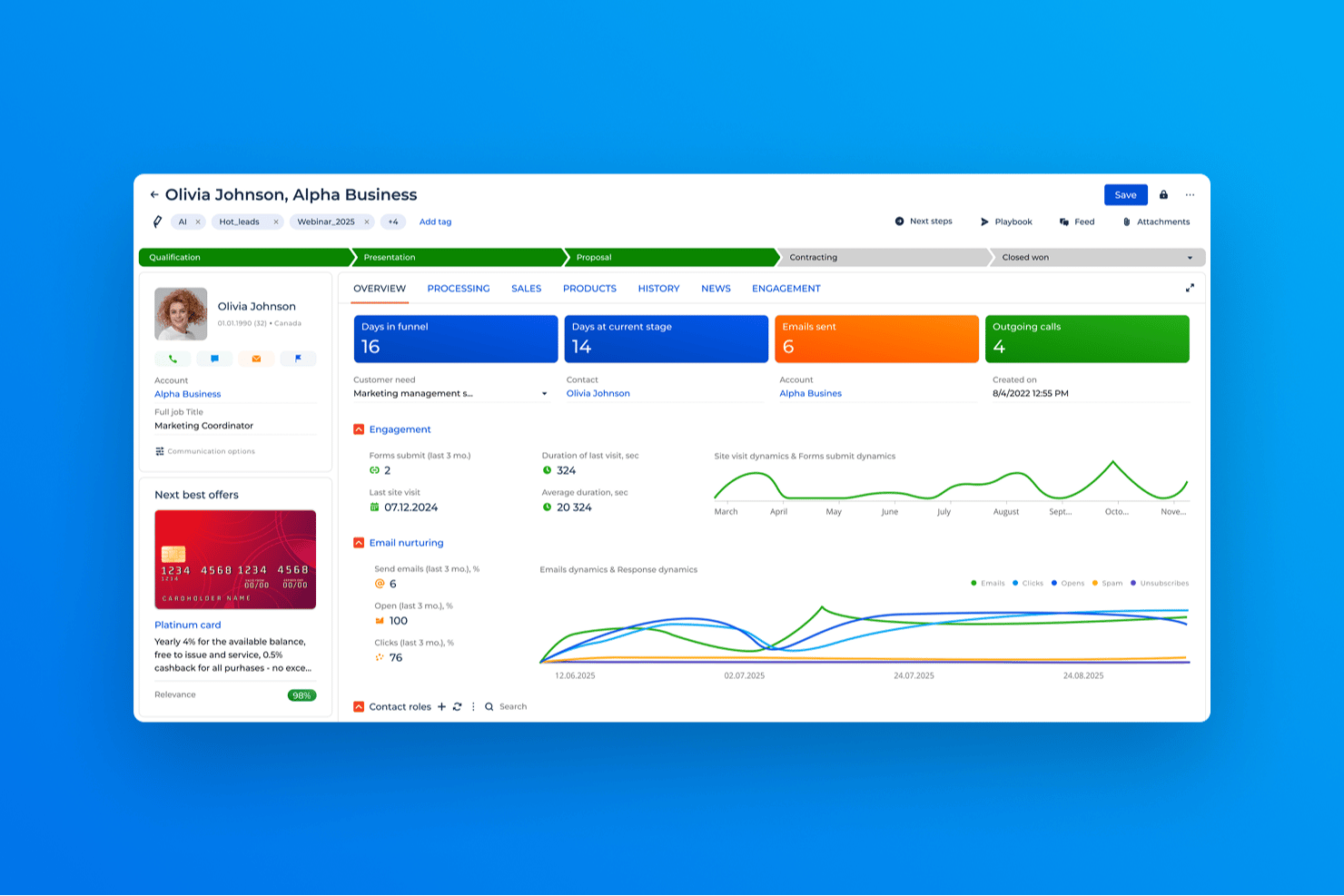
Creatio CRM è una piattaforma senza codice per il coinvolgimento dei clienti che unifica le operazioni di vendita, marketing e assistenza grazie all'orchestrazione dei percorsi omnicanale, all'automazione basata sull'IA e alla gestione centralizzata dei dati dei clienti lungo l'intero ciclo di vita del cliente.
Per chi è più indicato Creatio CRM?
Creatio CRM è adatto ai team di aziende di medie e grandi dimensioni nei settori finanziario, delle telecomunicazioni, della vendita al dettaglio e sanitario che necessitano di un CRM unificato e altamente personalizzabile per vendite, marketing e assistenza.
Perché ho scelto Creatio CRM
Ho scelto Creatio CRM come una delle soluzioni migliori perché la sua visione del cliente a 360 gradi riunisce concretamente ogni interazione, dalle risposte alle campagne di marketing ai casi di assistenza aperti, in un unico profilo operativo. Mi piace il fatto che gli agenti CRM basati sull'IA forniscano raccomandazioni sulla migliore azione successiva direttamente da questi dati unificati. Questo consente al mio team di personalizzare le comunicazioni in base allo stato in tempo reale del cliente su ogni punto di contatto, non solo in base al suo ultimo acquisto.
Funzionalità principali di Creatio CRM
- Creazione di percorsi a basso codice: Progetta e automatizza visivamente percorsi cliente complessi, senza ricorrere a risorse di ingegneria.
- Connettori del marketplace: Estendi le funzionalità e integra i sistemi aziendali più diffusi attraverso un ampio marketplace di app preconfigurate.
- Segmentazione avanzata: Crea segmenti di pubblico dinamici utilizzando dati comportamentali, demografici e transazionali.
- Console di assistenza omnicanale: Gestisci le conversazioni con i clienti tramite email, chat, telefono e piattaforme social da un'interfaccia unificata.
Integrazioni di Creatio CRM
Creatio CRM offre integrazioni native con Microsoft 365, Shopify, WooCommerce, PayPal e altri servizi, oltre a connettersi con Zapier e Make. È disponibile un'API aperta per le integrazioni personalizzate. I connettori del marketplace ampliano la compatibilità con sistemi ERP, di marketing e di comunicazione.
Pros and Cons
Pros:
- Il generatore di flussi di lavoro senza codice accelera la creazione dei percorsi
- Gli agenti IA suggeriscono in tempo reale la migliore azione successiva
- Il profilo unificato consolida i dati provenienti da tutti i punti di contatto
Cons:
- La personalizzazione dei report richiede una configurazione tecnica
- Complessità della configurazione iniziale per implementazioni su scala aziendale

Ideale per la gestione delle richieste di assistenza dei clienti e i sondaggi NPS
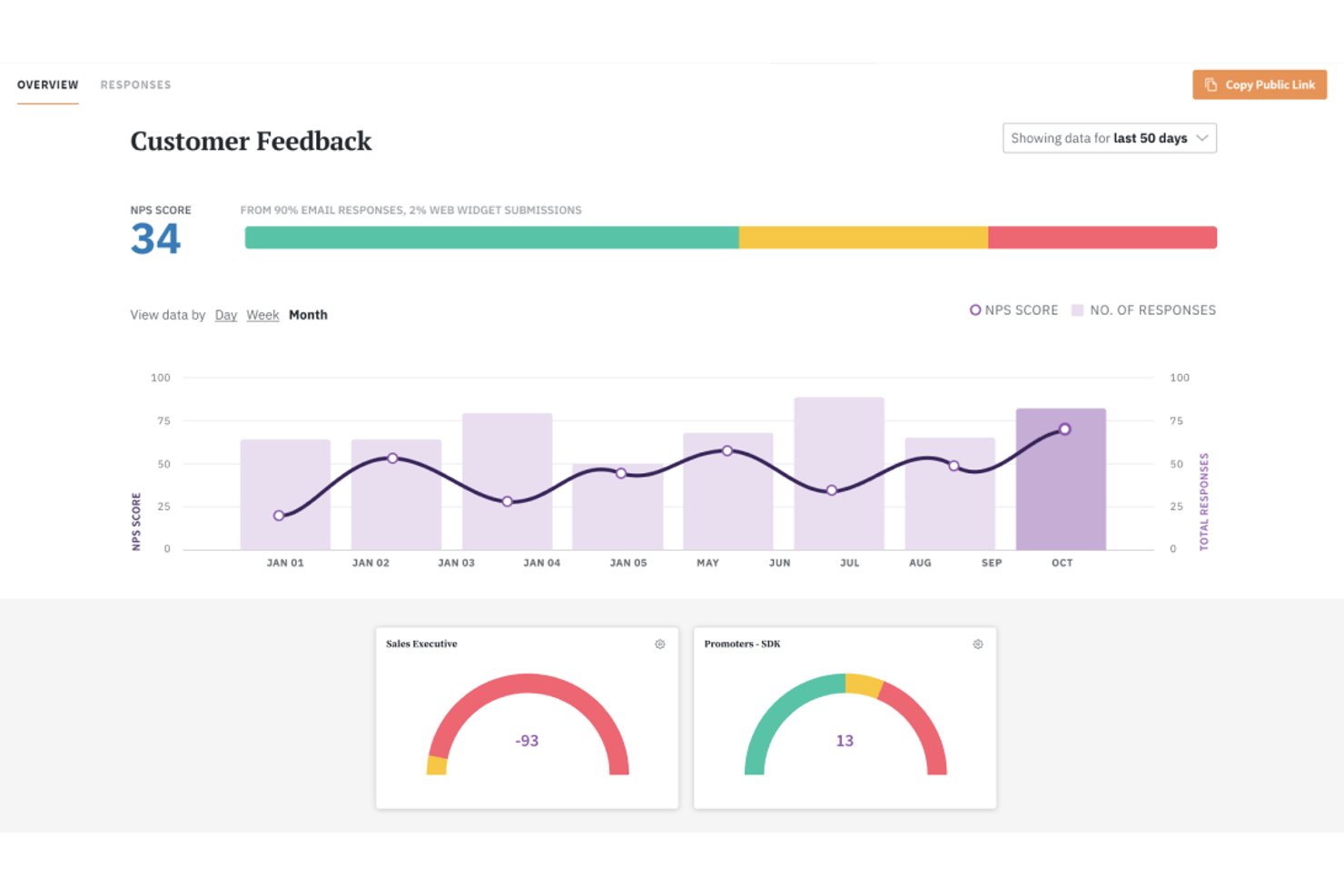
SurveySparrow è una piattaforma di gestione dell'esperienza conversazionale che combina sondaggi NPS, CSAT e CES con la raccolta di riscontri omnicanale, analisi basate sull'intelligenza artificiale, gestione della reputazione e gestione delle richieste di assistenza per chiudere il ciclo dei riscontri dei clienti.
Per chi è più adatto SurveySparrow?
Team CX e di successo dei clienti di aziende del mercato medio che devono raccogliere, monitorare e utilizzare i riscontri dei clienti su larga scala.
Perché ho scelto SurveySparrow
Ho scelto SurveySparrow perché la sua funzionalità di gestione delle richieste di assistenza converte direttamente un punteggio NPS basso in una richiesta assegnabile, così una risposta di un detrattore attiva un flusso di lavoro di risoluzione monitorabile invece di rimanere in un foglio di calcolo. Mi piace anche il fatto che i sondaggi NPS ricorrenti vengano eseguiti automaticamente, consentendo al mio team di monitorare continuamente le tendenze della fidelizzazione. La funzionalità echoAI aggiunge domande di approfondimento durante la conversazione per chiarire i riscontri ambigui prima che vadano persi.
Funzionalità principali di SurveySparrow
- Gestione della reputazione: Monitora e gestisci le recensioni online provenienti da oltre 100 piattaforme all'interno di un unico pannello di controllo.
- Progettazione di sondaggi conversazionali: Crea sondaggi con un'interfaccia simile a una conversazione, progettata per aumentare i tassi di risposta.
- Raccolta di riscontri multicanale: Distribuisci sondaggi via e-mail, WhatsApp, SMS, incorporamento web e modalità chiosco.
- Pannello di controllo per dirigenti: Accedi ad analisi in tempo reale e grafici personalizzabili per monitorare le tendenze dei riscontri e le metriche principali.
Integrazioni di SurveySparrow
SurveySparrow offre integrazioni native con HubSpot, Salesforce, Slack, Google Sheets, Intercom, Zendesk, Freshdesk, Webhook e Microsoft Teams. Si connette inoltre a Zapier e mette a disposizione un'API per integrazioni personalizzate.
Pros and Cons
Pros:
- I sondaggi NPS ricorrenti vengono eseguiti automaticamente
- Converte le risposte ai sondaggi in richieste di assistenza
- I sondaggi in stile conversazione aumentano i tassi di completamento
Cons:
- Messaggistica in uscita limitata oltre ai sondaggi
- La personalizzazione dei report è limitata nei piani inferiori

Alchemer
Ideale per informazioni utili e fruibili sul coinvolgimento dei clienti
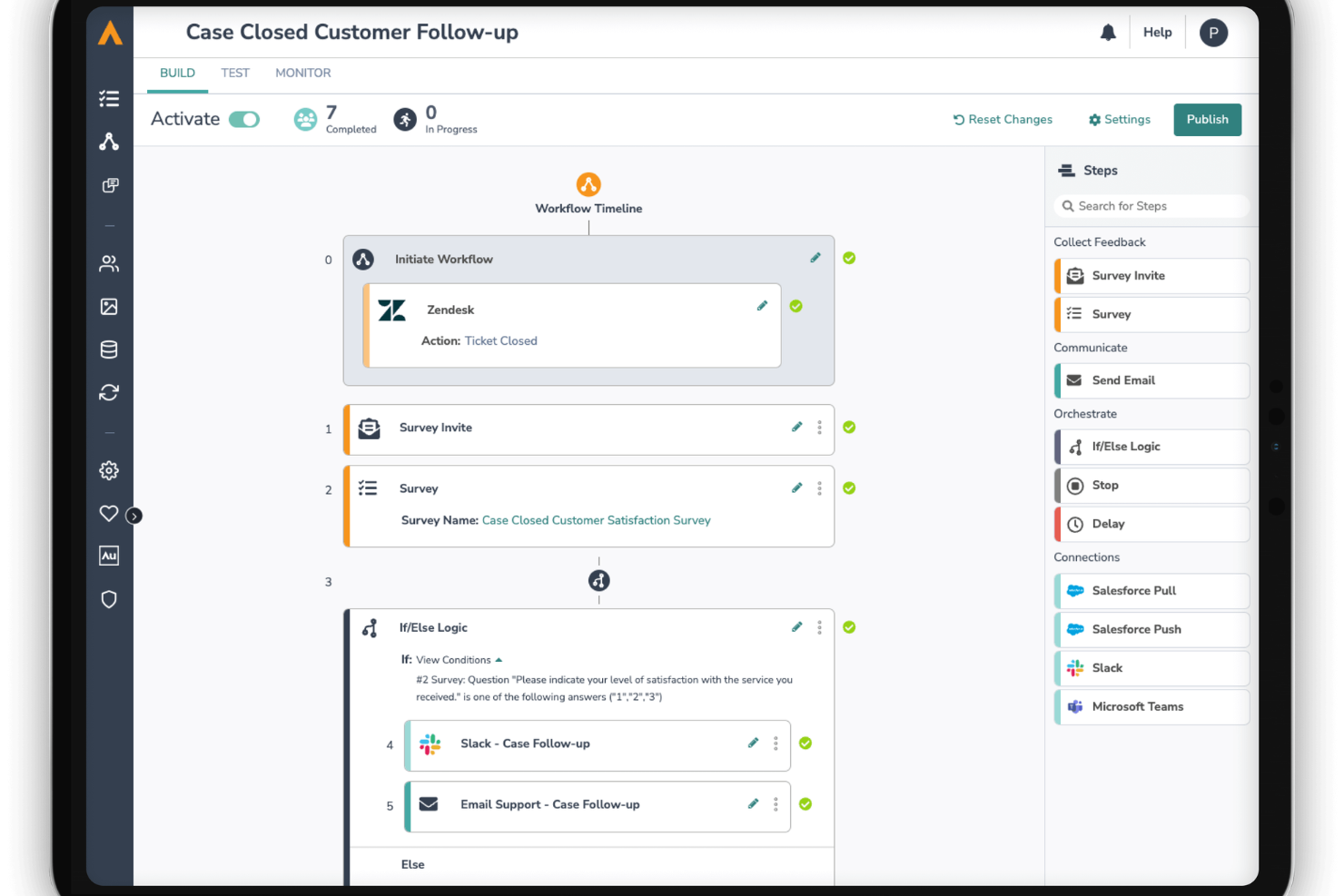
Alchemer è una piattaforma per la Voce del cliente che combina la distribuzione omnicanale di sondaggi, la raccolta di riscontri nell'app, l'analisi del testo e i flussi di lavoro automatizzati per raccogliere e utilizzare le informazioni utili di clienti e dipendenti.
Per chi è più adatto Alchemer?
Alchemer è adatto ai team CX e di ricerca di organizzazioni di medie e grandi dimensioni che devono gestire programmi VoC strutturati e indirizzare i riscontri direttamente nei flussi di lavoro aziendali esistenti.
Perché ho scelto Alchemer
Ho incluso Alchemer tra le mie scelte migliori perché va oltre la raccolta dei riscontri e chiude effettivamente il ciclo del coinvolgimento dei clienti. Apprezzo particolarmente il modo in cui Alchemer Digital acquisisce segnali in tempo reale mentre i clienti interagiscono con la tua app o il tuo sito web, mentre Alchemer Pulse individua i temi relativi al sentiment nelle risposte a testo libero senza ricorrere all'etichettatura manuale. Da lì, i flussi di lavoro automatizzati inviano queste informazioni utili direttamente a Salesforce o Slack, consentendo al mio team di intervenire prima che un cliente si disimpegni.
Funzionalità principali di Alchemer
- Generatore visivo di flussi di lavoro: Interfaccia di trascinamento per automatizzare l'instradamento dei riscontri e le azioni successive.
- Controlli degli accessi basati sui ruoli: Definisci le autorizzazioni degli utenti per la creazione dei sondaggi, l'accesso ai dati e l'amministrazione.
- Oltre 400 integrazioni software: Collega i dati dei sondaggi direttamente a Salesforce, HubSpot, Tableau e Microsoft Teams.
- Logica di diramazione avanzata: Personalizza i percorsi delle domande in base alle risposte dei partecipanti utilizzando schemi di salto complessi.
Integrazioni di Alchemer
Alchemer offre oltre 400 integrazioni native, tra cui Salesforce, HubSpot, Microsoft Teams, Tableau, ServiceNow, Zendesk, Jira, Marketo, Slack e Microsoft 365. È disponibile un'API per le integrazioni personalizzate.
Pros and Cons
Pros:
- Chiude automaticamente il ciclo dei riscontri
- L'analisi approfondita del testo fa emergere i temi relativi al sentiment
- Flussi di lavoro per sondaggi e riscontri altamente personalizzabili
Cons:
- Supporto limitato per i canali nativi di messaggistica in uscita
- Non è progettato per l'orchestrazione dei percorsi in tempo reale

Tidio
Ideale per il coinvolgimento nell'assistenza basata sull'IA
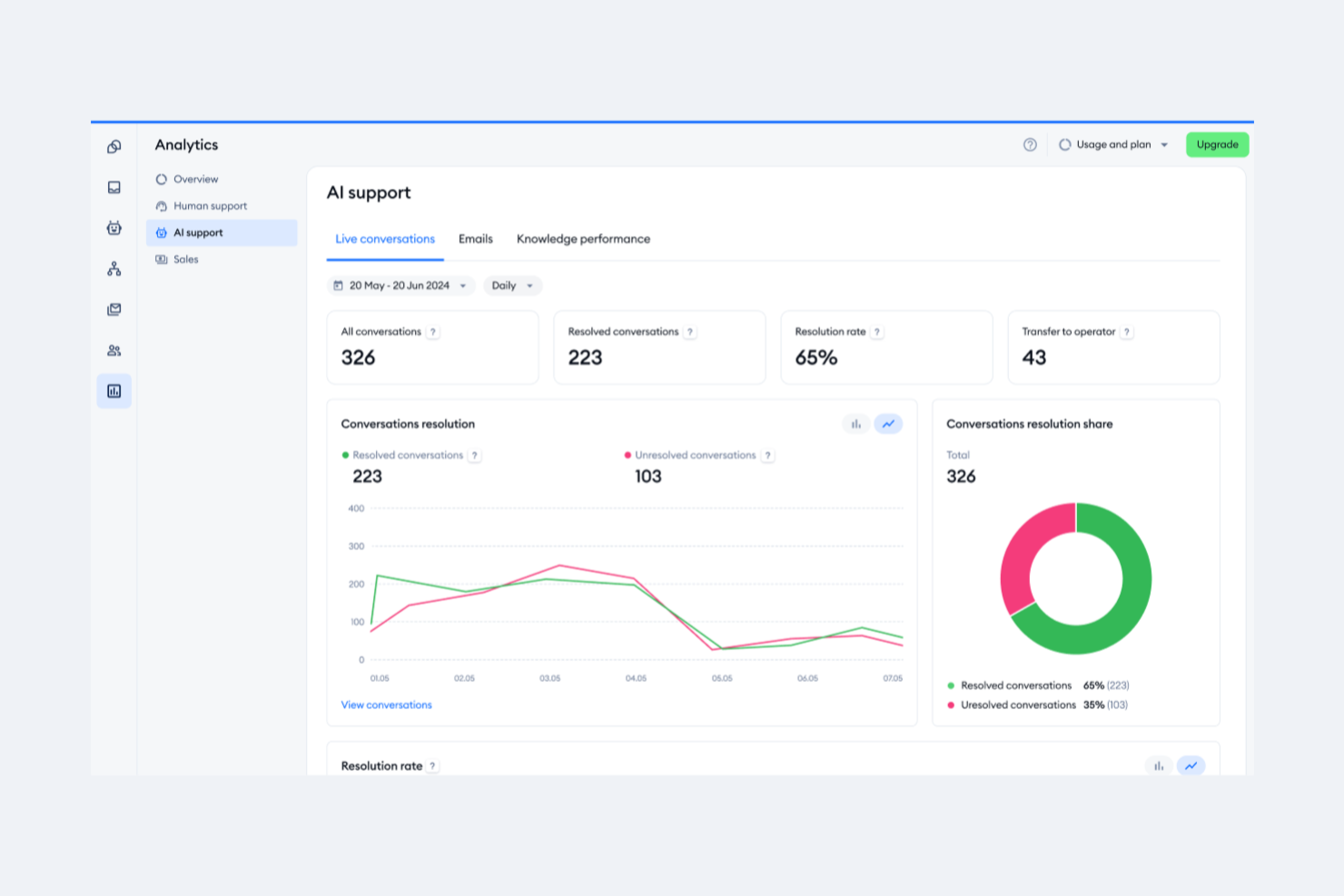
Tidio è una piattaforma di assistenza clienti che combina chat dal vivo, gestione dei ticket dell'assistenza tecnica, automazione senza codice e un agente di IA (Lyro) per gestire e rispondere alle conversazioni con i clienti attraverso chat web, e-mail e canali di messaggistica social.
Per chi è più adatto Tidio?
Tidio è una soluzione particolarmente adatta ai team di PMI e aziende del mercato medio nel settore dell'e-commerce che hanno bisogno di automatizzare l'assistenza clienti senza creare un team numeroso di agenti.
Perché ho scelto Tidio
Ho incluso Tidio tra le mie scelte principali grazie a Lyro, il suo agente di IA basato su Claude, che risolve fino al 67% delle conversazioni con i clienti senza alcun intervento umano. Apprezzo il fatto che Lyro recuperi le risposte direttamente dai contenuti di assistenza già esistenti, in modo che le risposte rimangano coerenti con il marchio anziché essere inventate. Quando Lyro raggiunge i limiti delle proprie conoscenze, trasferisce la conversazione a un agente dal vivo in modo fluido, mantenendo intatta la fiducia del cliente durante tutta l'interazione.
Funzionalità principali di Tidio
- Posta in arrivo multicanale unificata: Gestisci le conversazioni da chat web, e-mail, Messenger, Instagram e WhatsApp in un unico cruscotto.
- Flussi di automazione visivi: Crea chatbot e flussi automatizzati con uno strumento intuitivo basato sul trascinamento per coinvolgere i visitatori del sito.
- Integrazione con Shopify: Collega i dati del negozio per consentire agli agenti di visualizzare ordini, carrelli e dettagli dei clienti direttamente nell'interfaccia della chat.
- Pannello con informazioni sui visitatori: Monitora la posizione dei visitatori, il tempo trascorso sul sito e la cronologia delle pagine per orientare le interazioni dal vivo e automatizzate.
Integrazioni di Tidio
Tidio offre integrazioni native con Shopify, WordPress, Wix, BigCommerce, Messenger, Instagram e WhatsApp. Si collega a Zapier e fornisce un'API per le integrazioni personalizzate.
Pros and Cons
Pros:
- L'IA Lyro risolve le chat senza agenti umani
- I trigger del chatbot rispondono alle azioni dei visitatori in tempo reale
- La posta in arrivo multicanale unifica i social e la chat dal vivo
Cons:
- La profondità delle analisi non è sufficiente per i team aziendali
- I limiti delle conversazioni dell'IA Lyro ne restringono l'utilizzo ad alto volume
Ideale per aumentare i tassi di attivazione degli utenti
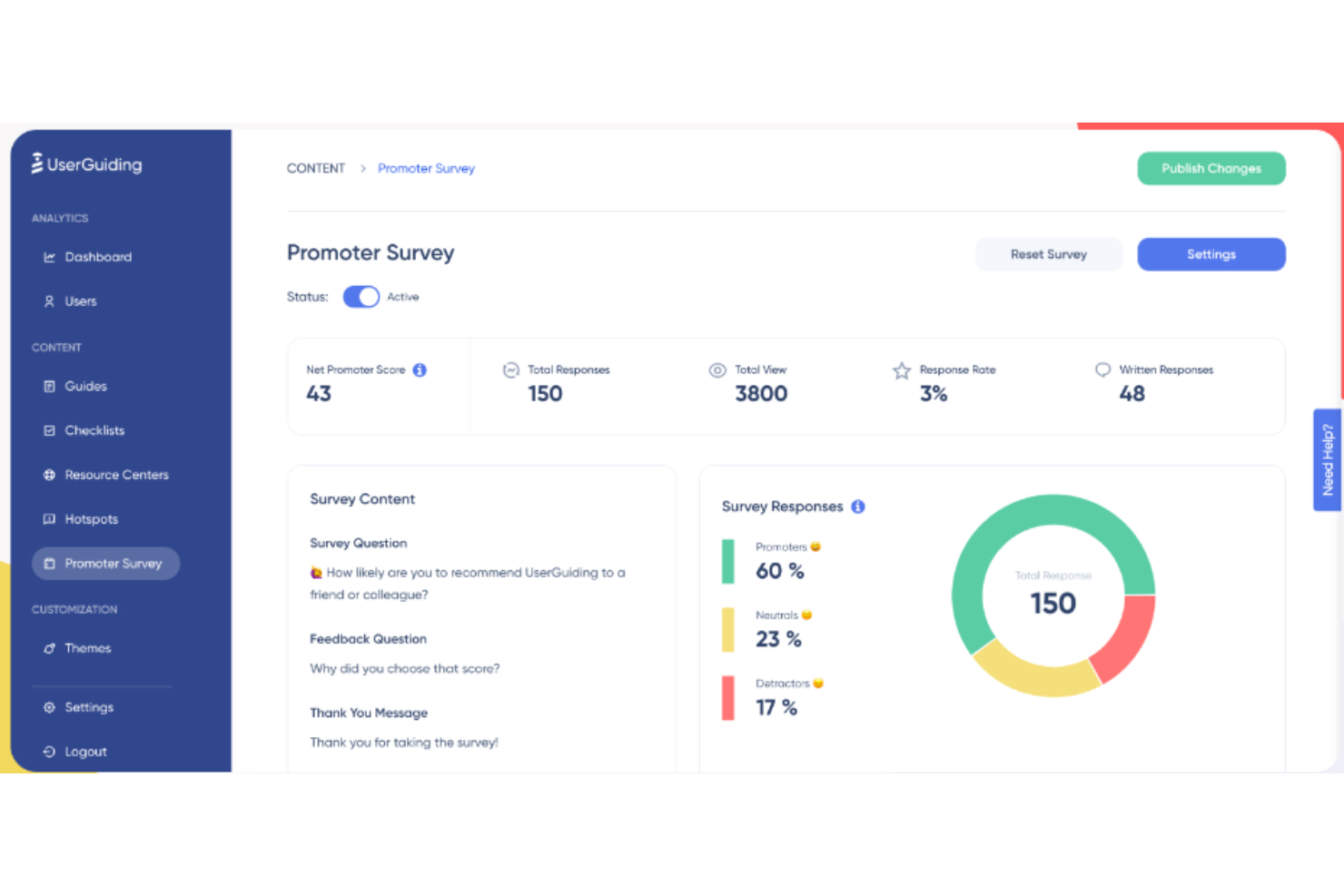
UserGuiding è una piattaforma di adozione digitale senza codice che offre flussi di inserimento nell'applicazione, descrizioni comandi, liste di controllo, centri risorse e sondaggi NPS per guidare gli utenti attraverso il prodotto.
Per chi è più adatto UserGuiding?
UserGuiding è adatto alle squadre responsabili del prodotto SaaS e del successo dei clienti presso aziende di piccole e medie dimensioni che desiderano migliorare l'attivazione degli utenti senza dipendere dalle risorse di sviluppo.
Perché ho scelto UserGuiding
Ho scelto UserGuiding come una delle soluzioni migliori perché il suo kit di strumenti incentrato sull'attivazione va oltre le visite guidate di base del prodotto. Utilizzo insieme il Monitoraggio degli obiettivi e i Test A/B per individuare quali flussi di inserimento portano effettivamente gli utenti alla loro prima azione chiave, non solo quali vengono aperti. Le liste di controllo per l'inserimento sono particolarmente efficaci in questo ambito: creano un percorso strutturato verso l'attivazione che mantiene gli utenti sulla buona strada senza richiedere un'assistenza continua da parte della squadra responsabile del successo dei clienti.
Funzionalità principali di UserGuiding
- Centro risorse: Centralizza guide del prodotto, FAQ e documentazione all'interno della tua applicazione web per offrire supporto autonomo.
- Assistente AI: Utilizza risposte basate sull'AI per aiutare gli utenti a trovare risposte e risolvere i problemi direttamente nell'applicazione.
- Sondaggi NPS e nell'applicazione: Raccoglie i riscontri degli utenti e misura la soddisfazione utilizzando strumenti di sondaggio integrati.
- Riproduzione delle sessioni: Registra sessioni reali degli utenti, permettendo alle squadre di osservare le interazioni e individuare i problemi dell'esperienza.
Integrazioni di UserGuiding
UserGuiding offre integrazioni native con HubSpot, Intercom, Mixpanel, Segment e Google Analytics. È disponibile un'API per le integrazioni personalizzate.
Pros and Cons
Pros:
- I flussi di inserimento senza codice vengono avviati senza l'intervento della squadra di sviluppo
- Le liste di controllo per l'attivazione guidano gli utenti verso le azioni chiave
- I sondaggi nell'applicazione raccolgono riscontri senza strumenti di terze parti
Cons:
- Messaggistica multicanale limitata oltre l'applicazione
- La profondità delle analisi non soddisfa le esigenze delle aziende

Netmera
Ideale per una segmentazione granulare del pubblico
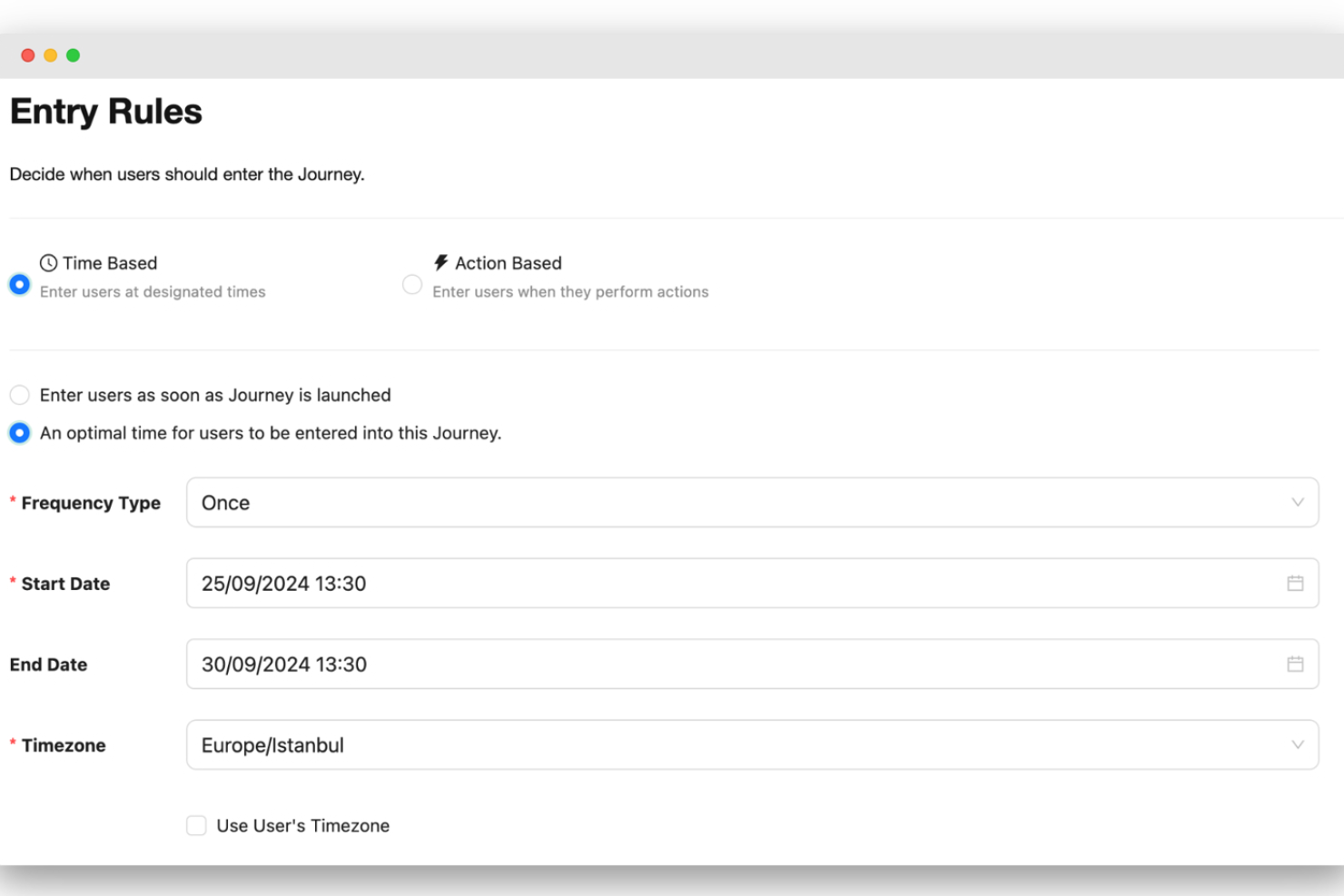
Netmera è una piattaforma di coinvolgimento omnicanale dei clienti che combina una CDP integrata, una segmentazione basata sull'intelligenza artificiale, messaggistica multicanale (push, email, SMS, WhatsApp, in-app e web) e l'orchestrazione di percorsi senza codice in un'unica interfaccia.
Per chi è più adatto Netmera?
Netmera è particolarmente adatto ai team aziendali nei settori bancario, delle telecomunicazioni, della vendita al dettaglio e dei media che hanno bisogno di gestire un coinvolgimento ad alto volume e basato sul comportamento su dispositivi mobili e web.
Perché ho scelto Netmera
Ho scelto Netmera come una delle migliori soluzioni perché la profondità della sua segmentazione si distingue davvero in un settore affollato. Apprezzo in particolare l'acquisizione dei dati senza tag, che raccoglie automaticamente gli eventi comportamentali senza ricorrere all'assegnazione manuale dei tag, offrendo segnali più ricchi per creare segmenti fin dal primo giorno. Se a questo si aggiunge l'intelligenza artificiale predittiva, che segnala in tempo reale il rischio di abbandono e l'intenzione di acquisto, è possibile raggiungere il cliente giusto esattamente nel momento giusto del suo percorso di fidelizzazione.
Funzionalità principali di Netmera
- Orchestrazione di campagne omnicanale: Gestisci campagne email, SMS, push mobile, WhatsApp, in-app e web da un'unica interfaccia.
- Creazione visiva dei percorsi: Progetta e automatizza percorsi cliente articolati in più fasi con una logica di trascinamento su tutti i canali.
- Pannello di analisi in tempo reale: Monitora in un unico luogo le prestazioni delle campagne, l'efficacia dei canali e i risultati del coinvolgimento dei clienti.
- Controlli per la privacy dei dati e la conformità: Supporto integrato per il GDPR, certificazioni ISO e strumenti granulari per la gestione del consenso.
Integrazioni di Netmera
Netmera offre integrazioni native con WhatsApp, Mixpanel, SAP Marketing, Twilio e altro ancora. È disponibile un'API per le integrazioni personalizzate.
Pros and Cons
Pros:
- Segmentazione comportamentale approfondita con attivatori in tempo reale
- CDP integrata con acquisizione dei dati senza tag
- Previsione del rischio di abbandono e ottimizzazione dell'orario di invio basate sull'intelligenza artificiale
Cons:
- L'interfaccia dei report può sembrare obsoleta
- Documentazione disponibile limitata per la configurazione autonoma iniziale

Ideale per la distribuzione globale di ricompense
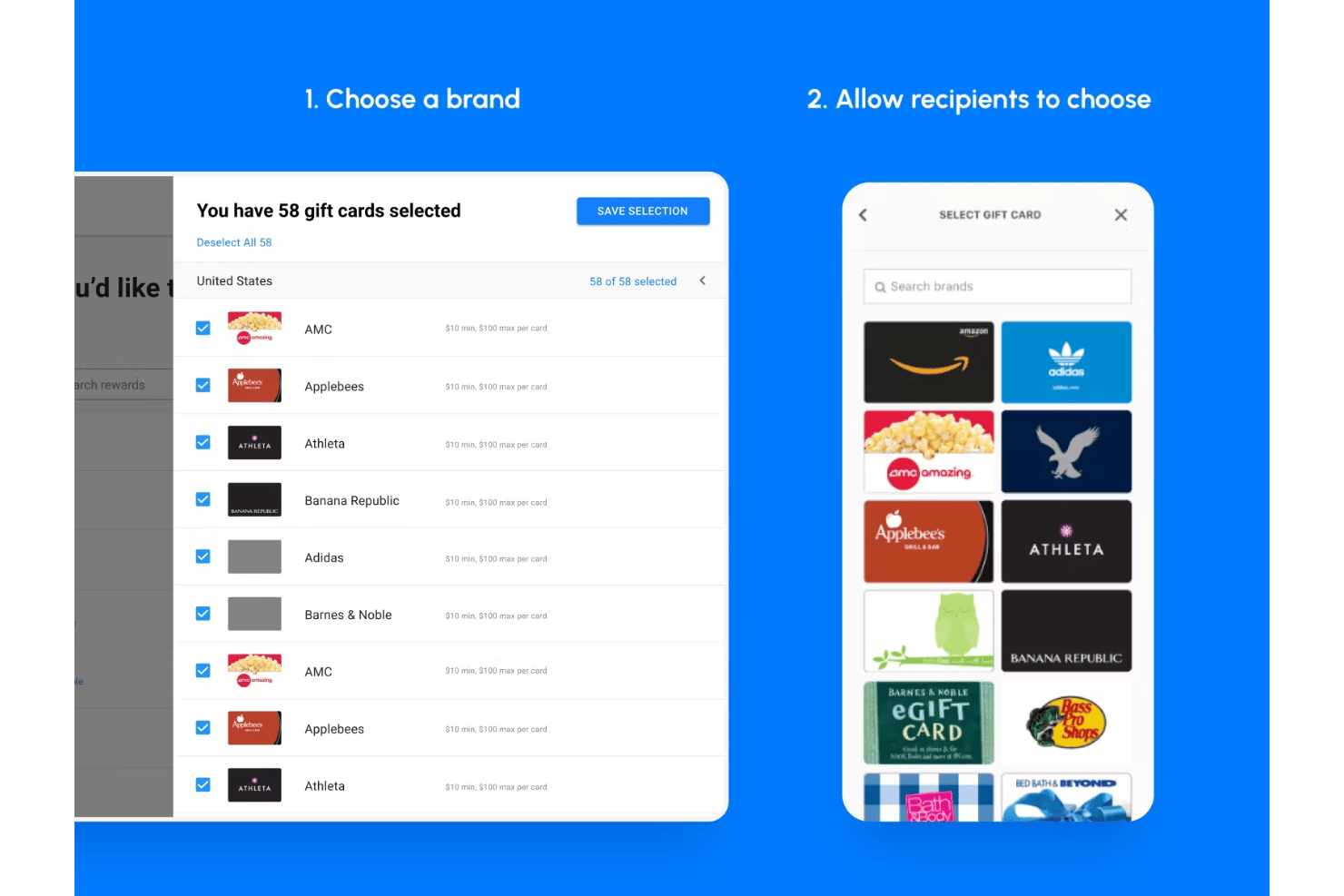
Tremendous è una piattaforma globale per la distribuzione di ricompense e incentivi che consente alle aziende di inviare carte regalo, carte prepagate e pagamenti monetari a clienti, partecipanti a programmi di referral e intervistati di ricerche in oltre 200 paesi.
Per chi è più adatto Tremendous?
Tremendous è adatto ai team di marketing e ricerca di aziende medio-grandi che gestiscono programmi di referral, fidelizzazione o incentivi ad alto volume in più paesi.
Perché ho scelto Tremendous
Tremendous si è guadagnato un posto nella mia lista ristretta grazie alla sua portata: oltre 2.500 opzioni di ricompensa disponibili in più di 200 paesi, con conversione automatica della valuta integrata. Mi piace che i destinatari possano scegliere il proprio formato di pagamento, che si tratti di una carta regalo Amazon, di una carta prepagata Visa o di un trasferimento PayPal. In pratica, il mio team può gestire un'unica campagna globale di fidelizzazione senza creare cataloghi di ricompense separati per ogni regione.
Caratteristiche principali di Tremendous
- Invio massivo di ricompense: Carica un foglio di calcolo o utilizza l'API per distribuire ricompense a centinaia o migliaia di destinatari contemporaneamente.
- Branding personalizzato: Personalizza le email relative alle ricompense, le pagine di destinazione e le comunicazioni con le immagini e i messaggi del tuo marchio.
- Pannello di monitoraggio degli ordini: Monitora lo stato e il riscatto di tutte le ricompense con visibilità in tempo reale su spesa, consegna e utilizzo.
- Controlli per la prevenzione delle frodi: Imposta limiti di spesa, richiedi approvazioni e utilizza controlli automatizzati per contribuire a ridurre il rischio di pagamenti fraudolenti.
Integrazioni di Tremendous
Tremendous offre integrazioni native con Salesforce, HubSpot, Friendbuy, Qualtrics e Zapier, oltre a fornire un'API per integrazioni personalizzate.
Pros and Cons
Pros:
- I destinatari possono scegliere tra oltre 2.500 opzioni di ricompensa
- Gestisce enormi volumi di ricompense senza ritardi
- Monitoraggio in tempo reale dei riscatti in tutte le campagne
Cons:
- Non è progettato per percorsi di coinvolgimento continuativo
- Funzionalità native limitate per la segmentazione dei clienti

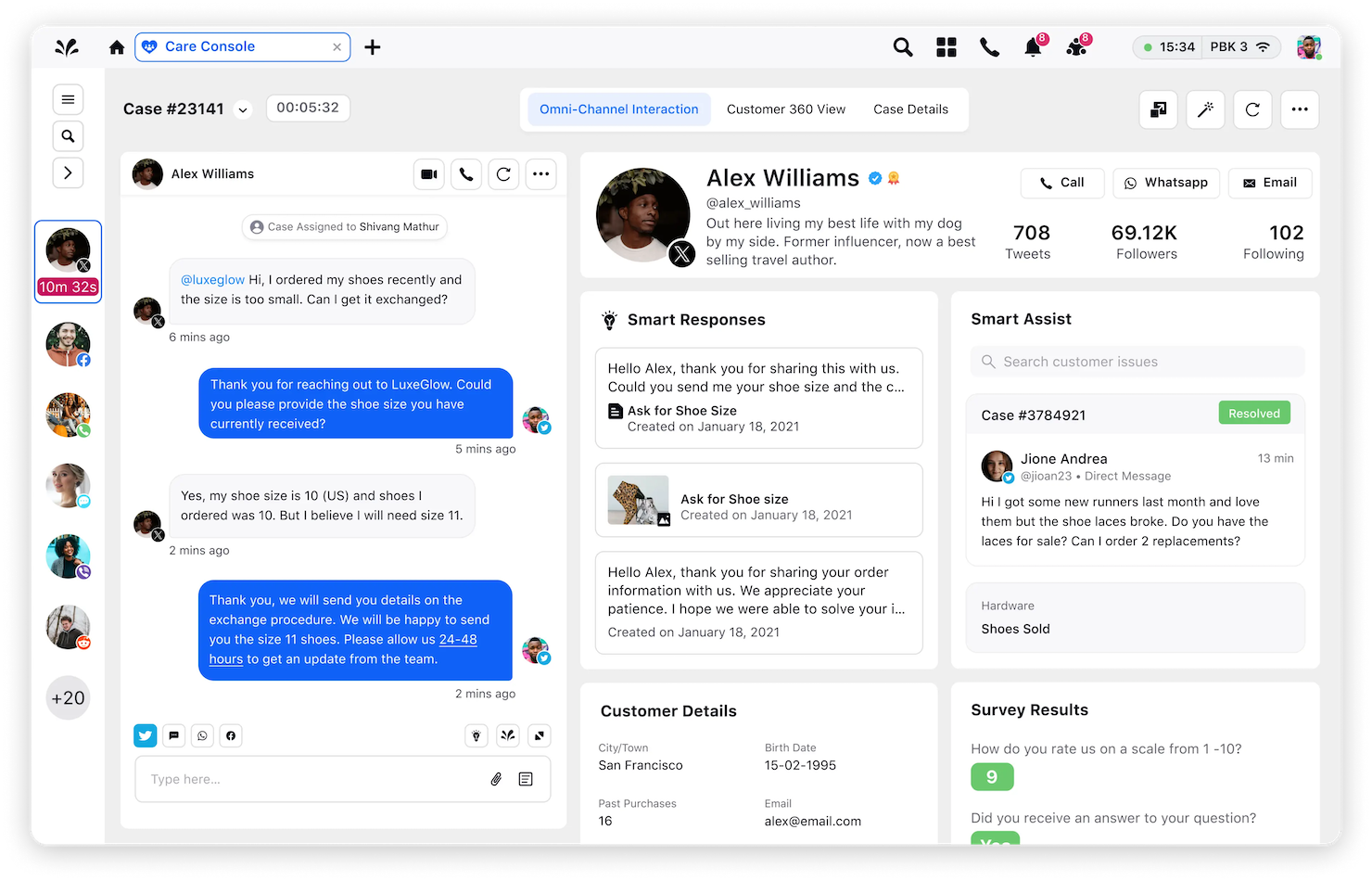
Sprinklr Service aiuta i team di supporto e marketing a gestire le conversazioni sui social media, app di messaggistica e altri canali. Risolve la sfida di gestire molteplici punti di contatto con i clienti riunendoli in un'unica casella di posta. Il tuo team può centralizzare le interazioni e fornire risposte coerenti.
Perché ho scelto Sprinklr Service: Ho scelto Sprinklr Service perché eccelle nell'ingaggio unificato del cliente. Combina gestione dei casi basata sull’AI, instradamento intelligente delle conversazioni e analisi in tempo reale del sentiment, così puoi dare priorità alle questioni più importanti. Dashboard personalizzabili ti permettono di monitorare le principali metriche del servizio clienti e le performance degli operatori. I flussi di lavoro automatizzati e una knowledge base integrata riducono le attività manuali e mantengono il team concentrato sulle relazioni.
Funzionalità principali e integrazioni
Le funzionalità includono una casella di posta omnicanale che raccoglie messaggi da social, email, voce e app di messaggistica, instradamento dei ticket guidato dall’AI con analisi del sentiment, dashboard personalizzabili per la reportistica e strumenti di automazione per creare flussi di lavoro e articoli di knowledge base.
Le integrazioni includono Salesforce, Zendesk, ServiceNow, Slack, Microsoft Teams, Google Workspace, HubSpot Marketing Hub, HubSpot Sales Hub, Jira e Tableau; è disponibile anche un'API.
Pros and Cons
Pros:
- Interfaccia intuitiva e ampia gamma di integrazioni
- Analisi approfondite e set di funzionalità robuste
- Gestione centralizzata dei social media, pianificazione intuitiva
Cons:
- Set di funzionalità ampio che richiede formazione pratica
- Configurazione lunga con processo di implementazione complesso

Braze
Ideale per le meccaniche di gioco
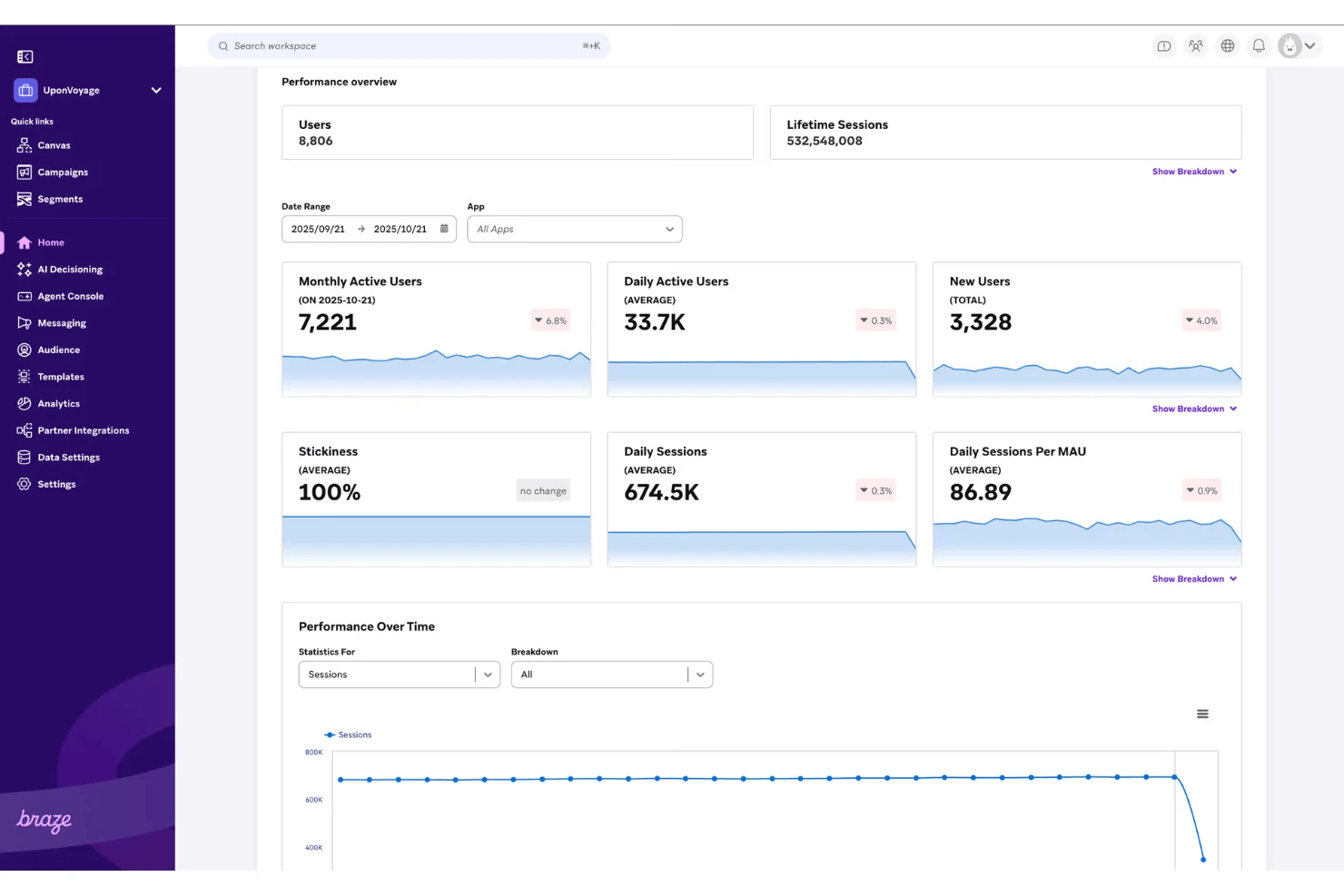
Braze è una piattaforma di coinvolgimento dei clienti che combina messaggistica multicanale, orchestrazione dei percorsi, unificazione dei dati dei clienti, personalizzazione basata sull'IA e analisi in tempo reale in un'unica soluzione per i marchi B2C.
Per chi è più adatto Braze?
Braze è particolarmente adatto ai marchi B2C del mercato medio e aziendale che dispongono di risorse interne per lo sviluppo e adottano strategie incentrate sui dispositivi mobili o sulla crescita guidata dal prodotto.
Perché ho scelto Braze
Ho incluso Braze tra le mie scelte principali per il modo in cui Canvas e la personalizzazione Liquid collaborano per rendere possibili autentiche meccaniche di gioco. In pratica, posso usare Canvas per attivare sequenze di ricompense dopo azioni specifiche degli utenti, quindi distribuire tali ricompense tramite schede di contenuto o notifiche HTTP in tempo reale. Snoonu ha utilizzato esattamente questa configurazione per una campagna della Ruota della fortuna, che ha portato a un aumento del 39% degli ordini ripetuti.
Caratteristiche principali di Braze
- Suite di messaggistica omnicanale: Supporta email, notifiche push, SMS, messaggi nell'app, WhatsApp e messaggistica web da un'unica piattaforma.
- Funzionalità di piattaforma dei dati dei clienti: Crea profili cliente unificati con acquisizione dei dati in tempo reale e risoluzione nativa delle identità.
- Orchestrazione visiva dei percorsi: Il generatore basato sul trascinamento consente ai team di automatizzare percorsi cliente composti da più fasi tra segmenti e canali.
- Strumenti di sperimentazione e ottimizzazione: Consente di eseguire test multivariati, esperimenti sui percorsi e monitoraggio del coinvolgimento in un unico flusso di lavoro.
Integrazioni di Braze
Braze offre integrazioni native con Salesforce, Snowflake, Amplitude, Segment, Mixpanel, Looker, Shopify e mParticle. È disponibile un'API per le integrazioni personalizzate.
Pros and Cons
Pros:
- Meccaniche di gioco native integrate in Canvas
- Gli attivatori degli eventi in tempo reale si attivano in pochi millisecondi
- L'IA integrata ottimizza gli orari di invio dei messaggi
Cons:
- Richiede il supporto di sviluppatori per la configurazione completa
- Inserimento iniziale complesso per i team CX non tecnici

Pendo
Ideale per la facilità d'uso
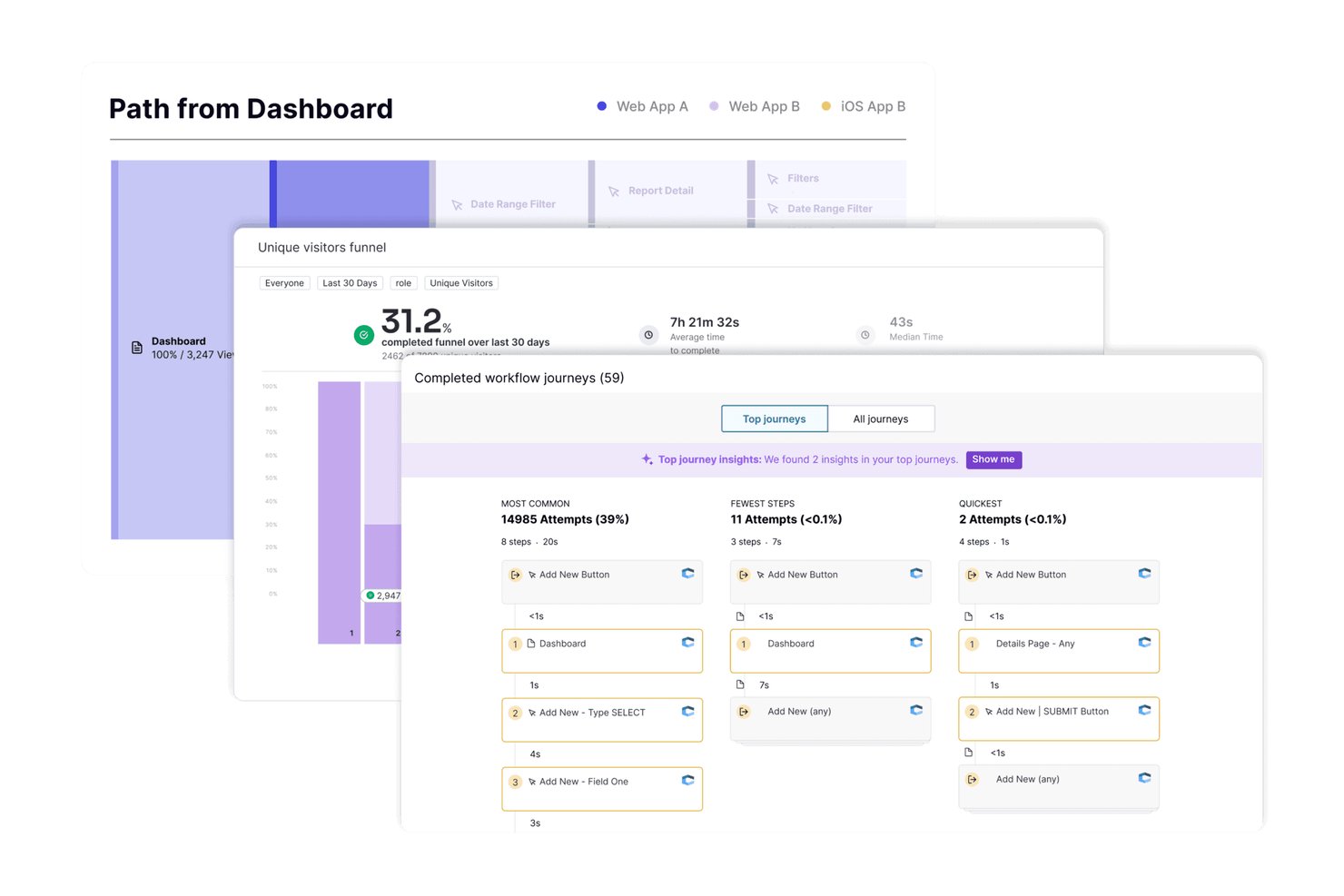
Pendo è una piattaforma per l'esperienza del prodotto che combina analisi nell'app, segmentazione comportamentale, procedure guidate, messaggistica nell'app e strumenti per i riscontri degli utenti, per favorire il coinvolgimento dei clienti direttamente all'interno dei prodotti digitali.
Per chi è più indicato Pendo?
Pendo è particolarmente adatto ai team di successo dei clienti e di prodotto delle aziende SaaS che desiderano favorire il coinvolgimento nell'app e l'adozione delle funzionalità senza dipendere dalle risorse tecniche.
Perché ho scelto Pendo
Ho scelto Pendo come una delle soluzioni migliori perché il suo generatore di guide senza codice consente al mio team di lanciare procedure guidate nell'app, suggerimenti e sondaggi NPS senza alcun supporto tecnico. Ho creato flussi di lavoro successivi all'NPS che indirizzano automaticamente i riscontri dei detrattori verso sequenze di recupero, incoraggiando al contempo i promotori a cogliere le opportunità di segnalazione. Le analisi retroattive di Pendo mi permettono inoltre di analizzare il comportamento degli utenti fin dal primo giorno, anche per le guide create dopo l'installazione iniziale.
Funzionalità principali di Pendo
- Riproduzione delle sessioni: Visualizza le registrazioni delle sessioni degli utenti per analizzare le interazioni e i comportamenti reali dei clienti nel tuo prodotto.
- Sondaggi sulla percezione: Avvia sondaggi NPS, PMF e CSAT nell'app per raccogliere le opinioni degli utenti nei punti chiave del percorso.
- Modulo Orchestrate: Crea percorsi nell'app articolati in più fasi con attivatori, ritardi e flussi condizionali per un coinvolgimento più personalizzato.
- Integrazioni per la sincronizzazione dei dati: Esporta i dati degli eventi verso i magazzini di dati e connettiti a sistemi come Salesforce e HubSpot tramite componenti aggiuntivi a pagamento.
Integrazioni di Pendo
Pendo offre integrazioni native con Salesforce e HubSpot, oltre a funzionalità di sincronizzazione dei dati per Snowflake e Amazon Redshift. È disponibile un'API per le integrazioni personalizzate.
Pros and Cons
Pros:
- Il generatore di guide senza codice non richiede supporto tecnico
- Le analisi retroattive acquisiscono il comportamento fin dal primo giorno
- Gli attivatori NPS nell'app avviano sequenze automatizzate di azioni successive per i detrattori
Cons:
- Debole orchestrazione dei percorsi tra i canali al di là dell'esperienza nell'app
- La riproduzione delle sessioni richiede un componente aggiuntivo a pagamento
Altre opzioni
Ecco alcune altre opzioni che non sono rientrate nell’elenco principale.
- MoEngage
Miglior orchestrazione dei percorsi cliente
- Sprout Social
Ideale per l'engagement sui social media guidato dall'AI
- Qualtrics Customer Experience
Ideale per sondaggi rivolti ai clienti
- twik
Ideale per l'automazione delle chat
- Medallia
Ideale per insight in tempo reale sui feedback dei clienti
- Annex Cloud
Ideale per fidelizzazione omnicanale e advocacy
- Front
Ideale per una comunicazione efficiente del team
- Zingle
Migliore automazione dei flussi di lavoro
- PUG's Picnic
Ideale per coinvolgimento clienti e fidelizzazione gamificata
- Birdeye
Migliore per il benchmarking competitivo
- Zendesk
Ideale per il coinvolgimento clienti potenziato dall'IA
- Zoho SalesIQ
Migliore per la creazione di una knowledge base


Come valuto le piattaforme di coinvolgimento dei clienti
Le piattaforme di coinvolgimento dei clienti sono lo strumento attraverso cui i brand e-commerce e i team SaaS coordinano messaggi attivati da comportamenti tramite email, SMS, notifiche push e messaggi in-app da un'unica postazione. Valuto questi strumenti su due livelli: ciò che permette a una piattaforma di entrare in questa lista e ciò che differenzia effettivamente una scelta dall'altra.
Funzionalità di base (Requisiti minimi per questa lista)
Per le piattaforme di coinvolgimento dei clienti, le funzionalità di base che testo e valuto sono:
- Messaggistica omnicanale: Verifico se la piattaforma coordina email, SMS, notifiche push e messaggi in-app da un unico posto invece di separare ogni canale.
- Unificazione dei dati dei clienti: La creazione di profili in tempo reale è fondamentale. Cerco piattaforme che uniscono dati comportamentali, transazionali e demografici in una singola vista utente.
- Segmentazione dell’audience: Segmenti dinamici che si aggiornano in base al comportamento in tempo reale sono essenziali. Pensate a "utenti che hanno abbandonato il carrello nell’ultima ora" che si aggiornano automaticamente.
- Orchestrazione del percorso: Valuto il builder visivo dei percorsi per la logica ramificata, la flessibilità dei trigger e i passaggi cross-canale all'interno di un singolo flusso di lavoro automatizzato.
- Personalizzazione: Oltre ai tag sostitutivi per il nome proprio, cerco blocchi di contenuto dinamici, raccomandazioni di prodotto e ottimizzazione del momento dell’invio guidata dai dati utente.
- Monitoraggio degli eventi: La piattaforma deve avere SDK o API che raccolgano in tempo reale le azioni degli utenti come l'uso di funzionalità, la visualizzazione di pagine o eventi di acquisto senza un elevato sforzo per gli sviluppatori.
- A/B testing: Verifico se è possibile testare oggetti delle email, varianti di contenuto, canali e percorsi dei journey con reportistica integrata sulla significatività statistica.
- Analisi delle campagne: Metriche di coinvolgimento a livello di campagna, percorso e canale sono il minimo indispensabile. Cerco attribuzione delle conversioni e approfondimenti a livello di coorte.
Uno strumento deve offrire la maggior parte di queste funzionalità per entrare nella lista. Da lì, considero ciò che distingue ogni piattaforma.
Funzionalità distintive (Cosa differenzia le scelte)
Quando seleziono piattaforme di coinvolgimento dei clienti cerco funzionalità guidate dall'IA come la segmentazione predittiva e raccomandazioni sulle prossime azioni che aggiungono vera intelligenza alle campagne. Integrazioni nativamente col data warehouse—come sincronizzazione diretta con Snowflake o BigQuery—sono importanti per i team che vogliono attivare dati ricchi senza ingegneria pesante. Considero anche se la piattaforma supporta operazioni multi-brand o multi-regione con permessi avanzati per organizzazioni complesse.
Cosa valuto oltre le funzionalità
La complessità dell’implementazione è un fattore importante. Alcune piattaforme richiedono mesi di integrazione SDK e lavori sui data pipeline, quindi valuto quanto sforzo ingegneristico serve davvero per andare online. Tengo anche conto con attenzione dei modelli di pricing, poiché la fatturazione basata su MAU e i costi per messaggio SMS possono crescere rapidamente su grandi volumi. La conformità normativa è fondamentale—controllo per SOC 2 Tipo II, strumenti GDPR come DSAR automatici e opzioni di residenza dei dati, soprattutto per i team con clienti nell’UE.
Cosa sono le piattaforme di coinvolgimento dei clienti?
Le piattaforme di coinvolgimento dei clienti (CEP) sono strumenti che supportano il coinvolgimento dei clienti, consentendo alle aziende di entrare in contatto con i clienti attraverso più canali in modo coerente, personalizzato e tempestivo. Aiutano a unificare la comunicazione, automatizzare le interazioni e monitorare il comportamento per favorire esperienze migliori e relazioni più solide con i clienti.
Come funziona una piattaforma di coinvolgimento dei clienti?
Una piattaforma di coinvolgimento dei clienti collega i dati dei clienti ai canali utilizzati per comunicare con loro. In pratica, il processo si svolge generalmente come segue:
1. Raccogliere i dati dei clienti → Il comportamento, le transazioni, lo storico dell'assistenza, le preferenze e altri segnali confluiscono nella piattaforma.
2. Creare i profili dei clienti → La piattaforma collega questi segnali per creare una visione più completa di ogni cliente.
3. Identificare i segmenti di pubblico o i trigger → I clienti possono essere segmentati in base agli attributi o al comportamento oppure possono entrare in percorsi quando si verifica un determinato evento.
4. Distribuire le interazioni → Messaggi ed esperienze vengono forniti attraverso canali come e-mail, SMS, notifiche push, messaggi in-app o chat.
5. Misurare la risposta → Il coinvolgimento, le conversioni, la fidelizzazione e altri risultati vengono reimmessi nella piattaforma per orientare le interazioni future.
Coinvolgimento nelle vendite e piattaforme di coinvolgimento dei clienti a confronto
La differenza principale riguarda chi si sta coinvolgendo e in quale fase della relazione. Le piattaforme di coinvolgimento delle vendite aiutano principalmente i team commerciali a comunicare con i potenziali clienti e a portare le opportunità verso una vendita, mentre le piattaforme di coinvolgimento dei clienti gestiscono le interazioni lungo l'intero ciclo di vita del cliente.
| Parametro di confronto | Piattaforma di coinvolgimento delle vendite | Piattaforma di coinvolgimento dei clienti |
|---|---|---|
| Pubblico principale | Potenziali clienti e lead | Potenziali clienti e clienti esistenti |
| Obiettivo principale | Generare risposte e portare avanti le trattative | Costruire coinvolgimento, fidelizzazione e valore per il cliente |
| Utenti comuni | SDR, BDR e team commerciali | Team di marketing, CX, successo del cliente e gestione del ciclo di vita |
| Canali più comuni | Email, telefono, LinkedIn, SMS | Email, SMS, notifiche push, messaggi nelle app, chat, WhatsApp |
| Flussi di lavoro principali | Prospezione, sequenze di contatto, messaggi di follow-up | Percorso del cliente, personalizzazione, messaggistica basata sul ciclo di vita |
| Metriche più comuni | Risposte, riunioni, opportunità, pipeline | Coinvolgimento, conversione, fidelizzazione, abbandono, CLV |
Esiste una certa sovrapposizione, soprattutto per quanto riguarda email, SMS, automazione e personalizzazione. Il fattore determinante è solitamente la fase del ciclo di vita: se il tuo obiettivo principale è trasformare i potenziali clienti in clienti, orientati verso un software di coinvolgimento delle vendite; se invece gestisci il coinvolgimento durante acquisizione, avviamento, fidelizzazione e lealtà, una piattaforma di coinvolgimento dei clienti è la scelta più adatta.
Quale piattaforma di coinvolgimento dei clienti è più adatta alla tua azienda?
La piattaforma migliore dipende dal modo in cui coinvolgi i clienti, non soltanto dal numero di funzionalità che offre. Utilizza il tuo modello di business e i principali canali di comunicazione per restringere la scelta.
| Caso d'uso | Più adatto a | Canali da privilegiare | Cosa cercare | Esempi da questo elenco |
|---|---|---|---|---|
| Commercio elettronico | Rivenditori online e marchi DTC | Email, SMS, notifiche push | Dati sugli acquisti, percorsi del cliente per il recupero dei carrelli abbandonati, consigli sui prodotti, integrazioni per la fidelizzazione | Annex Cloud, twik, Tremendous, Birdeye |
| Priorità al mobile | App, marketplace e servizi digitali | Notifiche push, messaggi nelle app, SMS, WhatsApp | Attivatori comportamentali in tempo reale, percorsi del cliente su dispositivi mobili, collegamenti profondi, messaggistica basata sulla posizione e sul contesto | Braze, MoEngage, Netmera, Pendo, UserGuiding |
| Coinvolgimento conversazionale | Aziende con interazioni frequenti e personalizzate con i clienti | Chat dal vivo, WhatsApp, SMS | Messaggistica bidirezionale, cronologia delle conversazioni, instradamento, automazione, passaggio a un operatore | Front, Tidio, Zendesk, Zoho SalesIQ, Zingle, Sprinklr Service |
| Tutto in uno / mercato intermedio | Aziende in crescita che consolidano gli strumenti di coinvolgimento | Email, SMS, chat, web | Automazione multicanale, segmentazione, integrazioni CRM, reportistica | Creatio CRM, SurveySparrow, Alchemer, Sprout Social, Augeo |
| Omnicanale per grandi aziende | Grandi aziende con percorsi del cliente complessi | Email, SMS, notifiche push, WhatsApp, web, app | Orchestrazione dei percorsi del cliente, governance, personalizzazione avanzata, scalabilità, integrazioni dei dati | Qualtrics Customer Experience, Medallia, PUG's Picnic |
Come implementare una piattaforma di coinvolgimento dei clienti
Un'implementazione efficace dipende dalla corretta organizzazione dei dati dei clienti, dei canali e dei flussi di lavoro prima di iniziare ad automatizzare i percorsi del cliente. Utilizza questa checklist per pianificare l'implementazione:
| ✓ | Prima di rendere operativa la tua piattaforma di coinvolgimento dei clienti… |
|---|---|
| ☐ | Definisci i primi casi d'uso. Inizia con alcuni percorsi del cliente di alto valore, come avviamento, recupero dei carrelli, rinnovi o nuovo coinvolgimento. |
| ☐ | Verifica i dati dei clienti. Individua quali dati CRM, di prodotto, di assistenza, di commercio elettronico e comportamentali sono necessari alla piattaforma e risolvi le principali lacune o duplicazioni. |
| ☐ | Collega i sistemi principali. Configura le integrazioni e verifica che le identità dei clienti e gli eventi vengano sincronizzati correttamente tra le piattaforme. |
| ☐ | Imposta regole e autorizzazioni per i canali. Verifica consenso, revoche del consenso, limiti di frequenza e requisiti regionali prima di attivare email, SMS, notifiche push o WhatsApp. |
| ☐ | Crea e testa i percorsi del cliente. Controlla attivatori, segmentazione, personalizzazione, passaggi tra canali e percorsi alternativi prima di inviare comunicazioni ai clienti. |
| ☐ | Definisci le metriche di riferimento. Registra i dati attuali relativi a conversione, fidelizzazione, coinvolgimento o assistenza, così da poter misurare in seguito l'impatto della piattaforma. |
| ☐ | Procedi per fasi. Avvia il progetto con un pubblico o un percorso del cliente limitato, correggi i problemi ed espandi l'implementazione quando dati e flussi di lavoro funzionano come previsto. |
Come scegliere una piattaforma di coinvolgimento dei clienti
È facile perdersi in lunghi elenchi di funzionalità e strutture tariffarie complesse. Per aiutarti a rimanere concentrato mentre affronti il tuo specifico processo di selezione del software, ecco una checklist dei fattori da tenere a mente:
| Fattore | Cosa considerare |
|---|---|
| Scalabilità | Assicurati che la piattaforma possa crescere insieme alla tua azienda. Verifica che sia in grado di gestire un aumento delle interazioni con i clienti senza compromettere le prestazioni. |
| Integrazioni | Cerca un'integrazione perfetta con i sistemi esistenti, come il CRM e gli strumenti di email marketing, per ottimizzare i processi. |
| Personalizzazione | Il tuo team dovrebbe poter adattare la piattaforma ai propri flussi di lavoro specifici e alle esigenze del tuo marchio. |
| Facilità d'uso | Scegli un'interfaccia intuitiva che riduca i tempi di formazione e aumenti la produttività del tuo team. |
| Budget | Valuta il costo totale, comprese eventuali commissioni nascoste, per assicurarti che sia in linea con il tuo piano finanziario. |
| Misure di sicurezza | Verifica la presenza di solide misure di sicurezza per proteggere i dati sensibili dei clienti e rispettare le normative del settore. |
| Opzioni di assistenza | Scegli una piattaforma che offra un'assistenza clienti affidabile, incluse chat dal vivo, supporto telefonico o assistenza via email. |
| Analisi | Assicurati che fornisca analisi complete per monitorare il coinvolgimento e prendere decisioni basate sui dati. |
Tendenze per le piattaforme di coinvolgimento dei clienti nel 2026
Le piattaforme di coinvolgimento dei clienti si stanno evolvendo per soddisfare le esigenze dinamiche delle aziende e dei loro clienti. Ecco alcune tendenze chiave da osservare nel 2026.
- IA in grado di agire: l'IA sta andando oltre la generazione di risposte e raccomandazioni. Le piattaforme di coinvolgimento dei clienti la utilizzano sempre più per gestire richieste di routine, prendere decisioni basate sul contesto del cliente e completare azioni in più passaggi, con l'intervento umano dove necessario
- Conversazioni che proseguono su più canali: i clienti si aspettano di poter passare dalla chat all'email, agli SMS, alla voce e ad altri canali senza dover ricominciare da capo. Le piattaforme stanno diventando più efficaci nel trasferire la cronologia e il contesto del cliente tra queste interazioni, facendo sembrare il coinvolgimento omnicanale un'unica conversazione continua.
- Dati dei clienti in tempo reale: l'attenzione si sta spostando dalla semplice raccolta dei dati dei clienti alla loro disponibilità immediata. Profili dei clienti unificati e aggiornati continuamente possono aiutare i team a rispondere al comportamento nel momento in cui si verifica, invece di affidarsi a segmenti obsoleti e aggiornamenti in batch.
- Coinvolgimento bidirezionale: il coinvolgimento dei clienti sta diventando meno legato alle campagne e più conversazionale. I clienti si aspettano sempre più che i marchi rispondano loro, ma molte aziende faticano ancora a supportare interazioni bidirezionali affidabili su tutti i canali.
- Maggiore attenzione alla governance e all'affidabilità dell'IA: man mano che l'IA svolge una parte sempre più ampia delle attività rivolte ai clienti, la qualità dei dati, la privacy, le autorizzazioni, la spiegabilità e la supervisione diventano sempre più importanti. Per gli acquirenti, la domanda non è più soltanto “Questa piattaforma dispone dell'IA?”, ma sempre più spesso “Possiamo affidarle le interazioni e i dati dei clienti?”
Funzionalità di una piattaforma di coinvolgimento dei clienti
Quando selezioni una piattaforma di coinvolgimento dei clienti, presta attenzione alle seguenti funzionalità chiave:
- Comunicazione omnicanale: Connettiti con i tuoi clienti ovunque si trovino, tramite e-mail, chat, social media o SMS. Questa funzionalità ti consente di avere conversazioni fluide, indipendentemente dai canali che i tuoi clienti preferiscono.
- Strumenti di personalizzazione: Adatta i tuoi messaggi, le offerte e le interazioni in base ai comportamenti e alle preferenze di ciascun cliente. La personalizzazione rende il tuo approccio più attento anziché generico, trasformando un semplice contatto in un coinvolgimento significativo.
- Flussi di lavoro automatizzati: Imposta attivatori e azioni affinché le attività ripetitive, come l'invio di e-mail di benvenuto o il ricontatto in merito agli acquisti recenti, avvengano senza il tuo intervento continuo. In questo modo risparmi tempo e mantieni tempestive le tue comunicazioni.
- Profili cliente unificati: Accedi a una panoramica a 360 gradi di ogni cliente, con tutti i suoi dati, le interazioni e la cronologia in un unico luogo. Questo ti aiuta a comprendere davvero il tuo pubblico e a rispondere ai clienti come individui, non come una semplice voce in un foglio di calcolo.
- Segmentazione e definizione del pubblico: Raggruppa facilmente i clienti in base a dati demografici, comportamenti o cronologia. In questo modo puoi creare campagne che risuonano davvero con il pubblico, invece di inviare lo stesso messaggio generico a tutti.
- Analisi e reportistica in tempo reale: Esamina le statistiche di coinvolgimento aggiornate all'ultimo minuto per capire cosa funziona e cosa no. Queste informazioni ti aiutano a prendere decisioni più intelligenti e a perfezionare il tuo approccio senza dover procedere per tentativi.
- Funzionalità di integrazione: Connettiti senza problemi agli strumenti CRM, di marketing e di analisi che già utilizzi. L'integrazione significa che non dovrai passare da una scheda all'altra né duplicare i dati: tutto funziona armoniosamente.
- Strumenti per riscontri e sondaggi: Raccogli direttamente tramite la tua piattaforma le opinioni e le esperienze dei clienti. Questa funzionalità ti permette di agire sulla base di riscontri reali, anziché di supposizioni, e di dimostrare al tuo pubblico che lo stai ascoltando.
Funzionalità comuni di intelligenza artificiale delle piattaforme di coinvolgimento dei clienti
Oltre alle funzionalità standard delle piattaforme di coinvolgimento dei clienti elencate sopra, molte di queste soluzioni integrano l'intelligenza artificiale con funzionalità come:
- Analisi predittiva: Utilizza l'intelligenza artificiale per analizzare i modelli presenti nei dati dei clienti e prevedere comportamenti o esigenze future. In questo modo puoi contattare proattivamente i clienti con offerte o assistenza prima ancora che ne facciano richiesta.
- Chatbot basati sull'intelligenza artificiale: Fornisci assistenza clienti immediata, 24 ore su 24 e 7 giorni su 7, rispondendo automaticamente alle domande e ai problemi più comuni. Questi bot consentono al tuo team di dedicarsi alle interazioni più complesse e assicurano ai clienti risposte sempre rapide.
- Elaborazione del linguaggio naturale (NLP): Comprendi e interpreta automaticamente i messaggi dei clienti, anche quando contengono errori di ortografia o sono formulati in modo insolito. L'NLP ti aiuta a rispondere in modo più intelligente e a creare interazioni più naturali.
- Analisi del tono emotivo: Rileva le emozioni alla base dei messaggi dei clienti utilizzando l'intelligenza artificiale, per capire se una persona è soddisfatta, frustrata o confusa. In questo modo puoi dare priorità alle risposte o inoltrare i problemi a un operatore umano quando necessario, dimostrando ai clienti che tieni davvero a loro.
- Motori di raccomandazione dei contenuti: Suggerisci dinamicamente prodotti, articoli o risorse ai clienti in base al loro comportamento e alle loro preferenze. Li guidi verso ciò che è più rilevante, rendendo la loro esperienza più fluida e personalizzata.
Vantaggi delle piattaforme di coinvolgimento dei clienti
I vantaggi delle piattaforme di coinvolgimento dei clienti possono essere significativi per le aziende che desiderano migliorare le proprie interazioni con i clienti. Ecco i principali vantaggi che i potenziali acquirenti dovrebbero prendere in considerazione:
- Esperienza cliente migliorata: Fornisce comunicazioni personalizzate e coerenti su tutti i canali, migliorando la soddisfazione complessiva dei clienti.
- Maggiore efficienza: Automatizza le attività e i flussi di lavoro ripetitivi, consentendo al tuo team di concentrarsi sulle attività strategiche.
- Decisioni basate sui dati: Fornisce analisi e informazioni in tempo reale, consentendo di prendere decisioni informate e modificare le strategie.
- Maggiore fidelizzazione dei clienti: Costruisce relazioni più solide attraverso un coinvolgimento mirato, portando a una maggiore fedeltà e a tassi di fidelizzazione più elevati.
- Scalabilità: Si adatta alle esigenze della tua azienda in crescita, garantendo supporto e coinvolgimento continui con l'espansione della tua base clienti.
L'utilizzo di una piattaforma di coinvolgimento dei clienti può trasformare il modo in cui interagisci con i tuoi clienti, rendendo la tua azienda più efficiente e orientata al cliente. Questi vantaggi evidenziano il valore e l'impatto dell'implementazione di una piattaforma di questo tipo.
Costi e prezzi delle piattaforme di coinvolgimento dei clienti
Le piattaforme di coinvolgimento dei clienti offrono in genere una gamma di piani tariffari per adattarsi ad aziende di diverse dimensioni e con esigenze differenti. Comprendere questi piani e i relativi costi può aiutarti a prendere una decisione informata. Ecco le opzioni di piano più comuni e i relativi dettagli sui prezzi.
| Tipo di piano | Prezzo medio | Funzionalità comuni |
|---|---|---|
| Gratuito | $0 | Strumenti di coinvolgimento di base, canali limitati, analisi minime |
| Base | $50/mese | Funzionalità essenziali, comunicazione omnicanale, automazione di base |
| Standard | $150/mese | Automazione avanzata, mappatura del percorso del cliente, integrazioni |
| Professionale | $300/mese | Analisi in tempo reale, informazioni basate sull'IA, segmentazione |
| Aziendale | Prezzo personalizzato | Set completo di funzionalità, assistenza dedicata, sicurezza avanzata |
Domande frequenti
Domande comuni sulle piattaforme di coinvolgimento dei clienti:
Cosa significa coinvolgimento dei clienti?
Perché è importante il coinvolgimento dei clienti?
Qual è la differenza tra un CRM e una piattaforma di coinvolgimento dei clienti?
La conformità è garantita nelle piattaforme di coinvolgimento dei clienti?
Cosa devo cercare quando confronto i software per il coinvolgimento dei clienti?
Come dovresti misurare il ROI di una piattaforma di coinvolgimento dei clienti?
In sintesi
La piattaforma di engagement dei clienti più adatta dipende dal tuo modello di business, dalle dimensioni del team e dai canali che i tuoi clienti utilizzano realmente.
- Team piccoli: dai priorità a una configurazione semplice, all'automazione intuitiva e a un supporto efficace per i pochi canali che utilizzi maggiormente.
- Team di medie dimensioni: cerca una segmentazione più approfondita, percorsi multicanale, integrazioni e reportistica in grado di supportare volumi di clienti in crescita.
- Team aziendali: concentrati su scalabilità, governance, dati unificati dei clienti, personalizzazione avanzata e gestione di percorsi complessi.
- Attività di commercio elettronico: dai priorità a email e SMS, trigger basati sugli acquisti, percorsi per i carrelli abbandonati, consigli sui prodotti e strumenti per la fidelizzazione.
- Attività con priorità al mobile: cerca funzionalità efficaci per le notifiche push e i messaggi in-app, trigger comportamentali in tempo reale e funzionalità per i percorsi su dispositivi mobili.
Non hai bisogno della piattaforma con l'elenco di funzionalità più lungo. Scegli quella che si adatta meglio al modo in cui i tuoi clienti interagiscono oggi, offrendoti al contempo spazio sufficiente per ampliare i tuoi canali e percorsi man mano che crescono le tue esigenze.
Se vuoi scoprire altri software che possono aiutare la tua attività a crescere, iscriviti alla newsletter di The CX Lead.