

10 Best Banking CRM Software in 2026

Best Banking CRM Software Shortlist


Banking CRM software is a platform that connects customer data, relationship history, sales activity, lending workflows, and service interactions. The best banking CRM software helps retail, commercial, and lending teams coordinate relevant experiences across products and channels.
This guide compares leading platforms by household visibility, personalization, referral workflows, compliance support, integrations, usability, and reporting. Use it to identify the right fit for your bank’s customer journeys, operating model, and growth priorities.
Why Trust Our Software Recommendations
Our team has been testing and reviewing software since 2012. As CX leaders ourselves, we know how difficult—and important—it is to choose the right software.
For this guide, we evaluated tools using hands-on testing and independent research, scoring tools using our selection criteria.
Our reviews reflect our human editorial judgment, not a sales pitch.
Comparison Table: Banking CRM Software
Compare pricing and specs side by side for the banking CRM software that made it onto my shortlist.
| Tool | Best For | Trial Info | Price | ||
|---|---|---|---|---|---|
| 1 | Best for AI-driven cross-sell across banking lines | 30-day free trial + free demo available | From $325/user/month (billed annually) | Website | |
| 2 | Best for banks needing AI next-best-action at scale | Free demo available | Pricing upon request | Website | |
| 3 | Best for banks tracking cross-sell referrals | Free demo available | Pricing upon request | Website | |
| 4 | Best for compliance-first lending relationship growth | Free demo available | Pricing upon request | Website | |
| 5 | Best for bank compliance and lending pipelines | Free demo available | Pricing upon request | Website | |
| 6 | Best for household-level relationship mapping | Free demo available | Pricing upon request | Website | |
| 7 | Best for commercial lenders on banking core systems | Not available | Pricing upon request | Website | |
| 8 | Best for AI-driven cross-sell and referral tracking | Free demo available | Pricing upon request | Website | |
| 9 | Best for AI-driven cross-sell in mid-large banks | Free plan + free demo available | Pricing upon request | Website | |
| 10 | Best for configurable loan and account pipelines | 15-day free trial + free plan available | From $14/user/month (billed annually) | Website |


Best Banking CRM Software Reviews
Below are my summaries of the best banking CRM software on my shortlist. My reviews examine each banking CRM platform’s capabilities, best use cases, and integrations to help you find the right fit.

Best for AI-driven cross-sell across banking lines
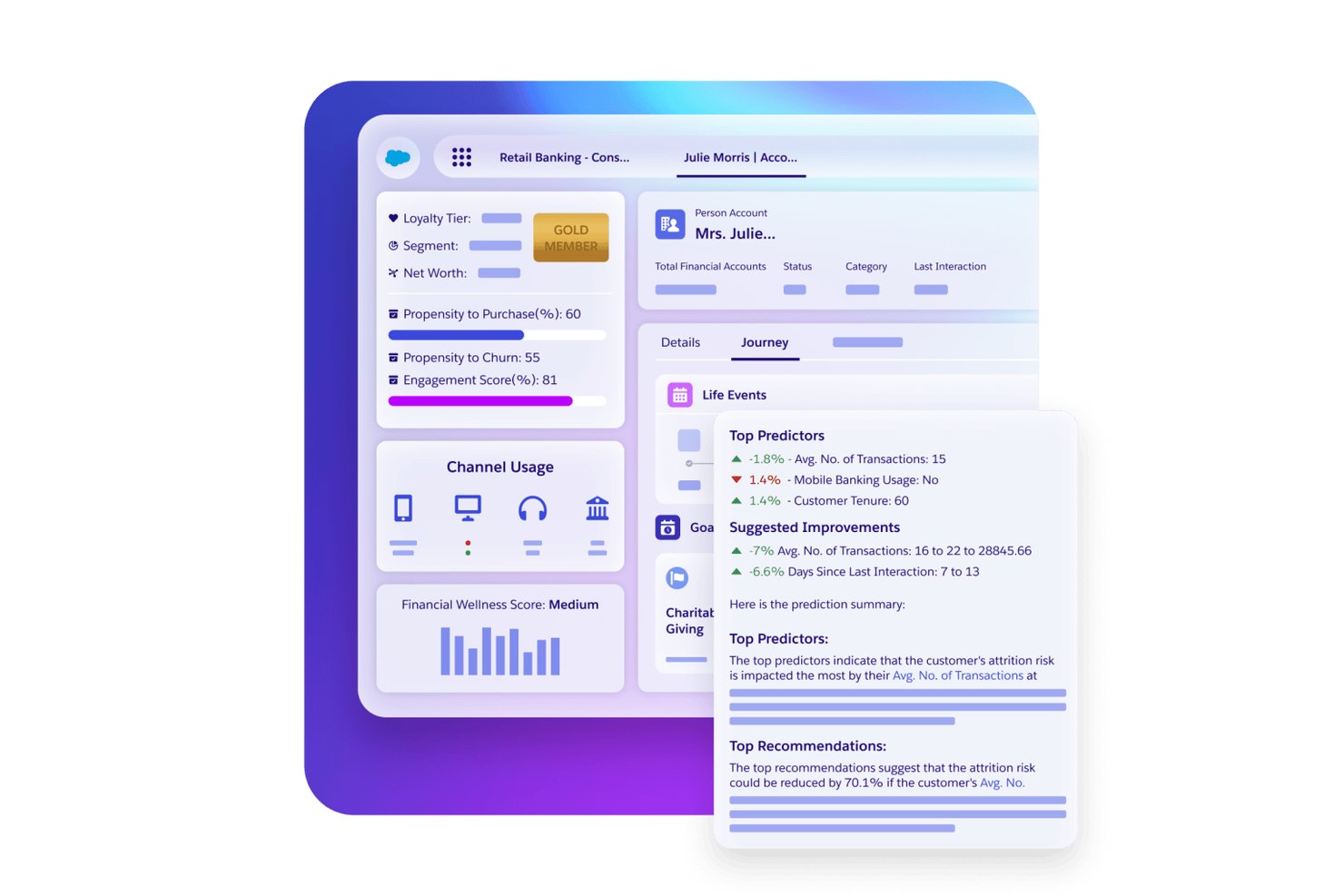
Salesforce Financial Services Cloud is a banking CRM built on the Salesforce platform that combines relationship management, AI-driven cross-sell, loan and deposit pipeline tracking, compliance controls, and core banking integrations across retail and commercial banking lines.
Who Is Salesforce Financial Services Cloud Best For?
Retail and commercial banks that need AI-driven cross-sell, compliance controls, and a unified customer view across multiple banking lines will get the most out of this platform.
Why I Picked Salesforce Financial Services Cloud
Salesforce Financial Services Cloud earns its spot on my shortlist because no other banking CRM matches its AI-driven cross-sell capabilities across multiple product lines. I particularly like the AI next-best-action engine, which ranks cross-sell opportunities in real time and routes intelligent referrals across retail and commercial lines. The Referral Scoring components let bankers track referral performance by conversion rate and status, so a mortgage referral doesn't quietly fall through the cracks.
Salesforce Financial Services Cloud Key Features
- Household and relationship mapping: The Actionable Relationship Center (ARC) visually maps connections between clients, households, and businesses so bankers can see the full relationship picture in one view.
- Process Compliance Navigator: A built-in compliance tool that manages policy acknowledgements, risk surveys, and AI-assisted clause extraction to keep your team audit-ready.
- Service Process Studio: A low-code workflow builder that lets your team configure banking service processes—like KYC document collection and account opening—without heavy developer involvement.
- Salesforce Shield field audit trail: Tracks up to 10 years of field-level history across up to 200 fields per object, giving compliance and operations teams a detailed, long-term record of data changes.
Salesforce Financial Services Cloud Integrations
Salesforce Financial Services Cloud offers native integrations with MuleSoft Anypoint Platform, Data 360, Tableau, Slack, and Agentforce. It connects with Jack Henry SilverLake, Snowflake, Databricks, AWS, and Equifax through MuleSoft, Data 360, or marketplace partners.
Pros and Cons
Pros:
- Audit tools support long-term field histories
- AI ranks cross-sell opportunities across banking lines
- Unified profiles connect accounts and interactions
Cons:
- Busy screens complicate high-volume record review
- Advanced configuration needs specialist Salesforce skills

CRMNEXT
Best for banks needing AI next-best-action at scale
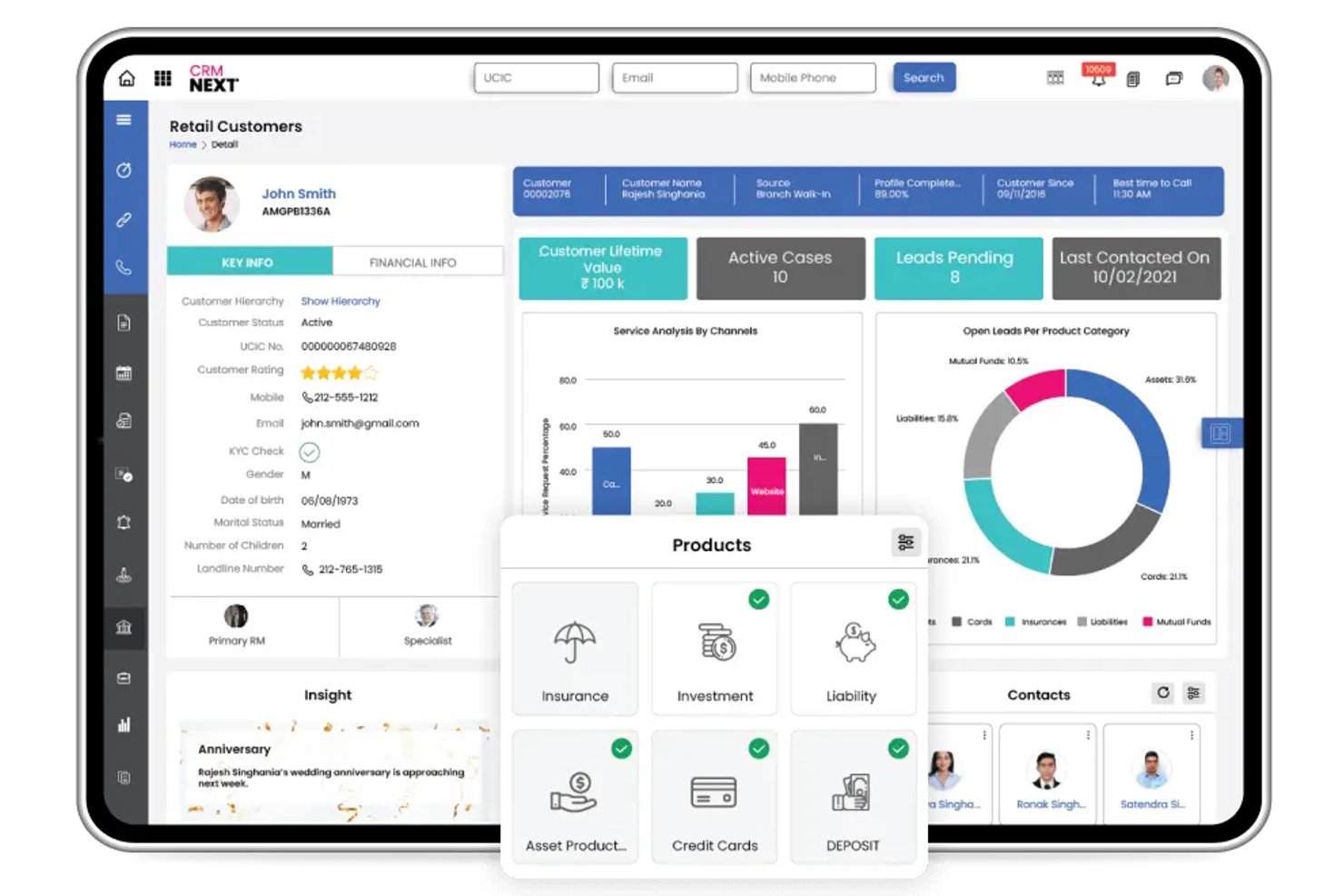
CRMNEXT is a banking CRM platform built for retail and corporate financial institutions, offering AI-driven next-best-action recommendations, omnichannel customer relationship management, pipeline tracking, and core banking system integrations.
Who Is CRMNEXT Best For?
CRMNEXT is a strong fit for retail banks, commercial banks, and credit unions that need a purpose-built CRM with deep core banking integrations and AI-driven next-best-action recommendations at the frontline.
Why I Picked CRMNEXT
I've included CRMNEXT in my top picks because it's purpose-built for banking at scale, with AI next-best-action baked into the frontline experience rather than bolted on. I particularly like the Insight Card feature, which surfaces next-best offers and churn risk scores directly in the member 360 view, so relationship managers act on live signals without switching screens. At Magnifi Financial, that translated to 19% more referrals year over year and a 60% lead close rate.
CRMNEXT Key Features
- Member 360 view: Displays product holdings, recent transactions, channel preferences, churn risk scores, and lead scores in a single screen, with the ability to initiate loans or accounts from the same place.
- Drag-and-drop workflow builder: Lets you configure triggers based on member behavior and build automated onboarding journeys without writing code.
- Role-based dashboards: Branch managers and officers track team goals, loan pipelines, and cycle times through configurable, widget-based dashboards that don't require a developer to update.
- Omnichannel campaign management: Runs targeted cross-sell campaigns across email, SMS, and WhatsApp, with shared member interaction history across branch, phone, and digital channels.
CRMNEXT Integrations
CRMNEXT lists integrations with Symitar, Silverlake/Jack Henry, Corelation, and Temenos, plus 150+ connectors for digital account opening and corporate banking and 170+ for lending. Its API-first, headless architecture supports custom integrations.
Pros and Cons
Pros:
- Configurable workflows support complex banking processes
- Banking-specific 360 view unifies customer context
- AI next actions guide frontline recommendations
Cons:
- Users report occasional slowdowns and browser issues
- Reporting can feel unintuitive for some users

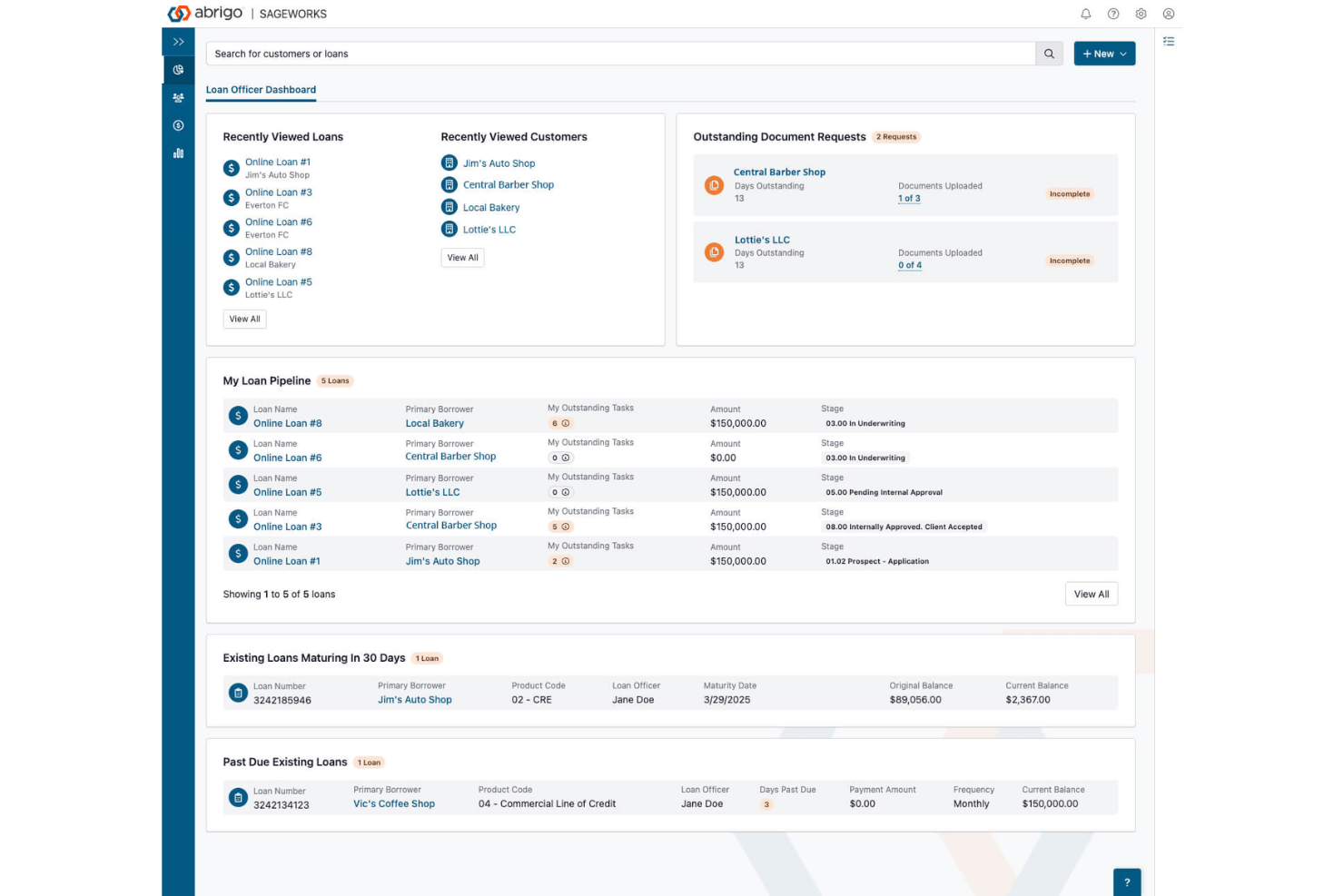
Abrigo is a banking CRM platform built on 360 View that combines unified customer profiling, referral and cross-sell tracking, pipeline management, marketing automation, and core banking system integrations for banks and credit unions.
Who Is Abrigo Best For?
Abrigo's banking CRM is a strong fit for community banks and credit unions that need purpose-built referral tracking and cross-sell management tied directly to their core banking system.
Why I Picked Abrigo
I picked Abrigo as one of the best because its referral tracking is built directly into the customer profile, not bolted on as an afterthought. SmartPops surfaces real-time cross-sell prompts on a banker's screen mid-conversation, while the referral pipeline automatically closes when a new account opens. I also like that Goals & Incentives ties referral performance to scorecards and payroll exports, so cross-sell activity is measurable at the individual and branch level.
Abrigo Key Features
- Actionlytics™ data enrichment: Layers external wealth, demographic, and lifestyle data onto customer and prospect profiles directly within the CRM.
- Marketing automation: Builds segmented campaigns using account behavior, product ownership, and demographics, with tracking for opens, responses, and conversions.
- Customer profitability tracking: Measures profit at the account, household, and relationship level so bankers can prioritize high-value relationships.
- Two-way Outlook sync: Automatically logs emails and calendar activity to the corresponding customer record without manual entry.
Abrigo Integrations
Abrigo integrates with 15+ core systems, including FIS, Fiserv, Jack Henry, Finastra, CSI, DCI, COCC, and Corelation, plus Microsoft Outlook and Constant Contact. Its CRUD API supports custom integrations across customers, accounts, referrals, incidents, pipelines, and activities.
Pros and Cons
Pros:
- Maps household profitability for prioritization
- Surfaces customer-specific cross-sell prompts
- Tracks referrals through account opening
Cons:
- Reporting and interface can feel dated
- Omnichannel interaction capture remains limited

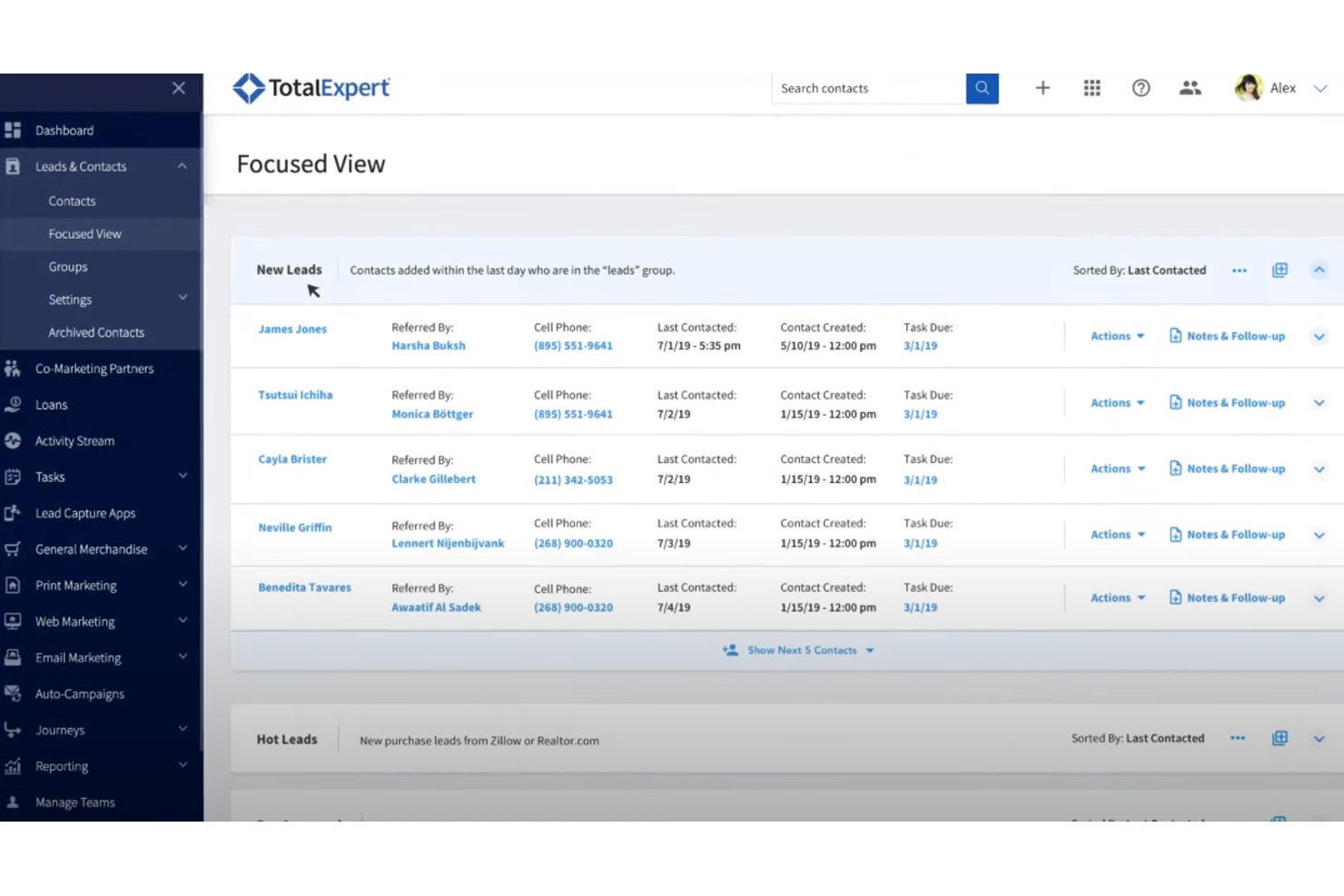
Total Expert is a financial-services-native customer operating system built for banks and credit unions, combining relationship tracking, journey automation, cross-sell campaign management, and compliance tooling in one platform.
Who Is Total Expert Best For?
Total Expert is a strong fit for mortgage-focused banks and credit unions that need compliance-grade consent tracking, journey automation, and cross-sell campaign management built into one platform.
Why I Picked Total Expert
I picked Total Expert as one of the best because its compliance tooling is built into the core of the platform, not bolted on. Every automated or AI-initiated outreach checks consent first, logging the source, wording, and IP address in an unchangeable audit trail. Its disclosure library covers RESPA, TCPA, CCPA, and CAN-SPAM, so mortgage-focused banks and credit unions can run cross-sell campaigns without manually verifying regulatory exposure on each send.
Total Expert Key Features
- Journey Orchestration builder: A drag-and-drop visual tool for building automated, multi-channel outreach sequences triggered by life events, rate changes, equity thresholds, and customer behavior.
- Customer IQ intent signals: Monitors customer data across connected sources to surface activity alerts and next-best-product suggestions for loan officers and marketing teams.
- LOS pipeline sync: Automatically updates lead stages in Total Expert when loan status changes in your connected loan origination system, keeping pipeline views current without manual entry.
- Co-marketing campaign management: Lets loan officers and referral partners run co-branded, RESPA-compliant campaigns with partner-level tracking and approval workflows built in.
Total Expert Integrations
Total Expert reports 70+ industry integrations, including Encompass, Blend, nCino, and Salesforce. It also offers API access for custom integrations.
Pros and Cons
Pros:
- Customer signals suggest relevant next products
- Journey automation coordinates digital and human contact
- Compliance logs support regulated outreach
Cons:
- Admin changes may require vendor assistance
- Mortgage workflows overshadow broader banking needs

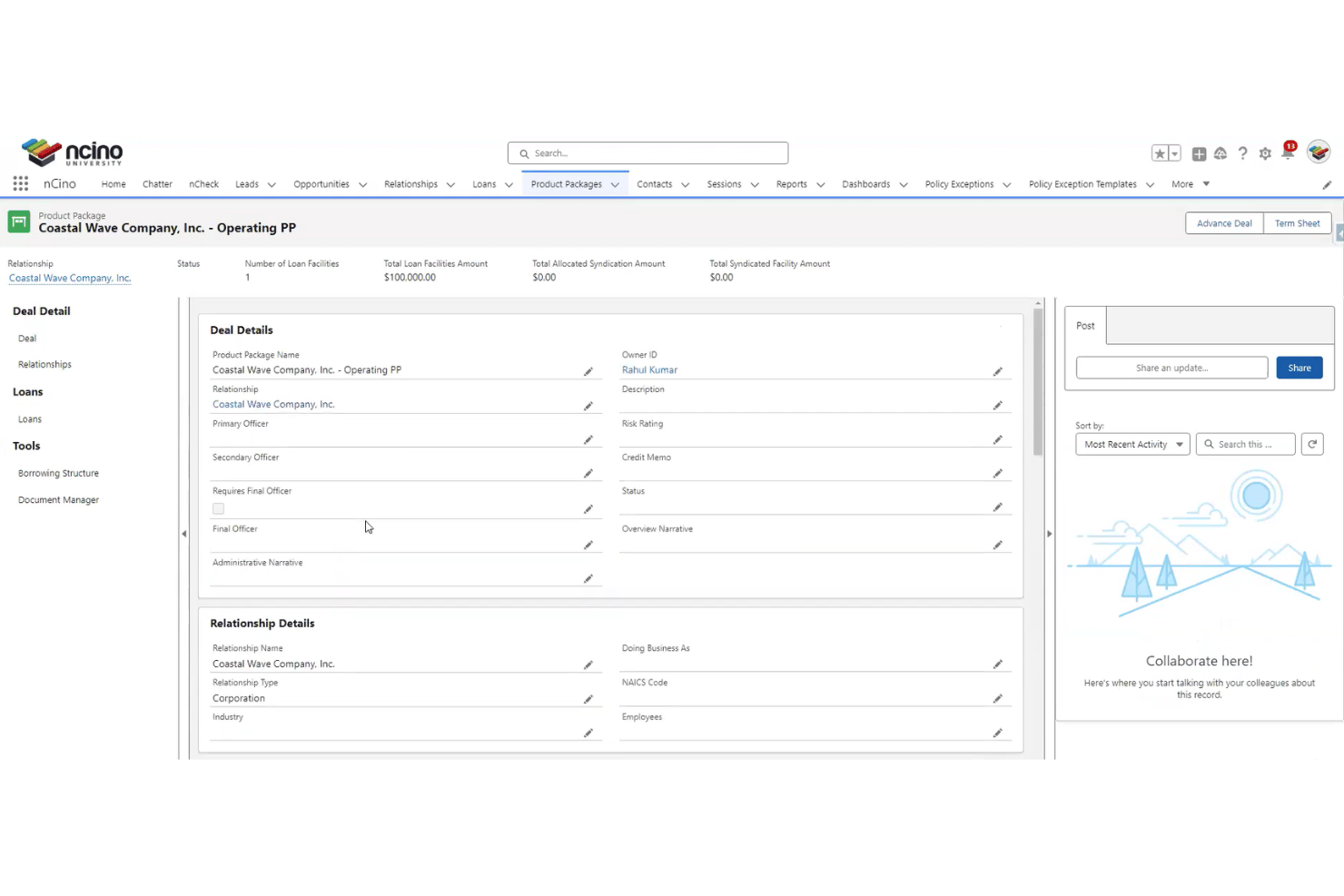
nCino is a cloud-based banking platform built on Salesforce that covers commercial and consumer lending pipelines, deposit account opening, client lifecycle management, and compliance workflows.
Who Is nCino Best For?
nCino is a strong fit for commercial banking officers and credit union operations managers who need purpose-built lending pipelines and compliance workflows.
Why I Picked nCino
I picked nCino as one of the best because its compliance and lending pipeline depth is genuinely hard to replicate with a general-purpose CRM. Built-in KYC, KYB, AML, and BSA workflows run directly inside the lending origination process, so a commercial banking officer can move a deal from application through underwriting with every compliance checkpoint already embedded. The pipeline dashboards track production and portfolio performance across commercial, consumer, and small business lending on one shared data layer.
nCino Key Features
- Deposit account opening workflow: Handles consumer, small business, and multi-owner commercial applicants in a single flow, with options to pause, resume, or open multiple products in one session.
- Integration Gateway: Connects nCino to 14+ core banking platforms and 50+ financial services solutions, with prebuilt connectors for Fiserv, Jack Henry, and FIS cores.
- Operations Analytics: Pre-built banking dashboards with historical trending and peer benchmarking drawn from anonymized data across 1,250+ institutions, with a free access tier.
- Role-based AI Digital Partners: Five agents—Executive, Analyst, Service, Processor, and Client—that automate tasks like covenant testing, document validation, and relationship reviews across banking roles.
nCino Integrations
nCino offers integrations through Integration Gateway with 14+ core banking platforms and 50+ financial services solutions, including Fiserv, Jack Henry, FIS, Alloy, DocuSign, Plaid, and ChexSystems. Direct account-opening integrations include Jack Henry SilverLake, jXchange, Symitar, and SymXchange.
Pros and Cons
Pros:
- Role-based AI agents automate reviews
- Embedded KYC and AML workflows
- Banking-specific lending pipelines
Cons:
- Referral routing remains undocumented
- Salesforce dependency complicates CRM ownership

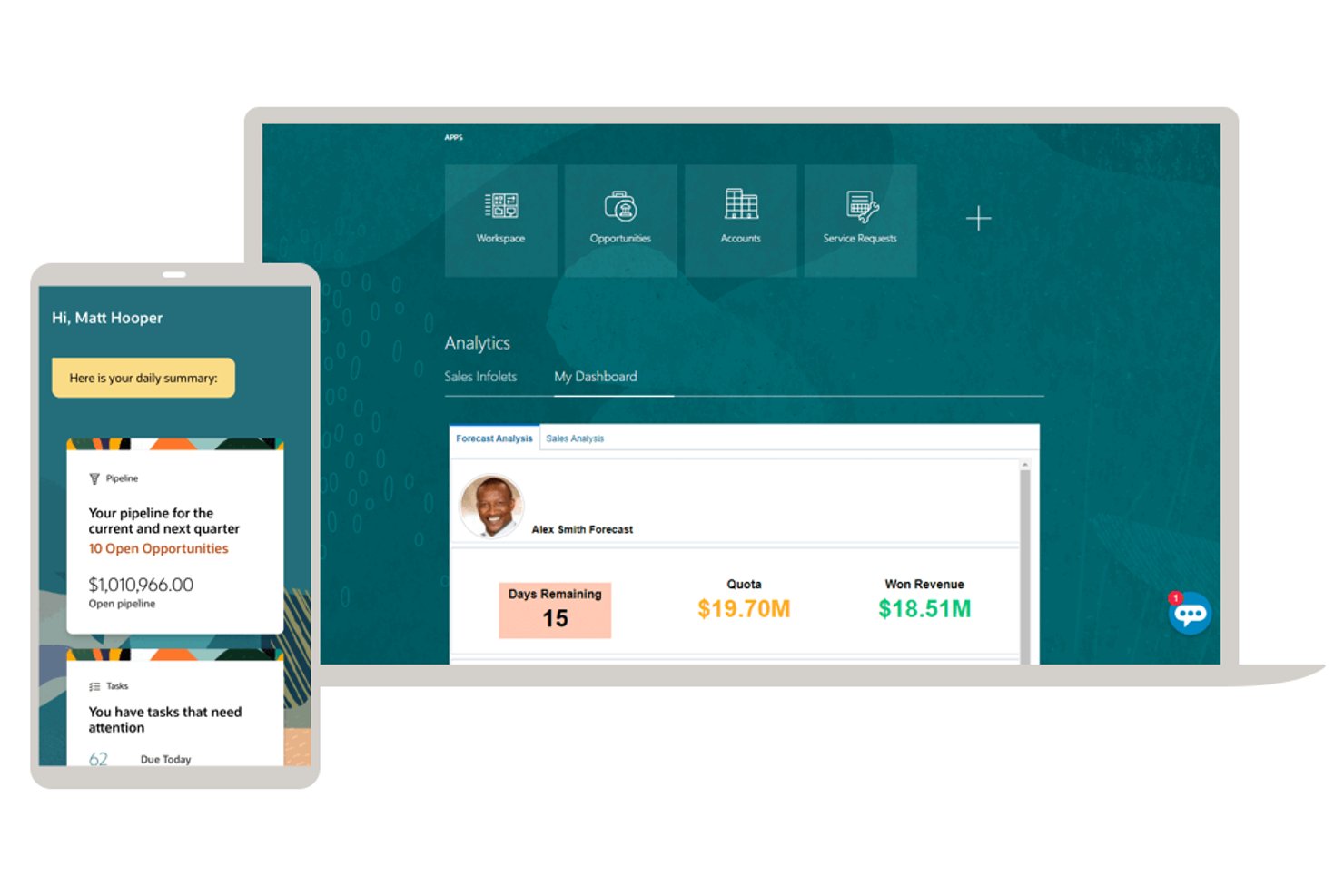
Oracle CRM On Demand Financial Services Edition is a banking-focused CRM with a built-in financial data model that covers household profiles, financial accounts, account holder roles, financial plans, and configurable audit trails.
Who Is Oracle Customer Experience Best For?
Oracle Customer Experience is a strong fit for retail banks that need a built-in data model for managing household profiles, financial account holder roles, and relationship hierarchies across contact and business records.
Why I Picked Oracle Customer Experience
I picked Oracle Customer Experience because its Financial Services Edition is built around a data model that treats households as the core unit of banking relationships. I love how the Financial Account Holder record links individual contacts, households, and businesses through specific roles like Owner, Guardian, and External Advisor, so a relationship manager can see every account tied to a household in one place. Nested picklists for product categories and dedicated Financial Plan record types add real structure to cross-household tracking.
Oracle Customer Experience Key Features
- Financial account record types: Six banking-specific record types—Financial Account, Financial Account Holders, Financial Account Holdings, Financial Plan, Financial Product, and Financial Transaction—come pre-built in the Financial Services Edition.
- Configurable audit trail: Track field-level changes across records with a Master Audit Trail that logs the user, action, timestamp, and old and new values, with adjustable retention settings.
- Time-based workflow automation: Set up event- and time-triggered workflow rules that can repeat, re-check conditions, and escalate tasks across multi-step sequences.
- Contact risk and goal fields: Contact records include pre-built fields for risk profile (Aggressive, Moderate, Conservative) and financial goals like Retirement and Wealth Accumulation.
Oracle Customer Experience Integrations
Native integrations are not clearly documented. Oracle CRM On Demand supports SOAP and REST APIs, plus JavaScript, Report Services, and CTI interfaces for custom connectivity.
Pros and Cons
Pros:
- Supports configurable audit trails and workflows
- Includes banking-specific account and plan records
- Maps household financial relationships across accounts
Cons:
- Offers no built-in banking compliance templates
- Uses generic stages for banking pipelines

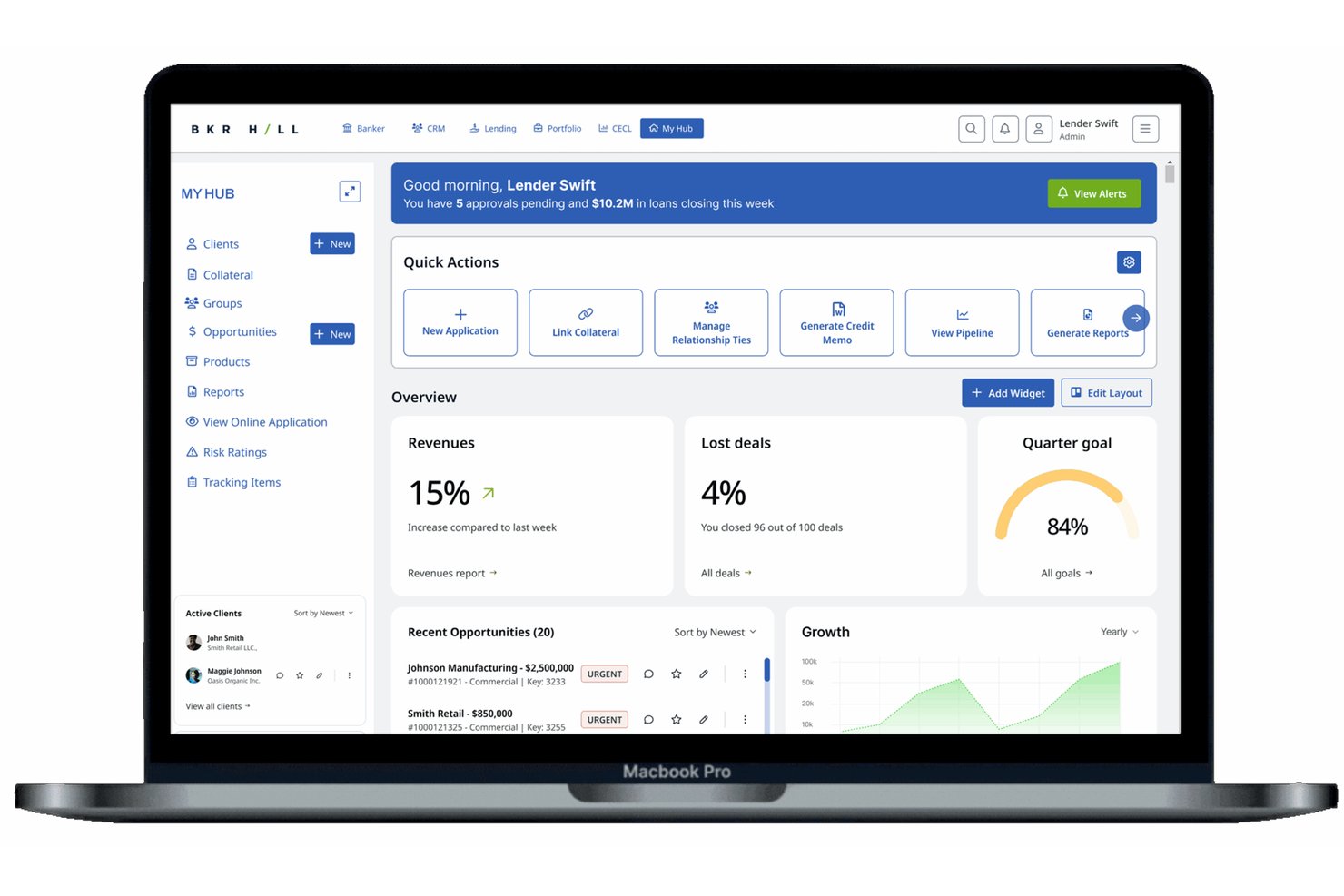
Baker Hill is a lending-focused banking CRM and loan origination platform built for financial institutions, covering commercial, small business, and consumer loan pipeline management, relationship tracking, and workflow automation.
Who Is Baker Hill Best For?
Baker Hill is a strong fit for commercial lending officers and credit union operations teams whose CRM needs revolve around loan pipelines and core banking system integration.
Why I Picked Baker Hill
I picked Baker Hill as one of the best because it's built entirely around how commercial lenders actually work, not adapted from a generic CRM. Its core integration layer, Data Pond, pulls live data from Fiserv, Jack Henry, and FIS directly into borrower profiles, so calling officers aren't manually reconciling records. I also like that Smart Workflow Management automates covenant monitoring and renewal alerts tied to real loan lifecycle events, which matters when you're managing complex commercial portfolios on a banking core system.
Baker Hill Key Features
- Sales pipeline management: Track opportunities by stage, likelihood of closing, and expected close date across commercial, small business, and consumer loan types.
- Relationship plans: Build and manage structured relationship plans for individual clients, including goals, touch history, and shared call activity across your team.
- Ask BKR AI assistant: Get real-time client insights, policy checks, task guidance, and pipeline risk flags directly within the platform.
- Intelligent document processing: Automatically extract and populate financial spread data from IRS forms 1040, 1065, 1120, and 1120S.
Baker Hill Integrations
Baker Hill integrates with Fiserv, Jack Henry, FIS, COCC, Corelation, Salesforce, Microsoft Dynamics 365, Okta, TransUnion, and LexisNexis Risk Solutions. Sandbox Banking’s Glyue iPaaS also connects Baker Hill to 14+ core platforms.
Pros and Cons
Pros:
- Relationship groups organize complex borrower records
- Workflow automation supports covenant and renewal tracking
- Loan pipelines span multiple lending products
Cons:
- Cross-sell campaigns require managed marketing services
- CRM focuses narrowly on lending operations

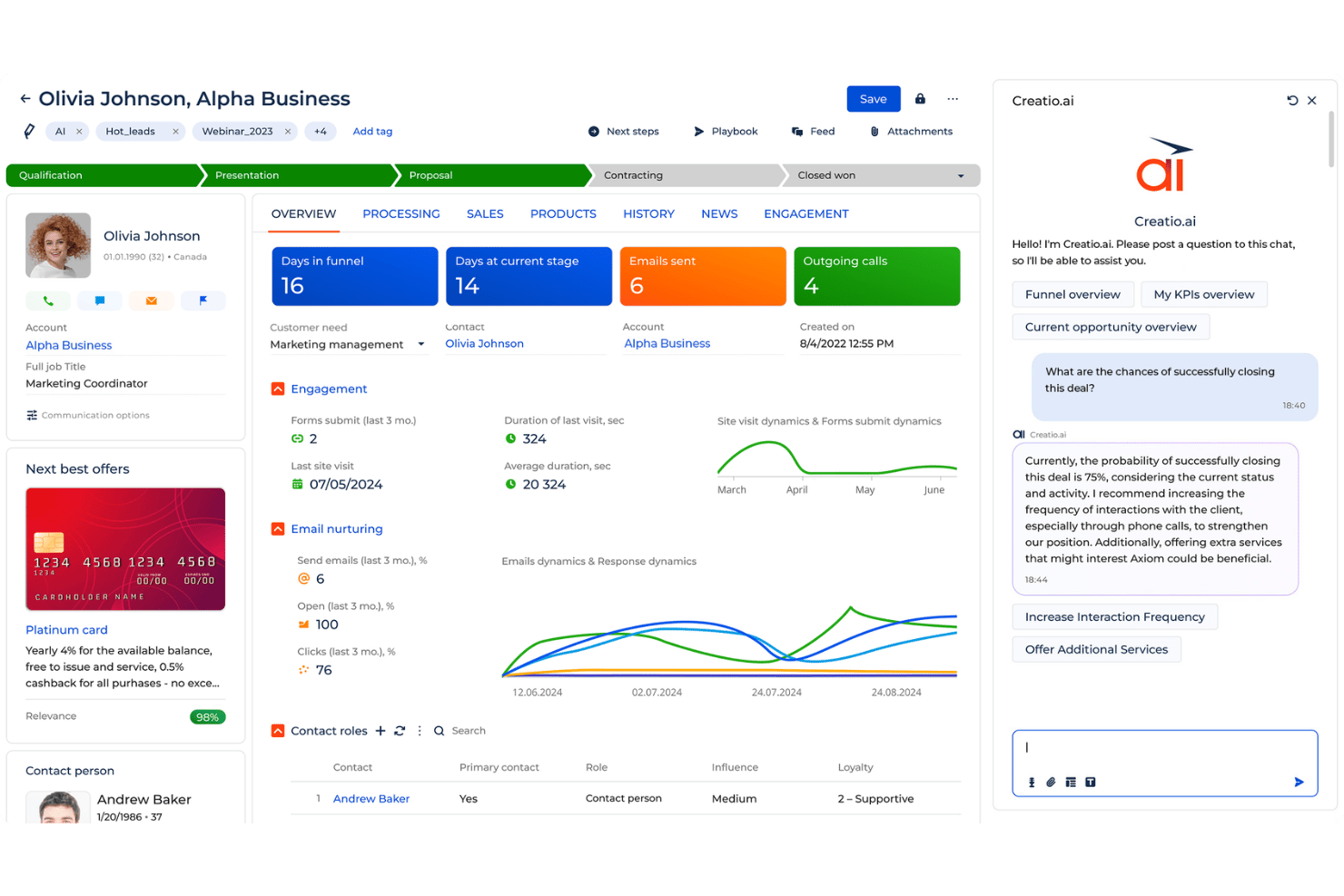
Creatio Bank.AI is a banking-specific AI CRM platform that combines sales pipeline tracking, customer 360 profiles, AI-driven referral and cross-sell management, compliance workflows, and pre-built banking agents across lending, deposits, and account servicing.
Who Is Creatio Bank.AI Best For?
Creatio Bank.AI is a strong fit for retail banks, commercial banks, and credit unions that want AI-driven referral attribution, cross-sell automation, and compliance workflows in a single platform.
Why I Picked Creatio Bank.AI
I picked Creatio Bank.AI as one of the best because its Referral Agent goes well beyond basic attribution, watching for real signals like liquidity events and outside business activity, then scoring contacts, crediting introducers before the attribution window closes, and retraining on outcomes over time. Paired with the Next Best Offer Agent, which weighs propensity, eligibility, and timing before pushing offers across digital, email, and branch channels, cross-sell tracking here is genuinely built for banking workflows.
Creatio Bank.AI Key Features
- Relationship Manager Agent: Sends bankers a daily portfolio brief with a ranked contact list, pre-call notes, and AI-drafted follow-up recaps based on account activity.
- KYC and AML workflows: Runs guided identity checks, sanctions screening, and risk scoring, then generates SAR drafts from built-in templates with a full auditable timeline.
- Renewal Agent: Monitors CD, credit line, and promotional rate maturities and begins outreach 90 days out, comparing renewal options against competitor rates.
- No-code workflow configuration: Lets business and compliance teams adjust pipelines, agent rules, and case routing without developer support.
Creatio Bank.AI Integrations
Creatio Bank.AI offers marketplace integrations, including a paid Jack Henry Symitar connector for accounts, shares, loans, and cards.
Pros and Cons
Pros:
- Auditable KYC, AML, and regulatory workflows
- AI agents guide next-best offers and renewals
- Banking-specific referral attribution tracks introducer credit
Cons:
- Published retail household mapping remains limited
- Complex deployments require planning and ownership

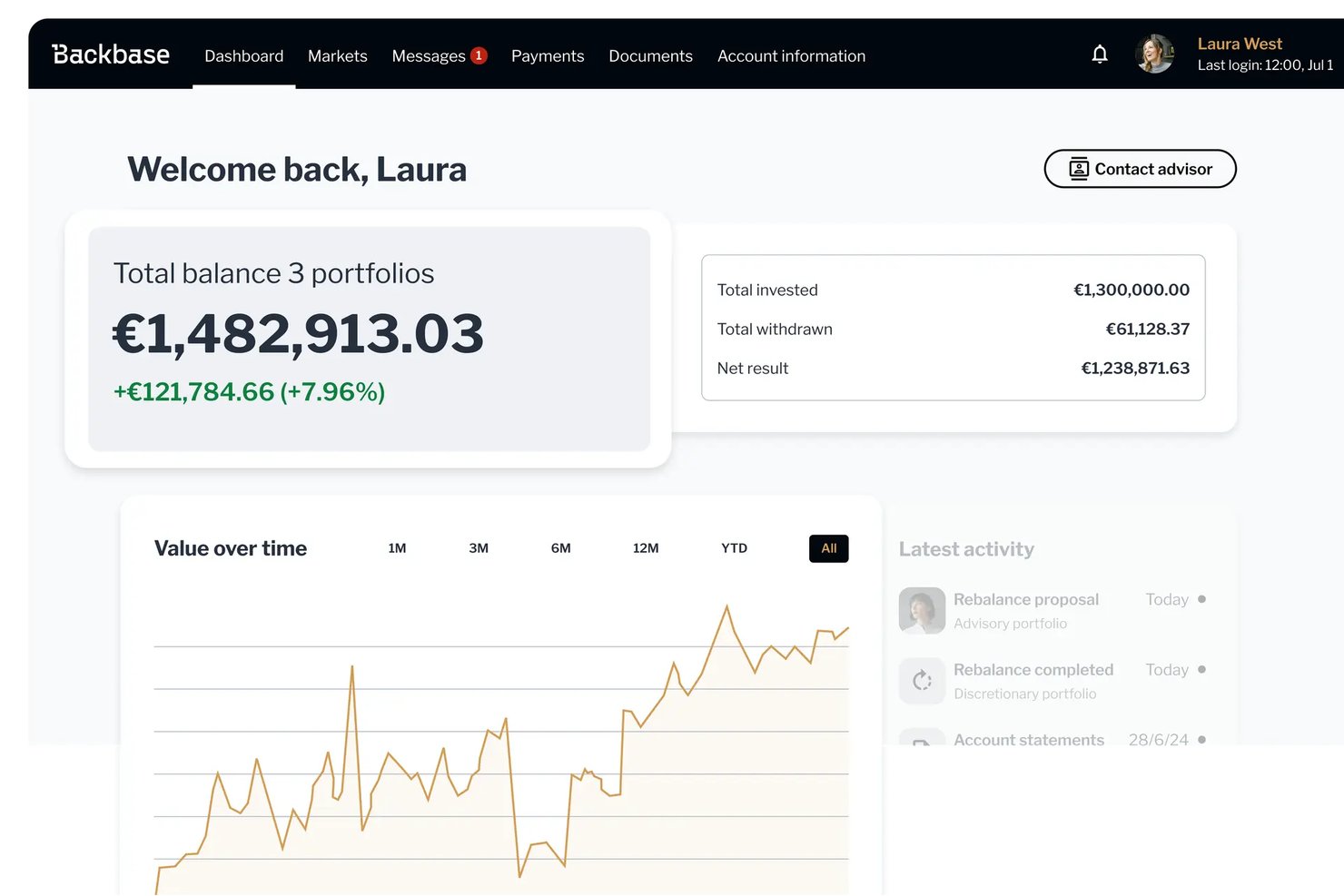
Backbase is an AI-native banking engagement platform that layers over your existing core and CRM to deliver customer onboarding, loan origination, cross-sell orchestration, and unified customer views across digital, branch, and assisted channels.
Who Is Backbase Best For?
Backbase is a strong fit for mid-size to large banks that need AI-driven cross-sell orchestration layered across digital, branch, and assisted channels without replacing their existing core or CRM.
Why I Picked Backbase
I've included Backbase in my top picks because its Relationship Intelligence engine does something most banking CRMs don't: it generates cross-sell recommendations from live account data rather than static segments, checking eligibility before surfacing anything to a banker. The Customer Lifetime Orchestrator watches for signals like maturing deposits or life events, then pushes next-best-action prompts directly into staff workflows.
Backbase Key Features
- Customer State Graph: A live customer map that updates in real time, pulling together account holdings, behavioral signals, household connections, and active applications into one view.
- Sentinel compliance controls: Checks identity, permissions, and policy before any action executes, issuing Decision Tokens and logging a full audit trail for both staff and AI decisions.
- Customer Operations agents: Specialist AI agents handle payment traces, dispute intake, and eligibility checks, with case tracking that follows each issue through to resolution across teams.
- Grand Central core connectors: Over 50 pre-built connectors link Backbase to core banking systems like Mambu, Thought Machine, and Jack Henry using BIAN and ISO 20022 data standards.
Backbase Integrations
Backbase offers 50+ out-of-the-box integrations, including Mambu, Thought Machine, and Jack Henry through Grand Central. It supports open APIs, BIAN and ISO 20022 data models, plus marketplace integrations for fintech services and custom core systems.
Pros and Cons
Pros:
- Auditable controls for AI decisions
- Unified customer and household views
- AI-driven next-best-action recommendations
Cons:
- Referral tracking remains undocumented
- No dedicated opportunity pipeline management
Zoho CRM
Best for configurable loan and account pipelines
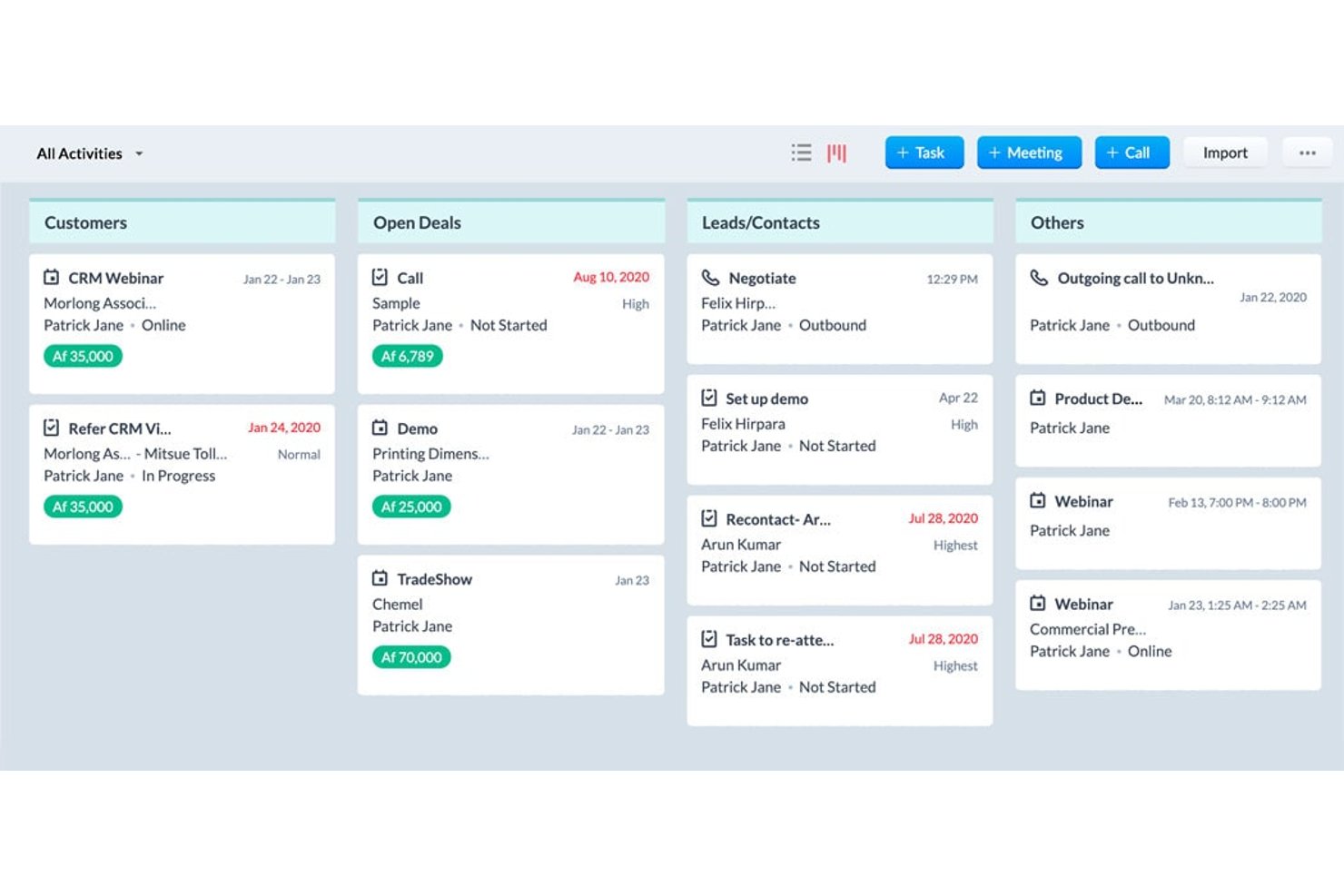
Zoho CRM is a configurable CRM platform that supports loan origination, account opening pipelines, workflow automation, and customer relationship management for financial services teams.
Who Is Zoho CRM Best For?
Zoho CRM is a good fit for financial services teams that want to build custom loan and account pipelines without paying for a dedicated banking platform.
Why I Picked Zoho CRM
I picked Zoho CRM as one of the best because of how far you can push its pipeline and process tools for banking-specific workflows. I've built separate pipelines for personal and business account opening, with stages like "Compliance Approval" and "Legal Team Approval" triggering automated notifications to the right teams. Blueprints let you lock down each stage with role-based controls and field validations, which is exactly what loan origination needs when multi-level approvals depend on loan value.
Zoho CRM Key Features
- Zia next best experience: Surfaces recommended next steps on lead, contact, and deal records, with explanations, similar past deals, and draft email suggestions.
- Customer 360 profile: Consolidates personal and financial data, service requests, account activity, communication preferences, and missing KYC indicators into a single record.
- Field-level encryption: Encrypts sensitive data fields like account numbers at the module level, available on Enterprise and above.
- Audit log: Tracks add, update, delete, import, export, and setup changes with three years of retention, role-based visibility, and CSV export.
Zoho CRM Integrations
Zoho CRM has native integrations with Gmail, Outlook, Slack, Zoom, Microsoft Teams, Google Ads, QuickBooks, and Zoho Desk, Analytics, Sign, and Campaigns. It also supports 1,000+ Marketplace apps, REST API, webhooks, Zoho Flow, and Deluge for custom core-banking connections.
Pros and Cons
Pros:
- Customer 360 unifies service and sales data
- Stage-specific approvals support banking workflows
- Configurable loan and account pipelines
Cons:
- No built-in KYC, AML, or Reg B templates
- Core banking connections require custom development
New Product Updates from Zoho CRM

Zoho CRM Adds Workflow Automation for Subform Actions
Zoho CRM now lets you automate subform events with workflow rules, triggering actions when rows are added, edited, or deleted based on conditions. For more information, visit Zoho CRM's official site.
 .
.Other Banking CRM Software
Here are a few additional options that didn’t make my top list, but are still good to check out:
- HubSpot
For marketing-led deposit and loan campaigns
- HubSpot CRM
For marketing-led cross-sell in bank campaigns
- Redtail CRM
For advisor-focused contact and audit trails
- Wealthbox CRM
For wealth CRM inside banks and credit unions
- Microsoft Dynamics 365 CRM
For Microsoft 365-native banking CRM
- SugarAI
For flexible workflow automation in banking


How I Evaluate Banking CRM Software
I split my evaluation into three parts: core functionality (most weight), where I look for tools that can track loan and account pipelines and connect with core banking systems; standout features like AI-driven next-best-action; and beyond features, including onboarding support and implementation quality.
Core Functionality (Table Stakes for This List)
When I'm selecting tools for my list, I score each one on a scale from 0 (does not offer the functionality) to 5 (excels in this area) for each core functionality listed below. I then convert the total into a percentage to help assess each tool's overall fit, with extra weight on any functionalities I've deemed essential.
- Pipeline Tracking (Essential): I evaluate whether the CRM supports bank-specific stages like loan origination, deposit growth, and account opening across multiple product lines.
- Core Banking Integration (Essential): Each tool needs to connect with core banking platforms to sync customer and account data, so I check for pre-built connectors and API flexibility.
- Unified Customer View: I look for a single profile that consolidates accounts, product holdings, and interactions across retail, commercial, and lending teams.
- Compliance and Audit Trails: Detailed, exportable logs of customer interactions and consent matter here, especially for institutions navigating regulatory reviews.
- Referral and Cross-Sell Management: I evaluate how the platform routes referrals between departments and tracks follow-through, since manual handoffs are where cross-sell opportunities tend to fall apart.
- Task and Workflow Automation: Automated task triggers tied to lifecycle events like onboarding, renewal, or account maturity help me gauge how much manual coordination a team can eliminate.
Once I have a list of tools that meet the criteria, I consider what sets each platform apart.
Differentiating Factors (What Sets Vendors Apart)
Here's how I compare and contrast different vendors:
Standout Features
I evaluate how each platform handles household and relationship mapping, since linking family members, co-owned businesses, and joint accounts reveals the full relationship value a single contact record can't capture. AI-powered next-best-action is another differentiator—I look for recommendations tied to actual financial behavior rather than generic prompts. I also check whether built-in regulatory templates cover workflows like KYC and AML, which saves compliance teams from building disclosure steps from scratch.
Beyond Features
I check whether a vendor offers cloud, on-premise, or hybrid deployment, since banks with strict data residency rules need control over where customer records are hosted. Implementation support matters just as much—migrating from a legacy core system mid-quarter can disrupt active lending relationships if the vendor doesn't provide structured onboarding and dedicated migration resources. I also evaluate how licensing scales with growth, from a single-branch credit union to a multi-charter regional bank adding new lines of business.
How to Choose a Banking CRM software
Choose banking CRM software by testing whether it supports your customer journeys, data controls, and operating requirements in practice.
| If your priority is… | Look for… |
|---|---|
| One customer record across relationships | Household mapping and documented data ownership rules |
| Coordinated lending and account journeys | Configurable stages for applications, renewals, and account opening |
| Referral follow-through | Transfer records with assigned owners, timestamps, and status history |
| Audit readiness | Exportable interaction logs, consent records, and retention settings |
How to Vet Your Shortlist
- Test a real journey: Ask each vendor to demonstrate a new customer moving from an account inquiry to a lending referral within 30 minutes.
- Request integration evidence: Obtain a current data-flow diagram and named API documentation showing how customer and account records move between systems.
- Verify audit handling: Request a sample audit export containing interaction history, consent changes, user actions, and timestamps.
- Test implementation fit: Ask for a 90-day migration plan that identifies data mapping, duplicate handling, testing, training, and customer-service continuity.
- Choose your tradeoff: Decide whether your priority is banking-specific workflow depth or broader configurability across service, sales, and lending teams.
What is Banking CRM Software?
Banking CRM software is a customer relationship management platform built for financial institutions. It connects customer profiles, account activity, lending pipelines, service interactions, referrals, and compliance records in one system. Retail, commercial, lending, and service teams use it to coordinate customer journeys, manage follow-ups, and identify relevant product opportunities. Core banking integrations help keep customer and account information current across connected systems.
Features
Here are the main features I look for in banking CRM software:
- Unified customer profiles: Combine contact details, account relationships, product holdings, service history, and communications in one record. Teams can review a customer’s full relationship before recommending products or responding to requests.
- Pipeline tracking: Manage account openings, loan applications, renewals, and deposit opportunities through defined stages. Staff can assign ownership, monitor progress, and identify applications that need follow-up.
- Core banking integrations: Connect the CRM with core banking systems and other financial applications through connectors or APIs. These integrations keep customer and account information consistent across systems.
- Household and relationship mapping: Link family members, joint account holders, businesses, and related contacts. Relationship managers can then understand connected accounts and identify the right context for each interaction.
- Referral management: Route customer opportunities between retail banking, lending, commercial banking, and service teams. The CRM records the receiving employee, transfer date, status, and follow-up activity.
- Workflow automation: Trigger tasks, notifications, approvals, and messages from events such as new applications, account maturity dates, or onboarding milestones. Teams can apply consistent processes without relying on manual reminders.
- Compliance and audit trails: Record user actions, customer communications, consent changes, and workflow decisions with timestamps. Authorized staff can export this history for reviews, investigations, or internal controls.
- Personalization and next-best-action: Use customer data, product holdings, and interaction history to suggest relevant follow-ups or product conversations. Staff can tailor outreach while keeping recommendations connected to documented customer activity.
- Reporting and dashboards: Track pipeline volume, referral outcomes, customer activity, service requests, and conversion rates. Managers can compare performance across teams, branches, products, and customer segments.
Benefits
In my experience, banking CRM software offers several benefits, including:
- Unified customer context: Centralized profiles combine account relationships, product holdings, communications, and service history for each customer.
- Coordinated customer journeys: Configurable pipelines help teams manage account openings, loan applications, renewals, and deposit opportunities through defined stages.
- Better referral follow-through: Referral records assign ownership, track transfer dates, and document status changes across lending, service, and banking teams.
- Fewer manual follow-ups: Workflow automation creates tasks, notifications, approvals, and messages from onboarding milestones, applications, and account maturity dates.
- Stronger relationship insight: Household mapping connects family members, joint account holders, businesses, and related contacts within a shared relationship view.
- Clearer compliance records: Timestamped logs capture customer communications, consent changes, user actions, and workflow decisions for audits and internal reviews.
Costs and Pricing
Costs vary based on features, team size, add-ons, and implementation needs. Here are the pricing ranges you can typically expect for banking CRM software:
Plan Comparison Table for Banking CRM Software
| Plan Type | Average Price | Common Features |
|---|---|---|
| Free Plan | $0 | Basic contact management, limited pipeline tracking, task reminders, and user limits. |
| Personal Plan | $10-$30/user/month | Customer profiles, account notes, basic reporting, email integration, and limited workflow automation. |
| Business Plan | $40-$100/user/month | Unified customer records, pipeline management, referral tracking, workflow automation, reporting dashboards, and core banking integrations. |
| Enterprise Plan | $100-$300+/user/month | Advanced relationship mapping, configurable banking workflows, compliance audit trails, AI recommendations, custom integrations, and dedicated implementation support. |
FAQs
Some answers to common questions about banking CRM software:
How does a banking CRM differ from core banking software?
A banking CRM manages customer relationships, while core banking software processes accounts and transactions. The CRM stores interactions, referrals, applications, tasks, and relationship details. Core systems handle balances, payments, deposits, and account servicing. Your CRM should connect with the core platform through APIs or pre-built connectors. This connection keeps customer and account data aligned. Ask vendors to show the data flow during a product demonstration. Pay attention to update timing, error handling, duplicate records, and access controls.
Can a banking CRM support both retail and commercial banking?
Yes, a banking CRM can support retail and commercial banking within shared workflows. Configure separate stages for account opening, lending, renewals, and relationship reviews. Household mapping can connect individuals, businesses, joint accounts, and related contacts. Permission settings should control which teams can view sensitive records. Ask vendors to demonstrate a customer who owns a personal account and a business relationship. Check whether the system preserves separate ownership, referral history, documents, and service activity.
How long does it take to implement banking CRM software?
Implementation often takes several months, depending on integrations, data quality, and workflow scope. A small credit union may start with core profiles, tasks, and referrals. A regional bank may need phased migration across lending, commercial, and service teams. Request a 90-day plan covering data mapping, duplicate handling, testing, training, and launch support. Confirm who owns each task. Include customer-service continuity plans, since migration issues can affect active applications and existing relationships.
What should banks verify before choosing a CRM?
Banks should verify integration behavior, audit exports, permissions, workflow configuration, and migration support. Ask vendors for current API documentation and a data-flow diagram. Test a journey from an account inquiry to a lending referral. Request an export showing consent changes, user actions, timestamps, and interaction history. Review deployment choices, data residency, retention settings, and contract limits. Finally, confirm how pricing changes when you add branches, users, products, or new business units.