

VoIP for international calls lets you make voice calls over the internet to people in other countries, helping your team connect worldwide without the high cost of traditional phone lines. If you’re looking for the best VoIP providers for international calls, you need solutions that deliver clear audio, reliable connections, and affordable rates no matter where your contacts are.
Choosing the right provider goes beyond picking the cheapest plan—think features like call quality, number flexibility, integrations, and easy setup. This guide helps you compare top options so you can confidently pick the best tool for your customers, colleagues, and business in 2026.
Why Trust Our Software Recommendations
6,700+
Reviews
20
Industry experts
16+
Evaluation factors
14
Years
Our team has been testing and reviewing software since 2012. As CX leaders ourselves, we know how difficult—and important—it is to choose the right software.
For this guide, we evaluated tools using hands-on testing and independent research, scoring tools using our selection criteria.
Our reviews reflect our human editorial judgment, not a sales pitch.
 Gui DrusinaCreative Director
 Tim FisherVP of AI
VoIP for International Calls Comparison Table
This comparison table summarizes pricing details for my top VoIP for international calls selections:
| Tool | Best For | Trial Info | Price | ||
|---|---|---|---|---|---|
| 1 | Best for advanced call routing features | 14-day free trial | From $25/user/month (billed annually) | Website | |
| 2 | Best for multi-device accessibility | 7-day free trial + free demo available | From $15/user/month (billed annually) | Website | |
| 3 | Best for automated call workflows | 14-day free trial | From $29/user/month (billed annually) | Website | |
| 4 | Best for easy remote team setup | Free demo available | Pricing upon request | Website | |
| 5 | Best for free internal calls globally | Free plan | From $39/month/10 users (billed annually) | Website | |
| 6 | Best for all-in-one communications platform | Free demo available | From $15/user/month (billed annually) | Website | |
| 7 | Best for AI-powered call insights | 14-day free trial + free demo available | Pricing upon request | Website | |
| 8 | Best for global number availability | Free demo | Pricing upon request | Website | |
| 9 | Best for video meeting integration | Free demo available | From $10.50/user/month | Website | |
| 10 | Best for unified team messaging and voice | 14-day free trial | From $20/user/month (billed annually) | Website |


Best VoIP for International Calls Reviews
Below are my detailed summaries of the best VoIP for international calls that made it onto my shortlist. My reviews offer a detailed look at the features, pricing, and integrations of each platform to help you find the best one for you.
 Best for advanced call routing features
- 14-day free trial
- From $25/user/month (billed annually)
Visit WebsiteCustomer Rating:4.4/5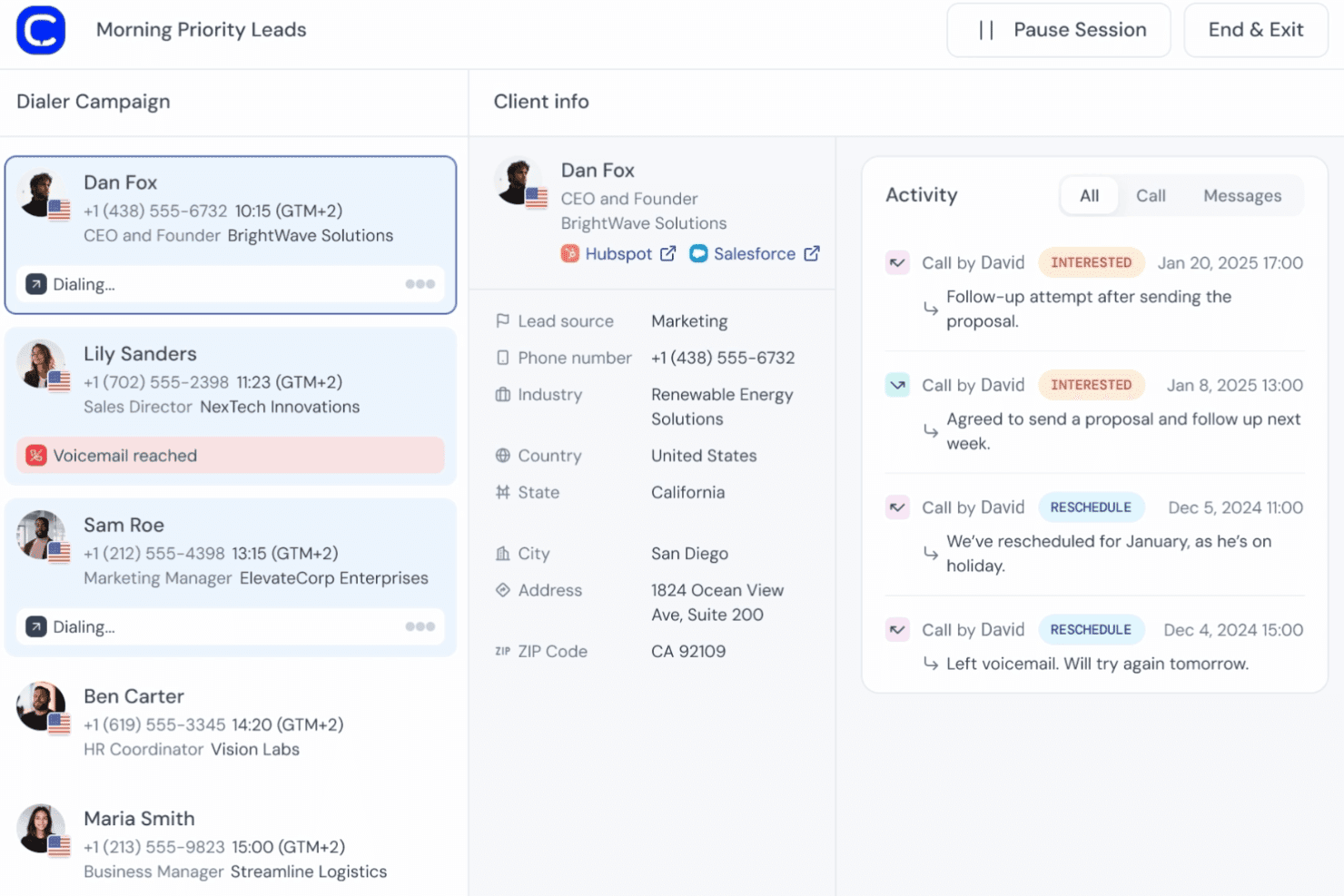
CloudTalk offers a power dialer campaign interface displaying client info, call activity history, and lead statuses in a unified sales dashboard. CloudTalk is a cloud-based business calling platform with local number coverage in 160+ countries, AI-powered call routing, CRM integrations, and multi-channel support across voice, SMS, and WhatsApp.
Who Is CloudTalk Best For?
CloudTalk suits growing SMBs with high-volume outbound sales or customer support operations spanning multiple countries that need local number presence.
Why I Picked CloudTalk
I picked CloudTalk as one of the best because its visual call flow designer lets me build routing logic that accounts for language, geography, and agent skill sets without writing a single line of code. I particularly like the condition-based routing, which directs calls from specific countries to agents trained on those markets automatically. Preferred agent routing and VIP queues add another layer, so high-value international accounts always reach the right person.
CloudTalk Key Features
- Global number coverage: Supports local, toll-free, and mobile numbers in 160+ countries.
- AI conversation intelligence: Automatically transcribes and analyzes international calls to surface insights.
- WhatsApp and SMS integration: Lets teams send and receive text-based messages alongside calls.
- Live monitoring tools: Supervisors can listen, whisper, and barge in on global conversations in real time.
CloudTalk Integrations
CloudTalk offers native integrations with Salesforce, HubSpot, Zendesk, Pipedrive, Zoho CRM, Intercom, Freshdesk, Slack, Microsoft Teams, Zapier, and provides an API for custom integrations.
Pros and Cons
Pros:
- Multi-channel voice, SMS, and WhatsApp support
- Skill-based and VIP call routing automation
- Extensive local number coverage worldwide
Cons:
- Occasional latency with overseas call connections
- No built-in workforce management tools
 Best for multi-device accessibility
- 7-day free trial + free demo available
- From $15/user/month (billed annually)
Visit WebsiteCustomer Rating:4.7/5
Ringover offers a calls settings panel with ringtone selection, ring duration, call waiting, and an integrated dial pad for managing incoming and outgoing calls. Ringover is a cloud-based business phone system with unlimited calling to 110+ destinations, local numbers in 65+ countries, IVR, call routing, and CRM integrations built for global customer-facing teams.
Who Is Ringover Best For?
Ringover suits distributed sales and support teams that need reliable international calling without complex setup, especially those operating across European and global markets.
Why I Picked Ringover
Ringover earns its spot on my shortlist because of how it handles in-call device switching. I can move an active international call from my desktop to my smartphone mid-conversation without the other party noticing the transition. That's a genuinely useful feature when agents are covering global time zones across different locations. Ringover also runs natively on Windows, Mac, Linux, iOS, Android, and directly in the browser via Chrome and Firefox extensions.
Ringover Key Features
- Unlimited international calling: Place and receive unlimited calls to 110+ destinations on supported plans.
- Local numbers in 65+ countries: Assign virtual local phone numbers across Europe, the Americas, Asia, and beyond.
- AI-powered call transcription: Automatically transcribe calls for searchable records and post-call analysis.
- 100+ CRM and helpdesk integrations: Sync with Salesforce, HubSpot, Bullhorn, and other leading platforms for unified workflows.
Ringover Integrations
Ringover offers 100+ native integrations, including Salesforce, HubSpot, Zendesk, Freshdesk, Pipedrive, Zoho CRM, Slack, Microsoft 365, and Zapier. An API is also available for custom integrations.
Pros and Cons
Pros:
- In-call device switching without dropping connection
- Local numbers available in 65+ countries
- Unlimited calling to 110+ international destinations
Cons:
- Mobile app less stable than desktop version
- Occasional call quality drops reported
 Best for automated call workflows
- 14-day free trial
- From $29/user/month (billed annually)
Visit WebsiteCustomer Rating:4.1/5
JustCall offers a real-time dashboard displaying live calls, call analytics, and performance metrics including service level, calls made, and average answer time. JustCall is a cloud-based business phone system with local numbers in 70+ countries, multi-level IVR, AI-driven call workflows, power and predictive dialers, and native integrations with 100+ CRM and helpdesk tools.
Who Is JustCall Best For?
JustCall suits sales and customer support teams at SMB and mid-market companies managing outbound call workflows across multiple countries.
Why I Picked JustCall
JustCall earns its spot on my shortlist because of how well it handles automated call workflows across international markets. I particularly like the multi-line predictive dialer, which lets my team run outbound campaigns across multiple countries without manually queuing each call. The AI Voice Agent covers inbound calls in 14 languages around the clock, so my team isn't scrambling to staff every time zone we operate in.
JustCall Key Features
- Local number coverage: Lets you provision virtual phone numbers in over 70 countries for inbound and outbound voice communication.
- Multi-level IVR builder: Allows you to set up visual, drag-and-drop call menus to route callers efficiently across geographies.
- CRM and helpdesk integrations: Connects natively to Salesforce, HubSpot, Zendesk, and over 100 other platforms for unified logging.
- GDPR and HIPAA compliance: Supports regulatory needs for international operations with certifications and data management controls.
JustCall Integrations
JustCall offers over 100 native integrations, including Salesforce, HubSpot, Pipedrive, Zoho CRM, Zendesk, Freshdesk, Intercom, Slack, Close, and Outlook. An API is available for custom integrations.
Pros and Cons
Pros:
- Built-in AI agent supports 14 languages
- Automated outbound and inbound call workflows
- Local numbers available in 70+ countries
Cons:
- No unlimited international calling plans
- International call quality can be inconsistent


GoTo Connect offers an active call interface with options to mute, transfer, hold, park, and hang up during a live call with a contact. GoTo Connect is a cloud-based VoIP and unified communications platform that combines international calling across 50+ countries, cloud telephony, video meetings, and omnichannel messaging in a single system.
Who Is GoTo Connect Best For?
Small and mid-sized businesses with remote or multi-location teams that regularly call customers across borders will find GoTo Connect a natural fit.
Why I Picked GoTo Connect
GoTo Connect earns its spot on my shortlist because setting up a distributed calling team across multiple countries genuinely takes minutes, not weeks. I particularly like the visual drag-and-drop dial plan editor, which lets me configure call routing for international teams without involving IT. Combined with free calling to 50+ countries built into every plan, remote agents can start making outbound customer calls almost immediately after onboarding.
GoTo Connect Key Features
- AI-powered call summaries: AI automatically generates summaries and transcripts of every call for easy review.
- Omnichannel messaging: Supports SMS, MMS, WhatsApp, web chat, and social messaging within the same platform.
- Call recording and analytics: Record inbound and outbound calls and access analytics for tracking agent performance across countries.
- Local, toll-free, and vanity numbers: Assign dedicated business phone numbers from a range of international markets.
GoTo Connect Integrations
GoTo Connect offers native integrations with Miro, Outlook, Microsoft Teams, and Google Workspace, with API access available for custom integrations.
Pros and Cons
Pros:
- AI-generated call summaries and transcripts
- Fast onboarding for remote global teams
- Free international calls to 50+ countries
Cons:
- Call quality depends on internet connectivity
- Limited access to international phone numbers
Learn more about GoTo Connect: Best for free internal calls globally
- Free plan
- From $39/month/10 users (billed annually)

Zadarma offers outgoing calls, virtual phone numbers, billing balance, virtual phone system settings, news, and call statistics. Zadarma is a cloud VoIP platform offering virtual phone numbers in 110 countries, a free Cloud PBX, per-second international calling rates, and a built-in CRM for managing customer calls across distributed teams.
Who Is Zadarma Best For?
Zadarma is a good fit for small to mid-sized businesses with globally distributed support or sales teams who need affordable international calling without enterprise-level complexity.
Why I Picked Zadarma
Zadarma earns its spot on my shortlist because calls between any two Zadarma users anywhere in the world are completely free, with no per-minute charges regardless of geography. That means a support team spanning New York, Lagos, and Manila can handle internal transfers and escalations without accumulating international call costs. I also like that the free Cloud PBX includes IVR menus and call recording, so internal call routing doesn't require a separate paid system on top of it.
Zadarma Key Features
- Virtual phone numbers in 110 countries: Provision local, mobile, or toll-free numbers for customer-facing teams worldwide.
- AI voice agent: Automate answering and basic queries with a multilingual, always-on voice assistant.
- Integrated Teamsale CRM: Log calls, manage contacts, and track deals directly within the Zadarma platform.
- Speech recognition analytics: Generate voicemail transcriptions and analyze recorded calls for quality and compliance.
Zadarma Integrations
Zadarma offers native integrations with Salesforce, HubSpot, Zoho CRM, Zendesk, Freshdesk, Slack, and Shopify. An API is also available for custom integrations.
Pros and Cons
Pros:
- Built-in AI voice agent and speech analytics
- Wide coverage of international phone numbers
- Free internal calls worldwide between users
Cons:
- Limited SLA and call quality guarantees
- Frequent call disconnects reported by users
Learn more about Zadarma: Best for all-in-one communications platform
- Free demo available
- From $15/user/month (billed annually)
Visit WebsiteCustomer Rating:4.5/5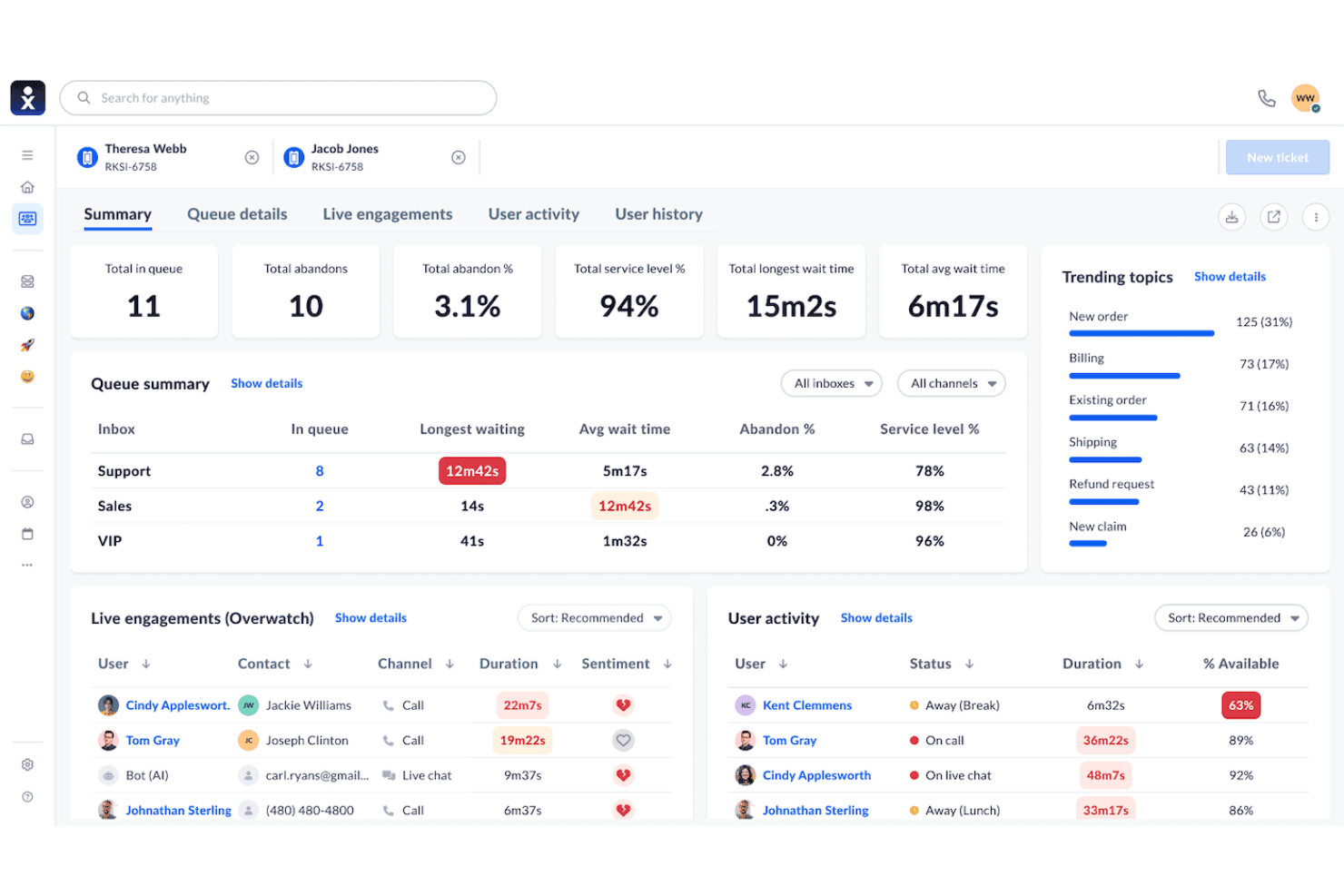
Nextiva offers a contact center dashboard with real-time queue metrics, live engagement monitoring, user activity tracking, and trending topic analytics. Nextiva is an AI-powered unified communications and contact center platform that combines voice, video, chat, email, and social media channels with call routing, journey orchestration, and built-in analytics.
Who Is Nextiva Best For?
Nextiva is a strong fit for US-based SMBs and mid-market teams that need to manage customer communications across multiple channels from a single platform.
Why I Picked Nextiva
I've included Nextiva in my top picks because no other platform on this list matches its depth as a unified communications system. My team can run voice, chat, email, and social interactions from one interface using Journey Orchestration, a code-free tool that lets us build call routing flows visually. On top of that, the AI Agent Assist transcribes calls in real time and surfaces next-step guidance mid-conversation, which is especially useful when managing agents across multiple time zones.
Nextiva Key Features
- Omnichannel interactions: Manage customer conversations across voice, chat, email, and social channels in one place.
- Skills-based routing: Automatically direct calls to the most qualified available agent based on skills and attributes.
- Advanced analytics and reporting: Track real-time and historical call metrics with customizable dashboards and sentiment analytics.
- CRM and helpdesk integrations: Connect with Salesforce, HubSpot, Zendesk, and other major platforms to unify customer information.
Nextiva Integrations
Nextiva offers native integrations with Salesforce, HubSpot, Zendesk, Microsoft Teams, Outlook, Google Contacts, and more.
Pros and Cons
Pros:
- Customizable caller ID for international outreach
- Centralized voicemail accessible from any device
- Global call forwarding for traveling teams
Cons:
- No pay-as-you-go international calling option
- Limited coverage for some international regions
 Best for AI-powered call insights
- 14-day free trial + free demo available
- Pricing upon request
Visit WebsiteCustomer Rating:4.3/5
Dialpad offers a unified remote communication interface combining live calls, AI-powered call summaries, sales playbooks, and cross-device switching in one platform. Dialpad is a cloud-based business communications platform that combines VoIP calling, video meetings, team messaging, and AI-native call intelligence—including real-time transcription, sentiment analysis, and post-call summaries—across a unified app.
Who Is Dialpad Best For?
Dialpad is a strong fit for mid-size to enterprise customer-facing teams — particularly support and sales orgs with distributed agents who need built-in call coaching and analytics.
Why I Picked Dialpad
I've included Dialpad in my top picks because no other VoIP platform I've tested bakes AI this deeply into every call. Real-time transcription runs live during international calls, and post-call summaries with action items land in your inbox automatically. Live sentiment analysis also lets managers spot struggling interactions mid-call, regardless of where agents or customers are dialing from.
Dialpad Key Features
- Global unlimited calling add-on: Unlock calls to up to 65 countries for a flat rate per user.
- International virtual number support: Set up local or toll-free numbers in multiple countries for regional presence.
- Multi-level auto attendant: Route callers to the right department or team anywhere in the world.
- Native CRM integrations: Connect Salesforce, HubSpot, and other CRMs for unified global call workflows.
Dialpad Integrations
Dialpad offers native integrations with Salesforce, HubSpot, Zendesk, Zoho CRM, Google Workspace, Microsoft 365, Miro, Clio, and Zapier, and provides an API for custom integrations.
Pros and Cons
Pros:
- Post-call summaries with action items
- International virtual numbers in dozens of countries
- Real-time AI transcription during calls
Cons:
- Fewer supported countries than some competitors
- Cellular networks can cause dropped international calls


8x8 Contact Center offers an active call interface with call recording, transfer, hold, and mute controls via a support call queue. 8x8 Contact Center is a cloud-based CCaaS platform that unifies voice, video, chat, SMS, and email communications across 100+ countries, with built-in IVR, skills-based routing, AI agent assist, and workforce engagement management.
Who Is 8x8 Contact Center Best For?
8x8 Contact Center suits enterprise and mid-market teams running multinational contact center operations across multiple geographies.
Why I Picked 8x8 Contact Center
8x8 Contact Center earns its spot on my shortlist because no other platform I've tested matches its phone number availability across 100+ countries, including local DIDs and toll-free numbers in markets where most competitors simply don't reach. I particularly like the patented geo-routing, which automatically connects calls through the nearest in-region point-of-presence across 35+ cloud regions. And 8x8 is the only CCaaS platform I know of that supports in-country PSTN in Mainland China through a direct partnership with China Mobile International.
8x8 Contact Center Key Features
- Omnichannel agent workspace: Access voice, video, chat, SMS, email, and social channels from a single interface.
- AI-driven agent assist: Get real-time insights, call sentiment, and next-step recommendations during customer interactions.
- Workforce engagement management: Schedule teams, track performance, and manage forecasting within the platform.
- Journey analytics: Visualize and analyze customer touchpoints across both digital and voice interactions.
8x8 Contact Center Integrations
8x8 Contact Center offers native integrations with Salesforce, Zendesk, ServiceNow, Microsoft Teams, Google Workspace, Microsoft Dynamics, HubSpot, and NetSuite. An API is available for custom integrations.
Pros and Cons
Pros:
- IVR supports multiple global languages
- Call quality consistency in remote regions
- Local numbers in 100+ countries
Cons:
- Onboarding can take several months
- Billing disputes reported by some users
Learn more about 8x8 Contact Center:
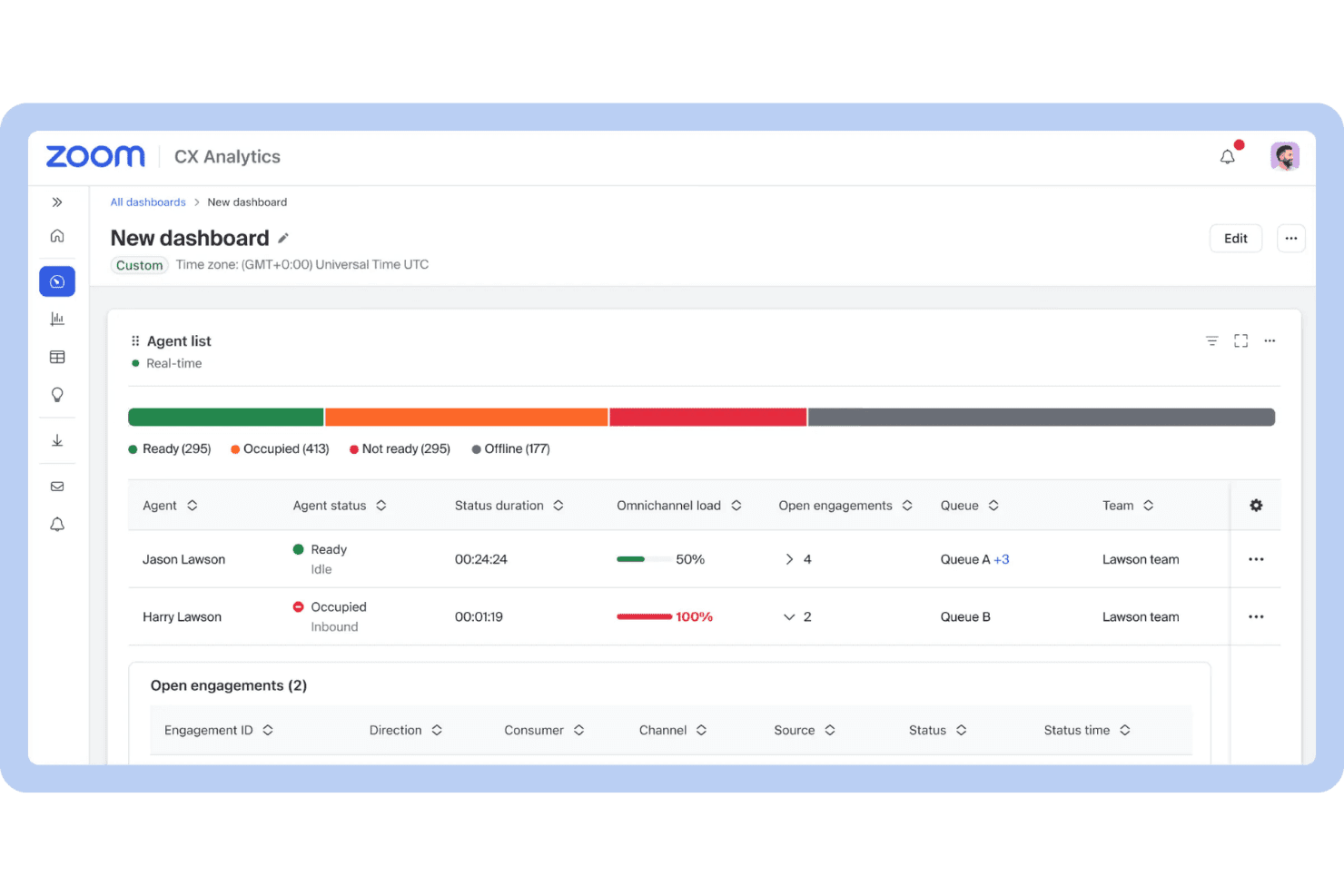
Zoom Phone offers a CX Analytics dashboard with a real-time agent list showing agent status, omnichannel load, open engagements, and queue assignments. Zoom Phone is a cloud-based VoIP system that delivers local PSTN calling across ~49 countries, global number coverage, IVR, call recording, and native integrations with Zoom Meetings, Salesforce, and Zendesk.
Who Is Zoom Phone Best For?
Zoom Phone is a natural fit for multinational organizations that already use Zoom Meetings and want to consolidate voice calling into the same platform.
Why I Picked Zoom Phone
I've included Zoom Phone in my top picks because it lets you escalate a live international call into a video meeting with one click. My team uses the Microsoft Teams integration to make and receive Zoom Phone calls inside Teams, so agents never leave their primary workspace. The Global Select plan lets me assign local numbers across 40+ countries at one flat monthly rate, without managing separate carrier contracts per region.
Zoom Phone Key Features
- Local PSTN coverage: Assign direct dial numbers in over 45 countries for inbound and outbound international calling.
- Auto attendants and IVR: Configure automated phone trees and call routing for multilingual customer support.
- Call recording: Capture and store inbound and outbound calls for compliance and quality assurance across regions.
- CRM integration: Connect with Salesforce, Zendesk, and HubSpot for click-to-dial and call activity tracking within your workflow.
Zoom Phone Integrations
Zoom Phone offers native integrations with Salesforce, HubSpot, Slack, ServiceNow, and Microsoft Teams, and provides an API for custom integrations.
Pros and Cons
Pros:
- Spam call blocking for international numbers
- Global PSTN access in dozens of countries
- Escalate calls to video with one click
Cons:
- International texting support is limited
- Outbound call quality varies by country
Learn more about Zoom Phone: 10Best for unified team messaging and voice
RingEX
- 14-day free trial
- From $20/user/month (billed annually)

RingEX offers a LOB Analytics dashboard with call trend charts, department performance tables, and member-level call metrics for Finance Operations. RingEX by RingCentral is a cloud-based UCaaS platform that combines international voice calling, team messaging, SMS, video meetings, and AI-powered call routing across 100+ countries in a single app.
Who Is RingEX Best For?
RingEX is a strong fit for mid-to-large enterprises running distributed or international teams who need voice, messaging, and meetings consolidated into one platform.
Why I Picked RingEX
RingEX earns its spot on my shortlist because it genuinely collapses voice, messaging, and SMS into one interface without forcing your team across multiple apps. What I particularly like is the in-app translation across 18 languages, which means agents handling international queues can communicate without switching tools. The AI Receptionist also routes international callers 24/7, capturing leads and directing calls even when no one is available across time zones.
RingEX Key Features
- HD voice calls: Delivers reliable call quality with enterprise-grade uptime across global regions.
- Local and toll-free numbers: Supports local, mobile, and toll-free numbers in over 50 countries for inbound and outbound calls.
- Multi-level IVR: Enables custom call routing flows and business hour rules for international support teams.
- Call recording and analytics: Captures, stores, and analyzes calls for quality assurance and compliance.
RingEX Integrations
RingEX offers over 330 native integrations, including Salesforce, HubSpot, Zendesk, Google Workspace, Microsoft Teams, ServiceNow, and has native integrations across the Microsoft ecosystem, including Microsoft 365 and Azure. An API is available for custom integrations.
Pros and Cons
Pros:
- AI-powered call routing handles global queues
- Consistent voice quality on international calls
- Global DIDs and local numbers available
Cons:
- Some advanced analytics cost extra
- Unlimited dialing mostly regional not global
Learn more about RingEX:
Other VoIP for International Calls
Here are some additional VoIP for international calls options that didn’t make it onto my shortlist, but are still worth checking out:
- 11Vonage Business CommunicationsBest for flexible app integrations
- 12AircallBest for instant CRM integration
- 13LiveAgentBest for integrated ticket and call management
- 14Freshdesk Contact CenterBest for easy browser-based calling
- 15Five9Best for predictive dialer technology
- 16TalkdeskBest for industry-specific solutions
- 17Genesys Cloud CXBest for real-time omnichannel analytics
- 18NiCE CXoneBest for AI-driven automation tools
- 19Sprinklr ServiceBest for unified digital channel support
- 20QuoBest for customizable call flows
How I Evaluate VoIP for International Calls
I split my evaluation into the baseline features a platform needs—like competitive rates, global number coverage, and CX tooling—and the differentiators that separate the best from the rest.
Core Functionality (Table Stakes For This List)
When I'm selecting tools for my list, I rank each one on a scale from 0 (does not offer the functionality) to 5 (excels in this area) for each core functionality listed below. Then, I calculate the tool's total score as a percentage. Each tool needs to achieve a minimum total score of 65% to be considered for inclusion.
- International Calling Rates: I compare per-minute pricing and bundled plans across destination countries, checking whether mobile and landline rates are listed separately.
- Global Number Coverage: I look for local, toll-free, and virtual numbers in a wide range of markets so your customers can dial a familiar local number.
- Global Call Quality: HD voice codecs and distributed points of presence matter here—I check for multi-region hosting, carrier redundancy, and uptime SLAs.
- CX & Contact Center Features: Tools should offer IVR, skills-based routing, call recording, and queue management to support customer-facing teams at scale.
- CRM & Helpdesk Integrations: I evaluate native connections with platforms like Salesforce, Zendesk, and HubSpot, plus whether the vendor provides an open API.
- Compliance & Regulations: Each vendor should handle local number registration rules, data residency requirements, and privacy standards like GDPR across regions.
Once I have a list of tools that meet the criteria, I consider what sets each platform apart.
Differentiating Factors (What Sets Vendors Apart)
Here's how I compare and contrast different vendors:
Standout Features
Local number availability across a wide range of countries is a major separator. It gives your customers a familiar, local dialing experience instead of an expensive international line. I also look for real-time call translation, where AI transcribes or translates speech during live conversations with customers who speak different languages. Number porting support matters when you're switching providers and need to keep existing international numbers intact across multiple markets.
Beyond Features
Rate transparency is something I always evaluate closely. Some vendors separate mobile and landline pricing by country, while others bury connection fees or currency conversion charges. Compliance coverage also varies widely—I check whether a vendor handles data residency options and local telecom registration requirements across the regions you operate in. Multilingual support rounds things out, especially 24/7 availability across time zones and multi-currency billing for distributed teams.
How to Choose VoIP for International Calls
It’s easy to get bogged down in long feature lists and complex pricing structures. To help you stay focused as you work through your unique software selection process, here’s a checklist of factors to keep in mind:
| Factor | What to Consider |
|---|---|
| FactorScalability | What to ConsiderWill the solution handle more international numbers, users, and countries as your needs grow? Ask about plans, number limits, and account expansion. |
| FactorIntegrations | What to ConsiderWhich CRMs or helpdesks do you need to connect? Check for native integrations and whether your workflows require open API access for custom connections. |
| FactorCost | What to ConsiderCompare not just per-minute rates but taxes, setup fees, number rental, and currency conversion. Watch for hidden costs that drive up total spend. |
| FactorEase of use | What to ConsiderHow easily can your agents and admins place calls, change settings, and train new hires? Request a trial or demo for hands-on experience. |
| FactorImplementation and onboarding | What to ConsiderWhat support does the vendor offer during porting, deployment, and training? Clarify who handles number registration and agent onboarding logistics. |
| FactorSecurity safeguards | What to ConsiderDoes the provider offer encryption, access controls, and compliance with privacy standards? Ask about data centers, call recording, and audit trails. |
| FactorCompliance requirements | What to ConsiderWill local telecom, data residency, and customer privacy rules in your regions impact rollout? Make sure your vendor addresses all relevant regulations. |
| FactorInternational capabilities | What to ConsiderHow broad is the vendor’s country coverage, and do they support local presence in your top regions? Look for number options in markets you care about. |
What Is VoIP for International Calls?
VoIP for international calls is internet-based voice calling technology designed to connect users across different countries at lower costs than traditional phone services. It lets customer experience teams support global contacts, route calls to international numbers, and maintain reliable call quality no matter where agents or customers are located. This approach enables more affordable, flexible, and scalable global communications for service organizations.
Features of VoIP for International Calls
When selecting VoIP for international calls, keep an eye out for the following key features:
- International calling rates: Flexible pricing options for calls to a broad range of countries, including competitive per-minute rates and bundled packages for frequent global communication.
- Global number coverage: Access to purchase and assign local, toll-free, or virtual numbers across multiple countries, supporting local presence and easier inbound calling for customers.
- Call routing and IVR: Intelligent routing that directs calls to the right agents or teams, with interactive voice response menus tailored for different regions, languages, or time zones.
- High-definition audio quality: Use of HD audio codecs and global network points of presence to minimize latency and deliver clear conversations across continents.
- CRM and helpdesk integrations: Native or API-based connections to major customer relationship management and support platforms, unifying customer conversations and records.
- Compliance and regulatory controls: Built-in support for telecom regulations, privacy rules, caller ID standards, and data residency requirements in all operating countries.
- Call recording and analytics: Tools to record, store, and analyze calls for quality assurance, training, and compliance with regional standards.
- Automated call queueing: Systems that manage queues, estimate wait times, and allow for call-back options, ensuring smooth customer experiences during busy periods.
- Multilingual support: Interfaces and user experiences in multiple languages, plus access to multilingual agents or real-time translation tools for cross-border service.
- Mobile and remote agent access: Cloud-based apps or softphones that enable distributed or remote teams to make and receive international calls from anywhere with an internet connection.
Benefits of VoIP for International Calls
Implementing VoIP for international calls provides several benefits for your team and your business. Here are a few you can look forward to:
- Lower international calling costs: Take advantage of competitive rates and unlimited plans to reduce expenses on cross-border customer communication.
- Broader global reach: Access local numbers and toll-free lines in many countries, making it easier to establish a presence and support customers worldwide.
- Consistent call quality: Rely on HD voice codecs and global network infrastructure to maintain clear, reliable audio no matter where your agents or customers are located.
- Unified workflow integration: Connect your VoIP system with CRM and helpdesk platforms to centralize customer data, simplify interactions, and improve service efficiency.
- Regulatory compliance confidence: Meet regional telecom and privacy requirements through built-in compliance features that adapt to various international standards.
- Easy scaling for growth: Add numbers, users, and regions quickly without needing new hardware, supporting demand spikes and distributed teams as your business expands.
- Enhanced multilingual support: Serve diverse customer bases using multilingual interfaces, real-time translation, and global agent accessibility for true international coverage.
Costs and Pricing of VoIP for International Calls
Selecting VoIP for international calls requires an understanding of the various pricing models and plans available. Costs vary based on features, team size, add-ons, and more. The table below summarizes common plans, their average prices, and typical features included in VoIP for international calls solutions:
Plan Comparison Table for VoIP for International Calls
| Plan Type | Average Price | Common Features |
|---|---|---|
| Plan TypeFree Plan | Average Price$0 | Common FeaturesLimited outbound calls, basic call management, and access to a small selection of countries. |
| Plan TypePersonal Plan | Average Price$5–$25/user/month | Common FeaturesLocal number support, call recording, basic IVR, and pay-as-you-go international calling rates. |
| Plan TypeBusiness Plan | Average Price$20–$50/user/month | Common FeaturesMultiple international numbers, CRM integrations, analytics, HD audio, call queueing, and advanced call routing. |
| Plan TypeEnterprise Plan | Average Price$50–$120/user/month | Common FeaturesCustom contracts, advanced compliance, global points of presence, guaranteed SLAs, unlimited calling bundles, and dedicated support. |
VoIP for International Calls FAQs
Here are some answers to common questions about VoIP for international calls:
Can I keep my existing international numbers when switching to VoIP?
Yes, most VoIP service provider options offer number porting, allowing you to transfer existing international numbers to your new VoIP phone system. This ensures full compatibility with your established communication channels so you can maintain consistency for your customers and partners.
How do international calling rates compare to traditional phone services?
VoIP rates for international calls are typically much lower than traditional carriers, making a VoIP solution especially valuable for small businesses and high-volume teams. While consumer options like Skype or Google Voice offer basic connectivity or even free VoIP calling, a dedicated business VoIP plan provides cost-effective rates alongside advanced call handling features.
Be sure to compare rates for specific countries—such as the United Kingdom or Australia—and check for hidden fees.
Is call quality the same for international VoIP calls as for local calls?
Call quality on international VoIP calls can match or even exceed traditional calls when supported by HD audio codecs and a reliable service provider. Delivering high-quality audio whether you use a dedicated VoIP phone, a mobile phone, or laptop-based video conferencing apps relies on stable internet connectivity—so a Wi-Fi or Ethernet network is essential.
What compliance risks should I watch for in different countries?
International VoIP use may trigger telecom, privacy, and data residency regulations that vary by country. Make sure your provider offers guidance and controls for regulatory compliance in all regions you serve.
Can I use VoIP for international calls with remote or mobile teams?
Yes, cloud-based VoIP platforms typically allow remote and mobile agents to make and receive international calls from any location with internet access, simplifying distributed team management.