

10 Best Google Voice Alternatives In 2026

Best Google Voice Alternatives Shortlist


Great Google Voice alternatives offer flexible VoIP calling, reliable texting, easy setup, and strong integration options—without locking you into Google’s ecosystem. If you’re searching for Google Voice alternatives, you probably want more features, better call quality, or support for teams that outgrow the basics. Maybe you need advanced call routing, analytics, or easier number management as your business scales. This guide gives you a clear look at the best Google Voice alternatives so you can compare your top options and pick a VoIP solution that matches the way your team works.
What Is Google Voice?
Google Voice is a cloud-based VoIP service that lets users make calls, send texts, and manage voicemails using one phone number across devices. It’s popular for its simple setup, browser-based access, and integration with other Google Workspace tools. Teams often turn to Google Voice for basic call handling, unified numbers, and flexible communication—but it falls short for businesses needing advanced features or more specialized phone solutions.
Why Trust Our Software Recommendations
Our team has been testing and reviewing software since 2012. As CX leaders ourselves, we know how difficult—and important—it is to choose the right software.
For this guide, we evaluated tools using hands-on testing and independent research, scoring tools using our selection criteria.
Our reviews reflect our human editorial judgment, not a sales pitch.
Google Voice Alternatives Comparison Table
This comparison table summarizes pricing details for my top Google Voice alternative selections:
| Tool | Best For | Trial Info | Price | ||
|---|---|---|---|---|---|
| 1 | Best for small business scalability | Free demo available | From $15/user/month (billed annually) | Website | |
| 2 | Best international phone number options | 14-day free trial | From $25/user/month (billed annually) | Website | |
| 3 | Best analytics dashboard for call performance | 7-day free trial + free demo available | From $15/user/month (billed annually) | Website | |
| 4 | Best real-time transcription features | 14-day free trial + free demo available | Pricing upon request | Website | |
| 5 | Best SMS and calling automation | 14-day free trial | From $29/user/month (billed annually) | Website | |
| 6 | Best app integrations for support teams | Free demo available | Pricing upon request | Website | |
| 7 | Best for voice support in helpdesk tickets | 14-day free trial | From $55/user/month (billed annually) | Website | |
| 8 | Best for omnichannel customer engagement | Free demo available | From $75/user/month (billed annually) | Website | |
| 9 | Best AI-powered call routing | Free demo available | From $119/seat/month | Website | |
| 10 | Best unified communications platform | 14-day free trial | From £18/user/month | Website |
Best Google Voice Alternatives Reviews
Below are my detailed summaries of the best Google Voice alternatives that made it onto my shortlist. My reviews offer a detailed look at the features, integrations, and best use cases of each platform to help you find the best one for you.
Nextiva
Best for small business scalability
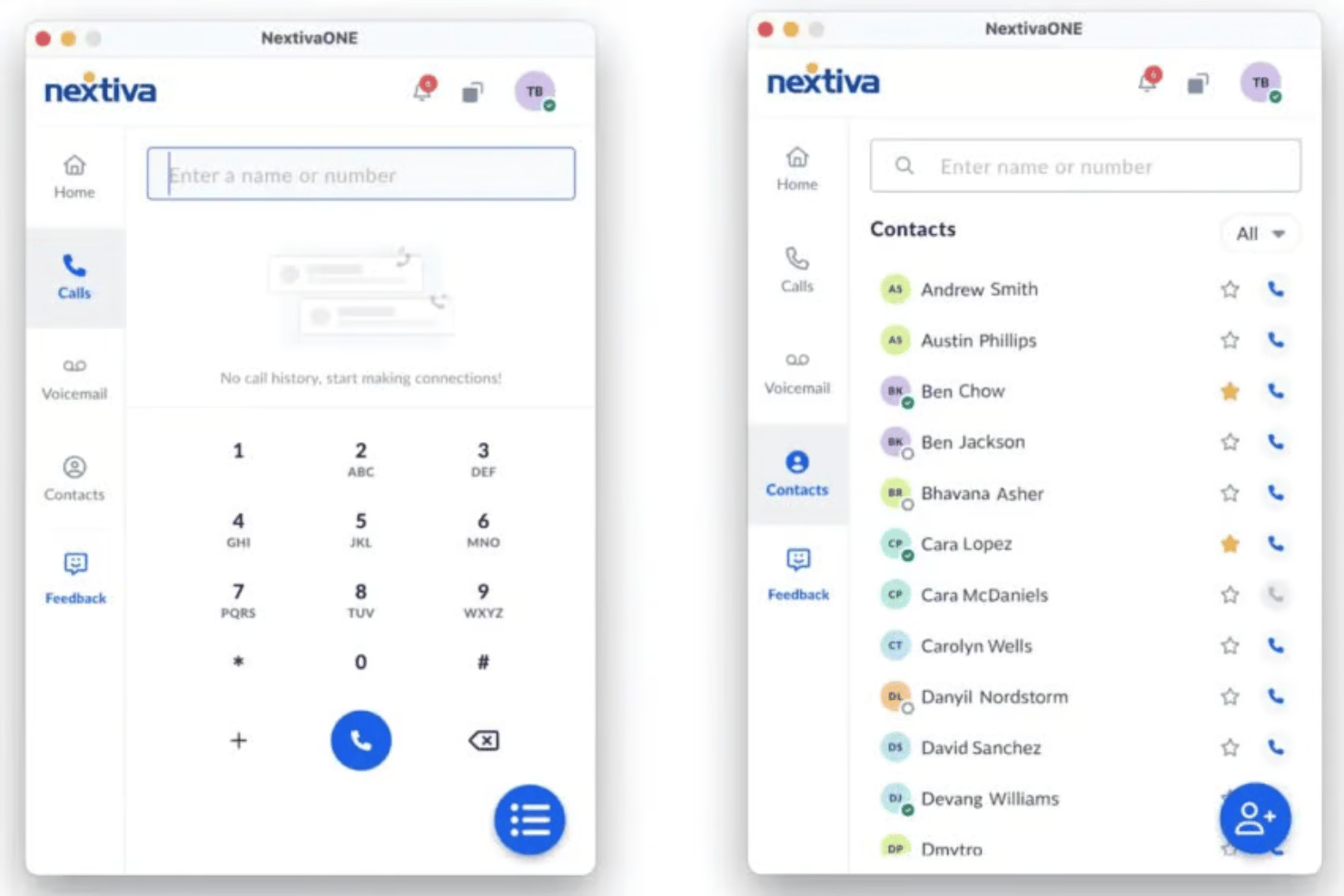
Nextiva is a unified VoIP and collaboration platform for small and midsize businesses that want to manage calls, video meetings, messaging, analytics, and customer interactions in a single app with strong scalability and automation.
Who Is Nextiva Best For?
Small businesses and distributed teams that need a scalable, feature-rich VoIP system to support growth and unified communications.
Why Nextiva Is a Good Google Voice Alternative
I picked Nextiva as one of the best because I can scale from a single small office to multiple locations, manage all business calls and messages in one app, and automate call routing with built-in AI tools as my team grows.
Nextiva Key Features
- Voicemail transcription: Voicemails are automatically converted to text so you can read messages in the app or by email.
- Threaded conversations: Call history, texts, and chats with each contact are displayed in a single timeline for context.
- HD video meetings: Host unlimited video conferences with HD quality, screen sharing, and chat for remote collaboration.
- Contact center integrations: Connect with CRM, helpdesk, and industry-specific apps to handle customer communications within your workflows.
Nextiva Integrations
Nextiva offers native integrations with Salesforce, HubSpot, Zendesk, ServiceNow, Zoho, Microsoft Teams, Bullhorn, Pipedrive, Oracle Sales Cloud, and Outlook Calendar. An API is available for custom integrations.
Pros and Cons
Pros:
- Advanced call routing with built-in AI
- Centralizes calls, video, chat, and SMS
- Scales easily from one to many users
Cons:
- Fewer international number options available
- Requires stable internet for reliable calls

Best international phone number options
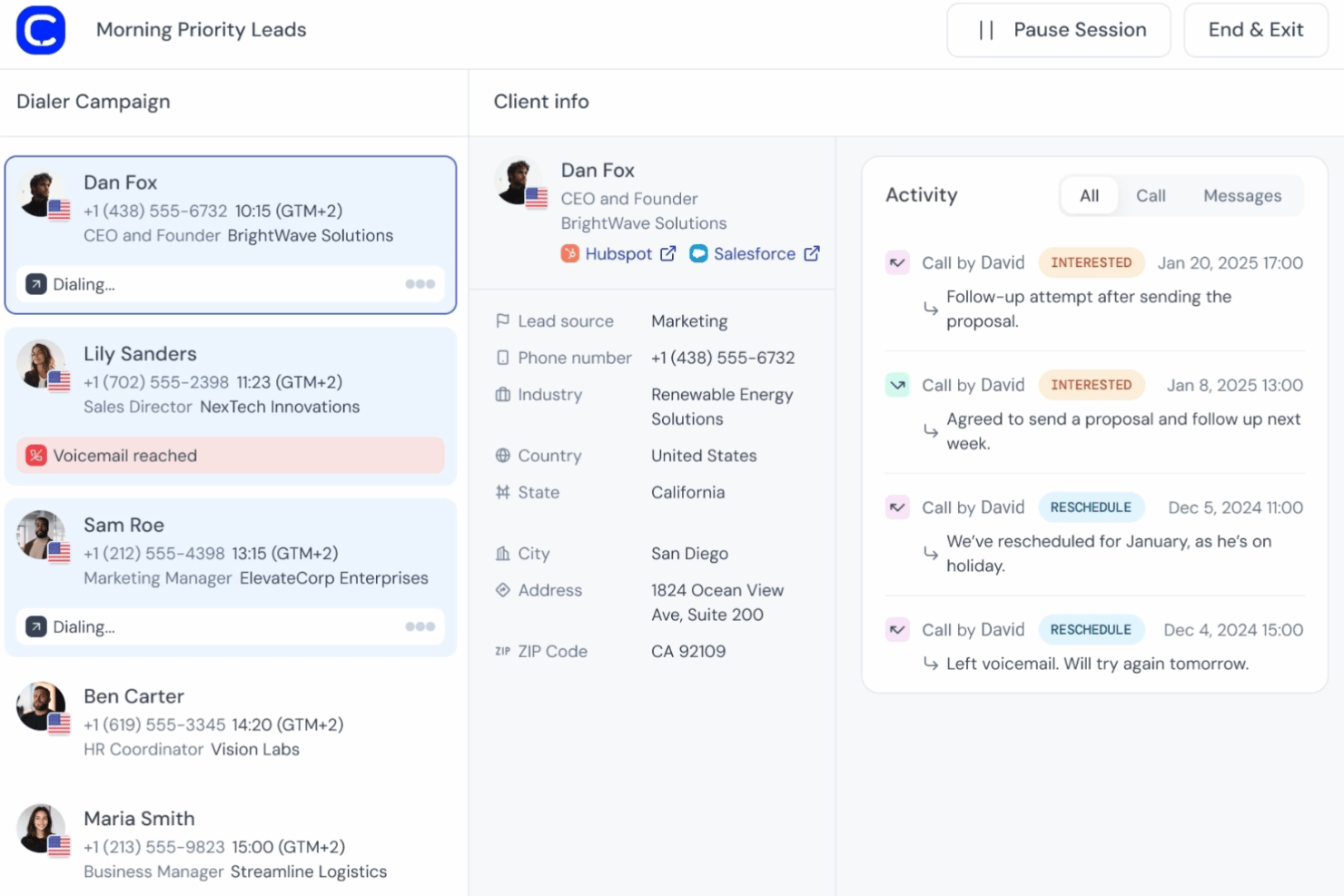
CloudTalk is a business VoIP platform designed for companies that need advanced call routing, global number coverage, and deep integrations—ideal for sales or support teams handling international communication at scale.
Who Is CloudTalk Best For?
CloudTalk suits global customer support teams and sales operations that need reliable international calling and integrations across multiple business systems.
Why CloudTalk Is a Good Google Voice Alternative
I picked CloudTalk as one of the best because I can activate international phone numbers in over 160 countries, manage global call routing, and ensure local presence for sales or support without juggling multiple providers.
CloudTalk Key Features
- AI voice agents: Use AI-powered receptionists and specialists to handle, qualify, and route incoming calls automatically.
- Live call monitoring: Listen, whisper, or barge into live calls for quality assurance and training.
- Power dialer and parallel dialer: Automate high-volume outbound calling with features that accelerate sales and support workflows.
- CRM and helpdesk integrations: Connect CloudTalk with tools like HubSpot, Salesforce, and Zendesk for data syncing.
CloudTalk Integrations
CloudTalk offers 100+ native integrations, including HubSpot, Salesforce, Zendesk, Freshdesk, Pipedrive, Zoho CRM, Microsoft Dynamics 365, Intercom, Aircall, Slack, and Zapier. An API is available for custom integrations.
Pros and Cons
Pros:
- AI-powered live call transcription available
- Advanced call routing and IVR options
- Local numbers in over 160 countries
Cons:
- Limits simultaneous file attachments
- Outbound international calls can increase costs
Ringover
Best analytics dashboard for call performance
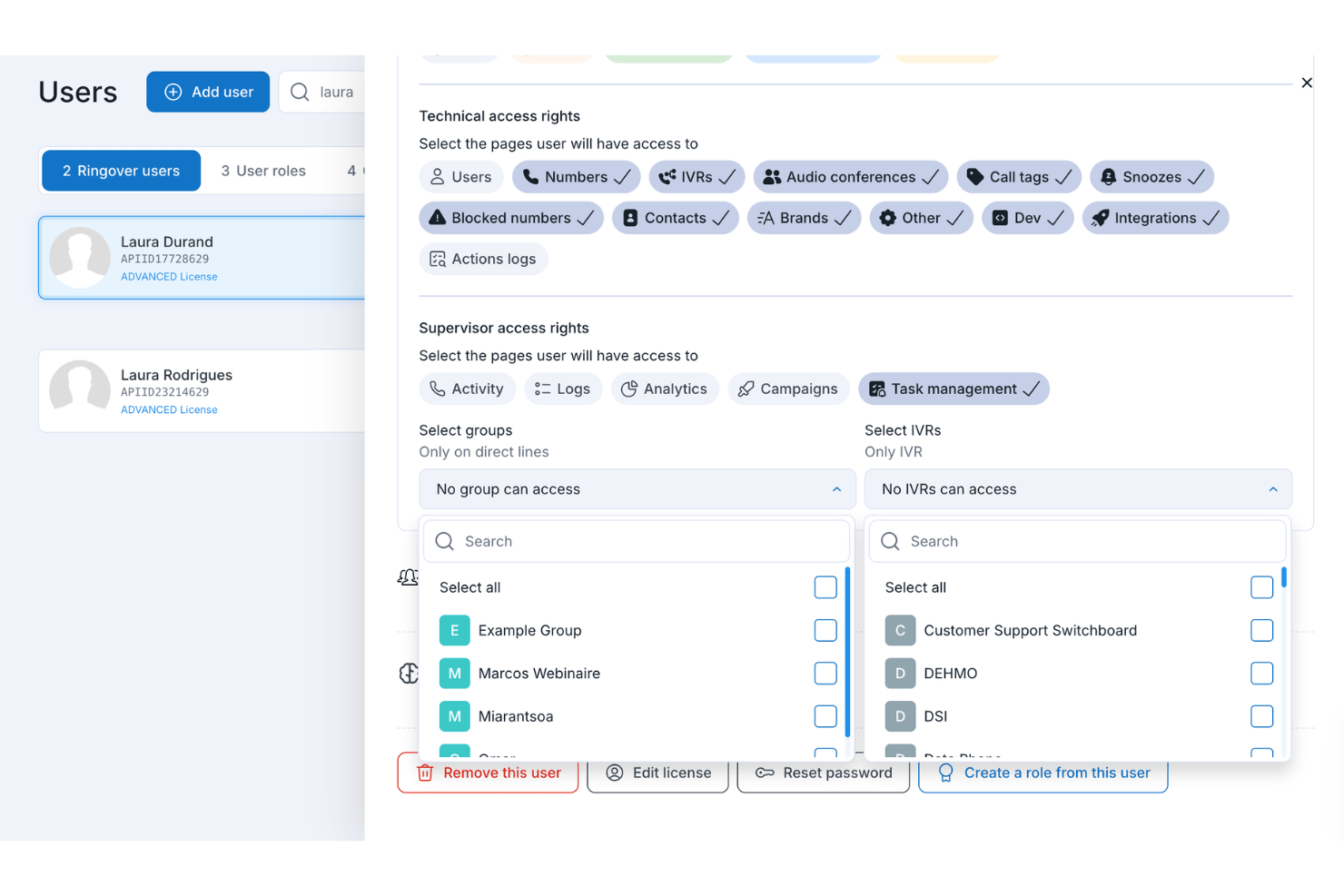
Ringover is a cloud-based VoIP platform designed for sales, support, and distributed teams that need advanced call analytics, AI features, and real-time performance tracking well beyond what Google Voice and basic phone systems offer.
Who Is Ringover Best For?
Sales and customer service teams in mid-size or growing businesses that require advanced call management, analytics, and AI-driven performance insights.
Why Ringover Is a Good Google Voice Alternative
I picked Ringover as one of the best because I rely on its analytics dashboard for in-depth call performance tracking, real-time monitoring, and AI-powered coaching. My team uses built-in dashboards to analyze call volume, duration, and outcomes while instantly spotting trends across agents.
Ringover Key Features
- Omnichannel messaging: Connect with customers via SMS, WhatsApp, Messenger, Instagram, and email from a single platform.
- Customizable IVR and call routing: Set up multi-level IVR menus and advanced call distribution rules for efficient handling.
- 100+ CRM and helpdesk integrations: Sync call activity and contacts with systems like Salesforce, HubSpot, and Zendesk.
- Call recording and transcription: Automatically record calls and generate searchable transcriptions for easy review.
Ringover Integrations
Ringover offers 100+ native integrations, including Salesforce, HubSpot, Zendesk, Zoho, Pipedrive, Bullhorn, Microsoft 365, and Google Workspace. An API is available for custom integrations.
Pros and Cons
Pros:
- Omnichannel messaging beyond standard calls
- Real-time call monitoring and coaching features
- Advanced analytics dashboard for call insights
Cons:
- SMS support is limited by country and plan
- Limited bulk data extraction

Dialpad
Best real-time transcription features
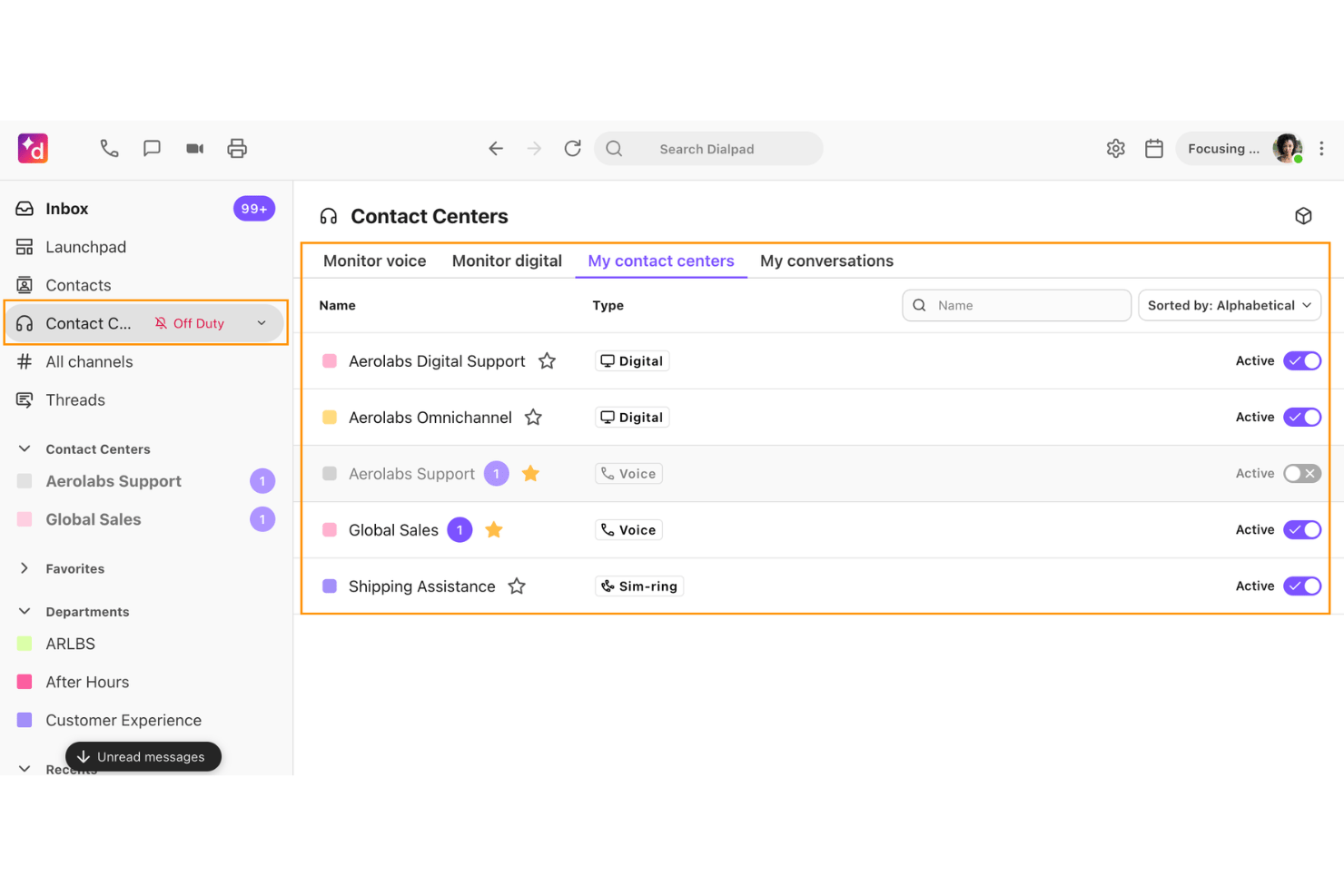
Dialpad is a cloud-based VoIP platform designed for businesses that want AI-powered calling, messaging, and meetings with integrated productivity tools to support both remote and hybrid teams looking for a modern Google Voice alternative.
Who Is Dialpad Best For?
Dialpad suits customer support and sales teams in growing companies that want unified communications powered by AI on one platform.
Why Dialpad Is a Good Google Voice Alternative
I picked Dialpad as one of the best because I use its real-time transcription to capture every detail of customer calls, and the AI-driven call summaries give my team instant insights right after meetings. Voice-to-text accuracy consistently stands out in my workflow.
Dialpad Key Features
- AI agent workspace: Lets agents manage calls, messages, and tasks from a single dashboard.
- Omnichannel routing: Distributes voice, SMS, and chat interactions automatically to the right agent.
- CRM integrations: Connect with tools like Salesforce, HubSpot, and Zendesk to sync customer data.
- Enterprise compliance controls: Include features like audit logs, SOC 2, and HIPAA-ready security.
Dialpad Integrations
Dialpad offers native integrations with Google Workspace, Microsoft 365, Salesforce, HubSpot, Zendesk, Slack, Front, Okta, Zoho CRM, and ServiceNow. An API is available for custom integrations.
Pros and Cons
Pros:
- Scalable for both small and large teams
- Automated call summaries and action items
- Extensive historical call logs
Cons:
- Reporting features can be limiting for call centers
- SMS coverage limited in some regions

JustCall
Best SMS and calling automation
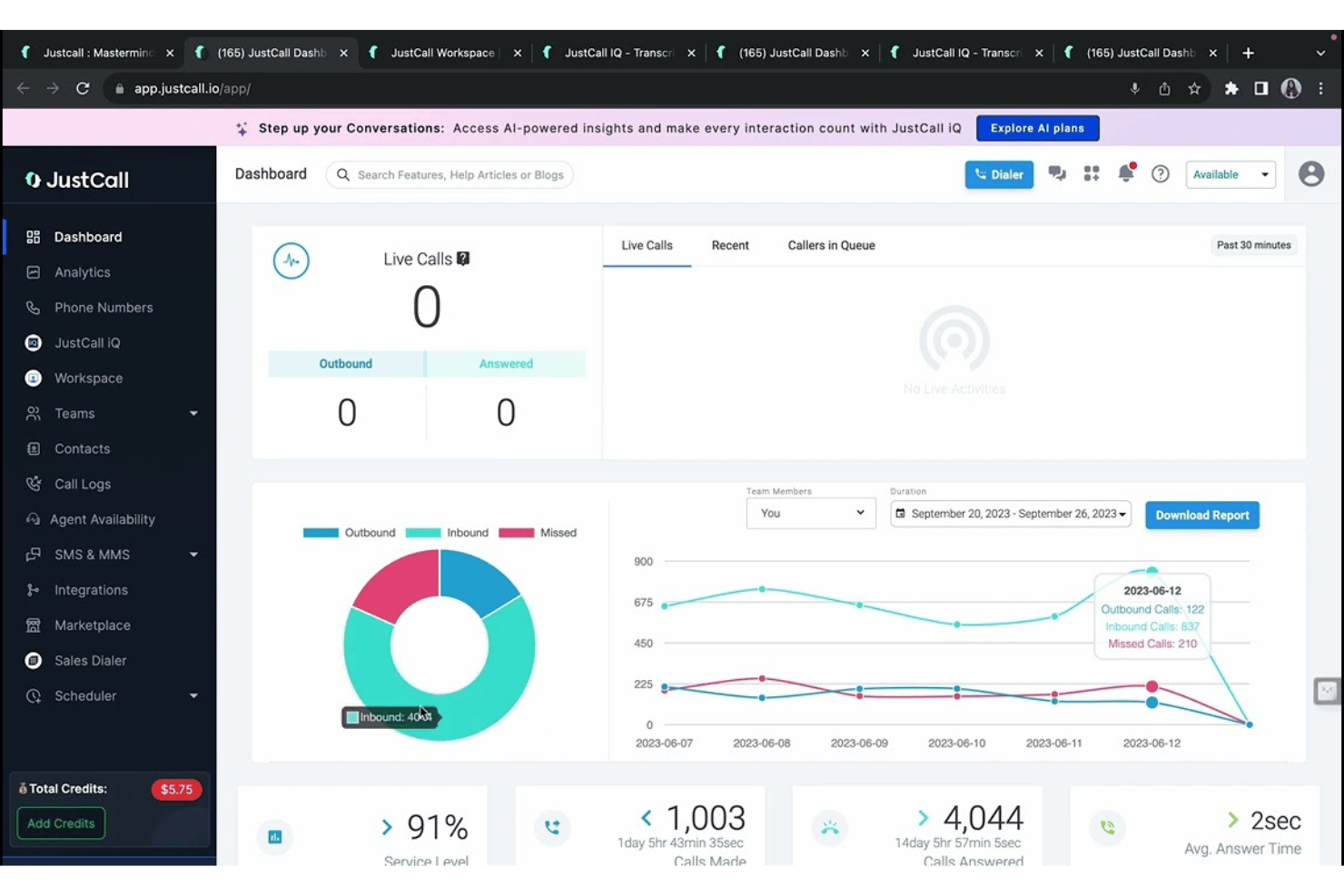
JustCall is a cloud-based VoIP platform designed for sales, support, and service teams that need advanced calling, SMS automation, and cost-effective unified communication tools with deep CRM integrations and AI-powered workflow tools to modernize customer business communications.
Who Is JustCall Best For?
Sales, customer service, and fast-growing startups looking for multi-channel communication, AI-powered workflow automation, and deep CRM connectivity to meet all their business needs.
Why JustCall Is a Good Google Voice Alternative
I picked JustCall as one of the best because I can automate SMS and calling with AI-powered tools, like SMS campaigns and voice workflows, that help my team handle high communication volumes and personalize outreach far beyond what a basic Google Voice number offers for simple personal use.
JustCall Key Features
- Multi-level IVR: Set up interactive voice menus to route incoming calls to the right team or agent automatically.
- Call recording and logs: Automatically record all calls and access searchable call logs for performance and compliance needs.
- Click-to-call browser extension: Place outbound calls directly from CRM and helpdesk tools using a Chrome extension.
- Local and international numbers: Instantly provision local phone numbers in over 70 countries for outbound and inbound calling.
JustCall Integrations
JustCall offers 100+ native integrations, including Salesforce, HubSpot, Zoho CRM, Pipedrive, Copper, Zendesk, Freshdesk, Intercom, ActiveCampaign, and Slack. Zapier and an API are also available for custom integrations.
Pros and Cons
Pros:
- Instant local numbers in 70+ countries
- AI-powered call analysis and coaching tools
- Advanced SMS and calling automation options
Cons:
- AI features limited to highest-tier plans
- High data usage requirements

Talkdesk
Best app integrations for support teams
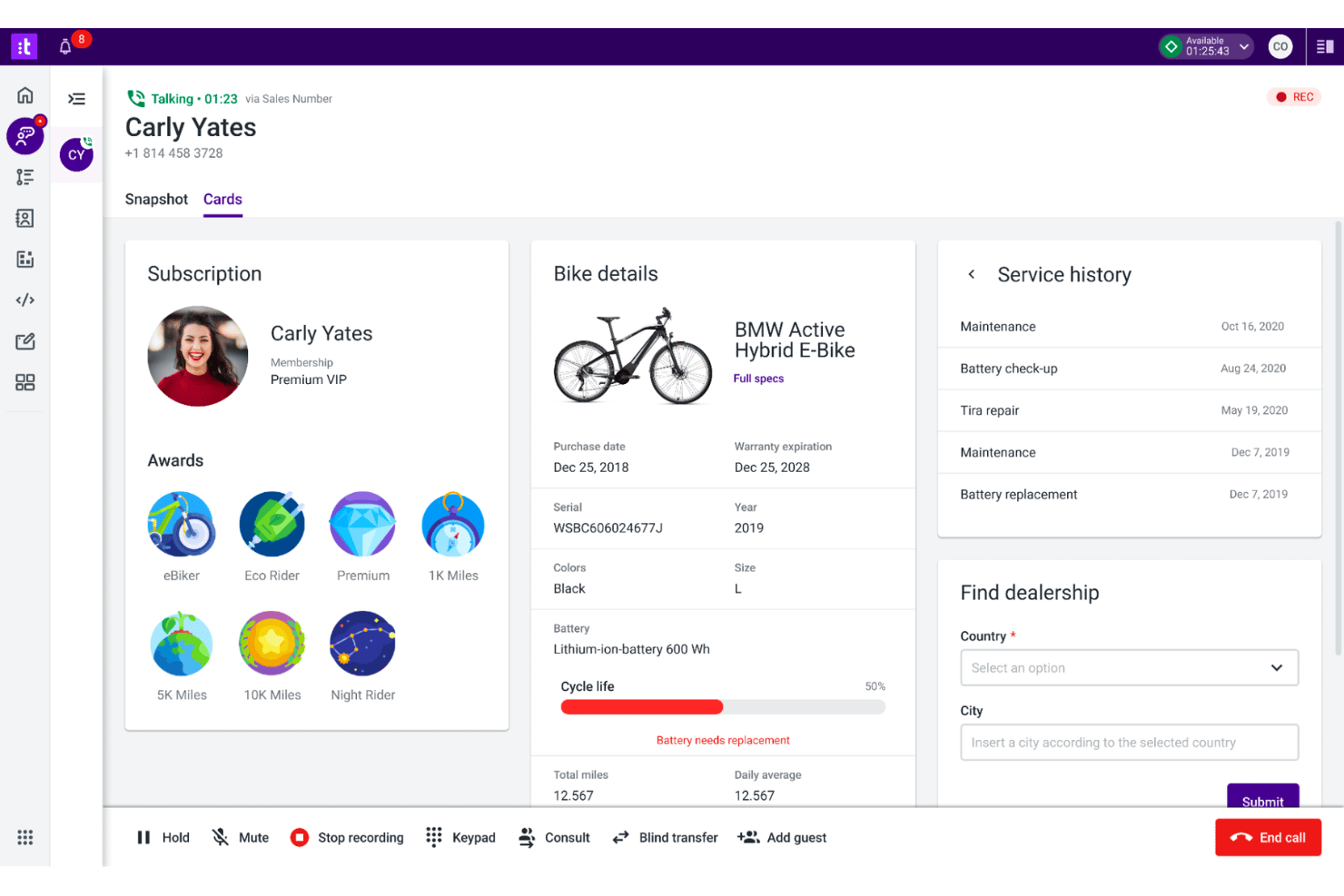
Talkdesk is a cloud-based contact center platform designed for support teams and organizations that want advanced integrations, smart automation, and multichannel communications beyond the basics of Google Voice.
Who Is Talkdesk Best For?
Support leaders at midsize to enterprise companies who need deep app integrations and flexible call center workflows.
Why Talkdesk Is a Good Google Voice Alternative
I picked Talkdesk as one of the best Google Voice alternatives because I can connect it to my CRM, helpdesk, and messaging apps without extra hassle. My team uses its prebuilt app marketplace and advanced workflow automation to centralize channel management and customer data.
Talkdesk Key Features
- AI-powered agent assistance: Agents get real-time recommendations and automated call summaries to support conversations.
- Speech analytics: Analyze voice interactions using sentiment detection and keyword spotting tools.
- Omnichannel support: Route and handle contacts across voice, SMS, web chat, email, and social channels.
- Call recording and quality management: Record calls and score them for quality directly within the platform.
Talkdesk Integrations
Talkdesk offers native integrations with Salesforce, Zendesk, Slack, Microsoft Teams, ServiceNow, Google Workspace, Microsoft 365, Shopify, Zoom, and Oracle Service Cloud, and provides an API for custom integrations.
Pros and Cons
Pros:
- Flexible interactive voice response builder
- Advanced call routing and workflow builder
- AI-powered agent assistance for voice calls
Cons:
- No native fax transmission capabilities
- Lacks built-in hardware provisioning
Best for voice support in helpdesk tickets
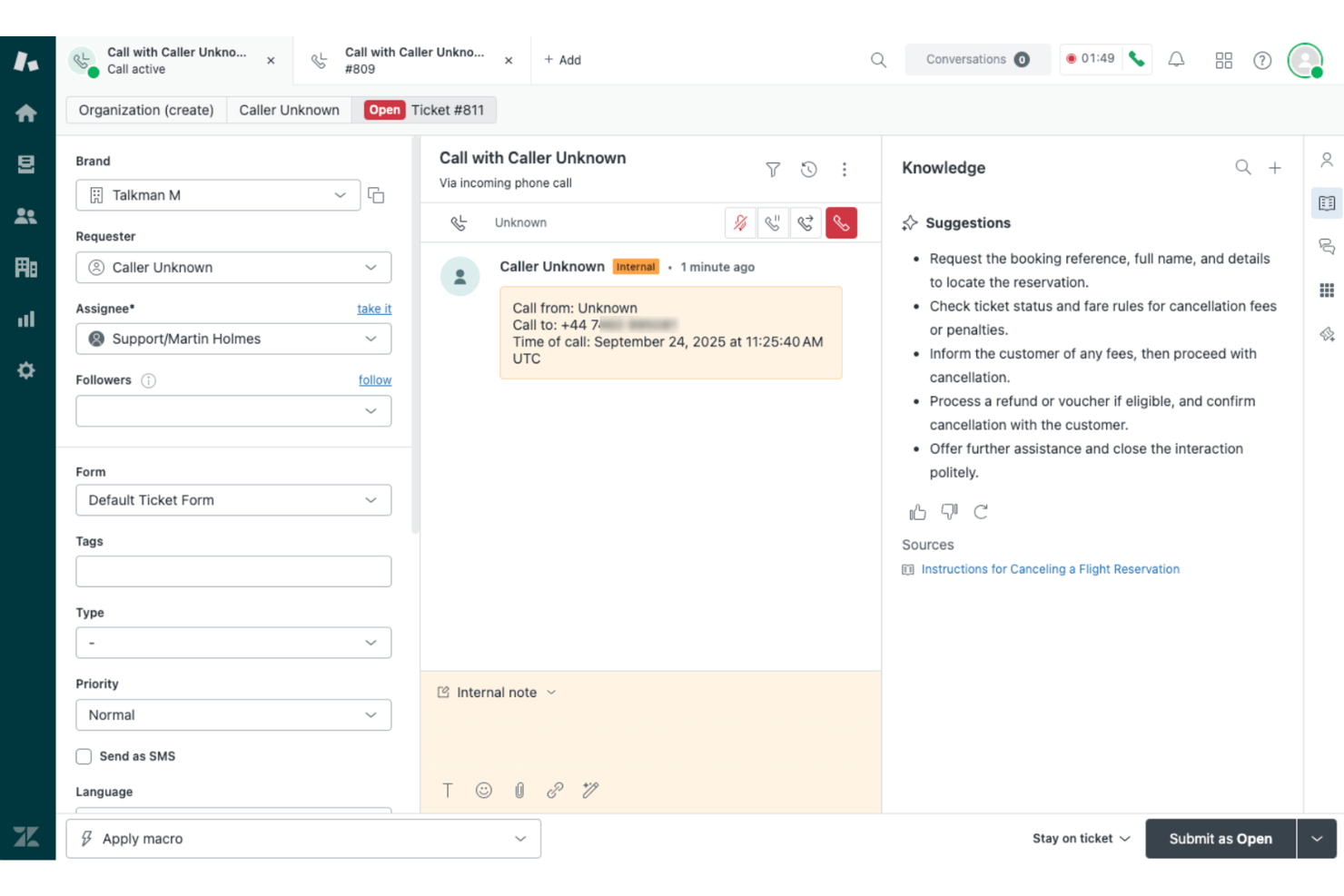
Zendesk Voice is a native cloud telephony solution built for customer support teams that want every call routed, recorded, and resolved inside the same helpdesk workspace they already use for email, chat, and messaging.
Who Is Zendesk Voice Best For?
Zendesk Voice is a strong fit for mid-sized to enterprise support teams managing high call volumes across multiple channels from a centralized helpdesk.
Why Zendesk Voice Is a Good Best Google Voice Alternatives
I picked Zendesk Voice as one of the best because it turns every inbound call into a ticket automatically. When a customer calls, the interaction lands directly in the agent workspace alongside existing email and chat threads, so agents resolve calls with full context rather than switching tools. Voice Copilot surfaces real-time suggestions mid-call, and post-call AI writes the summary straight into the ticket record without any manual logging.
Zendesk Voice Key Features
- Unified agent workspace: Calls, chats, emails, and messages all appear in a single Zendesk ticket view for a complete customer conversation history.
- Quality assurance monitoring: Supervisors can review 100% of voice and digital interactions for compliance and performance.
- Advanced call analytics: Real-time dashboards and historical reporting provide detailed insights on call volume, agent activity, and resolution times.
- Zendesk Marketplace integrations: Connects with 1,800+ apps to embed telephony alongside CRM, collaboration, and workflow tools.
Zendesk Voice Integrations
Zendesk Voice offers native integrations with Amazon Connect, Microsoft Teams, Slack, and Jira, and supports over 1,800 apps through the Zendesk Marketplace. An API is available for custom integrations.
Pros and Cons
Pros:
- Real-time call monitoring and supervisor features
- AI-generated call summaries in ticket records
- Voice calls logged directly as helpdesk tickets
Cons:
- Requires entire team to use Zendesk workspace
- SMS capabilities less robust than top providers

Best for omnichannel customer engagement
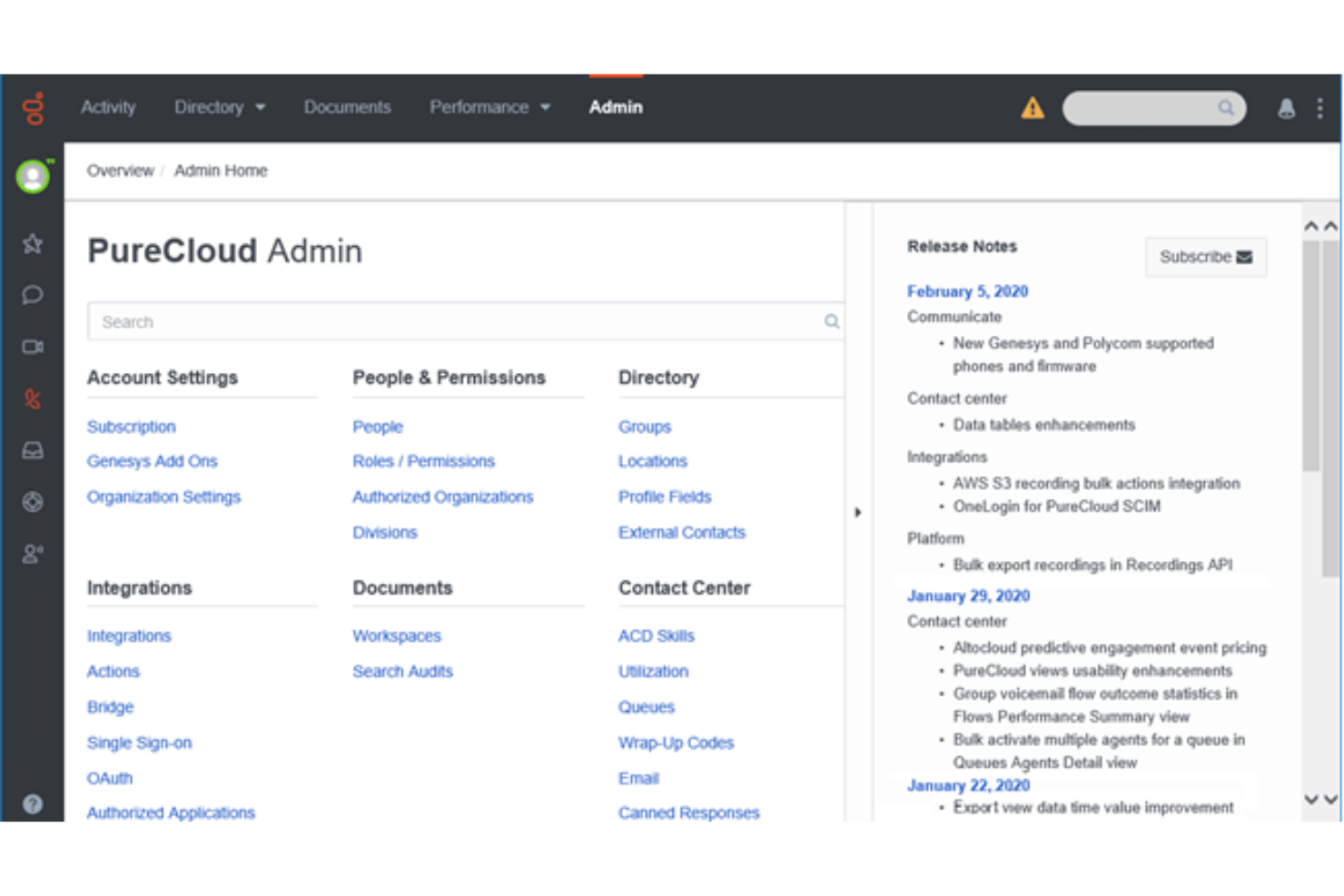
Genesys Cloud CX is a unified communications and contact center platform designed for organizations that want advanced voice, digital, and AI customer engagement beyond what traditional VoIP tools like Google Voice deliver.
Who Is Genesys Cloud CX Best For?
Enterprises and large customer service teams handling high volumes of voice, digital, and AI-powered interactions across multiple channels.
Why Genesys Cloud CX Is a Good Google Voice Alternative
I picked Genesys Cloud CX because I can manage voice, chat, SMS, and social interactions all in one place, making it easy for my team to deliver connected experiences. I appreciate how omnichannel routing and AI-powered engagement let us unify communications beyond what Google Voice provides.
Genesys Cloud CX Key Features
- Integrated call recording: Capture, store, and review voice interactions automatically for compliance and quality assurance.
- Custom IVR design: Build interactive voice response menus with drag-and-drop tools to automate call handling.
- Workforce management suite: Schedule, forecast, and monitor team activity with built-in tools for large-scale operations.
- Real-time analytics dashboard: View live metrics and performance indicators for every communication channel.
Genesys Cloud CX Integrations
Genesys Cloud CX offers native integrations with Salesforce, Microsoft Teams, Zendesk, Zoom, Amazon Lex, and Google Cloud Dialogflow, plus an API for custom integrations. Additional integrations are available through the AppFoundry marketplace.
Pros and Cons
Pros:
- Supports complex call routing and escalation
- Offers advanced AI-powered automation and analytics
- Handles high call volumes across channels
Cons:
- Lacks standalone desktop client options
- Requires significant setup and configuration
Five9
Best AI-powered call routing
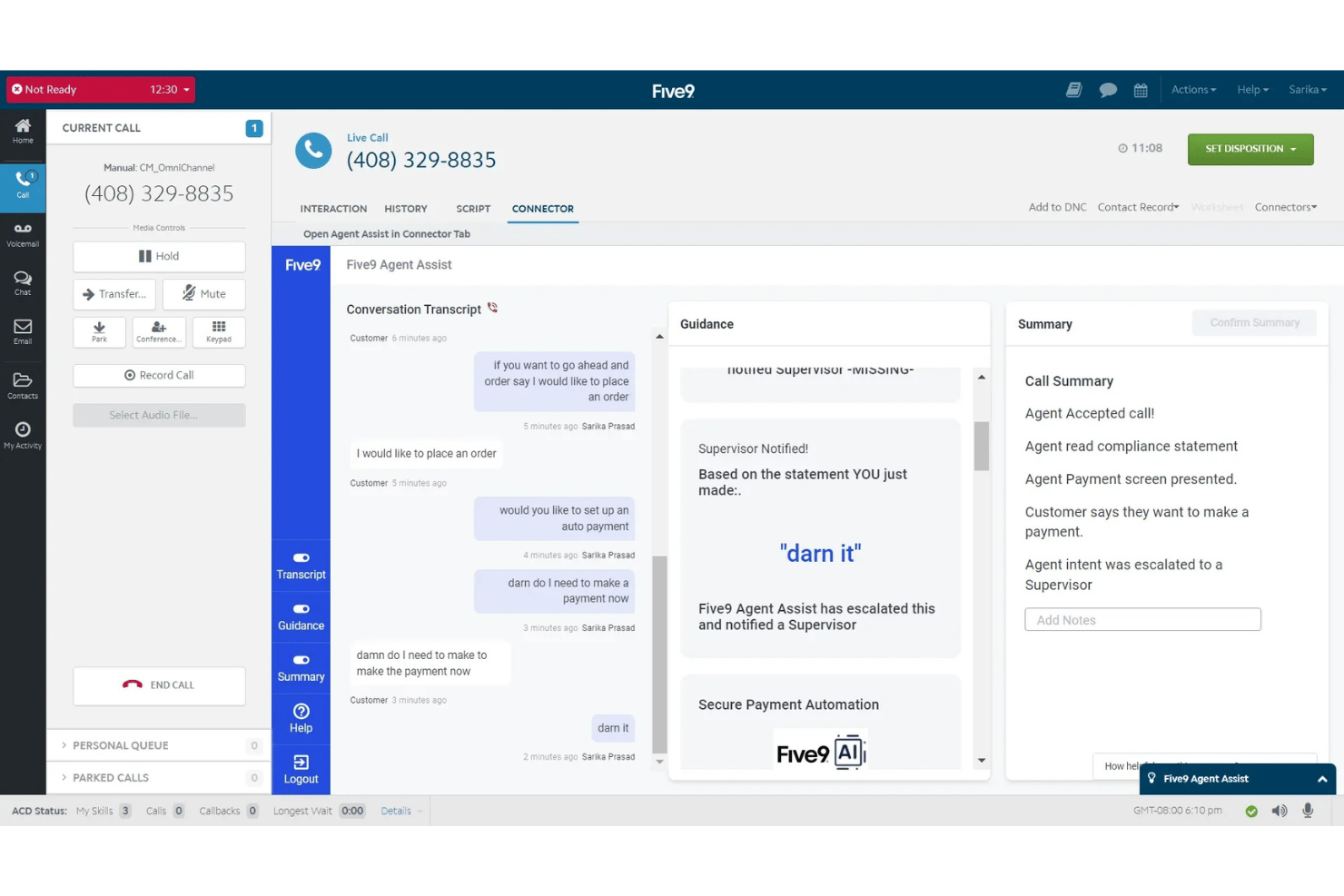
Five9 is a cloud-based contact center solution designed for businesses that need advanced call routing, omnichannel communication, and AI-driven voice interactions—ideal for large teams that want to move beyond the basics of Google Voice and standard VoIP platforms.
Who Is Five9 Best For?
Large enterprise contact centers and support teams that need scalable, AI-powered call handling and deep CRM integrations.
Why Five9 Is a Good Google Voice Alternative
I picked Five9 as one of the best because its AI-powered call routing directs voice traffic to the right agents based on context and intent. I use features like real-time transcription and automated post-call summaries to boost agent productivity at scale.
Five9 Key Features
- Omnichannel communication: Connect with customers over voice, chat, email, SMS, and social messaging in one platform.
- CRM integrations: Sync customer data with Salesforce, ServiceNow, Microsoft Dynamics, Zendesk, and more.
- Workforce management: Schedule, forecast, and monitor agent performance using built-in WEM tools.
- Quality monitoring: Record, score, and review calls for agent coaching and compliance control.
Five9 Integrations
Five9 offers native integrations with Salesforce, ServiceNow, Microsoft Teams, Zoom, RingCentral, Oracle, Zendesk, and AT&T Office@Hand. An API is available for custom integrations.
Pros and Cons
Pros:
- Real-time analytics for live call monitoring
- Omnichannel support for voice, chat, and SMS
- AI routes calls to best available agent
Cons:
- Needs dedicated local network infrastructure
- Minimum seat requirement for all plans

RingCentral
Best unified communications platform
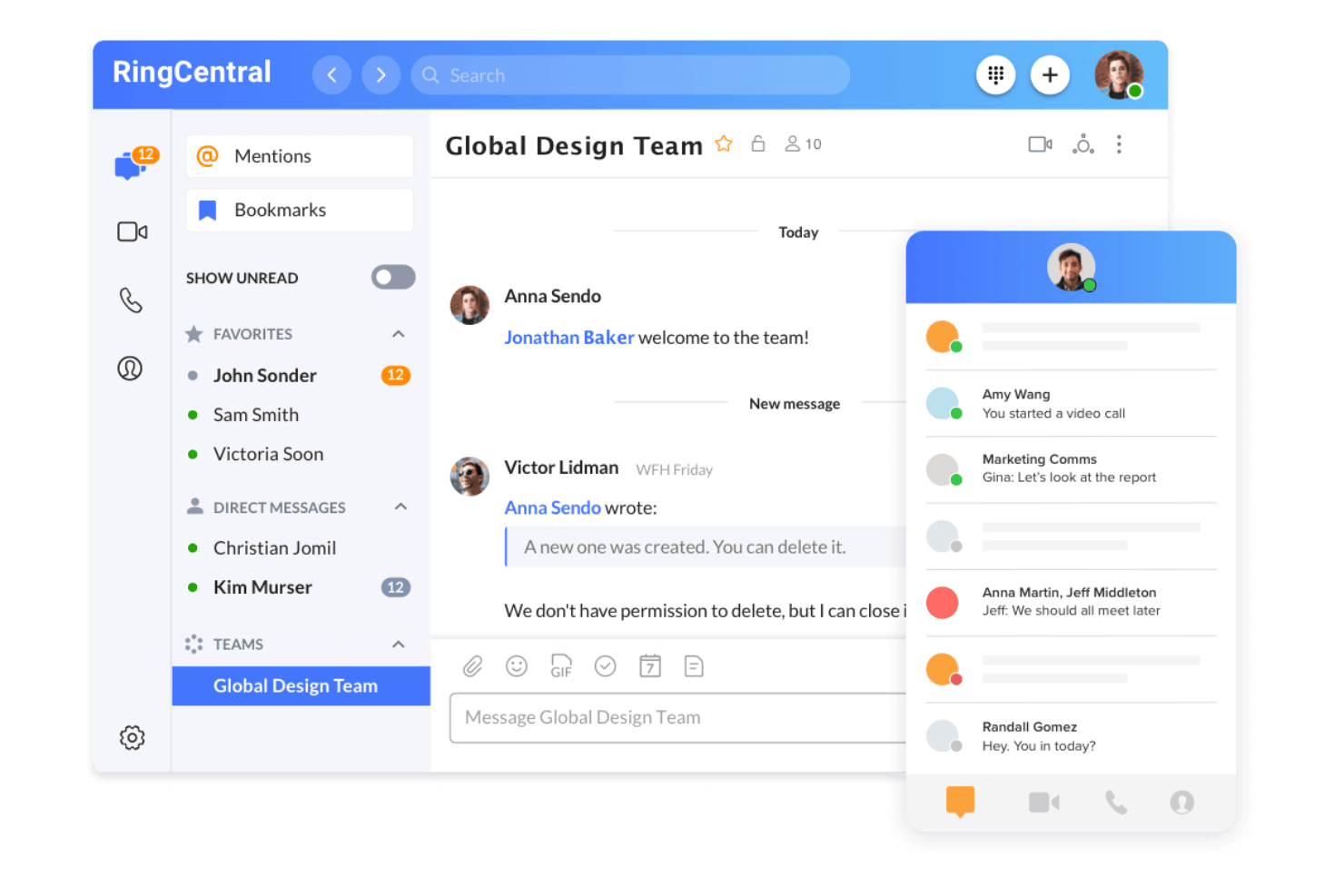
RingCentral is a cloud-based communications platform designed for businesses that want unified voice calling, SMS, video meetings, and team messaging with strong integration, AI, and compliance options as a Google Voice alternative.
Who Is RingCentral Best For?
RingCentral fits multi-location and hybrid teams in healthcare, finance, education, and other regulated industries that prioritize unified communication and compliance.
Why RingCentral Is a Good Google Voice Alternative
I picked RingCentral as one of the best because I can unify calling, SMS, team chat, video meetings, and webinars on one platform, plus rely on AI-driven call routing and advanced compliance for regulated industries.
RingCentral Key Features
- Call queue management: Organize, route, and prioritize inbound calls for teams or departments.
- Visual voicemail: Access, manage, and transcribe voicemails directly from the dashboard.
- Multi-level auto attendant: Set up dynamic call menus with custom greetings and routing rules.
- Customizable call analytics: Track usage, performance, and trends with built-in reporting dashboards.
RingCentral Integrations
RingCentral offers native integrations with Salesforce, HubSpot, Microsoft Teams, Zendesk, ServiceNow, Google Workspace, Slack, Box, Okta, and Dropbox. An API is available for custom integrations.
Pros and Cons
Pros:
- Centralized voice, chat, SMS, and meetings
- HIPAA and PCI compliance for regulated industries
- AI-powered receptionist handles inbound calls
Cons:
- Limited external storage options
- Extra charges for exceeding fair usage limits
Other Google Voice Alternatives
Here are some additional Google Voice alternative options that didn’t make it onto my shortlist, but are still worth checking out:
- Quo
For shared team phone numbers
- Aircall
For collaborative calling workflows
- 8x8
Advanced call security options
- MightyCall
For freelancer call management
- Vonage
API customization for workflows
- GoTo Connect
Visual call flow editor
- Zoom Phone
For integrating with video meetings


How I Evaluate Google Voice Alternatives
I start by checking whether a platform covers the core VoIP basics Google Voice offers—calling, texting, routing, and CRM integrations. Then I look at differentiators like AI transcription or global number coverage that set one tool apart.
Core Functionality (Table Stakes For This List)
When I'm selecting tools for my list, I rank each one on a scale from 0 (does not offer the functionality) to 5 (excels in this area) for each core functionality listed below. Then, I calculate the tool's total score as a percentage. Each tool needs to achieve a minimum total score of 75% to be considered for inclusion.
- VoIP Calling: I check for reliable cloud-based calling with business numbers, including local and toll-free options across multiple regions.
- Business SMS/Texting: Teams fielding order confirmations or appointment reminders need SMS and MMS from a business number, so I evaluate messaging depth.
- Call Routing & IVR: I look for auto-attendants, ring groups, and multi-level IVR menus that let support teams direct callers without manual transfers.
- Voicemail & Transcription: A busy support queue generates missed calls, so I evaluate whether voicemail transcriptions are accurate and easy to search.
- Multi-Device Access: I check that desktop, mobile, and web apps offer consistent features so agents can handle calls from the office or on the go.
- CX Tool Integrations: Platforms should connect to CRMs and helpdesks like Salesforce, HubSpot, or Zendesk to log calls and surface customer context automatically.
Once I have a list of tools that meet the criteria, I consider what sets each platform apart.
Differentiating Factors (What Sets Vendors Apart)
Here's how I compare and contrast different vendors:
Standout Features
AI call intelligence is a big differentiator—platforms like Dialpad and Five9 offer real-time transcription, sentiment analysis, and post-call summaries that help QA teams coach agents without reviewing every recording manually. I also look at international DID coverage, since distributed teams need local numbers in the regions they serve. CRM-embedded dialling matters too. Click-to-call, screen pops, and automatic call logging inside tools like Salesforce or HubSpot save agents from constant context-switching between apps.
Beyond Features
Number porting matters when you're migrating a team off Google Voice—I evaluate how smooth and fast each vendor makes it to transfer existing business numbers. Compliance is another key factor, especially for teams in healthcare or finance that need HIPAA or PCI-DSS certifications. I also compare pricing structures closely, since some platforms charge per user while others bundle minutes differently, and features like voicemail transcription that Google Voice includes for free can carry extra costs elsewhere.
Why Look For A Google Voice Alternative?
While Google Voice is a good choice of VoIP software, there are a number of reasons why some users seek out alternative solutions. You might be looking for a free Google Voice alternative or a paid business phone system that better fits your growing business needs because…
- Needing advanced call routing, a virtual receptionist, or a multi-level IVR
- Wanting global phone number availability or toll-free numbers outside Google Voice’s regions
- Requiring HIPAA or PCI-DSS compliance for regulated industries
- Looking for deeper CRM and helpdesk integrations
- Outgrowing single-user, cost-effective plans, or small team limitations
- Needing 24/7 live customer support instead of self-service only
If any of these sound like you, you’ve come to the right place. My list of the best Google Voice alternatives contains several VoIP providers and communication solutions—like Grasshopper or Openphone—that are better suited for teams facing these challenges with a standard Google Voice number and looking for alternative pricing plans.
Google Voice Key Features
Here are some of the key features of Google Voice to help you contrast and compare what alternative solutions offer:
- VoIP calling: Make and receive phone calls using a wifi or internet connection instead of traditional landlines or a dedicated desk phone.
- Business texting: Send and receive SMS messages and enjoy unlimited text messaging from a business number right from your device or desktop.
- Voicemail transcription: Get automatic transcriptions of voicemail messages so you can quickly scan and prioritize your responses.
- Multi-device access: Use one number across your desktop, Android or iOS mobile app, or tablet for a unified communication experience.
- Call forwarding: Direct incoming calls to other numbers or devices, so you never miss an important customer inquiry.
- Google Workspace integration: Sync with Gmail, Calendar, and Contacts to simplify daily workflows for team members already using Google products.
- Personalized greetings: Record different custom greetings for groups, small business teams, or individuals, adding a more tailored customer touch.
- Basic call screening: See caller details and decide whether to answer, route, or block calls to manage interruptions more easily.
- Number portability: Bring an existing phone number into Google Voice through number porting, which helps reduce friction when migrating from another service provider.
- Do not disturb: Set your status to route calls straight to voicemail when you need focused time or are out of the office.