

10 Best Insurance Call Center Software in 2026

Best Insurance Call Center Software Shortlist


Insurance call center software is purpose-built technology that helps insurance teams manage policyholder inquiries, claims, renewals, and compliance across multiple channels. If you’re searching for the best platforms to upgrade your operations, you already know how tough it is to keep up with high call volumes, evolving regulations, and soaring customer expectations. From omnichannel engagement to automated claims workflows and AI-driven compliance, I’ll walk you through the key options that can help your team create responsive, reliable, and consistent experiences—so you can focus on delivering real value at every touchpoint.
Why Trust Our Software Recommendations
Our team has been testing and reviewing software since 2012. As CX leaders ourselves, we know how difficult—and important—it is to choose the right software.
For this guide, we evaluated tools using hands-on testing and independent research, scoring tools using our selection criteria.
Our reviews reflect our human editorial judgment, not a sales pitch.
Insurance Call Center Software Comparison Table
The table below compares pricing details for my top insurance call center software selections.
| Tool | Best For | Trial Info | Price | ||
|---|---|---|---|---|---|
| 1 | Best for AI-assisted FNOL intake and routing | Free demo available | From $15/user/month (billed annually) | Website | |
| 2 | Best for AI call scoring on a budget | 14-day free trial | From $25/user/month (billed annually) | Website | |
| 3 | Best for scalable, cloud-based deployments | Free plan available | Pricing upon request | Website | |
| 4 | Best for omnichannel policyholder engagement | Free trial available | From $75/user/month (billed annually) | Website | |
| 5 | Best for AI-driven compliance monitoring | Not available | From $110/agent/month | Website | |
| 6 | Best for insurance claims workflow automation | Free demo available | Pricing upon request | Website | |
| 7 | Best for AI-assisted call summaries in insurance | 14-day free trial + free demo available | Pricing upon request | Website | |
| 8 | Best for outbound insurance campaign management | Free demo available | Pricing upon request | Website | |
| 9 | Best for deep policy system integrations | Free demo available | From $119/seat/month | Website | |
| 10 | Best for regulatory call recording features | Free demo available | Pricing upon request | Website |
Insurance Call Center Software Reviews
Below are my detailed summaries of the best insurance call center software that made it onto my shortlist. My reviews offer a detailed look at the features, best use cases, and integrations of each platform to help you find the best one for you.
Nextiva
Best for AI-assisted FNOL intake and routing
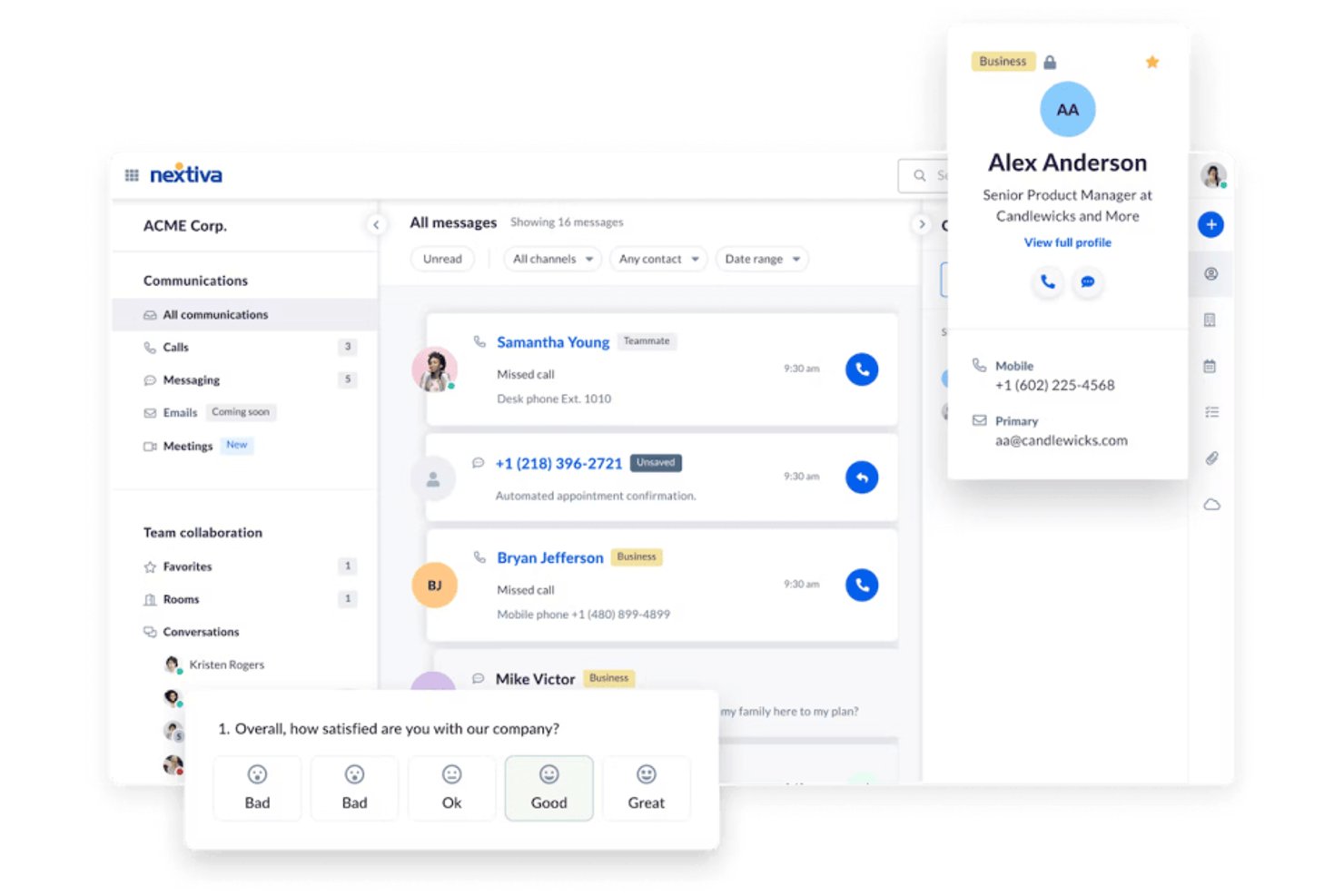
Nextiva is a cloud-based contact center and AI agent platform that combines omnichannel call handling, IVR, skills-based routing, compliance recording, and an AI agent (XBert) built to manage inbound insurance inquiries including FNOL intake, claims routing, and policyholder communications.
Who Is Nextiva Best For?
Nextiva is a strong fit for insurance contact center managers who need a single platform to handle inbound FNOL intake, policyholder inquiries, and claims routing across voice, SMS, and chat.
Why I Picked Nextiva
I picked Nextiva as one of the best because its XBert AI agent handles the full FNOL intake conversation, capturing loss details and routing the claim to the right agent based on urgency and line of business, before a human ever picks up. I particularly like how sentiment analysis runs in real time, so a distressed policyholder gets escalated immediately rather than waiting in a standard queue. When a live agent does take over, they receive the full transcript and AI summary, which cuts the time spent recapping and keeps the conversation moving.
Nextiva Key Features
- Omnichannel agent interface: Handles voice, SMS, web chat, email, and messaging apps in a single agent view with unified conversation history across channels.
- Call Flow Builder: A drag-and-drop tool for designing claims, quote, and service routing paths with IVR and speech recognition built in.
- Automatic PII and PCI redaction: Scrubs sensitive data from voice recordings, transcripts, screen recordings, and chat logs automatically across all channels.
- Skills-based routing: Directs inbound calls to agents based on line of business, availability, and urgency without requiring manual queue management.
Nextiva Integrations
Nextiva offers documented integrations with AgencyBloc, EZLynx, Salesforce, HubSpot, Zoho, Microsoft Dynamics, Zendesk, ServiceNow, Microsoft Teams, and Google Workspace. It also provides a REST API for custom integrations.
Pros and Cons
Pros:
- Agents receive transcripts and summaries immediately
- Sentiment flags distressed callers for escalation
- AI captures FNOL details before handoff
Cons:
- Advanced quality management requires an add-on
- Insurance workflows remain largely general-purpose

Best for AI call scoring on a budget
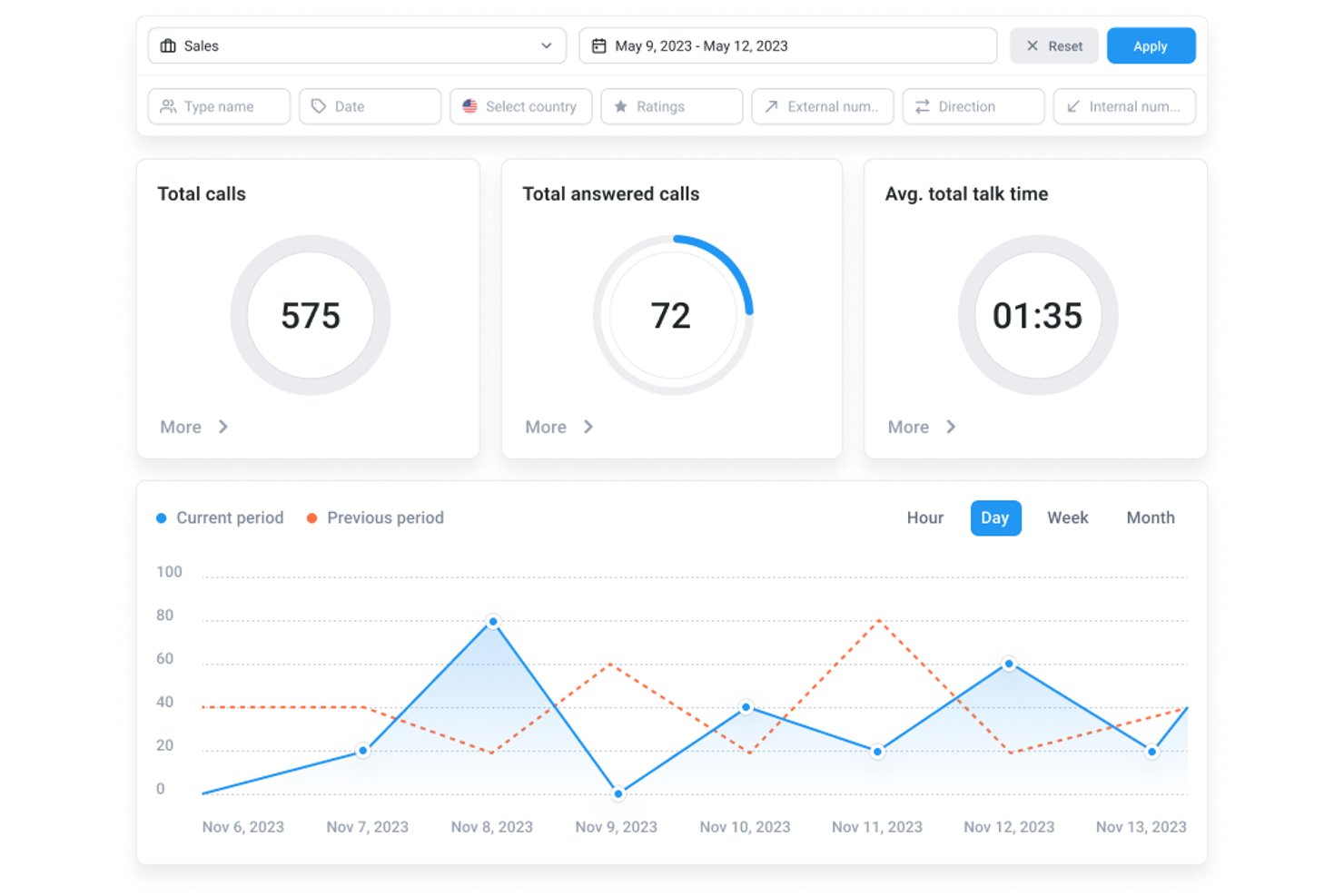
CloudTalk is a cloud-based call center platform that handles inbound and outbound voice calls, SMS/MMS, and WhatsApp, with AI conversation intelligence, multi-mode dialers, and skill-based routing built in.
Who Is CloudTalk Best For?
CloudTalk is a strong fit for small to mid-sized insurance agencies that want AI-powered call scoring and quality monitoring without paying enterprise-tier prices.
Why I Picked CloudTalk
I picked CloudTalk as one of the best because its AI Conversation Intelligence add-on brings real call scoring capability to agencies that can't justify enterprise pricing. At just €9/user/month, you get automatic sentiment analysis, AI-generated call summaries, and topic tagging across every recorded call, so QA reviewers can spot coaching opportunities without manually listening to hours of audio. I also like that AI call scoring pairs directly with live monitoring tools like listen, whisper, and barge, making it practical for supervisors to coach agents on policyholder calls in real time.
CloudTalk Key Features
- Skill-based routing: Directs inbound calls to agents based on defined skills, so policyholders reach the right person without unnecessary transfers.
- Power Dialer: Runs automated outbound call campaigns with scripts, notes, and voicemail drop built in, useful for renewals and premium collection follow-ups.
- IVR and Call Flow Designer: A drag-and-drop builder lets you configure multi-level menus, time-based routing, and queue callbacks without developer support.
- Real-time call monitoring: Supervisors can listen, whisper, or barge into live calls, giving managers a direct way to support agents during complex policyholder interactions.
CloudTalk Integrations
CloudTalk offers 100+ native integrations, including Salesforce, Microsoft Dynamics 365, HubSpot, Zendesk, and Freshdesk. It also supports an open API, webhooks, Dataddo, Make, and Zapier, but no documented native connectors for insurance policy administration or claims platforms.
Pros and Cons
Pros:
- Variety of outbound dialer options available
- Fast setup without hardware or installation
- AI call scoring highlights coaching moments
Cons:
- Lacks automated TCPA and DNC compliance tools
- No insurance-specific call routing attributes
New Product Updates from CloudTalk
CloudTalk Adds Campaign Statistics to MCP
CloudTalk adds campaign statistics to MCP with funnel, call, conversion, disposition, and duration metrics. This helps reporting assistants review campaign performance using read-only aggregate data. For more information, visit CloudTalk’s official site.
 .
.
Best for scalable, cloud-based deployments
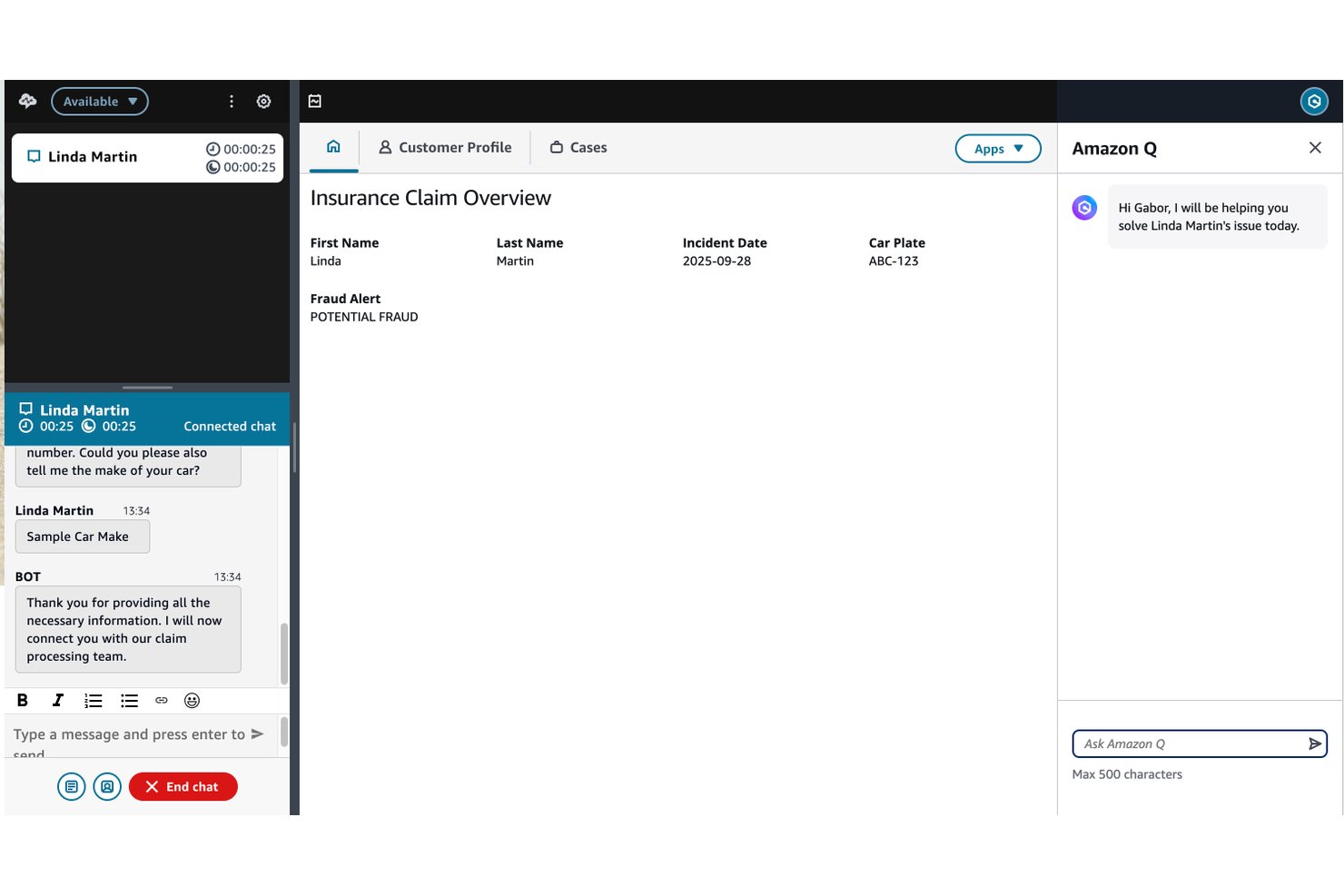
Amazon Connect is an AWS-native cloud contact center platform with AI-driven voice, chat, email, and SMS handling, skills-based routing, built-in IVR and voicebots, compliance recording with PII redaction, and speech analytics.
Who Is Amazon Connect Best For?
Amazon Connect suits mid-size to enterprise insurance carriers with in-house AWS or technical expertise who need a highly customizable, scalable contact center.
Why I Picked Amazon Connect
Amazon Connect earns its spot on my shortlist because its pay-as-you-go infrastructure scales instantly, which matters during open enrollment or post-storm claims surges when call volume can spike without warning. I particularly like the ML-powered forecasting and scheduling tools, which let my team right-size staffing in real time rather than overprovisioning for peaks. The AI Agent Designer also lets us deploy pre-built AI agents for claims status and FNOL intake without months of build time.
Amazon Connect Key Features
- Unified agent desktop: Agents handle voice, chat, email, and SMS interactions in a single interface with contextual customer data.
- Contact Lens analytics: Analyze 100% of calls and chats for sentiment, compliance, and keyword trends with automated transcription.
- Automated compliance tools: Includes PII redaction, call and screen recording, and encrypted storage to support insurance regulations.
- Salesforce Service Cloud Voice integration: Connects telephony, digital channels, and CRM data for insurance contact centers.
Amazon Connect Integrations
Amazon Connect offers native integrations with Salesforce Service Cloud Voice, EIS, Microsoft Teams, Amazon Lex, and AWS Lambda for backend connections. An API is available for custom integrations.
Pros and Cons
Pros:
- Pay-per-use billing suits variable claim volumes
- Customizable voicebot interaction flows
- Native cloud data repositories
Cons:
- No pre-built insurance call flows included
- Requires significant AWS technical expertise to configure

Best for omnichannel policyholder engagement
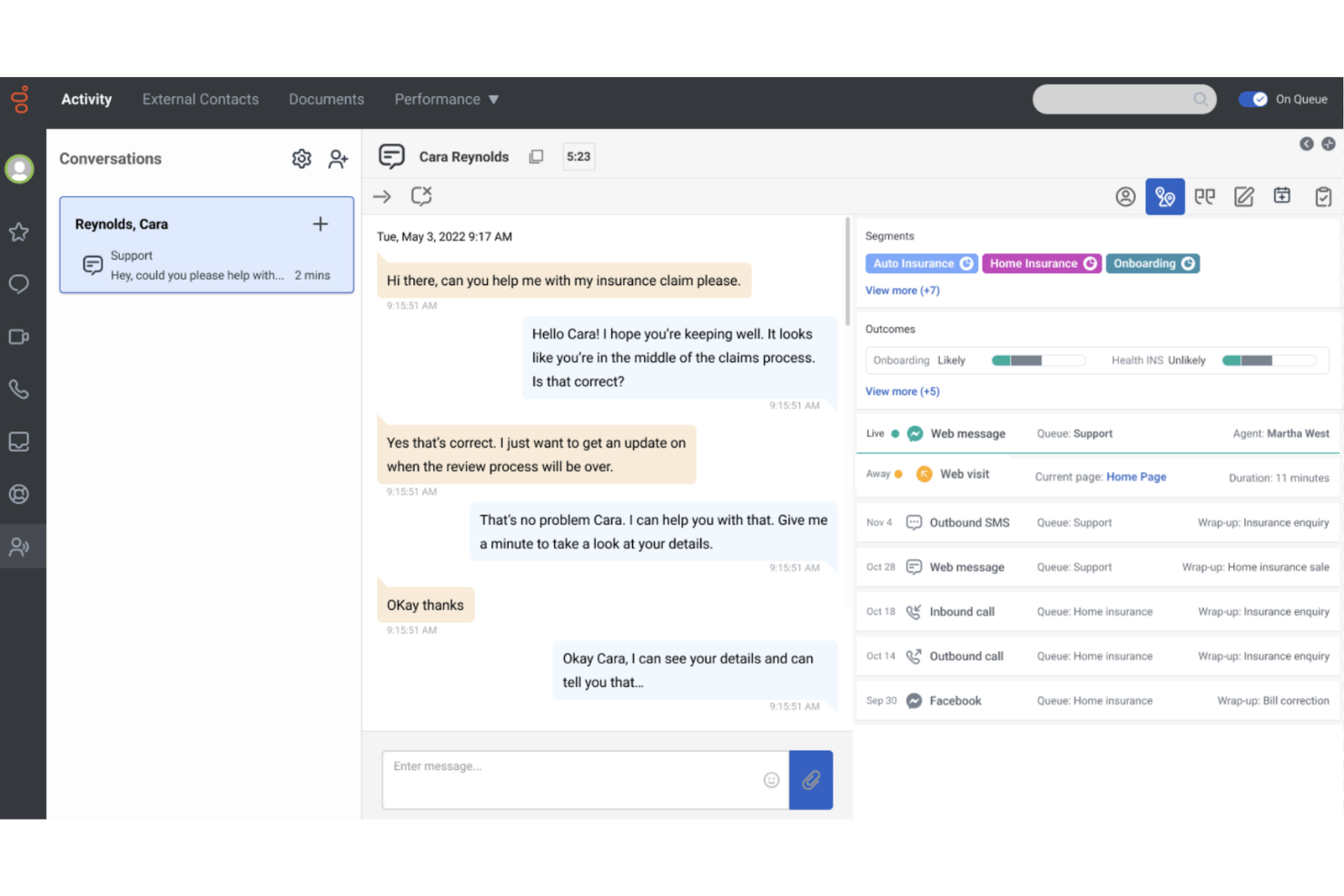
Genesys Cloud CX is an AI-powered cloud contact center platform that unifies voice, digital channels, workforce engagement management, IVR, outbound campaigns, and real-time analytics in a single interface.
Who Is Genesys Cloud CX Best For?
It's well-suited to mid-market and enterprise insurance carriers running multi-channel contact centers that need to manage high volumes of policyholder interactions across voice and digital.
Why I Picked Genesys Cloud CX
I picked Genesys Cloud CX as one of the best because its Architect flow designer lets insurance teams build voicebot-driven FNOL intake flows that connect to backend systems via Data Actions. Predictive routing then matches callers to licensed agents by product line or state automatically. On top of that, speech and sentiment analytics run across 100% of interactions, giving supervisors visibility into claim conversations without manual call sampling.
Genesys Cloud CX Key Features
- Unified agent desktop: Agents manage calls, email, SMS, chat, and social interactions from one interface with full conversation history.
- Screen recording: Supervisors capture and review agent desktop activity alongside call audio for compliance and quality assurance.
- AppFoundry marketplace: Access a range of prebuilt connectors and apps for integrating policy admin, CRM, and claims platforms.
- Workforce engagement management: Tools for agent forecasting, scheduling, coaching, and gamification tailored to contact center operations.
Genesys Cloud CX Integrations
Genesys Cloud CX offers native integrations with Salesforce, ServiceNow, Microsoft Teams, Zendesk, Microsoft 365, Amazon Lex, Google Dialogflow, and Zoom. Additional marketplace integrations are available through AppFoundry, and an API is provided for custom integrations.
Pros and Cons
Pros:
- Native FNOL voicebot flows configurable without coding
- Speech analytics covers 100% of interactions
- AI-driven routing matches callers to licensed agents
Cons:
- Requires manual campaign pausing
- Lacks automated failover protocols

Best for AI-driven compliance monitoring
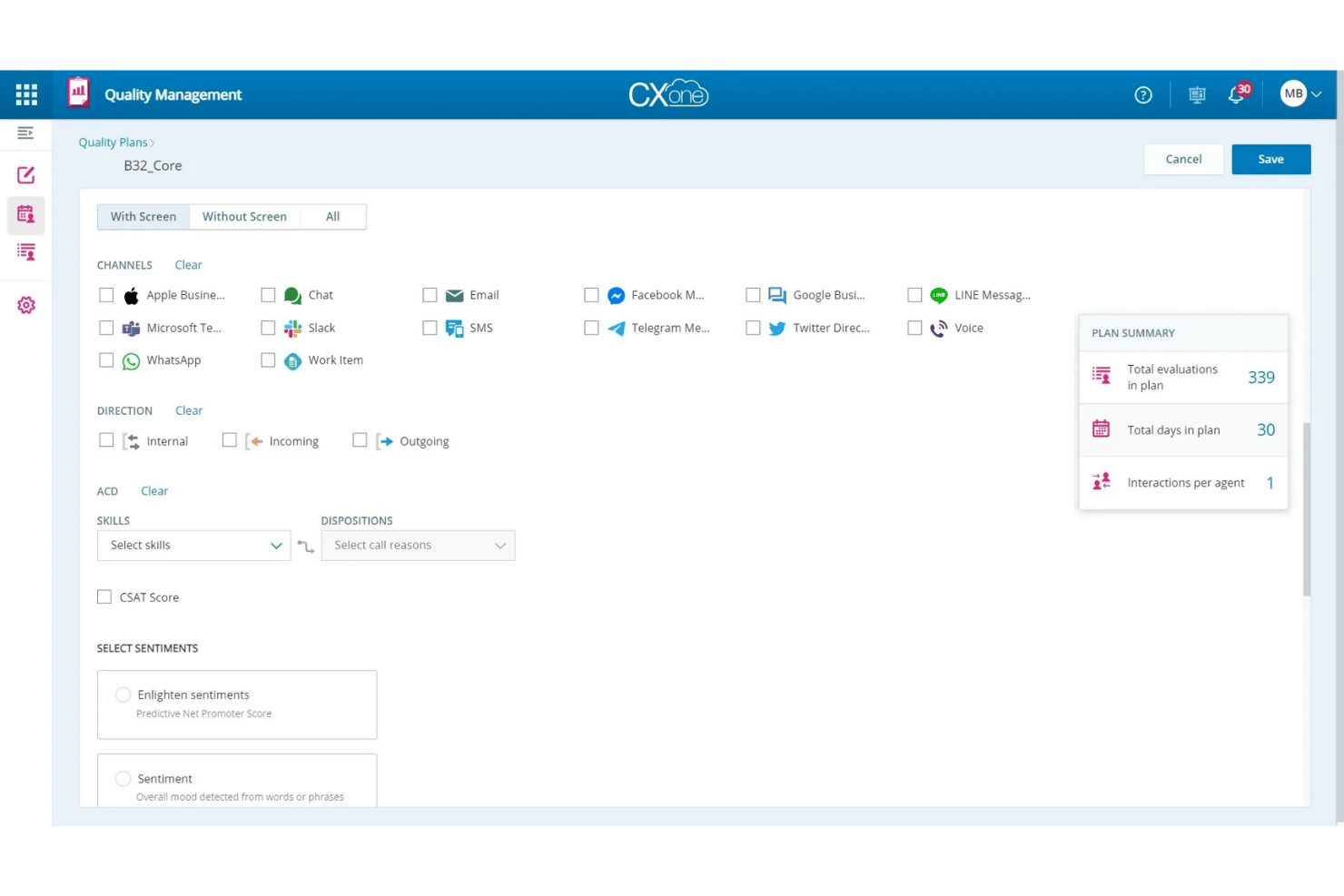
NiCE CXone is an enterprise cloud contact center platform that combines omnichannel routing, AI-powered workforce management, quality monitoring, compliance recording, and self-service automation across voice and digital channels.
Who Is NiCE CXone Best For?
It's a strong fit for enterprise insurance carriers and claims operations running large, multi-channel contact centers with strict regulatory oversight.
Why I Picked NiCE CXone
NiCE CXone earns its spot on my shortlist because of how it approaches compliance monitoring at scale. Its Enlighten AI automatically scores every interaction for vulnerability, distress, fraud, and policy exposure, not just a sampled subset. I also like that the same audit controls, escalation rules, and scoring criteria that govern human agents apply equally to AI agents, which matters when your contact center runs automated workflows alongside live agents.
NiCE CXone Key Features
- Omnichannel agent desktop: Offers a unified inbox for voice, email, chat, SMS, and social channels.
- Skills-based AI routing: Directs interactions to agents based on product line, license, state, or language proficiency.
- Prebuilt CRM integration: Connects natively with platforms like Salesforce for real-time customer context.
- Configurable IVR and bots: Supports automated workflows for claim status, policy lookups, and payments.
NiCE CXone Integrations
NiCE CXone offers native integrations with Salesforce, Microsoft Teams, Zendesk, Oracle Service Cloud, and ServiceNow. An API is available for custom integrations.
Pros and Cons
Pros:
- Integrated workforce management suite
- Predictive dialling includes built-in DNC scrubbing
- Prebuilt automated workflow templates
Cons:
- Lacks embedded scheduling widget
- Lacks custom transcription dictionary

Talkdesk
Best for insurance claims workflow automation
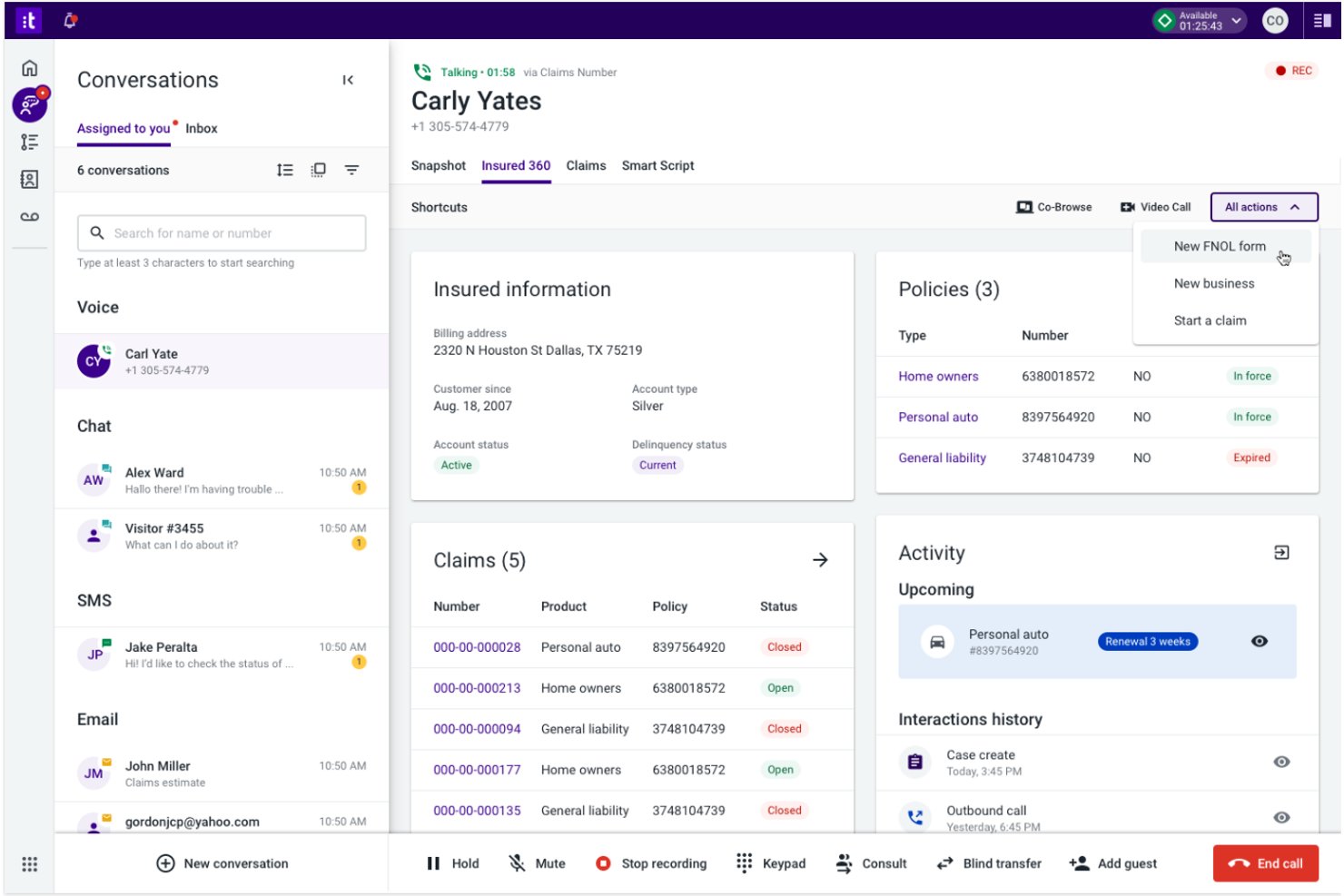
Talkdesk is a cloud-based contact center platform built for insurance carriers and agencies, combining agentic AI automation, omnichannel engagement, and pre-built integrations with core policy administration and claims systems.
Who Is Talkdesk Best For?
Talkdesk suits mid-to-large insurance carriers and claims operations teams running high-volume contact centers that need purpose-built AI and compliance tooling.
Why I Picked Talkdesk
I picked Talkdesk as one of the best because of Autopilot for Insurance, which autonomously handles FNOL intake, claim opening and closing, and general liability processing without agent involvement. I also like that the Insurance Agent Workspace surfaces a unified policyholder view mid-call, so adjusters aren't toggling between systems during a live claim. That combination of autonomous intake and in-call context is what makes Talkdesk the strongest pick for claims workflow automation specifically.
Talkdesk Key Features
- Omnichannel agent desktop: Agents can manage inbound and outbound calls, email, SMS, chat, and social messages in one interface.
- Native Guidewire and Duck Creek integrations: Connects directly to leading policy and claims administration systems for real-time policyholder context.
- AI-driven skills-based routing: Assigns inbound interactions based on attributes like license, product line, and geographic region.
- Automated speech analytics: Monitors sentiment, script adherence, and regulatory compliance on every recorded call.
Talkdesk Integrations
Talkdesk offers native integrations with Guidewire, Duck Creek, Salesforce, Microsoft Teams, Slack, Zendesk, ServiceNow, and Shopify. An API is available for custom integrations.
Pros and Cons
Pros:
- Compliance monitoring across 100% of recorded calls
- Integrated workforce optimization tools
- Purpose-built FNOL automation for insurance carriers
Cons:
- Lacks native gamification module
- Limited outbound caller masking

Dialpad
Best for AI-assisted call summaries in insurance
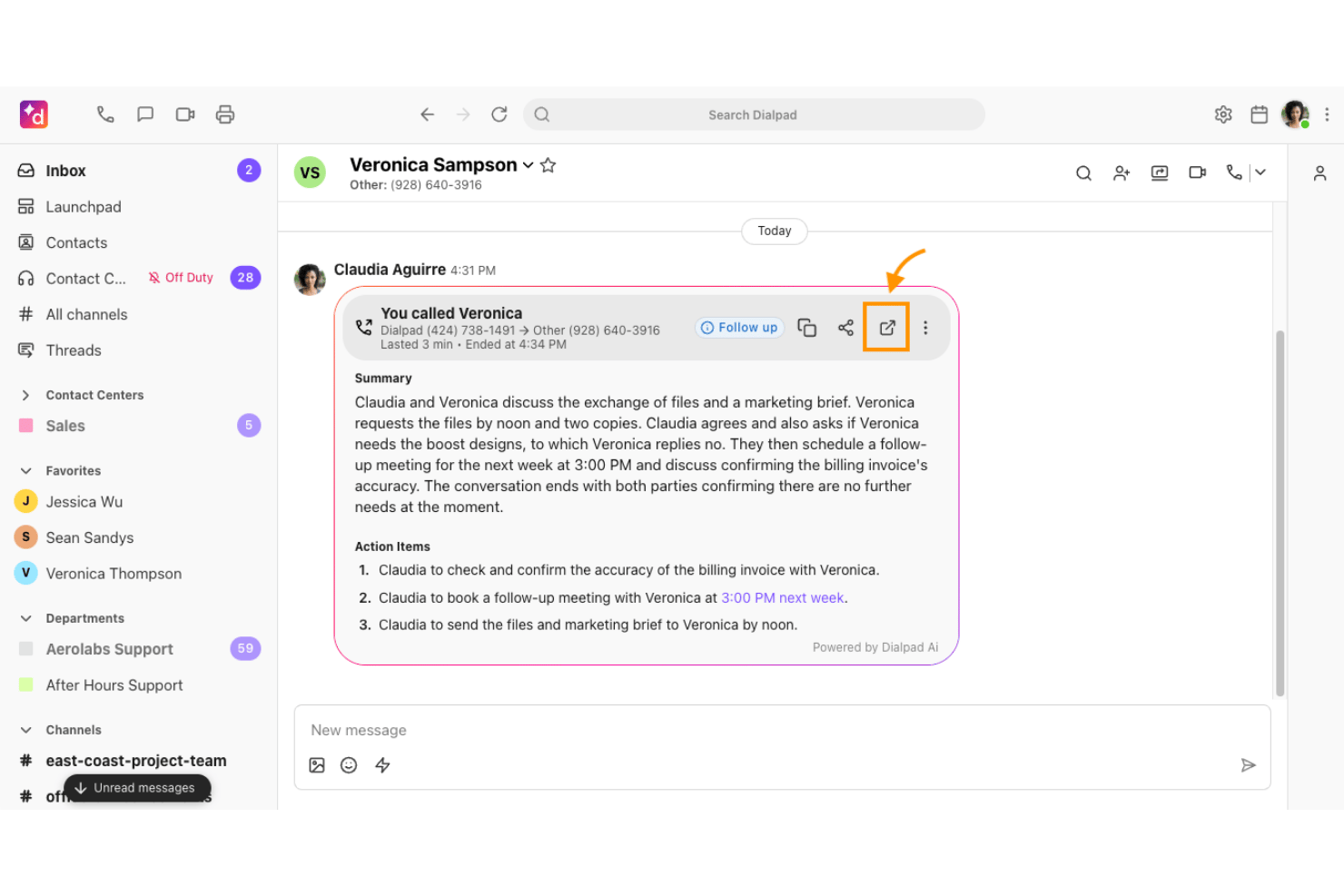
Dialpad is an AI-native cloud contact center platform that combines omnichannel voice, chat, and messaging handling with real-time transcription, automated call summaries, live agent coaching, and AI-driven quality management.
Who Is Dialpad Best For?
Dialpad is a strong fit for insurance contact center managers who need AI-generated call summaries and automated quality scoring across high volumes of policyholder interactions.
Why I Picked Dialpad
I picked Dialpad as one of the best because its DialpadGPT-powered AI Recaps generate automatic call summaries and action items the moment a policyholder conversation ends, so agents move to the next call instead of writing notes. I also rely on AI Scorecards, which grade 100% of calls without manual review, giving supervisors full performance visibility at scale. Dialpad's recording also auto-pauses when sensitive information is detected, a practical safeguard for health and life insurance calls.
Dialpad Key Features
- Unified omnichannel agent desktop: Handle voice, SMS, live chat, WhatsApp, and Apple Business Chat within a single platform.
- CRM and ticketing integrations: Connect with Salesforce, HubSpot, Zendesk, Microsoft Dynamics, and Zoho CRM for real-time policyholder context.
- Live sentiment analysis: Track caller sentiment in real time with AI-powered prompts for agent supervisors.
- Drag-and-drop chatbot builder: Build custom IVR and self-service flows for claims, payments, or policy status without coding.
Dialpad Integrations
Dialpad offers native integrations with Salesforce, HubSpot, Zendesk, Microsoft Dynamics, Zoho CRM, and ServiceNow. An API is available for custom integrations.
Pros and Cons
Pros:
- Live coaching cues appear during active calls
- Native directory synchronization tools
- Automatic post-call summaries on every call
Cons:
- Limited bulk user export
- No native insurance policy system connectors

Convoso
Best for outbound insurance campaign management
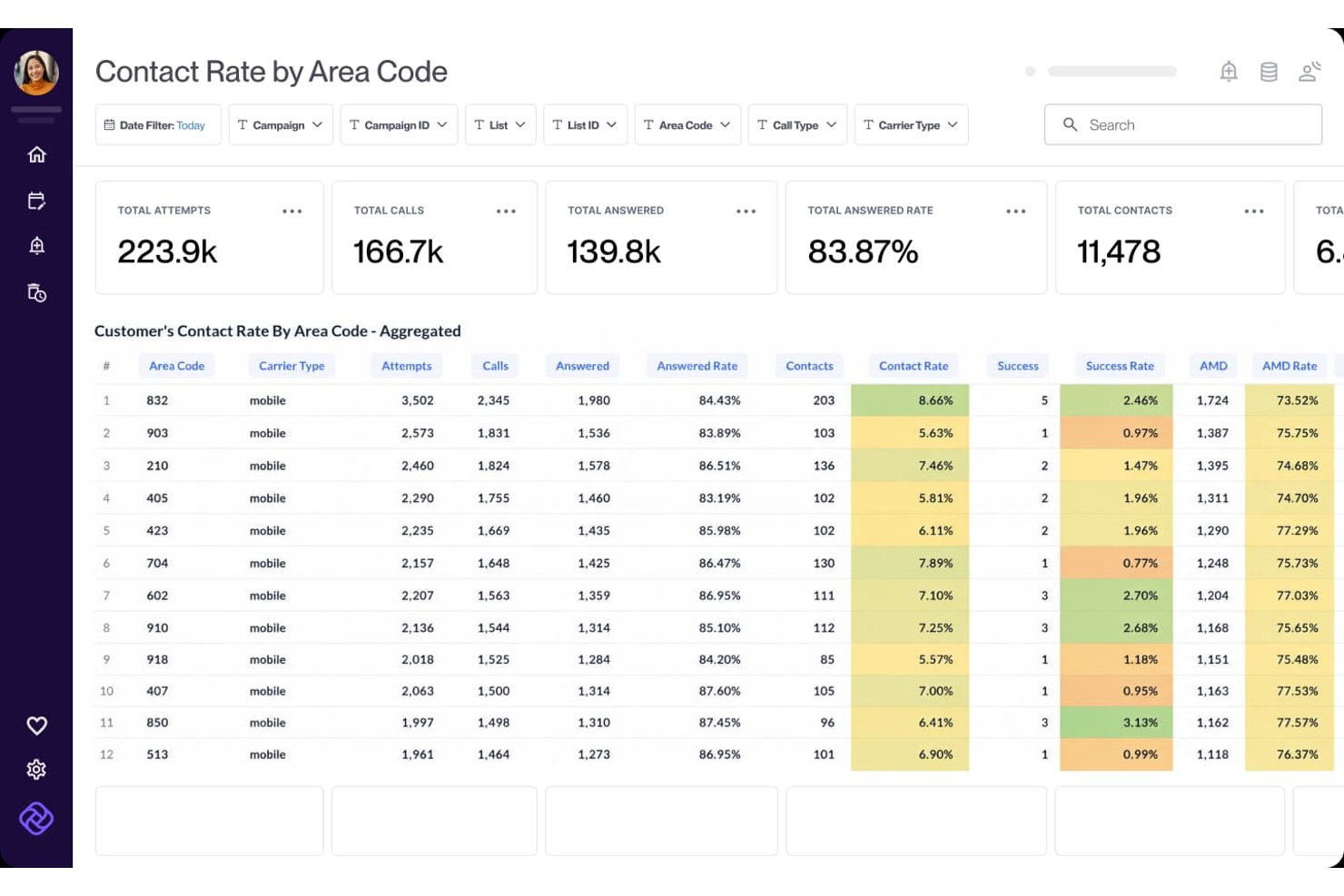
Convoso is a cloud-based outbound contact center platform built for high-volume insurance sales teams, featuring a predictive dialer, state-based licensed agent routing, TCPA compliance tools, and multichannel outreach across voice, SMS, and email.
Who Is Convoso Best For?
Convoso suits mid-to-large insurance agencies and outbound sales contact centers running high-volume dialling campaigns across Medicare, ACA, life, or auto insurance product lines.
Why I Picked Convoso
I've included Convoso in my top picks because of how specifically it's built for outbound insurance dialling at scale. StateTracker is the only campaign management tool designed for Mini-TCPA compliance, letting my team dial across state lines without manually tracking calling-time rules per state. On top of that, state-based licensed agent routing automatically connects prospects to agents licensed in their state, a genuine operational requirement for insurance outbound campaigns.
Convoso Key Features
- Multichannel outreach: Agents can engage leads over voice, SMS, and email from a unified interface.
- Open API for CRM integration: Lets you connect the dialer with CRMs and lead vendors for data sync.
- Dynamic scripting: Automatically adapts call scripts based on campaign or state requirements.
- ClearCallerID management: Monitors and rotates outbound numbers to help prevent spam labelling.
Convoso Integrations
Native integrations are not clearly documented. The tool supports integrations via an open API for custom integrations.
Pros and Cons
Pros:
- Real-time campaign dashboards for outbound teams
- Built-in state-level TCPA compliance tools
- Strong predictive dialer for high-volume campaigns
Cons:
- Lacks multilingual audio transcription
- Limited inbound claims handling capabilities
Five9
Best for deep policy system integrations
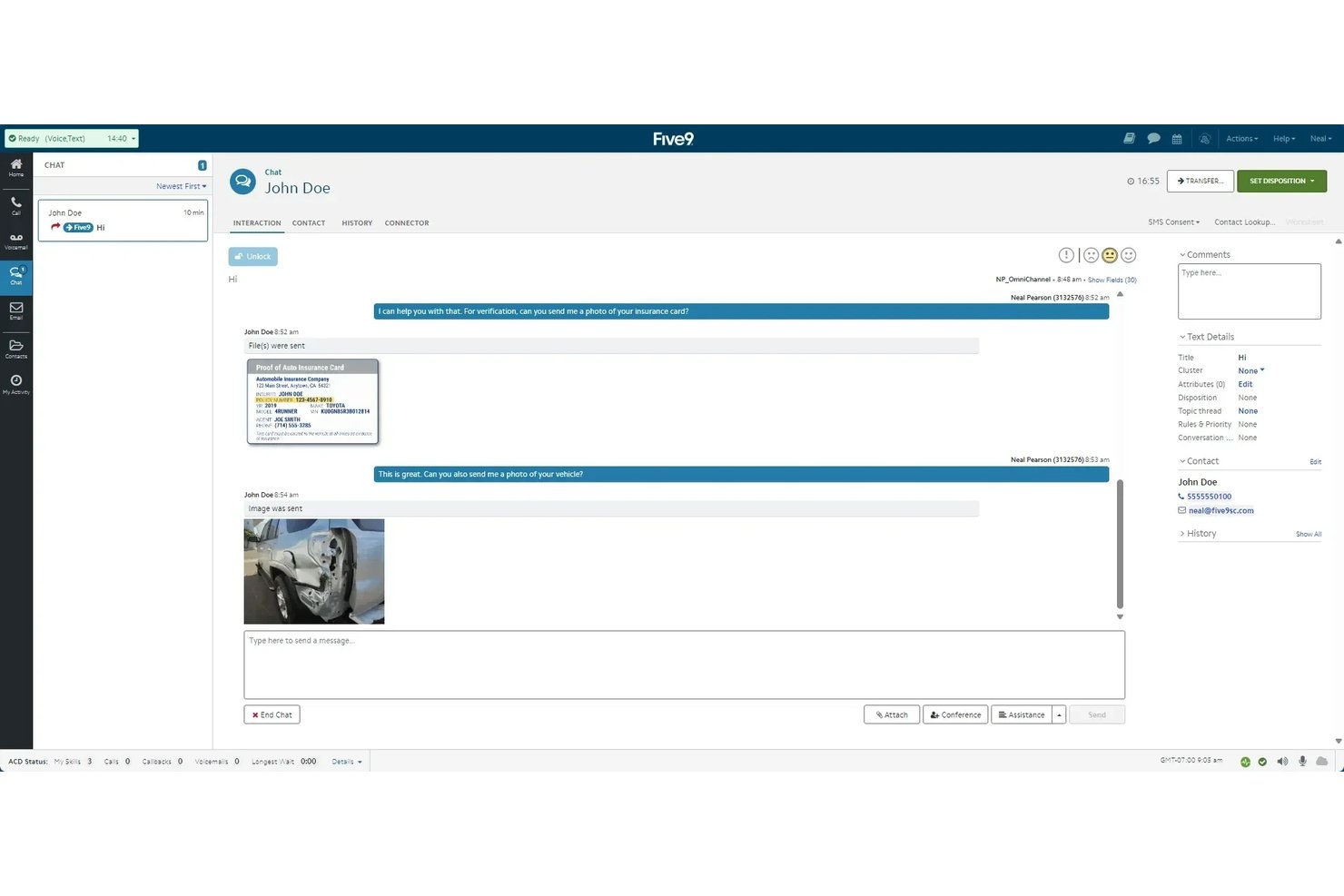
Five9 is a cloud contact center platform that combines omnichannel routing, AI-powered virtual agents, predictive dialing, workforce management, and deep CRM integration across voice, chat, email, SMS, and social channels.
Who Is Five9 Best For?
Five9 is a strong fit for mid-to-large insurance carriers and brokerages running formal call center operations with high inbound or outbound call volumes.
Why I Picked Five9
I've included Five9 in my top picks because its integration layer reaches deeper into backend systems than most contact center platforms. Using its open APIs and SDKs, you can connect to policy admin systems, ERP platforms, and billing tools. That puts live policyholder context in front of agents on every call. I also like List Sync Plus, which pulls member or policyholder data from your CRM into the dialer automatically, keeping renewal and enrollment campaigns precise.
Five9 Key Features
- Omnichannel agent desktop: Agents handle voice, chat, email, SMS, and social channels from a single unified interface.
- Advanced compliance toolkit: Includes PCI/PII redaction, call and screen recording, HIPAA-ready controls, and region-specific consent management.
- Customizable IVR designer: Drag-and-drop IVR builder lets you deploy self-service flows for claims or policy inquiry.
- Speech analytics suite: Analyzes every recorded call for compliance, sentiment, and script adherence with automated QA scoring.
Five9 Integrations
Five9 offers native integrations with Salesforce, ServiceNow, Microsoft Dynamics 365, Oracle, and Zendesk. An API and SDK are available for custom integrations.
Pros and Cons
Pros:
- Embedded quality management suite
- Real-time agent assist on live calls
- Deep policy system integration capabilities
Cons:
- Analytics dashboards lack insurance-specific KPI templates
- Limited custom metadata tags

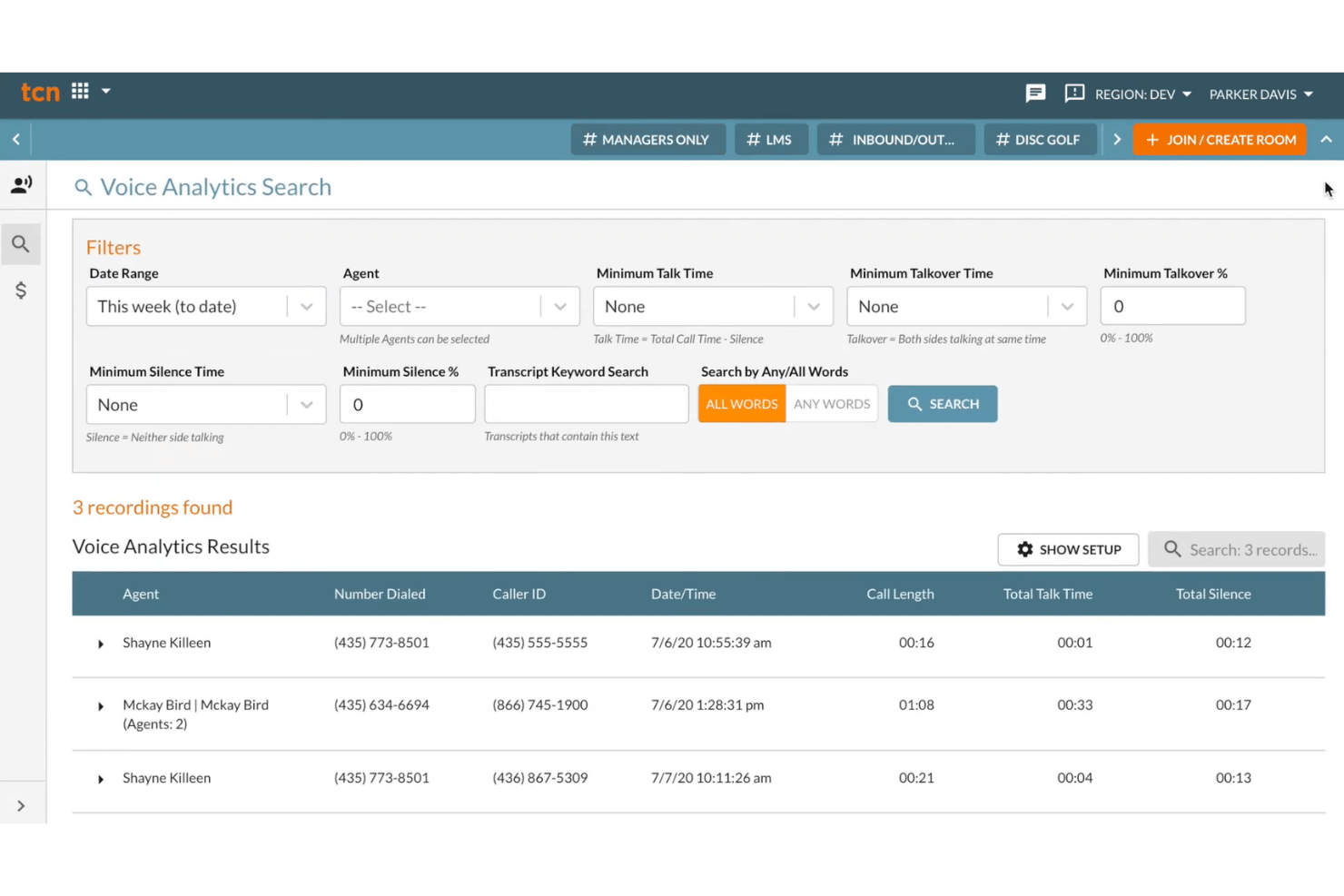
TCN is a cloud-based contact center platform that combines omnichannel communication (voice, SMS, email, and chat), compliance management, IVR, workforce engagement, and speech analytics for high-volume call center operations.
Who Is TCN Best For?
TCN is a strong fit for mid-to-large enterprise contact centers and BPOs operating in regulated industries that require strict compliance tooling.
Why I Picked TCN
TCN earns its spot on my shortlist because of how seriously it takes compliance recording. I particularly like the Manually Approved Calling tool, which navigates TCPA restrictions by requiring explicit agent action before connecting calls. TCN also layers in a Reassigned Numbers Database check and Natural Language Compliance rule-building, meaning every recorded call sits within a verifiable, audit-ready framework that holds up under insurance regulatory scrutiny.
TCN Key Features
- Omnichannel agent interface: Manage voice, SMS, email, and chat interactions from a single unified desktop.
- Skills-based call routing: Direct calls to agents based on pre-set attributes like language, product, or region.
- Workforce engagement tools: Monitor agent activity and performance with real-time dashboards and historical analytics.
- Configurable IVR and self-service: Set up automated call flows for policy lookups, payment processing, and claim status updates.
TCN Integrations
TCN offers native integrations with Salesforce, ServiceNow, Dynamics 365, Zendesk, Zoho, and Finvi. An API is available for custom integrations.
Pros and Cons
Pros:
- Predictive, progressive, and preview dialling modes
- Built-in natural language compliance rule-building
- Strong TCPA and compliance recording tools
Cons:
- Excludes internal agent messaging
- No local call recording
Other Insurance Call Center Software
Here are some additional insurance call center software options that didn’t make it onto my shortlist, but are still worth checking out:
- Vonage Contact Center
For unified voice and messaging channels
- Nextiva Contact Center
For prebuilt insurance workflows
- RingCX
For supported multi-location contact centers
- AgentTech
For real-time agent licensing verification
- Freshdesk Contact Center
For CRM integration via open APIs
- JustCall
For automating call activity logging
- Zendesk Talk
For ticket-based inbound call workflows
- 8x8 Contact Center
For advanced omnichannel queue management


How I Evaluate Insurance Call Center Software
I split my evaluation into two layers: the core capabilities every platform must cover—compliance recording, skills routing, integrations—and the differentiators that separate good from great.
Core Functionality (Table Stakes For This List)
When I'm selecting tools for my list, I rank each one on a scale from 0 (does not offer the functionality) to 5 (excels in this area) for each core functionality listed below. I then calculate the tool's total score into a percentage, using 65% as a benchmark to help assess its overall fit for the list.
- Omnichannel Contact Handling: I look for a unified agent desktop that brings voice, email, SMS, and chat into one view so agents aren't toggling between tools mid-conversation with a policyholder.
- CRM/Policy System Integration: Prebuilt connectors to insurance platforms like Guidewire, Duck Creek, or Applied Epic matter here—agents need policy context on screen the moment a call arrives.
- Skills-Based Call Routing: I evaluate whether routing accounts for agent licensing, state jurisdiction, product line, and claim type so callers reach someone qualified to help.
- Compliance Recording & Redaction: Each platform should offer call and screen recording with automated PCI/PII redaction and consent management aligned to TCPA and HIPAA requirements.
- IVR & Self-Service Automation: I check for configurable IVR flows that let policyholders handle common tasks like claim status checks, payment processing, and FNOL intake without waiting for an agent.
- Quality Management & Analytics: Speech analytics, automated call scoring, and dashboards that track insurance-specific KPIs like first-call resolution on claims help me gauge how well a platform supports ongoing coaching.
Once I have a list of tools that meet the criteria, I consider what sets each platform apart.
Differentiating Factors (What Sets Vendors Apart)
Here's how I compare and contrast different vendors:
Standout Features
AI-powered claims triage is a major differentiator. I look for platforms that use NLP to detect claim urgency and route callers to the right adjuster queue without manual intervention. Real-time agent assist matters just as much, especially when agents need policy details and compliance scripts surfaced mid-call to avoid errors. I also evaluate automated speech analytics to see whether a platform can monitor every interaction for sentiment shifts and compliance breaches rather than relying on random sample reviews.
Beyond Features
Deployment and scalability are top of mind. I check whether a platform can elastically scale during CAT event surges so your team doesn't drop calls when policyholders need you most. Insurance-specific compliance is equally important—I evaluate how each vendor handles TCPA consent management, HIPAA safeguards, and state-level recording laws. Implementation support also shapes my assessment, particularly whether a vendor offers prebuilt call flows for P&C, life, and health lines that shorten time to deploy.
How to Choose Insurance Call Center Software
How can you quickly match the right insurance call center platform to your team’s most pressing compliance, integration, and workflow needs?
| If your priority is... | Look for... |
|---|---|
| Routing calls to licensed agents by state | Multi-attribute, licensing-aware skills-based call routing |
| Supporting omnichannel policyholder touchpoints | Unified agent desktop for voice, SMS, chat, and email |
| Ensuring compliance with insurance regulations | Built-in recording, redaction, and TCPA consent tools |
| Tying calls to policy and claims systems | Prebuilt integrations with insurance CRMs and policy platforms |
| Handling CAT surge demand reliably | Elastic cloud scaling and remote workforce support |
How to Vet Your Shortlist
- Request a routing demo: Ask vendors to show dynamic agent routing based on state license, product, and language—see it in action before proceeding.
- Test compliance workflows: Run a mock call scenario with PHI or payment data; verify how PII redaction and compliance prompts work live.
- Connect a claims system trial: Have the vendor surface policy details or claim status from your core insurance platform during a live call test.
- Get consent law policy in writing: Request a documented policy on TCPA, HIPAA, and state-specific call recording to confirm regulatory coverage.
- Tradeoff—vertical depth vs. extensibility: Decide whether you need insurance-specific flows and integrations or a more customizable, flexible platform for future needs.
What Is Insurance Call Center Software?
Insurance call center software is technology that centralizes and manages customer interactions across voice, email, SMS, and chat for insurance agencies and carriers. These platforms provide tools for skills-based call routing, compliance recording, policy and claims system integration, and self-service automation—all tailored to the unique regulatory and workflow needs of insurance operations. This ensures policyholders receive timely, accurate support from appropriately licensed agents and teams.
Features of Insurance Call Center Software
When selecting insurance call center software, keep an eye out for the following key features:
- Omnichannel contact handling: Manage calls, emails, SMS, and live chat from a single agent desktop, so teams can interact with policyholders wherever they reach out.
- Skills-based call routing: Direct callers to agents who have the right licenses, product expertise, or language skills based on state and policy type.
- Compliance recording and redaction: Automatically record calls and redact PCI/PII data to meet industry regulations like TCPA and HIPAA.
- Insurance CRM integration: Surface policyholder, claims, and payment information in real time by connecting with insurance CRMs and policy administration platforms.
- IVR and self-service automation: Deploy interactive voice response and voicebots that let policyholders check claim status, make payments, or report losses anytime.
- Speech analytics and QA: Monitor calls for compliance, sentiment, and script adherence, then generate reports or surface coaching opportunities for agents.
- Real-time agent assist: Provide prompts, policy details, and compliance scripts during live calls to help agents answer questions accurately and reduce errors.
- Outbound campaign dialers: Automate dialling for renewals, collections, or claims follow-ups using preview, progressive, or predictive modes with DNC compliance.
- Customizable reporting dashboards: Visualize KPIs like first-call resolution, average handle time, and claim-to-resolution rates for continuous improvement.
- Elastic scalability: Rapidly increase or decrease capacity during seasonal spikes or CAT events so no policyholder is left waiting.
Benefits of Insurance Call Center Software
Implementing insurance call center software provides several benefits for your team and your business. Here are a few you can look forward to:
- Improved compliance confidence: Automated call recording, consent management, and redaction help your team meet TCPA, HIPAA, and state regulations without extra effort.
- Faster first-call resolution: Skills-based routing and CRM integrations ensure policyholders reach the right agent and have their issues resolved quickly.
- Consistent policyholder experience: Omnichannel contact handling and real-time agent assist keep interactions smooth and accurate across all channels.
- Reduced operational overhead: Self-service IVR and automation allow policyholders to handle routine needs and free up agents for complex support.
- Actionable performance insights: Speech analytics, QA dashboards, and reporting help you spot coaching opportunities and measure service KPIs.
- Resilience in high-demand periods: Elastic scaling means you can handle CAT surges or peak seasons without missed calls or service gaps.
- Efficient outbound engagement: Automated campaign dialers support proactive outreach for renewals, claims, and collections with built-in compliance checks.
Costs and Pricing of Insurance Call Center Software
Selecting insurance call center software requires an understanding of the various pricing models and plans available. Costs vary based on features, team size, add-ons, and more. The table below summarizes common plans, their average prices, and typical features included in insurance call center software solutions:
Plan Comparison Table for Insurance Call Center Software
| Plan Type | Average Price | Common Features |
|---|---|---|
| Free Plan | $0 | Limited call volume, basic IVR, minimal reporting, and standard call routing. |
| Personal Plan | $20–$50/user/month | Single channel support, basic compliance recording, simple integrations, and foundational analytics. |
| Business Plan | $60–$120/user/month | Omnichannel contact handling, skills-based routing, CRM integration, advanced IVR, and compliance redaction. |
| Enterprise Plan | $150–$250/user/month | AI-powered routing, full system integration, real-time agent assist, elastic scaling, and advanced reporting. |
Insurance Call Center Software FAQs
Here are some answers to common questions about insurance call center software:
What makes insurance call center software different from generic call center solutions?
Insurance contact center software is built specifically for insurance providers and insurance agencies. Unlike generic CCaaS or VoIP tools, it supports policy servicing, claims processing, and lead generation to lower operational costs. With intelligent routing and safeguards for protected health information, it helps agents manage cancellations while improving the overall customer experience.
Can these platforms help with compliance in regulated insurance markets?
Yes, most insurance contact center software platforms offer automated compliance workflows for TCPA, HIPAA, PCI-DSS, and state-specific call recording consent. They help protect protected health information (PHI) and assist with fraud detection, ensuring insurance providers follow industry regulations in every interaction.
How does insurance call center software support CAT event surges?
Elastic scaling and remote workforce features allow insurance call center software to handle rapid increases in call volume during catastrophes without dropped calls or long waits for policyholders.
Will these tools integrate with our policy administration or claims systems?
Yes, leading insurance call center platforms usually offer prebuilt integrations or APIs for systems like Guidewire, Duck Creek, and Salesforce to surface policy, claims, and payment details for agents.
Is it possible to automate outbound follow-up for renewals and claims?
Yes, most platforms include outbound campaign dialers with compliance checks so teams can automate calls for policy renewals, claims updates, and payment reminders while staying within consent laws.