

10 Best ITSM Help Desk Software in 2026

Best ITSM Help Desk Software Shortlist


ITSM help desk software connects IT support with tools you use to manage customer service, assets, and workflows, ensuring every request is handled efficiently. If you need a solution that aligns IT and customer experience teams, supports hybrid or multi-cloud environments, and delivers full operational visibility, this guide is for you.
Below are the best ITSM help desk platforms for 2026, with features, integrations, and deployment options.
Why Trust Our Software Recommendations
Our team has been testing and reviewing software since 2012. As CX leaders ourselves, we know how difficult—and important—it is to choose the right software.
For this guide, we evaluated tools using hands-on testing and independent research, scoring tools using our selection criteria.
Our reviews reflect our human editorial judgment, not a sales pitch.
ITSM Help Desk Software Comparison Table
This comparison table summarizes pricing details for my top ITSM help desk software selections:
| Tool | Best For | Trial Info | Price | ||
|---|---|---|---|---|---|
| 1 | Best for IT service desk and asset management | Free plan + 30-day free trial available | From $13/technician/month (billed annually) | Website | |
| 2 | Best for unifying IT, HR, and Facilities on one portal | Free demo available | From $76/agent/month | Website | |
| 3 | Best for self-healing hybrid endpoint management | Free demo available | Pricing upon request | Website | |
| 4 | Best for licensed ITSM with native CMDB | Free demo available | Pricing upon request | Website | |
| 5 | Best for rapid deployment and fast-growing IT teams | 14-day free trial | From $19/user/month (billed annually) | Website | |
| 6 | Best for full ITIL coverage at a flat per-agent price | Free demo + 30-day free trial available | From $99/agent/month (billed annually) | Website | |
| 7 | Best for unifying DevOps and IT support workflows | Free plan + 14-day free trial available | From $25/user/month | Website | |
| 8 | Best for enterprise multi-cloud environments and AIOps | Free demo available | Pricing upon request | Website | |
| 9 | Best for large-scale enterprise digital workflows | Free demo available | Pricing upon request | Website | |
| 10 | Best for omnichannel service and help desk integration | 14-day free trial | From $19/user/month (billed annually) | Website |


ITSM Help Desk Software Reviews
Below are the detailed summaries of the best ITSM help desk software on my shortlist. Each review offers a detailed look at each platform’s features, integrations, and best use cases to help you choose the right one.

Best for IT service desk and asset management
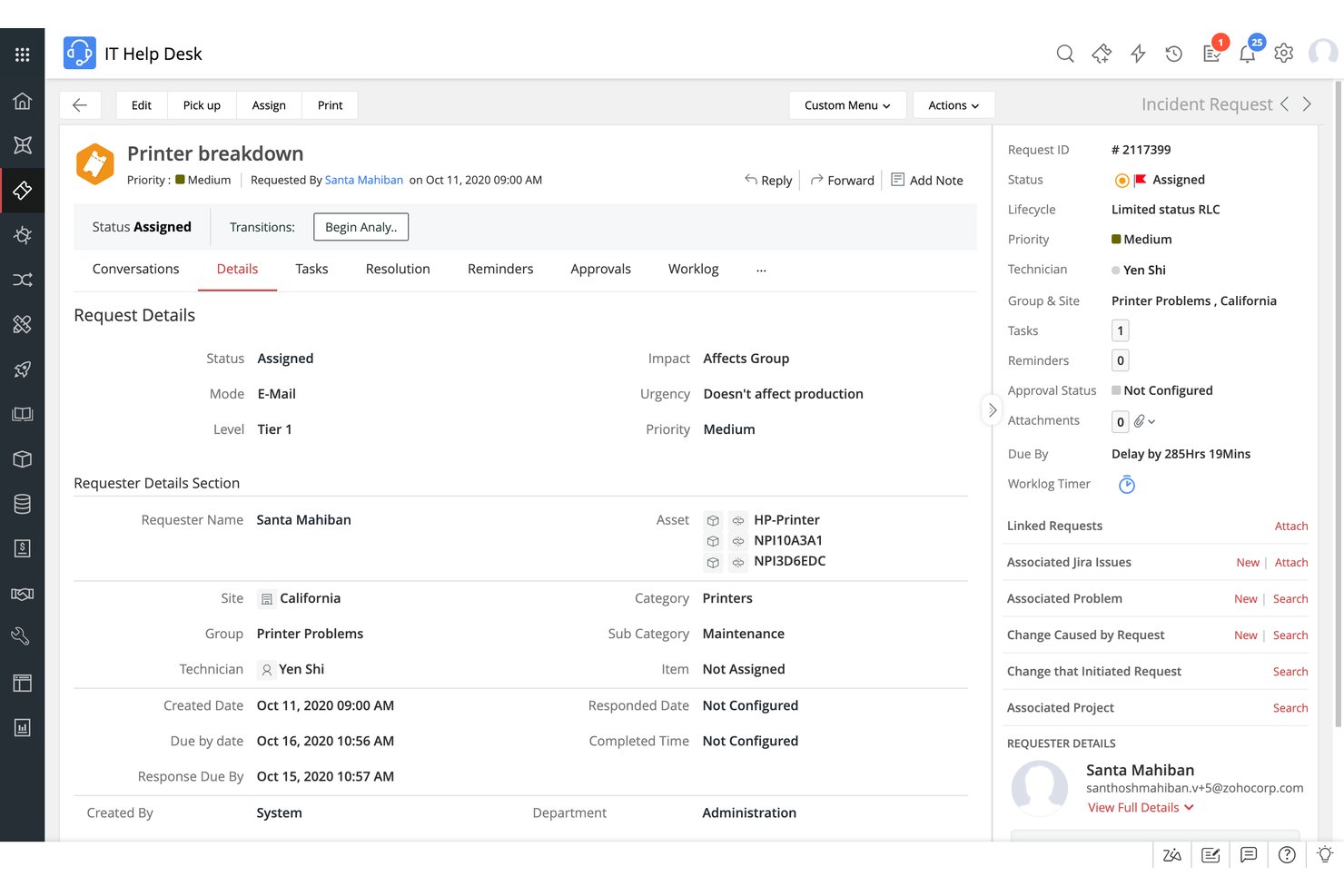
ServiceDesk Plus is an ITSM help desk platform by ManageEngine that covers incident, problem, change, and release management alongside integrated IT asset management and a built-in CMDB.
Who Is ServiceDesk Plus Best For?
ServiceDesk Plus is a strong fit for IT teams that need full ITIL process coverage alongside native asset management in a single platform.
Why I Picked ServiceDesk Plus
I picked ServiceDesk Plus because it bundles native IT asset management and a full CMDB directly into the help desk. When a ticket comes in, I can immediately see the CI relationship map, trace the impacted assets, and link the incident to a known change, all within the same workspace. It's also certified for 14 ITIL practices by PeopleCert, which is the broadest certification coverage I've seen in this category.
ServiceDesk Plus Key Features
- Ask Zia virtual agent: Lets end users log tickets, check status, and get KB suggestions through multi-turn chat without involving a technician.
- Enterprise service management (ESM): Run up to 15 separate service desk instances across departments like HR, Facilities, and Finance.
- No-code workflow automation: Configure ticket routing, approval chains, and escalation rules, with a sandbox environment for testing before deployment.
- Deployment flexibility: Choose between on-premises and cloud (SaaS) deployment, with migration support between both models.
ServiceDesk Plus Integrations
ServiceDesk Plus integrates with Microsoft Teams, Slack, Endpoint Central, Intune, Power BI, Jira, Azure DevOps, and supports REST API, webhooks, Deluge scripting, and Zapier.
Pros and Cons
Pros:
- Unified ITSM, asset, and CMDB platform
- AI and virtual agent features bundled
- Certified for 14 ITIL practices
Cons:
- API rate limits on cloud edition
- Feature depth varies across modules

TOPdesk
Best for unifying IT, HR, and Facilities on one portal
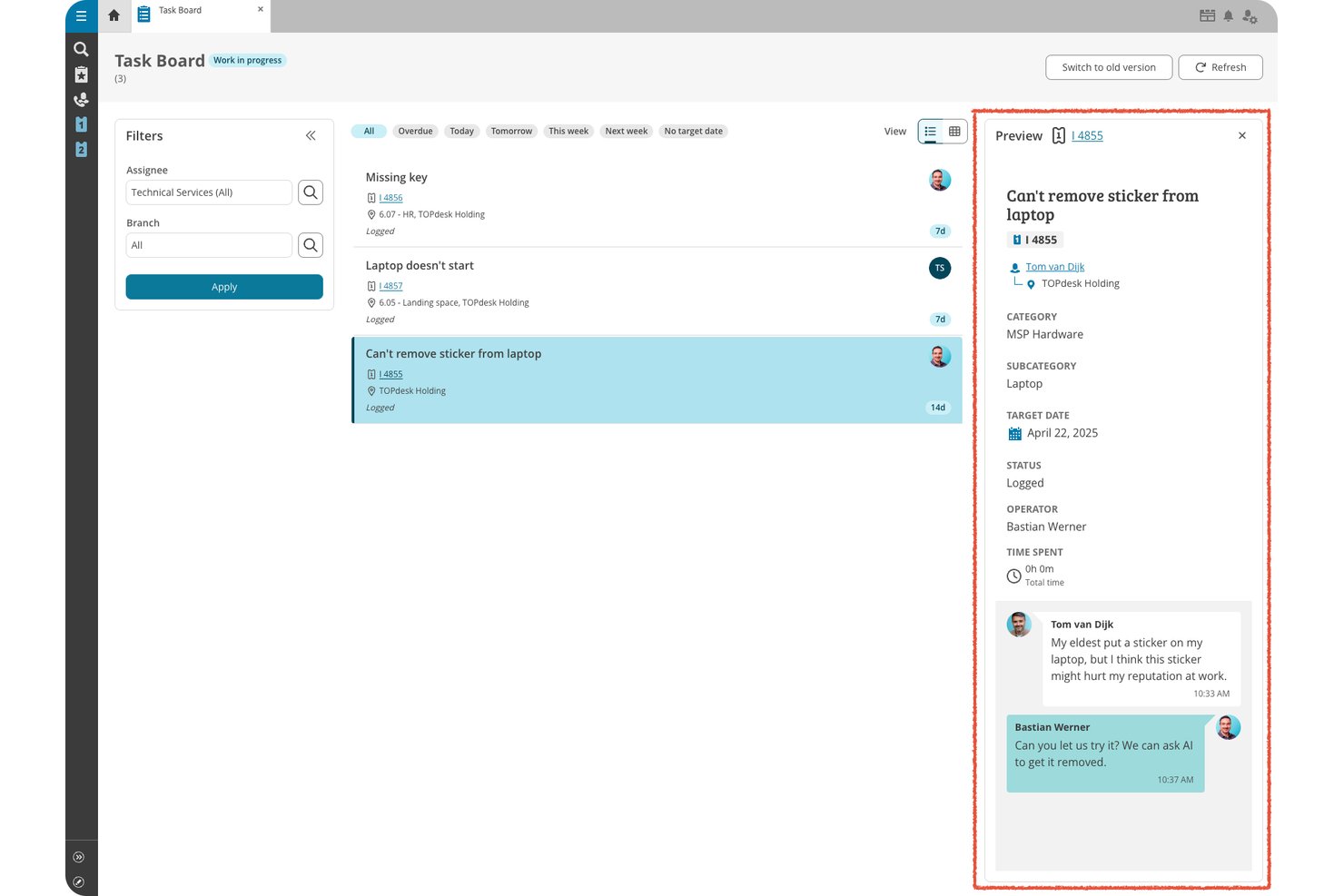
TOPdesk is an ITSM help desk platform built for IT, facilities, and HR teams that covers ticket management, asset tracking, knowledge management, and self-service portals across shared, multi-department service environments.
Who Is TOPdesk Best For?
TOPdesk is a strong fit for mid-sized organizations running shared service centers across IT, HR, and facilities under one roof.
Why I Picked TOPdesk
TOPdesk made it to my shortlist because it stands out for managing shared service environments effectively, allowing IT, HR, and facilities to work on a single platform. Its shared self-service portal lets each department publish service catalogs and request forms together. The plan and Kanban boards offer clear visibility into team workloads and ticket assignments across departments.
TOPdesk Key Features
- IT asset management: Track hardware, software, and other assets, showing who's using each item and how assets connect across your network.
- Change & request management: Plan and execute changes with a built-in planner that sends automated notifications.
- Contract & SLA management: Register service level agreements and monitor compliance so your team knows the right response and resolution standards.
- Problem management: Identify recurring incidents by analyzing ticket patterns, helping your team address root causes proactively.
TOPdesk Integrations
TOPdesk offers 100+ integrations, including Jira, Azure DevOps, Microsoft Entra ID, Dynatrace, Lansweeper, and Make. It supports custom connections via REST API and webhooks.
Pros and Cons
Pros:
- Visual plan board simplifies ticket assignments
- Shared self-service portal for multiple departments
- Handles IT, HR, and facilities requests together
Cons:
- Automation options feel limited for advanced workflows
- Reporting can be difficult to customize
Best for self-healing hybrid endpoint management
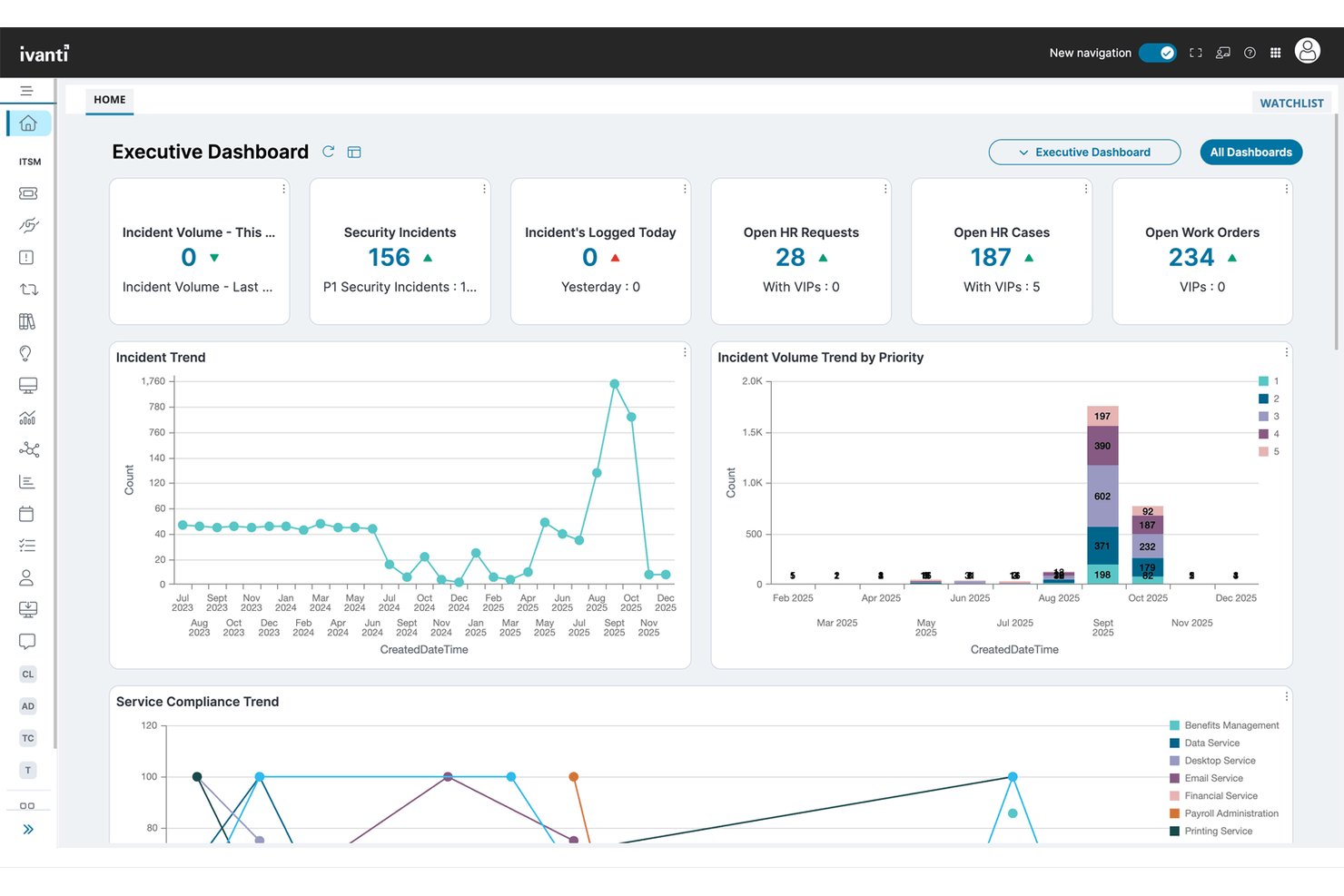
Ivanti Neurons for ITSM is a flexible ITSM platform that covers the full range of ITIL 4 practices—including incident, change, problem, and request management—alongside integrated IT asset management, a self-service portal, and AI-powered ticket classification and workflow automation.
Who Is Ivanti Neurons Best For?
Ivanti Neurons for ITSM is a strong fit for IT teams in regulated or security-sensitive industries that need the flexibility to run on-premises, in the cloud, or in a hybrid setup.
Why I Picked Ivanti Neurons
Ivanti Neurons is one of the few ITSM tools that supports on-premises, cloud, and hybrid deployment, and lets you switch between them without losing data. That flexibility matters when your industry has strict data residency or compliance requirements. I also like that it's PinkVERIFY certified across 14 ITIL 4 practices, covering everything from change and problem management to release and financial management.
Ivanti Neurons Key Features
- AI-powered ticket classification: Automatically routes, categorizes, and prioritizes incoming tickets using AI to support SLA adherence across channels.
- Healing Bots for endpoint remediation: Autonomous bots detect and fix endpoint issues before users submit a ticket, reducing overall ticket volume.
- No-code workflow designer: Lets IT and non-IT admins build custom request forms, multi-stage approvals, and cross-department workflows.
- CMDB with incident and change linking: Connects CIs to active incidents and change records for real-time impact analysis.
Ivanti Neurons Integrations
Ivanti Neurons for ITSM integrates with Jira, Slack, and Tenable, offers 1,000+ connectors via Workato, and supports custom integrations through its REST API.
Pros and Cons
Pros:
- CMDB links incidents, changes, and assets
- AI classifies and routes tickets automatically
- Flexible cloud, on-premises, or hybrid deployment
Cons:
- Some users report inconsistent customer support
- No public or transparent pricing available

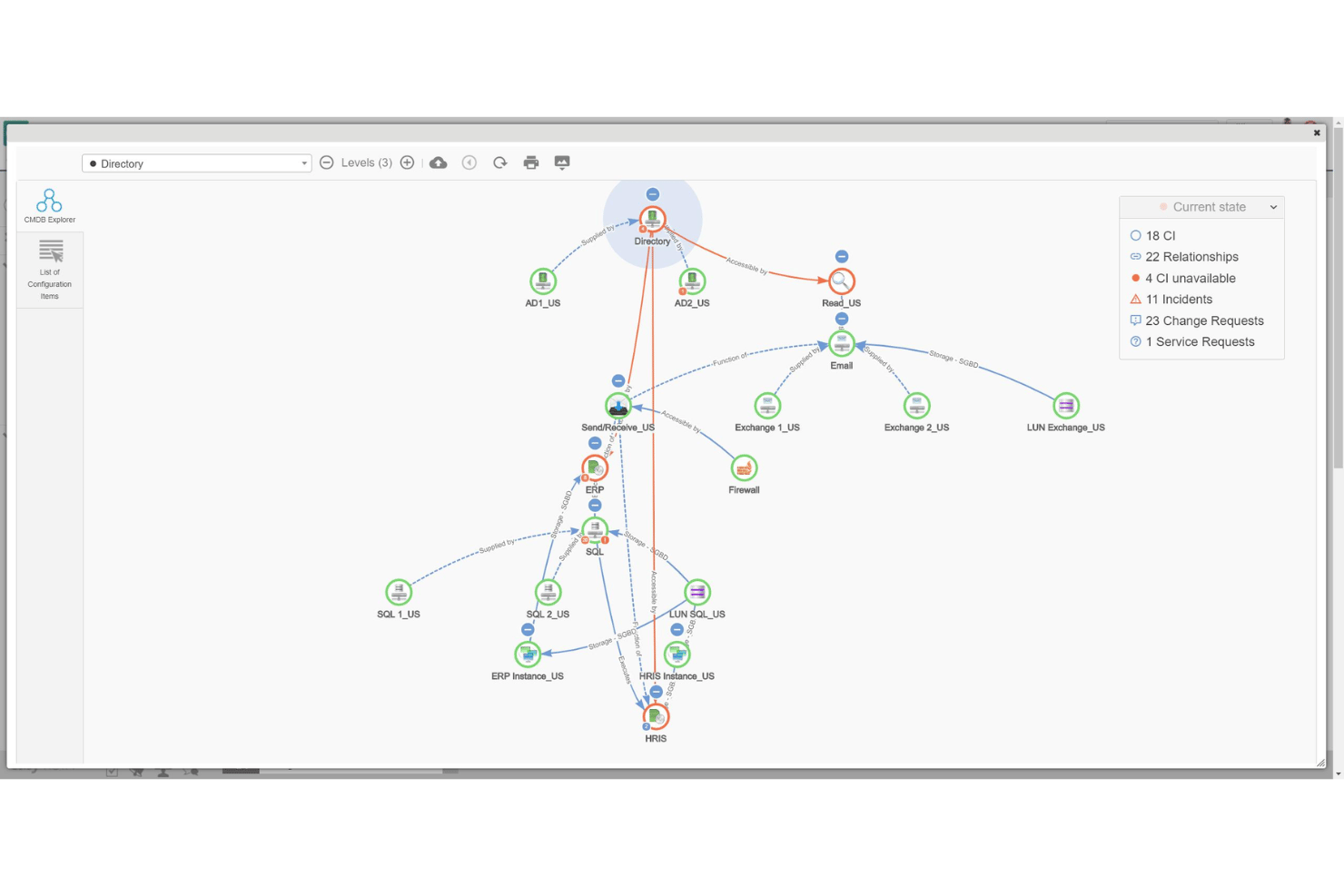
EasyVista is an IT service management software built around a native CMDB that covers incident, problem, change, and service request management, with AI-powered ticket triage, a guided self-service portal, workflow automation, and remote support tools.
Who Is EasyVista Best For?
EasyVista is a strong fit for enterprise IT teams that need ITIL-certified service management built around a native CMDB, especially in regulated industries like healthcare, finance, and the public sector.
Why I Picked EasyVista
I picked EasyVista because its native CMDB is the backbone that ties incidents, changes, and assets together from the start. When a server goes down, I can immediately see every CI linked to that ticket, trace affected services, and route the change through an ITIL-certified workflow without switching tools. EV Pulse AI adds urgency detection and expert routing, so the right technician gets the right ticket faster.
EasyVista Key Features
- EV Self Help: Delivers step-by-step resolution paths through an AI-powered self-service portal, letting users resolve issues without submitting a ticket.
- EV Orchestrate: Builds multi-stage approval and automation sequences across IT and non-IT departments.
- EV Insights: Provides pre-built and custom dashboards tracking ticket volume, SLA compliance, and agent performance metrics.
- EV Reach: Lets technicians securely access and control end-user devices directly from within EV Service Manager workflows.
EasyVista Integrations
EasyVista offers integrations with Datadog, Lansweeper, Microsoft Intune, Power BI, SAP, Genesys, and Cisco CallManager. Its also support custom integrations.
Pros and Cons
Pros:
- Concurrent licensing lowers total user cost
- Native CMDB links tickets to assets
- AI-powered ticket triage and urgency detection
Cons:
- Reporting depth lags behind analytics leaders
- Interface navigation feels clunky for new users
Best for rapid deployment and fast-growing IT teams
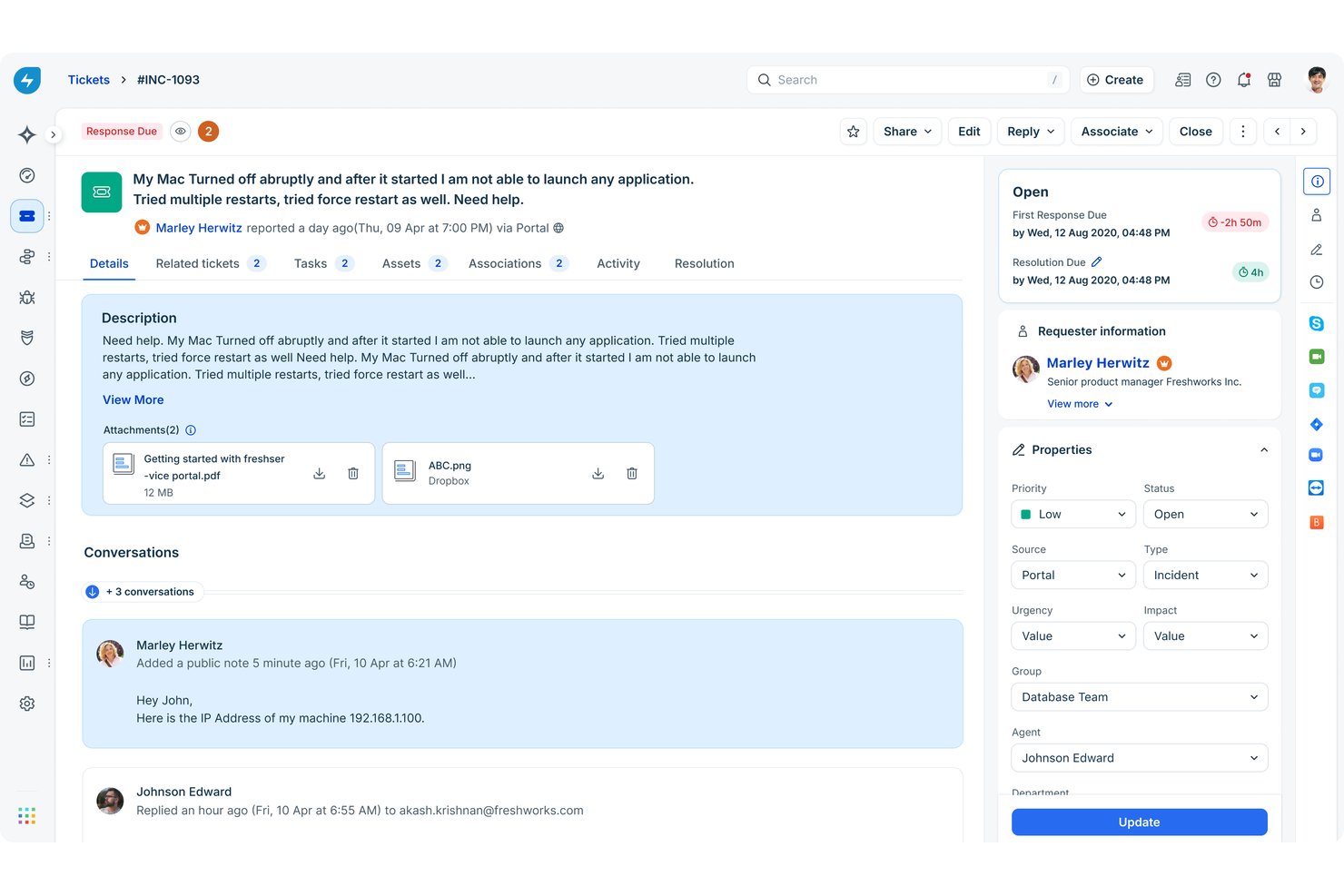
Freshservice is an ITSM help desk platform that covers incident, problem, change, and release management alongside IT asset tracking, a self-service portal, and AI-powered ticket triage through its Freddy AI layer.
Who Is Freshservice Best For?
Freshservice is a strong fit for IT teams that are scaling quickly and need ITIL-aligned incident, change, and problem management without a months-long implementation.
Why I Picked Freshservice
I picked Freshservice because it's designed for IT teams growing faster than they can document processes. Its no-code Workflow Automator ensures consistent ticket handling as queues scale. Plus, its ITIL Gold accreditation across 14 practices means incident, problem, and change management all work in one unified platform.
Freshservice Key Features
- Freddy AI Copilot: Generates reply suggestions, auto-summarizes ticket threads, and recommends field values to speed up agent categorization.
- Native CMDB with dependency mapping: Tracks relationships between assets, services, and infrastructure, linking configuration items to incidents and change records.
- Experience Level Agreements (XLAs): Measure service quality based on employee experience outcomes, not just resolution times.
- Freddy AI Agent Studio: Create custom AI agents that resolve employee requests across MS Teams, Slack, and the self-service portal.
Freshservice Integrations
Freshservice offers 1,000+ integrations with platforms like Microsoft Teams, Slack, Jira, and AWS. It also supports custom integrations via REST APIs, webhooks, and Zapier.
Pros and Cons
Pros:
- Unified ITSM, ITAM, and ITOM platform
- Built-in AI agent for ticket deflection
- Configurable workflows across incident, change, and problem
Cons:
- Limited flexibility in built-in reporting
- Advanced AI features require expensive add-ons
New Product Updates from Freshservice
 Experience)
Freshservice Introduces a Reimagined IT Asset Management (ITAM) Experience
Freshservice introduces a reimagined IT Asset Management (ITAM) experience with continuous infrastructure discovery, dependency mapping, IPAM, and Software License Management. This update helps teams improve asset visibility and manage connected IT environments more effectively. For more information, visit Freshservice’s official site.

Halo
Best for full ITIL coverage at a flat per-agent price
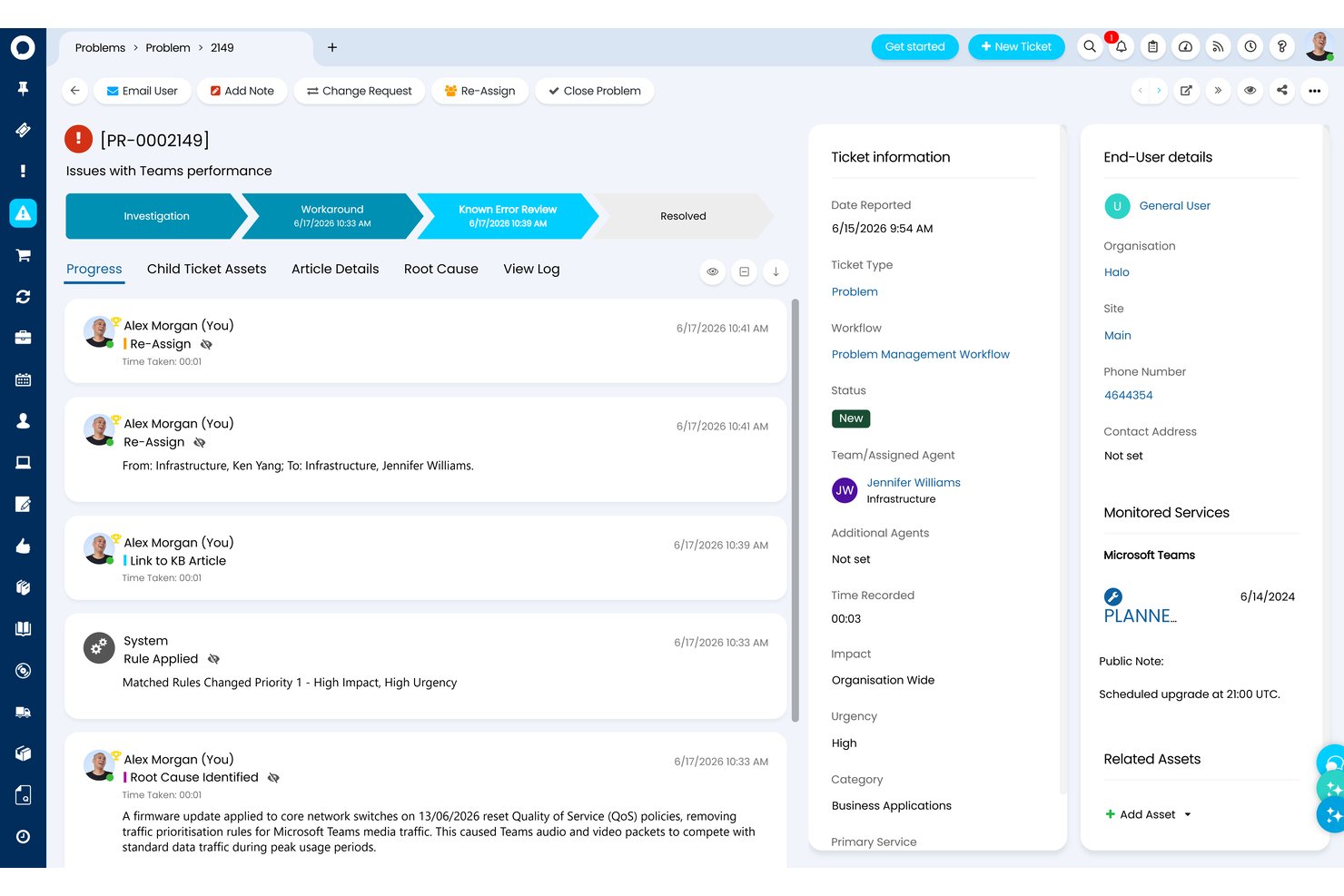
Halo is an ITSM help desk platform that covers the full ITIL process suite—incident, problem, change, request, release, knowledge, and asset management—alongside omnichannel ticket intake, a no-code workflow builder, native CMDB, AI triage, and built-in customer service management tools.
Who Is Halo Best For?
Halo is a strong fit for IT and service operations teams that need a full ITIL process suite—incident, problem, change, and beyond—without paying extra for each module.
Why I Picked Halo
Halo earns its spot on my shortlist because it includes every ITIL module in one flat per-agent price, with no paywalled tiers. I especially like that the full change management workflow ships out of the box with CAB reviews, risk checks, and a change calendar. The native CMDB links configuration items directly to open incidents and problems, so when something breaks, my team can see what's affected without switching tools.
Halo Key Features
- Omnichannel ticket intake: Captures tickets from email, live chat, phone, SMS, social media, Slack, and a self-service portal into one workspace.
- AI triage and sentiment detection: Automatically categorizes, prioritizes, and routes incoming tickets while analyzing ticket threads for customer sentiment.
- Virtual agent chatbot: Surfaces knowledge base articles and resolved tickets in 40+ languages before a new ticket is logged.
- No-code workflow builder: Lets admins configure routing rules, approval chains, escalation triggers, and automated actions.
Halo Integrations
Halo integrates with 247 Connect, Slack, Atera, GitHub, Azure DevOps, Virima, Confluence, and offers a REST API plus CMDB sync with Lansweeper and Virima.
Pros and Cons
Pros:
- One tenant supports IT and customer support
- AI triage and sentiment analysis built in
- All ITIL process modules included standard
Cons:
- User interface feels dated to some users
- Initial setup requires significant configuration work
Best for unifying DevOps and IT support workflows
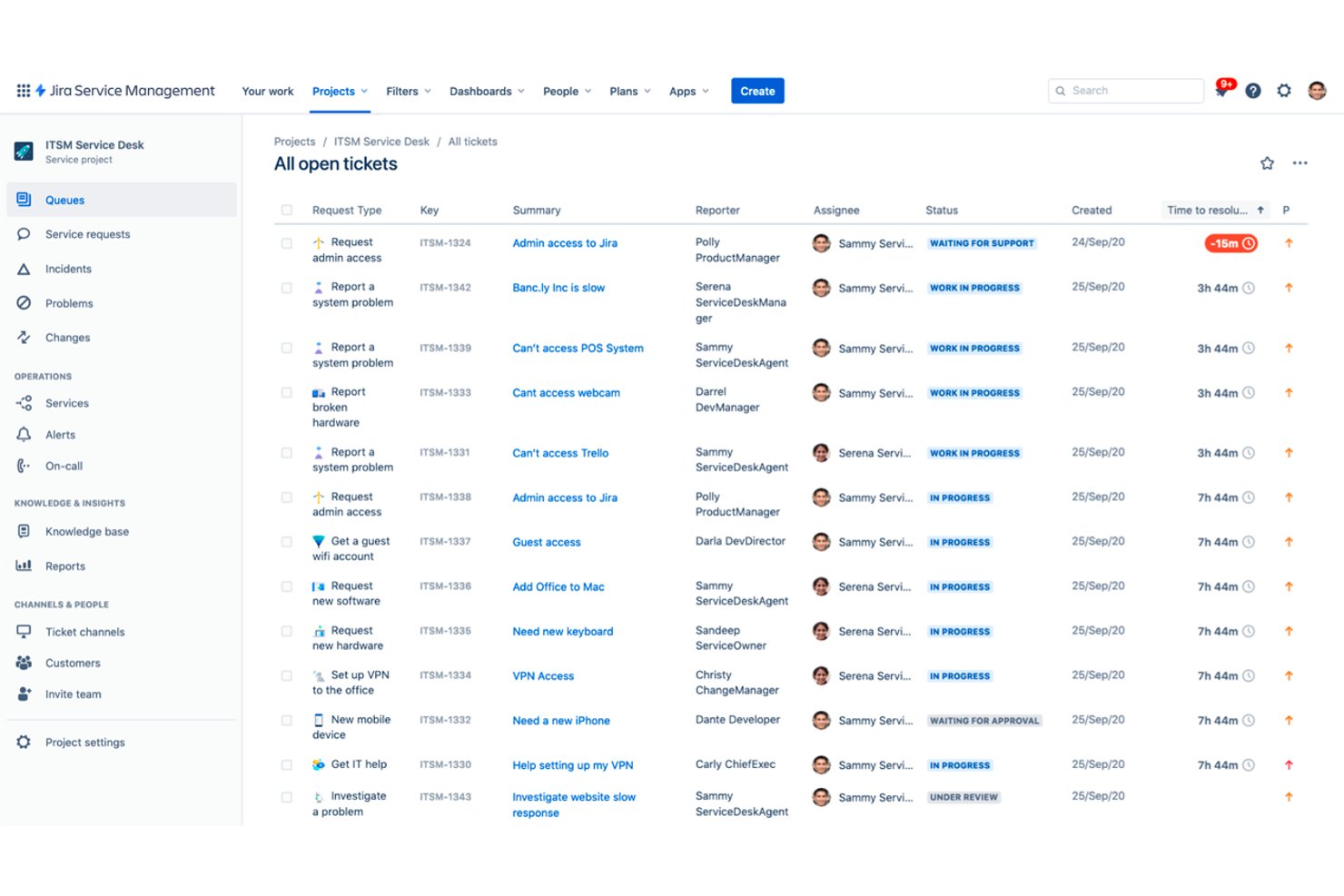
Jira Service Management is an ITSM platform from Atlassian that covers incident management, change management, problem tracking, asset and configuration management, and service request handling in a single system.
Who Is Jira Service Management Best For?
Jira Service Management is a natural fit for organizations where dev and IT ops teams work side by side and need a single system to handle both service requests and software issues.
Why I Picked Jira Service Management
I picked Jira Service Management because it's the one ITSM platform where a developer filing a bug and an IT agent resolving an incident are working in the same system, instead of separate tools. When an agent spots a recurring incident pattern, they can link it directly to a Jira issue and hand it off to the dev team without losing any ticket context. I also love that the native CMDB includes network-based asset discovery, so your configuration data stays current without manual updates.
Jira Service Management Key Features
- Virtual Service Agent: Handles Tier-0 and Tier-1 requests in the self-service portal, Slack, and Teams.
- No-code automation builder: Helps with ticket routing, SLA alerts, field updates, and approvals.
- On-call scheduling and escalation: Configurable rotations with automated paging and war rooms in Slack or Teams.
- Atlassian Analytics: Enterprise BI layer with cross-product dashboards and custom reporting via VisualSQL.
Jira Service Management Integrations
Jira Service natively integrates with Jira, Confluence, Bitbucket, Statuspage, and Zoom. It also offers REST API, Workato, MuleSoft, and Zapier.
Pros and Cons
Pros:
- Native CMDB with automated asset discovery
- Virtual Service Agent handles Tier-1 requests
- Unified ticketing system for IT and development teams
Cons:
- External customer support requires separate app
- Advanced analytics only on Enterprise plan
Best for enterprise multi-cloud environments and AIOps
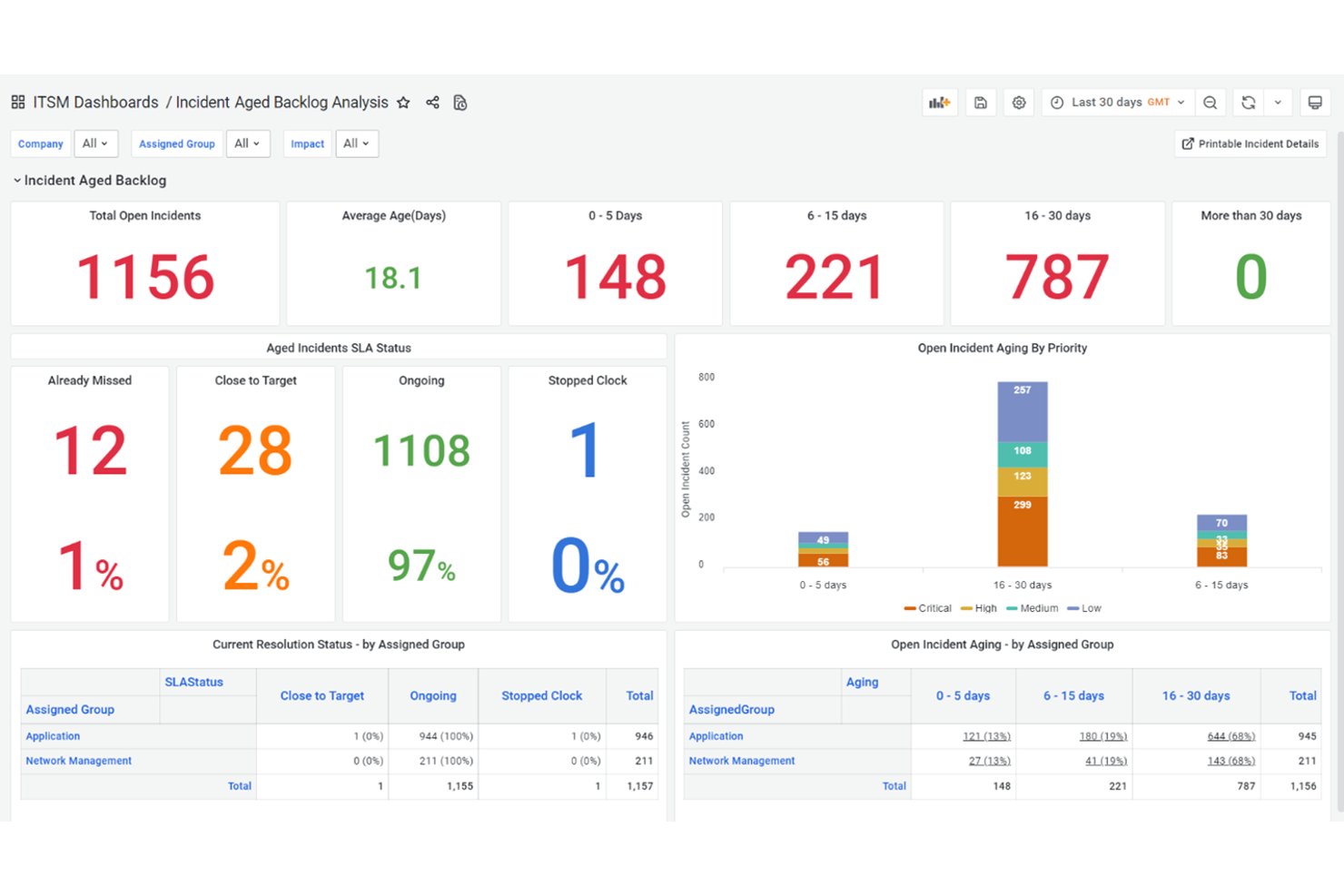
BMC Helix ITSM is an enterprise ITSM platform that covers incident, problem, change, and service request management alongside a native CMDB, agentic AI triage, and a self-service portal with virtual agent capabilities.
Who Is BMC Helix ITSM Best For?
BMC Helix ITSM is built for large enterprises managing IT service operations across multiple cloud environments, on-premises IT infrastructure, or both simultaneously.
Why I Picked BMC Helix ITSM
BMC Helix ITSM earns its spot on my shortlist because it's purpose-built for large enterprises running IT operations across AWS, Azure, GCP, and on-premises infrastructure simultaneously. I like that the native CMDB links directly to every incident, change, and problem ticket, giving teams real-time impact analysis when a CI changes across cloud boundaries. The agentic HelixGPT layer, bundled into existing licenses, handles auto-classification and resolution drafting without requiring a separate AI add-on purchase.
BMC Helix ITSM Key Features
- PinkVERIFY ITIL 4 certified: Covers 18 ITIL 4 practices, including incident, problem, change, release, knowledge, and asset management.
- Innovation Studio: Low-code, drag-and-drop workflow builder for multi-stage approvals and service automations.
- Digital Workplace portal: Self-service with NLP knowledge base, Virtual Agent chatbot, and Live Chat via web, Teams, or Slack.
- Helix ITSM Insights: 100+ pre-built visualizations with natural language reporting and combined ITSM/AIOps data.
BMC Helix ITSM Integrations
BMC Helix ITSM natively integrates with Microsoft Teams and Slack, connects to ServiceNow via Workato, offers a REST API, and integrates with Bright Pattern through third-party marketplaces.
Pros and Cons
Pros:
- Native CMDB enables real-time impact analysis
- Agentic AI for ticket triage and resolution
- Deepest ITIL 4-certified workflows available
Cons:
- Back-office admin interface feels outdated
- Implementation often exceeds twelve months
ServiceNow IT Service Management is an enterprise ITSM platform that covers the full ITIL process stack—incident, problem, change, request, and knowledge management—within a single, AI-native system built around a native CMDB and no-code workflow automation.
Who Is ServiceNow IT Service Management Best For?
ServiceNow ITSM is built for large enterprises that need to manage complex, cross-departmental IT workflows at scale—think global organizations with dedicated IT ops teams, compliance requirements, and thousands of daily service requests.
Why I Picked ServiceNow IT Service Management
ServiceNow ITSM earns its spot on my shortlist because no other platform matches its depth for managing enterprise-wide IT workflows at scale. I'm impressed by the native CMDB, which automatically links every incident, problem, and change record to affected configuration items so your team can run real impact analysis before a change window opens. The Service Operations Workspace gives agents a single pane of glass with AI-powered triage via Predictive Intelligence, cutting manual dispatch work significantly across high-volume queues.
ServiceNow IT Service Management Key Features
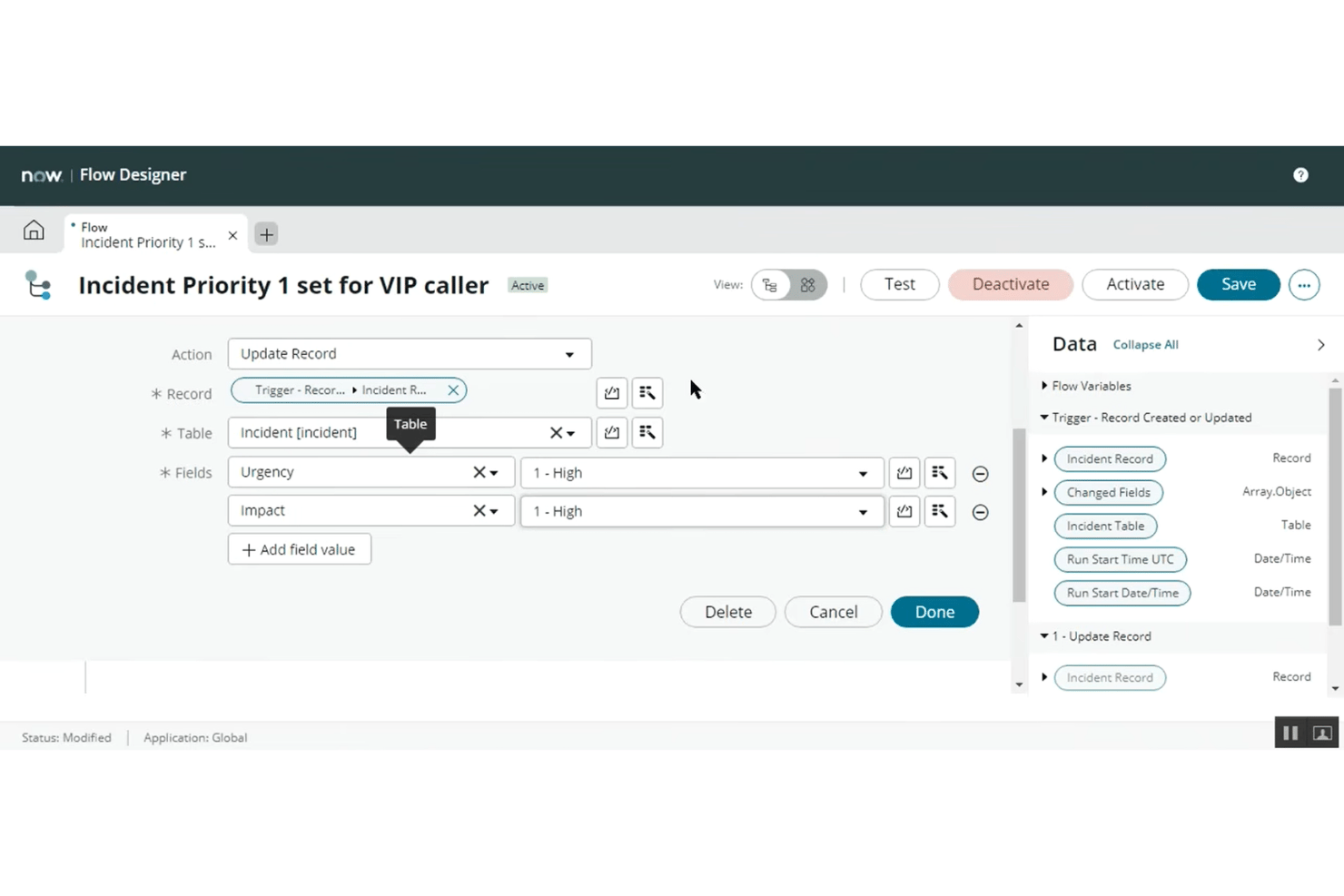
- Flow Designer: Lets admins design multi-stage approvals and cross-departmental automations without writing code.
- Employee Center: Allows employees to submit requests, search knowledge articles, and track tickets across IT and other departments in one place.
- On-Call Management: Sets escalation schedules and routes alerts to the right team member automatically.
- Platform Analytics Advanced: Offers real-time dashboards, custom reports, and Process Mining for ticket volume, SLA compliance, and agent performance.
ServiceNow IT Service Management Integrations
ServiceNow ITSM integrates with Salesforce, Slack, Microsoft Teams, Jira, PagerDuty, Datadog, and AWS. It also supports REST APIs and iPaaS connections.
Pros and Cons
Pros:
- First SaaS with PinkVERIFY for 11 ITIL processes
- Unlimited AI-powered virtual agent conversations
- Native CMDB links every incident to assets
Cons:
- Most advanced workflows gated to higher tiers
- External user support requires a separate module
Zendesk
Best for omnichannel service and help desk integration
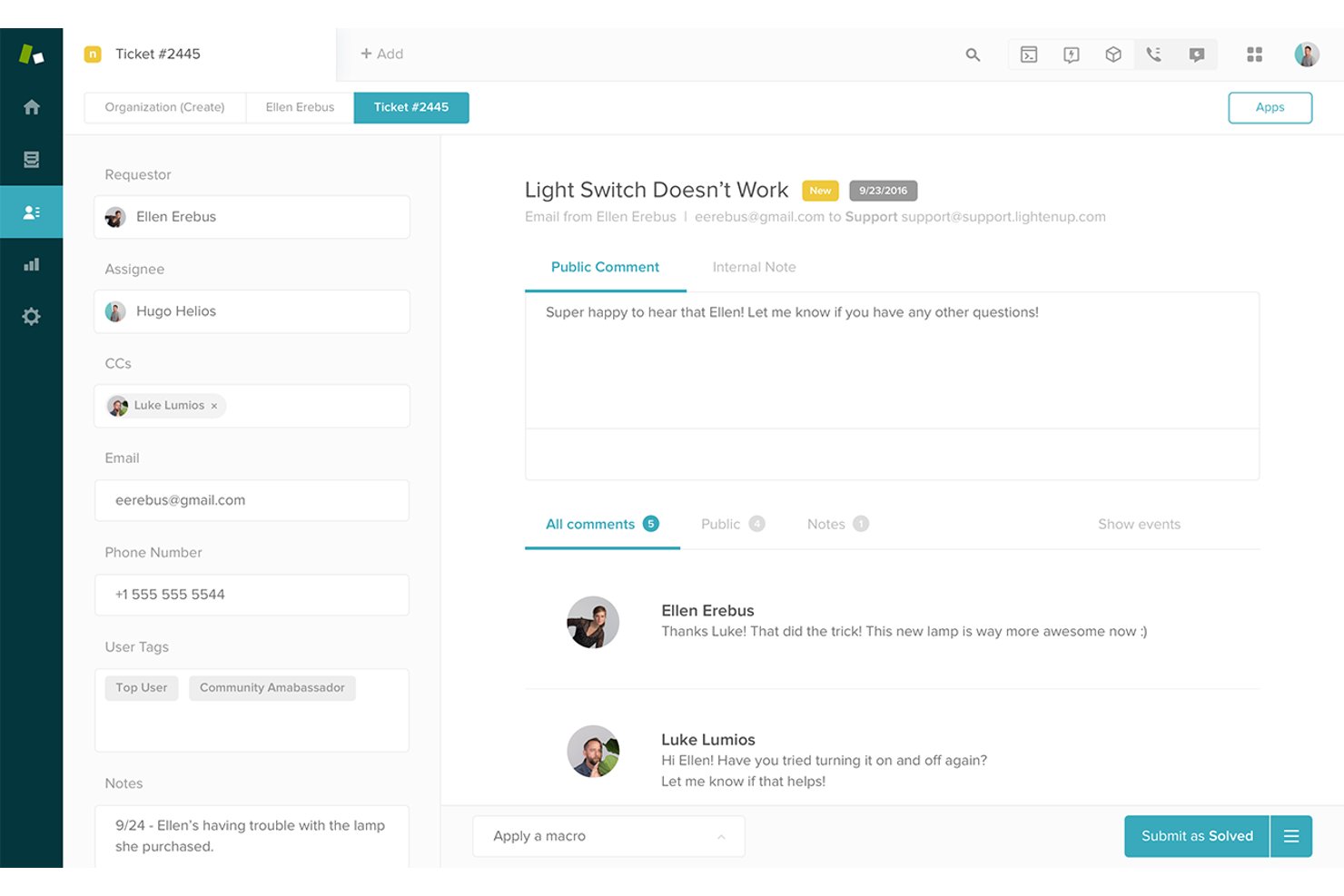
Zendesk is a help desk and ITSM platform that handles ticket management, omnichannel support intake, AI-powered self-service, SLA tracking, and IT asset management across both internal and customer-facing service operations.
Who Is Zendesk Best For?
Zendesk is a strong fit for mid-size to enterprise teams running both customer-facing support and internal IT service desks from a single platform.
Why I Picked Zendesk
Zendesk stands out for its omnichannel ticket intake, unifying email, live chat, voice, WhatsApp, Instagram DM, Slack, Microsoft Teams, and web portals into a single agent workspace. I like how Intelligent Triage uses AI to auto-classify incoming tickets by intent, sentiment, and language, then routes them without any manual dispatch. On top of that, AI agents handle Tier-0 and Tier-1 requests, like password resets and access inquiries, directly from the help center before a human ever gets involved.
Zendesk Key Features
- IT asset management: Track devices, warranties, OS versions, and ticket history with MDM sync (Jamf, Intune).
- SLA management: Set resolution and first-reply targets by priority, group, or tier with business hours and escalations.
- Service catalog: Structured portal for IT/HR requests with forms, routing, and approvals.
- Zendesk Explore dashboards: Pre-built/custom reports on tickets, SLA, performance, and CSAT with natural language queries.
Zendesk Integrations
Zendesk has 1,800+ marketplace integrations, including Salesforce, Jamf, Microsoft Intune, Datadog, and PagerDuty. It also supports REST APIs, webhooks, and Zapier.
Pros and Cons
Pros:
- Strong dual-use for IT and CX teams
- Omnichannel workspace handles all support channels
- AI-powered ticket triage automates complex workflows
Cons:
- Setup complexity scales with advanced workflows
- No native CMDB for asset management
New Product Updates from Zendesk
Zendesk Adds Email AI Replies and Predictive Routing
Zendesk’s latest email AI agents update brings configurable knowledge and welcome replies and adds predictive routing for email tickets, so you can tailor your automated emails and get inquiries resolved faster. For more information, visit Zendesk’s official site.
Other ITSM Help Desk Software
Here are some additional ITSM help desk software options worth checking out:
- SysAid
For AI-driven ESM automation
- Agentforce Service (formerly Service Cloud)
For unifying IT and CX on Salesforce CRM
- SolarWinds Service Desk
For real-time IT asset discovery and tracking
- HappyFox
For high-velocity ticket queue management
- InvGate Service Management
For no-code service catalog and workflow setup
- TeamDynamix
For higher ed ITSM, ESM, and project tools
- Xurrent
For cross-vendor SLA management and routing
- SymphonyAI IT Service Management
For autonomous, agentic AI workflows
- Alemba Service Manager
For compliance across 25 certified ITIL processes


How I Evaluate ITSM Help Desk Software
I split my evaluation into two layers: the baseline functionality every tool must nail—like multi-channel ticket management and ITIL-aligned workflows—and the differentiators that separate a good platform from the right one for your team.
Core Functionality (Table Stakes for This List)
When I'm selecting tools for my list, I rank each one on a scale from 0 (does not offer the functionality) to 5 (excels in this area) for each core functionality listed below. I then calculate the tool's total score into a percentage, using 75% as a benchmark to help assess its overall fit for the list.
- Ticket management: I evaluate how each tool handles ticket capture, assignment, and tracking across channels—looking for features like automated triage, collision detection, and full audit trails.
- ITIL-aligned workflows: Each platform should support incident, problem, change, and request management modules, ideally with CMDB linkage or formal ITIL certification.
- Self-service portal and knowledge base: I look for branded portals with searchable knowledge bases, service catalogs, and ticket submission—plus extras like AI-powered search or chatbot deflection.
- SLA management and automation: Configurable SLAs with escalation rules, business-hours support, and workflow automation matter here, especially for teams juggling multiple priority tiers or customer segments.
- Reporting and analytics: Dashboards covering ticket volume, agent performance, SLA compliance, and CSAT are the baseline. I also check for custom report builders and scheduled reporting options.
- Integrations and omnichannel intake: The tool should accept tickets via email, chat, portal, phone, and API, and connect to CRM, communication, and asset management platforms through native integrations or an open API.
Once I have a list of tools that meet the criteria, I consider what sets each platform apart.
Differentiating Factors (What Sets Vendors Apart)
Here's how I compare and contrast different vendors:
Standout Features
I look for AI-powered ticket triage that auto-categorizes and routes requests using historical patterns and sentiment—not just keyword matching. This matters when your service desk handles thousands of monthly tickets across IT and CX queues. I also evaluate each platform's low-code workflow builder, checking whether non-technical admins can design multi-stage approvals spanning HR, facilities, and finance without developer help. Sentiment analytics on ticket threads is another factor I check, since it helps CX leaders spot frustrated users before escalation.
Beyond Features
I evaluate whether a platform can run both an internal IT service desk and an external customer-facing help desk from one tenant—separate portals, SLAs, and agent workspaces without double licensing. Total cost of ownership matters just as much: I check how pricing scales with headcount and whether modules like AI or CMDB carry hidden add-on fees. I also look at ecosystem depth, specifically native connectors to CRMs, monitoring tools like Datadog, and iPaaS options such as Workato, since gaps there create manual work that erodes service quality.
How to Choose an ITSM Help Desk Software
The best way to find the right ITSM help desk platform is to match it to your team's actual support needs and future growth plans.
| If your priority is | Look for |
|---|---|
| Advanced automation | AI ticket routing and low-code workflow builders |
| Cohesive CX-IT teamwork | Shared CRM data and unified agent workspaces |
| Omnichannel support | Multichannel intake and deep communication app integrations |
| Adaptable deployment | Choice of cloud, hybrid, or on-prem options |
| Transparent reporting | Customizable dashboards and scheduled analytics |
How to Vet Your Shortlist
- Test workflow configurability: Build and run a custom multi-stage approval or escalation in a live demo within one business day.
- Validate integration coverage: Connect your ticketing tool to a real CRM, communication app, or monitoring system using only native options—no custom API work.
- Stress-test self-service: Populate the knowledge base and portal with sample content, then submit and resolve a ticket as an end user.
- Negotiate clear module pricing: Request explicit written documentation on which advanced features (AI, CMDB, APIs) require separate licenses or fees.
- Weigh agility against control: Decide if you need rapid, SaaS-based configuration without IT involvement, or prefer full control over on-premises and custom deployments—and let that guide your final pick.
What Is ITSM Help Desk Software?
ITSM help desk software is a digital platforms that support IT teams in managing service requests, incidents, problems, and changes within an organization. These tools offer centralized ticket tracking, workflow automation, and self-service options, helping you process support queries and maintain key IT operations. They are essential for teams that need to handle multiple communication channels, enforce service standards, and measure performance across complex internal and external support processes.
Features of ITSM Help Desk Software
When selecting ITSM help desk software, keep an eye out for the following key features:
- Ticket management: Centralizes incoming requests from various channels, assigns them to the right agent or team, and tracks their progress through to resolution. Look for automation and clear audit trails so your team can avoid duplicate work and missed issues.
- Self-service portal: Lets users submit tickets, access FAQs, and find knowledge base articles on their own. A well-designed portal reduces ticket volume and empowers end users to resolve common problems without waiting for IT.
- ITIL-aligned workflows: Helps structure incident, change, request, and problem management according to best-practice frameworks. Pre-built workflow templates create consistency while also allowing for customization to fit your existing processes.
- SLA management: Tracks response and resolution times against defined service targets. Automated escalation and notification rules make it easier for teams to adhere to service commitments and maintain customer trust.
- Knowledge base: Provides a searchable, organized library of help articles, troubleshooting guides, and process documentation. A strong knowledge base enhances self-service, speeds up onboarding, and supports internal training.
- Reporting and analytics: Delivers dashboards and reports with key metrics like ticket volume, resolution time, SLA attainment, and customer satisfaction. Customizable analytics help you track trends, identify bottlenecks, and measure team performance.
- Integration capabilities: Connects with tools like CRM systems, asset management platforms, messaging apps, and monitoring solutions. Integrations cut down manual entry and enable your team to work across systems without context switching.
- Automation and workflow builder: Lets admins set up business rules, triggers, and approval flows with minimal coding. Automating repetitive tasks reduces errors and speeds up resolution for both agents and end users.
- Multi-channel intake: Accepts requests via web forms, email, chat, phone, or API. Capturing tickets from every channel in one place ensures nothing slips through the cracks and meets users where they are.
- Configuration management database (CMDB): Maintains a real-time inventory of assets, systems, and their relationships. A CMDB gives agents context when handling incidents or changes, leading to faster, more accurate problem resolution.
Benefits of ITSM Help Desk Software
Implementing ITSM help desk software provides several benefits for your team and your business. Here are a few you can look forward to:
- Centralized ticket management: Bring requests from email, chat, phone, and web into a single place so agents can assign, track, and resolve issues without missing a step.
- Consistent ITIL-aligned processes: Structure your workflows around incident, problem, change, and request management using pre-built templates that follow industry best practices.
- Empowered self-service for users: Let end users resolve common questions with branded portals, searchable knowledge bases, and guided ticket submission without waiting for IT.
- Automated SLA enforcement: Set clear service targets with automated escalation and notification rules, helping your team stay on track for every commitment.
- Comprehensive reporting and analytics: Monitor ticket volume, agent workload, CSAT, and SLA performance with dashboards and custom reporting so you can spot trends and improve support.
- Flexible integration capabilities: Connect with your CRM, asset management, monitoring, and communication tools natively, reducing manual work and silos across your tech stack.
- Low-code workflow automation: Empower non-technical admins to build multi-stage approvals and automate tasks quickly, adapting processes without developer involvement.
Costs and Pricing of ITSM Help Desk Software
Selecting ITSM help desk software requires an understanding of the various pricing models and plans available. Costs vary based on features, team size, add-ons, and more. The table below summarizes common plans, their average prices, and typical features included in ITSM help desk software:
Plan Comparison Table for ITSM Help Desk Software
| Plan Type | Average Price | Common Features |
|---|---|---|
| Free Plan | $0/user/month | Basic ticket management, email support, and limited knowledge base articles. |
| Personal Plan | $10-$25/user/month | Ticket assignment, self-service portal, basic reporting, and single-channel intake. |
| Business Plan | $30-$60/user/month | Multi-channel ticket intake, workflow automation, SLA management, reporting dashboards, and growing integration options. |
| Enterprise Plan | $70-$150/user/month | Advanced automation, ITIL-aligned modules, AI-powered features, custom SLAs, configurable portals, and premium integrations. |
ITSM Help Desk Software FAQs
Here are some answers to common questions about ITSM help desk software:
Can I use ITSM help desk software for both IT and customer support?
Yes, many ITSM help desk software let you manage both internal IT and external customer support from a single system. You can set up different portals, workflows, and SLAs for each use case.
How do ITSM help desk software help with reporting and analytics?
ITSM solutions usually come with dashboards and reporting features that track ticket volume, SLA performance, agent workload, and customer satisfaction. Look for platforms with customizable dashboards and the ability to schedule and export reports.
Is it possible to automate IT workflows without technical skills?
Yes, most modern ITSM help desk software includes low-code or no-code workflow builders. These let you set up ticket routing, approval chains, and escalations using drag-and-drop editors. Non-technical team members can usually configure these workflows without needing IT involvement.
What are the risks of not using ITIL-aligned ITSM help desk software?
Without ITIL-aligned software, your team risks inconsistent processes, gaps in incident tracking, and missed service targets. This can cause longer resolution times, lower satisfaction, and reporting headaches. ITIL modules help bring structure to common processes and ensure everyone’s following agreed standards.
When should you upgrade from a free or personal plan to a business or enterprise plan?
Upgrade when you need features like multi-channel intake, workflow automation, custom SLAs, advanced reporting, or integration with other core business tools. Free plans are good for simple needs, but larger and growing teams hit limits quickly—upgrading gives you more control and flexibility.