

Agentforce Service Review: Pros, Cons, Features and Pricing
Agentforce Service isn’t just robust—it’s the gold standard for scalable, customizable customer support. Here’s why it stands out (and where it falls short) among the best in 2026.

We review tools independently, and commissions help fund our testing. See our transparency policy, our methodology, or suggest a tool.
Agentforce Service (formerly Salesforce Service Cloud) is a customer service software built on the Salesforce platform for teams managing cases, AI-assisted interactions, and customer data in one place. I'd mainly consider it if your business already runs on Salesforce CRM and you want your support agents working with full customer context natively—without building out integrations. That's where it pulls ahead of Zendesk, which requires more configuration to get that same depth of CRM-connected case visibility.
Agentforce Service (formerly Service Cloud) Evaluation Summary

4.4/5
- From $75/user/month
- Free trial available
Why Trust Our Software Recommendations
6,700+
Reviews
20
Industry experts
16+
Evaluation factors
14
Years
Our team has been testing and reviewing software since 2012. As CX leaders ourselves, we know how difficult—and important—it is to choose the right software.
For this guide, we evaluated tools using hands-on testing and independent research, scoring tools using our selection criteria.
Our reviews reflect our human editorial judgment, not a sales pitch.
 Gui DrusinaCreative Director
 Tim FisherVP of AI
Agentforce Service (formerly Service Cloud) Overview
If you’re judging Agentforce Service against other options, I think its automation, AI-powered case routing, and deep integration with sales and marketing set it apart. The interface can feel complex, and pricing is on the higher end, but you get unmatched customization and reporting.
I’d suggest it’s best for larger teams or organizations with complex support needs and existing Salesforce investments. For example, if you need to connect support with sales data or automate multi-channel workflows, this platform is hard to beat. Onboarding takes effort, but the long-term flexibility pays off.
Pros
- Deep Salesforce integration provides unified customer service data.
- Advanced AI automation streamlines service workflows and resolutions.
- Extensive customization supports complex enterprise service operations.
Cons
- Higher costs can limit accessibility for smaller teams.
- Implementation often requires significant planning and technical expertise.
- Interface complexity creates a steeper learning curve initially.
Is Agentforce Service (formerly Service Cloud) Right For Your Needs?
Who Would be a Good Fit for Agentforce Service (formerly Service Cloud)?
Agentforce Service is a strong choice for organizations that need highly customizable service workflows, advanced AI capabilities, and deep visibility into customer data. It's particularly well-suited for enterprises managing complex customer journeys, large support operations, or cross-functional service processes. Businesses already invested in Salesforce will often see the greatest value, as Agentforce Service connects customer service with sales, marketing, commerce, and operational data on a single platform.
- Salesforce-Centric OrganizationsConnects customer service, sales, marketing, and customer data within a unified Salesforce ecosystem.
- Enterprise Customer SupportHandles high ticket volumes, complex workflows, and large service teams with AI-powered automation.
- Global OperationsSupports multilingual service operations, advanced routing, and large-scale customer engagement.
- Retail and EcommerceUnifies customer interactions across service, sales, commerce, and digital channels.
- Financial ServicesSupports highly regulated environments with strong security, governance, and customer visibility.
- Healthcare ProvidersHelps manage complex customer journeys and sensitive communications across multiple channels.
Who Would be a Bad Fit for Agentforce Service (formerly Service Cloud)?
Agentforce Service isn’t ideal for smaller teams, simple support needs, or organizations with limited budgets. Its complexity and cost can outweigh the benefits for those who don’t need advanced features or deep integrations. Teams looking for quick setup or minimal admin overhead may find it overwhelming compared to lighter alternatives.
- Temporary ProjectsLong onboarding and setup don’t suit short-term or seasonal teams.
- FreelancersOverkill for solo operators needing simple ticket management.
- Field Service TeamsMobile app and offline capabilities lag behind specialized solutions.
- NonprofitsBudget constraints make ongoing licensing and admin difficult.
- StartupsSetup and customization require resources most startups lack.
- Small BusinessesHigh costs and complexity outweigh benefits for basic support needs.
How We Test & Score Tools
We’ve spent years building, refining, and improving our software testing and scoring system. The rubric is designed to capture the nuances of software selection and what makes a tool effective, focusing on critical aspects of the decision-making process.
Below, you can see exactly how our testing and scoring works across seven criteria. It allows us to provide an unbiased evaluation of the software based on core functionality, standout features, ease of use, onboarding, customer support, integrations, customer reviews, and value for money.
Core Functionality (25% of final scoring)
The starting point of our evaluation is always the core functionality of the tool. Does it have the basic features and functions that a user would expect to see? Are any of those core features locked to higher-tiered pricing plans? At its core, we expect a tool to stand up against the baseline capabilities of its competitors.
Standout Features (25% of final scoring)
Next, we evaluate uncommon standout features that go above and beyond the core functionality typically found in tools of its kind. A high score reflects specialized or unique features that make the product faster, more efficient, or offer additional value to the user.
We also evaluate how easy it is to integrate with other tools typically found in the tech stack to expand the functionality and utility of the software. Tools offering plentiful native integrations, 3rd party connections, and API access to build custom integrations score best.
Ease of Use (10% of final scoring)
We consider how quick and easy it is to execute the tasks defined in the core functionality using the tool. High scoring software is well designed, intuitive to use, offers mobile apps, provides templates, and makes relatively complex tasks seem simple.
Onboarding (10% of final scoring)
We know how important rapid team adoption is for a new platform, so we evaluate how easy it is to learn and use a tool with minimal training. We evaluate how quickly a team member can get set up and start using the tool with no experience. High scoring solutions indicate little or no support is required.
Customer Support (10% of final scoring)
We review how quick and easy it is to get unstuck and find help by phone, live chat, or knowledge base. Tools and companies that provide real-time support score best, while chatbots score worst.
Customer Reviews (10% of final scoring)
Beyond our own testing and evaluation, we consider the net promoter score from current and past customers. We review their likelihood, given the option, to choose the tool again for the core functionality. A high scoring software reflects a high net promoter score from current or past customers.
Value for Money (10% of final scoring)
Lastly, in consideration of all the other criteria, we review the average price of entry level plans against the core features and consider the value of the other evaluation criteria. Software that delivers more, for less, will score higher.
Core Features
Case Management
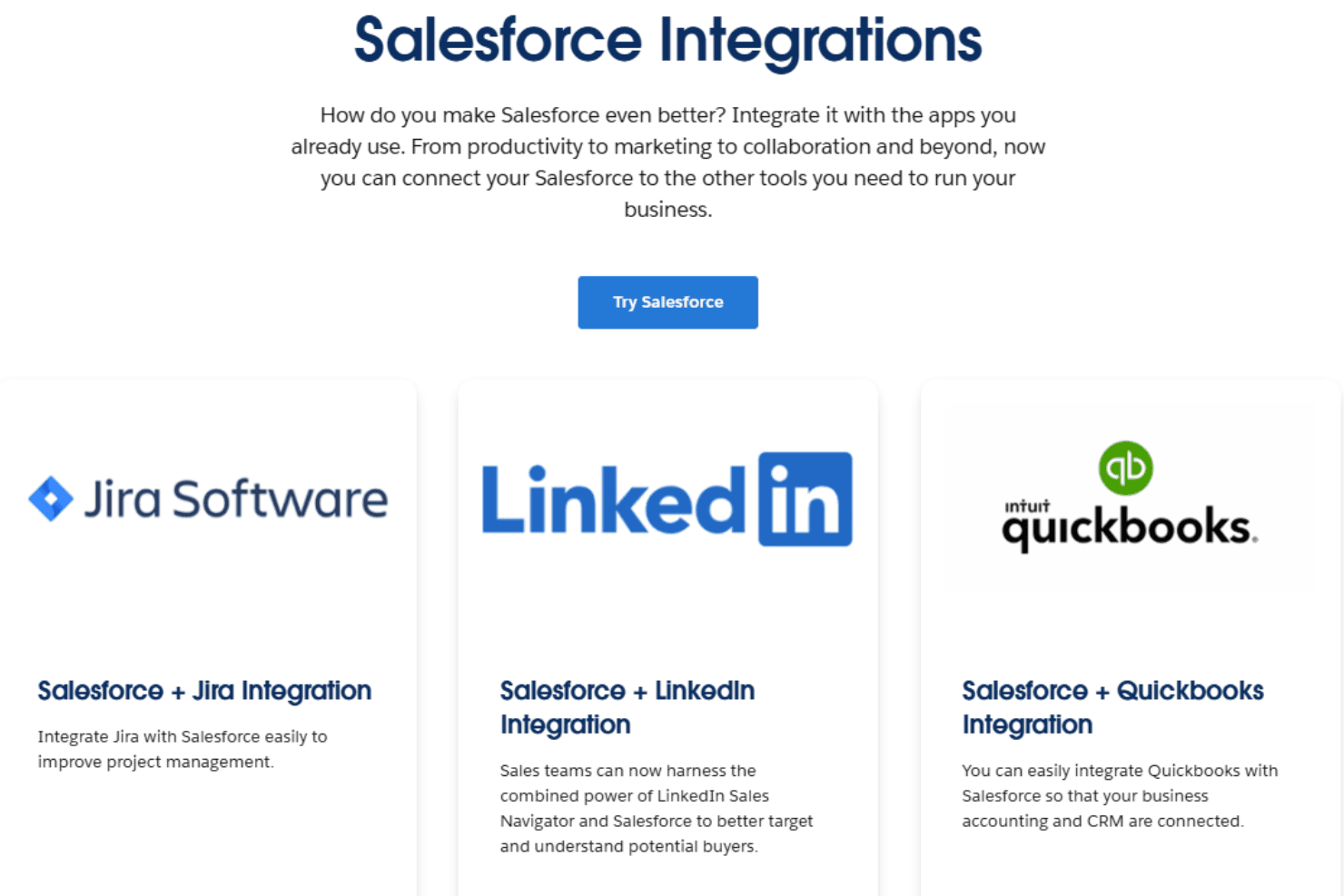
Track, assign, and resolve customer issues from a unified dashboard. Automate case routing and escalation based on rules you set.
Omnichannel Support
Engage with customers across chat, email, phone, and social channels in one place. Switch between channels without losing context or conversation history.
Knowledge Base
Create and manage a searchable library of articles for agents and customers. Use AI to suggest relevant content during live interactions.
Service Analytics
Access real-time dashboards and customizable reports on team performance and customer trends. Spot bottlenecks and measure KPIs with built-in analytics tools.
AI-Powered Automation
Leverage Einstein AI to automate repetitive tasks and recommend next steps. Use predictive insights to prioritize urgent cases and improve response times.
Self-Service Portals
Let customers find answers and submit requests through branded web portals. Customize the experience with community forums and personalized content.
Ease of Use
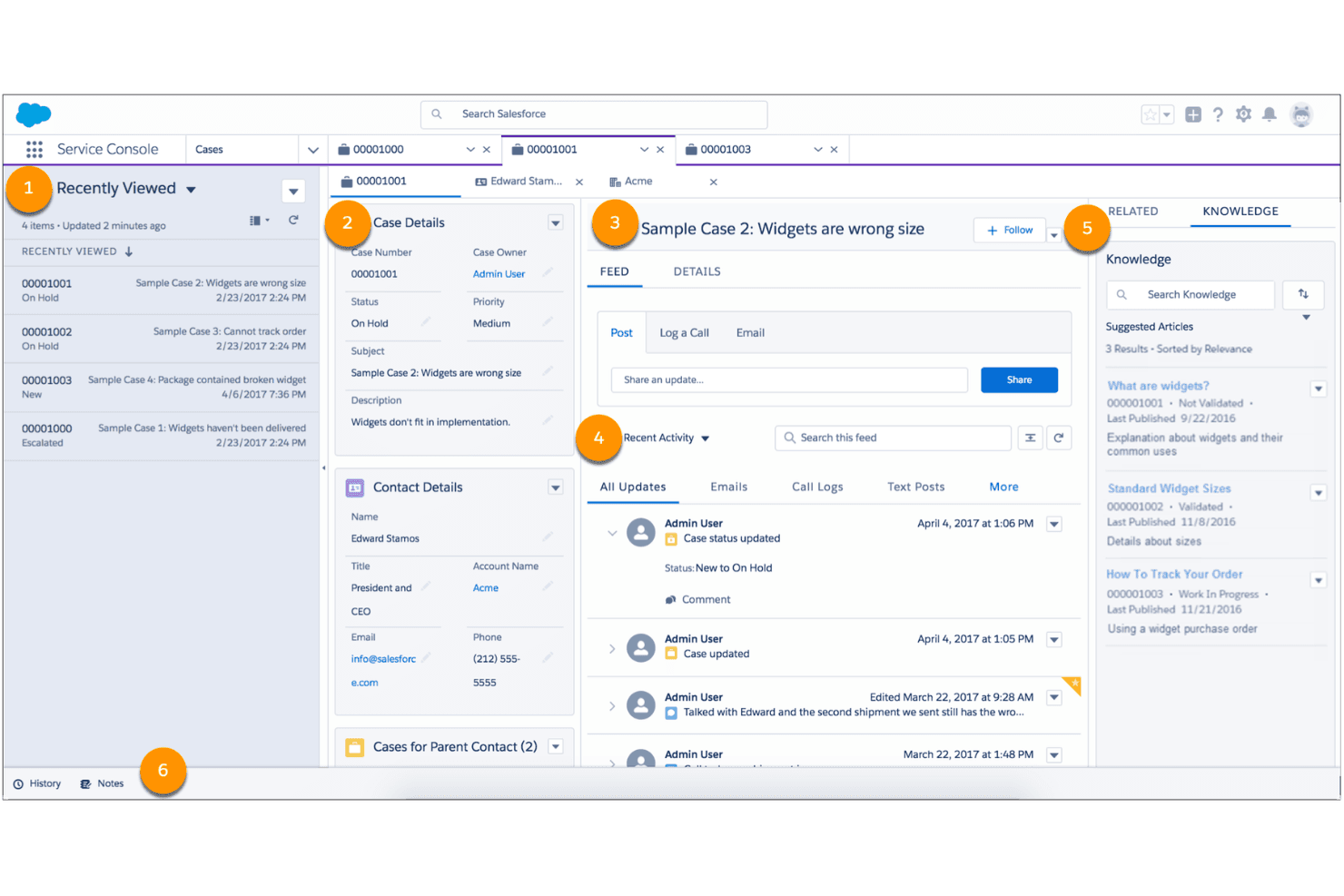
Agentforce Service offers a feature-rich experience, but the interface can feel overwhelming for new users or smaller teams. Many users mention that setup and customization require dedicated admin support, especially to unlock advanced automation and reporting. Once configured, navigation is logical and powerful, but expect a learning curve.
I think teams with complex needs or existing Salesforce experience will adapt fastest, while those seeking simplicity may find it less approachable.
Integrations
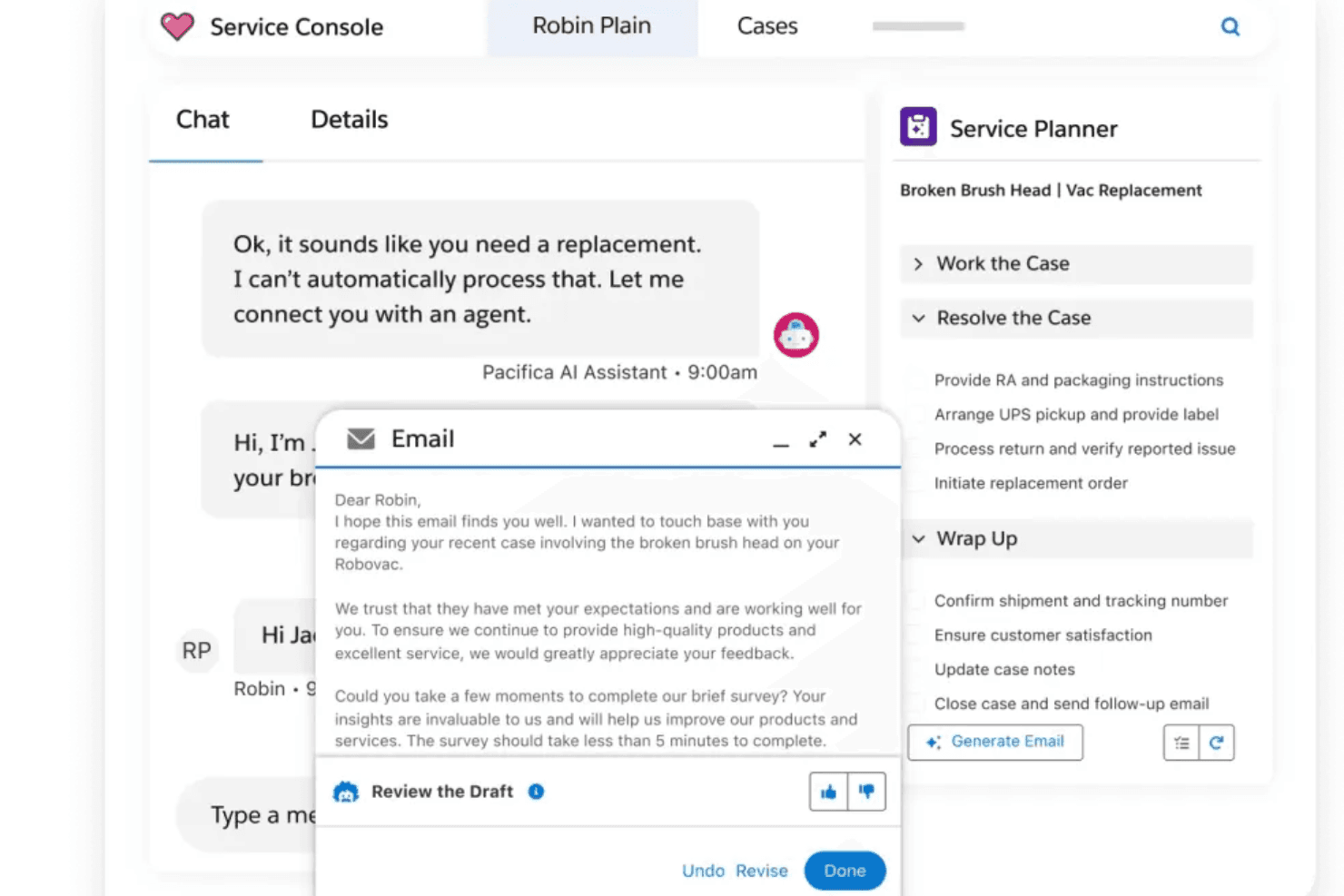
Agentforce Service integrates with Slack, Jira, Outlook, Gmail, Zendesk, HubSpot, SAP, Intercom, Freshdesk, and QuickBooks, among others.
They also offer a robust API and connect with third-party integration tools for custom workflows and data sync.
Agentforce Service (formerly Service Cloud) Specs
- Analytics: Yes
- API: Yes
- Batch Permissions & Access: Yes
- Call Integration: Yes
- Chat: Yes
- Contact Management: Yes
- Contact Sharing: No
- CRM Integration: Yes
- Customer Management: Yes
- Customer Service: Yes
- Dashboard: Yes
- Data Export: Yes
- Data Import: Yes
- Data Visualization: Yes
- Email Integration: Yes
- Escalation Management: Yes
- External Integrations: Yes
- Instant Chat Integration: Yes
- Knowledge Base: Yes
- Lead Management: No
- Lead Scoring: No
- Multi-User: Yes
- Notifications: Yes
- Real-time Alerts: No
- Scheduling: Yes
- Self-service Portal: Yes
- Social Media Integration: Yes
- Support Forum: Yes
- Third-Party Plugins/Add-Ons: Yes
- Ticket Management: Yes
- Workflow Management: Yes


