

Reseña de Canny: ventajas, desventajas, funciones y precios
Canny destaca por ofrecer una interfaz fácil de usar que simplifica la recopilación y priorización de comentarios sobre productos, lo que lo convierte en una opción destacada para equipos centrados en el desarrollo de productos impulsado por los clientes.

Revisamos las herramientas de manera independiente, y las comisiones ayudan a financiar nuestras pruebas. Consulta nuestra política de transparencia, nuestra metodología o sugiere una herramienta.
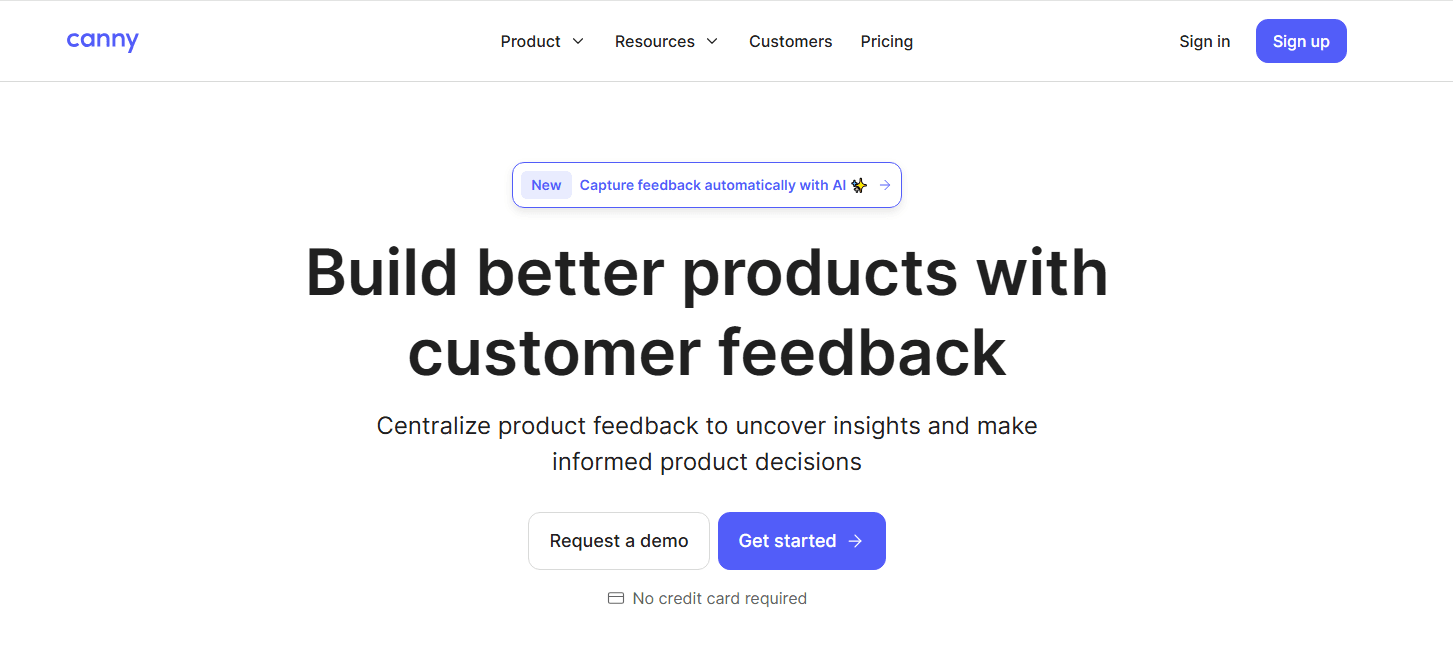
Canny is a customer feedback software for product and CX teams that need to collect, organize, and prioritize feature requests in one place. It's worth considering if your team wants a dedicated feedback portal with built-in voting, roadmap visibility, and a public changelog—without the steep learning curve that comes with something like Productboard, which leans further into full product management territory than most CX teams actually need.
Canny Evaluation Summary
4.6/5
- From $79/month (billed annually)
- Free plan available
Por qué confiar en nuestras recomendaciones de software
6,700+
Reviews
20
Industry experts
16+
Evaluation factors
14
Years
Nuestro equipo lleva probando y evaluando software desde 2012. Como líderes de CX, sabemos lo difícil —y lo importante— que es elegir el software adecuado.
Para esta guía, evaluamos las herramientas mediante pruebas prácticas e investigación independiente, puntuando las herramientas según nuestros criterios de selección.
Nuestras reseñas reflejan nuestro criterio editorial humano, no un discurso de ventas.
 Gui DrusinaCreative Director
 Tim FisherVP of AI
Canny Overview
In my opinion, Canny.io is a strong choice for teams seeking effective customer feedback software. It stands out with its straightforward interface and powerful feedback tracking features. Compared to others, Canny excels in capturing and organizing user feedback, making it easy for your team to prioritize improvements. However, its onboarding process could be smoother. If your team values seamless integration with other tools and prioritizes customer feedback in product development, Canny is worth considering. While its customer support is generally reliable, expanding support team channels could enhance user experience. Overall, Canny offers solid value, especially for teams committed to leveraging user insights for product growth.
Pros
- Canny provides a clean interface and an embeddable widget that helps you collect feedback and prioritize.
- It offers excellent tools for managing feature requests and user feedback.
- Your team can easily track and vote on suggestions to improve product development.
Cons
- It may not fully support complex workflows for larger organizations or advanced project management needs.
- You might find it less customizable compared to other feedback tools.
Is Canny Right For Your Needs?
Who Would be a Good Fit for Canny?
Canny is ideal for startups and small to medium-sized tech companies focused on product development. Your team can benefit from its straightforward feedback collection and prioritization tools, which streamline the process of acting on user suggestions. Canny's voting system helps prioritize features that users want, making it a great fit for teams looking to build products that align closely with user needs.
- Tech StartupsCanny simplifies gathering user feedback, essential for startups developing new features or products.
- Product TeamsYour team can track feature requests easily, ensuring alignment with user demands for product updates.
- SaaS CompaniesCanny supports feedback-driven development, crucial for SaaS offerings.
- Customer SuccessTeams It helps you manage and prioritize customer suggestions effectively while collaborating with your support team.
- Small to Medium BusinessesCanny’s user-friendly interface suits smaller teams that need efficient feedback management.
- Agile Development TeamsThe tool’s prioritization features align with agile methodologies for rapid iteration.
Who Would be a Bad Fit for Canny?
Canny might not suit large enterprises or organizations with complex feedback workflows. If your team needs detailed reporting and advanced customization, Canny's features might fall short. Larger teams that require intricate feedback management and integration with other complex systems may want to look at Canny alternatives like Trello.
- Large EnterprisesCanny's basic reporting features may not meet the needs of large-scale operations.
- Complex Feedback WorkflowsYour team might find Canny too simple for managing intricate feedback processes without additional automation or custom functionality.
- Industries Needing CustomizationCanny lacks deep customization options, which can be a drawback for specialized industries.
- Government OrganizationsThe tool may not align with the strict regulatory requirements typical in government settings.
- Financial InstitutionsCanny's straightforward approach might not comply with financial industry standards for data handling.
- Healthcare ProvidersYour team could find Canny insufficient for handling sensitive patient feedback securely.
Cómo Probamos y Evaluamos Herramientas
Hemos pasado años construyendo, refinando y perfeccionando nuestro sistema de evaluación y puntuación de software. La rúbrica está diseñada para capturar los matices de la selección de software y lo que hace que una herramienta sea eficaz, centrándose en los aspectos críticos del proceso de toma de decisiones. A continuación, puedes ver exactamente cómo funcionan nuestras pruebas y puntuaciones en siete criterios. Esto nos permite ofrecer una evaluación imparcial del software basada en funcionalidad principal, características destacadas, facilidad de uso, incorporación, soporte al cliente, integraciones, opiniones de clientes y la relación calidad-precio.
Funcionalidad Principal (25% de la puntuación final)
El punto de partida de nuestra evaluación siempre es la funcionalidad principal de la herramienta. ¿Tiene las funciones básicas que un usuario esperaría? ¿Alguna de esas funciones principales está bloqueada en planes de precios más altos? Consideramos que una herramienta debe estar a la par de las capacidades básicas de sus competidores.
Características Destacadas (25% de la puntuación final)
A continuación, evaluamos aquellas características poco comunes y destacadas que superan la funcionalidad principal típica de herramientas de ese tipo. Una puntuación alta refleja funciones especializadas o únicas que hacen que el producto sea más rápido, eficiente o que aporte un valor adicional al usuario. También evaluamos lo fácil que es integrar la herramienta con otras que típicamente se utilizan en el ecosistema tecnológico para ampliar la funcionalidad y utilidad del software. Las herramientas que ofrecen abundantes integraciones nativas, conexiones de terceros y acceso a API para integraciones personalizadas obtienen la mejor puntuación.
Facilidad de Uso (10% de la puntuación final)
Consideramos lo rápido y sencillo que es ejecutar las tareas definidas en la funcionalidad principal usando la herramienta. El software que puntúa alto está bien diseñado, es intuitivo, ofrece aplicaciones móviles, proporciona plantillas y hace que tareas relativamente complejas parezcan sencillas.
Incorporación (10% de la puntuación final)
Sabemos lo importante que es la rápida adopción del equipo en una nueva plataforma, así que evaluamos lo fácil que es aprender y usar una herramienta con poca formación. Evaluamos cuán rápido un miembro del equipo puede configurarse y comenzar a usar la herramienta sin experiencia. Las soluciones mejor puntuadas requieren poco o ningún soporte.
Soporte al Cliente (10% de la puntuación final)
Revisamos lo rápido y sencillo que es salir de un atasco y encontrar ayuda por teléfono, chat en vivo o una base de conocimientos. Las herramientas y empresas que brindan soporte en tiempo real obtienen la mejor puntuación, mientras que los chatbots obtienen la peor.
Opiniones de Clientes (10% de la puntuación final)
Más allá de nuestras propias pruebas, consideramos el puntaje neto del promotor de los clientes actuales y anteriores. Revisamos la probabilidad de que elijan la herramienta nuevamente para la funcionalidad principal. Un software con alta puntuación refleja un alto puntaje neto del promotor por parte de clientes actuales o anteriores.
Relación Calidad-Precio (10% de la puntuación final)
Por último, considerando todos los demás criterios, analizamos el precio promedio de los planes de nivel inicial frente a las funciones principales y valoramos el resto de los criterios de evaluación. El software que ofrece más por menos obtiene una mayor puntuación.
Core Features
Feedback Collection: Canny lets you gather feedback directly from users in a streamlined way. Your team can easily access user opinions and requests.
Voting System: Users can vote on feedback, helping you prioritize features based on demand. This makes it easy to see what matters most to your audience.
Roadmap Visualization: Canny offers a visual roadmap that shows planned features and updates. This keeps your team and users aligned on upcoming changes.
Commenting: Users can comment on feedback to provide more context or suggestions. It fosters open communication and deeper insights into user needs.
Status Updates: You can update the status of feedback items, keeping everyone informed. This transparency helps build trust with your users.
Analytics: Basic analytics provide insights into which features get the most attention. Your team can use this data to make informed product decisions.

Ease of Use
Canny's user-friendly interface makes it easy for your team to collect and prioritize feedback without a steep learning curve. The straightforward design means you can quickly navigate through features like voting and roadmap visualization. Compared to many other tools, Canny's simplicity stands out, allowing you to focus on user feedback without getting bogged down in unnecessary complexity. This ease of use ensures your team can start benefiting from its features right away.

Integrations
Canny integrates with Jira, GitHub, ClickUp, Linear, Azure DevOps, Asana, Intercom, Zendesk, Salesforce, Slack, and many more. Canny also offers an API and connects with third-party integration tools allowing for extensive customization and integration with a wide range of other applications.

Canny Specs
- Analytics: Yes
- API: Yes
- Calendar Management: No
- Call Tracking: No
- Contact Management: Yes
- Dashboard: Yes
- Data Export: Yes
- Data Import: Yes
- Data Visualization: Yes
- Email Integration: Yes
- External Integrations: Yes
- Google Apps Integration: No
- Multi-User: Yes
- Net Promoter Score: Yes
- Notifications: Yes
- Review Monitoring: Yes
- Scheduling: No
- Softphone: No
- Third-Party Plugins/Add-Ons: Yes


