

Die 10 besten VoIP-Softphone-Apps im Jahr 2026

Auswahl der besten VoIP-Softphone-Apps


VoIP-Softphone-Apps ermöglichen es Ihnen, Geschäftsanrufe direkt von Ihrem Computer oder Mobilgerät über ein Headset zu tätigen und entgegenzunehmen, sodass jeder Bildschirm zu Ihrer geschäftlichen Telefonleitung wird. Für Führungskräfte im Support- und Kundenerlebnisbereich bedeutet dies flexible und kostengünstige Kommunikation, ohne dass Sie Hardware oder komplexe Einrichtungsvorgänge verwalten müssen.
Wenn Sie nach den besten Lösungen suchen, um Kundengespräche zu verbessern, Ihr Team verbunden zu halten und sich an die Entwicklung Ihres Unternehmens anzupassen, hilft Ihnen dieser Leitfaden dabei, die besten Optionen zu vergleichen und selbstbewusst das richtige Tool auszuwählen.
Warum Sie unseren Software-Empfehlungen vertrauen können
Unser Team testet und bewertet Software seit 2012. Als CX-Führungskräfte selbst wissen wir, wie schwierig – und wichtig – es ist, die richtige Software auszuwählen.
Für diesen Leitfaden haben wir Tools mithilfe von praktischen Tests und unabhängiger Recherche bewertet und dabei unsere Bewertungskriterien angewendet.
Unsere Bewertungen spiegeln unser menschliches redaktionelles Urteilsvermögen wider, keine Verkaufsstrategie.
| Tool | Best For | Trial Info | Price | ||
|---|---|---|---|---|---|
| 1 | Best for international calling analytics | 14-day free trial | From $25/user/month (billed annually) | Website | |
| 2 | Best for global virtual phone numbers | 10-day free trial | From $18/user/month (billed annually) | Website | |
| 3 | Best for Freshworks-based call routing | 14-day free trial | From $15/user/month (billed annually) | Website | |
| 4 | Best for Workspace-based business calling | Free plan available | From $10/user/month | Website | |
| 5 | Best for customer-facing team communications | Free demo available | From $15/user/month (billed annually) | Website | |
| 6 | Best for AI-powered call notes | 14-day free trial + free demo available | Pricing upon request | Website | |
| 7 | Best for multi-device business communications | 14-day free trial | From £18/user/month | Website | |
| 8 | Best for sales dialers and SMS workflows | 14-day free trial | From $29/user/month (billed annually) | Website | |
| 9 | Best for small-business calling and desk phones | Not available | From $19.95/user/month | Website | |
| 10 | Best for Zoom-based business calling | Free demo available | From $10.50/user/month | Website |
Bewertungen von VoIP-Softphone-Apps
Im Folgenden finden Sie meine ausführlichen Zusammenfassungen der besten VoIP-Softphone-Apps, die es in meine Auswahl geschafft haben. Meine Bewertungen bieten einen detaillierten Einblick in die Funktionen, Integrationen und besten Anwendungsfälle jeder Plattform, damit Sie die beste Lösung für sich finden.

Best for international calling analytics
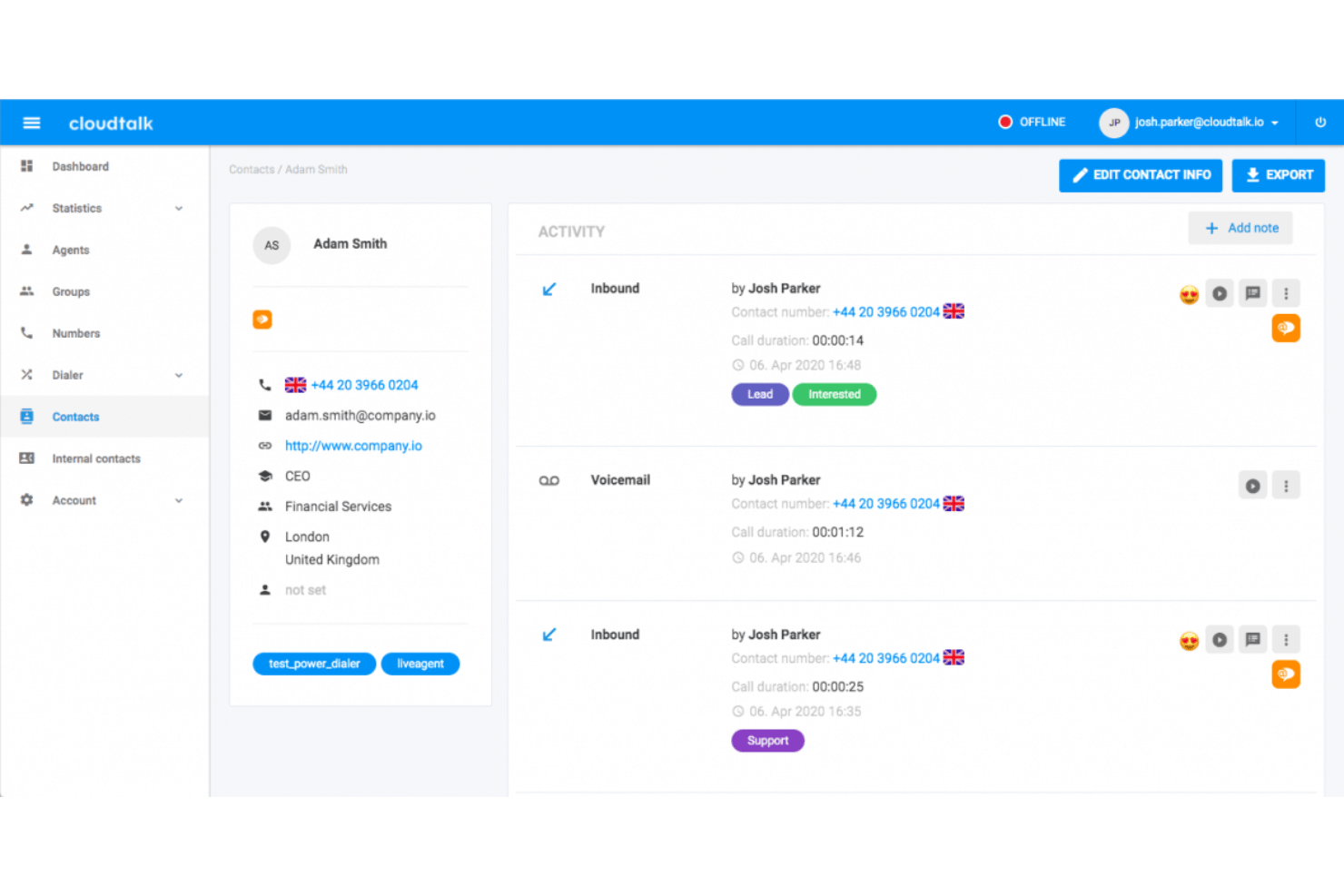
CloudTalk is a cloud-based VoIP softphone platform combining AI-powered dialers, global calling across 160+ countries, CRM integrations, real-time call analytics, and multi-channel messaging in a single interface.
Who Is CloudTalk Best For?
CloudTalk suits growing sales and support teams that manage high call volumes across multiple countries and need detailed agent performance visibility.
Why I Picked CloudTalk
I've included CloudTalk in my top picks because its real-time analytics go deeper than most softphones when calls span multiple countries. The custom dashboards break down call volume, duration, and agent activity by region, queue, or time period, all without manual exports. The AI Conversation Intelligence layer adds sentiment scoring and searchable transcripts on top, so I can review how specific agents are performing across different international markets.
CloudTalk Key Features
- Smart dialer: Queue up multiple calls from lists and contacts to automate outbound dialing workflows.
- Skill-based routing: Assign incoming calls to available agents based on expertise or language criteria.
- IVR call flow designer: Build multi-level interactive menus with drag-and-drop controls for self-service or routing.
- Softphone apps for all devices: Access the softphone via Mac, Windows, browser, iOS, and Android without extra hardware.
CloudTalk Integrations
CloudTalk offers 100+ native integrations, including Salesforce, HubSpot, Zendesk, Pipedrive, Intercom, Zoho CRM, Freshdesk, Gorgias, Slack, Microsoft Teams, and Zapier. An API is available for custom integrations.
Pros and Cons
Pros:
- Strong uptime with global carrier redundancy
- AI transcription available on all paid plans
- Deep analytics across international call queues
Cons:
- Call quality drops on poor network connections
- Mobile app less reliable than desktop version

Best for global virtual phone numbers
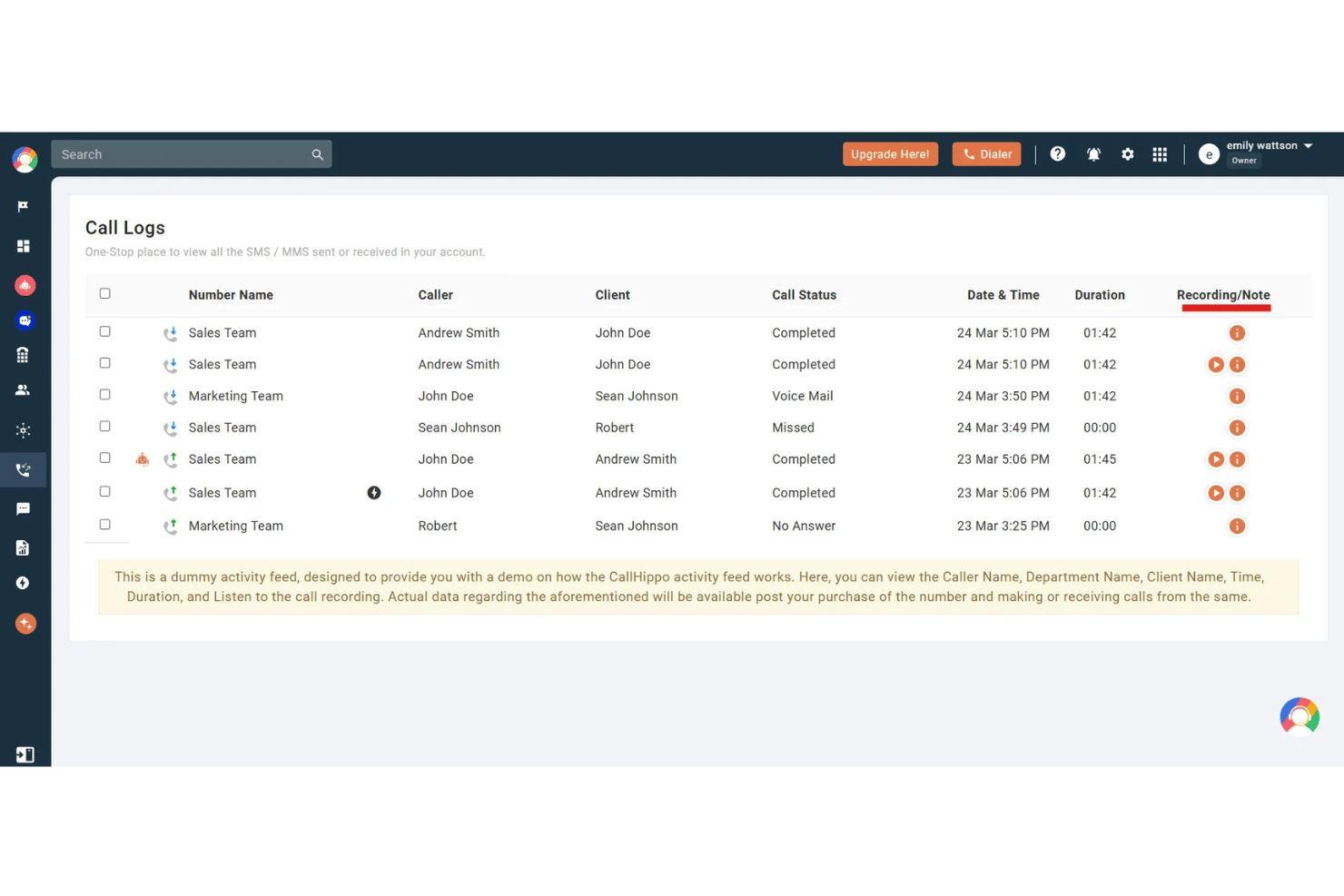
CallHippo is a cloud telephony platform with softphone apps for web, desktop, and mobile. It offers virtual phone numbers in 150+ countries alongside AI-powered calling, omnichannel messaging, and contact center routing.
Who Is CallHippo Best For?
It's a strong fit for small to mid-sized sales and support teams that need local phone presence across multiple countries without complex infrastructure.
Why I Picked CallHippo
I've included CallHippo in my top picks because the depth of its global number coverage sets it apart from most softphone apps. You can provision local, toll-free, or mobile numbers in 150+ countries within minutes, and Smart DID Routing automatically presents the correct local caller ID based on the destination country. I also like the AI Global Connect feature, which detects a contact's local time zone before dialing to prevent calls landing outside business hours.
CallHippo Key Features
- Omnichannel inbox: Manage calls, SMS, WhatsApp, Telegram, email, and chat messages from one unified dashboard.
- Call center controls: Use IVR menus, smart call routing, call queues, barging, whisper, and monitoring for live agent coaching.
- CRM and helpdesk integrations: Connect directly with Salesforce, HubSpot, Zoho, Zendesk, Freshdesk, and more to log call activity.
- Real-time analytics dashboards: Monitor team and agent call metrics, performance KPIs, and historical trends in a customizable dashboard.
CallHippo Integrations
CallHippo offers native integrations with Salesforce, HubSpot, Zoho CRM, Zendesk, Freshdesk, Pipedrive, Intercom, Shopify, Slack, and Microsoft Teams. An API is available for custom integrations.
Pros and Cons
Pros:
- Live call monitoring with whisper and barge
- AI transcription and post-call summaries included
- Virtual numbers available in 150+ countries
Cons:
- Mobile app less stable than web client
- Call quality issues reported on low bandwidth

Best for Freshworks-based call routing
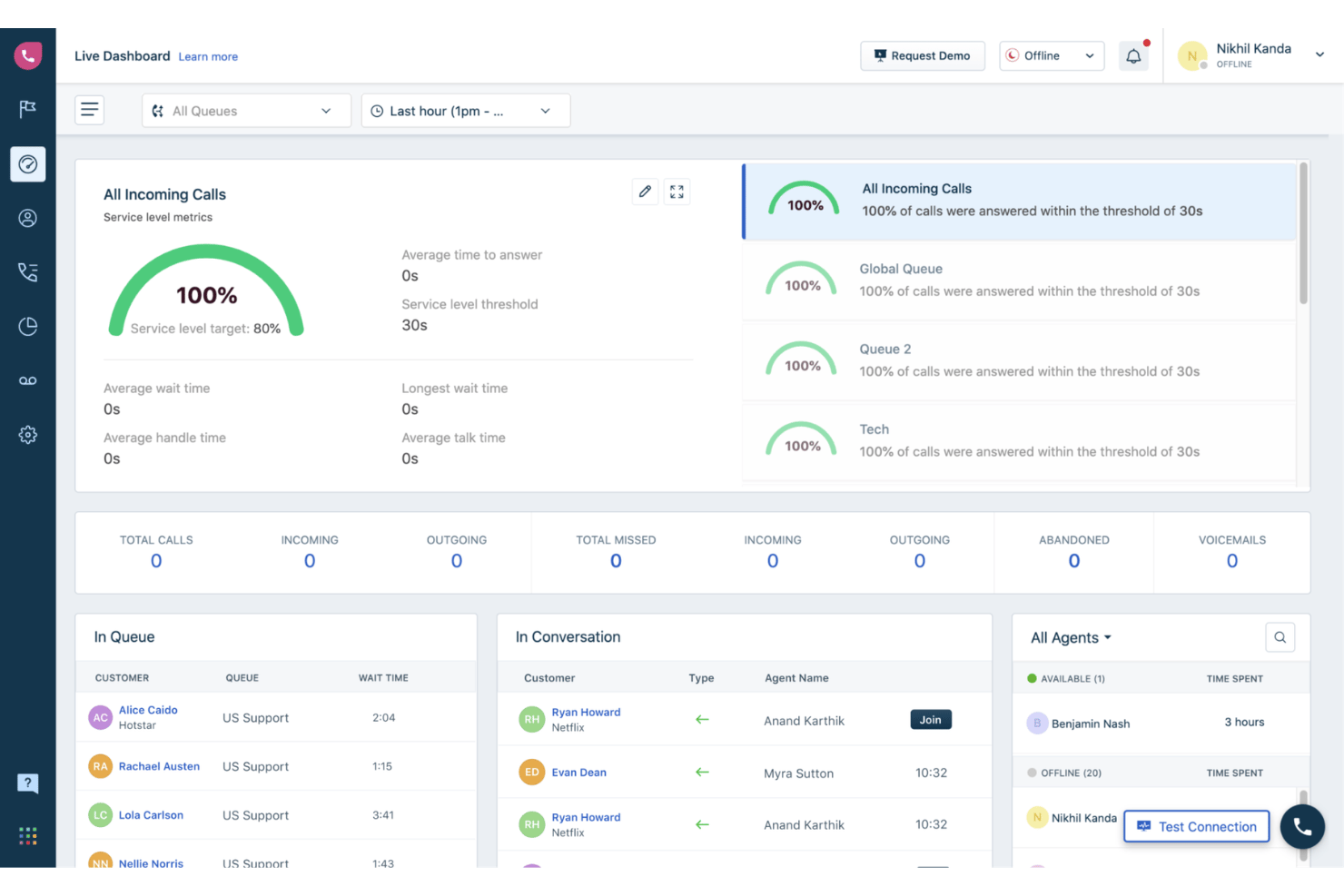
Freshcaller is a cloud-based VoIP contact center solution that lets agents place and receive calls via browser, mobile app, or SIP handset, with multi-level IVR, call routing, recording, and real-time analytics built in.
Who Is Freshcaller Best For?
Freshcaller is a strong fit for support teams already using the Freshworks ecosystem who need a tightly connected call center and helpdesk setup.
Why I Picked Freshcaller
I've included Freshcaller in my top picks because its call routing is purpose-built for teams running on Freshworks. Inbound calls can be routed using conditions tied directly to Freshdesk or Freshsales data, so the right agent gets the right call based on CRM context. I also rely on its smart escalation rules and live call barging, which let supervisors step into active calls and coach agents in real time without disrupting the customer.
Freshcaller Key Features
- Multi-level IVR system: Build custom call menus with nested options to direct callers where they need to go.
- Call recording with storage: Automatically record calls and access recordings directly from the call log.
- Real-time agent status: See live agent availability, including ready, busy, and do-not-disturb, for more effective routing.
- Global phone number coverage: Access local and toll-free numbers from over 90 countries for international presence.
Freshcaller Integrations
Freshcaller offers native integrations with Freshdesk, Freshsales, Salesforce, HubSpot, and Slack. An API is available for custom integrations.
Pros and Cons
Pros:
- Real-time agent availability visible across teams
- Barge and whisper on active calls
- IVR routing needs no coding
Cons:
- Less suited for non-Freshworks tech stacks
- Reporting dashboards lack deep customization options

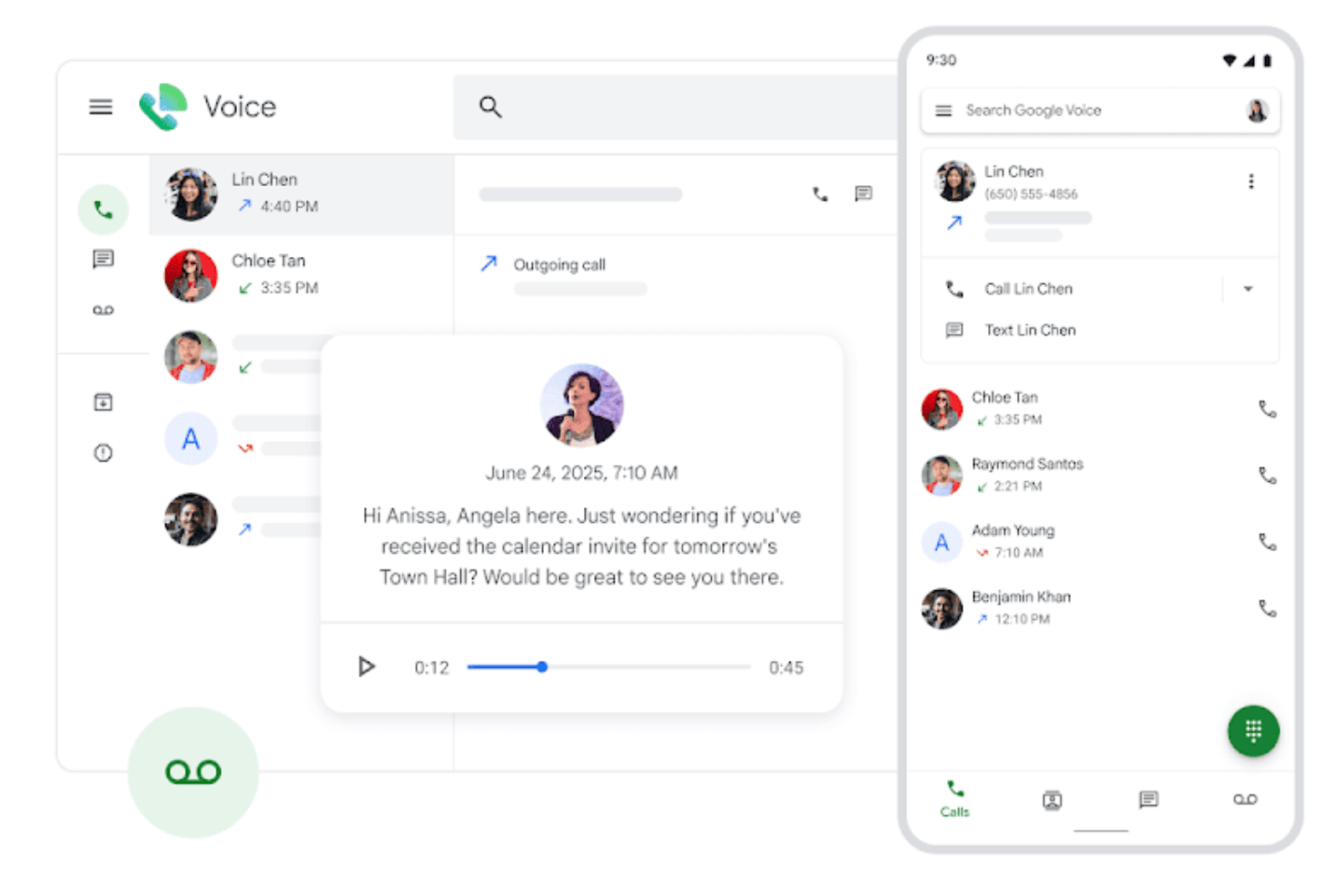
Google Voice is a cloud-based VoIP softphone built into the Google Workspace ecosystem, offering calling, video calls, SMS, voicemail transcription, and AI-powered spam filtering across mobile, desktop, and desk phones.
Who Is Google Voice Best For?
Google Voice is a natural fit for small businesses and distributed teams already running on Google Workspace who need a lightweight business phone system without added infrastructure.
Why I Picked Google Voice
I've included Google Voice in my top picks because it's the only VoIP softphone that's fully native to Google Workspace. Calls route directly through Gmail, voicemails transcribe automatically into your inbox, and the multi-level auto attendant handles call routing without any separate admin platform. My team uses the Vault integration to keep call records in the same discovery and retention system as email.
Google Voice Key Features
- Multi-device calling: Make and receive calls from mobile devices, laptops, or supported desk phones with one number.
- Spam call blocking: Uses Google AI to detect and block spam callers before the phone rings.
- SIP Link integration: Connect existing PSTN services and desk phones to Google Voice through certified session border controllers.
- Google Calendar routing: Routes incoming calls based on your Google Calendar working hours settings.
Google Voice Integrations
Google Voice offers native integrations with Google Workspace apps, including Google Meet and Google Calendar, and provides an API for custom integrations.
Pros and Cons
Pros:
- Works across mobile, desktop, and desk phones
- AI-powered voicemail transcription included
- Native Google Workspace sync across all apps
Cons:
- No built-in call recording on starter plan
- Limited call analytics for contact center teams
Nextiva
Best for customer-facing team communications
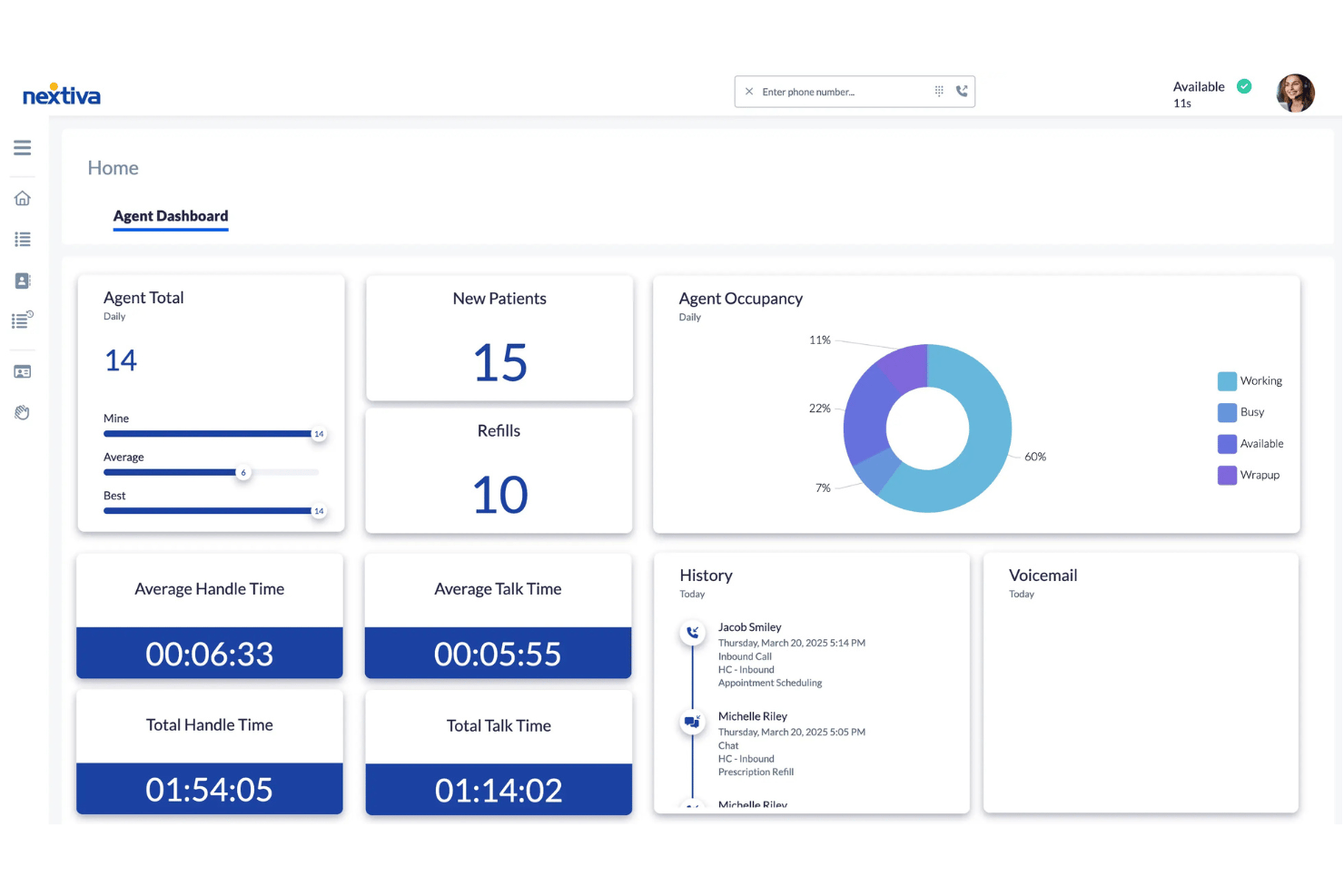
Nextiva is a cloud-based VoIP and unified communications platform that combines softphone calling, SMS, video meetings, team chat, and AI-powered call management across desktop and mobile apps.
Who Is Nextiva Best For?
Nextiva is a strong fit for customer support and contact center teams that need a single platform for voice, messaging, and AI-assisted call handling.
Why I Picked Nextiva
I picked Nextiva as one of the best because the NextivaONE app keeps my whole customer-facing team on voice, SMS, and chat without switching between tools. The AI Voice Agent handles inbound calls 24/7, routing inquiries and answering FAQs before a live agent picks up. I also rely on AI call transcription and summary to review customer interactions quickly, without replaying full recordings.
Nextiva Key Features
- Multi-level auto attendant: Set up advanced call routing menus for different departments or schedules.
- Team presence and status: See real-time availability of colleagues for easier call transfers and coordination.
- Contact center analytics: Access dashboards with live and historical metrics on agent performance and call activity.
- Browser and mobile softphone apps: Make and receive calls from web browsers, Windows, macOS, iOS, and Android devices.
Nextiva Integrations
Nextiva offers native integrations with Salesforce, HubSpot, Microsoft Teams, Google Workspace, Outlook, and Microsoft Dynamics, and provides an API for custom integrations.
Pros and Cons
Pros:
- Reliable HD audio on desktop and mobile clients
- Unified voice, SMS, and chat in one app
- AI call summaries reduce manual post-call documentation
Cons:
- Reporting dashboards have a steep initial learning curve
- Mobile app occasionally drops calls on poor connections

Dialpad
Best for AI-powered call notes
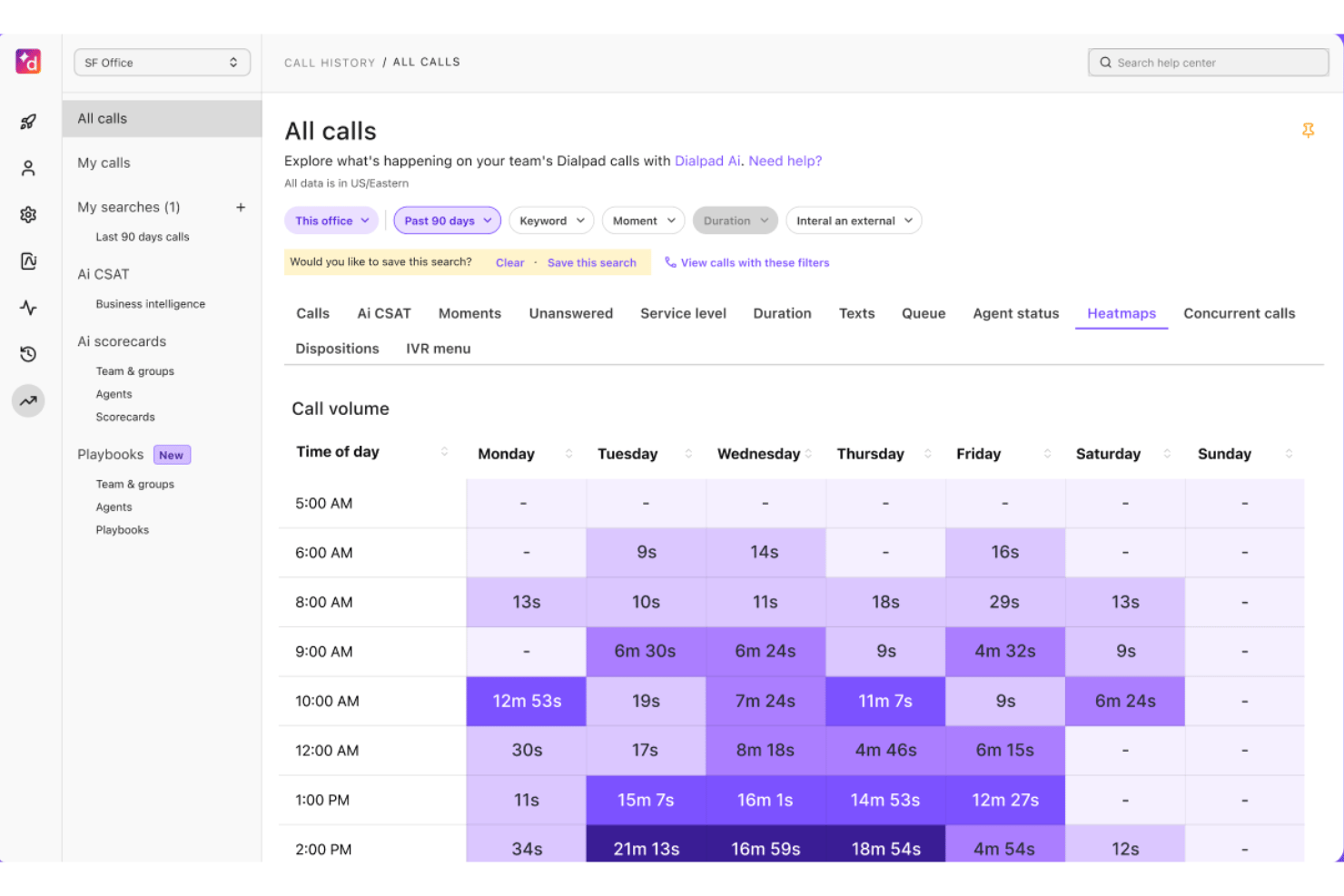
Dialpad is an AI-native cloud communications platform that unifies voice calling, SMS, messaging, and video meetings in a single softphone app built on its own proprietary large language model, DialpadGPT.
Who Is Dialpad Best For?
Dialpad suits small to midsize customer support and sales teams—particularly those running on Google Workspace—who need a cloud phone system with built-in AI call documentation.
Why I Picked Dialpad
Dialpad earns its spot on my shortlist because its AI Recaps feature automatically generates structured call summaries and action items after every conversation, powered by its proprietary DialpadGPT model. Real-time transcription runs live during calls, so nothing gets missed even in fast-moving support interactions. I also like that AI CSAT scoring runs automatically on 91% of calls, giving my team consistent post-call performance data without any manual review process.
Dialpad Key Features
- Multi-device softphone: Make and receive calls on desktop, mobile, tablet, or web.
- Unified team messaging: Chat and share files with coworkers in the same app as calls.
- Native CRM integrations: Connects directly with platforms like Salesforce, HubSpot, and Zendesk.
- Real-time presence: See agent availability and status instantly to streamline call routing and collaboration.
Dialpad Integrations
Dialpad offers native integrations with Salesforce, HubSpot, Zendesk, Google Workspace, Microsoft 365, ServiceNow, Zoho CRM, Okta, Bullhorn, and Clio. An API is available for custom integrations.
Pros and Cons
Pros:
- Works across desktop, mobile, and web browser
- Real-time transcription runs during live calls
- AI-generated call summaries after every conversation
Cons:
- Call quality can drop on weak connections
- AI features locked behind higher-tier plans

Best for multi-device business communications
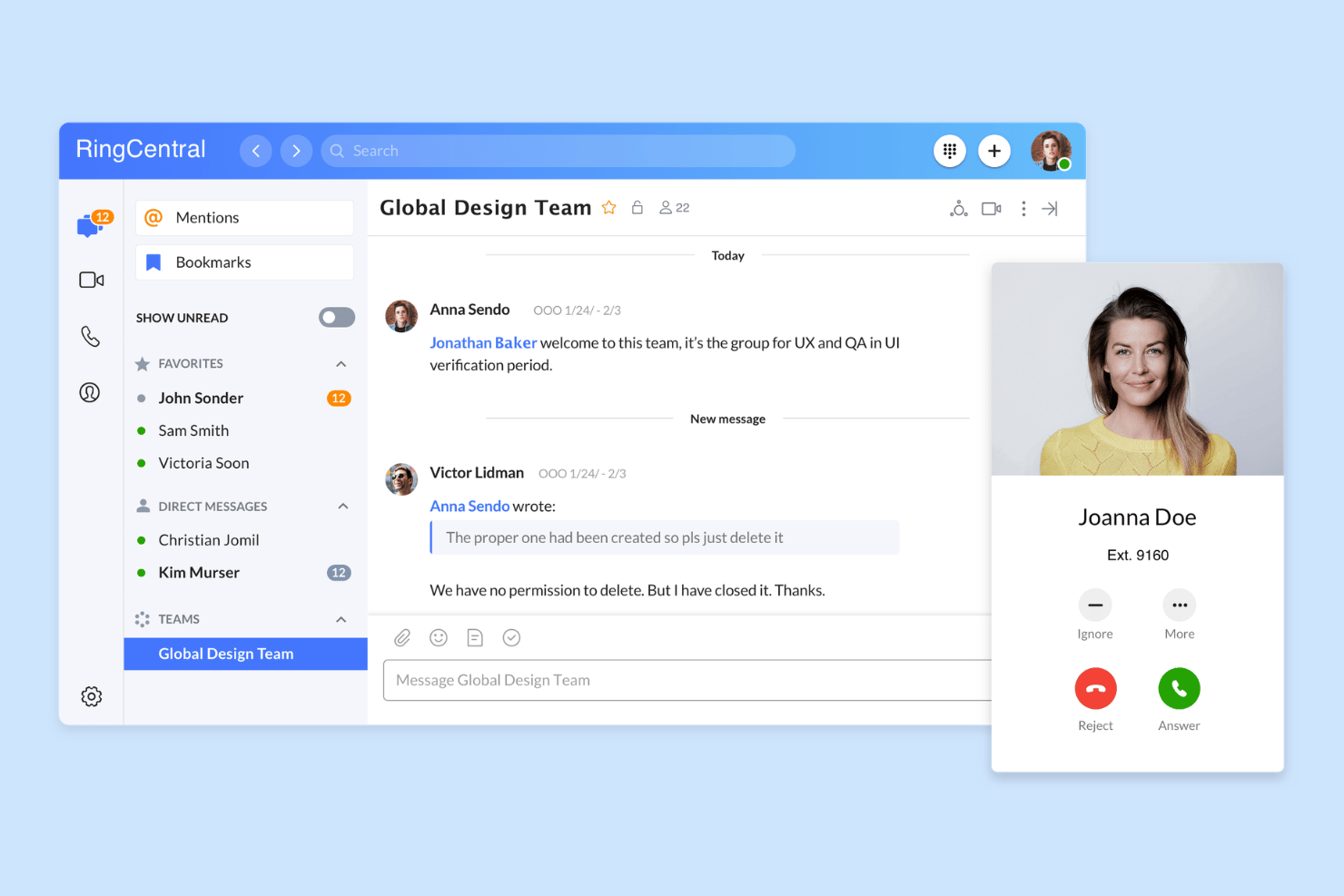
RingCentral is a cloud-based UCaaS platform that combines VoIP calling, video meetings, business SMS, and team messaging into a single softphone app across desktop, mobile, and web.
Who Is RingCentral Best For?
It's a strong fit for mid-sized businesses with distributed or remote teams that need a single platform for managing voice communications across multiple devices and locations.
Why I Picked RingCentral
RingCentral earns its spot on my shortlist because of how consistently it handles voice across every device in my setup. I particularly like the call flip feature, which lets you transfer a live call from your desktop softphone to your mobile app mid-conversation without any interruption. Presence status also syncs in real time across desktop, mobile, and web, so my team always sees accurate availability no matter which device someone is working from.
RingCentral Key Features
- AI-powered call summaries: Automatically generates searchable, AI-driven summaries for every call to speed up review and QA.
- Integrated team messaging: Offers built-in chat and group messaging directly alongside calling functions in the softphone app.
- Omnichannel contact centre: Supports voice, SMS, web chat, and social messaging in one dashboard for CX teams.
- Native CRM integrations: Connects with Salesforce, HubSpot, and Zendesk to pull up customer records and auto-log activities.
RingCentral Integrations
RingCentral offers native integrations with Salesforce, HubSpot, Zendesk, Microsoft Teams, Google Workspace, Slack, and ServiceNow, and provides an API for custom integrations.
Pros and Cons
Pros:
- AI transcription covers every recorded call
- Real-time presence synced across all platforms
- Call flip works live mid-conversation
Cons:
- Interface feels cluttered for call-only users
- Mobile app frequently drains battery faster

JustCall
Best for sales dialers and SMS workflows
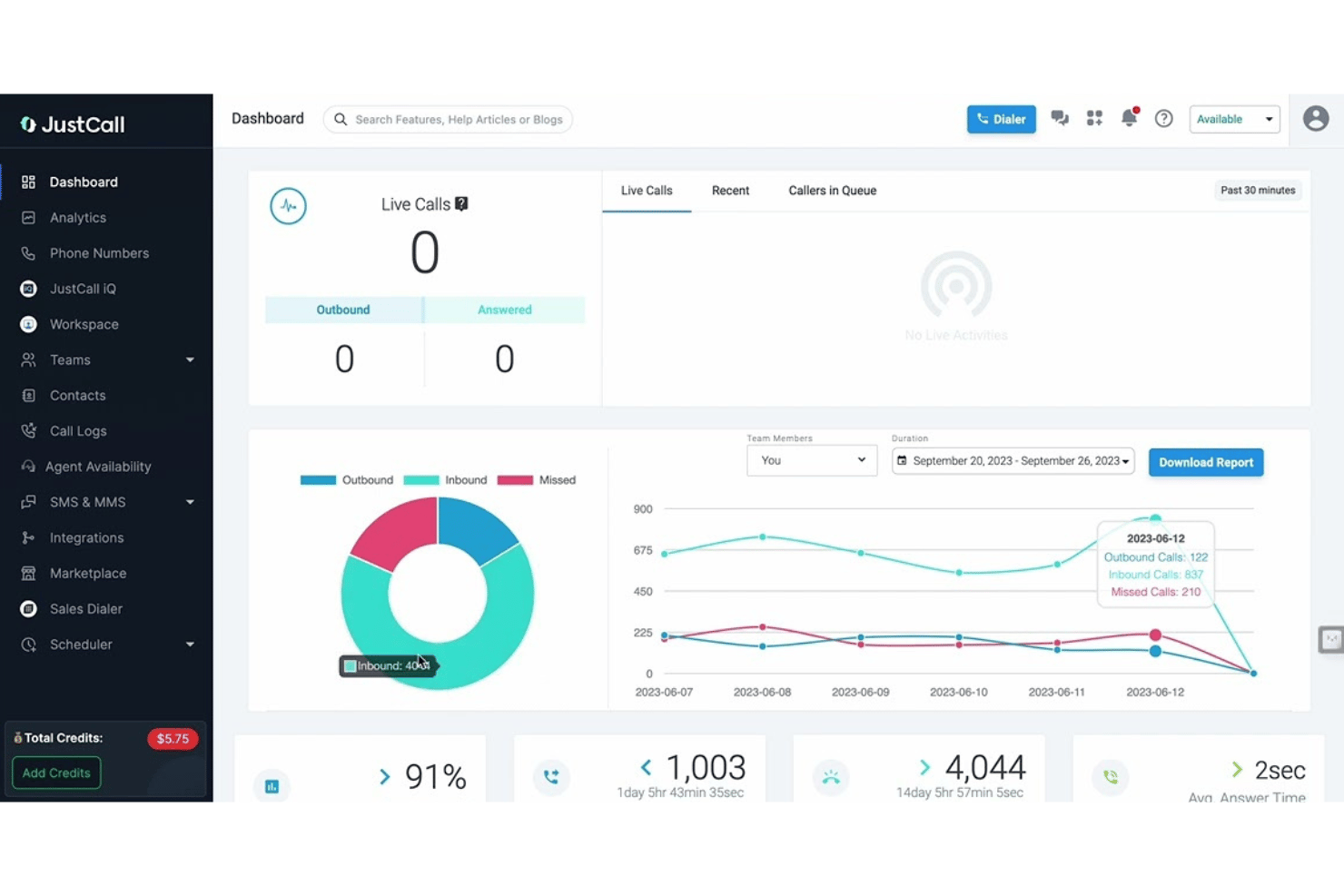
JustCall is a cloud-based VoIP softphone platform combining voice calling, SMS and MMS messaging, AI conversation intelligence, and multi-line auto-dialer capabilities across desktop, mobile, and web.
Who Is JustCall Best For?
JustCall is a strong fit for outbound sales teams and SMB-to-mid-market customer support operations that need voice, SMS, and dialer tools in one place.
Why I Picked JustCall
I picked JustCall as one of the best because its multi-line predictive dialer (up to 10 simultaneous lines) and Dynamic Dialer genuinely set it apart from most softphone apps that only offer basic click-to-dial. I also like how SMS workflows and bots run natively inside the same platform, so my team can trigger automated follow-up sequences without switching tools. The local presence dialing feature, which displays a number matching the prospect's area code, adds a layer of functionality that most standalone softphone apps skip entirely.
JustCall Key Features
- Real-time agent presence: Displays agent availability status across web, desktop, and mobile for efficient routing.
- Native CRM integrations: Connects natively with Salesforce, HubSpot, Zoho, and Zendesk for click-to-dial and automatic call logging.
- Automatic call recording: Captures and stores every call for easy playback and quality assurance.
- Live call monitoring: Lets supervisors listen, whisper, or barge into ongoing calls for coaching and oversight.
JustCall Integrations
JustCall offers 100+ native integrations, including Salesforce, HubSpot, Zoho CRM, Pipedrive, Zendesk, Freshdesk, Intercom, Help Scout, Slack, and Microsoft Teams. An API is available for custom integrations.
Pros and Cons
Pros:
- AI transcription on every recorded call
- SMS workflows and bots run natively
- Predictive dialer supports up to 10 lines
Cons:
- Reporting dashboards offer limited customization options
- Mobile app call quality can be inconsistent

Best for small-business calling and desk phones
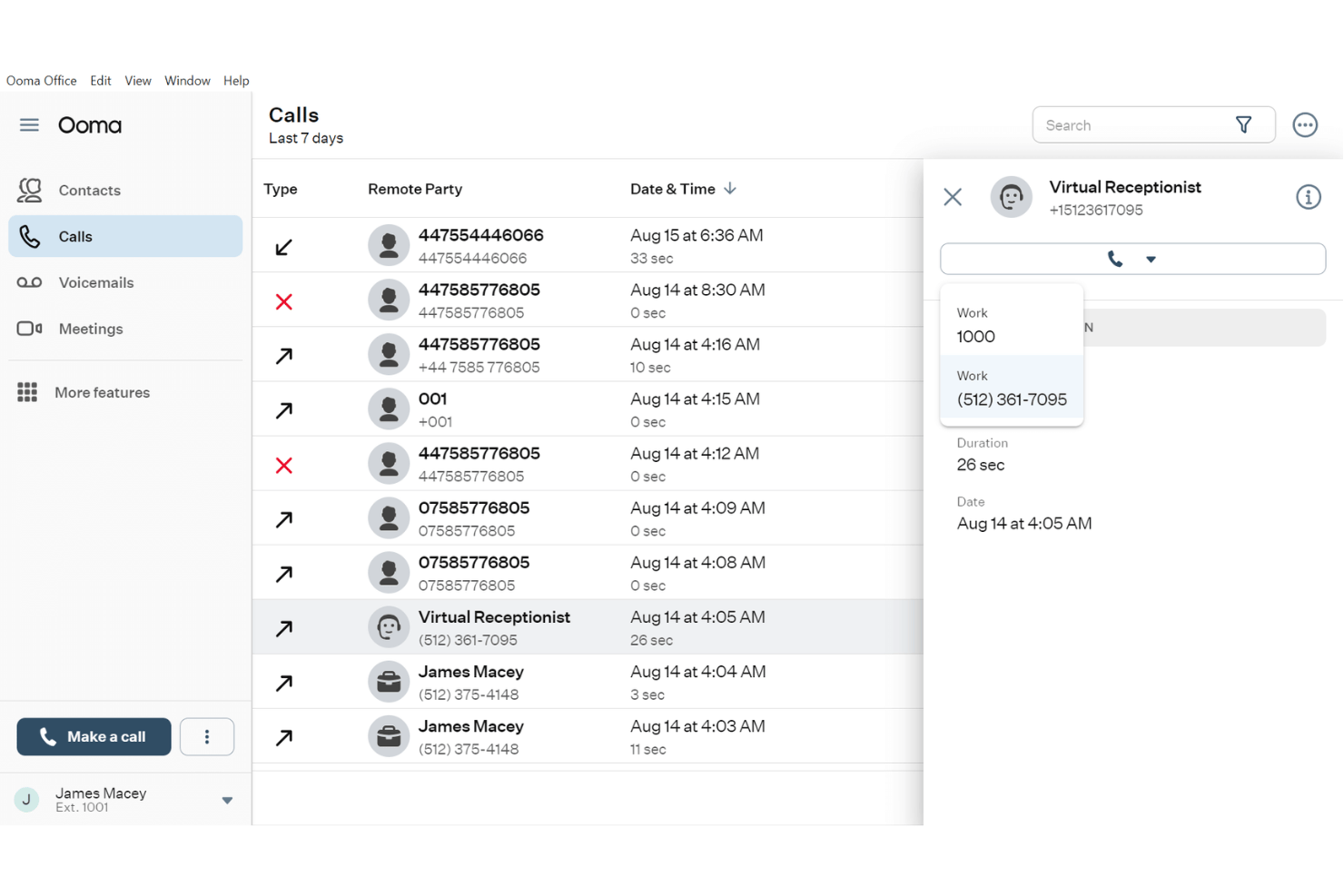
Ooma Office is a cloud-based VoIP phone system for small businesses that combines a desktop and mobile softphone, call management controls, SMS, videoconferencing, and CRM integrations in one platform.
Who Is Ooma Office Best For?
Ooma Office is a strong fit for small and mid-sized businesses that want a full-featured phone system without the complexity or cost of enterprise VoIP platforms.
Why I Picked Ooma Office
I picked Ooma Office as one of the best because it genuinely bridges desk phones and softphone apps in a way few SMB-focused platforms do. Call Flip lets me transfer an active call from my desk phone to the mobile softphone mid-conversation without dropping it. Simultaneous ring means incoming calls hit both the desk phone and the softphone app at once, so my team never misses a call when moving between spaces.
Ooma Office Key Features
- AI call transcription and summaries: AI-powered transcriptions and automated call summaries on Pro Plus plans.
- CRM integration: Connects with platforms like Salesforce, HubSpot, and Zoho to sync contacts and call logs.
- Team chat and presence: Built-in team messaging and real-time presence indicators for improved coordination.
- Call analytics dashboard: Detailed call metrics and leaderboards help you track agent and team activity.
Ooma Office Integrations
Ooma Office offers native integrations with Salesforce, HubSpot, Zendesk, Zoho, Pipedrive, Microsoft Dynamics 365, SugarCRM, and Google and Microsoft 365. It also connects with Zapier and provides an API for custom integrations.
Pros and Cons
Pros:
- Includes built-in video conferencing on mobile
- Call Flip moves live calls between devices
- Supports physical desk phones alongside softphone
Cons:
- AI transcription requires the pricier Pro Plus
- Mobile app stability has frustrated some users

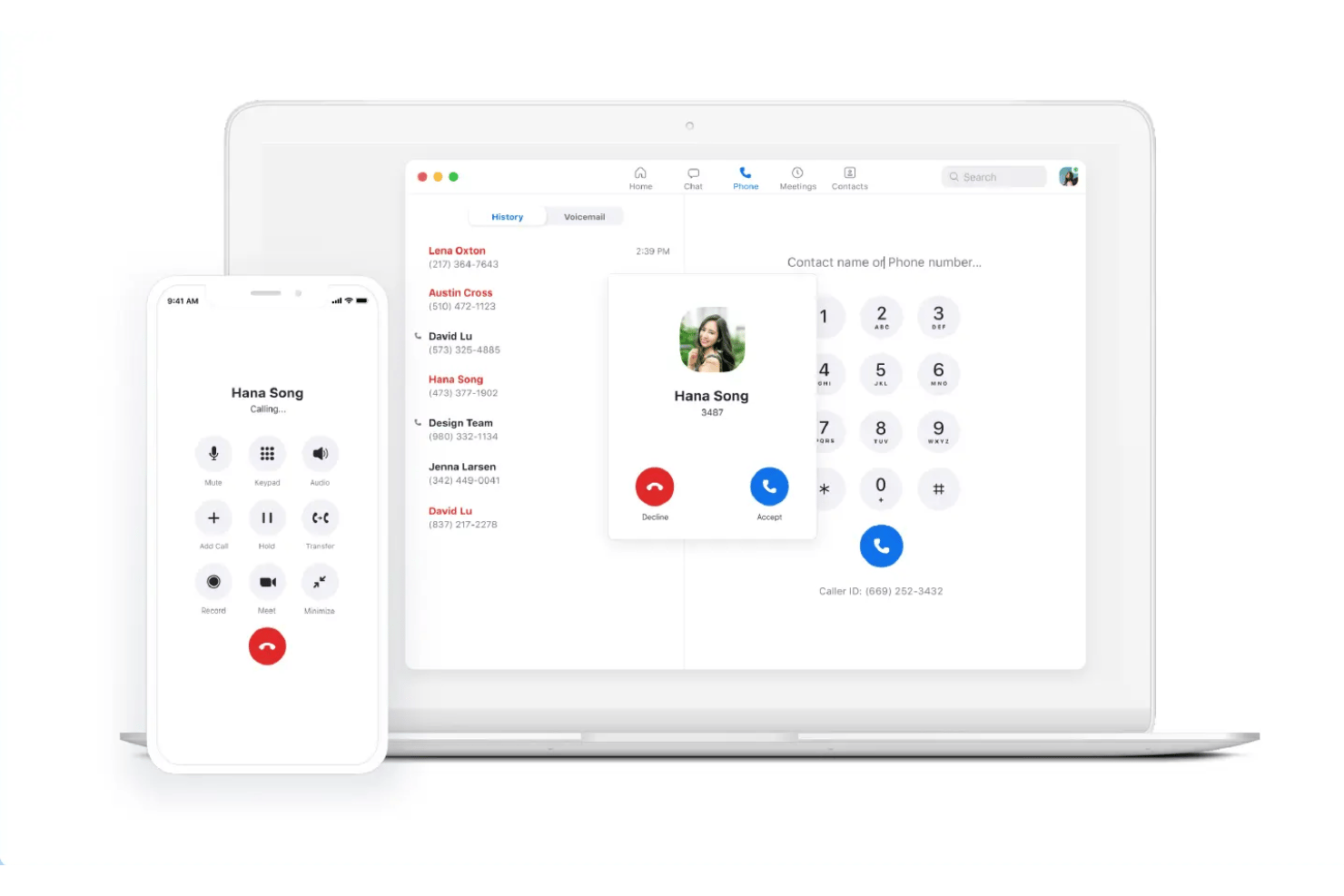
Zoom Phone is a cloud-based VoIP softphone that brings together inbound and outbound PSTN calling, SMS/MMS, voicemail transcription, call routing, and AI-powered call summaries across desktop, mobile, and desk phone clients.
Who Is Zoom Phone Best For?
It's a natural fit for teams already running on Zoom Workplace who want voice calling built into the same platform as their meetings and chat.
Why I Picked Zoom Phone
Zoom Phone earns its spot as one of the best on my shortlist because of how tightly it plugs into the rest of the Zoom Workplace suite. I like that my team can flip an active call from desktop to mobile without dropping it, which matters on days when someone needs to step away from their desk mid-conversation. The AI Companion adds real value too, generating post-call summaries and pulling action items directly from recorded calls.
Zoom Phone Key Features
- CRM and helpdesk integrations: Connects natively with Salesforce, HubSpot, Zendesk, and Microsoft Teams for click-to-dial and auto-logged call activity.
- Presence and team messaging: Real-time presence status and direct chat enable seamless team coordination inside the Zoom app.
- Call queue management: Lets admins set up call queues and routing rules to distribute incoming calls across agents or departments.
- Automatic call recording: Captures and stores calls for quality review, compliance, or performance management.
Zoom Phone Integrations
Zoom Phone offers native integrations with Salesforce, HubSpot, Zendesk, Microsoft Teams, Google Workspace, Slack, ServiceNow, and Okta, and provides an API for custom integrations.
Pros and Cons
Pros:
- Unified with Zoom meetings and chat
- AI call summaries included natively
- Call flip from desktop to mobile
Cons:
- Limited supervisor monitoring without Contact Center add-on
- Requires an existing Zoom Workplace plan
Weitere VoIP-Softphone-Apps
Hier finden Sie einige weitere VoIP-Softphone-Apps, die es nicht in meine Auswahl geschafft haben, aber dennoch eine Überlegung wert sind:
- 3CX
For self-hosted business phone systems
- Aircall
For CRM-integrated sales calling
- Five9
For outbound contact center campaigns
- Talkdesk
For AI contact center automation
- CloudCall
For CRM-based sales calling
- Genesys Cloud CX
For enterprise experience orchestration
- 8x8 Contact Center
For secure omnichannel contact centers
- Vonage Contact Center
For Salesforce contact center workflows


Wie ich VoIP-Softphone-Apps bewerte
Ich unterteile meine Bewertung in zentrale unverzichtbare Funktionen – wie geräteübergreifendes Telefonieren und CRM-Integrationen – sowie unterscheidende Faktoren, die ein einfaches Wählprogramm von einem Tool abheben, auf das sich Mitarbeitende tatsächlich verlassen werden.
Kernfunktionen (Grundvoraussetzungen für diese Liste)
Bei der Auswahl der Tools für meine Liste bewerte ich jedes einzelne für die unten aufgeführten Kernfunktionen auf einer Skala von 0 (bietet die Funktion nicht) bis 5 (zeichnet sich in diesem Bereich aus). Anschließend rechne ich die Gesamtpunktzahl des Tools in einen Prozentsatz um und verwende 65 % als Richtwert, um die allgemeine Eignung für die Liste zu beurteilen.
- VoIP-Telefonie: Ich prüfe, ob Mitarbeitende HD-Anrufe über Desktop, Mobilgeräte und das Web tätigen und empfangen können, damit Remote-Teams nicht an ein einziges Gerät gebunden sind.
- Steuerung der Anrufbearbeitung: Halten, angekündigte Weiterleitung, Konferenzen und Anrufübergabe sind gleichermaßen wichtig. Ich bewerte, wie reibungslos Mitarbeitende Anrufe während eines Gesprächs umleiten oder eskalieren können.
- CRM-/Helpdesk-Integrationen: Native Verbindungen zu Plattformen wie Salesforce oder Zendesk sollten Bildschirmanzeigen mit Kundendaten einblenden und Aktivitäten automatisch protokollieren, ohne dass eine manuelle Eingabe erforderlich ist.
- Anrufaufzeichnung & Sprachnachrichten: Ich achte auf automatische Aufzeichnungen mit durchsuchbarem Speicher, da Qualitätssicherungsprüfungen und Coachingsitzungen von einem einfachen Zugriff auf vergangene Anrufe abhängen.
- Präsenz & Verfügbarkeit: Echtzeit-Statusanzeigen helfen dabei, Anrufe an verfügbare Mitarbeitende weiterzuleiten. Ich prüfe, ob die Präsenz teamübergreifend synchronisiert und automatisch aktualisiert wird.
- Anrufanalyse & Berichterstattung: Dashboards sollten Anrufvolumen, verpasste Anrufe und Kennzahlen auf Mitarbeitendenebene abdecken, damit Teamleitungen Trends erkennen und Leistungslücken beheben können.
Sobald ich eine Liste von Tools zusammengestellt habe, die die Kriterien erfüllen, prüfe ich, wodurch sich die einzelnen Plattformen voneinander unterscheiden.
Unterscheidungsmerkmale (Wodurch sich Anbieter abheben)
So vergleiche ich die verschiedenen Anbieter:
Hervorstechende Funktionen
Die Transkription von Anrufen durch KI erspart Mitarbeitenden das manuelle Anfertigen von Notizen und liefert Vorgesetzten durchsuchbare Zusammenfassungen nach dem Anruf, auf die sie während Qualitätssicherungsprüfungen zurückgreifen können. Außerdem bewerte ich Coaching-Tools wie Zuflüstern und Aufschalten, mit denen Teamleitungen Mitarbeitende während laufender Anrufe anleiten können, ohne dass der Kunde dies hört. CRM-Bildschirmanzeigen mit Kundendaten sind ein weiterer Unterscheidungsfaktor: Wenn die Kundenhistorie genau in dem Moment erscheint, in dem ein Anruf verbunden wird, entfällt für Mitarbeitende der sich wiederholende Verifizierungsschritt vollständig.
Über die Funktionen hinaus
Die Sprachqualität ist wichtiger, als die meisten Käufer erkennen. Beispielsweise prüfe ich die Unterstützung von HD-Codecs und Ausfallsicherheitsoptionen, da ein abgebrochenes Supportgespräch das Vertrauen der Kunden schnell beeinträchtigen kann. Neben der Gesprächsqualität ist die Sicherheit ein weiterer wichtiger Faktor. Ich achte auf TLS/SRTP-Verschlüsselung und Compliance-Zertifizierungen wie HIPAA oder SOC 2. Schließlich vergleiche ich die Preismodelle, da einige Anbieter pro Benutzer abrechnen, während andere Lizenzen nach der Anzahl gleichzeitig geführter Anrufe vergeben.
So wählen Sie VoIP-Softphone-Apps aus
Sie versuchen zu entscheiden, welche VoIP-Softphone-App Ihrem Team den größten Nutzen bietet? Überlegen Sie zunächst, welche Kommunikations-, Integrations- oder Überwachungsanforderungen für Sie höchste Priorität haben:
| Wenn Ihre Priorität ... ist | Priorisieren Sie ... |
|---|---|
| Manuelle Notizen reduzieren | KI-gestützte Gesprächstranskription |
| Anrufe in Ihr CRM integrieren | Native CRM-Konnektoren und Bildschirm-Pop-ups |
| Flexibilität der Agenten auf mehreren Geräten | Plattformübergreifende Nutzung (Desktop, Web, Mobilgerät) |
| Agenten in Echtzeit überwachen | Supervisor-Funktionen (Mithören, Aufschalten) |
| Sicherheit und Compliance | Ende-zu-Ende-Verschlüsselung, SOC 2, HIPAA |
So prüfen Sie Ihre Auswahl
- Fordern Sie eine Demo der KI-Transkription an: Bitten Sie um ein Beispiel oder führen Sie Ihre eigene Live-Transkription durch, um die Genauigkeit zu prüfen, indem Sie innerhalb einer Woche mindestens zwei echte Agentengespräche vergleichen.
- Verbinden Sie Ihr CRM während der Testphase: Nutzen Sie die Sandbox Ihres Systems, um Bildschirm-Pop-ups und Funktionen zur automatischen Protokollierung zu überprüfen, bevor Sie das System mit Live-Kundendaten einsetzen.
- Testen Sie Abläufe zur Anrufweiterleitung: Führen Sie parallele Übungen mit Agenten durch (Anrufübergabe, angekündigte Weiterleitung, Konferenz) und dokumentieren Sie die Wartezeiten auf verschiedenen Geräten.
- Bitten Sie um schriftliche Compliance-Nachweise: Fordern Sie von den Sicherheitsteams des Anbieters eine Dokumentation der TLS-/SRTP-Verschlüsselung sowie Nachweise für Zertifizierungen wie SOC 2 oder HIPAA an.
- Abwägung zur Filterung Ihrer Liste: Entscheiden Sie, ob Flexibilität (plattformübergreifend, BYOD) für Ihr Team wichtiger ist als erweiterte Analysen und Berichte – nur wenige Lösungen überzeugen in beiden Bereichen.
Was sind VoIP-Softphone-Apps?
Mit VoIP-Softphone-Apps können Sie über das Internet von einem Desktop-Computer, Webbrowser oder Mobilgerät aus Telefongespräche führen und empfangen. Dadurch können Teams geschäftliche Anrufe tätigen, ohne auf physische Tischtelefone angewiesen zu sein. Diese Apps bieten außerdem Funktionen wie Anrufsteuerung, Voicemail sowie CRM- oder Helpdesk-Integrationen. So haben Mitarbeitende während der Bearbeitung von Gesprächen von verschiedenen Standorten aus Zugriff auf den Kundenkontext.
Funktionen von VoIP-Softphone-Apps
Achten Sie bei der Auswahl von VoIP-Softphone-Apps auf die folgenden wichtigen Funktionen:
- VoIP-Telefonie: Tätigen und empfangen Sie Anrufe über das Internet von jedem Desktop- oder Mobilgerät aus, sodass kein physisches Telefon erforderlich ist.
- Anrufsteuerung: Greifen Sie auf wichtige Funktionen wie Halten, Stummschalten, Weiterleiten, Umleiten und Konferenzen zu, um jedes eingehende oder ausgehende Gespräch reibungslos zu verwalten.
- CRM-Integration: Verbinden Sie sich mit CRM-Systemen, um Anruferdetails anzuzeigen, Aktivitäten automatisch zu protokollieren und Mitarbeitenden während jeder Interaktion sofort den relevanten Kontext bereitzustellen.
- Anrufaufzeichnung und Voicemail: Archivieren Sie Anrufe und Voicemails für Schulungen, Qualitätssicherung und Compliance – mit einfachen Möglichkeiten zum Abrufen und Abspielen.
- Präsenz und Verfügbarkeit: Zeigen Sie den Echtzeitstatus von Mitarbeitenden an, etwa verfügbar, beschäftigt oder im Gespräch, um eingehende Kontakte effektiver weiterzuleiten und abgebrochene Übergaben zu vermeiden.
- Teamnachrichten: Ermöglichen Sie Chats und Direktnachrichten innerhalb der App, damit Mitarbeitende und Vorgesetzte sich schnell abstimmen können, ohne die Softphone-Umgebung zu verlassen.
- Anrufanalysen und Berichte: Verfolgen Sie Kennzahlen wie Anrufvolumen, Wartezeiten und verpasste Anrufe über Übersichten und Berichte, damit Führungskräfte die Teamleistung überwachen können.
- Sicherheit und Verschlüsselung: Schützen Sie Sprachdaten während der Übertragung und im Ruhezustand durch TLS- oder SRTP-Verschlüsselung und unterstützen Sie so die branchenüblichen Compliance-Anforderungen für vertrauliche Kommunikation.
- Unterstützung mehrerer Geräte: Ermöglichen Sie den einfachen Wechsel zwischen Desktop, Mobilgerät und Web, um eine flexible Nutzung für remote und hybrid arbeitende Teams zu schaffen.
- Steuerungsmöglichkeiten für Vorgesetzte: Bieten Sie Funktionen wie Anrufüberwachung, Mithören und Aufschalten, damit Teamleitungen während laufender Gespräche coachen oder eingreifen können, ohne dass der Kunde davon erfährt.
Vorteile von VoIP-Softphone-Apps
Die Einführung von VoIP-Softphone-Apps bietet Ihrem Team und Ihrem Unternehmen mehrere Vorteile. Hier sind einige, auf die Sie sich freuen können:
- Mehr Flexibilität: Mitarbeitende können Anrufe von überall aus über einen Desktop-Computer, ein Mobilgerät oder einen Browser annehmen, wodurch Remote- und hybrider Support möglich werden.
- Gebündelte Kommunikation: Verwalten Sie Sprache, Voicemail und Teamchat auf einer einzigen Plattform, sodass Mitarbeitende nicht zwischen verschiedenen Tools wechseln müssen.
- Besserer Kundenkontext: Integrationen mit CRM- und Helpdesk-Plattformen zeigen Anruferdetails sofort an, sodass Mitarbeitende vom ersten Moment an einen personalisierten Service bieten können.
- Besseres Coaching und bessere Qualitätssicherung: Integrierte Funktionen zur Anrufaufzeichnung, Überwachung und zum Mithören ermöglichen es Vorgesetzten, Gespräche zu überprüfen und Mitarbeitende in Echtzeit zu coachen.
- Verbesserte Übersicht: Live-Übersichten und Analysen geben Führungskräften an einem zentralen Ort Einblick in den Status der Mitarbeitenden, Anrufwarteschlangen und die Teamleistung.
- Erhöhte Datensicherheit: TLS-/SRTP-Verschlüsselung und Funktionen zur Unterstützung von Compliance helfen dabei, vertrauliche Gespräche und Kundendaten zu schützen.
- Kosten- und Hardwareeinsparungen: Softphone-Apps machen Tischtelefone und teure PBX-Systeme überflüssig und senken dadurch die anfänglichen sowie die laufenden Kosten.
Kosten und Preise von VoIP-Softphone-Apps
Bei der Auswahl von VoIP-Softphone-Apps ist es wichtig, die verschiedenen verfügbaren Preismodelle und Tarife zu verstehen. Die Kosten variieren abhängig von Funktionen, Teamgröße, Zusatzoptionen und weiteren Faktoren. Die folgende Tabelle fasst gängige Tarife, ihre durchschnittlichen Preise und die typischerweise enthaltenen Funktionen von VoIP-Softphone-App-Lösungen zusammen:
Vergleichstabelle der Tarife für VoIP-Softphone-Apps
| Tarifart | Durchschnittlicher Preis | Übliche Funktionen |
|---|---|---|
| Kostenloser Tarif | $0 | Unterstützt grundlegende Anrufe, bietet Voicemail und ermöglicht eingeschränkte Sofortnachrichten für Teams. |
| Persönlicher Tarif | $5-$15/Nutzer/Monat | Fügt Unterstützung für mobile/Desktop-Apps, einfache Anrufverwaltung und grundlegende CRM-Integration hinzu. |
| Geschäftstarif | $15-$35/Nutzer/Monat | Umfasst Anrufaufzeichnung, integrierte Anbindungen, Analyseübersichten und Steuerungen der Team-Verfügbarkeitsanzeige. |
| Unternehmenstarif | $35-$60/Nutzer/Monat | Bietet erweiterte Sicherheit, Steuerungen für Vorgesetzte, offenen API-Zugriff und Zertifizierungen zur Einhaltung von Vorschriften. |
Häufig gestellte Fragen zu VoIP-Softphone-Apps
Hier finden Sie Antworten auf häufige Fragen zu VoIP-Softphone-Apps:
Können VoIP-Softphone-Apps auf jedem Gerät verwendet werden?
Ja, die meisten VoIP-Softphone-Apps unterstützen Windows, macOS, iOS, Android und den browserbasierten Zugriff mit Push-Benachrichtigungen für eingehende Anrufe. Dadurch können Mitarbeitende und Vorgesetzte Anrufe von Desktop-Computern, Laptops, Tablets oder Smartphones aus tätigen und entgegennehmen, ohne zusätzliche Hardware zu benötigen.
Sind VoIP-Softphone-Apps sicher genug für sensible Daten?
Ja, führende Lösungen verwenden Verschlüsselungsprotokolle wie TLS und SRTP, um Anrufe und Nachrichten zu schützen. Für Branchen mit strengen Compliance-Anforderungen sollten Sie auf Zertifizierungen wie HIPAA, SOC 2 oder GDPR-Unterstützung achten.
Wie lassen sich VoIP-Softphone-Apps in CRM- oder Kundendienstsysteme integrieren?
Die meisten Apps bieten vorgefertigte Integrationen oder offene APIs für gängige CRM- und Kundendienstplattformen. Dadurch lassen sich Kundendaten und Anrufaktivitäten automatisch synchronisieren, sodass Mitarbeitende die Anruferhistorie sehen und jedes Gespräch protokollieren können.
Welche Internetgeschwindigkeit benötigen Sie für zuverlässige VoIP-Anrufe?
In der Regel ist eine stabile Breitbandverbindung mit mindestens 100 kbit/s pro gleichzeitigem Anruf erforderlich. Geringere Geschwindigkeiten oder unzuverlässige Netzwerke können zu Gesprächsabbrüchen, abgehackter Audioqualität oder Latenzproblemen führen.
Können VoIP-Softphone-Apps herkömmliche Tischtelefone ersetzen?
Ja, sie wurden genau dafür entwickelt und ermöglichen es Teams, alle eingehenden und ausgehenden Anrufe digital zu verwalten. Dadurch sinken die Hardwarekosten, und Teams erhalten mehr Flexibilität für die Arbeit im Homeoffice oder in hybriden Arbeitsmodellen.