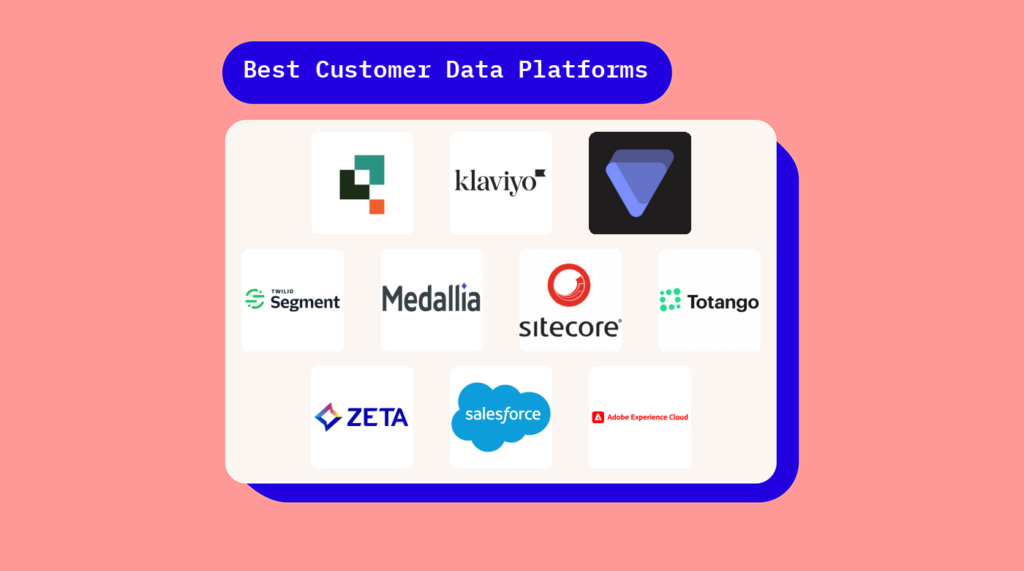

Les plateformes de données clients vous aident à centraliser les informations relatives à vos clients afin que vos équipes puissent proposer des expériences plus personnalisées et cohérentes. Mais avec autant d’outils qui se présentent comme des CDP, il est difficile de savoir lesquels unifient réellement vos données et les rendent exploitables.
Dans cet article, je vous présente mes meilleures recommandations de plateformes de données clients pour vous aider à segmenter les audiences, à activer des informations en temps réel et à coordonner l’expérience client entre les équipes et les canaux. Que vous gériez des demandes de service, lanciez des campagnes ou personnalisiez les parcours utilisateurs, ces outils fournissent la base de données nécessaire pour valoriser chaque interaction avec vos clients.
Pourquoi faire confiance à nos recommandations de logiciels
6,700+
Reviews
20
Industry experts
16+
Evaluation factors
14
Years
Notre équipe teste et évalue des logiciels depuis 2012. En tant que leaders CX nous-mêmes, nous savons à quel point il est difficile — et important — de choisir le bon logiciel.
Pour ce guide, nous avons évalué les outils grâce à des tests pratiques et une recherche indépendante, en notant les outils selon nos critères de sélection.
Nos avis reflètent notre jugement éditorial humain, et non un argumentaire de vente.
 Gui DrusinaCreative Director
 Tim FisherVP of AI
Tableau comparatif : plateformes de données clients
Ce tableau comparatif récapitule les informations essentielles concernant chacune de mes meilleures sélections de plateformes de données clients.
| Tool | Best For | Trial Info | Price | ||
|---|---|---|---|---|---|
| 1 | Meilleure CDP sans code, hautement personnalisable | Essai gratuit de 30 jours | À partir de 35 $/utilisateur/mois (facturé annuellement, minimum 20 utilisateurs) | Website | |
| 2 | Idéal pour l’activation des données clients | Forfait gratuit + démo gratuite disponible | À partir de 20$/mois | Website | |
| 3 | Idéal pour comprendre la santé des portefeuilles client | Démo gratuite disponible | Tarification sur demande | Website | |
| 4 | Idéal pour l'ingestion et la distribution de données analytiques utilisateurs | Démo gratuite disponible | Tarification sur demande | Website | |
| 5 | Idéal pour recueillir les retours des clients | Démo gratuite disponible | Tarification sur demande | Website | |
| 6 | Idéal pour la capture de données client omnicanal | Démo gratuite disponible | Tarification sur demande | Website | |
| 7 | Idéal pour les startups recherchant de la flexibilité dans l'optimisation du parcours client | Démo gratuite disponible | Tarification sur demande | Website | |
| 8 | Démo gratuite disponible | Tarification sur demande | Website | ||
| 9 | Idéal pour des profils clients unifiés | Démo gratuite disponible | Tarification sur demande | Website | |
| 10 | Idéal pour la collecte en temps réel de données clients B2B et B2C | Démo gratuite disponible | Tarification sur demande | Website |


Présentation des 20 meilleures plateformes de données clients
Voici mes principales recommandations parmi les meilleures plateformes de données clients (CDP) actuellement disponibles, accompagnées d’une brève description de l’usage auquel chacune est la mieux adaptée :
 Meilleure CDP sans code, hautement personnalisable
- Essai gratuit de 30 jours
- À partir de 35 $/utilisateur/mois (facturé annuellement, minimum 20 utilisateurs)
Visit WebsiteCustomer Rating:4.4/5
QuickBase propose des solutions de bases de données personnalisables pour optimiser les processus de vente et la collaboration d’équipe grâce au développement d’applications sans code et à des analyses en temps réel. Quickbase propose un environnement low-code qui vous permet de concevoir des applications sur mesure, assurant l’intégration des données à travers vos opérations sans nécessiter une expertise technique approfondie. Grâce à Quickbase, vous pouvez améliorer l’efficacité des flux de travail et obtenir des informations en temps réel, faisant de cet outil une ressource précieuse pour toute organisation cherchant à optimiser ses processus et à exploiter les données client pour une croissance stratégique.
Pourquoi j’ai choisi Quickbase
J’ai choisi Quickbase pour sa capacité inégalée à servir de plateforme de données client sans code, hautement personnalisable, idéale pour ceux qui souhaitent concevoir des applications adaptées sans avoir besoin de compétences techniques poussées. Son constructeur visuel intuitif permet de créer des workflows et applications personnalisés, rationalisant ainsi les processus dans divers secteurs d’activité. De plus, Quickbase propose des outils d’automatisation qui simplifient les tâches complexes, vous laissant plus de temps à consacrer aux initiatives stratégiques. Grâce à ses capacités d’intégration, il est possible d’unifier des données provenant de multiples sources, améliorant ainsi la prise de décisions éclairées et la croissance de l’entreprise.
Principales fonctionnalités de Quickbase
En plus de ses capacités de personnalisation sans code, Quickbase propose une gamme de fonctionnalités qui renforcent son efficacité en tant que plateforme de données client.
- Notifications e-mail intégrées : Restez informé grâce à des alertes automatisées pour les événements critiques, garantissant que votre équipe soit toujours à jour sur les derniers développements.
- Bibliothèque d’APIs RESTful : Exploitez un ensemble complet d’APIs pour automatiser des tâches et intégrer Quickbase à d’autres systèmes, renforçant la flexibilité des flux de travail.
- Plus de 40 connecteurs intégrés : Connectez-vous facilement aux services cloud populaires comme Salesforce et Slack, pour permettre une circulation fluide des données entre les outils de votre organisation.
- Accès mobile : Accédez rapidement à vos applications lors de vos déplacements grâce à une application mobile dédiée, afin de gérer les workflows où que vous soyez.
Intégrations Quickbase
Les intégrations incluent Salesforce, Slack, Google Drive, Dropbox, DocuSign, QuickBooks Online, Box, Zendesk, ServiceNow et Snowflake.
Pros and Cons
Pros:
- La gestion avancée des rôles utilisateurs contrôle efficacement la visibilité des données
- L’interface de glisser-déposer simplifie le développement d’applications
- Quickbase offre un environnement low-code polyvalent pour la personnalisation
Cons:
- Des défis d’intégration peuvent survenir, nécessitant une connaissance avancée des APIs
- Des limitations de la fonctionnalité mobile peuvent entraver l’accès en déplacement
Learn more about Quickbase: Idéal pour l’activation des données clients
- Forfait gratuit + démo gratuite disponible
- À partir de 20$/mois
Visit WebsiteCustomer Rating:4.6/5
La plateforme de données clients de Klaviyo offre une analyse intelligente de nombreux indicateurs, notamment la performance du tunnel de conversion. La plateforme de données de Klaviyo place les informations de vos clients au cœur de votre stratégie d’engagement, afin que vous puissiez les utiliser à travers vos activités de marketing, de service et d’analyse, sans avoir à regrouper plusieurs systèmes. Elle agrège des données provenant de divers éléments de votre stack technologique, vous aide à créer des profils clients détaillés, et active ces profils dans des campagnes qui s’adressent directement à la façon dont les clients se comportent et interagissent avec votre marque — idéal si votre équipe attend plus de vos données clients que de simples listes et rapports.
Pourquoi j'ai choisi Klaviyo
J’apprécie la capacité de Klaviyo à unifier et activer les données clients avec fluidité. Sa segmentation basée sur le comportement en temps réel permet de cibler des audiences spécifiques avec précision, renforçant l’efficacité de vos campagnes marketing. De plus, l’analytique prédictive alimentée par l’IA de la plateforme fournit des informations précieuses sur le comportement client, aidant à anticiper les besoins et à adapter les stratégies marketing en conséquence. Avec plus de 350 intégrations, Klaviyo garantit une connectivité de données robuste et polyvalente.
Fonctionnalités clés de Klaviyo
En plus de ses puissantes capacités de segmentation et d’analyse prédictive, Klaviyo propose plusieurs autres fonctionnalités :
- Marketing omnicanal : Klaviyo prend en charge le marketing par email, SMS et réseaux sociaux, vous permettant d’atteindre vos clients où qu’ils se trouvent.
- Agents de marketing alimentés par l’IA : Utilise des outils d’IA intégrés pour générer le contenu des campagnes, suggérer des segments, et optimiser les stratégies à partir des tendances issues de vos propres données.
- Créateur de campagnes et d’emails par glisser-déposer : Créez et personnalisez facilement vos campagnes email et SMS avec un éditeur visuel intuitif.
- Automatisations & déclencheurs : Permet l’envoi automatique d’emails basé sur des actions spécifiques de vos clients, renforçant l’engagement.
Intégrations Klaviyo
Les intégrations incluent Shopify, WooCommerce, BigCommerce, Magento, Salesforce, Stripe, Facebook, Instagram, Google Ads et Mailchimp.
Pros and Cons
Pros:
- Prend en charge le marketing omnicanal, incluant email, SMS et réseaux sociaux.
- Fournit des analyses personnalisées grâce à l’IA pour des stratégies marketing adaptées.
- Offre une intégration de données complète pour des profils clients unifiés.
Cons:
- Les tarifs peuvent augmenter rapidement avec la croissance des listes de contacts.
- Certains utilisateurs souhaitent plus d’options de personnalisation.
Learn more about Klaviyo: Idéal pour comprendre la santé des portefeuilles client
- Démo gratuite disponible
- Tarification sur demande
Visit WebsiteCustomer Rating:4.6/5
Velaris propose une base de données centralisée des données clients, incluant des analyses sur la santé et le ressenti des clients Velaris est conçu pour les entreprises souhaitant renforcer l'engagement client et optimiser leurs opérations. Il s'intègre parfaitement à vos processus, offrant des solutions personnalisées pour des équipes telles que la réussite client, les ventes et le marketing. En automatisant les tâches routinières et en utilisant l'analytique prédictive, Velaris vous aide à vous concentrer sur des interactions significatives, prévoir les risques de résiliation et créer des parcours client personnalisés.
Pourquoi j'ai choisi Velaris
J'ai choisi Velaris car il excelle dans la fourniture d'informations sur la santé des portefeuilles clients, un aspect crucial pour toute entreprise souhaitant optimiser ses efforts en matière de réussite client. Le Health Score Builder de Velaris vous permet de créer des indicateurs de santé personnalisés à partir de métriques en temps réel, telles que l'activité des utilisateurs et le volume de tickets de support, pouvant prévoir les risques de résiliation et révéler des opportunités d'expansion. Son système de surveillance de santé à plusieurs niveaux offre des informations à la fois globales et détaillées, ce qui vous permet d'évaluer la santé client à différents niveaux. De plus, les capacités d'automatisation de la plateforme rationalisent les flux de travail en envoyant des alertes et en déclenchant des actions basées sur l'évolution des scores de santé, ce qui vous permet de gérer proactivement les relations client.
Fonctionnalités clés de Velaris
En plus de fournir des informations sur la santé des portefeuilles client, Velaris propose une gamme de fonctionnalités qui renforcent son efficacité en tant que plateforme de données client.
- Vue d'ensemble des comptes : Offre une vision claire de tous les comptes client, vous aidant à identifier rapidement les risques et les opportunités d'engagement.
- Scores de santé personnalisables : Permet d'adapter les métriques afin de prévoir efficacement la santé des clients et les risques de résiliation.
- Génération de rapports : Permet la création de rapports partageables sur différents types de données, garantissant des processus décisionnels éclairés.
- Alertes en temps réel : Notifie instantanément votre équipe en cas de risques potentiels, favorisant une gestion proactive de la relation client.
Intégrations Velaris
Les intégrations incluent Hubspot, Intercom et plus de 70 autres connexions natives, avec des options pour des solutions personnalisées via des intégrations techniques flexibles.
Pros and Cons
Pros:
- Bonne agrégation des données clients
- Fonctionnalités d'automatisation efficaces pour rationaliser les flux de travail
- Analyses propulsées par l’IA pour de meilleurs insights
Cons:
- Pourrait offrir davantage d'intégrations
- Les nouveaux utilisateurs peuvent rencontrer une courbe d'apprentissage lors du démarrage
Learn more about Velaris: Idéal pour l'ingestion et la distribution de données analytiques utilisateurs
- Démo gratuite disponible
- Tarification sur demande
Visit WebsiteCustomer Rating:4.5/5
Segment a introduit Sources permettant aux développeurs d'intégrer les données clients dans leurs entrepôts de données. Pour ceux qui recherchent une plateforme de données clients capable d'intégrer et d'activer les données en temps réel, Segment propose une solution conçue pour répondre aux besoins de secteurs variés, notamment le commerce de détail, la santé et les services financiers. En offrant une API unique pour l'intégration des données et des outils de gestion des profils clients, Segment permet à votre équipe d'améliorer l'engagement client et de prendre des décisions éclairées sans compromettre la qualité des données ni la confidentialité des utilisateurs. Grâce à ses nombreuses intégrations et à son accent sur les expériences personnalisées, Segment est un choix idéal pour les organisations souhaitant optimiser la gestion de leurs données clients et améliorer leurs interactions globales.
Pourquoi j'ai choisi Segment
J'ai choisi Segment pour sa capacité inégalée à ingérer les données analytiques des utilisateurs et à les distribuer vers des applications d'entreposage de données, répondant ainsi à un besoin crucial des entreprises souhaitant exploiter pleinement leurs données. Grâce à sa fonctionnalité unique Connections, Segment intègre les données des applications web et mobiles via une seule API, les transforme et les charge dans les entrepôts, ce qui simplifie la gestion des données pour votre équipe. La fonction Unify consolide les données clients provenant de divers canaux, garantissant à vos équipes marketing et produit un accès à des profils clients complets et synchronisés. De plus, la fonctionnalité Reverse ETL permet de faire circuler les données des entrepôts vers les applications, facilitant ainsi un flux dynamique d'informations qui peut améliorer les processus de décision au sein de votre organisation.
Principales fonctionnalités de Segment
En plus de ses excellentes capacités d'ingestion et de distribution des données, Segment propose une suite de fonctionnalités conçues pour optimiser votre expérience de plateforme de données clients.
- Twilio Engage : Facilite le marketing personnalisé grâce à la création dynamique d'audiences et à l'orchestration des parcours clients.
- Protocols : Garantit la qualité des données et protège la confidentialité des utilisateurs en fournissant des outils de gouvernance et de conformité des données.
- Confidentialité & Sécurité : Offre des ressources pour la protection des données et le respect des réglementations telles que le RGPD, assurant ainsi que votre gestion des données réponde aux normes mondiales.
- Intégrations : Propose une large gamme d'intégrations avec des plateformes publicitaires, analytiques, CRM et autres, facilitant la connexion de Segment à vos outils existants.
Intégrations Segment
Les intégrations comprennent Amplitude, Mixpanel, Google Analytics, HubSpot, Mailchimp, Salesforce, Marketo, Facebook Ads, Zendesk et Slack.
Pros and Cons
Pros:
- Gère efficacement les informations PII ainsi que la conformité RGPD et CCPA
- Déduplication facile pour simplifier la mise à jour des données en temps réel
- Permet de créer des pipelines d'événements entre applications et intégrations
Cons:
- La récupération des données utilisateur via les bibliothèques frontend peut s'avérer complexe
- Difficultés avec de gros volumes de données et le chargement des données en une seule synchronisation
Learn more about Segment: Idéal pour recueillir les retours des clients
- Démo gratuite disponible
- Tarification sur demande
Visit WebsiteCustomer Rating:4.6/5
Medallia fournit des tableaux de bord et des alertes fondés sur les rôles afin de permettre une meilleure prise de décision Pour ceux qui recherchent une CDP qui excelle dans la transformation des retours en informations exploitables, Medallia est une solution idéale. Adaptée aux secteurs allant de la santé au commerce de détail, elle vous permet, à vous et à votre équipe, d’améliorer les expériences des clients et des employés grâce à ses analyses fondées sur l’IA et à ses intégrations. En recueillant des informations précieuses issues de diverses interactions, Medallia vous permet d’optimiser vos opérations et de favoriser des améliorations significatives, s’imposant ainsi comme un choix de premier plan pour exploiter les données clients afin de stimuler l’engagement et la satisfaction.
Pourquoi j’ai choisi Medallia
J’ai choisi Medallia pour son exceptionnelle capacité à recueillir les retours des clients, une fonctionnalité essentielle pour toute plateforme de données clients. Grâce à ses capacités avancées de collecte des retours, Medallia vous permet de déployer des enquêtes personnalisées sur plusieurs canaux, notamment par e-mail et via des applications de messagerie, afin de recueillir des informations partout où se trouvent vos clients. La fonctionnalité d’échantillonnage intelligent de la plateforme aide à gérer la collecte des retours, à réduire les biais et à améliorer la précision de vos données. En outre, l’analyse des textes et des sentiments alimentée par l’IA de Medallia vous fournit des informations exploitables, permettant à votre équipe de répondre de manière proactive aux besoins des clients et d’améliorer leur satisfaction.
Principales fonctionnalités de Medallia
En plus de ses atouts en matière de collecte des retours clients, Medallia propose un éventail de fonctionnalités qui renforcent ses capacités en tant que plateforme de données clients.
- Centres de contact alimentés par l’IA : cette fonctionnalité exploite des analyses avancées pour améliorer les interactions avec les clients et prévoir les tendances, permettant à votre équipe d’anticiper et de satisfaire efficacement les besoins des clients.
- Nuage d’expérience Medallia : fournit de solides capacités d’intégration pour les grandes entreprises, vous permettant d’automatiser la collecte des retours et d’améliorer l’expérience client globale sur différentes plateformes.
- Profils d’expérience totale (TX) : crée une chronologie complète des interactions avec les clients, ce qui vous aide à fournir des services personnalisés et à élaborer des stratégies omnicanales efficaces.
- Analyse des causes profondes : offre des informations exploitables en identifiant les problèmes sous-jacents dans les expériences clients, permettant à votre équipe de résoudre les problèmes de manière proactive et d’améliorer la satisfaction.
Intégrations de Medallia
Les intégrations comprennent Genesys, Amazon, Salesforce, Zendesk, Microsoft Dynamics, ServiceNow, SAP, Oracle, Adobe Experience Cloud et Twilio.
Pros and Cons
Pros:
- Large couverture des canaux pour la collecte des retours
- Contrôles précis de l’échantillonnage et des quotas
- Modèle solide de gouvernance et de gestion des autorisations
Cons:
- La configuration et la conception du schéma nécessitent une planification
- Gestion complexe entre les unités opérationnelles
 Idéal pour la capture de données client omnicanal
- Démo gratuite disponible
- Tarification sur demande
Visit WebsiteCustomer Rating:4.7/5
Le tableau de bord d'analyse du parcours client du CDP de Sitecore vous permet de comprendre le comportement des utilisateurs et la performance des pages sur vos canaux La plateforme de données clients (Customer Data Platform) de Sitecore propose une solution unique qui exploite la puissance de la personnalisation pilotée par l'IA et d’importantes capacités d’intégration. Cette plateforme est idéale pour le commerce électronique, les entreprises axées sur le contenu, les détaillants omnicanaux, ainsi que les secteurs tels que la finance et la santé nécessitant des interactions client sur mesure. En fournissant une vue unifiée du client et une activation des données en temps réel, Sitecore vous aide à surmonter des défis comme les silos de données et les préoccupations en matière de confidentialité, permettant à votre équipe d’offrir des expériences personnalisées qui résonnent auprès de votre audience.
Pourquoi j'ai choisi Sitecore
J’ai choisi Sitecore car il excelle dans la capture, l’unification et l’activation des données client omnicanal, essentielles pour offrir des expériences client exceptionnelles. La capacité de la plateforme à intégrer des données de sources diverses, telles que le web, les applications, l’email et les appareils IoT, offre une vue complète des interactions client. J’apprécie la façon dont la collecte de données en temps réel et les capacités avancées de segmentation de Sitecore permettent à votre équipe de créer des stratégies marketing personnalisées. En proposant des informations exploitables et une connectivité fluide avec d’autres services, Sitecore répond aux défis de la gestion des données, vous permettant d’optimiser efficacement l’engagement client.
Fonctionnalités principales de Sitecore
En plus de ses puissantes capacités de capture et d’activation des données client, Sitecore propose plusieurs fonctionnalités clés qui renforcent son rôle de plateforme de données clients.
- Personnalisation à grande échelle : Sitecore utilise l’IA pour offrir des interactions client personnalisées selon les préférences et comportements individuels.
- Gestion robuste des données : La plateforme garantit l’exactitude des données grâce au nettoyage automatique, permettant à votre équipe de s’appuyer sur des informations à jour.
- Sécurité et conformité : Sitecore accorde la priorité à la sécurité des données et vous aide à respecter les réglementations internationales sur la confidentialité, telles que le RGPD.
- Large écosystème pris en charge : Il s’intègre parfaitement aux autres produits Sitecore, renforçant la personnalisation sans nécessiter d’intégrations supplémentaires.
Intégrations de Sitecore
Les intégrations natives incluent Sitecore Personalize, XM Cloud, Salesforce CRM, Salesforce Marketing Cloud et Amazon S3.
Pros and Cons
Pros:
- Passe à l'échelle de gros volumes d'événements
- Options flexibles de fusion d'identité
- Segmentation par lots pour de grands ensembles de données
Cons:
- La stratégie de marquage doit être rigoureuse
- L'exportation du data lake augmente la charge opérationnelle
Learn more about Sitecore: Idéal pour les startups recherchant de la flexibilité dans l'optimisation du parcours client
- Démo gratuite disponible
- Tarification sur demande
Visit WebsiteCustomer Rating:4.3/5
Totango propose un tableau de bord exécutif qui offre une vue d'ensemble complète des indicateurs de succès client. Totango propose une approche innovante pour stimuler la croissance et la fidélisation de la clientèle. Il combine un logiciel de gestion de la relation client avec une intelligence prédictive des revenus et une méthode de valeur robuste, ce qui le rend idéal pour les entreprises axées sur la croissance guidée par la clientèle. Grâce à des analyses pilotées par l'IA et à des flux de travail personnalisables, Totango aide votre équipe à maximiser le retour sur investissement client et à s'adapter à l'évolution des besoins de l'entreprise, relevant ainsi le défi de l'alignement des ventes et du service après-vente pour atteindre des objectifs communs.
Pourquoi j'ai choisi Totango
J'ai choisi Totango pour sa capacité unique à répondre aux besoins des startups recherchant de la flexibilité pour optimiser le parcours client. Le moteur Unison Customer Intelligence de la plateforme utilise l'IA pour prédire l'attrition client en analysant les données d'engagement, fournissant des analyses ciblées cruciales pour les startups souhaitant améliorer la fidélisation. De plus, la plateforme Catalyst Customer Growth offre des flux de travail automatisés et des tableaux de bord personnalisables, permettant des campagnes sur mesure et une adaptation fluide à l'évolution des besoins métier. Ces fonctionnalités aident votre équipe à prévenir l'attrition et à stimuler la croissance des revenus, faisant de Totango un choix attractif pour ceux qui placent le succès client au cœur de leur stratégie.
Principales fonctionnalités de Totango
Outre sa flexibilité pour les startups, Totango offre un éventail de fonctionnalités destinées à améliorer la gestion des données clients.
- SuccessBLOCs : Cette fonctionnalité propose des modèles et des tactiques adaptés pour piloter des stratégies de réussite client efficaces, afin que votre équipe puisse appliquer les meilleures pratiques rapidement.
- Score de santé multidimensionnel : En évaluant divers facteurs, cette fonctionnalité vous permet d’apprécier la santé du client dans sa globalité, facilitant l’identification des points d’attention.
- Segmentation de la clientèle : Cet outil permet de regrouper les clients pour des actions marketing et d'engagement ciblées, simplifiant ainsi la personnalisation de vos interactions.
- Plans de succès axés sur les résultats : Collaborez avec vos clients pour définir des objectifs de réussite partagés, assurant alignement et clarté dans vos relations.
Intégrations Totango
Les intégrations incluent Slack, Salesforce, MS Outlook, Zendesk, Gmail, Hubspot, Amazon S3, Chorus, Dropbox, Gong, Jira, monday, Pendo, et bien d'autres.
Pros and Cons
Pros:
- Suivi et analyse du score de santé client
- Cartographie du parcours facile et configurable
- Fonctionnalité Successplays pour aider les équipes CX à standardiser l'expérience utilisateur
Cons:
- La mise à jour des points de contact demande de nombreux clics
- L’agrégation des usages produit crée parfois des comptes vierges
Learn more about Totango:
 Learn more about Zeta Global:
 Idéal pour des profils clients unifiés
- Démo gratuite disponible
- Tarification sur demande

Fournit une vue client à 360 degrés à travers les ventes et le service Pour ceux d'entre vous qui souhaitent améliorer leurs stratégies d'engagement client, Salesforce Data Cloud offre une vue unifiée des interactions clients en intégrant plusieurs sources de données. Cette plateforme est conçue pour les organisations qui privilégient une approche centrée sur le client, en proposant des modèles de données adaptés à chaque secteur d’activité et des capacités avancées d’IA pour personnaliser les expériences et accroître l’engagement. En relevant des défis complexes liés aux données, elle devient un outil essentiel pour optimiser vos opérations marketing, commerciales et de service client.
Pourquoi j'ai choisi Salesforce Data Cloud
J'ai choisi Salesforce Data Cloud pour son exceptionnelle capacité à créer des profils clients unifiés, un incontournable pour les entreprises qui souhaitent disposer d'une vision complète de leurs clients. La plateforme excelle dans l'intégration de données issues de multiples sources en temps réel, permettant ainsi à vos équipes de prendre des décisions éclairées rapidement. Grâce à des capacités avancées de segmentation, vous pouvez adapter les interactions clients en fonction d’attributs comme l’historique d’achat et l’engagement. De plus, son intégration avec l’IA pour l’analytique prédictive renforce votre capacité à anticiper les besoins des clients et à personnaliser les expériences, ce qui en fait un outil précieux pour optimiser les stratégies d’engagement client.
Principales fonctionnalités de Salesforce Data Cloud
En plus de ses solides capacités pour les profils clients unifiés, Salesforce Data Cloud propose une gamme de fonctionnalités conçues pour améliorer votre gestion des données.
- Connecteurs Zero-Copy : Permettent un accès en temps réel aux entrepôts de données externes sans dupliquer les données, garantissant la sécurité et réduisant la latence.
- Recherche Vectorielle : Prend en charge des applications d’IA avancées en retrouvant les enregistrements par signification, améliorant ainsi la pertinence contextuelle des informations.
- Data Cloud Sandboxes : Offrent des environnements sûrs pour les tests sans impacter les données de production, facilitant la collaboration entre les équipes.
- Gouvernance des politiques et des données : Garantit un accès contrôlé et la conformité aux réglementations via des politiques intégrées et des pistes d’audit.
Intégrations Salesforce Data Cloud
Les intégrations incluent les services Amazon, Google Analytics, LinkedIn, Salesforce CRM, Salesforce Marketing Cloud, Salesforce Service Cloud, services SAP, Snowflake, Tableau, TikTok, WordPress et Zendesk.
Pros and Cons
Pros:
- Parfaite intégration avec les workflows Salesforce
- Règles d'identité et de fusion flexibles
- Profils en temps réel pour des actions rapides
Cons:
- La logique des requêtes peut devenir complexe
- La mise en œuvre nécessite des administrateurs experts
Learn more about Salesforce Data Cloud: Idéal pour la collecte en temps réel de données clients B2B et B2C
- Démo gratuite disponible
- Tarification sur demande

Adobe Real-Time CDP segmente toutes les données comportementales et clients dans son tableau de bord à vue unique, à partir des solutions Adobe Cloud existantes ainsi que de sources de données natives non-Adobe. Pour ceux qui recherchent une solution sophistiquée afin d’unifier les données clients et d’améliorer le marketing personnalisé, Adobe Real-Time CDP propose une plateforme attrayante. En intégrant les données issues de l’ensemble de votre entreprise, elle vous permet de créer des profils clients exploitables en temps réel, favorisant un engagement client enrichi. Cette plateforme séduit tout particulièrement les responsables marketing et les entreprises souhaitant offrir des expériences personnalisées tout en garantissant une gouvernance rigoureuse et un contrôle strict de la confidentialité des données.
Pourquoi j’ai choisi Adobe Real-Time CDP
J’ai choisi Adobe Real-Time CDP pour sa capacité à unifier en temps réel les données clients B2B et B2C, un aspect crucial pour les entreprises nécessitant une activation instantanée de leurs audiences. La plateforme se distingue par des fonctionnalités telles que les profils clients unifiés qui centralisent les données en ligne et hors ligne, offrant ainsi des analyses exploitables et des stratégies marketing personnalisées. Ses capacités de gestion d’audience permettent un enrichissement et une segmentation en temps réel, assurant la pertinence et l’actualité de vos campagnes marketing. En outre, la focalisation d’Adobe Real-Time CDP sur le marketing sans cookies vous assure de maintenir un engagement client efficace sans avoir recours aux cookies tiers, répondant ainsi aux enjeux de confidentialité et à l’évolution du paysage numérique.
Caractéristiques clés de Adobe Real-Time CDP
Outre ses capacités de collecte de données en temps réel, Adobe Real-Time CDP offre plusieurs autres fonctionnalités importantes pour les entreprises souhaitant optimiser leur stratégie de données clients.
- Gouvernance des données : Cette fonctionnalité dote votre équipe d’outils pour gérer la conformité et la confidentialité, garantissant que les données clients sont traitées de manière responsable et conforme à la réglementation.
- Collaboration : Adobe Real-Time CDP inclut une application de collaboration sur les données qui met en relation les annonceurs et les éditeurs, leur permettant d’identifier des audiences à forte valeur ajoutée tout en préservant la confidentialité des données.
- Connexions : Rationalisez la collecte et la distribution des données vers Adobe Experience Platform et d’autres outils, améliorant la performance du site et les expériences marketing grâce à une circulation fluide des données entre les systèmes.
- Assistant IA : Un assistant IA intégré aide à rationaliser les processus de travail et à accroître la productivité, facilitant la gestion et l’activation efficace des données clients par vos équipes.
Intégrations d’Adobe Real-Time CDP
Les intégrations incluent Adobe Journey Optimizer, Adobe Customer Journey Analytics, Adobe Experience Platform, Facebook, Google et d’autres produits Adobe.
Pros and Cons
Pros:
- Fonction de recherche efficace pour analyser les données clients
- Propose une intégration des données en temps réel pour une meilleure prise de décision
- Favorise la conformité à la vie privée avec des outils de gouvernance des données performants
Cons:
- Barre d’outils peu intuitive
- Nécessite une intégration avec les produits Adobe pour un fonctionnement complet
Learn more about Adobe Real-Time CDP:
Autres options
Voici quelques autres plateformes de données clients qui n’ont pas retenu mon attention, mais qui méritent tout de même d’être examinées :
- 11Tealium AudienceStream CDPIdéal pour optimiser l'infrastructure de données afin de développer des vues client unifiées
- 12Emarsys Idéal pour l’automatisation marketing cross-canal automatisée
- 13Treasure DataIdéal pour une expérience client connectée grâce à l’unification des données utilisateur
- 14OptimoveIdéal pour des stratégies marketing personnalisées
- 15Zeta Idéal pour le traitement des données à grande échelle et une architecture sans schéma
- 16mParticle Idéal pour l’orchestration de parcours et l’intelligence client prédictive
- 17RudderstackMeilleure CDP native entrepôt pour l’ensemble du cycle d’activation des données
- 18Pimcore CDPMeilleure CDP open source pour l'automatisation de l'intégration, l'unification et la modélisation des données
- 19Customer.ioMeilleure CDP avec un éditeur de flux de travail visuel
- 20ActionIQIdéal pour transformer des données client fragmentées en vues clients uniques et orchestrer des parcours utilisateurs à grande échelle
- 21LeadspaceLe meilleur outil de CDP B2B alimenté par l'IA avec une couverture de données tierces pour visualiser, analyser et optimiser les données et les modèles de scoring à la demande
- 22AmperityIdéal pour créer des profils clients complets à l'aide de données de première main
- 23LyticsMeilleure CDP avec intégrations d'entrepôts de données cloud et capacités d'IA générative natives
Comment j'évalue les plateformes de gestion des données clients
Quand une CDP ne peut pas résoudre les identités ou pousser des segments en temps réel vers l’aval, elle est éliminée d’emblée—ensuite, j’évalue des éléments différenciateurs comme l’intégration entrepôt de données et la modélisation prédictive.
Fonctionnalités clés (Critères indispensables pour ce classement)
Lorsque je sélectionne des outils pour ma liste, j’attribue une note à chaque outil sur une échelle de 0 (ne propose pas la fonctionnalité) à 5 (excelle dans ce domaine) pour chaque fonctionnalité clé ci-dessous. Ensuite, je calcule le score total de l’outil en pourcentage. Chaque outil doit obtenir un score total minimum de 75% pour être pris en compte.
- Collecte & intégration de données : Je vérifie si une plateforme peut extraire les données des sources vraiment utilisées par les équipes CX—analyse web, SDK mobiles, CRM, bases de données transactionnelles et événements hors ligne comme les interactions en magasin.
- Résolution d’identité : Faire le lien entre un email identifié et de précédentes sessions de navigation anonymes est incontournable, donc j’évalue la capacité de chaque outil à gérer le matching d'identité inter-appareils et multi-canaux.
- Profils clients unifiés : Chaque plateforme doit regrouper les comportements, l’historique d’achat et les attributs démographiques dans une fiche unique, interrogeable et actualisée à chaque nouvel apport de données.
- Segmentation d’audience : Je recherche un éditeur visuel de segments où les équipes CX peuvent créer des audiences dynamiques—par exemple, les clients qui ont consulté trois fois une catégorie de produits sans jamais acheter—sans coder en SQL ou faire appel à l’ingénierie.
- Activation en temps réel : Les segments doivent parvenir aux destinations en aval comme les plateformes emailing, régies publicitaires, moteurs de personnalisation ; j’évalue donc l’étendue des connecteurs et si la synchronisation est immédiate ou seulement en mode batch planifié.
- Gouvernance des données & consentement : La conformité à la vie privée oriente la création et l’activation de chaque profil ; j’examine donc les workflows de recueil du consentement, les contrôles d’accès aux données personnelles et la prise en charge de réglementations comme le RGPD et la CCPA.
Une fois ma liste d’outils répondant à ces critères constituée, j’analyse ce qui distingue chaque plateforme.
Facteurs différenciants (Ce qui distingue les fournisseurs)
Voici comment je compare les différents fournisseurs :
Fonctionnalités remarquables
La notation prédictive—comme l’estimation du risque de churn ou la valeur client à vie—évite aux équipes CX de dépendre de files d’attente data science pour prioriser leurs actions. J’évalue aussi si la plateforme propose un orchestrateur de parcours natif, car déclencher un scénario de rétention dès qu’un client précieux décroche est bien plus utile qu’exporter une liste figée. L'intégration à l’entrepôt de données sans duplication compte aussi : des plateformes comme Hightouch et Census permettent d’activer les données directement depuis Snowflake ou BigQuery sans les recopier dans un silo supplémentaire.
Au-delà des fonctionnalités
La transparence du modèle tarifaire est un premier critère de vérification—la facturation par profil, événement ou MTU évolue très différemment lorsque l’on importe des millions d'interactions chaque mois. J’évalue aussi la profondeur des intégrations, notamment si la CDP se connecte nativement à la stack CX existante (helpdesks, emails, outils d’analyse) ou nécessite un développement sur mesure. La posture compliance compte tout autant : je recherche la certification SOC 2 Type II, des options de localisation des données et une gestion native du consentement, plutôt que des solutions bricolées en surcouche.
Comment choisir la bonne CDP
Il est facile de se perdre dans de longues listes de fonctionnalités et des structures tarifaires complexes lors du choix de la bonne CDP. Pour vous aider à rester concentré tout au long de votre processus de sélection logicielle, voici une liste de critères à garder à l’esprit :
| Critère | Points à prendre en compte |
|---|---|
| CritèreÉvolutivité | Points à prendre en compteAssurez-vous que la plateforme peut évoluer avec votre entreprise. Recherchez des solutions capables de gérer une augmentation du volume de données et de la charge utilisateur sans compromettre les performances. |
| CritèreIntégrations | Points à prendre en compteVérifiez la compatibilité avec vos outils existants. Une plateforme qui s’intègre facilement aux outils de CRM, de marketing et d’analyse fera gagner du temps et des efforts à votre équipe. |
| CritèrePersonnalisation | Points à prendre en compteRecherchez des options de personnalisation qui vous permettent d’adapter la plateforme à vos besoins spécifiques. Cela comprend des tableaux de bord personnalisés et des fonctionnalités de reporting. |
| CritèreFacilité d’utilisation | Points à prendre en compteChoisissez une plateforme dotée d’une interface intuitive. Votre équipe bénéficiera d’une courbe d’apprentissage plus courte, ce qui réduira le temps nécessaire pour maîtriser l’outil. |
| CritèreBudget | Points à prendre en compteTenez compte de vos contraintes financières. Évaluez le coût total de possession, y compris les éventuels frais supplémentaires liés à l’assistance ou aux fonctionnalités premium, afin de respecter votre budget. |
| CritèreMesures de sécurité | Points à prendre en comptePrivilégiez les plateformes dotées de mesures de sécurité robustes. Assurez-vous qu’elles respectent les réglementations relatives à la protection des données, telles que le RGPD, afin de protéger les informations de vos clients. |
Tendances des plateformes de données clients
Dans le cadre de mes recherches, j’ai consulté d’innombrables mises à jour de produits, communiqués de presse et journaux de versions provenant de différents fournisseurs de plateformes de données clients. Voici quelques-unes des tendances émergentes que je surveille :
- Traitement des données en temps réel : Les entreprises souhaitent obtenir des informations immédiatement, et les plateformes évoluent pour traiter les données en temps réel. Cette tendance aide les équipes à prendre des décisions plus rapidement, certains fournisseurs proposant des tableaux de bord en direct et des analyses instantanées pour répondre à cette demande.
- Informations clients pilotées par l’IA : Les plateformes intègrent l’IA et l’apprentissage automatique pour prédire le comportement des clients et personnaliser les expériences. Cette tendance donne aux entreprises un avantage concurrentiel en leur permettant d’adapter plus efficacement leurs interactions.
- Renforcement de la confidentialité des données : Les plateformes renforcent leurs fonctionnalités de sécurité. Les fournisseurs ajoutent des outils pour améliorer la conformité à des réglementations comme le RGPD, afin de garantir une gestion responsable des données clients.
- Intégration omnicanale : Les plateformes s’attachent à unifier les données clients issues de différents canaux. Cette tendance aide les entreprises à créer une expérience client cohérente en intégrant les données provenant des réseaux sociaux, des e-mails et des interactions en magasin.
- Solutions destinées aux grandes entreprises : Fournit des solutions de plateforme de données clients adaptées aux grandes entreprises, conçues pour améliorer les performances des campagnes et créer des expériences clients percutantes en unifiant efficacement d’énormes volumes de données.
Qu’est-ce qu’une plateforme de données clients ?
Une plateforme de données clients est un logiciel qui collecte et unifie les données provenant de plusieurs sources afin de créer une vue centralisée et en temps réel de chaque client. Elle permet aux équipes d’analyser les comportements, de personnaliser les interactions et de coordonner les expériences sur différents canaux.
Fonctionnalités des plateformes de données clients
Lors du choix d’une plateforme de données clients, soyez attentif aux fonctionnalités clés suivantes :
- Profils clients unifiés : Rassemblez les données provenant de plusieurs sources afin de créer une vue unique et complète de chaque client. Cela vous évite les situations embarrassantes où le marketing envoie des e-mails « Joyeux anniversaire » à la mauvaise personne.
- Traitement des données en temps réel : Collectez, analysez et mettez instantanément à jour les informations clients. Grâce aux informations immédiates, vous pouvez réagir aux actions des clients aussi vite qu’elles se produisent : fini le retard accumulé.
- Capacités d’intégration des données : Connectez-vous facilement à vos différents systèmes : CRM, comptes de réseaux sociaux, outils d’analyse web et bien plus encore, afin que toutes vos données clients fonctionnent harmonieusement ensemble et qu’aucune information ne soit laissée de côté.
- Outils de segmentation : Répartissez votre audience en groupes très ciblés à l’aide de caractéristiques ou de comportements précis. Vos messages peuvent ainsi être adaptés et pertinents, plutôt qu’un envoi générique du type « Cher client ».
- Confidentialité et sécurité des données : Protégez étroitement toutes ces données clients sensibles grâce à des fonctionnalités de sécurité intégrées et à une assistance pour la conformité. Personne ne souhaite être la raison pour laquelle l’entreprise fait la une des journaux télévisés.
- Activation intercanal : Utilisez vos données unifiées pour lancer des campagnes par e-mail, SMS, publicités et bien plus encore depuis un point unique. Cela simplifie considérablement la mise en œuvre de stratégies marketing complexes.
- Résolution des identités : Regroupez précisément les identités des clients, même lorsqu’ils utilisent plusieurs appareils ou adresses e-mail, afin de ne pas avoir à deviner qui est qui dans votre base de données.
- Tableaux de bord d’analyse et de rapports : Donnez du sens à votre montagne de données clients grâce à des rapports et des visualisations faciles à comprendre. Vous disposez ainsi toujours des informations nécessaires pour prendre des décisions éclairées.
Fonctionnalités courantes d’IA des plateformes de données clients
Au-delà des fonctionnalités standard des plateformes de données clients présentées ci-dessus, bon nombre de ces solutions intègrent l’IA avec des fonctionnalités telles que :
- Analyse prédictive : Utilisez l’IA pour prévoir le comportement des clients, notamment pour déterminer qui est susceptible d’acheter, de se désabonner ou d’interagir avec votre marque. Cela vous aide à hiérarchiser vos efforts marketing et à consacrer votre budget là où il est le plus utile.
- Segmentation automatisée des clients : Laissez l’IA détecter dans vos données des tendances et des segments cachés qui pourraient vous échapper. Vous bénéficiez ainsi d’un ciblage plus intelligent sans devoir découper et analyser manuellement les données pendant des heures.
- Moteurs de personnalisation : Fournissez des contenus et des recommandations de produits hautement personnalisés en fonction du comportement des clients en temps réel, grâce à une IA qui apprend ce qui intéresse chaque personne.
- Cartographie du parcours client : L’IA suit et optimise chaque étape du parcours client, afin que le bon message parvienne à la bonne personne au bon moment, comme si vous disposiez de votre propre service de conciergerie numérique.
- Analyse des sentiments : Détectez et interprétez automatiquement ce que les clients pensent de votre marque en analysant leurs messages, leurs avis ou leurs publications sur les réseaux sociaux. Vous pouvez repérer les ambassadeurs et résoudre les problèmes avant que la situation ne dégénère.
Avantages des plateformes de données clients
La mise en œuvre de plateformes de données clients offre plusieurs avantages à votre équipe et à votre entreprise. Voici quelques bénéfices auxquels vous pouvez vous attendre :
- Informations améliorées sur les clients : Les analyses pilotées par l’IA offrent une compréhension plus approfondie du comportement des clients, permettant des interactions plus personnalisées.
- Prise de décision améliorée : Le traitement des données en temps réel permet à votre équipe de prendre rapidement des décisions éclairées et de répondre aux besoins des clients au fur et à mesure qu’ils se présentent.
- Expérience client cohérente : L’intégration omnicanale garantit que les clients bénéficient d’une expérience uniforme sur tous les points de contact.
- Gestion efficace des données : Données clients unifiées, combinant des informations provenant de plusieurs sources et réduisant les doublons et les erreurs.
- Actions marketing ciblées : La segmentation des clients aide à élaborer des stratégies marketing qui trouvent un écho auprès de groupes d’audience spécifiques.
- Conformité réglementaire : Les fonctionnalités de confidentialité des données garantissent que votre entreprise respecte des réglementations telles que le RGPD, tout en protégeant la confiance des clients.
- Optimisation des ressources : Des flux de travail et des outils permettant d’économiser du temps et des ressources, afin que votre équipe puisse se concentrer sur des stratégies de réussite client de plus haut niveau.
Coûts et tarification des plateformes de données clients
Le choix de plateformes de données clients nécessite de comprendre les différents modèles de tarification et forfaits disponibles. Les coûts varient en fonction des fonctionnalités, de la taille de l’équipe, des modules complémentaires et d’autres éléments. Le tableau ci-dessous récapitule les forfaits courants, leurs prix moyens et les fonctionnalités généralement incluses dans les solutions de CDP :
Tableau comparatif des forfaits des plateformes de données clients
| Type de forfait | Prix moyen | Fonctionnalités courantes |
|---|---|---|
| Type de forfaitForfait gratuit | Prix moyen$0 | Fonctionnalités courantesCollecte de données de base, analyses limitées et accès à l’assistance de la communauté. |
| Type de forfaitForfait personnel | Prix moyen$10-$30/user/month | Fonctionnalités courantesSegmentation avancée des données, tableaux de bord personnalisables et assistance par e-mail. |
| Type de forfaitForfait professionnel | Prix moyen$50-$100/user/month | Fonctionnalités courantesAnalyses en temps réel, informations pilotées par l’IA et intégration avec les outils de gestion de la relation client. |
| Type de forfaitForfait entreprise | Prix moyen$150-$300/user/month | Fonctionnalités courantesIntégration omnicanale complète, responsable de compte dédié et fonctionnalités de sécurité renforcées. |
Questions fréquemment posées
Voici quelques questions fréquemment posées pertinentes sur les plateformes de données clients, qui expliquent leur fonctionnement plus en détail :
Comment fonctionnent les plateformes de données clients ?
Une plateforme de données clients (CDP) centralise et assimile les données clients provenant de diverses sources et de différents points de contact marketing afin de créer des profils clients unifiés. Ces profils comprennent des données démographiques telles que l’âge, le sexe, la localisation, etc. Ils incluent également des données psychographiques telles que le comportement, les préférences, les styles de vie, les habitudes de navigation en ligne, les interactions avec la marque, et bien plus encore.
Les CDP enrichissent la consolidation des données et garantissent un nettoyage adéquat des données afin d’établir des profils clients précis. Avec les CDP, vous pouvez mener une prise de décision fondée sur les données et des initiatives marketing personnalisées. Les meilleurs logiciels de CDP disposent également de fonctionnalités qui aident les entreprises à gérer les complexités de la gestion contemporaine des données et de la conformité en matière de confidentialité.
Les CDP constituent une source unique de vérité pour vos données clients. Une culture de maîtrise des données d’expérience client peut conduire à des interactions plus personnalisées et à une plus grande satisfaction client.
Quelle est la différence entre une CDP et un CRM ?
Une CDP collecte et unifie les données clients provenant de toutes les sources afin de créer des profils clients complets pour la segmentation et la personnalisation. Un \u003ca href=\u0022https://thecxlead.com/tools/best-customer-relationship-management-software/\u0022\u003eCRM\u003c/a\u003e suit les interactions individuelles avec les prospects ou les clients, principalement pour les équipes commerciales et de service client. Utilisez une CDP pour obtenir une vue d’ensemble de chaque client, tandis qu’un CRM aide votre équipe à gérer les relations directes et les activités commerciales.
Qu’est-ce que la résolution d’identité et comment fonctionne-t-elle ?
La résolution d’identité relie les points de données clients — tels que les adresses e-mail, les numéros de téléphone et le comportement — entre les canaux afin de créer un profil unifié. Une CDP y parvient en faisant correspondre les enregistrements provenant de différentes sources et en mettant à jour les profils à mesure que de nouvelles données arrivent. Ce processus vous aide à éviter les doublons et à offrir des expériences cohérentes et personnalisées à chaque client.
Voici comment cela fonctionne :
\u003cul\u003e
\t\u003cli\u003e\u003cstrong\u003eCollecte des données :\u003c/strong\u003e Une CDP recueille les données clients provenant de divers canaux marketing et d’assistance.\u003c/li\u003e
\t\u003cli\u003e\u003cstrong\u003eCorrespondance et déduplication :\u003c/strong\u003e Une CDP utilise des algorithmes qui examinent les identifiants afin de déterminer s’ils sont propres à une seule personne.\u003c/li\u003e
\t\u003cli\u003e\u003cstrong\u003eRattachement des identités :\u003c/strong\u003e Une fois les correspondances établies, une CDP réunit les éléments de données afin de créer un profil client complet.\u003c/li\u003e
\t\u003cli\u003e\u003cstrong\u003eMise à jour continue : \u003c/strong\u003eUne CDP met à jour les profils des consommateurs en temps réel afin de refléter les changements de préférences, de comportement ou de coordonnées.\u003c/li\u003e
\t\u003cli\u003e\u003cstrong\u003ePersonnalisation :\u003c/strong\u003e Les spécialistes du marketing peuvent cibler les profils clients idéaux avec du contenu, des offres et des expériences hautement personnalisés.\u003c/li\u003e
\u003c/ul\u003e
Comment intégrer une plateforme de données clients à ma pile technologique existante ?
La plupart des CDP vous permettent de vous intégrer à vos outils actuels à l’aide d’API, de connecteurs préconfigurés ou de plateformes intergicielles. Commencez par vérifier si votre CDP propose des intégrations directes avec votre CRM, vos outils d’e-mailing, d’analyse et de publicité. Si ce n’est pas le cas, renseignez-vous sur l’accès à une API ouverte ou sur la prise en charge de plateformes d’intégration comme Zapier. Plus l’intégration est fluide, plus il est facile d’unifier les canaux, de rationaliser votre flux de travail et de maintenir vos données exactes et à jour.
Comment les plateformes de données clients utilisent-elles l’IA et l’apprentissage automatique ?
Les CDP utilisent l’IA et l’apprentissage automatique pour prédire le comportement des clients, identifier des tendances et automatiser la segmentation. Ces outils peuvent vous aider à attribuer un score aux prospects, à suggérer les prochaines meilleures actions ou à déterminer quand les clients risquent de se désabonner. Vous bénéficierez d’informations plus pertinentes, d’un ciblage plus rapide et de campagnes plus efficaces.
Comment les plateformes de données clients garantissent-elles la protection et la confidentialité des données ?
Les CDP sécurisent vos données grâce au chiffrement, à l’accès basé sur les rôles et à des fonctionnalités de conformité pour des réglementations telles que le RGPD ou le CCPA. Elles vous permettent de définir des contrôles d’autorisation, d’auditer l’utilisation des données et de gérer les préférences de consentement. Vérifiez toujours les certifications de sécurité des données de votre fournisseur et examinez la manière dont il traite les informations sensibles avant d’acheter.
Quels sont les défis courants lors de la mise en œuvre d’une CDP ?
Les défis courants comprennent des données désordonnées ou cloisonnées, des objectifs mal définis et la nécessité d’obtenir l’adhésion de différentes équipes. Vous pouvez rencontrer des difficultés d’intégration ou avoir du mal à faire correspondre précisément les identités des clients entre les différentes sources. Préparez-vous à consacrer du temps au nettoyage des données, à la définition de règles de gouvernance des données et à une collaboration étroite avec les parties prenantes des équipes informatiques et métier. Une communication claire et un déploiement progressif peuvent faciliter considérablement l’adoption.
Comment une CDP peut-elle aider à la segmentation et à la personnalisation des clients ?
Une CDP vous aide à segmenter les clients en combinant les données de tous vos canaux dans des profils unifiés. Vous pouvez regrouper automatiquement les clients selon leurs comportements, leurs données démographiques, leurs achats passés ou leur niveau d’engagement. Il devient ainsi plus facile d’envoyer des offres ciblées ou des messages personnalisés par e-mail, dans les publicités ou sur votre site. Une meilleure segmentation signifie que vous améliorerez l’expérience client et obtiendrez des taux de conversion plus élevés.
Autres avis sur les logiciels de données clients
Avant de changer d’onglet, vous pouvez découvrir ces autres types de logiciels si vous souhaitez gérer les parcours clients et garantir des expériences client mémorables :
- Logiciels de gestion de la relation client (CRM)
- Logiciels d’analyse des données clients volumineuses
- Logiciels de base de données clients gratuits
- Logiciels d’analyse des parcours clients