
As support teams scale, their biggest risks are rarely about talent or intent. They are
about structure.
What worked when the team was only a few support agents begins to strain as volume
grows, more stakeholders get involved, and expectations around speed and consistency
increase.
Michael Ventresca, Customer Success Lead at Hiver and a former Zendesk employee, has
worked closely with teams at different stages of growth. Across those environments, the
same patterns show up repeatedly. These are not dramatic failures, but slow operational
drifts that compound over time.
Here are five of the most common mistakes he sees, along with his team's approach to
avoiding them.
Mistake 1: Not evolving workflows as the team scales
The most common issue, according to Michael, is teams keeping the same processes
long after they have outgrown them.
The biggest mistake is not evolving workflows as the team and ticket volume grow. Many teams are still running on workflows that were designed three or four years ago, when the team was smaller, and the volume was manageable.
Because things still appear to function, workflows are rarely revisited. But over time,
problems start to surface. Ownership becomes unclear, visibility fragments across
inboxes, and first response time and SLA performance begin to slip.
Agents rely on outdated SOPs or knowledge bases, which leads to inconsistent replies.
The solution is structural. Every conversation needs a clear owner from the moment it
enters the system.
For example, instead of letting emails sit in a shared inbox where anyone can pick them up, teams can use assignment rules to automatically route billing queries to finance, technical issues to support specialists, and high-priority customers to senior agents.
Once assigned, agents should not be starting from scratch each time. With shared
templates (canned responses), they can respond to common queries like refund requests
or password resets in seconds, while still personalizing the message where needed.
At the same time, a centralized knowledge base ensures that when a customer asks a
slightly nuanced question, agents are not guessing or relying on outdated docs. They can
pull accurate, approved answers instantly, keeping responses consistent across the team.
Scale does not require more effort. It requires better systems built into daily operations.
Mistake 2: Using AI either too aggressively or not at all
As AI becomes more accessible, support teams are making one of two mistakes. They
either apply it everywhere without guardrails or they avoid it entirely and continue relying
on manual effort.
Both approaches waste leverage.
AI should handle repetition, not responsibility. If it’s writing every response without oversight, that’s risky. If it’s not reducing repetitive work, that’s inefficient.
AI is most effective when it removes repetitive work that slows agents down during real
conversations.
For instance, with Hiver AI, when an agent opens a long email thread, AI Copilot can
summarize the entire conversation in seconds and draft a response based on past replies
and knowledge base content. Instead of reading through 10 back-and-forth emails, the
agent can focus on validating and sending the reply.
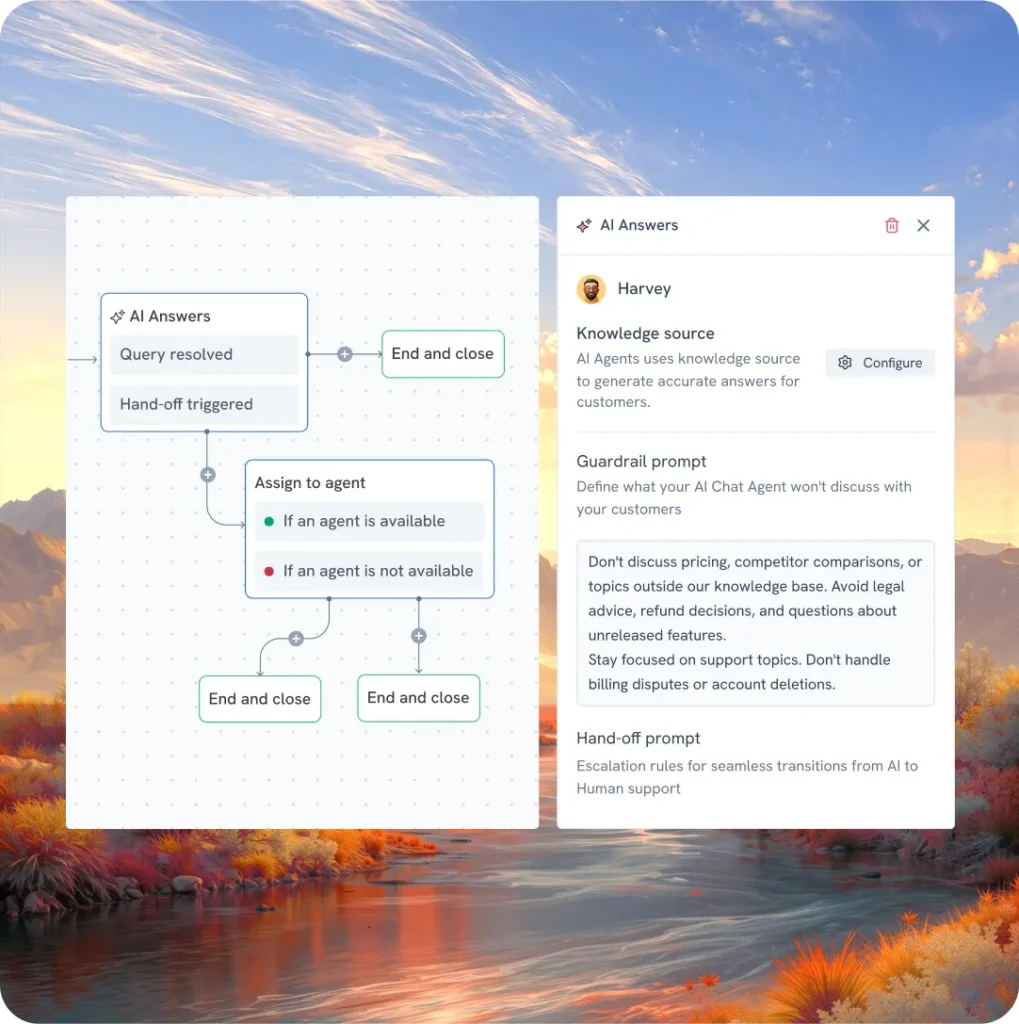
For high-volume queries like order status or account updates, Hiver AI Agents can step in
before a human ever gets involved. A customer asking “Where is my order?” can get an
instant, accurate response pulled from integrated systems, without creating a ticket at all.
On the backend, Hiver AI QA continuously reviews conversations for tone, accuracy, and
SLA adherence. Instead of managers manually auditing tickets, they get flagged insights
on where quality is slipping.
In this model, AI handles the mechanical work while agents remain accountable for tone,
accuracy, and final decisions.
Used intentionally, AI improves speed and consistency without diluting ownership. It
removes repetitive effort so teams can scale without increasing manual workload.
Want to learn more about Hiver?
Mistake 3: Choosing tools that become harder to manage over time
Another issue Michael has observed is selecting a highly complicated ticketing system
that adds more overhead as the team scales.
A tooling decision that often feels helpful early on but creates friction later is moving support into a highly complex, ticket-centric system that lives outside of where agents already work.
Early on, legacy platforms can provide structure and reporting. As teams grow, however,
simple workflow adjustments may require heavy configuration and ongoing maintenance.
Some organizations end up hiring dedicated administrators to manage the system. Others
struggle to adapt processes quickly because every change feels technical.
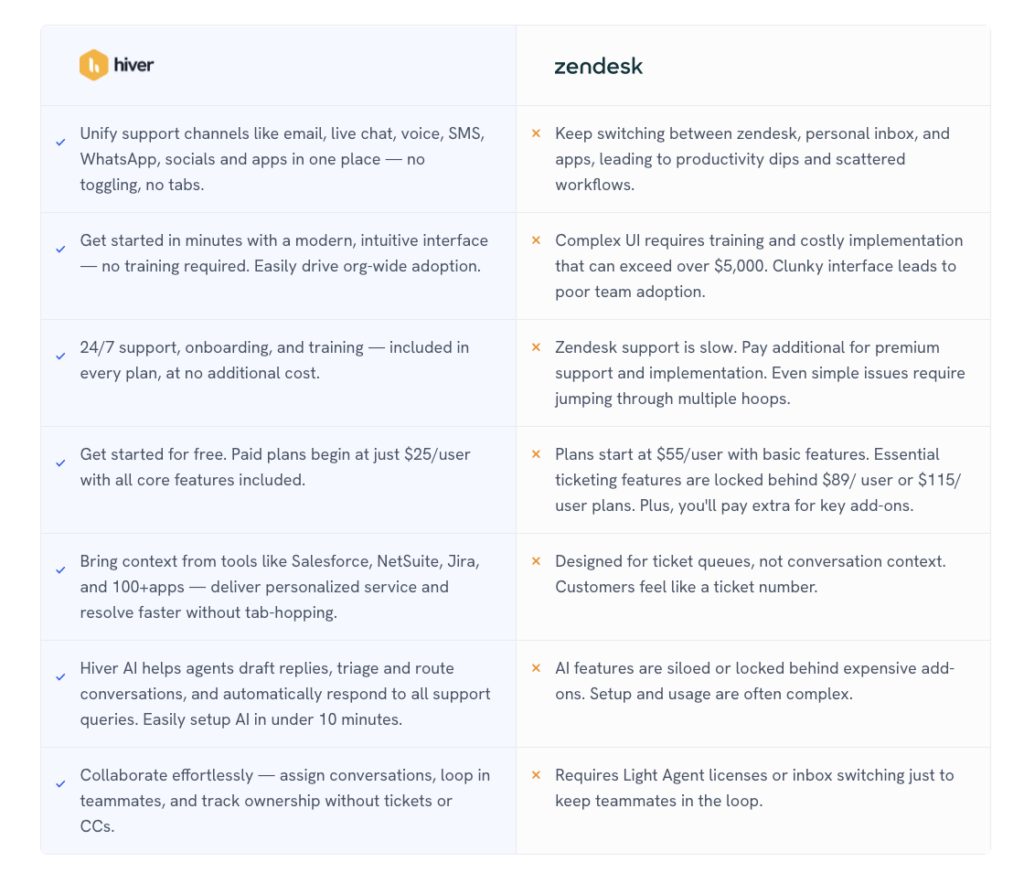
Michael has seen this happen with teams that adopted tools like Zendesk, expecting
scalability, only to find the operational burden heavier than anticipated.
He contrasts that with customers who moved to Hiver. One example is itGenius, which
initially adopted Zendesk but found it expensive and more complex than needed. The
ticketing model also made conversations feel impersonal.
After switching to Hiver, they centralized conversations quickly, set up routing and
assignment without a long implementation cycle, and restored a more natural
communication style. This resulted in them saving around 40 hours every month.
Your customer service platform should be up and running in hours, not weeks or months.
It should allow teams to configure automation, SLAs, and reporting without specialized
oversight.
When a platform is easy to adopt and easy to adjust, teams can evolve their workflows
without inheriting complexity.
Mistake 4: Letting collaboration move outside the customer thread
Even with clear ownership, collaboration can break down for another reason.
Internal collaboration usually breaks down when support needs timely input from teams that do not live in the support tool, such as product, engineering, finance, or sales.
Take a common scenario.
A customer reports that they were charged twice for a subscription upgrade. The support
agent can see the payment in the system, but they need confirmation from finance before
issuing a refund. At the same time, there is a chance this is a product bug, so engineering may also need to step in.
In most teams, this is where things start to fragment.
The agent forwards the email to finance. Then pings someone on Slack. Maybe creates a
separate internal ticket. Meanwhile, the original customer thread stays incomplete, and
context gets scattered across tools.
With Hiver, this entire interaction stays inside the same conversation.
The agent can add an internal note explaining the issue and loop in finance using an
@mention, attaching the exact customer message and payment details. Finance can
review the context and confirm whether a refund is valid, directly within the thread.
If the issue needs engineering input, the same conversation can be reassigned or shared
without starting over or copying context.
Once clarity is established, the agent can respond to the customer with a complete,
accurate update, instead of sending partial replies while waiting on internal teams.
Because collaboration happens inside the conversation, every decision, update, and
dependency is tied to the original request.
In Michael’s opinion, ownership solves accountability. Unified collaboration solves
information flow. Both are necessary for scale.
Mistake 5: Communicating frequently without delivering progress
Some communication habits feel helpful but actually harm the customer experience.
One of the most damaging communication habits is sending frequent updates that do not actually move the issue forward.
Michael explains that messages like “we are still looking into this” can create the
appearance of activity without adding value. This can lead to customers feeling managed
rather than supported, especially if timelines remain unclear.
He believes updates should be intentional and tied to real progress.
So, how do you get clarity before responding to a customer? When you use a customer
service platform like Hiver, you can ensure every query has a clear owner and that that
owner can cross-collaborate and get the right information needed before responding.
Shared visibility and AI-assisted drafting help teams deliver responses that are precise
and outcome-focused.
To sum it up, fewer but more substantive updates lead to greater trust.
Takeaway
In Michael’s experience, as teams grow, the systems behind support need to evolve just
as quickly. What feels manageable at a smaller scale often becomes harder to sustain as
volume, expectations, and cross-team dependencies increase.
The teams that handle this well are not constantly reacting. They build clarity into how
work gets done. Ownership is defined early, collaboration stays within the conversation,
and repetitive work is reduced without losing control.
If your current setup is starting to feel heavier than it should, it may be worth stepping
back and rethinking how your support operations are structured. Tools like Hiver are designed to make that transition easier without adding more complexity.