

Unwrap Introduces Support IQ to Turn Support Interactions Into Product and Coaching Insight


Customer intelligence platform Unwrap has launched Support IQ, a product designed to analyze support interactions and surface the product issues, resolution patterns, and agent actions that have the most impact on customer experience and support volume.
 has launched Support IQ, a product designed to analyze support interactions and surface the product issues, resolution patterns, and agent actions that have the most impact on customer experience and support volume.
Support IQ expands on Unwrap’s existing feedback analysis capabilities, examining how support agents respond, what actions they take, and whether those actions successfully resolve issues. By analyzing full support conversations, Support IQ helps teams understand the root causes of customer pain and the effectiveness of the ways those problems are addressed.
The Problem Support IQ Solves
Support teams resolve thousands of customer issues every week, yet most of the intelligence gathered in those interactions is never utilized in an effective way.
Traditional support analytics focus on operational metrics such as ticket volume, response time, and high-level categories. While useful for managing workload, these views fail to explain why issues occur, how agents attempt to resolve them, and which resolution approaches work the best.
In practice, support agents often uncover underlying causes that are not obvious in the original
customer request. Customers describe symptoms, while agents diagnose root problems, apply fixes, and clarify product behavior. These informal actions contain valuable insight into product gaps, documentation issues, and training needs, but are rarely analyzed systematically.
As a result, organizations miss opportunities to improve the product, coach agents more effectively, and reduce repeat support demand.
Analyzing Support Interactions End to End
Support IQ analyzes full support conversations to understand both sides of the interaction. It
distinguishes between customer input and agent response, extracting what actions agents took to resolve a case and summarizing those actions succinctly.
Support IQ reads through the entire customer conversation to identify patterns in how agents attempt to resolve problems. This allows teams to see not just what customers complained about, but how those complaints were handled and what resolutions were attempted.
Each interaction is evaluated in context, enabling Support IQ to determine whether a case was
successfully resolved based on the outcome of the conversation, rather than superficial signals like ticket closure.
Identifying Effective and Ineffective Resolution Paths
Once agent actions are extracted across support interactions, Support IQ aggregates them into common resolution paths. Teams can see the most commonly used approaches agents take to address issues, such as providing clarification, suggesting configuration changes, recommending workarounds, or escalating to other teams.
Support IQ then shows which resolution paths most often lead to successful outcomes and which tend to fail. This makes it possible to identify patterns where agents consistently apply solutions that resolve issues, as well as patterns where certain actions rarely lead to customer satisfaction.
This insight helps organizations understand not only what agents are doing, but whether those actions are effective in practice.
Using Support Intelligence to Improve Coaching and Product Decisions
By surfacing resolution patterns and success rates, Support IQ enables support leaders to coach teams based on evidence rather than anecdote. Ineffective or unnecessary actions can be identified and corrected, while successful approaches can be reinforced and standardized.
At the same time, Support IQ highlights situations where agents repeatedly apply workarounds or explanations for known product limitations. These patterns often indicate opportunities for product improvements that would eliminate the need for support intervention altogether.
Support teams can bring this data to product organizations with concrete evidence of impact, helping prioritize fixes that reduce customer friction and long-term support volume.
Example Use of Support IQ
Unwrap detects a recurring pattern across support interactions related to a specific product limitation.
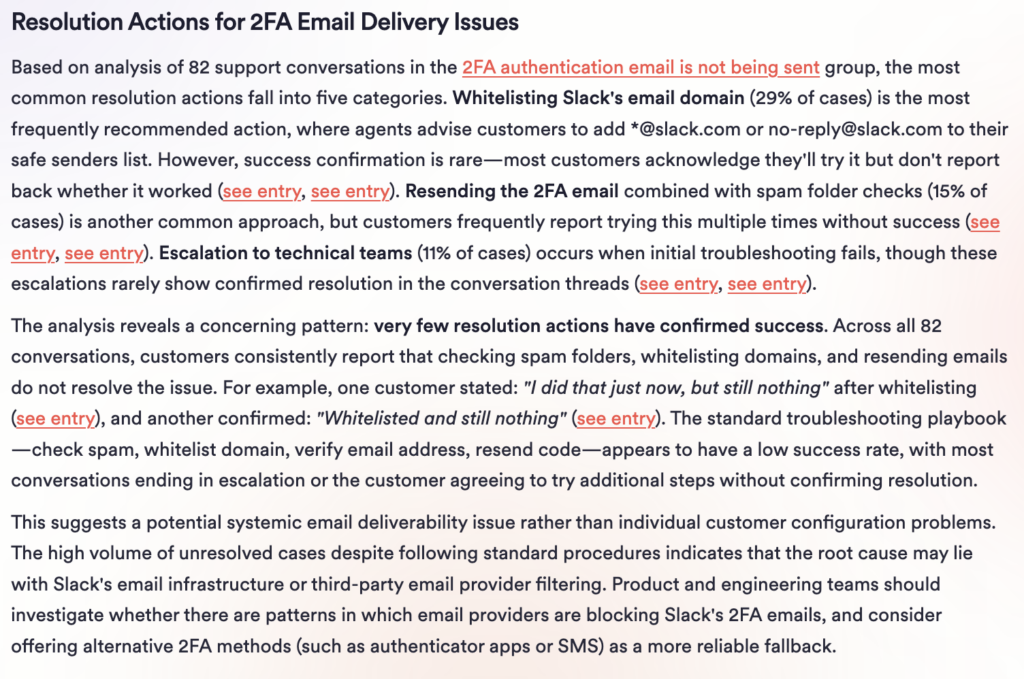
Support IQ extracts the actions agents take to resolve the issue and summarizes them across similar cases, showing the most common resolution paths and whether customers acknowledge successful resolution.
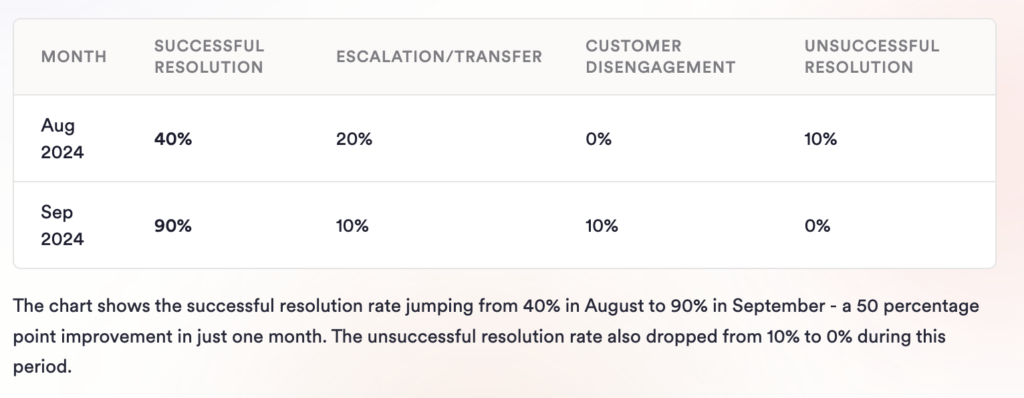
Teams review which approaches consistently lead to successful outcomes and which do not. Ineffective resolution paths are flagged for coaching or escalation, while recurring workarounds are identified as candidates for product improvements.
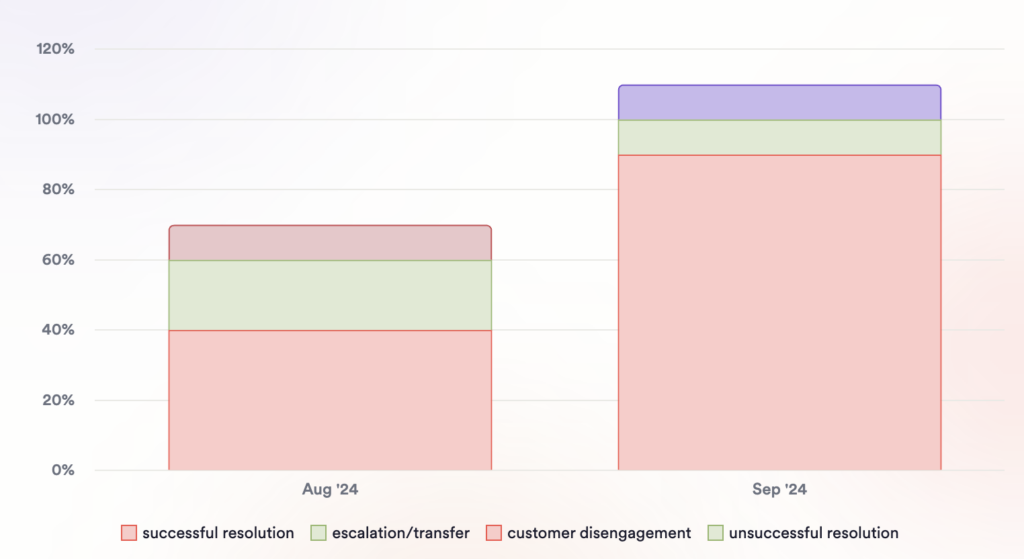
As changes are made, teams can monitor how resolution effectiveness and support demand evolve over time, helping validate whether interventions improved the customer experience.

