

10 Best Voip Softphone Apps in 2026

Best VoIP Softphone Apps Shortlist


VoIP softphone apps let you make and receive business calls directly from your computer or mobile device using a headset, turning any screen into your company phone line. For support and CX leaders, this means flexible, cost-effective communication without juggling hardware or complex setups.
If you’re searching for the best solutions to improve customer conversations, keep your team connected, and adapt as your business evolves, this guide will help you compare top options and pick the right tool with confidence.
Why Trust Our Software Recommendations
Our team has been testing and reviewing software since 2012. As CX leaders ourselves, we know how difficult—and important—it is to choose the right software.
For this guide, we evaluated tools using hands-on testing and independent research, scoring tools using our selection criteria.
Our reviews reflect our human editorial judgment, not a sales pitch.
| Tool | Best For | Trial Info | Price | ||
|---|---|---|---|---|---|
| 1 | Best for international calling analytics | 14-day free trial | From $25/user/month (billed annually) | Website | |
| 2 | Best for global virtual phone numbers | 10-day free trial | From $18/user/month (billed annually) | Website | |
| 3 | Best for Freshworks-based call routing | 14-day free trial | From $15/user/month (billed annually) | Website | |
| 4 | Best for Workspace-based business calling | Free plan available | From $10/user/month | Website | |
| 5 | Best for customer-facing team communications | Free demo available | From $15/user/month (billed annually) | Website | |
| 6 | Best for AI-powered call notes | 14-day free trial + free demo available | Pricing upon request | Website | |
| 7 | Best for multi-device business communications | 14-day free trial | From £18/user/month | Website | |
| 8 | Best for sales dialers and SMS workflows | 14-day free trial | From $29/user/month (billed annually) | Website | |
| 9 | Best for small-business calling and desk phones | Not available | From $19.95/user/month | Website | |
| 10 | Best for Zoom-based business calling | Free demo available | From $10.50/user/month | Website |
VoIP Softphone Apps Reviews
Below are my detailed summaries of the best VoIP softphone apps that made it onto my shortlist. My reviews offer a detailed look at the features, integrations, and best use cases of each platform to help you find the best one for you.

Best for international calling analytics
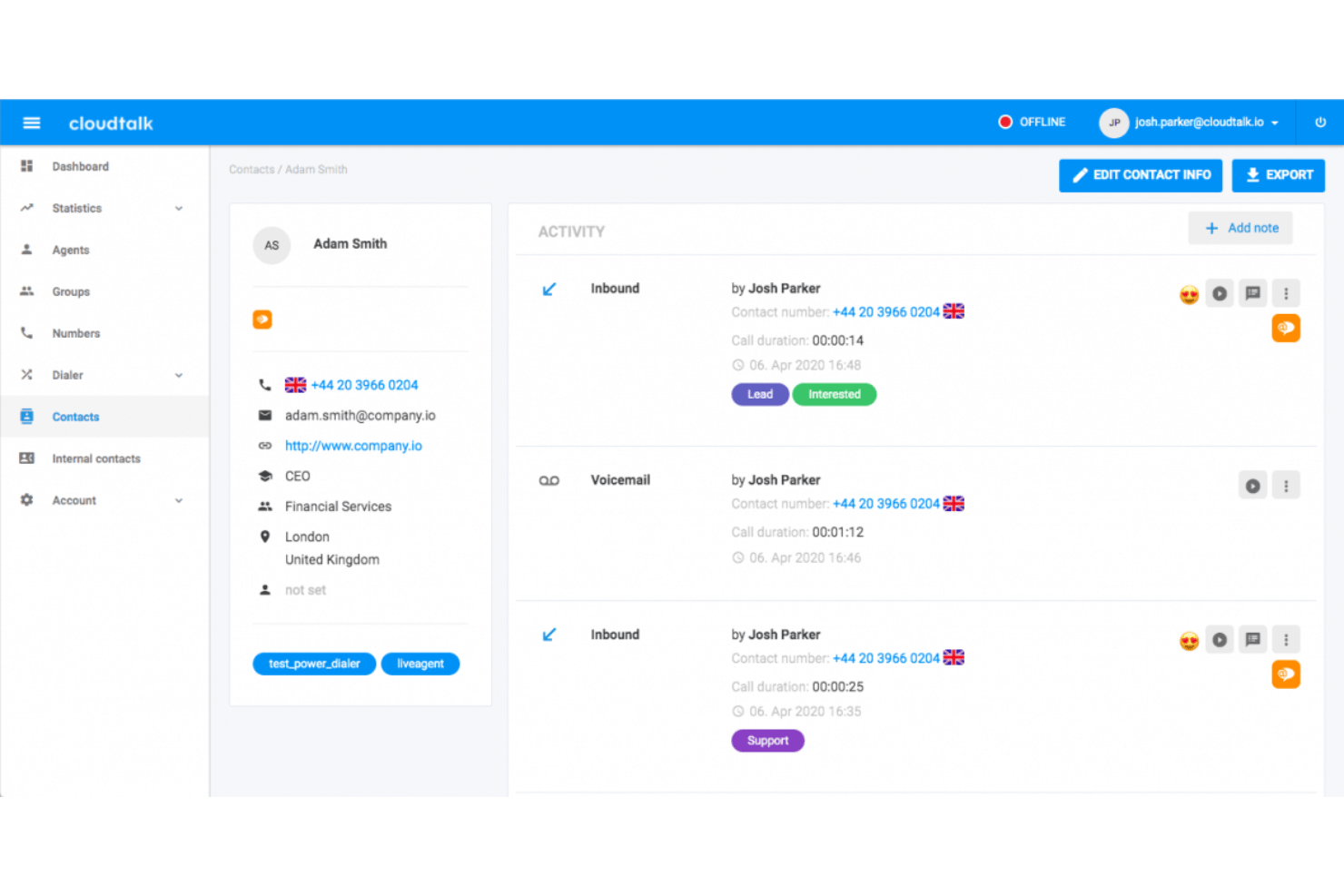
CloudTalk is a cloud-based VoIP softphone platform combining AI-powered dialers, global calling across 160+ countries, CRM integrations, real-time call analytics, and multi-channel messaging in a single interface.
Who Is CloudTalk Best For?
CloudTalk suits growing sales and support teams that manage high call volumes across multiple countries and need detailed agent performance visibility.
Why I Picked CloudTalk
I've included CloudTalk in my top picks because its real-time analytics go deeper than most softphones when calls span multiple countries. The custom dashboards break down call volume, duration, and agent activity by region, queue, or time period, all without manual exports. The AI Conversation Intelligence layer adds sentiment scoring and searchable transcripts on top, so I can review how specific agents are performing across different international markets.
CloudTalk Key Features
- Smart dialer: Queue up multiple calls from lists and contacts to automate outbound dialing workflows.
- Skill-based routing: Assign incoming calls to available agents based on expertise or language criteria.
- IVR call flow designer: Build multi-level interactive menus with drag-and-drop controls for self-service or routing.
- Softphone apps for all devices: Access the softphone via Mac, Windows, browser, iOS, and Android without extra hardware.
CloudTalk Integrations
CloudTalk offers 100+ native integrations, including Salesforce, HubSpot, Zendesk, Pipedrive, Intercom, Zoho CRM, Freshdesk, Gorgias, Slack, Microsoft Teams, and Zapier. An API is available for custom integrations.
Pros and Cons
Pros:
- Strong uptime with global carrier redundancy
- AI transcription available on all paid plans
- Deep analytics across international call queues
Cons:
- Call quality drops on poor network connections
- Mobile app less reliable than desktop version

Best for global virtual phone numbers
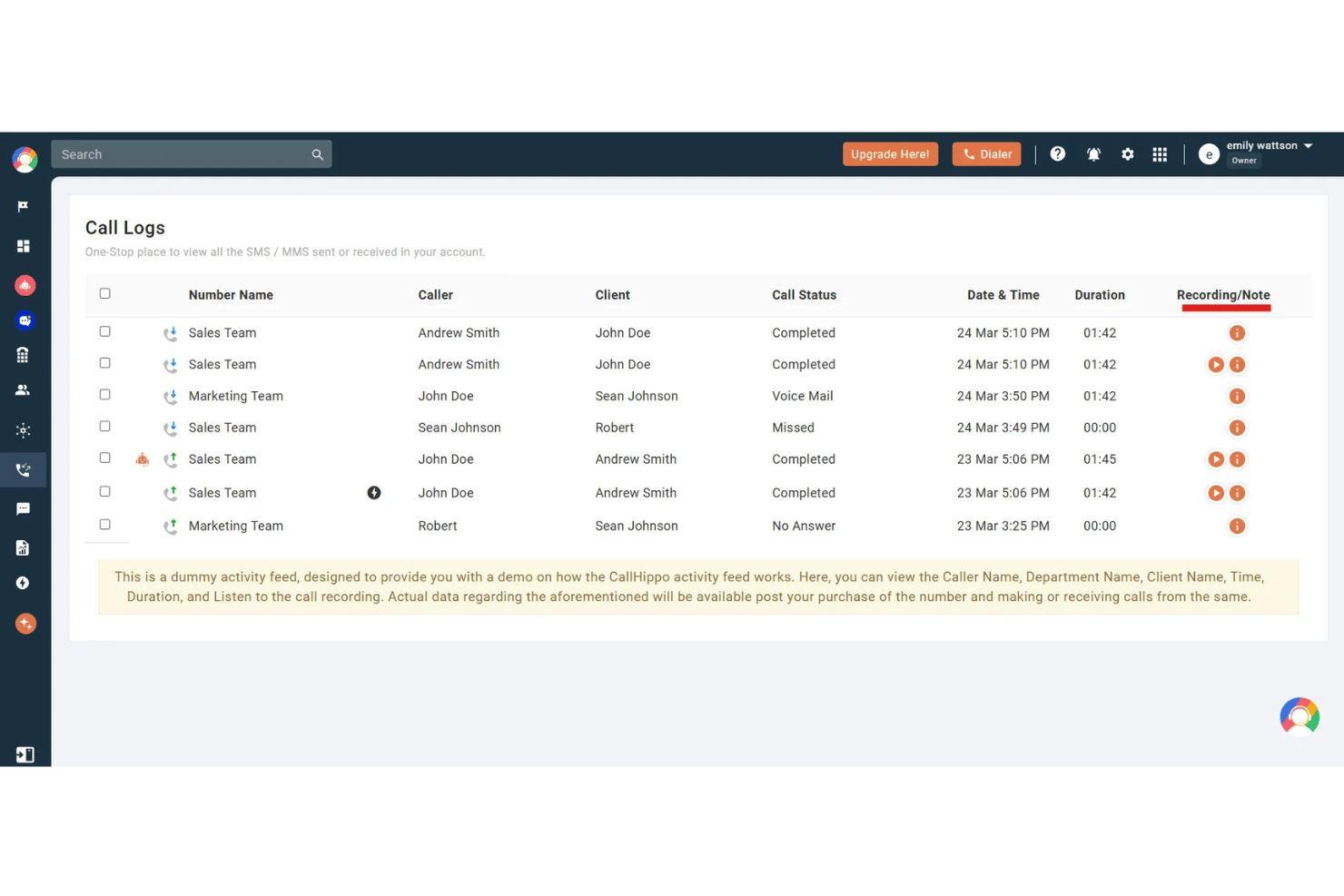
CallHippo is a cloud telephony platform with softphone apps for web, desktop, and mobile. It offers virtual phone numbers in 150+ countries alongside AI-powered calling, omnichannel messaging, and contact center routing.
Who Is CallHippo Best For?
It's a strong fit for small to mid-sized sales and support teams that need local phone presence across multiple countries without complex infrastructure.
Why I Picked CallHippo
I've included CallHippo in my top picks because the depth of its global number coverage sets it apart from most softphone apps. You can provision local, toll-free, or mobile numbers in 150+ countries within minutes, and Smart DID Routing automatically presents the correct local caller ID based on the destination country. I also like the AI Global Connect feature, which detects a contact's local time zone before dialing to prevent calls landing outside business hours.
CallHippo Key Features
- Omnichannel inbox: Manage calls, SMS, WhatsApp, Telegram, email, and chat messages from one unified dashboard.
- Call center controls: Use IVR menus, smart call routing, call queues, barging, whisper, and monitoring for live agent coaching.
- CRM and helpdesk integrations: Connect directly with Salesforce, HubSpot, Zoho, Zendesk, Freshdesk, and more to log call activity.
- Real-time analytics dashboards: Monitor team and agent call metrics, performance KPIs, and historical trends in a customizable dashboard.
CallHippo Integrations
CallHippo offers native integrations with Salesforce, HubSpot, Zoho CRM, Zendesk, Freshdesk, Pipedrive, Intercom, Shopify, Slack, and Microsoft Teams. An API is available for custom integrations.
Pros and Cons
Pros:
- Live call monitoring with whisper and barge
- AI transcription and post-call summaries included
- Virtual numbers available in 150+ countries
Cons:
- Mobile app less stable than web client
- Call quality issues reported on low bandwidth

Best for Freshworks-based call routing
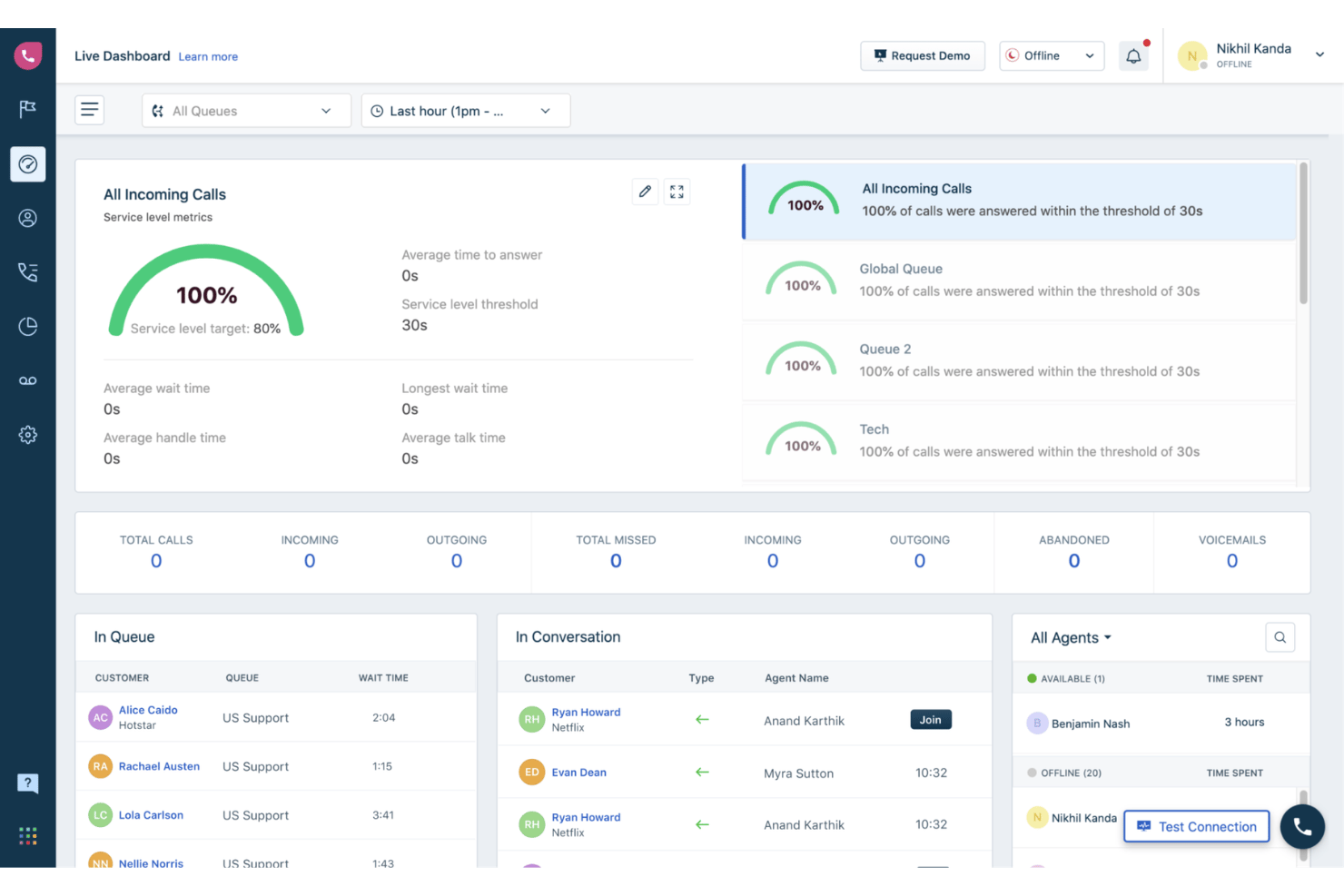
Freshcaller is a cloud-based VoIP contact center solution that lets agents place and receive calls via browser, mobile app, or SIP handset, with multi-level IVR, call routing, recording, and real-time analytics built in.
Who Is Freshcaller Best For?
Freshcaller is a strong fit for support teams already using the Freshworks ecosystem who need a tightly connected call center and helpdesk setup.
Why I Picked Freshcaller
I've included Freshcaller in my top picks because its call routing is purpose-built for teams running on Freshworks. Inbound calls can be routed using conditions tied directly to Freshdesk or Freshsales data, so the right agent gets the right call based on CRM context. I also rely on its smart escalation rules and live call barging, which let supervisors step into active calls and coach agents in real time without disrupting the customer.
Freshcaller Key Features
- Multi-level IVR system: Build custom call menus with nested options to direct callers where they need to go.
- Call recording with storage: Automatically record calls and access recordings directly from the call log.
- Real-time agent status: See live agent availability, including ready, busy, and do-not-disturb, for more effective routing.
- Global phone number coverage: Access local and toll-free numbers from over 90 countries for international presence.
Freshcaller Integrations
Freshcaller offers native integrations with Freshdesk, Freshsales, Salesforce, HubSpot, and Slack. An API is available for custom integrations.
Pros and Cons
Pros:
- Real-time agent availability visible across teams
- Barge and whisper on active calls
- IVR routing needs no coding
Cons:
- Less suited for non-Freshworks tech stacks
- Reporting dashboards lack deep customization options

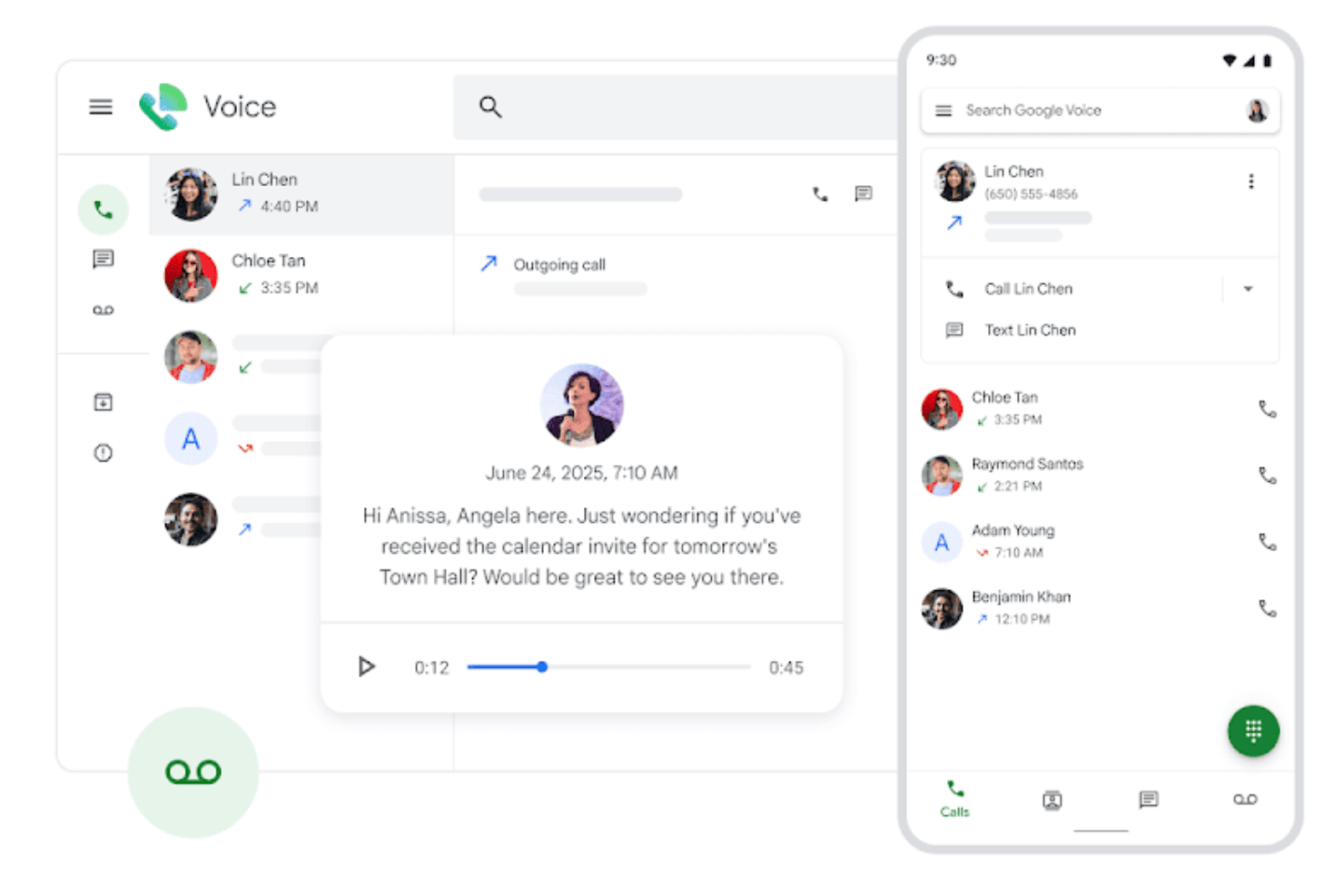
Google Voice is a cloud-based VoIP softphone built into the Google Workspace ecosystem, offering calling, video calls, SMS, voicemail transcription, and AI-powered spam filtering across mobile, desktop, and desk phones.
Who Is Google Voice Best For?
Google Voice is a natural fit for small businesses and distributed teams already running on Google Workspace who need a lightweight business phone system without added infrastructure.
Why I Picked Google Voice
I've included Google Voice in my top picks because it's the only VoIP softphone that's fully native to Google Workspace. Calls route directly through Gmail, voicemails transcribe automatically into your inbox, and the multi-level auto attendant handles call routing without any separate admin platform. My team uses the Vault integration to keep call records in the same discovery and retention system as email.
Google Voice Key Features
- Multi-device calling: Make and receive calls from mobile devices, laptops, or supported desk phones with one number.
- Spam call blocking: Uses Google AI to detect and block spam callers before the phone rings.
- SIP Link integration: Connect existing PSTN services and desk phones to Google Voice through certified session border controllers.
- Google Calendar routing: Routes incoming calls based on your Google Calendar working hours settings.
Google Voice Integrations
Google Voice offers native integrations with Google Workspace apps, including Google Meet and Google Calendar, and provides an API for custom integrations.
Pros and Cons
Pros:
- Works across mobile, desktop, and desk phones
- AI-powered voicemail transcription included
- Native Google Workspace sync across all apps
Cons:
- No built-in call recording on starter plan
- Limited call analytics for contact center teams
Nextiva
Best for customer-facing team communications
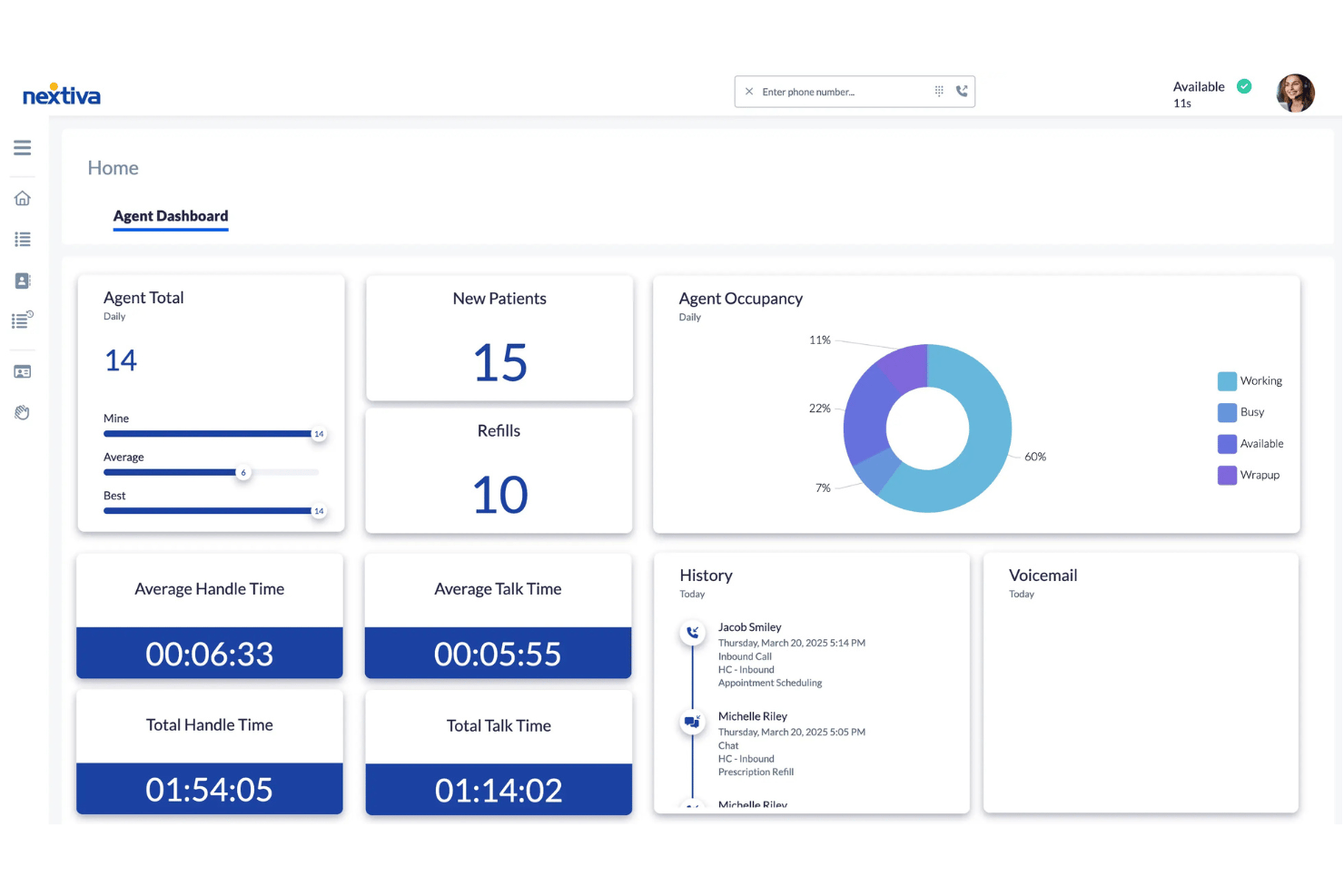
Nextiva is a cloud-based VoIP and unified communications platform that combines softphone calling, SMS, video meetings, team chat, and AI-powered call management across desktop and mobile apps.
Who Is Nextiva Best For?
Nextiva is a strong fit for customer support and contact center teams that need a single platform for voice, messaging, and AI-assisted call handling.
Why I Picked Nextiva
I picked Nextiva as one of the best because the NextivaONE app keeps my whole customer-facing team on voice, SMS, and chat without switching between tools. The AI Voice Agent handles inbound calls 24/7, routing inquiries and answering FAQs before a live agent picks up. I also rely on AI call transcription and summary to review customer interactions quickly, without replaying full recordings.
Nextiva Key Features
- Multi-level auto attendant: Set up advanced call routing menus for different departments or schedules.
- Team presence and status: See real-time availability of colleagues for easier call transfers and coordination.
- Contact center analytics: Access dashboards with live and historical metrics on agent performance and call activity.
- Browser and mobile softphone apps: Make and receive calls from web browsers, Windows, macOS, iOS, and Android devices.
Nextiva Integrations
Nextiva offers native integrations with Salesforce, HubSpot, Microsoft Teams, Google Workspace, Outlook, and Microsoft Dynamics, and provides an API for custom integrations.
Pros and Cons
Pros:
- Reliable HD audio on desktop and mobile clients
- Unified voice, SMS, and chat in one app
- AI call summaries reduce manual post-call documentation
Cons:
- Reporting dashboards have a steep initial learning curve
- Mobile app occasionally drops calls on poor connections

Dialpad
Best for AI-powered call notes
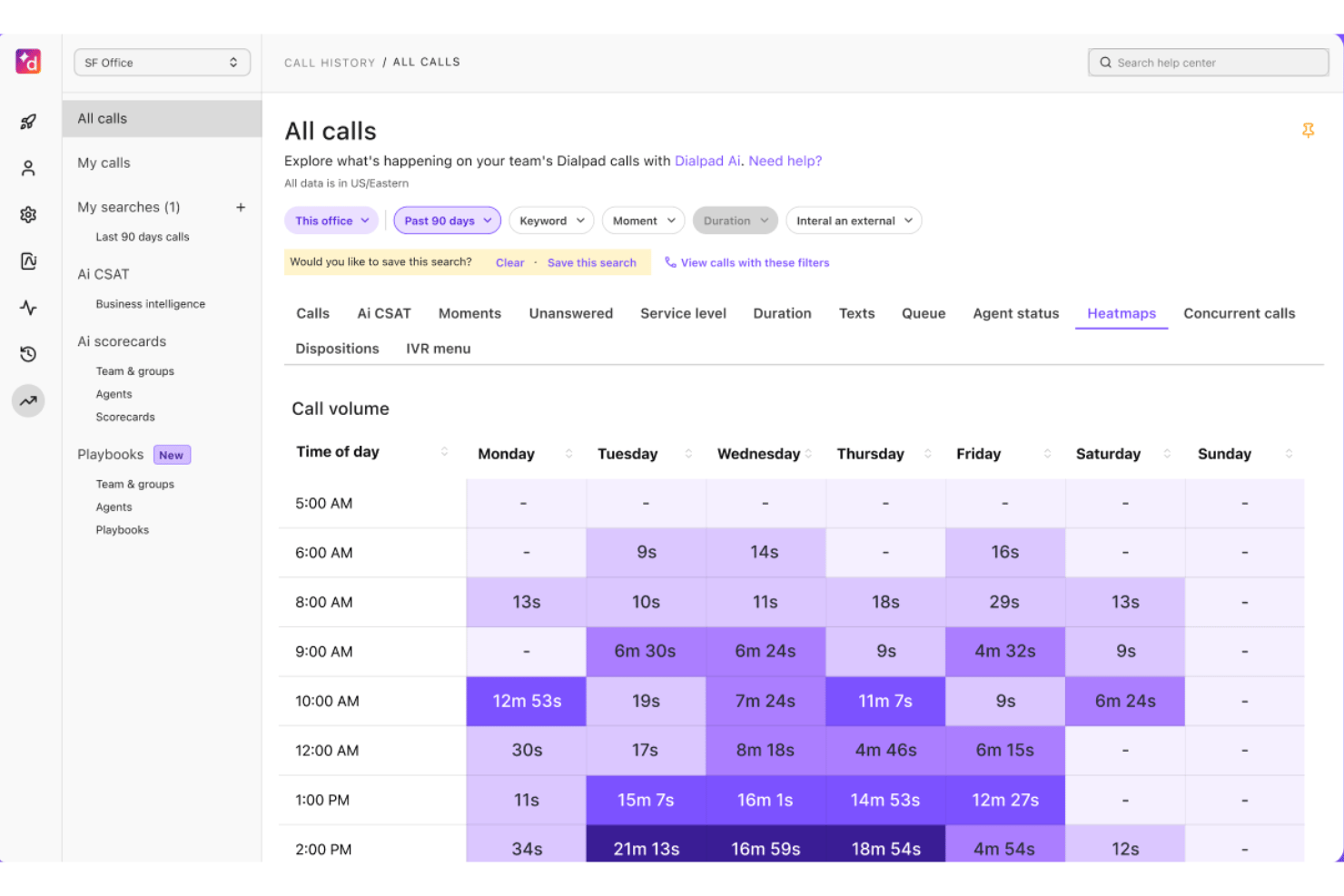
Dialpad is an AI-native cloud communications platform that unifies voice calling, SMS, messaging, and video meetings in a single softphone app built on its own proprietary large language model, DialpadGPT.
Who Is Dialpad Best For?
Dialpad suits small to midsize customer support and sales teams—particularly those running on Google Workspace—who need a cloud phone system with built-in AI call documentation.
Why I Picked Dialpad
Dialpad earns its spot on my shortlist because its AI Recaps feature automatically generates structured call summaries and action items after every conversation, powered by its proprietary DialpadGPT model. Real-time transcription runs live during calls, so nothing gets missed even in fast-moving support interactions. I also like that AI CSAT scoring runs automatically on 91% of calls, giving my team consistent post-call performance data without any manual review process.
Dialpad Key Features
- Multi-device softphone: Make and receive calls on desktop, mobile, tablet, or web.
- Unified team messaging: Chat and share files with coworkers in the same app as calls.
- Native CRM integrations: Connects directly with platforms like Salesforce, HubSpot, and Zendesk.
- Real-time presence: See agent availability and status instantly to streamline call routing and collaboration.
Dialpad Integrations
Dialpad offers native integrations with Salesforce, HubSpot, Zendesk, Google Workspace, Microsoft 365, ServiceNow, Zoho CRM, Okta, Bullhorn, and Clio. An API is available for custom integrations.
Pros and Cons
Pros:
- Works across desktop, mobile, and web browser
- Real-time transcription runs during live calls
- AI-generated call summaries after every conversation
Cons:
- Call quality can drop on weak connections
- AI features locked behind higher-tier plans

Best for multi-device business communications
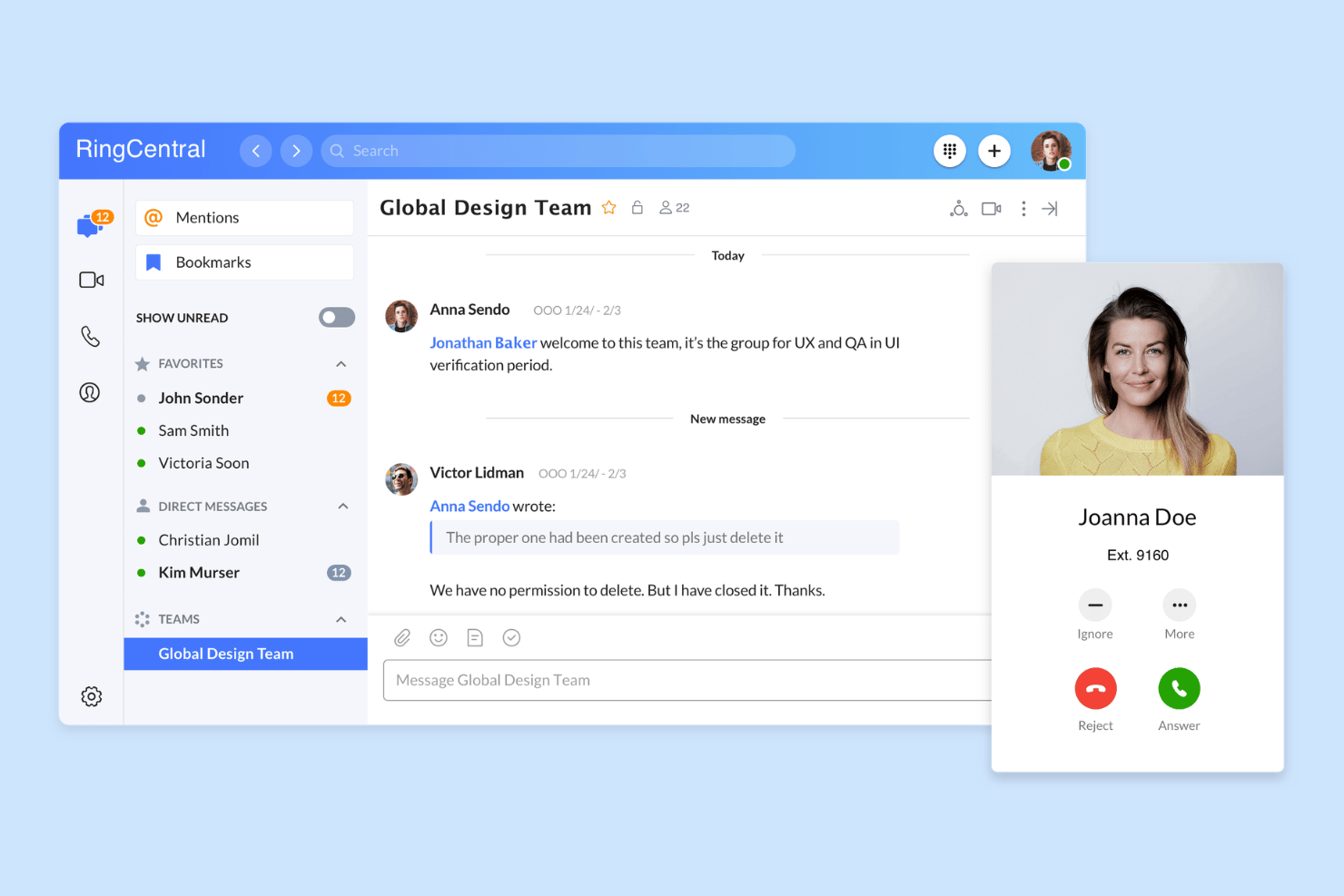
RingCentral is a cloud-based UCaaS platform that combines VoIP calling, video meetings, business SMS, and team messaging into a single softphone app across desktop, mobile, and web.
Who Is RingCentral Best For?
It's a strong fit for mid-sized businesses with distributed or remote teams that need a single platform for managing voice communications across multiple devices and locations.
Why I Picked RingCentral
RingCentral earns its spot on my shortlist because of how consistently it handles voice across every device in my setup. I particularly like the call flip feature, which lets you transfer a live call from your desktop softphone to your mobile app mid-conversation without any interruption. Presence status also syncs in real time across desktop, mobile, and web, so my team always sees accurate availability no matter which device someone is working from.
RingCentral Key Features
- AI-powered call summaries: Automatically generates searchable, AI-driven summaries for every call to speed up review and QA.
- Integrated team messaging: Offers built-in chat and group messaging directly alongside calling functions in the softphone app.
- Omnichannel contact centre: Supports voice, SMS, web chat, and social messaging in one dashboard for CX teams.
- Native CRM integrations: Connects with Salesforce, HubSpot, and Zendesk to pull up customer records and auto-log activities.
RingCentral Integrations
RingCentral offers native integrations with Salesforce, HubSpot, Zendesk, Microsoft Teams, Google Workspace, Slack, and ServiceNow, and provides an API for custom integrations.
Pros and Cons
Pros:
- AI transcription covers every recorded call
- Real-time presence synced across all platforms
- Call flip works live mid-conversation
Cons:
- Interface feels cluttered for call-only users
- Mobile app frequently drains battery faster

JustCall
Best for sales dialers and SMS workflows
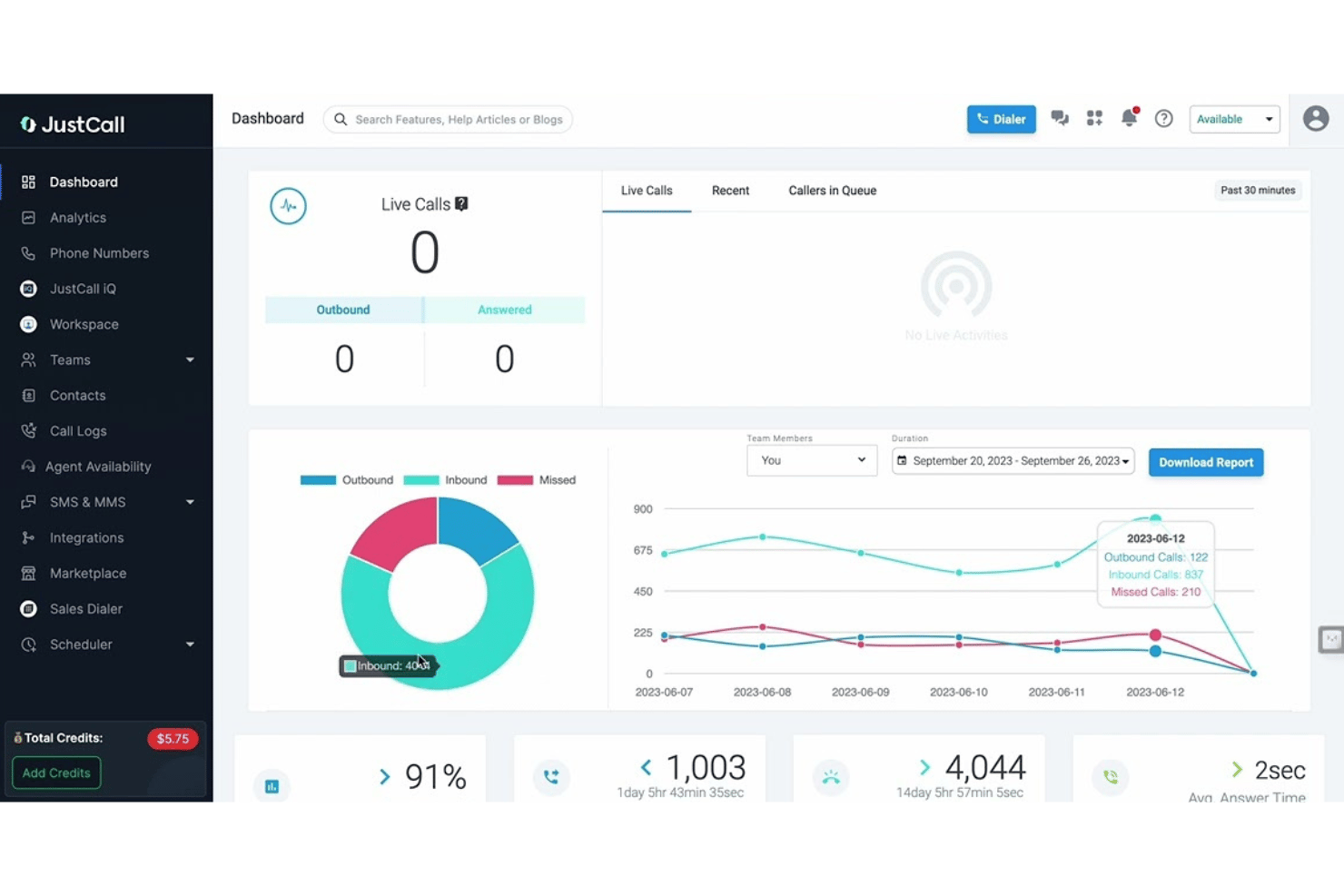
JustCall is a cloud-based VoIP softphone platform combining voice calling, SMS and MMS messaging, AI conversation intelligence, and multi-line auto-dialer capabilities across desktop, mobile, and web.
Who Is JustCall Best For?
JustCall is a strong fit for outbound sales teams and SMB-to-mid-market customer support operations that need voice, SMS, and dialer tools in one place.
Why I Picked JustCall
I picked JustCall as one of the best because its multi-line predictive dialer (up to 10 simultaneous lines) and Dynamic Dialer genuinely set it apart from most softphone apps that only offer basic click-to-dial. I also like how SMS workflows and bots run natively inside the same platform, so my team can trigger automated follow-up sequences without switching tools. The local presence dialing feature, which displays a number matching the prospect's area code, adds a layer of functionality that most standalone softphone apps skip entirely.
JustCall Key Features
- Real-time agent presence: Displays agent availability status across web, desktop, and mobile for efficient routing.
- Native CRM integrations: Connects natively with Salesforce, HubSpot, Zoho, and Zendesk for click-to-dial and automatic call logging.
- Automatic call recording: Captures and stores every call for easy playback and quality assurance.
- Live call monitoring: Lets supervisors listen, whisper, or barge into ongoing calls for coaching and oversight.
JustCall Integrations
JustCall offers 100+ native integrations, including Salesforce, HubSpot, Zoho CRM, Pipedrive, Zendesk, Freshdesk, Intercom, Help Scout, Slack, and Microsoft Teams. An API is available for custom integrations.
Pros and Cons
Pros:
- AI transcription on every recorded call
- SMS workflows and bots run natively
- Predictive dialer supports up to 10 lines
Cons:
- Reporting dashboards offer limited customization options
- Mobile app call quality can be inconsistent

Best for small-business calling and desk phones
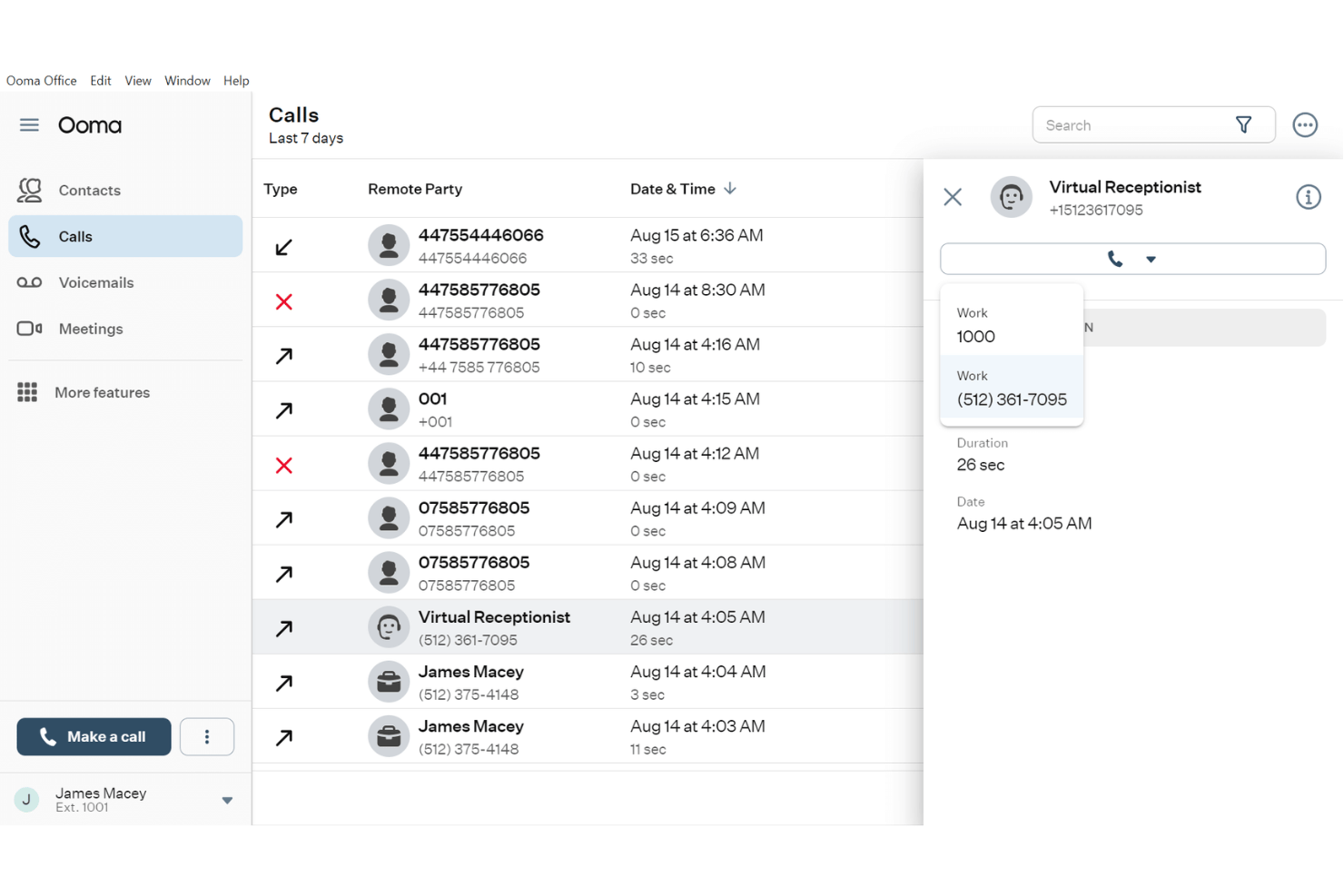
Ooma Office is a cloud-based VoIP phone system for small businesses that combines a desktop and mobile softphone, call management controls, SMS, videoconferencing, and CRM integrations in one platform.
Who Is Ooma Office Best For?
Ooma Office is a strong fit for small and mid-sized businesses that want a full-featured phone system without the complexity or cost of enterprise VoIP platforms.
Why I Picked Ooma Office
I picked Ooma Office as one of the best because it genuinely bridges desk phones and softphone apps in a way few SMB-focused platforms do. Call Flip lets me transfer an active call from my desk phone to the mobile softphone mid-conversation without dropping it. Simultaneous ring means incoming calls hit both the desk phone and the softphone app at once, so my team never misses a call when moving between spaces.
Ooma Office Key Features
- AI call transcription and summaries: AI-powered transcriptions and automated call summaries on Pro Plus plans.
- CRM integration: Connects with platforms like Salesforce, HubSpot, and Zoho to sync contacts and call logs.
- Team chat and presence: Built-in team messaging and real-time presence indicators for improved coordination.
- Call analytics dashboard: Detailed call metrics and leaderboards help you track agent and team activity.
Ooma Office Integrations
Ooma Office offers native integrations with Salesforce, HubSpot, Zendesk, Zoho, Pipedrive, Microsoft Dynamics 365, SugarCRM, and Google and Microsoft 365. It also connects with Zapier and provides an API for custom integrations.
Pros and Cons
Pros:
- Includes built-in video conferencing on mobile
- Call Flip moves live calls between devices
- Supports physical desk phones alongside softphone
Cons:
- AI transcription requires the pricier Pro Plus
- Mobile app stability has frustrated some users

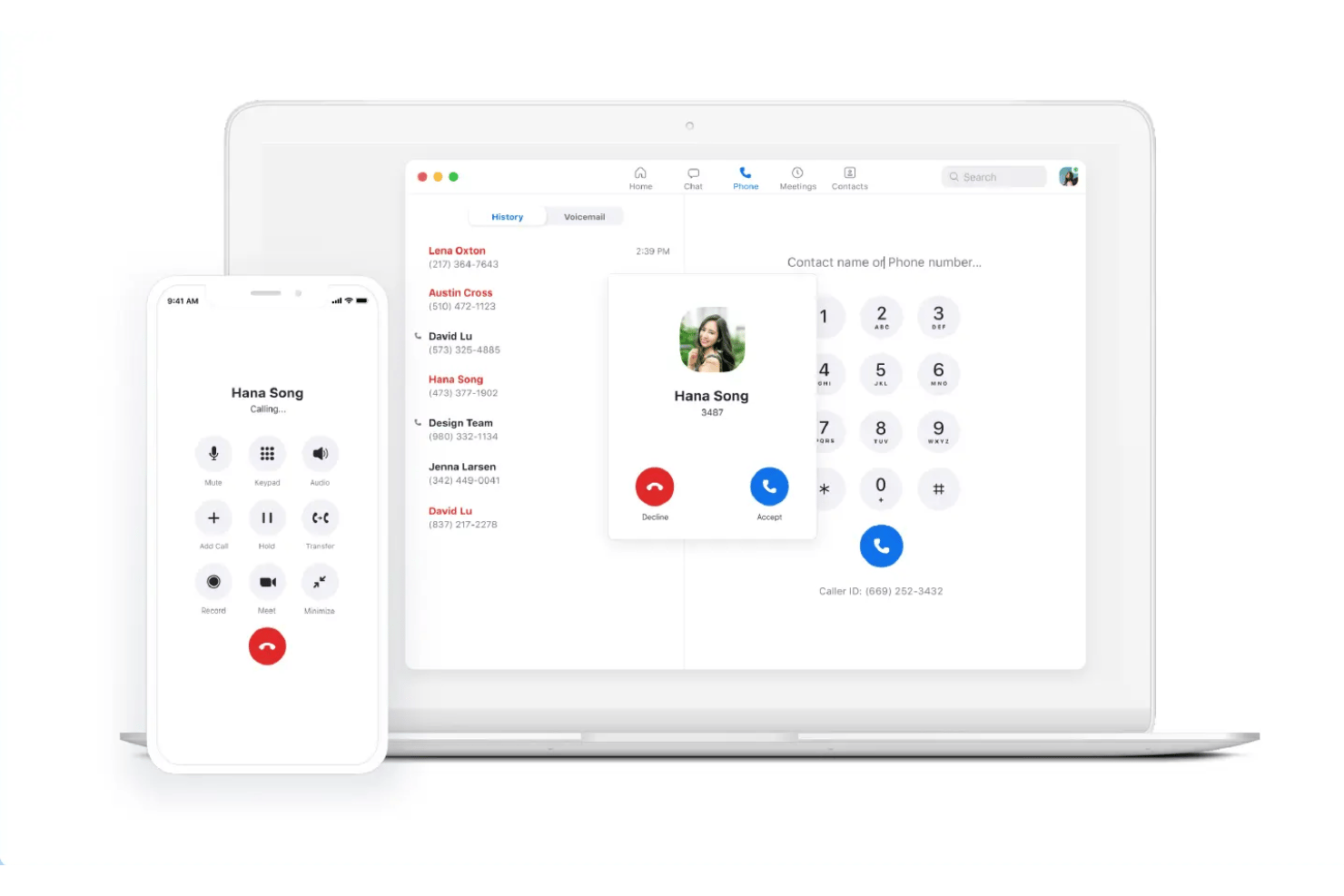
Zoom Phone is a cloud-based VoIP softphone that brings together inbound and outbound PSTN calling, SMS/MMS, voicemail transcription, call routing, and AI-powered call summaries across desktop, mobile, and desk phone clients.
Who Is Zoom Phone Best For?
It's a natural fit for teams already running on Zoom Workplace who want voice calling built into the same platform as their meetings and chat.
Why I Picked Zoom Phone
Zoom Phone earns its spot as one of the best on my shortlist because of how tightly it plugs into the rest of the Zoom Workplace suite. I like that my team can flip an active call from desktop to mobile without dropping it, which matters on days when someone needs to step away from their desk mid-conversation. The AI Companion adds real value too, generating post-call summaries and pulling action items directly from recorded calls.
Zoom Phone Key Features
- CRM and helpdesk integrations: Connects natively with Salesforce, HubSpot, Zendesk, and Microsoft Teams for click-to-dial and auto-logged call activity.
- Presence and team messaging: Real-time presence status and direct chat enable seamless team coordination inside the Zoom app.
- Call queue management: Lets admins set up call queues and routing rules to distribute incoming calls across agents or departments.
- Automatic call recording: Captures and stores calls for quality review, compliance, or performance management.
Zoom Phone Integrations
Zoom Phone offers native integrations with Salesforce, HubSpot, Zendesk, Microsoft Teams, Google Workspace, Slack, ServiceNow, and Okta, and provides an API for custom integrations.
Pros and Cons
Pros:
- Unified with Zoom meetings and chat
- AI call summaries included natively
- Call flip from desktop to mobile
Cons:
- Limited supervisor monitoring without Contact Center add-on
- Requires an existing Zoom Workplace plan
Other VoIP Softphone Apps
Here are some additional VoIP softphone apps that didn’t make my shortlist but are still worth considering:
- 3CX
For self-hosted business phone systems
- Aircall
For CRM-integrated sales calling
- Five9
For outbound contact center campaigns
- Talkdesk
For AI contact center automation
- CloudCall
For CRM-based sales calling
- Genesys Cloud CX
For enterprise experience orchestration
- 8x8 Contact Center
For secure omnichannel contact centers
- Vonage Contact Center
For Salesforce contact center workflows


How I Evaluate VoIP Softphone Apps
I split my evaluation into core must-haves—like cross-device calling and CRM integrations—and differentiating factors that separate a basic dialer from a tool agents will actually rely on.
Core Functionality (Table Stakes for This List)
When I'm selecting tools for my list, I rank each one on a scale from 0 (does not offer the functionality) to 5 (excels in this area) for each core functionality listed below. I then calculate the tool's total score into a percentage, using 65% as a benchmark to help assess its overall fit for the list.
- VoIP Calling: I check whether agents can place and receive HD calls across desktop, mobile, and web—so remote teams aren't tied to a single device.
- Call Handling Controls: Hold, warm transfer, conference, and call flip all matter. I evaluate how smoothly agents can redirect or escalate mid-conversation.
- CRM/Helpdesk Integrations: Native connections to platforms like Salesforce or Zendesk should surface screen pops and auto-log activity without manual entry.
- Call Recording & Voicemail: I look for automatic recording with searchable storage, since QA reviews and coaching sessions depend on easy retrieval of past calls.
- Presence & Availability: Real-time status indicators help route calls to available agents. I check whether presence syncs across teams and updates automatically.
- Call Analytics & Reporting: Dashboards should cover call volume, missed calls, and agent-level metrics so team leads can spot trends and address performance gaps.
Once I have a list of tools that meet the criteria, I consider what sets each platform apart.
Differentiating Factors (What Sets Vendors Apart)
Here's how I compare and contrast different vendors:
Standout Features
AI call transcription saves agents from manual note-taking and gives supervisors searchable post-call summaries they can reference during QA reviews. I also evaluate coaching tools like whisper and barge, which let team leads guide agents during live calls without the customer hearing. CRM screen pops are another differentiator—when a customer's history appears the moment a call connects, agents skip the repetitive verification step entirely.
Beyond Features
Voice quality matters more than most buyers realize. For example, I check for HD codec support and failover options because a dropped support call can quickly erode customer trust. Beyond call quality, security is another key factor. I look for TLS/SRTP encryption and compliance certifications like HIPAA or SOC 2. Finally, I compare pricing models because some vendors charge per user while others license by concurrent call.
How to Choose VoIP Softphone Apps
Trying to decide which VoIP softphone app will deliver value for your team? Start by considering what your highest-priority communication, integration, or oversight needs are:
| If your priority is... | Prioritize... |
|---|---|
| Reducing manual note-taking | AI-powered call transcription |
| Integrating calls with your CRM | Native CRM connectors and screen pops |
| Multi-device agent flexibility | Cross-platform (desktop, web, mobile) |
| Real-time agent monitoring | Supervisor features (whisper, barge) |
| Security and compliance | End-to-end encryption, SOC 2, HIPAA |
How to Vet Your Shortlist
- Request an AI transcript demo: Ask for a sample or run your own live transcription to see accuracy by comparing 2+ real agent calls within one week.
- Connect your CRM in trial: Use your system’s sandbox to check screen pop and auto-log features before deploying with live customer data.
- Test call transfer workflows: Run side-by-side agent exercises (call flip, warm transfer, conference) and document hold times across devices.
- Ask for written compliance artifacts: Request documentation of TLS/SRTP encryption and proof of certifications like SOC 2 or HIPAA from vendor security teams.
- Tradeoff to filter your list: Decide if flexibility (cross-platform, BYOD) matters more to your team than advanced analytics/reporting—few rarely excel at both.
What Are VoIP Softphone Apps?
VoIP softphone apps let you place and receive phone calls over the internet from a desktop, web browser, or mobile device. As a result, teams can make business calls without relying on physical desk phones. These apps also provide features such as call controls, voicemail, and CRM or helpdesk integrations. This gives agents access to customer context while handling conversations from different locations.
Features of VoIP Softphone Apps
When selecting voip softphone apps, keep an eye out for the following key features:
- VoIP calling: Make and receive calls over the internet from any desktop or mobile device, eliminating the need for a physical phone.
- Call handling controls: Access essential functions like hold, mute, transfer, forward, and conference for smooth management of every inbound or outbound conversation.
- CRM integration: Connect with CRM systems to surface caller details, auto-log activity, and provide agents with instant context during each interaction.
- Call recording and voicemail: Archive calls and voicemails for training, quality assurance, and compliance, with easy retrieval and playback options.
- Presence and availability: Show real-time agent status, such as available, busy, or on a call, to route incoming contacts more effectively and avoid dropped handoffs.
- Team messaging: Enable in-app chat and direct messaging so agents and supervisors can coordinate quickly without leaving the softphone environment.
- Call analytics and reporting: Track metrics like call volume, wait times, and missed calls through dashboards and reports so managers can monitor team performance.
- Security and encryption: Protect voice data in transit and at rest with TLS or SRTP encryption, supporting industry compliance requirements for sensitive communications.
- Multi-device support: Allow users to switch easily between desktop, mobile, and web, enabling a flexible experience for remote and hybrid teams.
- Supervisor controls: Offer features like call monitoring, whisper, and barge so team leads can coach or intervene during live calls without customer awareness.
Benefits of VoIP Softphone Apps
Implementing voip softphone apps provides several benefits for your team and your business. Here are a few you can look forward to:
- Increased flexibility: Agents can answer calls from anywhere using a desktop, mobile device, or browser, making remote and hybrid support possible.
- Consolidated communications: Manage voice, voicemail, and team chat in a single platform, so agents never need to toggle between tools.
- Stronger customer context: Integrations with CRM and helpdesk platforms surface caller details instantly, allowing agents to deliver personalized service from the first moment.
- Better coaching and QA: Built-in call recording, monitoring, and whisper features enable supervisors to review calls and coach agents in real time.
- Improved visibility: Live dashboards and analytics give managers insight into agent status, call queues, and team performance all in one place.
- Enhanced data security: TLS/SRTP encryption and compliance-supporting features help safeguard sensitive calls and customer data.
- Cost and hardware savings: Softphone apps eliminate the need for desk phones and expensive PBX systems, lowering up-front and ongoing costs.
Costs and Pricing of VoIP Softphone Apps
Selecting voip softphone apps requires an understanding of the various pricing models and plans available. Costs vary based on features, team size, add-ons, and more. The table below summarizes common plans, their average prices, and typical features included in voip softphone apps solutions:
Plan Comparison Table for VoIP Softphone Apps
| Plan Type | Average Price | Common Features |
|---|---|---|
| Free Plan | $0 | Supports basic calling, offers voicemail, and provides limited team instant messaging. |
| Personal Plan | $5-$15/user/month | Adds mobile/desktop app support, simple call handling, and basic CRM integration. |
| Business Plan | $15-$35/user/month | Includes call recording, native integrations, analytics dashboards, and team presence controls. |
| Enterprise Plan | $35-$60/user/month | Offers advanced security, supervisor controls, open API access, and compliance certifications. |
VoIP Softphone Apps FAQs
Here are some answers to common questions about voip softphone apps:
Can you use voip softphone apps on any device?
Yes, most voip softphone apps support Windows, macOS, iOS, Android, and browser-based access with push notifications for incoming calls. This lets agents and supervisors make and receive calls from desktops, laptops, tablets, or smartphones without extra hardware.
Are voip softphone apps secure enough for sensitive data?
Yes, leading solutions use encryption protocols like TLS and SRTP to protect calls and messages. For industries with strict compliance needs, look for certifications such as HIPAA, SOC 2, or GDPR support.
How do voip softphone apps integrate with CRM or helpdesk tools?
Most apps provide pre-built integrations or open APIs for popular CRMs and helpdesk platforms. This lets customer data and call activity sync automatically, so agents see caller history and log every conversation.
What internet speed do you need for reliable voip calls?
A stable broadband connection with at least 100 kbps per concurrent call is generally required. Slower speeds or unreliable networks can cause call drops, choppy audio, or latency issues.
Can voip softphone apps replace traditional desk phones?
Yes, they’re designed to do exactly that, letting teams manage all inbound and outbound calls digitally. This reduces hardware costs and gives teams more flexibility for remote or hybrid work.