
Fin Review: Pros, Cons, Features and Pricing Explained
I reveal how Fin’s AI-driven customer service transforms agent productivity—not just another chatbot, but a solution that actually learns from your data and scales as you grow.

We review tools independently, and commissions help fund our testing. See our transparency policy, our methodology, or suggest a tool.
Fin is a customer service software built around an AI agent that resolves customer queries without human handoffs. I'd consider it when your team is handling high support volume and needs an AI that fully closes conversations, instead of suggesting answers. Compared to Zendesk AI, Fin requires less configuration to reach autonomous resolution, making it a better pick for teams that want to deploy quickly and see results without a lengthy setup.
Fin Evaluation Summary

4.5/5
- From $49.50/month
- 14-day free trial
Why Trust Our Software Recommendations
6,700+
Reviews
20
Industry experts
16+
Evaluation factors
14
Years
Our team has been testing and reviewing software since 2012. As CX leaders ourselves, we know how difficult—and important—it is to choose the right software.
For this guide, we evaluated tools using hands-on testing and independent research, scoring tools using our selection criteria.
Our reviews reflect our human editorial judgment, not a sales pitch.
 Gui DrusinaCreative Director
 Tim FisherVP of AI
Fin Overview
Fin stands out for its AI-first approach, flexible deployment options, and ability to work alongside existing helpdesks. Compared to many customer service tools, I find its knowledge-driven responses, advanced testing capabilities, and support for API-backed actions particularly impressive. Pricing can become difficult to predict as usage grows, and getting the most value from the platform requires well-maintained content and ongoing optimization. Still, for teams looking to automate customer conversations at scale while maintaining control and oversight, Fin is a compelling option.
Pros
- AI accurately resolves both simple and complex customer inquiries.
- Flexible deployment with Intercom or existing helpdesk platforms.
- Strong testing, governance, and optimization tools for AI.
Cons
- Pricing can become difficult to predict as usage grows.
- Advanced workflows require additional setup, testing, and maintenance.
- Performance depends heavily on quality knowledge base content.
Is Fin Right For Your Needs?
Who Would be a Good Fit for Fin?
Fin is a strong fit for organizations that handle large volumes of customer inquiries and want to automate support without sacrificing control or customer experience. I think it's especially well-suited for teams with a well-maintained knowledge base, established support processes, and a desire to scale service efficiently across multiple channels. Businesses looking to add AI automation while keeping their existing helpdesk can also benefit from Fin's flexible deployment options.
- High-Growth SaaSFin helps SaaS teams automate large ticket volumes while keeping answers aligned with evolving product documentation and support content.
- Ecommerce Customer SupportEcommerce brands can use Fin to handle repetitive customer questions, automate common workflows, and improve response times across channels.
- B2B Tech CompaniesFin excels with technical documentation and supports complex products by instantly surfacing accurate answers from deep knowledge bases.
- Support Operations TeamsSupport leaders can use Fin's testing, reporting, and optimization tools to improve automation performance and customer outcomes.
- Existing Helpdesk TeamsOrganizations using platforms like Zendesk, Salesforce, HubSpot, or Freshworks can add AI automation without migrating support systems.
- Omnichannel Customer SupportTeams supporting customers across chat, email, messaging, phone, and social channels can use Fin to deliver more consistent service experiences.
Who Would be a Bad Fit for Fin?
Fin may not be the best option for organizations with limited support volume, weak documentation, or highly constrained budgets. Because the platform relies heavily on knowledge content and ongoing optimization, teams without established support resources may struggle to achieve strong results. It's also less suitable for businesses seeking extensive automation with minimal setup or those whose primary workflows fall outside customer support and engagement.
- Teams With Limited DocumentationFin's performance depends heavily on the quality, accuracy, and coverage of your knowledge base and support content.
- Very Low-Volume Support TeamsOrganizations handling only a small number of customer inquiries may struggle to justify the platform's cost and complexity.
- Budget-Constrained Small BusinessesOutcome-based pricing and optional add-ons can become difficult to justify for highly cost-sensitive organizations.
- Hands-Off Automation NeedsAdvanced workflows still require testing, configuration, governance, and ongoing maintenance to perform effectively.
- Non-Customer Service Operational TeamsOrganizations focused on internal operations, project management, or non-customer-facing workflows may be better served by specialized tools.
- Organizations Requiring Extensive Custom DevelopmentHighly bespoke processes may require deeper customization than Fin's standard configuration and workflow tools provide.
How We Test & Score Tools
We’ve spent years building, refining, and improving our software testing and scoring system. The rubric is designed to capture the nuances of software selection and what makes a tool effective, focusing on critical aspects of the decision-making process.
Below, you can see exactly how our testing and scoring works across seven criteria. It allows us to provide an unbiased evaluation of the software based on core functionality, standout features, ease of use, onboarding, customer support, integrations, customer reviews, and value for money.
Core Functionality (25% of final scoring)
The starting point of our evaluation is always the core functionality of the tool. Does it have the basic features and functions that a user would expect to see? Are any of those core features locked to higher-tiered pricing plans? At its core, we expect a tool to stand up against the baseline capabilities of its competitors.
Standout Features (25% of final scoring)
Next, we evaluate uncommon standout features that go above and beyond the core functionality typically found in tools of its kind. A high score reflects specialized or unique features that make the product faster, more efficient, or offer additional value to the user.
We also evaluate how easy it is to integrate with other tools typically found in the tech stack to expand the functionality and utility of the software. Tools offering plentiful native integrations, 3rd party connections, and API access to build custom integrations score best.
Ease of Use (10% of final scoring)
We consider how quick and easy it is to execute the tasks defined in the core functionality using the tool. High scoring software is well designed, intuitive to use, offers mobile apps, provides templates, and makes relatively complex tasks seem simple.
Onboarding (10% of final scoring)
We know how important rapid team adoption is for a new platform, so we evaluate how easy it is to learn and use a tool with minimal training. We evaluate how quickly a team member can get set up and start using the tool with no experience. High scoring solutions indicate little or no support is required.
Customer Support (10% of final scoring)
We review how quick and easy it is to get unstuck and find help by phone, live chat, or knowledge base. Tools and companies that provide real-time support score best, while chatbots score worst.
Customer Reviews (10% of final scoring)
Beyond our own testing and evaluation, we consider the net promoter score from current and past customers. We review their likelihood, given the option, to choose the tool again for the core functionality. A high scoring software reflects a high net promoter score from current or past customers.
Value for Money (10% of final scoring)
Lastly, in consideration of all the other criteria, we review the average price of entry level plans against the core features and consider the value of the other evaluation criteria. Software that delivers more, for less, will score higher.
Core Features
AI-Powered Answer Generation
Fin automatically generates customer responses using your knowledge base, support content, and connected data sources. This helps resolve customer questions quickly without requiring agent intervention.
Conversational Self-Service
Fin lets customers get instant answers through chat, messaging, email, and other supported channels. This helps reduce ticket volume while improving customer satisfaction.
Knowledge Management
Fin can learn from help center articles, internal content, documents, websites, and synced knowledge sources. Teams can keep answers accurate by updating content in one place.
Ticket Escalation to Agents
When Fin cannot confidently resolve an issue, it can seamlessly hand the conversation to a human agent. This ensures customers receive support without getting stuck in automation loops.
Data Connectors
Fin can retrieve customer-specific information from external systems such as Shopify, Stripe, Salesforce, and Jira. This allows the AI to provide more personalized and actionable support.
Analytics and Optimization
Fin provides reporting tools such as CX Score, Topics Explorer, AI Suggestions, and performance dashboards. Teams can identify knowledge gaps and continuously improve automation performance.

Standout Features
Procedures
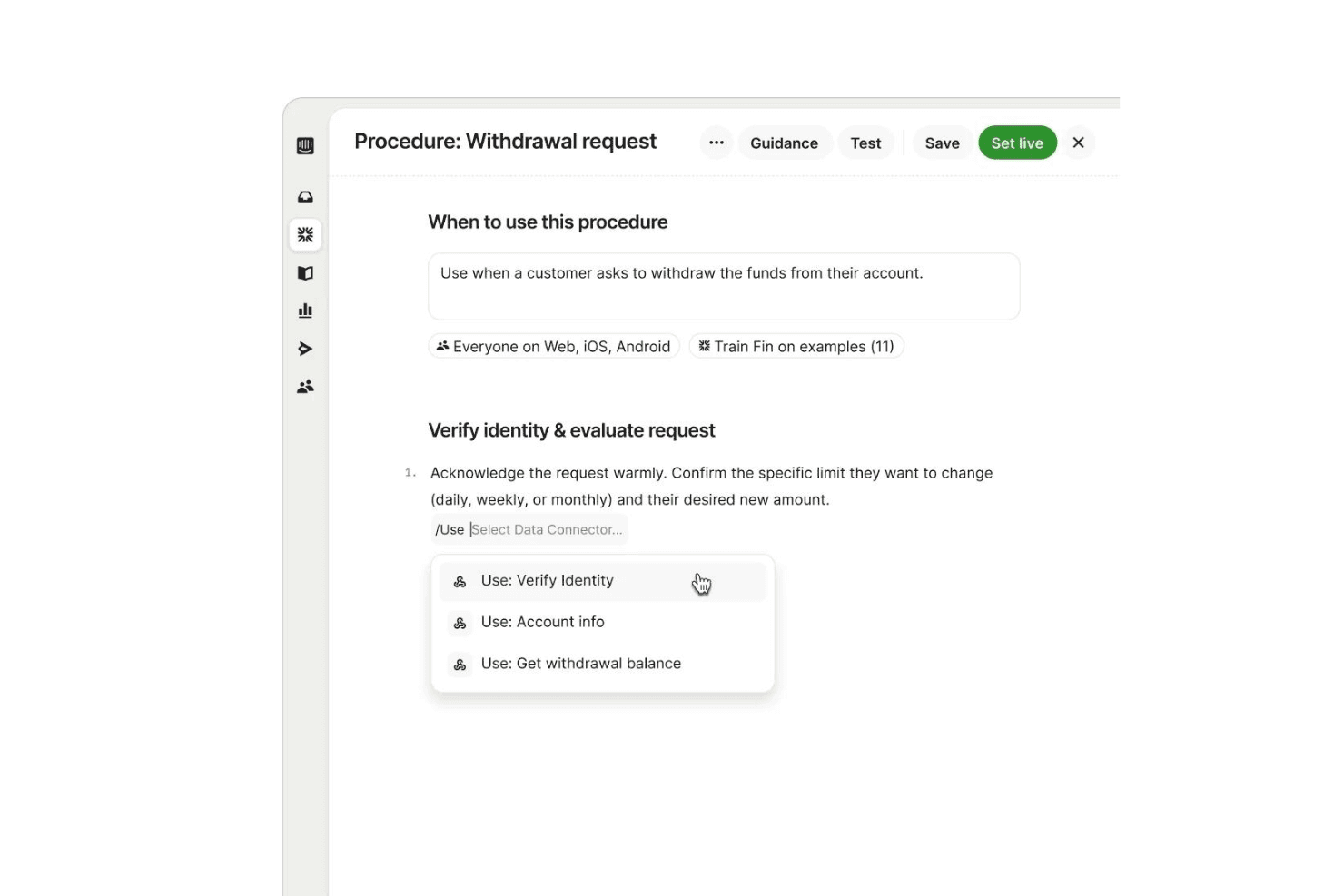
Procedures let teams create AI-powered workflows using natural-language instructions, branching logic, secure data access, and API actions. This enables Fin to complete complex tasks instead of simply answering questions.
Simulations
Simulations allow teams to test Fin against real-world scenarios before deployment. Organizations can identify issues, validate workflows, and improve performance without exposing customers to errors.
Ease of Use
Fin is relatively easy to use, especially for teams with an established knowledge base and support content. I like that the platform offers a centralized interface for managing content, testing responses, monitoring performance, and refining AI behavior. While basic deployments can be straightforward, more advanced workflows involving integrations, Procedures, or Data Connectors may require additional setup and ongoing management.

Onboarding
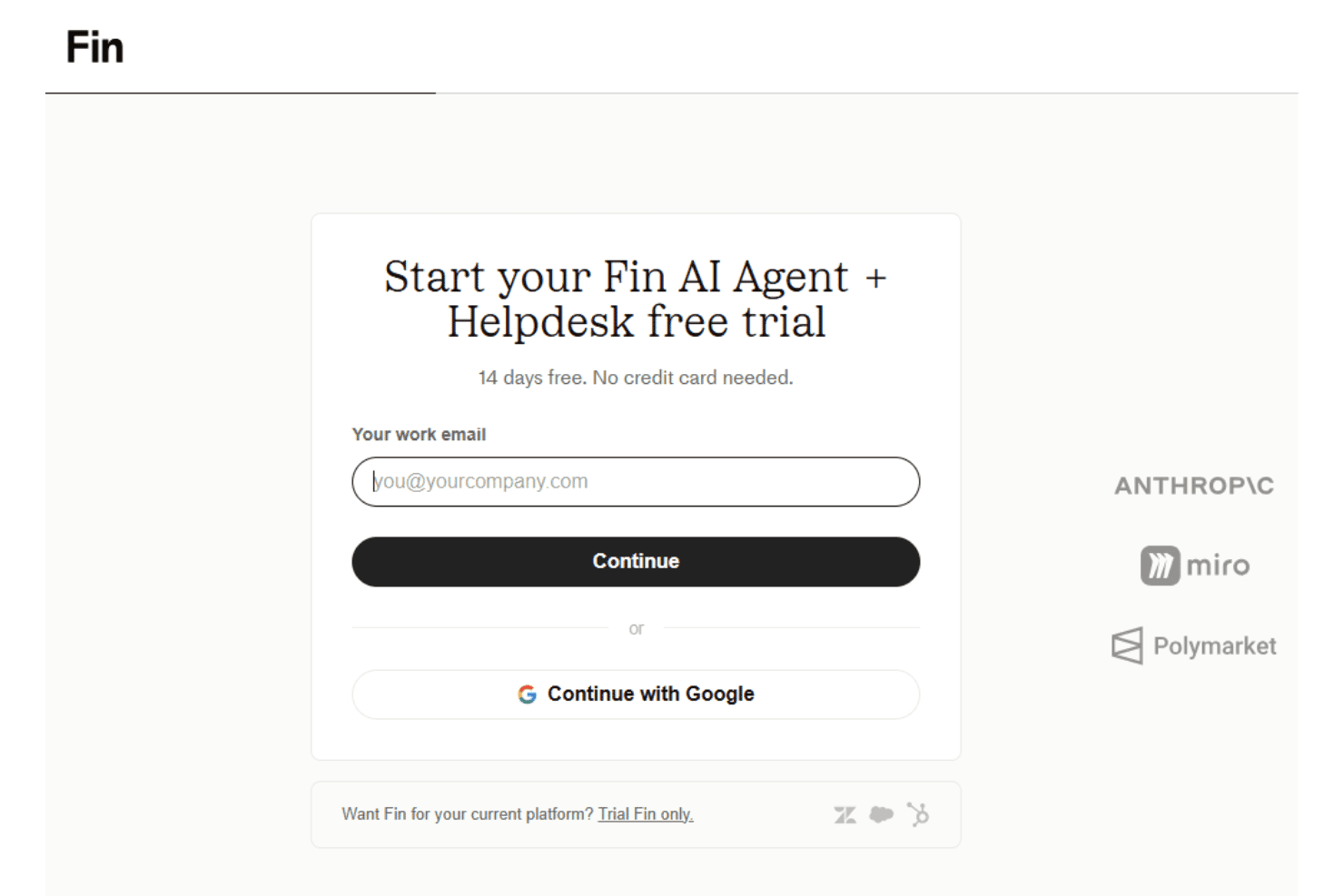
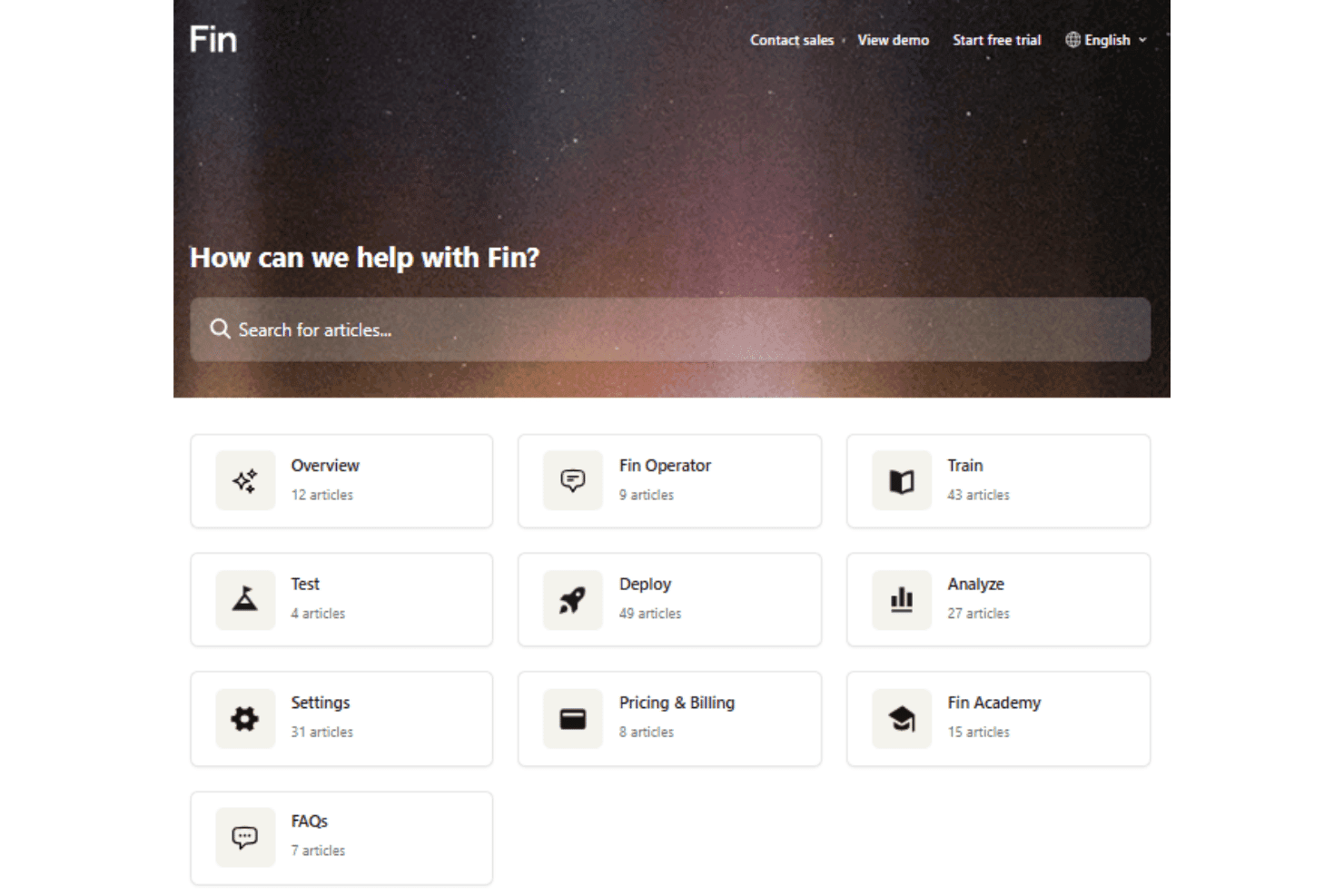
I think Fin's onboarding process is structured and approachable, particularly for teams that already have support documentation in place. The platform guides users through a cycle of training, testing, deployment, and optimization, while documentation, onboarding resources, and Fin Academy courses help accelerate adoption. Organizations with more complex environments can also purchase implementation and onboarding services for additional support.
Customer Support
Fin’s customer support sets a high bar, with users frequently mentioning rapid response times and knowledgeable staff. I’ve seen positive feedback about live chat support, onboarding calls, and ongoing access to expert guidance. The team is proactive about solving issues and taking feedback seriously.
Integrations
Fin integrates with Intercom, Zendesk, Salesforce, HubSpot, Freshworks, Shopify, Stripe, Jira, Slack, and other business applications through Data Connectors and APIs. It also supports custom integrations, allowing teams to connect Fin to existing systems and deliver more personalized, action-oriented customer support experiences.

Value for Money
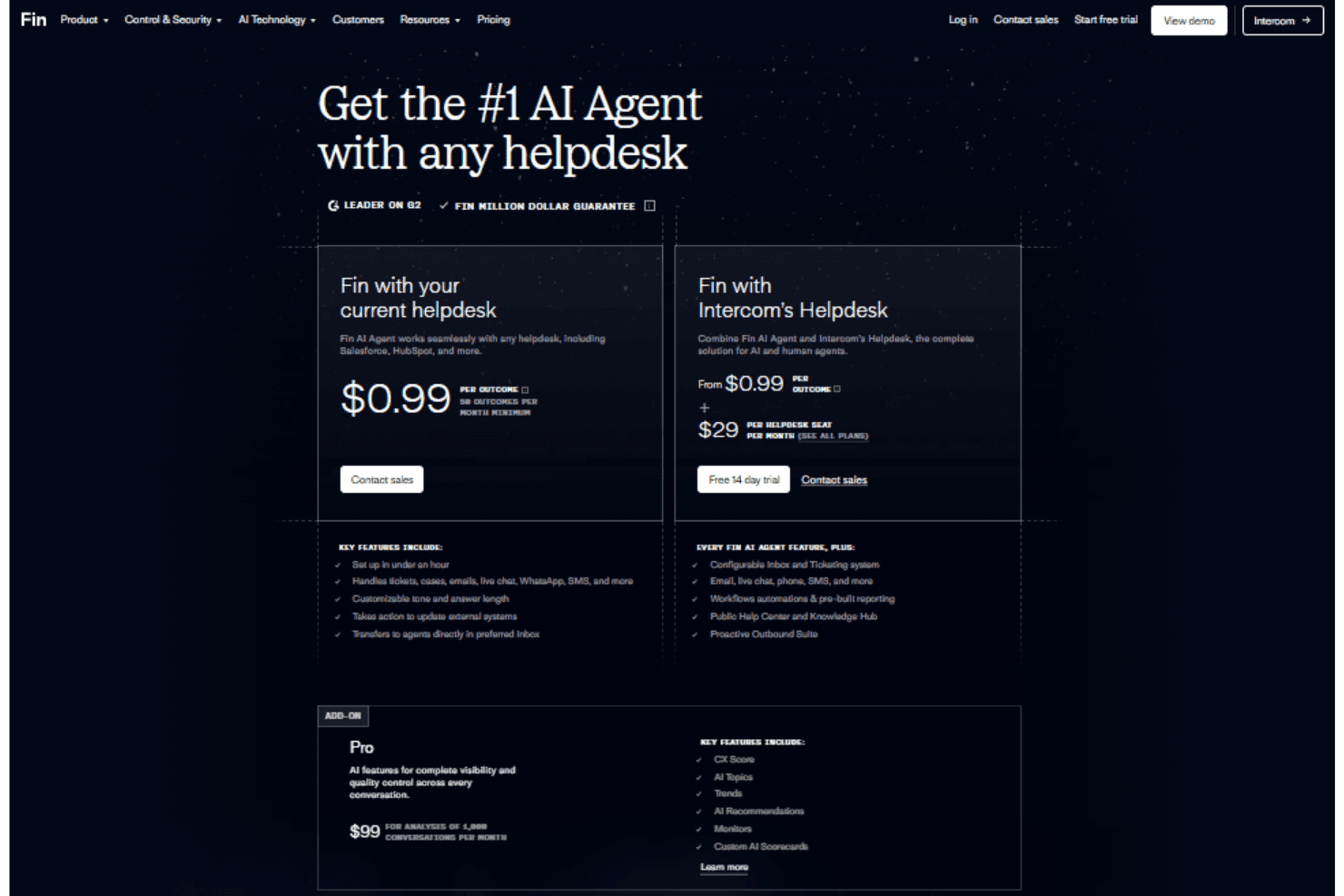
Fin's pricing can be expensive for smaller teams, but I think it delivers strong value for organizations looking to automate customer support at scale. Rather than charging primarily by seat, Fin uses an outcome-based pricing model that charges for resolved customer interactions, helping align costs with usage. Pricing options include:
- Fin with Your Current Helpdesk: Priced per outcome with a 50-outcome monthly minimum. Designed for teams that want to add AI-powered automation to existing platforms such as Zendesk, Salesforce, HubSpot, or Freshworks without migrating systems.
- Fin with Intercom: Also priced per outcome plus the cost of an Intercom customer service plan. This option combines Fin's AI capabilities with Intercom's customer service platform for a more unified support experience.
Additional costs may apply for add-ons such as Copilot, Pro, and voice-based usage (Fin Voice), making it important to evaluate expected usage before committing.
Fin Specs
- Analytics: Yes
- API: Yes
- Calendar Management: Yes
- Chat: Yes
- Click-to-Dial: Yes
- CRM Integration: Yes
- Customer Management: Yes
- Customer Service: Yes
- Dashboard: Yes
- Dashboards: Yes
- Data Export: Yes
- Data Import: Yes
- Data Visualization: Yes
- External Integrations: Yes
- Feedback Management: Yes
- Knowledge Base: Yes
- Lead Management: Yes
- Lead Scoring: Yes
- Multi-Source Feedback: Yes
- Multi-User: Yes
- Net Promoter Score: Yes
- Notifications: Yes
- Omnichannel Referrals: Yes
- Online Surveys: Yes
- Review Moderation: Yes
- Scheduling: Yes
- Sentiment Analysis: Yes
- Social Media Monitoring: Yes
Fin FAQs
Fin Company Overview & History
Fin is an AI-powered customer service agent developed by Intercom. Designed to automate customer conversations across channels, Fin uses knowledge sources, workflows, and connected business systems to resolve customer requests while reducing the workload on support teams. Unlike traditional chatbots, Fin can access company knowledge, follow predefined procedures, and take action across integrated systems to help organizations deliver faster, more scalable customer service experiences.
Fin Major Milestones
- 2023: Intercom launches Fin, an AI customer service agent powered by large language models.
- 2024: Intercom expands Fin with capabilities such as Procedures, Data Connectors, Fin Voice, and advanced analytics tools.
- 2025–2026: Fin evolves into a broader AI-powered customer agent platform with support for additional channels, integrations, governance features, and automation workflows.