


Hiver vs. Tidio: Comparison & Expert Reviews For 2026

We review tools independently, and commissions help fund our testing. See our transparency policy, our methodology, or suggest a tool.
If you’re comparing Hiver and Tidio as customer service software, you’re probably trying to solve a mix of everyday headaches—slow responses, scattered workflows, overwhelmed agents, and customers who expect answers instantly. Both tools promise faster, smoother support, but they take different approaches, which can make the decision feel more complicated than it needs to be. In this guide, you’ll get a clear, practical breakdown of how these platforms stack up across experience, automation, collaboration, and day-to-day usability so you can pick the one that actually fits your team’s workload and goals.
Hiver
4.7/5
- Free plan available
- From $35/user/month
Tidio


4.7/5
- Free plan available; 7-day free trial
- From $24.17/month (billed annually)
Why Trust Our Software Recommendations
6,700+
Reviews
20
Industry experts
16+
Evaluation factors
14
Years
Our team has been testing and reviewing software since 2012. As CX leaders ourselves, we know how difficult—and important—it is to choose the right software.
For this guide, we evaluated tools using hands-on testing and independent research, scoring tools using our selection criteria.
Our reviews reflect our human editorial judgment, not a sales pitch.
 Gui DrusinaCreative Director
 Tim FisherVP of AI
| Hiver | Tidio | |
|---|---|---|
| Free Trial | Free plan available | Free plan available; 7-day free trial |
| Pricing | From $35/user/month | From $24.17/month (billed annually) |
Hiver vs. Tidio Pricing & Hidden Costs
Hiver pricing operates on tiered plans where costs scale based on your feature needs, channels, workload, and usage. Tidio pricing also follows tiered billing with limits on billable conversations, add-on AI quotas, and additional charges for Flows usage or expanded Lyro AI capacities. You can pick the right option by mapping each vendor’s billing structure to the realities of your team’s conversation volume, automation needs, and how predictable you want monthly costs to be.
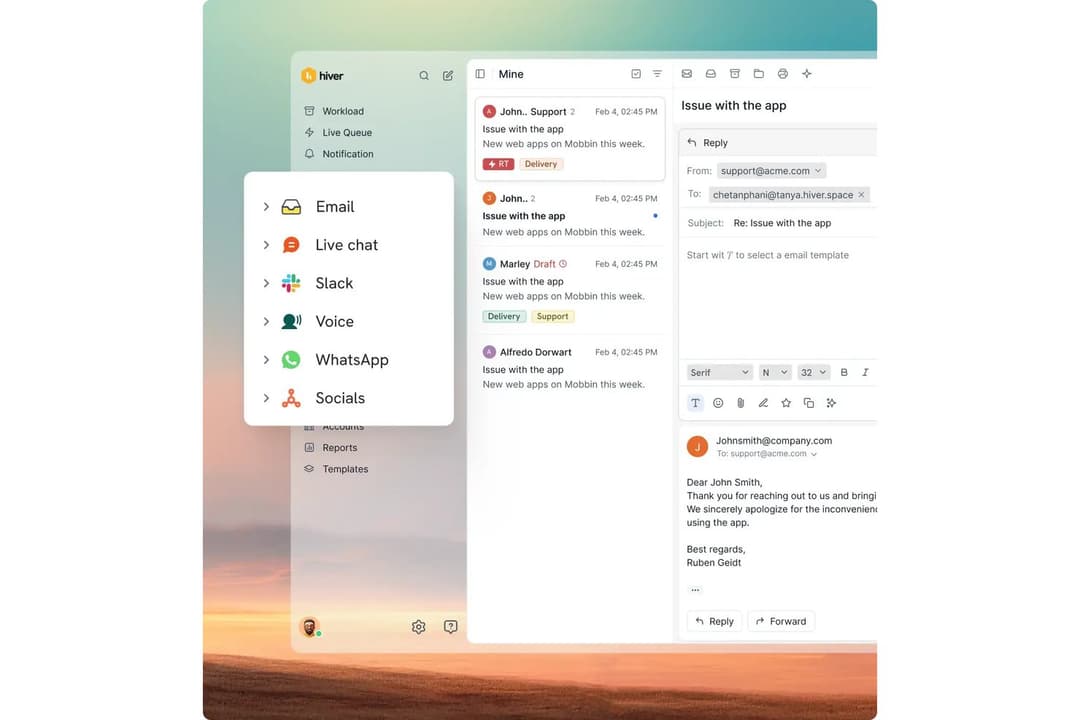
Hiver’s omnichannel inbox and Hiver AI are great for customer service leads who want a modern workspace that organizes support, cuts busywork, and keeps responses human without jumping between tools. Tidio’s Lyro AI Agent and Flows are helpful when you need deeper automation paths or AI that handles tasks across live chat and social channels. Both support your work in different but useful ways depending on whether your team values intuitive workflows or heavy automation and chat-first experiences.
| Hiver | Tidio | |
|---|---|---|
| API | Yes | Yes |
| Call Integration | Yes | No |
| Chat | Yes | Yes |
| Contact Management | Yes | Yes |
| CRM Integration | Yes | Yes |
| Customer Management | Yes | Yes |
| Dashboard | Yes | Yes |
| Data Export | Yes | Yes |
| Data Import | Yes | Yes |
| Data Visualization | Yes | Yes |
| Email Integration | Yes | Yes |
| Escalation Management | Yes | Yes |
| External Integrations | Yes | Yes |
| Knowledge Base | Yes | No |
| Lead Management | No | Yes |
| Lead Scoring | No | Yes |
| Multi-User | Yes | Yes |
| Notifications | Yes | Yes |
| Scheduling | Yes | Yes |
| Self-service Portal | Yes | Yes |
| Support Forum | No | No |
| Ticket Management | Yes | Yes |
| Integration | Hiver | Tidio |
| Salesforce | ✅ | ✅ |
| HubSpot | ✅ | ✅ |
| Shopify | ✅ | ✅ |
| Netsuite | ✅ | ❌ |
| Asana | ✅ | ❌ |
| Jira | ✅ | ❌ |
| ❌ | ✅ | |
| Slack | ✅ | ❌ |
| API | ✅ | ✅ |
| Zapier | ✅ | ✅ |
Both Hiver and Tidio connect easily to the tools you already rely on, giving you a smoother workflow without forcing your team to jump between tabs. Hiver leans into deeper operational integrations with systems like Salesforce, HubSpot, Shopify, Netsuite, Jira, and Asana, which makes it a strong fit if your team handles more structured work across multiple internal platforms. Tidio, on the other hand, stands out with broader social channel integrations—especially Instagram—which helps you support customers where they're already active. No matter which one you choose, both tools plug into Zapier and offer robust API access, so you can extend and customize your setup as your team grows.
| Factor | Hiver | Tidio |
| Data Security | Uses TLS/SSL encryption, isolated AWS VPCs, and strict internal access controls to keep customer data safe. | Encrypts all connections with TLS, uses hashed credential storage, and protects data with encrypted backups. |
| Compliance | Meets ISO 27001, SOC 2 Type II, GDPR, and CCPA, with HIPAA support on higher tiers. | Meets SOC 2, GDPR, and CCPA, plus PCI-DSS support for payments via Stripe. |
| Authentication | Supports OAuth-based SSO with Gmail/Outlook and OAuth permissions for provider access. | Offers two-factor authentication and role-based access controls to limit unauthorized access. |
| Hosting | Hosted on secure AWS infrastructure with regular security audits and vulnerability programs. | Hosted on AWS with strong cloud protection and continuous monitoring. |
| Data Handling | Email content and metadata handled with strict retention rules and temporary encrypted storage for syncing. | Encrypts data in transit and at rest, with strong controls over integrations and backups. |
Hiver offers deeper compliance options, while Tidio emphasizes fast, secure access and strong operational safeguards. You can compare the two by reviewing your compliance needs, checking authentication standards, and evaluating how each vendor handles data across AI, channels, and integrations.
| Factor | Hiver | Tidio |
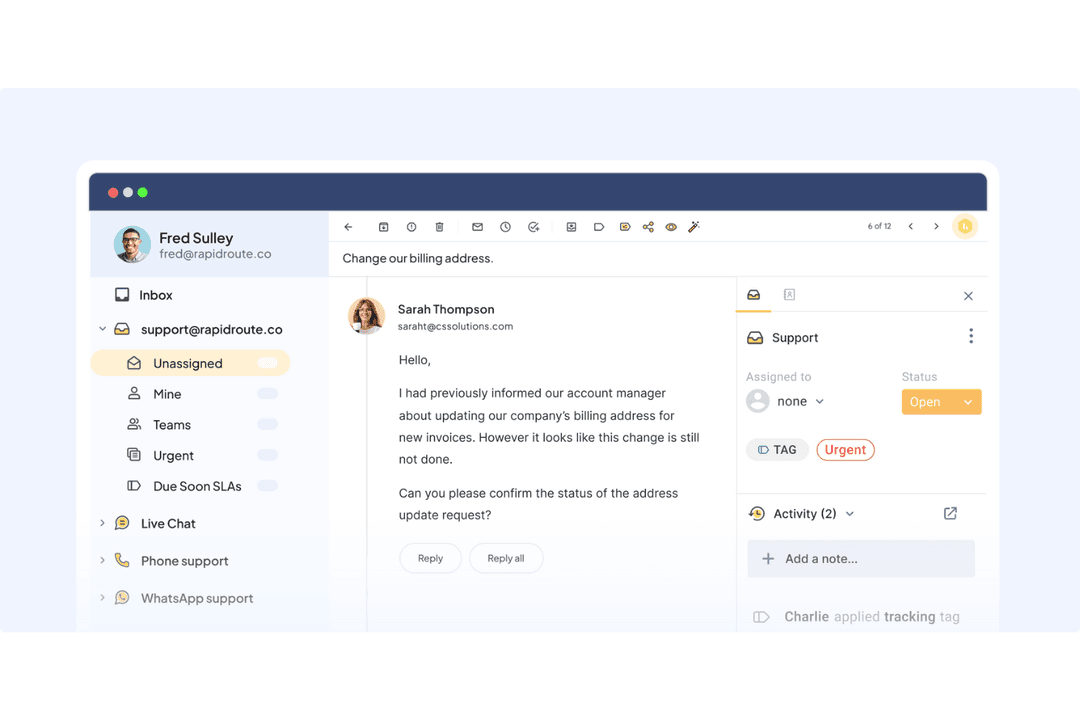
| User Interface | Intuitive, modern UI that makes it easy for teams to move fast. | Offers a visual, chat-centric dashboard with intuitive menus for fast navigation. |
| Onboarding | Simple setup that gets teams resolving conversations within hours. | Easy to install with guided setup and quick activation of Lyro and Flows. |
| Workflow Setup | Clear automations and assignment rules that match daily support needs. | Drag-and-drop builders and visual Flows make automation easy to configure. |
| Multichannel Use | Unified inbox combines email, chat, WhatsApp, voice, and portal. | Centralized dashboard for chat, email, and social channels like Instagram and Messenger. |
| Agent Productivity | AI Copilot reduces busywork and helps agents stay on task. | Lyro AI Agent handles repetitive tasks and lets agents focus on priority cases. |
Overall, I think Hiver is easier if your team wants an intuitive, minimal clutter experience, while Tidio is easier if your work is heavily chat-based and you want visual tools to build automations. Both are simple to use, but they shine in different environments based on your team’s habits.
Hiver
- You deliver human-like, personalized responses without switching tabs or sounding robotic.
- Your team stays aligned with shared drafts, notes, collision alerts, and clear ownership.
- Hiver AI reduces manual effort by drafting responses, auto-tagging conversations, and summarizing threads in seconds.
- Complex enterprise workflows may require more customization than Hiver currently offers.
- No advanced help desk forecasting, capacity planning, or predictive SLA breach modeling.
- Teams with support channels outside of chat, email, and call (like social channels), may find the platform lacks features.
Tidio
- You can set up and use Tidio quickly without much hassle.
- Tidio's interface is intuitive and easy to navigate.
- The live chat feature helps your team engage with customers in real time.
- Your team might find customer support responses slow at times.
- Some users have had issues with billing practices.
- Tidio's AI-powered functionality isn't as advanced as some competitors.
Hiver
- E-commerce TeamsYou can pull order context, draft responses faster, and handle customer issues without switching tools.
- IT & Internal SupportWorkflows, SLAs, and collision alerts help your team respond quickly and stay aligned.
- AI-Forward Support TeamsHiver AI handles repetitive tasks so your team focuses on high-value problems.
- Travel & HospitalityPersonalized responses and fast collaboration help you improve customer experience.
- Logistics & OperationsShared inboxes, tags, and workflows give you visibility and control over high-volume communication.
- Small Support TeamsHiver is easy to learn and helps your team start resolving issues within hours.
Tidio
- FreelancersFreelancers use Tidio to manage client communications easily, track visitor behavior, and maintain professional follow-up.
- Online MarketplacesOnline marketplaces enhance user interaction with Tidio's seamless chat capabilities and multichannel communication.
- Startup CompaniesStartups with limited resources appreciate Tidio's straightforward design, scalability, and quick deployment.
- Customer Service TeamsCustomer service teams find Tidio's intuitive interface valuable for managing customer interactions, notifications, and help desk tasks efficiently.
- E-Commerce StoresYour e-commerce store benefits from Tidio's live chat, AI chatbots, and chatbot flows by handling customer inquiries swiftly and improving sales.
- Small RetailersTidio's easy setup, chat widget, and real-time chat make it perfect for small businesses in retail needing to quickly assist customers and answer common questions.
Who Should Use Hiver, and Who Should Use Tidio?
Hiver is best for customer service leaders whose teams rely on email, chat, and calls, need tight collaboration, and want AI that speeds up work without changing how agents operate. Tidio makes more sense if you want deep automation, chat-first workflows, and an AI agent that can also handle a large portion of conversations across multiple channels (with the added benefit of managing social channel conversations). I think that Hiver fits teams that want structure, clarity, and speed without compromising down-to-earth interactions, while Tidio works well for teams that want proactive engagement and automation at scale.
| Hiver | Tidio | |
|---|---|---|
| Artificial Intelligence | Hiver Hiver AI improves replies, tagging, summaries, and personalization. | Tidio Lyro AI Agent performs tasks, answers questions, and runs automations. |
| Omnichannel Support | Hiver Strong for email, voice, chat, WhatsApp, and portal support. | Tidio Strong for live chat, Instagram, Messenger, and WhatsApp automations. |
| Self-Service | Hiver Offers a full customer portal for ticket submission and tracking. | Tidio Doesn’t include a customer-facing ticket portal; relies more on chat-based communication. |
| User Interface | Hiver Modern omnichannel dashboard built for teams wanting a familiar interface. | Tidio Chat-first interface with visual automation and conversation flows. |
| Workflows | Hiver Strong assignment, routing, and SLA tools. | Tidio Extensive Flows builder for proactive and reactive automations. |
| Analytics Tools | Each platform provides dashboards, insights, and reporting to help you see performance trends and improve service quality. |
|---|---|
| Collaboration | They both offer tools to help agents work together, stay aligned, and manage workloads effectively. |
| Mobile Usability | Both tools give your team mobile apps or mobile access so they can handle customer questions on the go. |
| Scalability | Both systems support small teams and can scale to larger operations with advanced features, automations, and multichannel setups. |
| Ticket Management | Both include ticketing systems that convert conversations into trackable requests so your team stays organized. |