
17 Best Customer Experience Templates For 2026

Customer experience templates help CX leaders tackle challenges like under-documented work, inconsistent execution, and initiatives that don’t scale beyond a single team. Used well, they give you structure without slowing you down, helping you create shared language, reduce decision fatigue, and turn one-off CX efforts into repeatable systems that actually stick.
I’ve curated and reviewed these customer experience templates based on how useful they are in real CX work, not how polished they look in a download library. This article breaks down the best options across strategy, journey design, feedback, measurement, and operations, and explains when each one is worth using depending on your team’s goals and maturity.
What Is a Customer Experience Template?
A customer experience template is a prebuilt framework CX teams can use to document, design, measure, or operationalize experience work without starting from scratch.
These templates can take many forms—strategy documents, journey maps, service blueprints, survey frameworks, dashboards, or process workflows. What they have in common is structure: they give you a repeatable way to capture insights, make decisions, and align teams around how the experience should work.
For senior CX leaders, templates aren’t about shortcuts. They’re about consistency and scale. A good template helps standardize how CX work gets done across teams and regions, reduces ambiguity, and makes it easier to connect experience efforts back to business outcomes. Used well, they turn CX from a collection of initiatives into an operating model.
17 Best Customer Experience Templates To Get Started With
These 17 customer experience templates cover the core work CX leaders are responsible for, from setting strategy and understanding customers to measuring impact and operationalizing change. Used together, they give you a practical starting point for building a more consistent, scalable approach to CX without reinventing everything from scratch.
1. Customer Success Plan Template (The CX Lead)
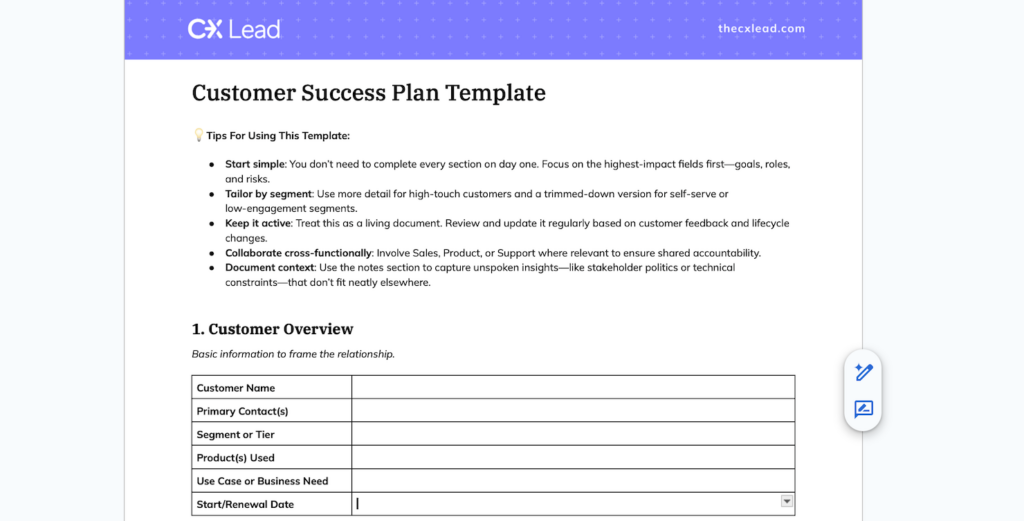
A customer success plan template gives you a clear, repeatable way to define what success actually looks like for a customer and how your team plans to deliver it. Instead of vague goals or static documents that go stale after kickoff, this template helps CX and CS leaders connect customer objectives to real outcomes, ownership, and next actions.
It is especially useful when you need alignment across onboarding, adoption, and renewal, and when you want success planning to be a working tool rather than a one-time exercise.
Best for: Customer success leaders, CX leaders partnering with CS, post-sales orgs in SaaS
Includes:
- Customer goals and success definitions
- Success milestones and ownership
- Risk signals and next actions
2. Customer Journey Map Template (HubSpot)
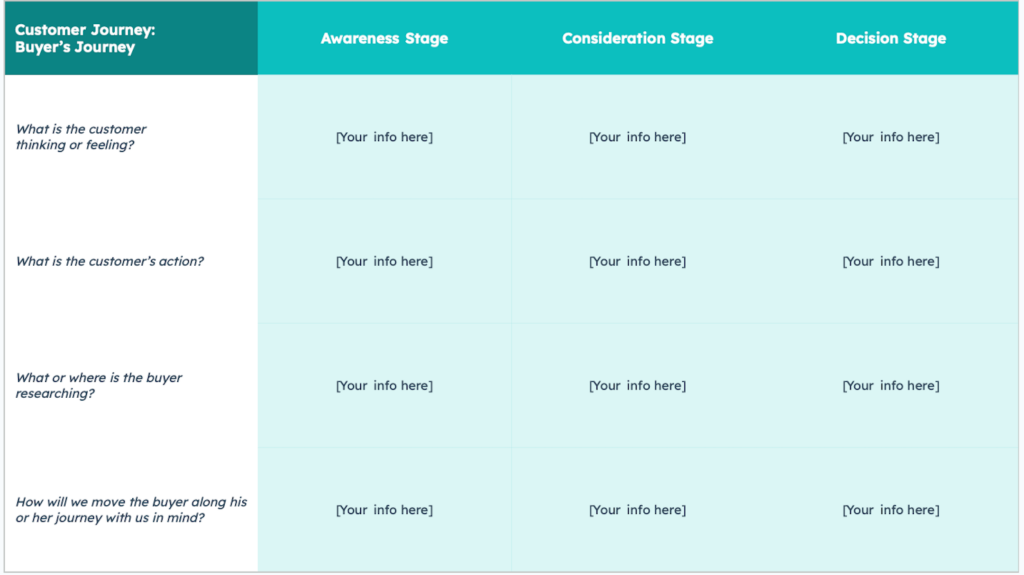
A customer journey map template helps you document how customers actually move through your experience across key stages, touchpoints, and moments of friction. It is useful when teams have strong opinions about the customer experience but no shared view of how it really works end to end.
This template gives CX leaders a practical way to align teams around customer goals, pain points, and opportunities without overengineering the exercise.
Best for: CX teams running journey mapping workshops, cross-functional alignment
Includes:
- Lifecycle stages
- Customer goals and touchpoints
- Pain points and opportunities
3. Customer Persona Template (UXPressia)
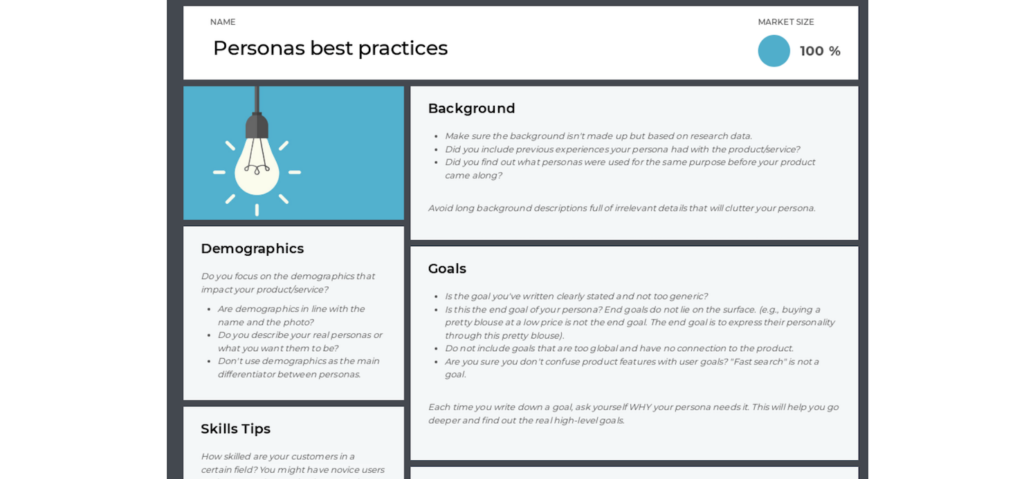
A customer persona template helps you capture who your customers are, what they are trying to achieve, and what gets in their way. It is useful when teams rely on assumptions or outdated profiles instead of shared, research-informed understanding.
This template focuses on behaviors, needs, and context. It works well for CX teams who want personas grounded in research and usable across journey mapping, product, and service design.
Best for: CX, UX, and research teams
Includes:
- Jobs-to-be-done framing
- Goals, pain points, and scenarios
- Contextual insights
4. Voice of the Customer (VoC) Program Template (Chattermill)
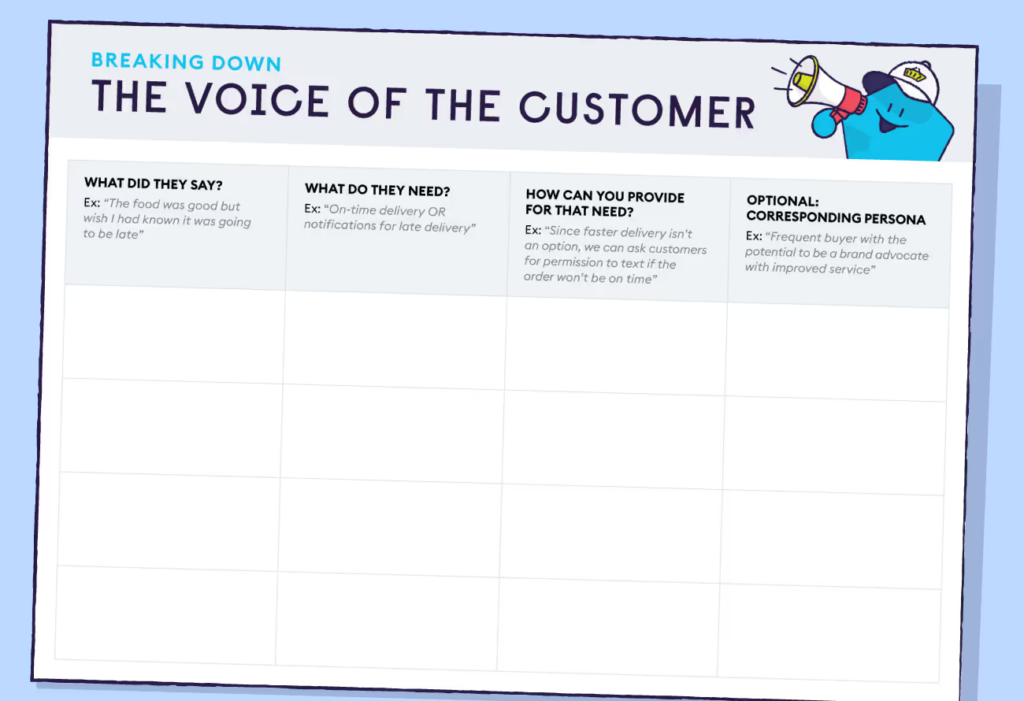
A voice of the customer program template helps you structure how feedback is collected, analyzed, and acted on across the organization. It is useful when feedback exists in many places but action is inconsistent or unclear.
This template focuses on structuring inputs, governance, and follow-up. It supports CX leaders who want to turn listening into decisions, priorities, and follow-through rather than another reporting layer.
Best for: CX leaders building or formalizing VoC programs
Includes:
- Feedback sources
- Ownership and workflows
- Action planning structure
5. Customer Education Template (Gainsight)
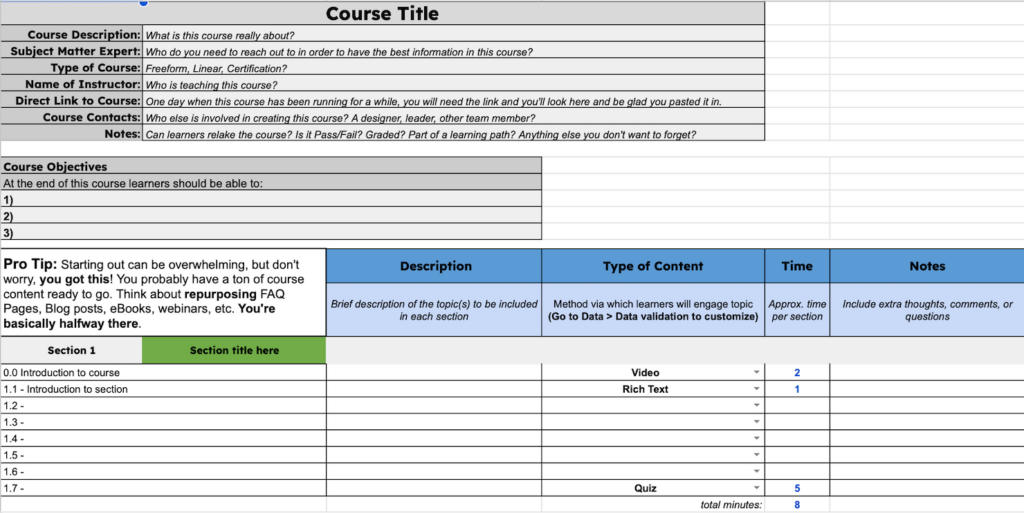
A customer education template helps teams design and manage programs that teach customers how to get value from a product or service. It is useful when adoption depends on learning, not just onboarding.
This template gives CX and CS leaders a structured way to plan education as a lever for adoption and retention, rather than an afterthought.
Best for: CS, CX, and enablement leaders
Includes:
- Program planning frameworks
- Learning paths
- Measurement considerations
6. Net Promoter Score (NPS) Survey Template (SurveyMonkey)
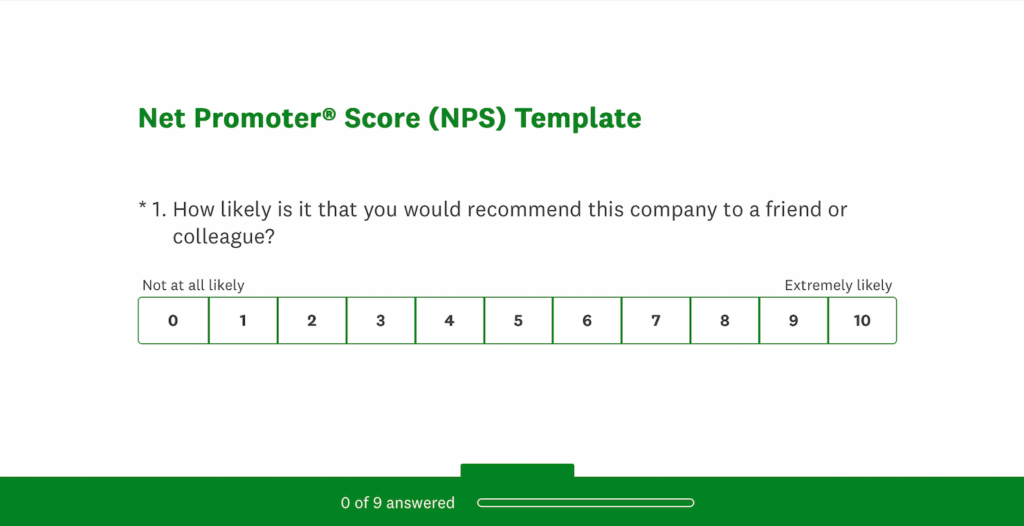
A net promoter score survey template provides a standardized way to measure customer loyalty and advocacy. It is useful when teams need a consistent signal they can track over time.
This template works best as a baseline, especially for organizations prioritizing reliability and comparability over heavy customization.
Best for: CX and insights teams running standardized surveys
Includes:
- Core NPS question
- Follow-up prompts
- Reporting structure
7. Customer Experience Strategy Template (Cascade)
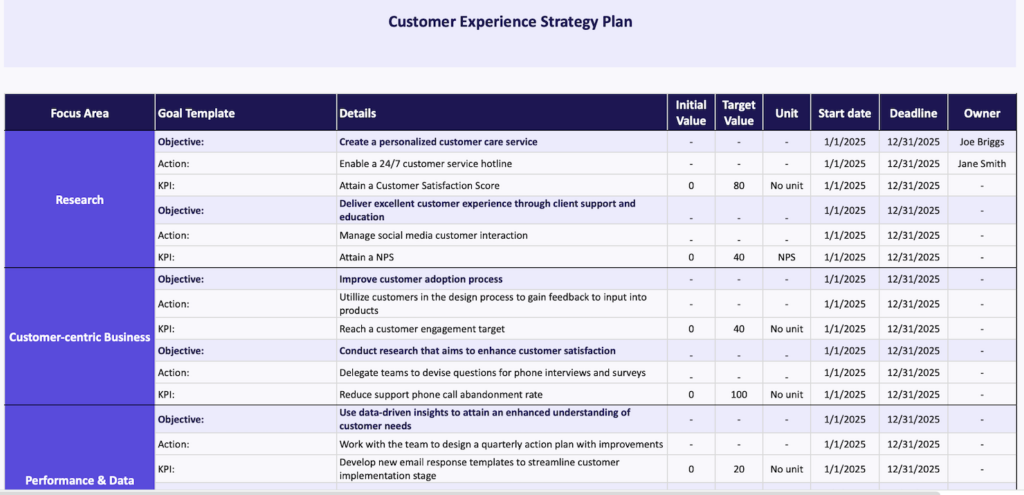
A customer experience strategy template helps you document priorities, initiatives, and success measures in one place. It is useful when CX work risks becoming fragmented or disconnected from business goals.
This template supports leaders who need to make experience strategy visible, actionable, and easier to execute.
Best for: Heads of CX, transformation leaders
Includes:
- Strategic objectives
- Initiatives and metrics
- Execution planning
8. Service Blueprint Templates (The CX Lead)
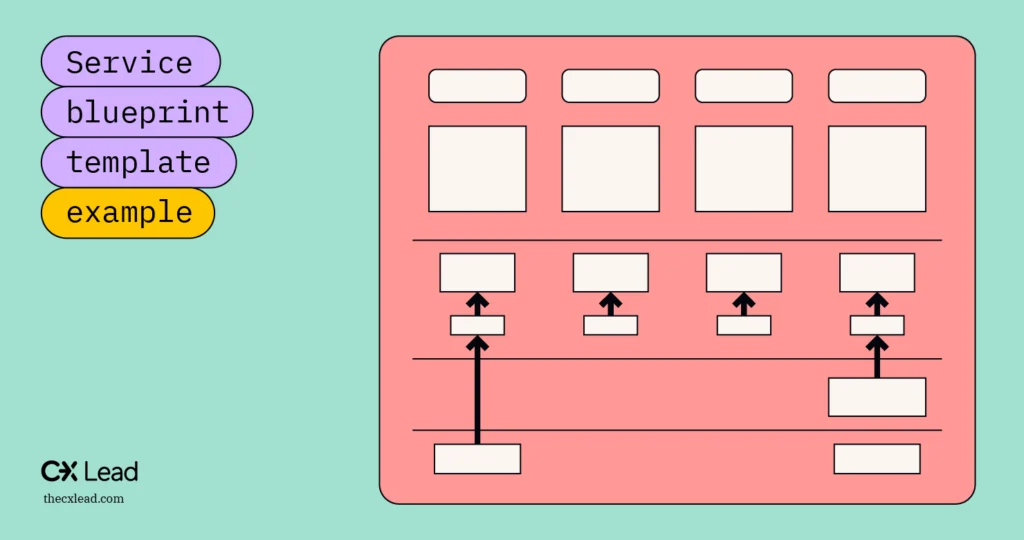
A service blueprint template helps you map the customer experience alongside the people, processes, and systems that support it. It is useful when customer issues are rooted in operational complexity rather than frontline behavior.
These templates help CX leaders surface dependencies and gaps that traditional journey maps often miss.
Best for: CX leaders working with ops, product, and support
Includes:
- Frontstage interactions
- Backstage processes
- Systems and ownership
9. Customer Feedback Analysis Template (Zendesk)
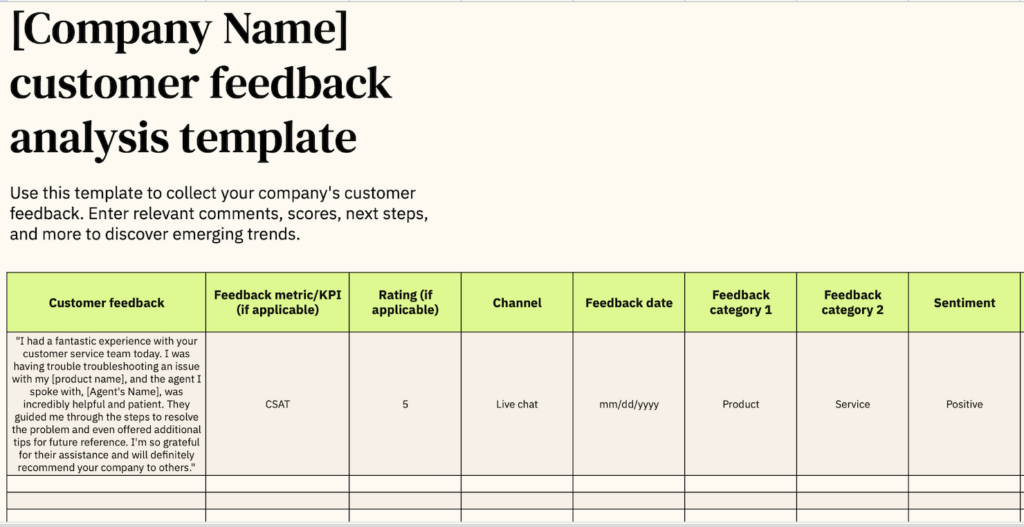
A customer feedback analysis template helps teams organize and interpret qualitative feedback at scale. It is useful when insights are scattered across tickets, surveys, and conversations.
This template provides a starting point for moving from raw feedback to patterns and priorities.
Best for: Support, CX, and insights teams
Includes:
- Feedback categorization
- Thematic analysis
- Action prioritization
10. Customer Onboarding Checklist Template (Process Street)
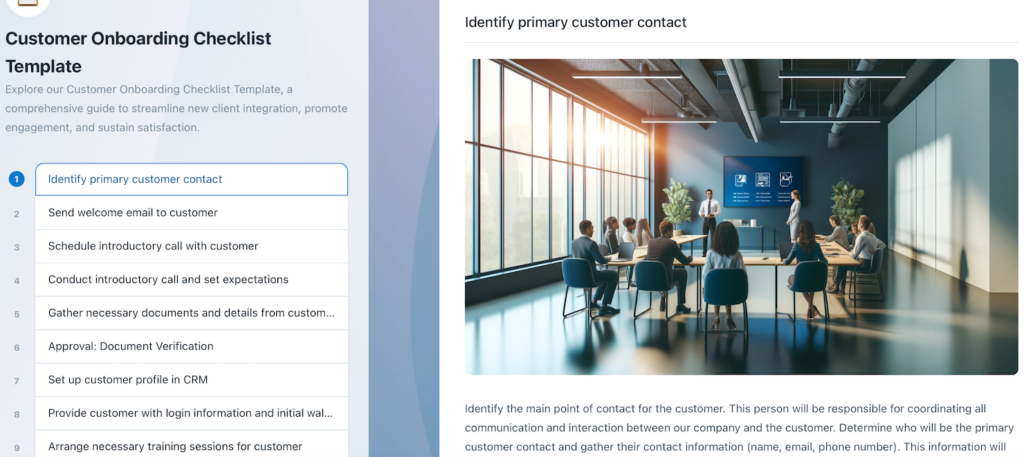
A customer onboarding checklist template gives teams a repeatable way to deliver consistent early experiences. It is useful when onboarding quality varies by segment, owner, or region.
This template helps CX and CS teams reduce gaps and missed steps during critical first interactions.
Best for: CS, onboarding, and CX ops teams
Includes:
- Step-by-step onboarding tasks
- Ownership tracking
- Process documentation
11. CX Metrics & KPI Dashboard Template (Geckoboard)
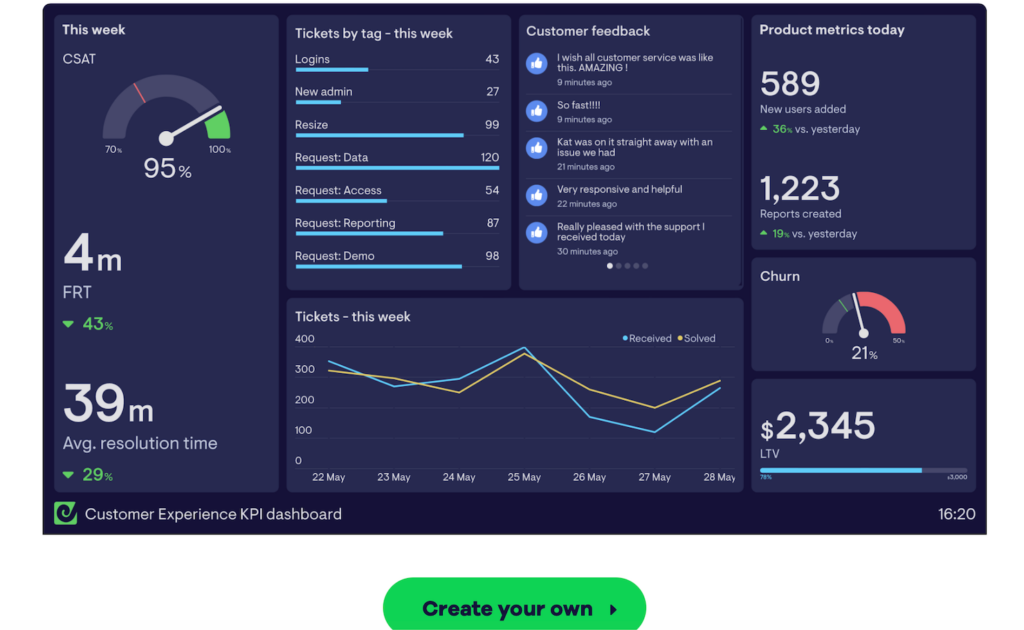
A CX metrics and KPI dashboard template helps leaders monitor experience performance in one view. It is useful when metrics exist but are buried in reports or spread across tools.
This template supports ongoing visibility and executive-level conversations about experience health, without having to build dashboards from scratch.
Best for: CX leaders, exec reporting
Includes:
- CX and support metrics
- Real-time visualization
- Executive-ready views
12. Customer Service Training Manual Template (HubSpot)
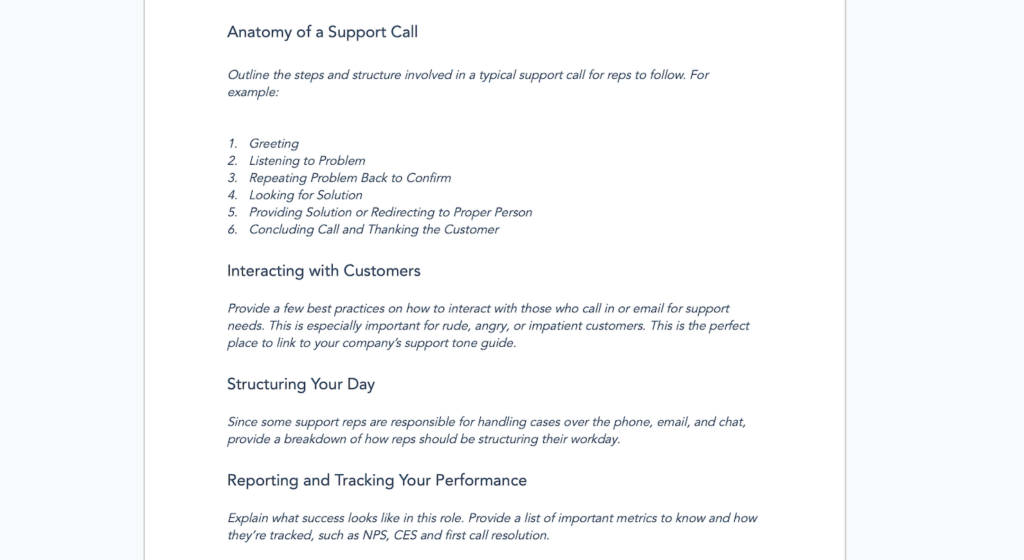
A customer service training manual template helps teams document service standards, processes, and expectations. It is useful when consistency depends on shared understanding rather than tribal knowledge.
This template gives CX and support leaders a foundation for onboarding and enablement. It is useful for leaders trying to scale consistent service delivery across teams.
Best for: Support and CX enablement leaders
Includes:
- Service principles
- Process documentation
- Training structure
13. Customer Effort Score (CES) Survey Template (AskNicely)
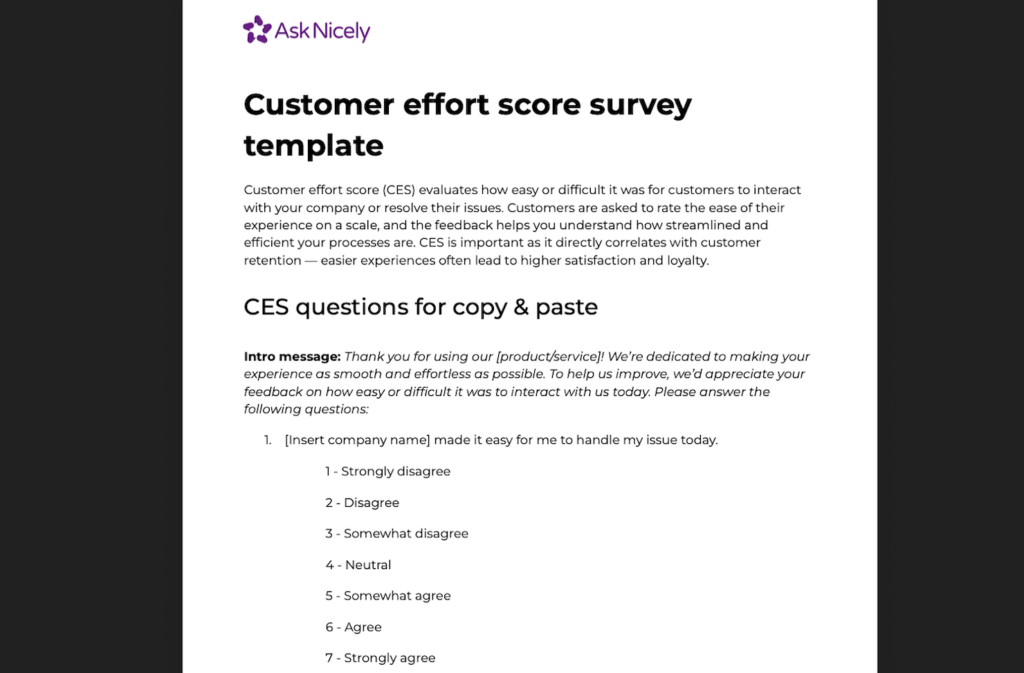
A customer effort score survey template helps measure how easy or difficult an interaction feels to customers. It is useful when teams want to understand friction rather than sentiment alone.
This template supports targeted improvements to reduce effort across key journeys. This is helpful when teams want to diagnose friction rather than sentiment alone.
Best for: CX and insights teams
Includes:
- CES question formats
- Follow-up prompts
- Reporting guidance
14. Customer Experience Maturity Model Template (Customer Success Collective)
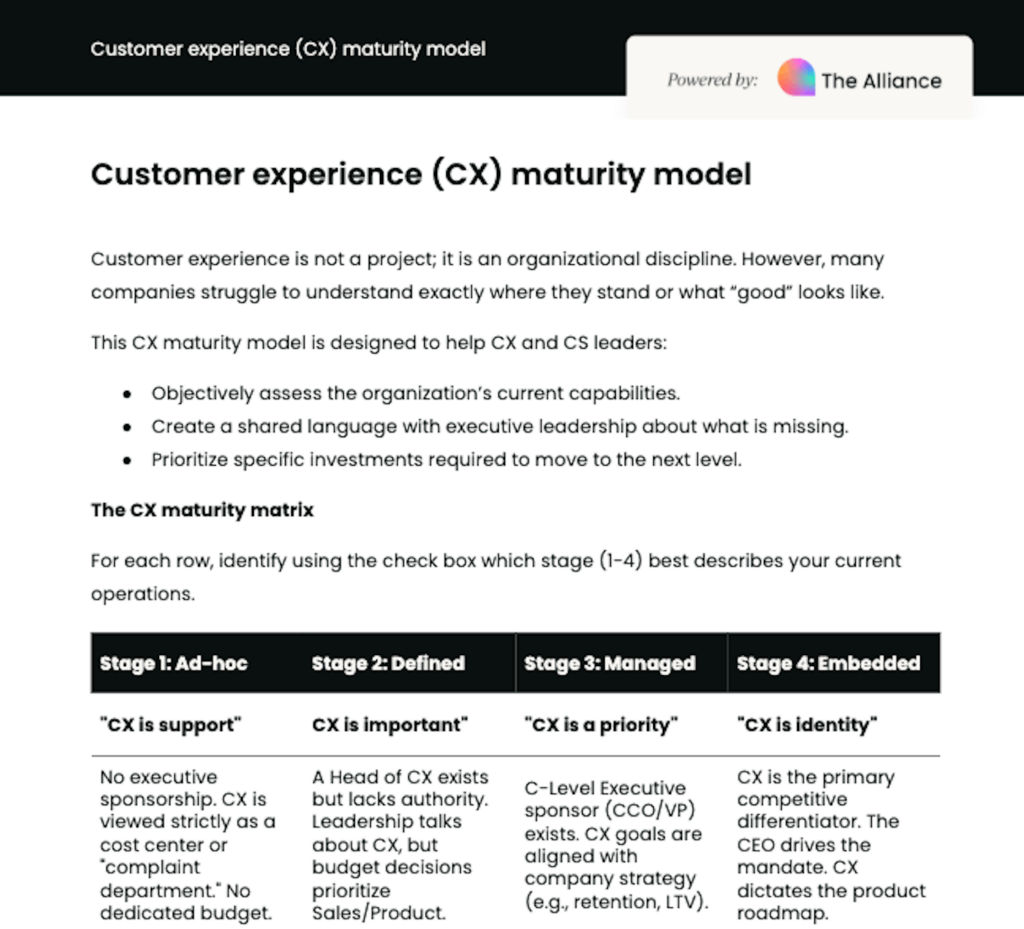
A customer experience maturity model template helps organizations assess how developed their CX capabilities are today. It is useful when prioritizing investments or aligning stakeholders on where to focus next.
This template is useful for prioritization, roadmap planning, and executive conversations.
Best for: CX leaders, transformation teams
Includes:
- Maturity stages
- Capability assessment
- Progress tracking
15. Customer Escalation Process Template (Trainual)
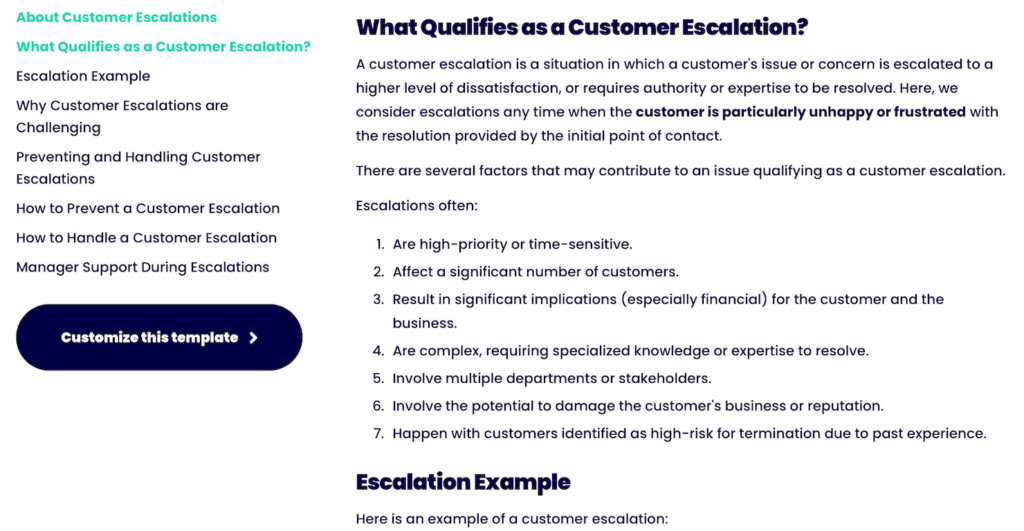
A customer escalation process template helps teams define how issues are raised, routed, and resolved. It is useful when escalation paths are unclear or inconsistently followed.
This template reduces confusion during high-risk customer moments.
Best for: Support and CX ops leaders
Includes:
- Escalation paths
- Roles and responsibilities
- Process documentation
16. Closed-Loop Workflow Map Template (Qualtrics / XM Institute)
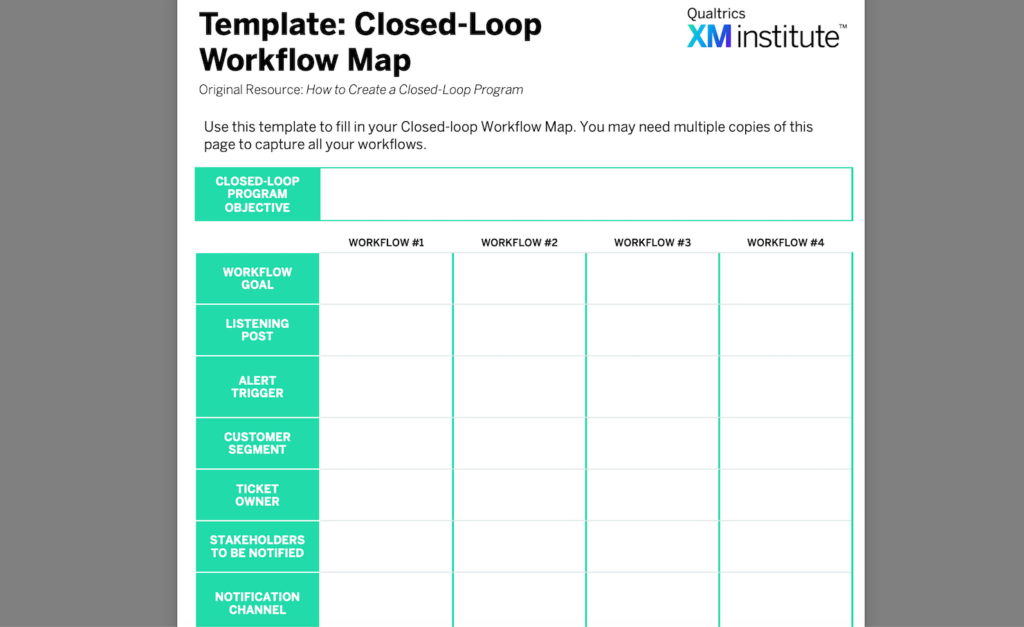
A closed-loop workflow map template helps teams design how feedback is followed up and resolved. It is useful when closing the loop is inconsistent or informal.
This template supports operational accountability after feedback is collected.
Best for: VoC and CX operations leaders
Includes:
- Feedback intake points
- Ownership and actions
- Loop closure steps
17. Customer Health Score Template (Revos)
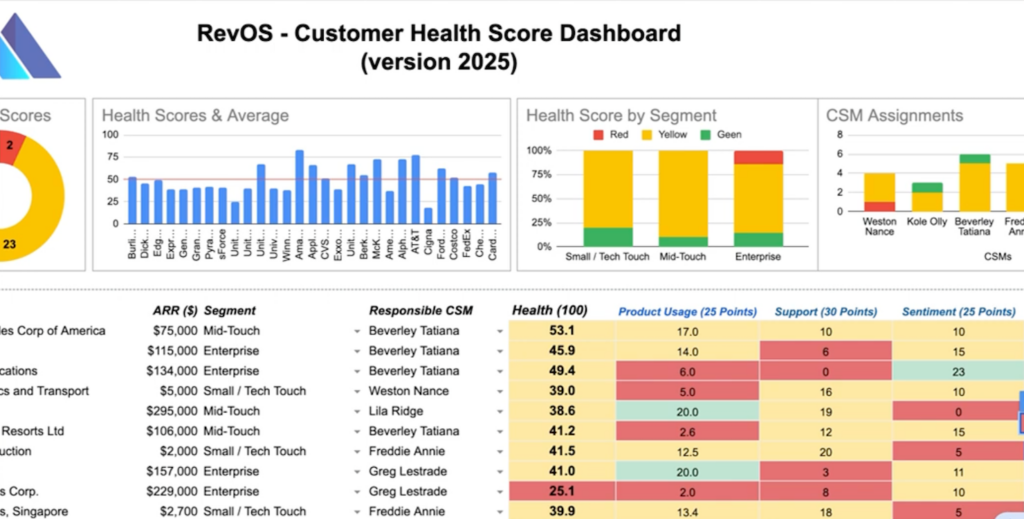
A customer health score template helps teams define and track signals that indicate customer risk or growth potential. It is useful when health is discussed qualitatively but not measured consistently.
This template enables shared visibility into customer health. It provides a starting point for teams building predictive risk models.
Best for: CS and CX leaders
Includes:
- Health indicators
- Scoring logic
- Reporting structure
Final Thoughts
Templates don’t replace thinking—but they do make good thinking repeatable.
The best CX leaders use templates as scaffolding: adapting them, stress-testing them, and evolving them as the organization matures. If you’re serious about running CX as a business discipline, not a side initiative, this collection gives you a strong place to start.

