


Alchemer Review: Pros, Cons, Features, and Pricing Explained


The right customer review management software can elevate your business' customer experience from just okay to something truly exceptional; gathering key insights at critical customer touchpoints, and being able to make informed decisions to act on it, makes for a seamless and continuously improving customer journey. Alchemer offers that and more through its robust feedback capabilities, flexible surveys, and in-depth reporting. In this review, I'll walk you through Alchemer's features, use cases, and its pros and cons, so you can decide if it's right for your CX needs.
Alchemer Evaluation Summary
- From $55/user/month
- 7-day free trial + free demo available
Why Trust Our Software Reviews
We’ve been testing and reviewing software since 2020. As CX leaders ourselves, we know how critical and difficult it is to make the right decision when selecting software.
We invest in deep research to help our audience make better software purchasing decisions. We’ve tested more than 2,000 tools for different CX use cases and written over 1,000 comprehensive software reviews. Learn how we stay transparent & our software review methodology.
Alchemer Overview
What makes Alchemer stand out as a customer review management software is the sheer depth of its survey logic and customization for complex feedback needs, which sets it apart from other platforms. Its user interface is straightforward, and onboarding is relatively fast after an initial learning curve, and although the pricing is flexible to your specific needs, it's still on the pricier side. But Alchemer makes up for these minor shortcomings with its extensive integrations and responsive support. If you’re selecting a platform for detailed surveys, advanced branching, or multi-channel distribution then Alchemer is definitely worth considering.
pros
-
Advanced survey logic supports complex branching and workflows.
-
Flexible branding and white-labeling options for surveys.
-
Responsive customer support with dedicated onboarding resources.
cons
-
Some features require higher-tier pricing plans.
-
There's a learning curve for advanced features.
-
Limited offline survey capabilities for field data collection.
Is Alchemer Right For Your Needs?
Who Would be a Good Fit for Alchemer?
Alchemer is best suited for organizations that need advanced survey logic, data compliant functionalities, detailed reports, and deep customization. Teams in large enterprises, regulated industries, and those running complex research projects will find its features especially valuable. Alchemer’s flexible branding, workflow automation, and robust data security make it a strong choice for those who need more than basic survey tools.
-
Healthcare Organizations
Alchemer supports HIPAA compliance and advanced logic for patient feedback.
-
Enterprise CX Teams
Custom workflows and detailed reporting fit large-scale feedback programs.
-
Higher Education
Complex branching and branding options suit academic research surveys.
-
Market Research Firms
Advanced survey logic enables sophisticated audience segmentation and analysis.
-
Government Agencies
Data security and compliance features meet strict regulatory requirements.
-
Product Management
Detailed feedback collection and workflow automation support product development cycles.
Who Would be a Bad Fit for Alchemer?
Alchemer may not be ideal for small teams needing basic survey needs, or those with limited budgets. Its advanced features and pricing structure can be overkill for simple feedback collection or organizations with minimal technical resources.
-
Small Startups
Pricing and feature set exceed what most startups require.
-
Local Retail Stores
Basic customer feedback can be gathered with simpler, less costly tools.
-
Event Planners
Limited offline capabilities hinder on-site survey collection.
-
Nonprofits with Low Budgets
Higher-tier plans may not align with tight funding constraints.
-
HR Departments
Employee pulse surveys may not need Alchemer’s advanced logic.
-
Freelancers
Solo practitioners likely won’t use the full range of features.
How We Test & Score Tools
We’ve spent years building, refining, and improving our software testing and scoring system. The rubric is designed to capture the nuances of software selection and what makes a tool effective, focusing on critical aspects of the decision-making process.
Below, you can see exactly how our testing and scoring works across seven criteria. It allows us to provide an unbiased evaluation of the software based on core functionality, standout features, ease of use, onboarding, customer support, integrations, customer reviews, and value for money.
Core Functionality (25% of final scoring)
The starting point of our evaluation is always the core functionality of the tool. Does it have the basic features and functions that a user would expect to see? Are any of those core features locked to higher-tiered pricing plans? At its core, we expect a tool to stand up against the baseline capabilities of its competitors.
Standout Features (25% of final scoring)
Next, we evaluate uncommon standout features that go above and beyond the core functionality typically found in tools of its kind. A high score reflects specialized or unique features that make the product faster, more efficient, or offer additional value to the user.
We also evaluate how easy it is to integrate with other tools typically found in the tech stack to expand the functionality and utility of the software. Tools offering plentiful native integrations, 3rd party connections, and API access to build custom integrations score best.
Ease of Use (10% of final scoring)
We consider how quick and easy it is to execute the tasks defined in the core functionality using the tool. High scoring software is well designed, intuitive to use, offers mobile apps, provides templates, and makes relatively complex tasks seem simple.
Onboarding (10% of final scoring)
We know how important rapid team adoption is for a new platform, so we evaluate how easy it is to learn and use a tool with minimal training. We evaluate how quickly a team member can get set up and start using the tool with no experience. High scoring solutions indicate little or no support is required.
Customer Support (10% of final scoring)
We review how quick and easy it is to get unstuck and find help by phone, live chat, or knowledge base. Tools and companies that provide real-time support score best, while chatbots score worst.
Customer Reviews (10% of final scoring)
Beyond our own testing and evaluation, we consider the net promoter score from current and past customers. We review their likelihood, given the option, to choose the tool again for the core functionality. A high scoring software reflects a high net promoter score from current or past customers.
Value for Money (10% of final scoring)
Lastly, in consideration of all the other criteria, we review the average price of entry level plans against the core features and consider the value of the other evaluation criteria. Software that delivers more, for less, will score higher.
Core Features
Advanced Survey Logic
Set up complex branching, skip logic, and piping to tailor each respondent’s path. This allows you to create personalized surveys using various question types for different audiences.
Custom Branding
Apply your organization’s logo, colors, and styles to every survey and questionnaire. White-labeling ensures a consistent brand experience for respondents.
Real-Time Reporting
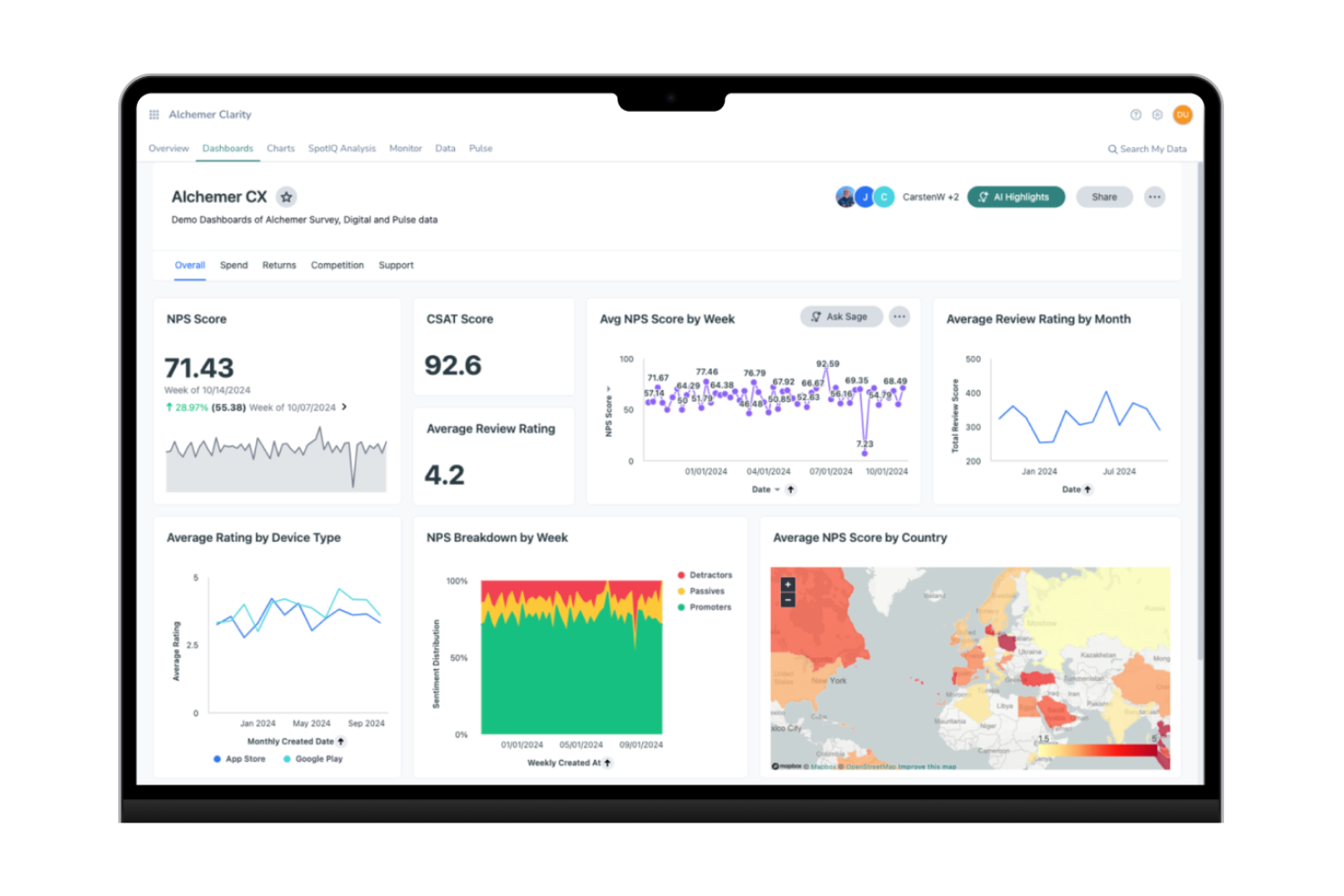
Access dashboards and analytics that update as responses come in. Track key metrics, filter data, and export results for deeper analysis.
Multi-Channel Distribution
Send surveys via email, web links, SMS, or embed them in apps. Reach respondents wherever they are most likely to engage.
Role-Based Access Control
Assign permissions to team members based on their responsibilities. Control who can create, edit, or view surveys and data.
Reporting & Data Analysis
View real-time dashboards and customizable reports to analyze survey responses and uncover key insights. Export data easily to share results and support data-driven decisions.
Standout Features
Workflow Automation
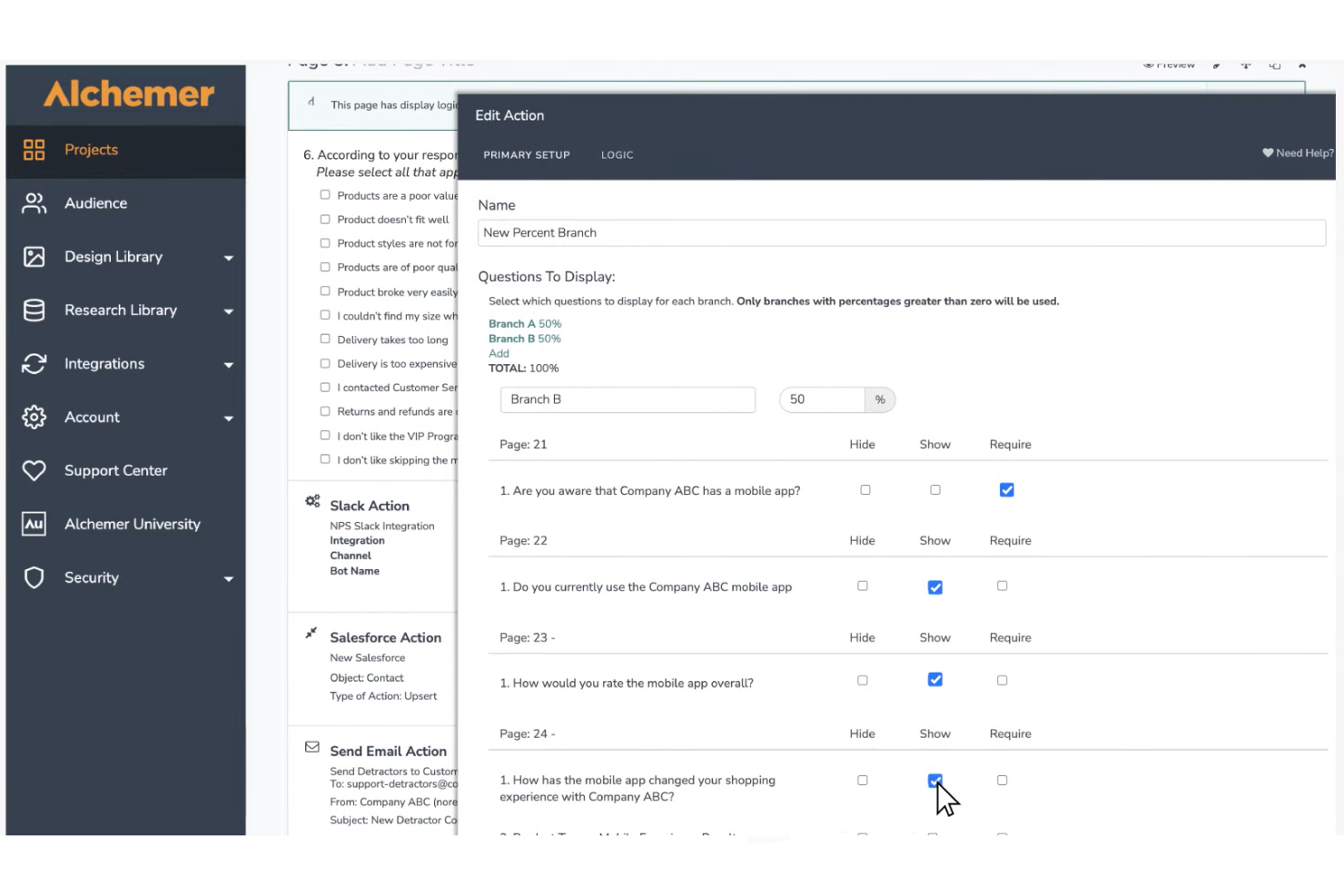
Alchemer lets you automate actions based on survey responses, such as triggering notifications or updating CRM record, reducing manual follow-up and ensures timely action on critical feedback.
Panel Management
You can build and manage respondent panels directly within Alchemer, segmenting audiences for targeted surveys. This feature streamlines longitudinal studies and recurring research with pre-qualified participants.
Ease of Use
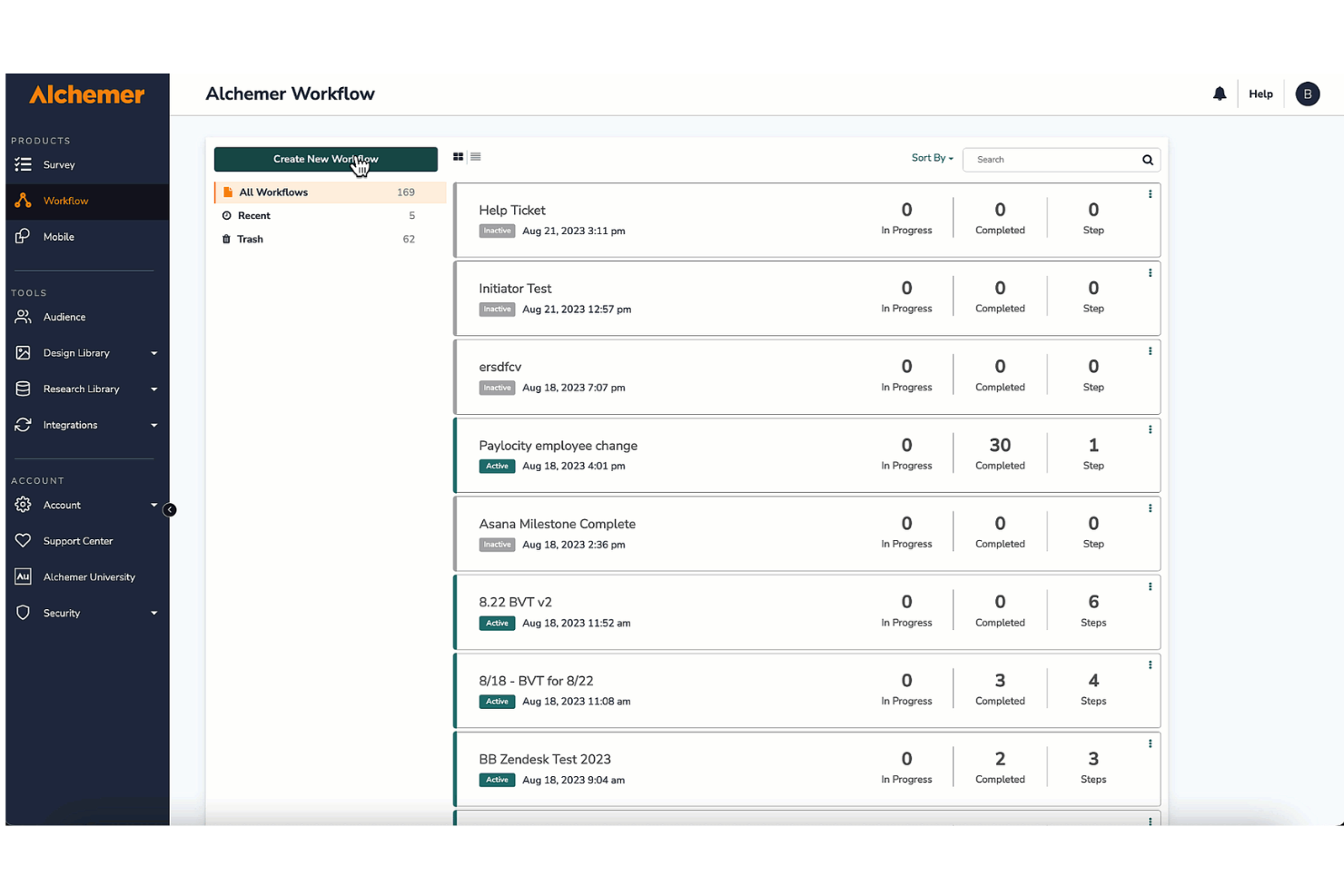
Alchemer offers a clean, intuitive interface that makes building complex surveys approachable, even for first-time users without technical backgrounds. Most users find the drag-and-drop editor and survey templates helpful for getting started quickly. While advanced features like workflow automation and logic require some learning, clear documentation and responsive support help bridge the gap. Overall, Alchemer balances powerful capabilities with usability, though users seeking only basic surveys may find the platform more detailed than necessary.
Onboarding
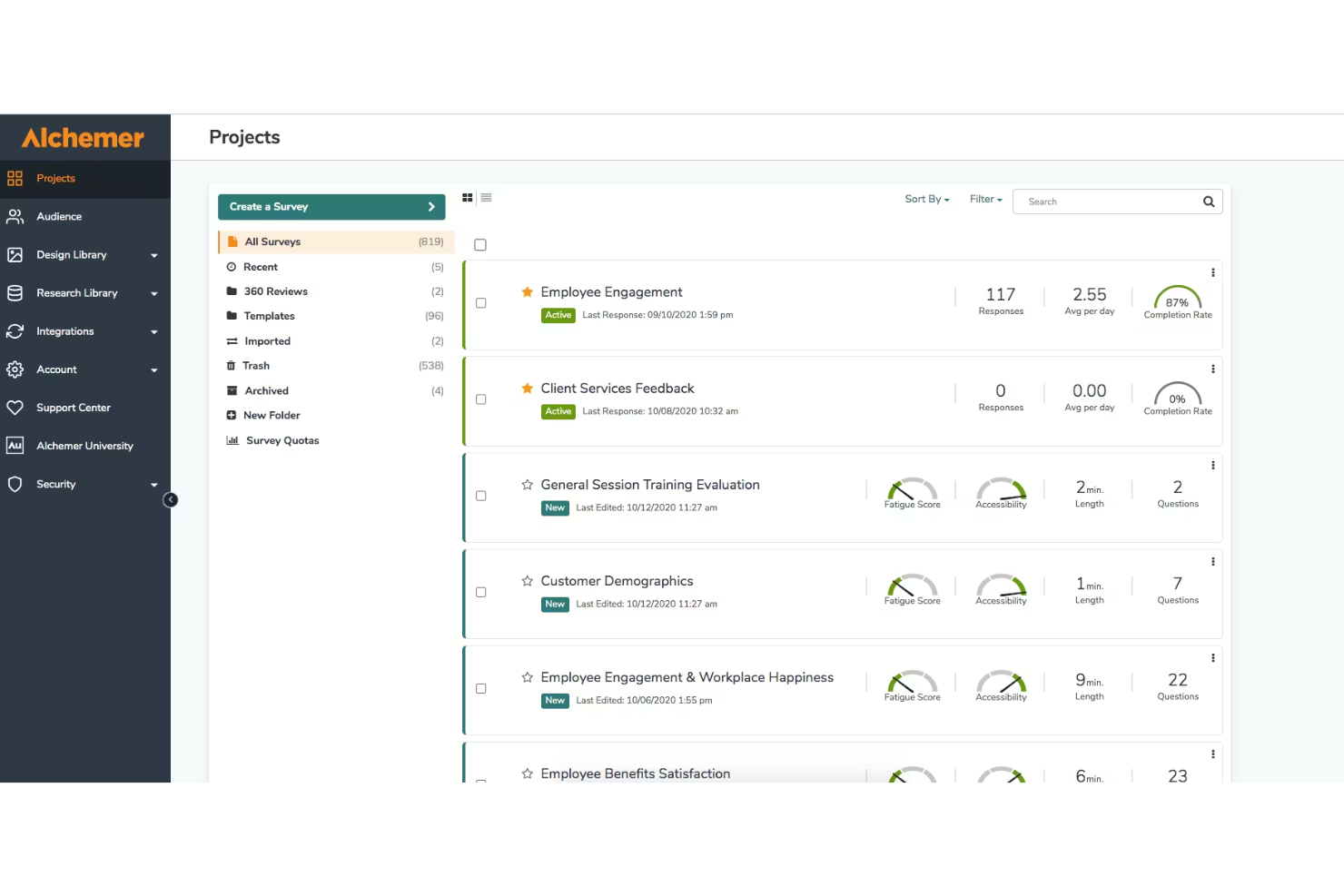
Alchemer’s onboarding experience is structured and supportive, with guided setup, in-app tutorials, and a comprehensive knowledge base. New users often mention the value of dedicated customer success managers and responsive customer support, which help shorten the learning curve for advanced features. The platform’s resource library and live training sessions further accelerate time to value, making it easier for teams to launch their first surveys and start collecting actionable feedback quickly.
Customer Support
Alchemer is frequently praised for its responsive and knowledgeable customer support team, with users highlighting quick turnaround times and helpful troubleshooting. Support is available through multiple channels, including email, phone, and a dedicated customer success manager, which ensures users can get assistance in the way that suits them best – although it should be noted that phone support and the customer success manager are locked behind higher tier plans. The availability of a detailed help center further enhances the support experience, making it easier for teams to resolve issues and maximize the platform’s capabilities.
Integrations
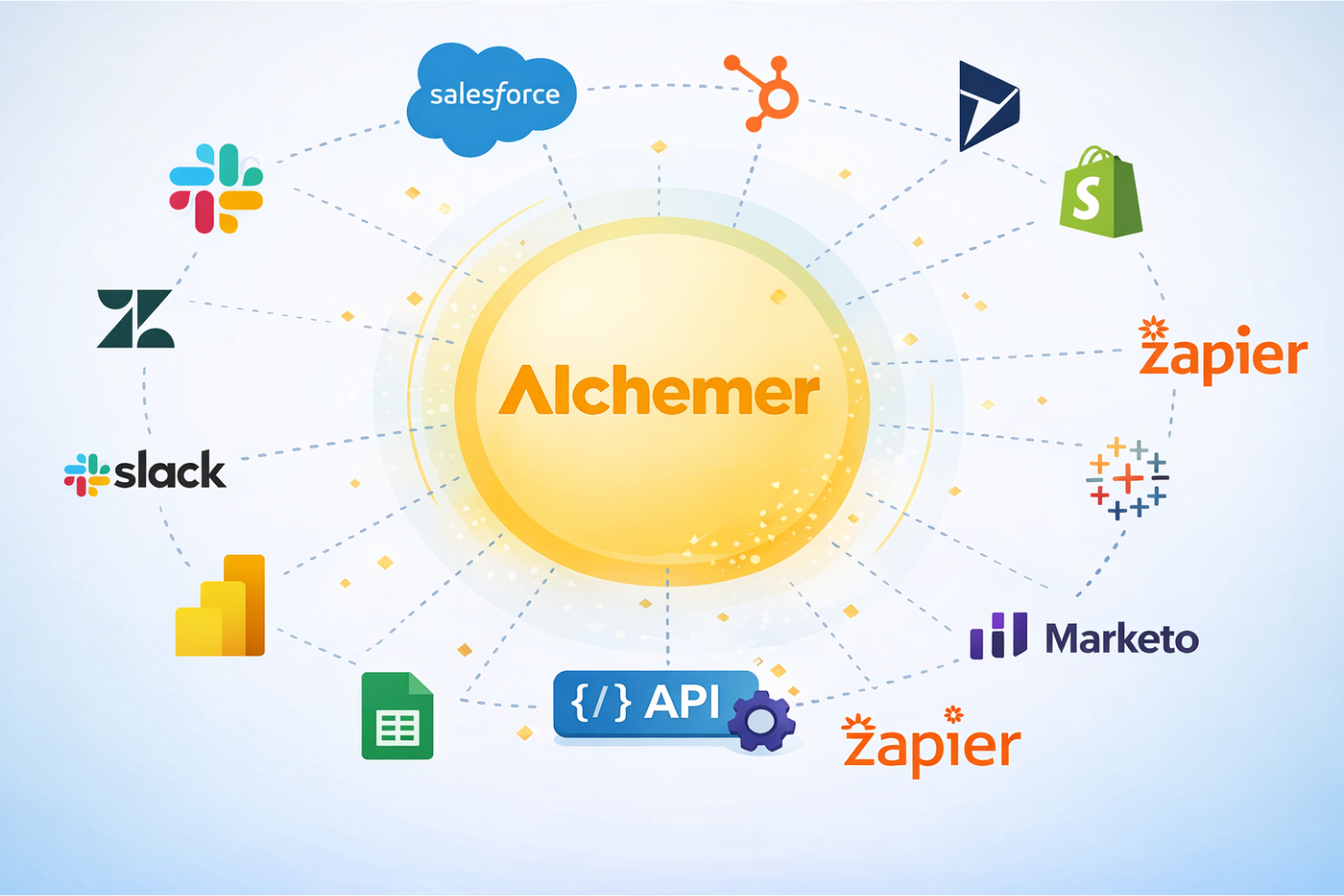
Alchemer natively integrates with Salesforce, HubSpot, Microsoft Dynamics 365, Slack, Zendesk, PowerBI, Tableau, Google Sheets, Marketo, and Shopify, among others.
Alchemer also offers a robust API and supports connections with third-party integration tools like Zapier for custom workflows and data syncing.
Value for Money
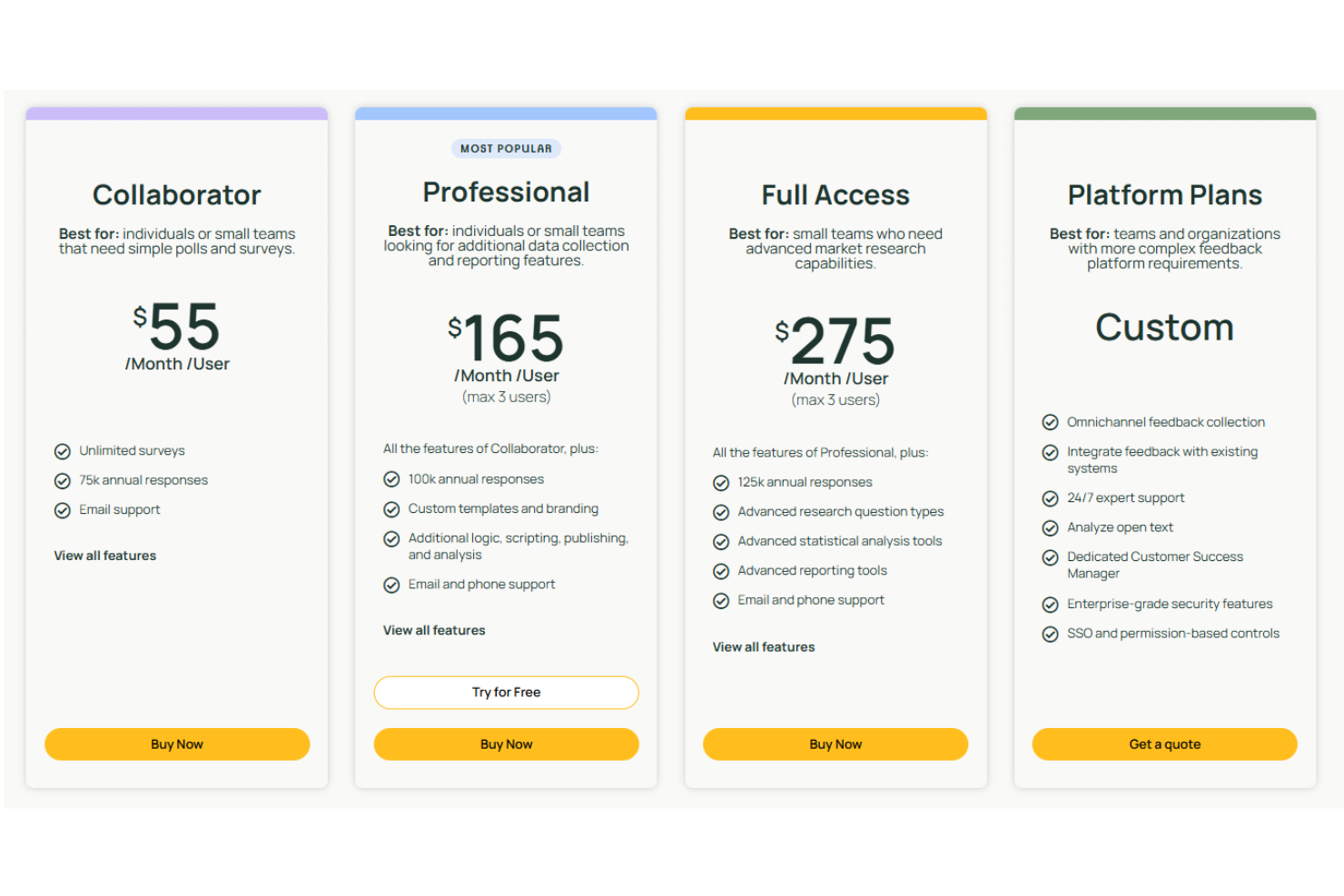
Alchemer’s pricing reflects its advanced features and customization options, making it a strong value for organizations with complex survey needs. User reviews note that while entry-level plans are accessible, the most valuable capabilities, like advanced logic and workflow automation, are reserved for higher tiers, which may be costly for smaller teams. There is no free trial or plan available to test out its features before committing to a paid plan.
- Collaborator: Basic survey creation and response collection.
- Professional: Adds advanced logic, reporting, and workflow features.
- Full Access: Includes all features, compliance tools, and priority support.
- Platform Plans: Offers tailored solutions, dedicated support, and enhanced security.
Alchemer Specs
- Analytics
- API
- Calendar Management
- Chat
- Click-to-Dial
- CRM Integration
- Customer Management
- Customer Service
- Dashboard
- Dashboards
- Data Export
- Data Import
- Data Visualization
- External Integrations
- Feedback Management
- Knowledge Base
- Lead Management
- Lead Scoring
- Multi-Source Feedback
- Multi-User
- Net Promoter Score
- Notifications
- Omnichannel Referrals
- Online Surveys
- Review Moderation
- Scheduling
- Sentiment Analysis
- Social Media Monitoring
Alchemer FAQs
How customizable are Alchemer’s surveys for different brands or departments?
Can Alchemer handle complex survey logic and branching?
What data security and compliance features does Alchemer offer?
How does Alchemer support large-scale or enterprise survey programs?
What types of reporting and analytics are available in Alchemer?
How quickly can my team get up and running with Alchemer?
Does Alchemer support multi-channel survey distribution?
What kind of customer support does Alchemer provide?
Alchemer Company Overview & History
Alchemer, formerly known as SurveyGizmo, was founded in 2006 and is headquartered in Louisville, Colorado. The company employs approximately 200 people and serves over 11,000 organizations worldwide, including notable clients like Zillow, Safeway, LendingTree, eBay, and FanDuel. Alchemer is privately held and has expanded its product suite to include Alchemer Survey, Alchemer Workflow, Alchemer Digital, and Chatmeter, following its 2025 acquisition of Chatmeter. The company is recognized for its flexible feedback and data collection platform and has received industry recognition, including being featured in the Gartner Magic Quadrant for Voice of the Customer.
Alchemer Major Milestones
- 2006: Company founded as SurveyGizmo in Louisville, Colorado.
- 2020: Rebranded as Alchemer.
- 2022: KKR makes a significant majority investment in Alchemer to accelerate growth.
- 2025: Alchemer acquires Chatmeter, expanding its feedback intelligence platform and customer base.
- 2025: Recognized in the Gartner Magic Quadrant for Voice of the Customer.
- 2026: Serves over 11,000 organizations globally, with a workforce of around 200 employees.