
20 AI Customer Experience Personalization Tools in 2026

AI Customer Experience Personalization Tools Shortlist
Here’s my shortlist of the best AI customer experience personalization tools:


AI customer experience personalization tools use artificial intelligence to tailor interactions, content, and recommendations for each customer across digital touchpoints. If you’re searching for ways to deliver more relevant, timely, and engaging experiences at scale, these tools help you move beyond generic messaging and manual segmentation.
With customer expectations rising and competition increasing, choosing the right AI-powered personalization platform can help your team drive satisfaction, loyalty, and measurable business impact.
In this list, you’ll find trusted solutions that support a range of use cases—from ecommerce product recommendations to real-time messaging and journey orchestration—so you can identify the best fit for your goals.
Why Trust Our Software Reviews
Best AI Customer Experience Personalization Tools Summary
This comparison chart summarizes pricing details for my top AI customer experience personalization tools selections to help you find the best one for your budget and business needs.
| Tool | Best For | Trial Info | Price | ||
|---|---|---|---|---|---|
| 1 | Best with real-time messaging personalization | 14-day free trial available | Pricing upon request | Website | |
| 2 | Best for e-commerce automation integration | 3-day free trial available | From $19/month (billed annually) | Website | |
| 3 | Best for API-driven customer engagement | Free trial available | Pricing upon request | Website | |
| 4 | Best for visual merchandising personalization | Free demo available | Pricing upon request | Website | |
| 5 | Best for dynamic website content targeting | Free demo available | Pricing upon request | Website | |
| 6 | Best for AI-driven web personalization | Free demo available | Pricing upon request | Website | |
| 7 | Best for cross-channel journey orchestration | Free demo available | Pricing upon request | Website | |
| 8 | Best for rapid A/B testing of experiences | Free demo available | Pricing upon request | Website | |
| 9 | Best for retail product recommendation automation | Free demo available | Pricing upon request | Website | |
| 10 | Best with AI-powered content recommendations | Free demo available | Pricing upon request | Website |
-

SupportYourApp
Visit WebsiteThis is an aggregated rating for this tool including ratings from Crozdesk users and ratings from other sites.4.7 -
Freshdesk
Visit WebsiteThis is an aggregated rating for this tool including ratings from Crozdesk users and ratings from other sites.4.4 -
Hiver
Visit WebsiteThis is an aggregated rating for this tool including ratings from Crozdesk users and ratings from other sites.4.6




AI Customer Experience Personalization Tools Reviews
Below are my detailed summaries of the best AI customer experience personalization tools that made it onto my shortlist. My reviews offer a detailed look at the features, capabilities, and integrations of each platform to help you find the best one for you.

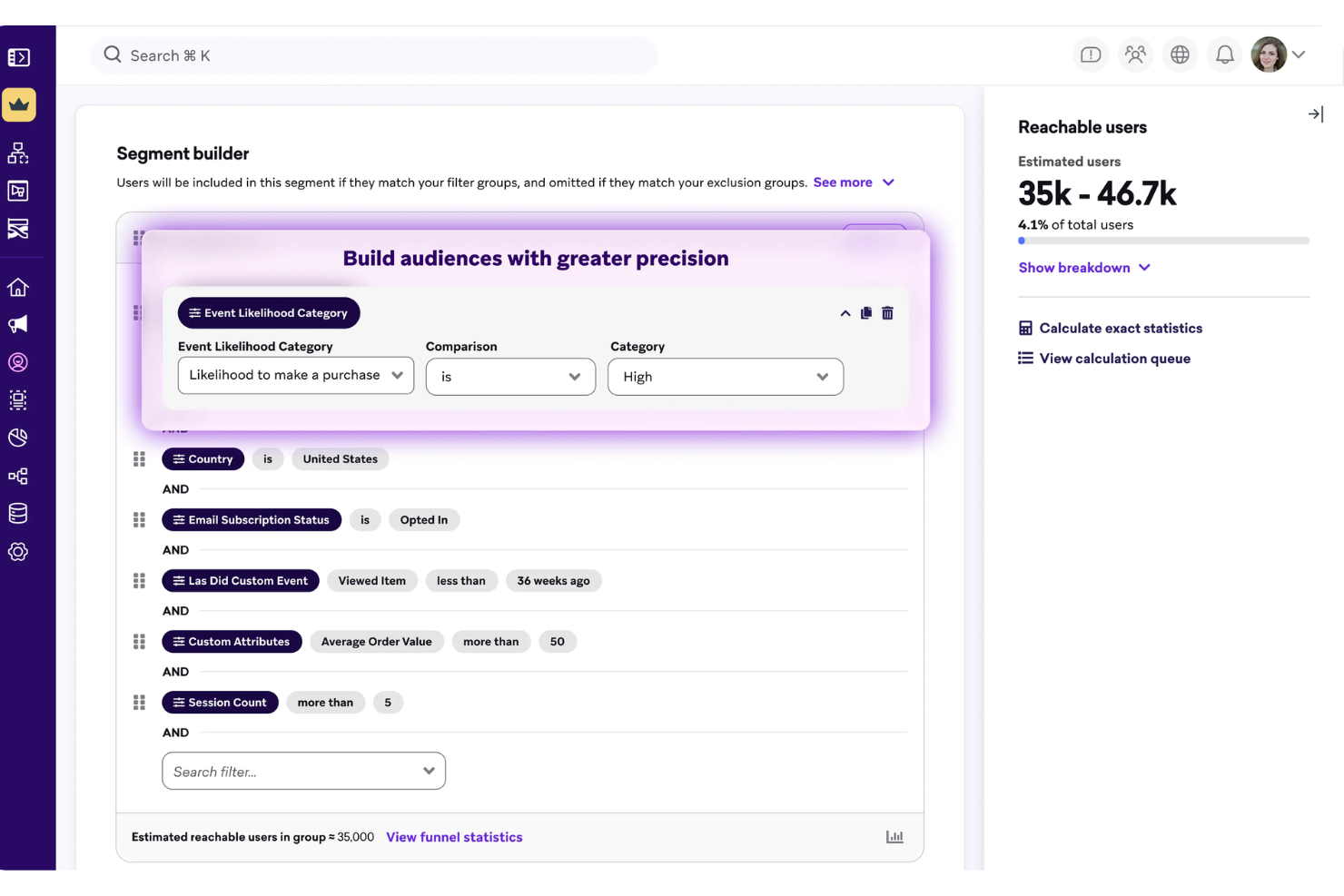
Braze is a customer engagement platform designed for brands that want to deliver personalized, data-driven messaging at scale. It’s a strong fit for marketing and product teams in ecommerce, retail, and mobile-first businesses looking to coordinate customer communications across channels. The platform helps you connect behavioral data with messaging workflows to create relevant, timely experiences for your users.
Who Is Braze Best For?
Braze is a strong choice for marketing and product teams at mid-sized to large consumer brands that prioritize personalized, real-time customer messaging across digital channels.
Why I Picked Braze
I picked Braze because it excels at delivering real-time, personalized messaging across multiple channels. The platform’s event-based triggers and dynamic audience segmentation let you send highly relevant messages the moment a user takes action, which is essential for teams focused on timely customer engagement.
I also like how Braze’s Canvas flow builder allows you to design and automate complex messaging journeys that adapt to each user’s behavior. These capabilities make it a strong fit for businesses that need to coordinate personalized communications at scale and respond instantly to customer signals.
Braze Key Features
Some other features that make Braze valuable for customer experience personalization include:
- Personalization with Liquid templating: Customize messages with user-specific data fields for highly tailored content.
- In-app messaging: Deliver targeted messages directly within your mobile or web app experience.
- Multichannel orchestration: Coordinate campaigns across email, SMS, push notifications, and more from a single platform.
- Analytics dashboard: Track engagement, conversion, and retention metrics in real time.
Braze Integrations
Integrations include Shopify, Snowflake, Amazon S3, Databricks, mParticle, Amplitude, and more.
Pros and Cons
Pros:
- Reinforcement learning for 1:1 decisioning
- Real-time stream-based behavioral triggers
- Specialized mobile-first journey orchestration
Cons:
- Lacks native website personalization depth
- Heavy reliance on engineering resources

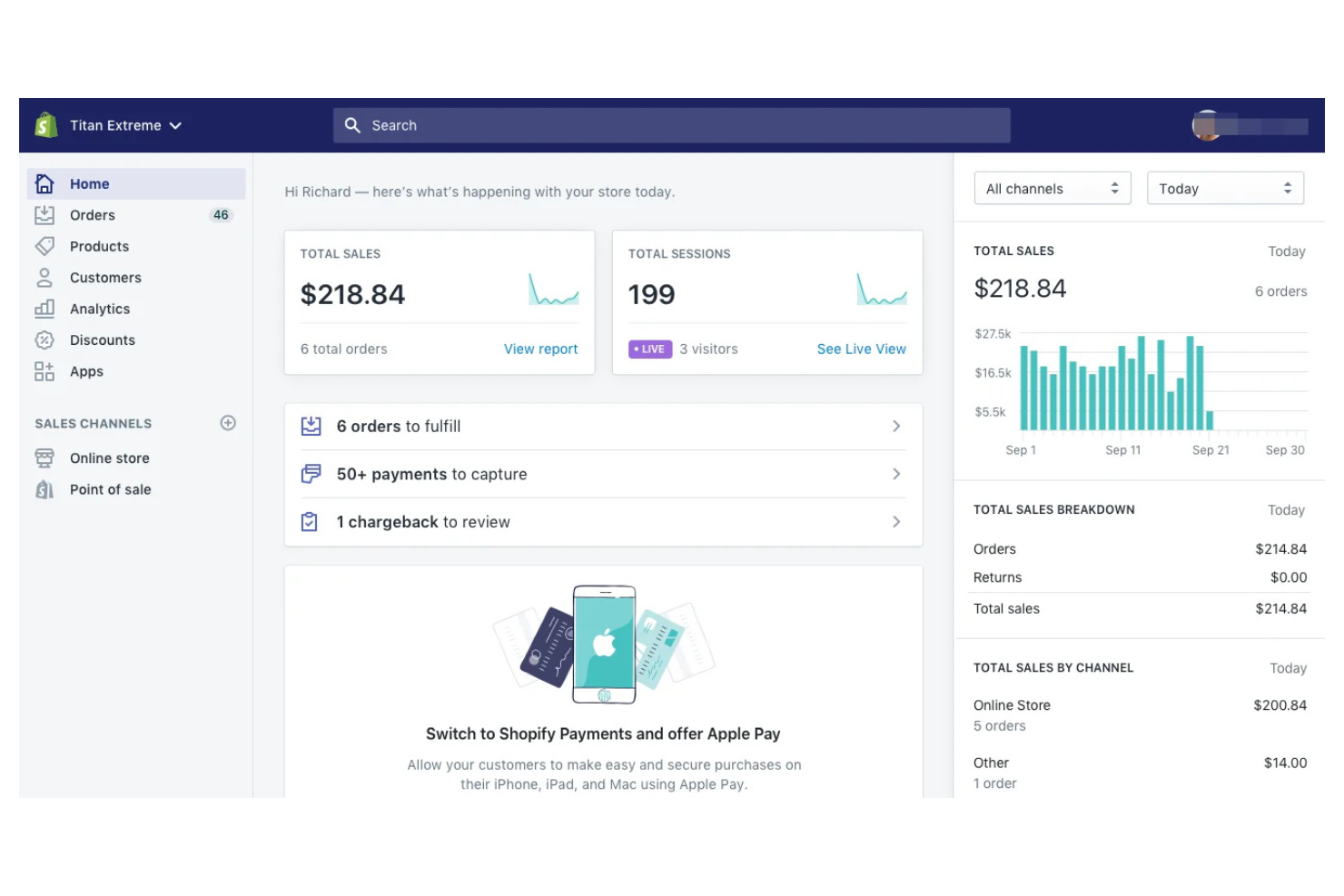
Shopify helps brands manage marketing campaigns, customer segmentation, and automated outreach from one connected platform. It’s a strong choice for ecommerce teams that need to capture leads, personalize messaging, and turn customer data into targeted campaigns. If you’re looking to automate key marketing tasks while keeping everything tied to your store, Shopify offers tools to help you do that.
Who Is Shopify Best For?
Shopify is a strong choice for e-commerce businesses and online retailers that want to automate and personalize customer journeys.
Why I Picked Shopify
I chose Shopify because it offers a tightly integrated suite of ecommerce automation tools that make it easy to personalize customer experiences directly within your storefront. Shopify’s built-in marketing automation lets you trigger personalized emails, product recommendations, and abandoned cart reminders based on real-time customer behavior.
I also like how Shopify connects store data with automation workflows, so you can segment audiences and deliver targeted campaigns without relying on third-party tools. For teams focused on e-commerce, this level of automation and integration is especially valuable for creating consistent, relevant customer journeys.
Shopify Key Features
Some other features that make Shopify useful for AI-driven customer experience personalization include:
- Dynamic discounting tools: Create and manage personalized discount codes and automatic promotions for specific customer segments.
- Product review automation: Collect and display customer reviews automatically to build trust and inform future personalization.
- AI-powered search and product filtering: Help customers find relevant products faster with intelligent search and filtering options.
- Customer segmentation dashboard: Build and manage detailed customer segments based on purchase history, behavior, and demographics.
Shopify Integrations
Integrations include Facebook, Instagram, Google, TikTok, YouTube, Walmart, AfterShip, PushOwl, Seguno, Shopify Inbox, and more.
Pros and Cons
Pros:
- Integrates with major social and ad platforms
- Supports dynamic discount and promotion campaigns
- Connects marketing automation with storefront data
Cons:
- Reporting lacks deep customer journey analytics
- Limited non-commerce tools

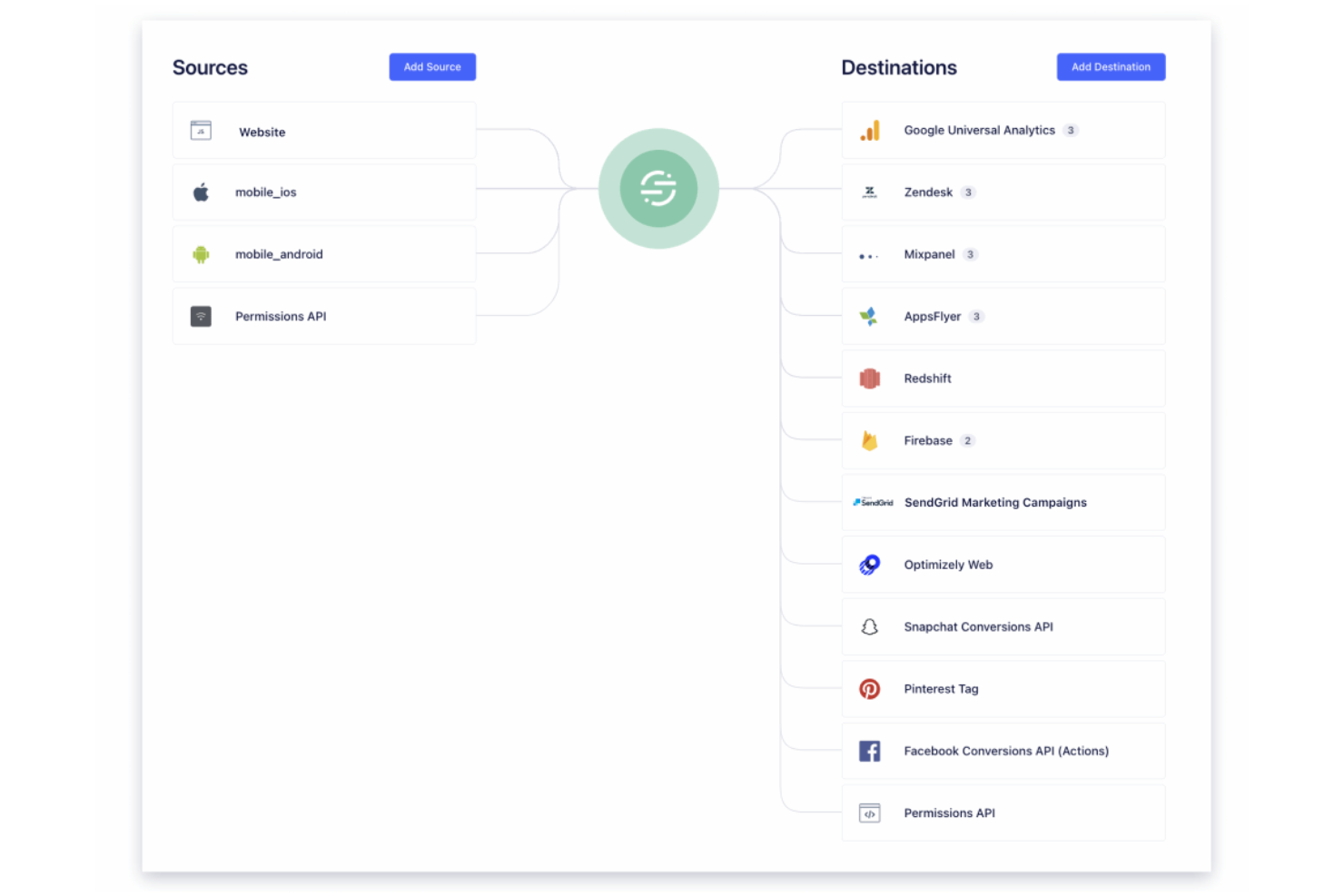
Twilio offers a flexible platform for teams that want to build personalized customer engagement across channels like SMS, voice, chat, and email. It’s especially useful for businesses with technical resources that need to create custom communication workflows and integrate messaging into their own apps or services. If you’re looking to automate and personalize customer interactions at scale, Twilio gives you the building blocks to do it your way.
Who Is Twilio Best For?
Twilio is a strong fit for technical teams at mid-sized to large businesses that need to build and customize multi-channel customer engagement solutions.
Why I Picked Twilio
I picked Twilio because it gives technical teams direct control over customer engagement through its extensive APIs. With Twilio, you can programmatically personalize communications across SMS, voice, chat, and email, which is essential for businesses that want to tailor experiences at scale.
I appreciate how the platform supports real-time data flows and event-driven messaging, letting you trigger personalized outreach based on customer behavior. This API-driven approach makes Twilio a strong choice for organizations that need to build custom, automated customer journeys rather than rely on out-of-the-box templates.
Twilio Key Features
Some other features that make Twilio valuable for customer experience personalization include:
- Customer data platform (CDP): Collects and unifies customer data from multiple sources to enable more targeted personalization.
- Programmable voice: Lets you build custom voice experiences, including IVR, call routing, and speech recognition.
- Conversations API: Supports multi-channel messaging threads across SMS, WhatsApp, and chat in a single conversation.
- Studio visual workflow builder: Allows teams to design and automate customer engagement flows without writing code.
Twilio Integrations
Integrations include Salesforce, Zendesk, HubSpot, Shopify, Microsoft Dynamics 365, Slack, Google Cloud, Amazon Web Services, and more.
Pros and Cons
Pros:
- Scalable infrastructure for high-volume engagement
- Supports global compliance needs
- Built-in customer data platform with Segment
Cons:
- Complex reporting across separate modules
- High technical barrier for non-developers
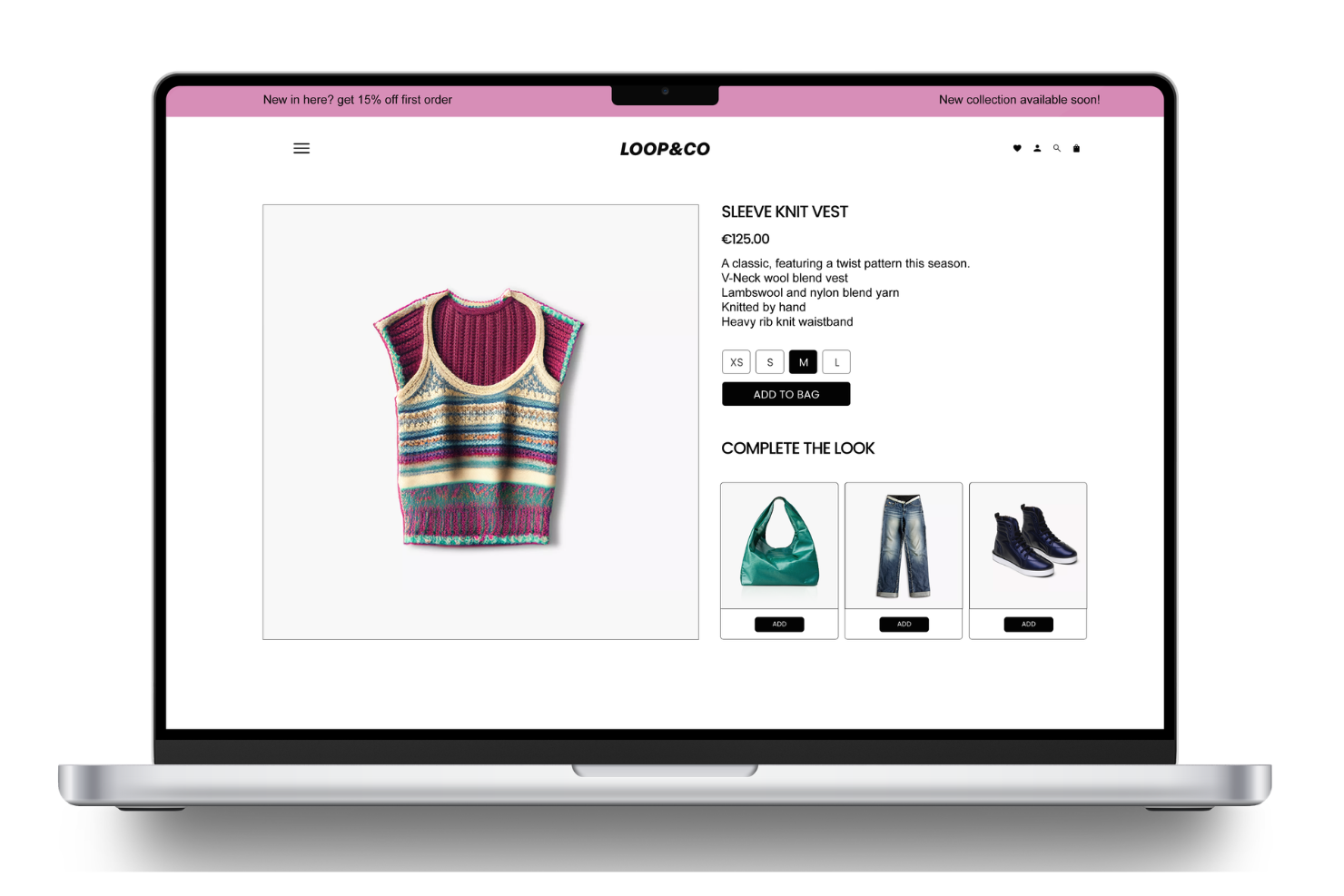
If you manage ecommerce merchandising or digital experience, Nosto offers a platform built for AI-driven personalization across online storefronts. The tool is especially useful for retailers and brands that want to tailor product displays, content, and recommendations to individual customers. Nosto helps you deliver more relevant shopping experiences by using real-time data and automation to adapt to each visitor’s preferences.
Who Is Nosto Best For?
Nosto is a strong choice for ecommerce and retail teams looking to personalize visual merchandising and product discovery across digital storefronts.
Why I Picked Nosto
What sets Nosto apart for me is its focus on visual merchandising personalization, which is a key differentiator for ecommerce brands aiming to create engaging, tailored storefronts. Nosto uses AI to dynamically arrange product grids, banners, and content blocks based on each shopper’s real-time behavior and preferences.
I also appreciate that it lets merchandisers test and optimize layouts without needing to code, so teams can quickly adapt to trends or campaigns. This level of control over visual presentation helps retailers deliver more relevant and compelling shopping experiences that drive engagement and sales.
Nosto Key Features
Some other features that make Nosto valuable for customer experience personalization include:
- Segmentation and targeting: Build and manage dynamic customer segments using behavioral, transactional, and demographic data.
- Product recommendations engine: Deliver AI-powered product suggestions across web, email, and mobile channels.
- Content personalization: Automatically adapt banners, pop-ups, and messaging to each visitor’s profile and journey stage.
- A/B and multivariate testing: Run experiments on personalized elements to optimize performance and conversion rates.
Nosto Integrations
Integrations include Shopify, Salesforce, Adobe Commerce, BigCommerce, Klaviyo, Attentive, Yotpo, and more.
Pros and Cons
Pros:
- Shoppable social media feed integration
- Personalization for banners and pop-ups
- Visual merchandising tools for dynamic product displays
Cons:
- Minimal cross-channel offline data integration
- Limited advanced logic for B2B

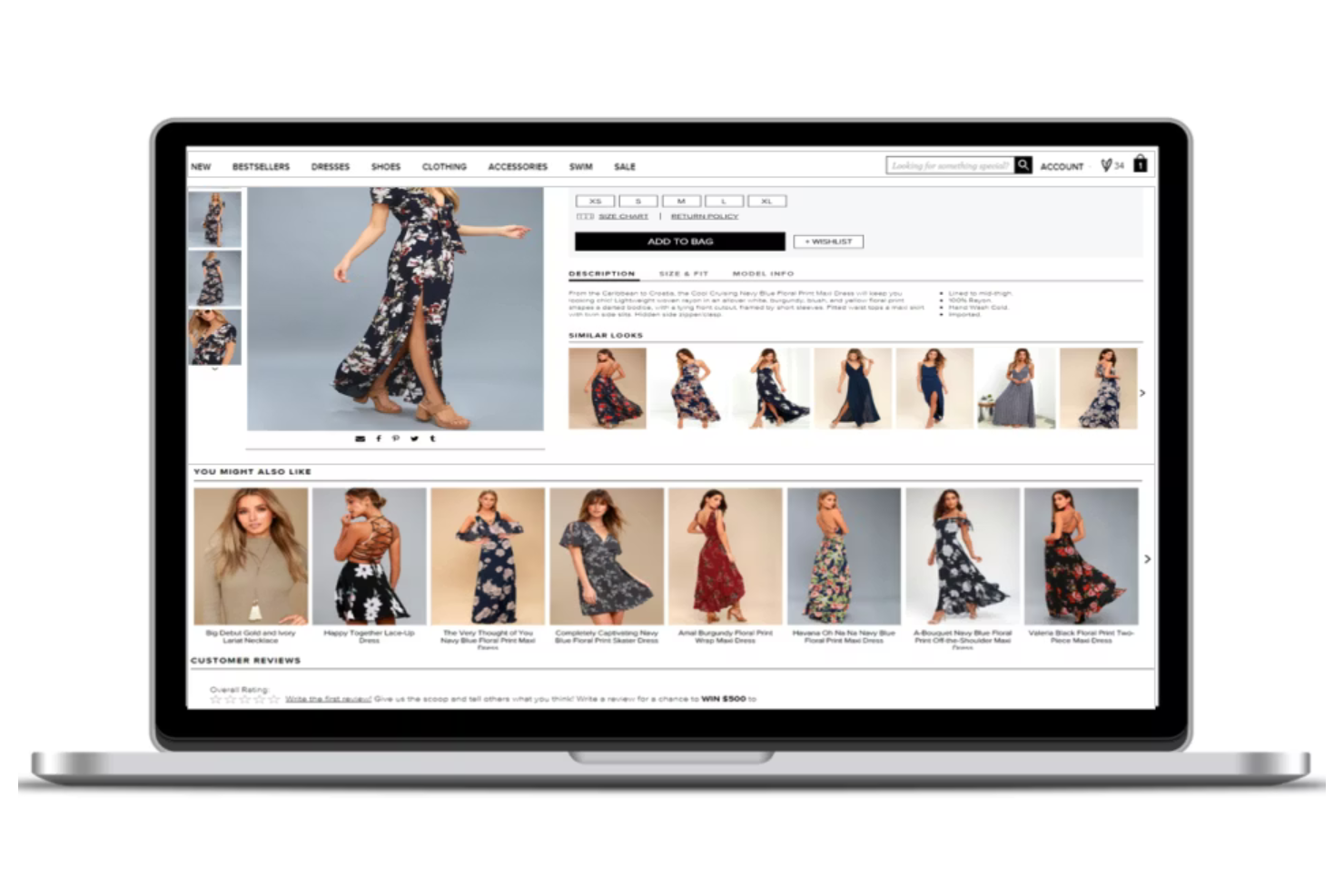
Monetate gives digital teams a way to personalize website content and experiences using AI-driven targeting. If you manage a retail, travel, or financial services site and want to deliver tailored content to different audience segments, Monetate offers flexible tools for real-time personalization. The platform is especially useful for teams looking to test, optimize, and automate content variations based on user behavior and datasets.
Who Is Monetate Best For?
Monetate is a strong fit for digital marketing and ecommerce teams in retail, travel, and financial services who need to personalize website content at scale.
Why I Picked Monetate
I picked Monetate because it gives you granular control over dynamic website content targeting, which is essential for advanced AI-driven personalization. Monetate’s platform lets you create and test multiple content variations for different audience segments in real time, so you can deliver highly relevant experiences as users interact with your site.
I also appreciate how its AI-powered decisioning engine automatically selects the best content for each visitor based on behavioral and contextual data. This level of dynamic targeting is especially valuable for teams that want to optimize conversion rates and engagement through personalized web experiences.
Monetate Key Features
In addition to dynamic content targeting and AI-powered decisioning, Monetate offers several other features that support advanced personalization:
- 1-to-1 personalization engine: Delivers individualized experiences by analyzing real-time user data and adapting content for each visitor.
- A/B and multivariate testing: Lets you run experiments on different content and layouts to identify what resonates best with your audience.
- Audience segmentation builder: Allows you to create detailed audience segments using behavioral, contextual, and demographic data.
- Product recommendations module: Suggests relevant products to users based on browsing and purchase history, increasing engagement and conversion opportunities.
Monetate Integrations
Integrations include Google Analytics, Adobe Analytics, Quantum Metric, Tealium, Shopify, Contentstack, New Relic, Bazaarvoice, FullStory, Intershop, and more.
Pros and Cons
Pros:
- Enables 1-to-1 personalization at scale
- Offers advanced A/B and multivariate testing
- Low-code visual experience builder
Cons:
- Limited reporting on cross-channel personalization
- Requires technical setup for advanced use cases

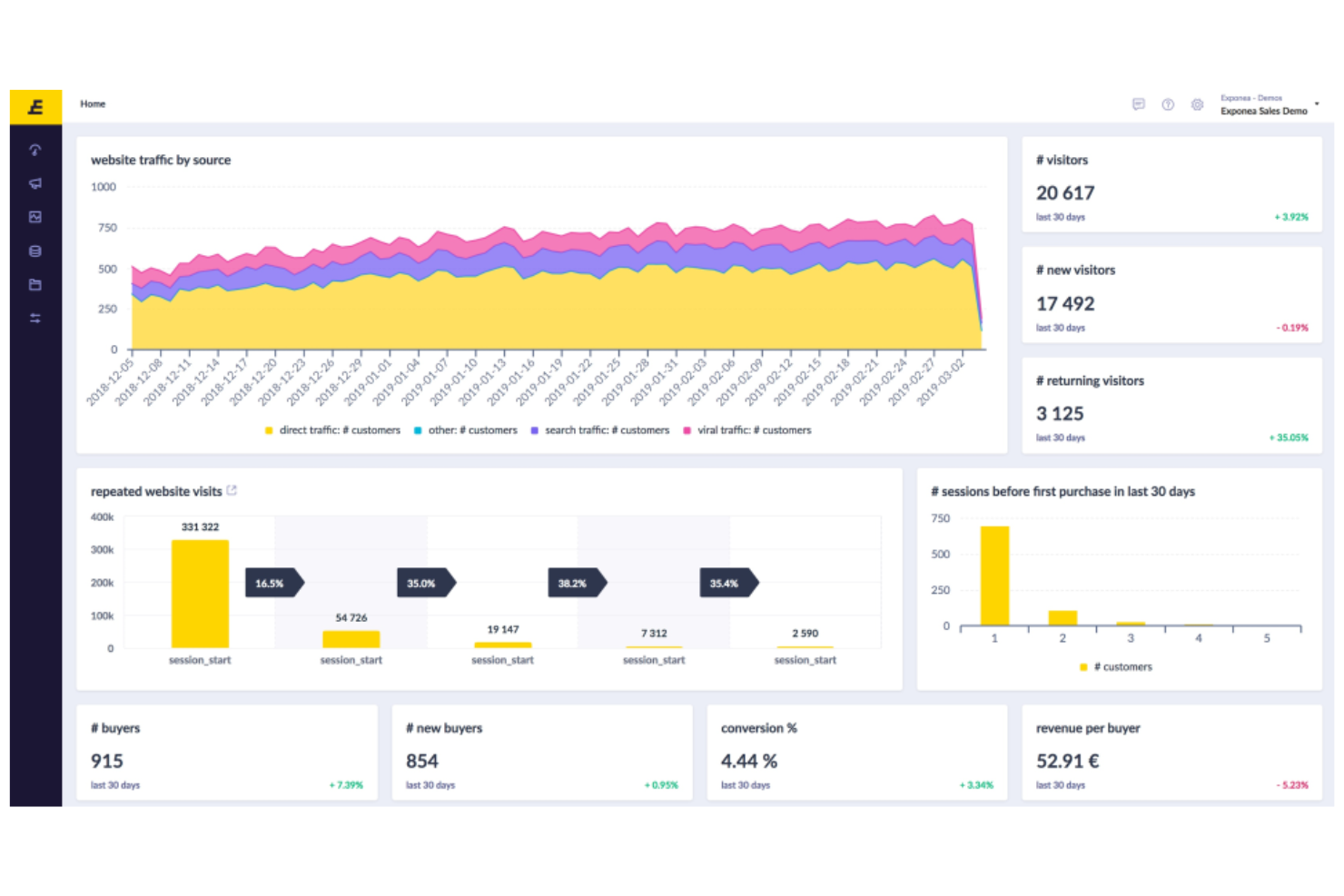
Loomi AI is part of the Bloomreach suite, designed for e-commerce and digital marketing teams that want to personalize web experiences using AI. The platform helps you tailor content, product recommendations, and messaging to individual visitors in real time. If you need to deliver relevant, data-driven experiences that adapt to each shopper’s behavior, Loomi AI offers tools to make that possible.
Who Is Loomi AI Best For?
Loomi AI is a strong fit for e-commerce and digital marketing teams in retail and B2C industries looking to personalize web experiences at scale.
Why I Picked Loomi AI
What drew me to Loomi AI is its advanced use of AI for real-time web personalization, which is essential for businesses aiming to deliver tailored digital experiences. Loomi AI analyzes visitor behavior and intent as users interact with your site, then dynamically adjusts content, product recommendations, and messaging to match each individual’s journey.
I like that it supports complex segmentation and leverages predictive analytics to anticipate what each shopper is likely to engage with next. This level of automation and intelligence makes Loomi AI a strong choice for teams that want to move beyond static personalization and create truly adaptive web experiences.
Loomi AI Key Features
Some other features that make Loomi AI valuable for customer experience personalization include:
- Omnichannel campaign orchestration: Coordinate personalized messaging and offers across web, email, and mobile channels from a single platform.
- Drag-and-drop experience editor: Build and modify personalized web experiences visually, without needing to code.
- Audience insights dashboard: Access real-time analytics on visitor segments, engagement, and conversion trends.
- Integration with e-commerce platforms: Connect directly with platforms like Shopify, Magento, and Salesforce Commerce Cloud for unified data and activation.
Loomi AI Integrations
Integrations include Shopify, Snowflake, Google Cloud Platform, Databricks, Antavo, Survicate, and more.
Pros and Cons
Pros:
- Native data-to-content generation loop
- Semantic search-driven product discovery
- Goal-oriented autonomous workflows
Cons:
- Fragmented single-customer view dashboards
- Limited built-in customer survey tools

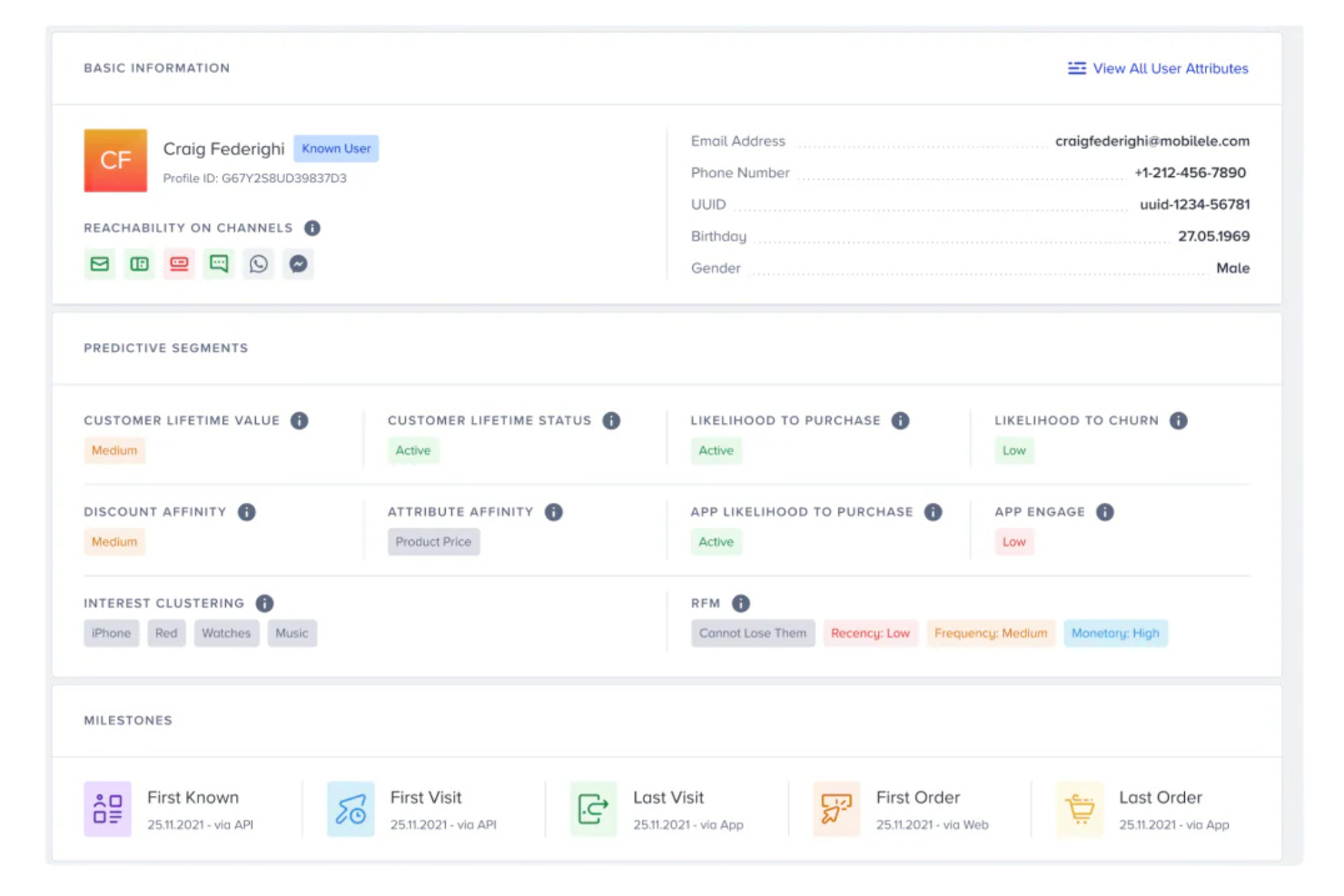
Insider One offers AI-driven personalization for businesses looking to coordinate customer experiences across multiple digital channels. It’s a strong fit for marketing and CX teams in retail, ecommerce, and travel who want to unify messaging and recommendations. The platform helps you deliver relevant content and offers based on real-time user behavior and customer preferences.
Who Is Insider One Best For?
Insider One is a good fit for marketing and customer experience teams at mid-sized to large ecommerce, retail, and travel companies aiming to personalize customer journeys across multiple channels.
Why I Picked Insider One
I chose Insider One because it stands out for orchestrating personalized customer journeys across multiple channels in real time. Its AI engine lets you design and automate complex, cross-channel campaigns that adapt to each customer’s behavior and preferences. I appreciate how the platform’s journey builder allows you to map out user interactions across web, mobile, email, and messaging apps, ensuring consistency and relevance at every touchpoint.
The ability to trigger personalized content and offers based on live customer data makes it especially valuable for teams aiming to deliver unified, adaptive experiences.
Insider One Key Features
Some other features that make Insider One a strong choice for customer experience personalization include:
- Predictive segmentation: Use AI to automatically group customers based on likelihood to convert, churn, or engage.
- Product recommendations: Deliver personalized product suggestions on web and mobile based on browsing and purchase history.
- A/B and multivariate testing: Test different content, layouts, and offers to optimize personalization strategies.
- On-site overlays and banners: Deploy targeted pop-ups, banners, and overlays to engage visitors with timely messages and offers.
Insider One Integrations
Integrations include Google Analytics, Salesforce, Shopify, HubSpot, Amplitude, Mixpanel, SendGrid, Amazon S3, and more.
Pros and Cons
Pros:
- Visual journey builder for campaign design
- Supports real-time cross-channel personalization
- Advanced AI-driven segmentation capabilities
Cons:
- Inconsistent mobile application performance
- Extensive feature set causes navigation friction

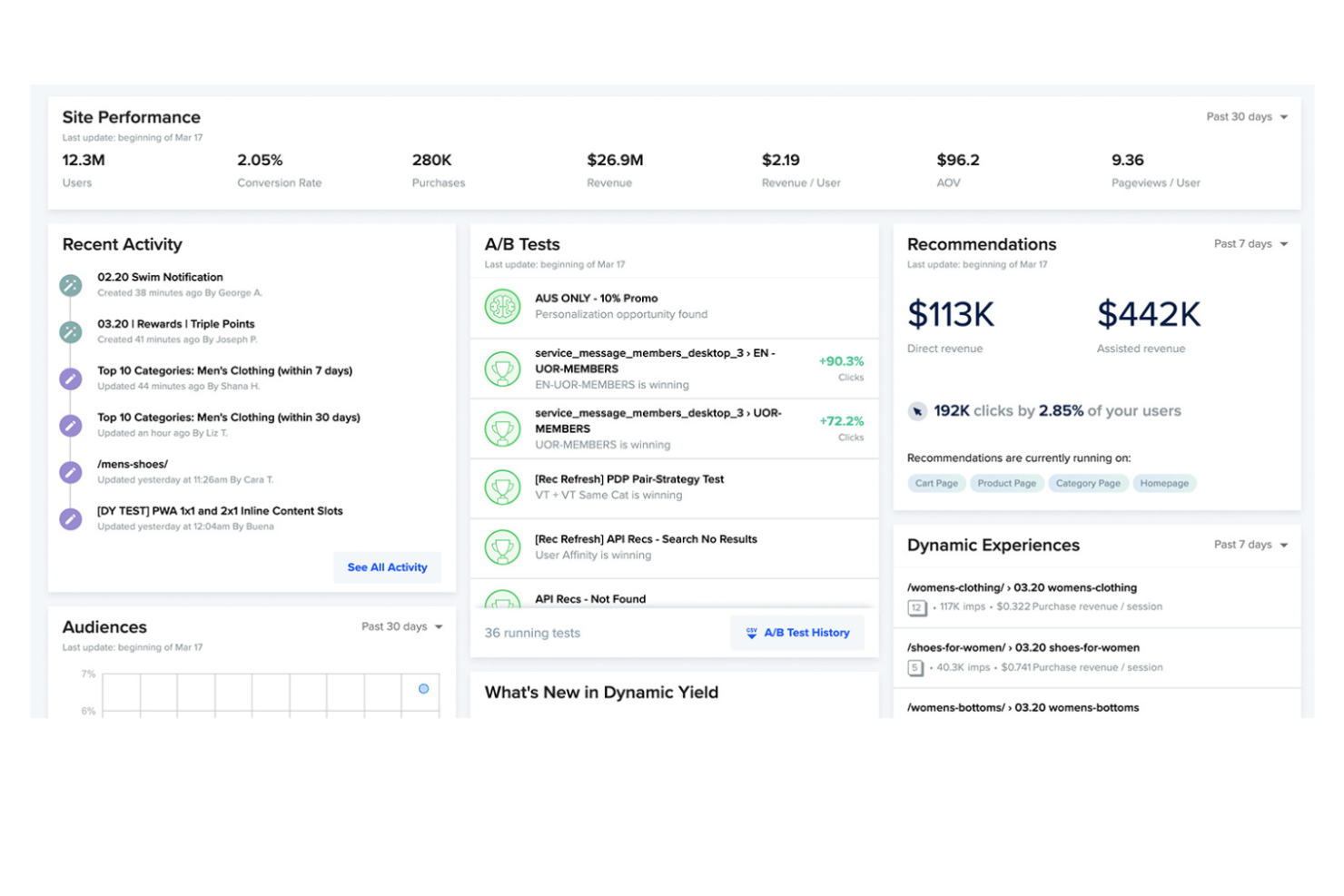
Dynamic Yield offers a flexible platform for teams looking to personalize digital experiences across web, mobile, and email channels. It’s especially useful for ecommerce, retail, and travel brands that want to quickly adapt content, recommendations, and messaging based on real-time customer behavior. With its AI-driven approach, Dynamic Yield helps you experiment with and optimize customer journeys to address shifting preferences and business goals.
Who Is Dynamic Yield Best For?
Dynamic Yield is a strong fit for ecommerce and retail teams that need to quickly test and personalize digital experiences at scale.
Why I Picked Dynamic Yield
I picked Dynamic Yield because it gives teams the ability to launch, manage, and analyze A/B tests for digital experiences with impressive speed and flexibility. The platform’s visual editor lets you set up experiments on web and mobile without heavy developer involvement, which is especially valuable for fast-paced teams.
I also appreciate how Dynamic Yield’s AI-driven targeting and segmentation help you quickly identify which experiences resonate with different audience segments. This focus on rapid testing and actionable insights makes it a strong choice for businesses that want to personalize customer journeys and iterate on ideas in real time.
Dynamic Yield Key Features
Some other features that make Dynamic Yield valuable for customer experience personalization include:
- Product recommendations engine: Suggests relevant products to users based on browsing and purchase behavior.
- Personalized content modules: Dynamically displays banners, pop-ups, and other content tailored to individual users.
- Predictive targeting: Uses machine learning to automatically segment audiences and deliver targeted experiences.
- Omnichannel hyper-personalization: Coordinates tailored experiences across web, mobile apps, email, and kiosks.
Dynamic Yield Integrations
Integrations include Oracle Responsys, Emarsys, Klaviyo, SendGrid, Iterable, Google Analytics, Tealium, Segment, and more.
Pros and Cons
Pros:
- Flexible rules engine for dynamic content delivery
- AI-driven product and content recommendations
- Visual editor for non-technical experiment setup
Cons:
- Limited native deep funnel analytics
- Fragmented multi-site campaign management

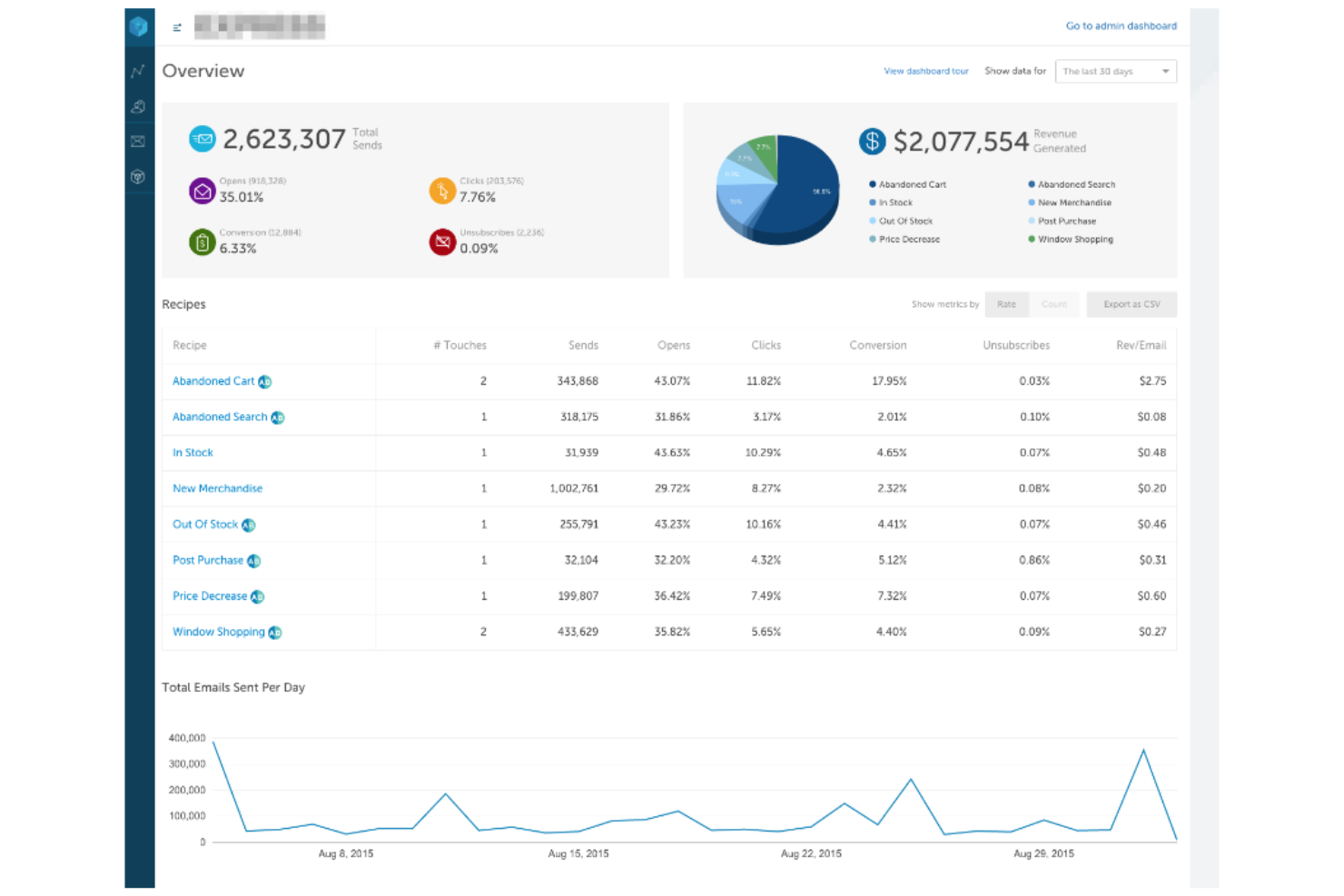
If you manage ecommerce marketing for a retail brand, Bluecore offers a specialized platform for automating product recommendations and personalized campaigns. The tool is designed for retail teams that want to use AI to connect customer data, predict intent, and deliver relevant product suggestions across channels. Bluecore helps you turn shopper behavior into actionable insights, making it easier to drive conversions and repeat purchases.
Who Is Bluecore Best For?
Bluecore is a strong fit for retail ecommerce teams looking to automate personalized product recommendations and campaigns at scale.
Why I Picked Bluecore
I picked Bluecore because it’s purpose-built for automating retail product recommendations using AI, which is a top priority for ecommerce teams aiming to personalize customer experiences at scale. Bluecore’s platform connects shopper data from multiple sources and uses predictive models to surface the most relevant products for each individual across email, onsite, and paid media channels.
I also like that it enables marketers to trigger campaigns based on real-time behaviors, such as browsing or cart abandonment, so recommendations always reflect current intent. This focus on retail-specific automation makes Bluecore especially valuable for brands that want to drive conversions with highly targeted product suggestions.
Bluecore Key Features
Some other features that make Bluecore stand out for AI-driven personalization include:
- Audience segmentation builder: Create granular customer segments using behavioral, transactional, and predictive data.
- Automated campaign orchestration: Set up and manage multi-channel campaigns that adapt to customer actions in real time.
- Dynamic content blocks: Personalize email campaigns and website content with dynamic modules that update based on shopper profiles and activity.
- Performance analytics dashboard: Access detailed reporting on campaign performance, customer engagement, and revenue impact.
Bluecore Integrations
Integrations include Shopify, Salesforce, Adobe Commerce, BigCommerce, Criteo, Google Analytics, and more.
Pros and Cons
Pros:
- Predictive "next best purchase" timing
- Automated inventory-to-customer matching
- Native high-speed transactional email triggers
Cons:
- Limited website-based visual layout editing
- Rigid data schema for non-retailers

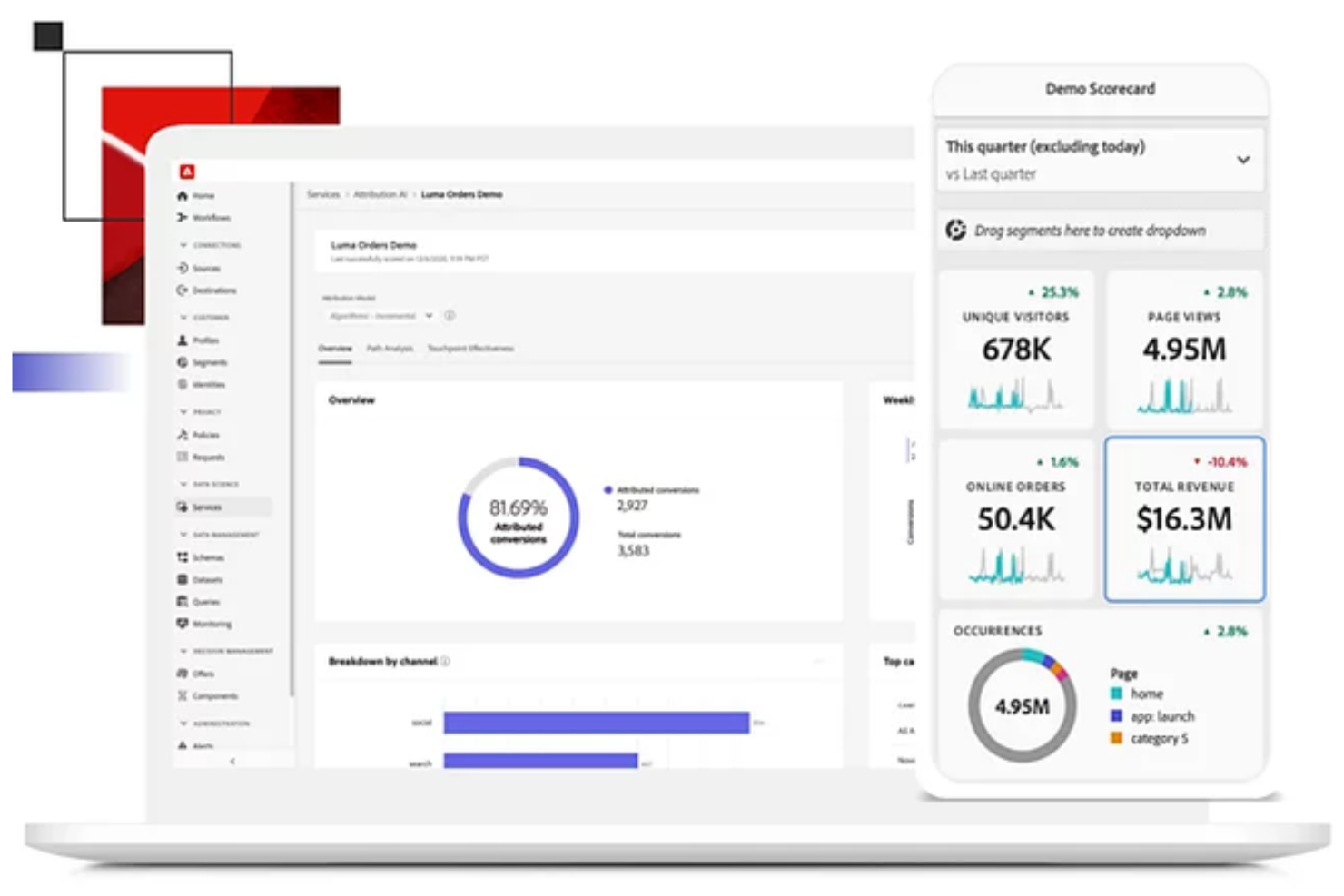
Adobe Sensei brings advanced AI and machine learning capabilities to digital experience teams looking to personalize customer journeys. It’s designed for organizations that want to automate content delivery, analyze customer behavior, and optimize engagement across channels. If you need to deliver relevant experiences at scale, Adobe Sensei offers tools to help you make data-driven decisions and tailor interactions in real time.
Who Is Adobe Sensei Best For?
Adobe Sensei is a strong fit for digital marketing and e-commerce teams at large enterprises that need to automate and personalize content at scale.
Why I Picked Adobe Sensei
What sets Adobe Sensei apart for me is its ability to deliver AI-powered content recommendations that adapt to each customer’s behavior and preferences. The platform uses machine learning to analyze real-time data and automatically suggest the most relevant content or offers across web, email, and mobile channels.
I also like that it integrates directly with Adobe Experience Cloud, making it easier for marketing and e-commerce teams to orchestrate personalized journeys without heavy manual effort. For organizations focused on delivering dynamic, data-driven experiences, Adobe Sensei’s recommendation engine is a clear differentiator.
Adobe Sensei Key Features
In addition to its recommendation engine, Adobe Sensei offers several other features that support AI-driven personalization:
- Automated image tagging: Uses AI to identify and tag images for faster content management and search.
- Predictive analytics: Analyzes customer data to forecast behaviors and trends for more informed decision-making.
- Natural language processing: Processes and understands text data to enhance search and content discovery.
- Personalized search results: Dynamically adjusts search rankings and results based on individual user profiles and behaviors.
Adobe Sensei Integrations
Integrations include Adobe Experience Manager Sites, Adobe Experience Manager Assets, Adobe Marketo Engage, Adobe Target, Adobe Campaign, Adobe Commerce, and more.
Pros and Cons
Pros:
- Offers predictive analytics for customer behavior
- Automates image and asset tagging with AI
- Integrates deeply with Adobe Experience Cloud
Cons:
- High susceptibility to content homogeneity
- Requires Adobe ecosystem for full functionality
Other AI Customer Experience Personalization Tools
Here are some additional AI customer experience personalization tools options that didn’t make it onto my shortlist, but are still worth checking out:
- Webflow Optimize
For no-code website experiment deployment
- BlueConic
For unified customer profile management
- Supermetrics
Est for activating marketing data in personalization
- VWO
For multivariate personalization testing
- CleverTap
For mobile app engagement personalization
- Qualtrics
For predictive customer sentiment analysis
- Treasure Data
For enterprise-scale data unification
- Contentstack
For headless CMS-driven personalization
- Klaviyo
For email and SMS audience segmentation
- HubSpot Marketing Hub
For automated lead nurturing


AI Customer Experience Personalization Tools Selection Criteria
When selecting the best AI customer experience personalization tools to include in this list, I considered common customer needs and pain points like delivering relevant, real-time experiences and reducing manual effort in personalization workflows. I also used the following framework to keep my evaluation structured and fair:
Core Functionality (25% of total score)
To be considered for inclusion in this list, each solution had to fulfill these common use cases:
- Personalize website or app content for users
- Segment audiences based on behavior or attributes
- Run A/B or multivariate experiments
- Track and report on personalization performance
- Integrate with CRM or marketing automation tools
Additional Standout Features (25% of total score)
To help further narrow down the competition, I also looked for unique features, such as:
- AI-driven predictive personalization
- Real-time behavioral targeting
- Omnichannel experience orchestration
- Dynamic content recommendations
- Automated journey mapping
Usability (10% of total score)
To get a sense of the usability of each system, I considered the following:
- Intuitive interface for non-technical users
- Clear navigation and labeling
- Minimal steps to launch experiments
- Visual editors for content and workflows
- Responsive design across devices
Onboarding (10% of total score)
To evaluate the onboarding experience for each platform, I considered the following:
- Availability of step-by-step product tours
- Access to training videos and documentation
- Pre-built templates for common use cases
- Live chat or chatbot onboarding support
- Webinars or onboarding sessions for new users
Customer Support (10% of total score)
To assess each software provider’s customer support services, I considered the following:
- 24/7 support availability
- Multiple support channels (chat, email, phone)
- Access to a knowledge base or help center
- Fast response times to inquiries
- Dedicated customer success managers
Value For Money (10% of total score)
To evaluate the value for money of each platform, I considered the following:
- Transparent and flexible pricing plans
- Features included at each pricing tier
- Free trial or demo availability
- No hidden fees or surprise charges
- Discounts for annual or volume commitments
Customer Reviews (10% of total score)
To get a sense of overall customer satisfaction, I considered the following when reading customer reviews:
- Positive feedback on personalization results
- Reports of reliable platform performance
- Comments on ease of use and setup
- Experiences with customer support quality
- Insights on integration and scalability
How to Choose AI Customer Experience Personalization Tools
It’s easy to get bogged down in long feature lists and complex pricing structures. To help you stay focused as you work through your unique software selection process, here’s a checklist of factors to keep in mind:
| Factor | What to Consider |
|---|---|
| Scalability | Will the tool handle your current and projected user volumes, data, and personalization needs as your business grows? |
| Integrations | Does the tool connect natively with your CRM, analytics, CMS, and marketing platforms, or will you need workarounds? |
| Customizability | Can you tailor rules, segments, and experiences to your brand’s unique workflows and customer journeys? |
| Ease of use | Will non-technical team members be able to launch and manage personalization campaigns without ongoing IT support? |
| Implementation and onboarding | How long will it take to get up and running, and what resources or training will your team need to start seeing value? |
| Cost | Are pricing tiers transparent, and do they align with your usage patterns, user seats, and required features? |
| Security safeguards | Does the tool meet your organization’s data privacy, encryption, and access control requirements? |
| Support availability | What support channels and response times are offered, and do they match your team’s needs for troubleshooting or guidance? |
What Are AI Customer Experience Personalization Tools?
AI customer experience personalization tools are software platforms that use artificial intelligence to tailor digital interactions, content, and recommendations to individual users in real time.
These tools analyze customer data and behaviors to deliver relevant experiences across websites, apps, and communication channels, helping businesses increase engagement, satisfaction, and retention by meeting each customer’s unique needs and preferences.
Features
When selecting AI customer experience personalization tools, keep an eye out for the following key features:
- Audience segmentation: Group users based on behaviors, demographics, or preferences to deliver targeted experiences and messaging.
- Real-time personalization: Dynamically adjust content, offers, or recommendations for each user as they interact with your digital channels.
- A/B and multivariate testing: Run experiments to compare different versions of content or layouts and identify what resonates best with your audience.
- Behavioral analytics: Track and analyze user actions to uncover patterns, measure engagement, and inform personalization strategies.
- Omnichannel orchestration: Coordinate personalized experiences across websites, mobile apps, email, and other customer touchpoints.
- Dynamic content delivery: Automatically serve relevant images, text, or product recommendations based on user data and context using generative AI.
- Integration capabilities: Connect with CRM, CMS, analytics, and marketing automation platforms to leverage existing customer data.
- AI-driven recommendations: Use machine learning and AI algorithms to suggest products, content, or actions tailored to each user’s interests.
- Privacy and consent management: Ensure compliance with data privacy regulations by managing user consent and data usage transparently.
- Visual campaign builder: Design and launch personalization campaigns using drag-and-drop or visual editing tools, reducing reliance on developers.
Benefits
Implementing AI customer experience personalization tools provides several benefits for your team and your business. Here are a few you can look forward to:
- Increased engagement: Personalized content and recommendations encourage users to interact more with your digital channels.
- Higher conversion rates: Tailoring offers and experiences to individual preferences helps move customers through the funnel more efficiently.
- Improved retention: Consistently relevant experiences foster customer loyalty and reduce customer churn over time.
- Faster decision-making: Real-time analytics and testing features help your team quickly identify what works and adjust marketing strategies on the fly.
- Reduced manual personalization efforts: Automation and AI-driven segmentation minimize the need for manual campaign setup and targeting.
- Better data utilization: Integrations and behavioral analytics ensure you’re making the most of your existing customer data for personalization.
- Stronger compliance: Built-in privacy and consent management features help your business stay aligned with data protection regulations.
Costs and Pricing
Selecting AI customer experience personalization tools requires an understanding of the various pricing models and plans available. Costs vary based on features, team size, add-ons, and more. The table below summarizes common plans, their average prices, and typical features included in AI user experience personalization tools solutions:
Plan Comparison Table for AI Customer Experience Personalization Tools
| Plan Type | Average Price | Common Features |
|---|---|---|
| Free Plan | $0 | Basic audience segmentation, limited personalization options, single-channel support, and basic analytics. |
| Personal Plan | $20-$50/user/month | Multi-channel personalization, A/B testing, standard integrations, and email support. |
| Business Plan | $80-$200/user/month | Advanced segmentation, real-time analytics, API access, priority support, and dynamic content delivery. |
| Enterprise Plan | $500-$2,000/month | Custom integrations, dedicated account management, advanced security, compliance tools, and SLA-backed support. |
AI Customer Experience Personalization Tools FAQs
Here are some answers to common questions about AI customer experience personalization tools:
How do AI customer experience personalization tools use data?
AI customer experience personalization tools analyze customer data—such as browsing behavior, purchase history, and engagement patterns—to identify trends and preferences. This data powers real-time content adjustments, targeted messaging, and personalized recommendations across digital channels.
Can these tools integrate with my existing CRM or marketing platforms?
Yes, most AI customer experience personalization tools offer integrations with popular CRM, CMS, and marketing automation platforms. This allows you to leverage existing customer data and workflows, but it’s important to confirm compatibility and any required setup before purchasing.
What skills are needed to manage these tools?
Most platforms are designed for non-technical users, offering visual editors and guided workflows. However, some familiarity with customer data, segmentation, and campaign management helps teams get the most value from advanced features.
Are there privacy concerns with using AI personalization tools?
Yes, privacy is a key consideration. Look for tools with built-in consent management, data encryption, and compliance with regulations like GDPR or CCPA. Always review how customer data is collected, stored, and used before implementation.
How quickly can I expect to see results after implementation?
Most teams start seeing measurable improvements in engagement and conversion within a few weeks of launching personalized campaigns. The timeline depends on your data quality, integration complexity, and how quickly you can launch and iterate on experiments.