

Avis sur Canny : avantages, inconvénients, fonctionnalités et tarifs
Canny se distingue par une interface conviviale qui simplifie la collecte et la priorisation des retours sur les produits, ce qui en fait un choix de premier plan pour les équipes axées sur le développement de produits guidé par les clients.

Nous évaluons les outils indépendamment ; les commissions aident à financer nos tests. Consultez notre politique de transparence et notre méthodologie.
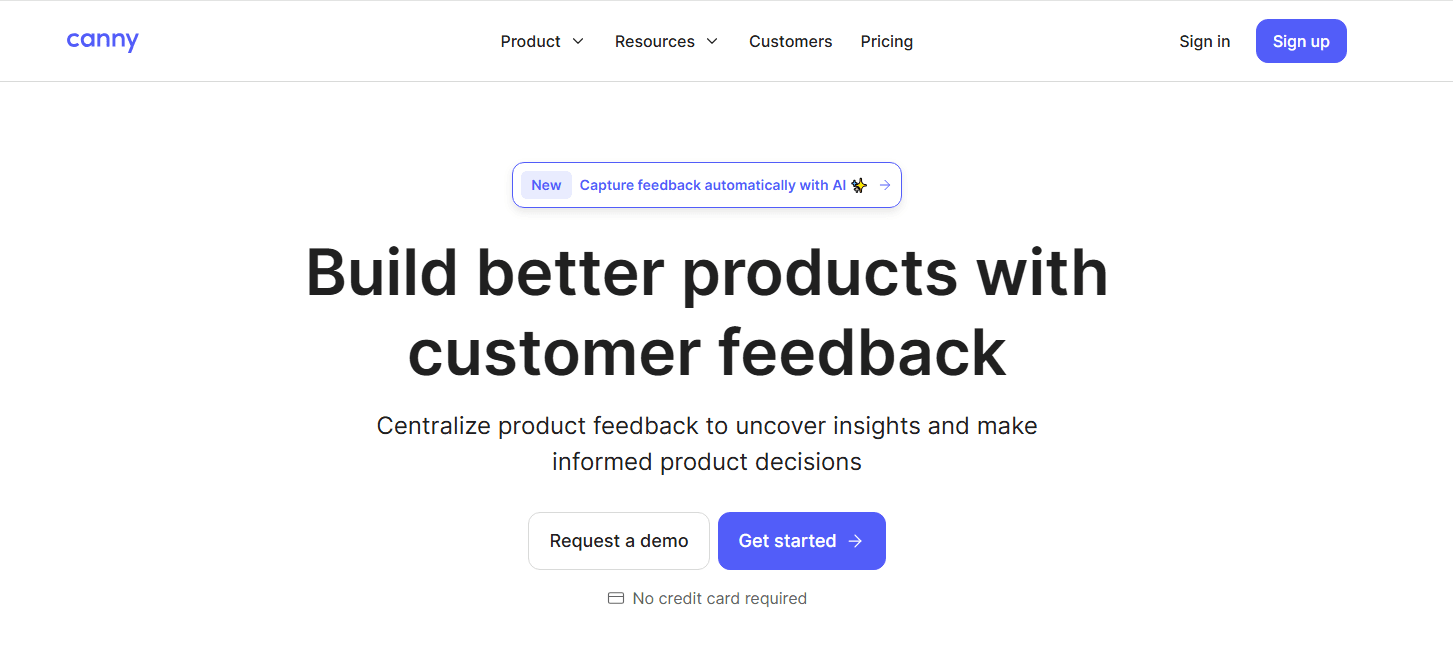
Canny is a customer feedback software for product and CX teams that need to collect, organize, and prioritize feature requests in one place. It's worth considering if your team wants a dedicated feedback portal with built-in voting, roadmap visibility, and a public changelog—without the steep learning curve that comes with something like Productboard, which leans further into full product management territory than most CX teams actually need.
Canny Evaluation Summary
4.6/5
- From $79/month (billed annually)
- Free plan available
Pourquoi faire confiance à nos recommandations de logiciels
6,700+
Reviews
20
Industry experts
16+
Evaluation factors
14
Years
Notre équipe teste et évalue des logiciels depuis 2012. En tant que leaders CX nous-mêmes, nous savons à quel point il est difficile — et important — de choisir le bon logiciel.
Pour ce guide, nous avons évalué les outils grâce à des tests pratiques et une recherche indépendante, en notant les outils selon nos critères de sélection.
Nos avis reflètent notre jugement éditorial humain, et non un argumentaire de vente.
 Gui DrusinaCreative Director
 Tim FisherVP of AI
Canny Overview
In my opinion, Canny.io is a strong choice for teams seeking effective customer feedback software. It stands out with its straightforward interface and powerful feedback tracking features. Compared to others, Canny excels in capturing and organizing user feedback, making it easy for your team to prioritize improvements. However, its onboarding process could be smoother. If your team values seamless integration with other tools and prioritizes customer feedback in product development, Canny is worth considering. While its customer support is generally reliable, expanding support team channels could enhance user experience. Overall, Canny offers solid value, especially for teams committed to leveraging user insights for product growth.
Pros
- Canny provides a clean interface and an embeddable widget that helps you collect feedback and prioritize.
- It offers excellent tools for managing feature requests and user feedback.
- Your team can easily track and vote on suggestions to improve product development.
Cons
- It may not fully support complex workflows for larger organizations or advanced project management needs.
- You might find it less customizable compared to other feedback tools.
Is Canny Right For Your Needs?
Who Would be a Good Fit for Canny?
Canny is ideal for startups and small to medium-sized tech companies focused on product development. Your team can benefit from its straightforward feedback collection and prioritization tools, which streamline the process of acting on user suggestions. Canny's voting system helps prioritize features that users want, making it a great fit for teams looking to build products that align closely with user needs.
- Tech StartupsCanny simplifies gathering user feedback, essential for startups developing new features or products.
- Product TeamsYour team can track feature requests easily, ensuring alignment with user demands for product updates.
- SaaS CompaniesCanny supports feedback-driven development, crucial for SaaS offerings.
- Customer SuccessTeams It helps you manage and prioritize customer suggestions effectively while collaborating with your support team.
- Small to Medium BusinessesCanny’s user-friendly interface suits smaller teams that need efficient feedback management.
- Agile Development TeamsThe tool’s prioritization features align with agile methodologies for rapid iteration.
Who Would be a Bad Fit for Canny?
Canny might not suit large enterprises or organizations with complex feedback workflows. If your team needs detailed reporting and advanced customization, Canny's features might fall short. Larger teams that require intricate feedback management and integration with other complex systems may want to look at Canny alternatives like Trello.
- Large EnterprisesCanny's basic reporting features may not meet the needs of large-scale operations.
- Complex Feedback WorkflowsYour team might find Canny too simple for managing intricate feedback processes without additional automation or custom functionality.
- Industries Needing CustomizationCanny lacks deep customization options, which can be a drawback for specialized industries.
- Government OrganizationsThe tool may not align with the strict regulatory requirements typical in government settings.
- Financial InstitutionsCanny's straightforward approach might not comply with financial industry standards for data handling.
- Healthcare ProvidersYour team could find Canny insufficient for handling sensitive patient feedback securely.
Comment nous testons et évaluons les outils
Nous avons passé des années à bâtir, affiner et améliorer notre système de test et de notation des logiciels. Notre grille d’évaluation est conçue pour saisir les subtilités des sélections logicielles et ce qui fait qu’un outil est efficace, en se concentrant sur les éléments essentiels du processus de décision. Vous trouverez ci-dessous le détail de notre méthodologie d’évaluation et de notation selon sept critères. Cela nous permet de fournir une évaluation impartiale des logiciels basée sur les fonctionnalités principales, les options uniques, la facilité d’utilisation, l’intégration, la prise en main, l’assistance, les avis clients et le rapport qualité/prix.
Fonctionnalité principale (25% de la note totale)
Le point de départ de notre évaluation concerne toujours la fonctionnalité principale de l’outil. Possède-t-il les fonctions que l’on attend normalement, et ces fonctions sont-elles accessibles pour toutes les offres ? Nous attendons qu’un outil soit au niveau des capacités minimales de ses concurrents.
Fonctionnalités différenciantes (25% de la note totale)
Nous évaluons ici les fonctionnalités qui se distinguent de la fonction de base habituellement présente dans ce type de logiciel. Un score élevé récompense des fonctions spécialisées qui rendent le produit plus efficace ou unique et offrent une valeur ajoutée à l’utilisateur. Nous évaluons également la capacité à s’intégrer facilement avec d’autres solutions courantes, ce qui accroît l’intérêt et l’utilité de l’outil. Les logiciels qui proposent de nombreuses intégrations natives, des connexions tierces ou une API pour les intégrations personnalisées obtiennent une meilleure note.
Facilité d’utilisation (10% de la note totale)
Nous mesurons la rapidité et la simplicité pour effectuer les tâches clés avec l’outil. On valorise le design intuitif, les applications mobiles, les templates préconçus et la capacité à simplifier les tâches complexes.
Accompagnement à la prise en main (10% de la note totale)
L’adoption rapide est essentielle. Nous examinons donc la facilité pour un nouvel utilisateur à prendre l’outil en main avec peu de formation. Nous vérifions la rapidité d’installation et d’utilisation sans expérience préalable. Les meilleurs logiciels exigent peu ou pas de support pour démarrer.
Assistance (10% de la note totale)
Nous évaluons la réactivité et la facilité d’obtenir de l’aide par téléphone, chat ou base de connaissances. Les outils offrant un support humain en temps réel ont le meilleur score ; les chatbots sont moins bien valorisés.
Avis clients (10% de la note totale)
En plus de notre expertises, nous prenons en compte le score NPS (Net Promoter Score) accordé par les utilisateurs actuels et passés. Nous analysons la probabilité qu’ils réutilisent l’outil. Les outils à score élevé possèdent un excellent NPS utilisateur.
Rapport qualité/prix (10% de la note totale)
Après examen des autres critères, nous considérons le prix moyen des offres principales par rapport aux fonctionnalités essentielles évaluées. Les solutions offrant plus pour un prix inférieur obtiennent un meilleur score.
Core Features
Feedback Collection: Canny lets you gather feedback directly from users in a streamlined way. Your team can easily access user opinions and requests.
Voting System: Users can vote on feedback, helping you prioritize features based on demand. This makes it easy to see what matters most to your audience.
Roadmap Visualization: Canny offers a visual roadmap that shows planned features and updates. This keeps your team and users aligned on upcoming changes.
Commenting: Users can comment on feedback to provide more context or suggestions. It fosters open communication and deeper insights into user needs.
Status Updates: You can update the status of feedback items, keeping everyone informed. This transparency helps build trust with your users.
Analytics: Basic analytics provide insights into which features get the most attention. Your team can use this data to make informed product decisions.

Ease of Use
Canny's user-friendly interface makes it easy for your team to collect and prioritize feedback without a steep learning curve. The straightforward design means you can quickly navigate through features like voting and roadmap visualization. Compared to many other tools, Canny's simplicity stands out, allowing you to focus on user feedback without getting bogged down in unnecessary complexity. This ease of use ensures your team can start benefiting from its features right away.

Integrations
Canny integrates with Jira, GitHub, ClickUp, Linear, Azure DevOps, Asana, Intercom, Zendesk, Salesforce, Slack, and many more. Canny also offers an API and connects with third-party integration tools allowing for extensive customization and integration with a wide range of other applications.

Canny Specs
- Analytics: Yes
- API: Yes
- Calendar Management: No
- Call Tracking: No
- Contact Management: Yes
- Dashboard: Yes
- Data Export: Yes
- Data Import: Yes
- Data Visualization: Yes
- Email Integration: Yes
- External Integrations: Yes
- Google Apps Integration: No
- Multi-User: Yes
- Net Promoter Score: Yes
- Notifications: Yes
- Review Monitoring: Yes
- Scheduling: No
- Softphone: No
- Third-Party Plugins/Add-Ons: Yes


