

Le 10 migliori app VoIP per telefonia software nel 2026

Elenco delle migliori app softphone VoIP


Le app softphone VoIP ti consentono di effettuare e ricevere chiamate aziendali direttamente dal computer o dal dispositivo mobile utilizzando un auricolare, trasformando qualsiasi schermo nella linea telefonica della tua azienda. Per i responsabili dell'assistenza e dell'esperienza del cliente, questo significa poter contare su comunicazioni flessibili ed economiche senza dover gestire componenti fisici o configurazioni complesse.
Se stai cercando le soluzioni migliori per migliorare le conversazioni con i clienti, mantenere la squadra connessa e adattarti all'evoluzione della tua azienda, questa guida ti aiuterà a confrontare le opzioni principali e a scegliere lo strumento giusto con sicurezza.
Perché fidarsi dei nostri consigli sui software
Il nostro team testa e recensisce software dal 2012. In quanto leader CX noi stessi, sappiamo quanto sia difficile — e importante — scegliere il software giusto.
Per questa guida, abbiamo valutato gli strumenti attraverso test pratici e ricerche indipendenti, assegnando un punteggio agli strumenti in base ai nostri criteri di selezione.
Le nostre recensioni riflettono il nostro giudizio editoriale umano, non un discorso di vendita.
| Tool | Best For | Trial Info | Price | ||
|---|---|---|---|---|---|
| 1 | Best for international calling analytics | 14-day free trial | From $25/user/month (billed annually) | Website | |
| 2 | Best for global virtual phone numbers | 10-day free trial | From $18/user/month (billed annually) | Website | |
| 3 | Best for Freshworks-based call routing | 14-day free trial | From $15/user/month (billed annually) | Website | |
| 4 | Best for Workspace-based business calling | Free plan available | From $10/user/month | Website | |
| 5 | Best for customer-facing team communications | Free demo available | From $15/user/month (billed annually) | Website | |
| 6 | Best for AI-powered call notes | 14-day free trial + free demo available | Pricing upon request | Website | |
| 7 | Best for multi-device business communications | 14-day free trial | From £18/user/month | Website | |
| 8 | Best for sales dialers and SMS workflows | 14-day free trial | From $29/user/month (billed annually) | Website | |
| 9 | Best for small-business calling and desk phones | Not available | From $19.95/user/month | Website | |
| 10 | Best for Zoom-based business calling | Free demo available | From $10.50/user/month | Website |
Recensioni delle app softphone VoIP
Di seguito trovi i miei riepiloghi dettagliati delle migliori app softphone VoIP incluse nel mio elenco ristretto. Le mie recensioni offrono uno sguardo approfondito alle funzionalità, alle integrazioni e ai casi d’uso migliori di ogni piattaforma, per aiutarti a trovare quella più adatta a te.

Best for international calling analytics
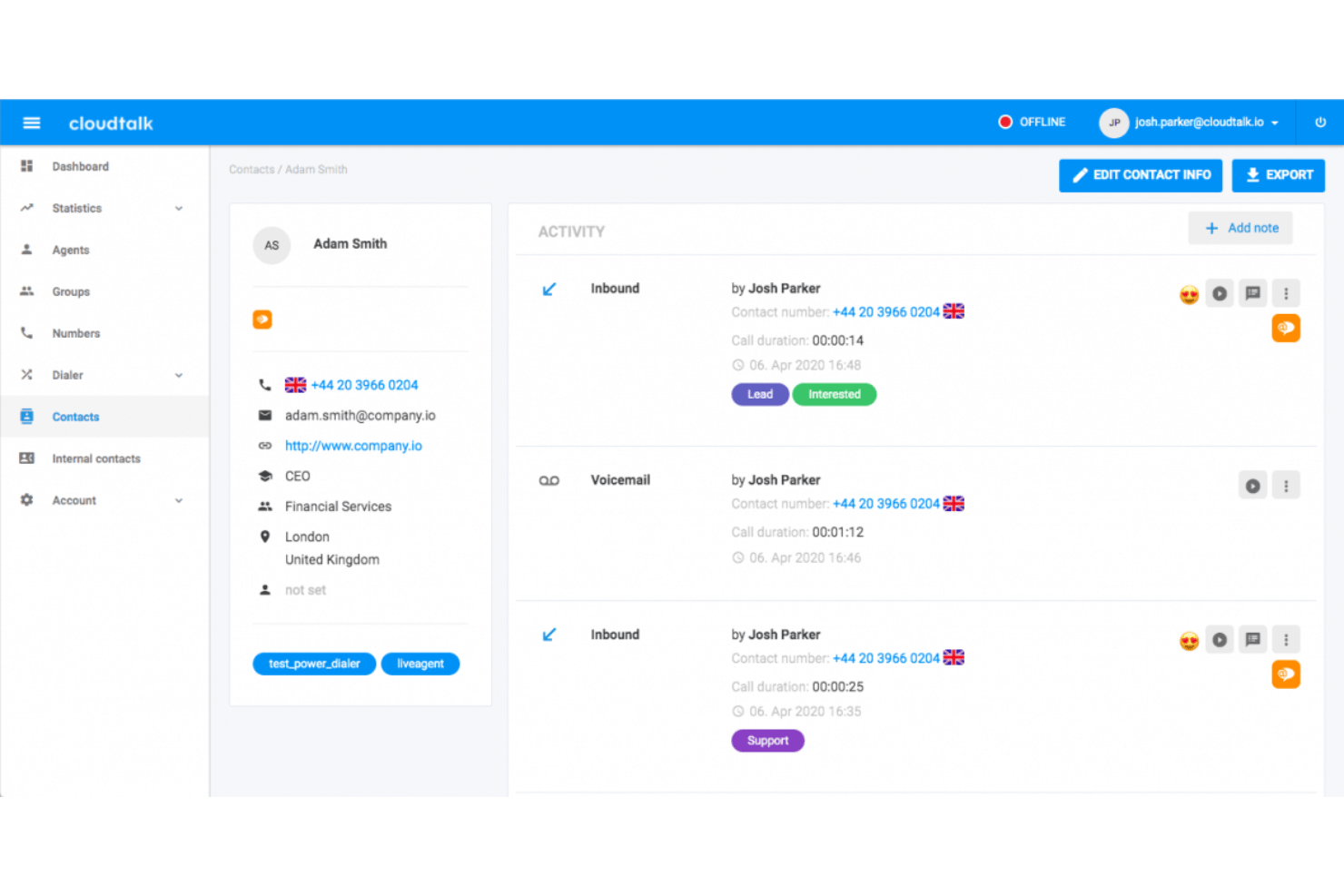
CloudTalk is a cloud-based VoIP softphone platform combining AI-powered dialers, global calling across 160+ countries, CRM integrations, real-time call analytics, and multi-channel messaging in a single interface.
Who Is CloudTalk Best For?
CloudTalk suits growing sales and support teams that manage high call volumes across multiple countries and need detailed agent performance visibility.
Why I Picked CloudTalk
I've included CloudTalk in my top picks because its real-time analytics go deeper than most softphones when calls span multiple countries. The custom dashboards break down call volume, duration, and agent activity by region, queue, or time period, all without manual exports. The AI Conversation Intelligence layer adds sentiment scoring and searchable transcripts on top, so I can review how specific agents are performing across different international markets.
CloudTalk Key Features
- Smart dialer: Queue up multiple calls from lists and contacts to automate outbound dialing workflows.
- Skill-based routing: Assign incoming calls to available agents based on expertise or language criteria.
- IVR call flow designer: Build multi-level interactive menus with drag-and-drop controls for self-service or routing.
- Softphone apps for all devices: Access the softphone via Mac, Windows, browser, iOS, and Android without extra hardware.
CloudTalk Integrations
CloudTalk offers 100+ native integrations, including Salesforce, HubSpot, Zendesk, Pipedrive, Intercom, Zoho CRM, Freshdesk, Gorgias, Slack, Microsoft Teams, and Zapier. An API is available for custom integrations.
Pros and Cons
Pros:
- Strong uptime with global carrier redundancy
- AI transcription available on all paid plans
- Deep analytics across international call queues
Cons:
- Call quality drops on poor network connections
- Mobile app less reliable than desktop version

Best for global virtual phone numbers
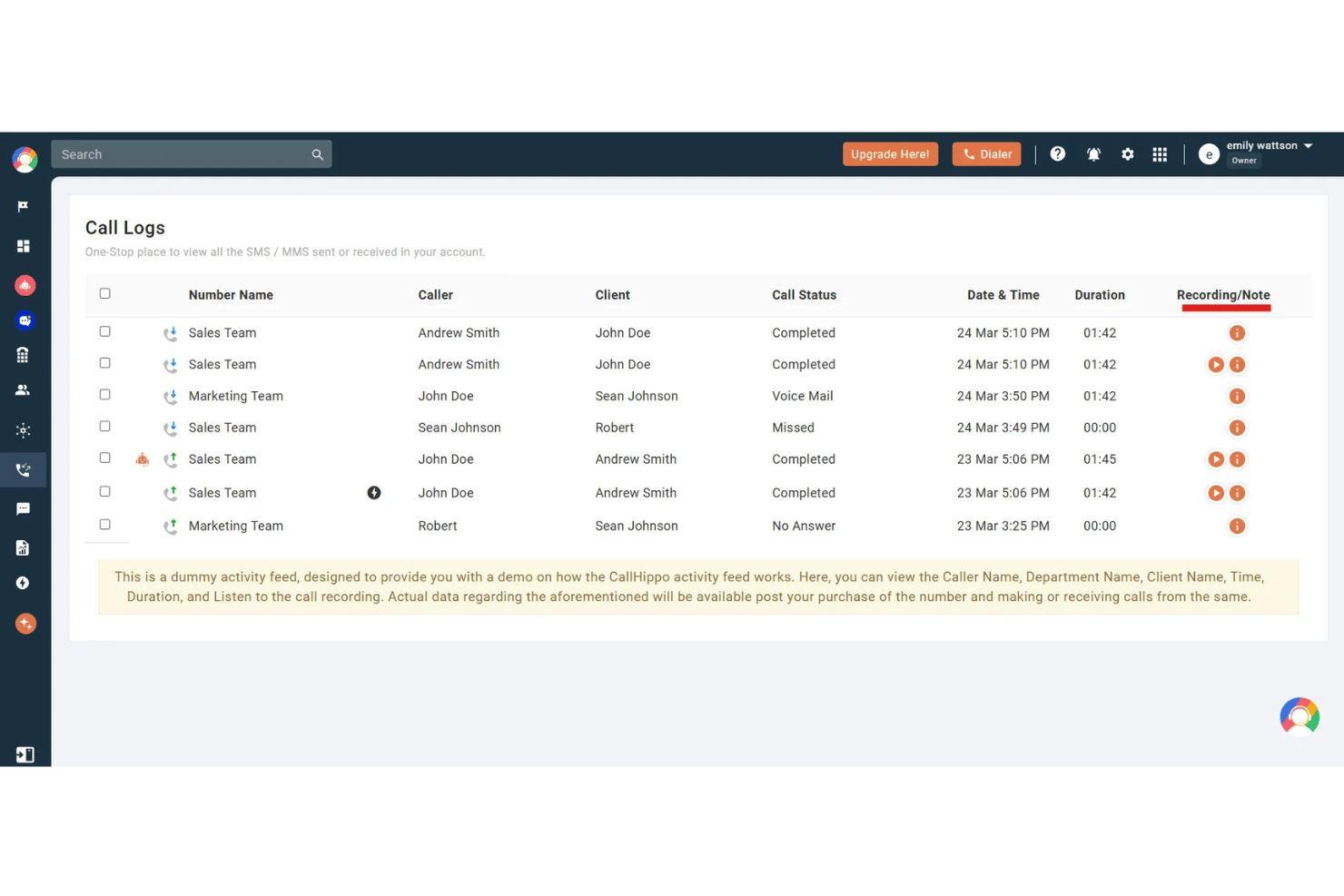
CallHippo is a cloud telephony platform with softphone apps for web, desktop, and mobile. It offers virtual phone numbers in 150+ countries alongside AI-powered calling, omnichannel messaging, and contact center routing.
Who Is CallHippo Best For?
It's a strong fit for small to mid-sized sales and support teams that need local phone presence across multiple countries without complex infrastructure.
Why I Picked CallHippo
I've included CallHippo in my top picks because the depth of its global number coverage sets it apart from most softphone apps. You can provision local, toll-free, or mobile numbers in 150+ countries within minutes, and Smart DID Routing automatically presents the correct local caller ID based on the destination country. I also like the AI Global Connect feature, which detects a contact's local time zone before dialing to prevent calls landing outside business hours.
CallHippo Key Features
- Omnichannel inbox: Manage calls, SMS, WhatsApp, Telegram, email, and chat messages from one unified dashboard.
- Call center controls: Use IVR menus, smart call routing, call queues, barging, whisper, and monitoring for live agent coaching.
- CRM and helpdesk integrations: Connect directly with Salesforce, HubSpot, Zoho, Zendesk, Freshdesk, and more to log call activity.
- Real-time analytics dashboards: Monitor team and agent call metrics, performance KPIs, and historical trends in a customizable dashboard.
CallHippo Integrations
CallHippo offers native integrations with Salesforce, HubSpot, Zoho CRM, Zendesk, Freshdesk, Pipedrive, Intercom, Shopify, Slack, and Microsoft Teams. An API is available for custom integrations.
Pros and Cons
Pros:
- Live call monitoring with whisper and barge
- AI transcription and post-call summaries included
- Virtual numbers available in 150+ countries
Cons:
- Mobile app less stable than web client
- Call quality issues reported on low bandwidth

Best for Freshworks-based call routing
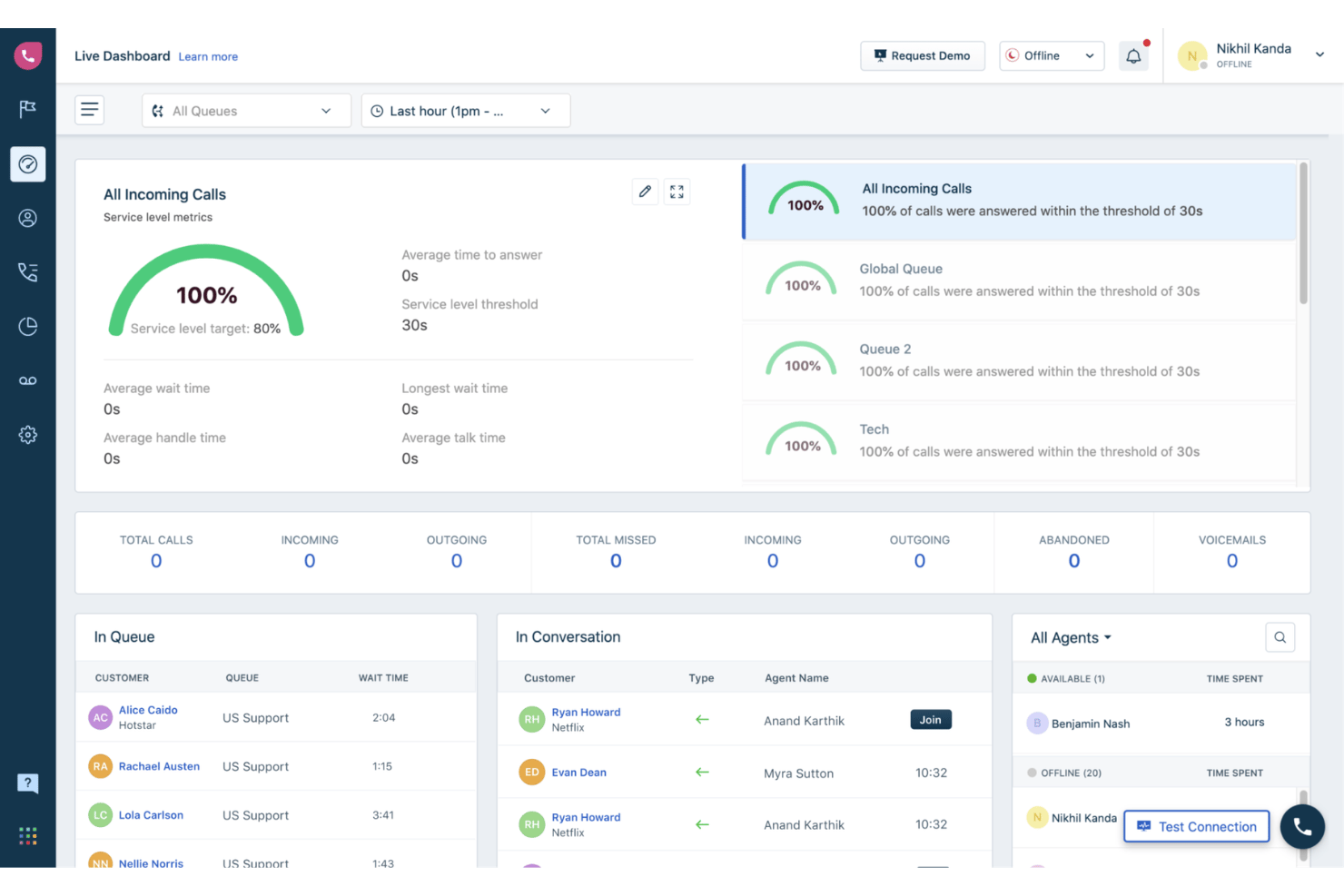
Freshcaller is a cloud-based VoIP contact center solution that lets agents place and receive calls via browser, mobile app, or SIP handset, with multi-level IVR, call routing, recording, and real-time analytics built in.
Who Is Freshcaller Best For?
Freshcaller is a strong fit for support teams already using the Freshworks ecosystem who need a tightly connected call center and helpdesk setup.
Why I Picked Freshcaller
I've included Freshcaller in my top picks because its call routing is purpose-built for teams running on Freshworks. Inbound calls can be routed using conditions tied directly to Freshdesk or Freshsales data, so the right agent gets the right call based on CRM context. I also rely on its smart escalation rules and live call barging, which let supervisors step into active calls and coach agents in real time without disrupting the customer.
Freshcaller Key Features
- Multi-level IVR system: Build custom call menus with nested options to direct callers where they need to go.
- Call recording with storage: Automatically record calls and access recordings directly from the call log.
- Real-time agent status: See live agent availability, including ready, busy, and do-not-disturb, for more effective routing.
- Global phone number coverage: Access local and toll-free numbers from over 90 countries for international presence.
Freshcaller Integrations
Freshcaller offers native integrations with Freshdesk, Freshsales, Salesforce, HubSpot, and Slack. An API is available for custom integrations.
Pros and Cons
Pros:
- Real-time agent availability visible across teams
- Barge and whisper on active calls
- IVR routing needs no coding
Cons:
- Less suited for non-Freshworks tech stacks
- Reporting dashboards lack deep customization options

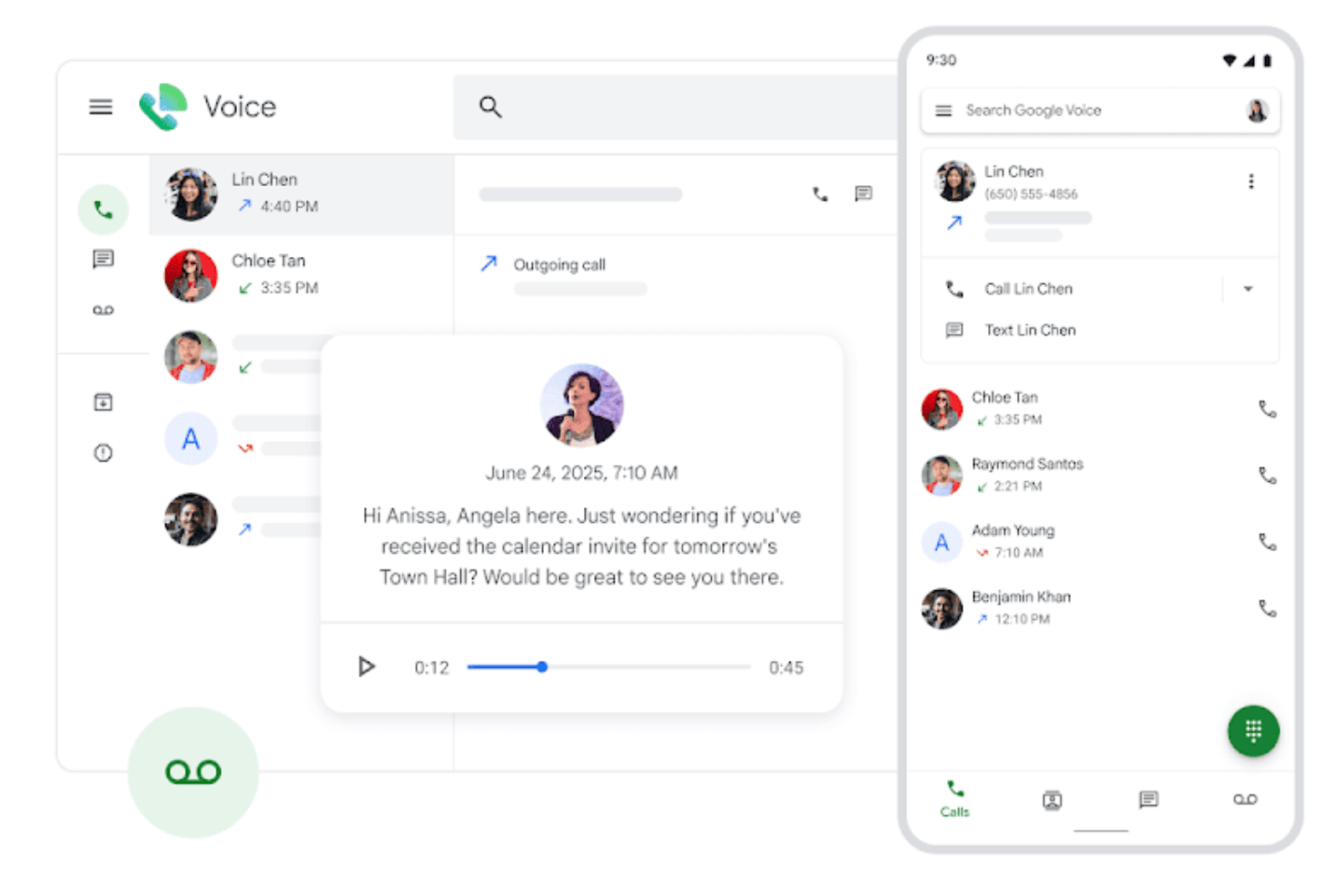
Google Voice is a cloud-based VoIP softphone built into the Google Workspace ecosystem, offering calling, video calls, SMS, voicemail transcription, and AI-powered spam filtering across mobile, desktop, and desk phones.
Who Is Google Voice Best For?
Google Voice is a natural fit for small businesses and distributed teams already running on Google Workspace who need a lightweight business phone system without added infrastructure.
Why I Picked Google Voice
I've included Google Voice in my top picks because it's the only VoIP softphone that's fully native to Google Workspace. Calls route directly through Gmail, voicemails transcribe automatically into your inbox, and the multi-level auto attendant handles call routing without any separate admin platform. My team uses the Vault integration to keep call records in the same discovery and retention system as email.
Google Voice Key Features
- Multi-device calling: Make and receive calls from mobile devices, laptops, or supported desk phones with one number.
- Spam call blocking: Uses Google AI to detect and block spam callers before the phone rings.
- SIP Link integration: Connect existing PSTN services and desk phones to Google Voice through certified session border controllers.
- Google Calendar routing: Routes incoming calls based on your Google Calendar working hours settings.
Google Voice Integrations
Google Voice offers native integrations with Google Workspace apps, including Google Meet and Google Calendar, and provides an API for custom integrations.
Pros and Cons
Pros:
- Works across mobile, desktop, and desk phones
- AI-powered voicemail transcription included
- Native Google Workspace sync across all apps
Cons:
- No built-in call recording on starter plan
- Limited call analytics for contact center teams
Nextiva
Best for customer-facing team communications
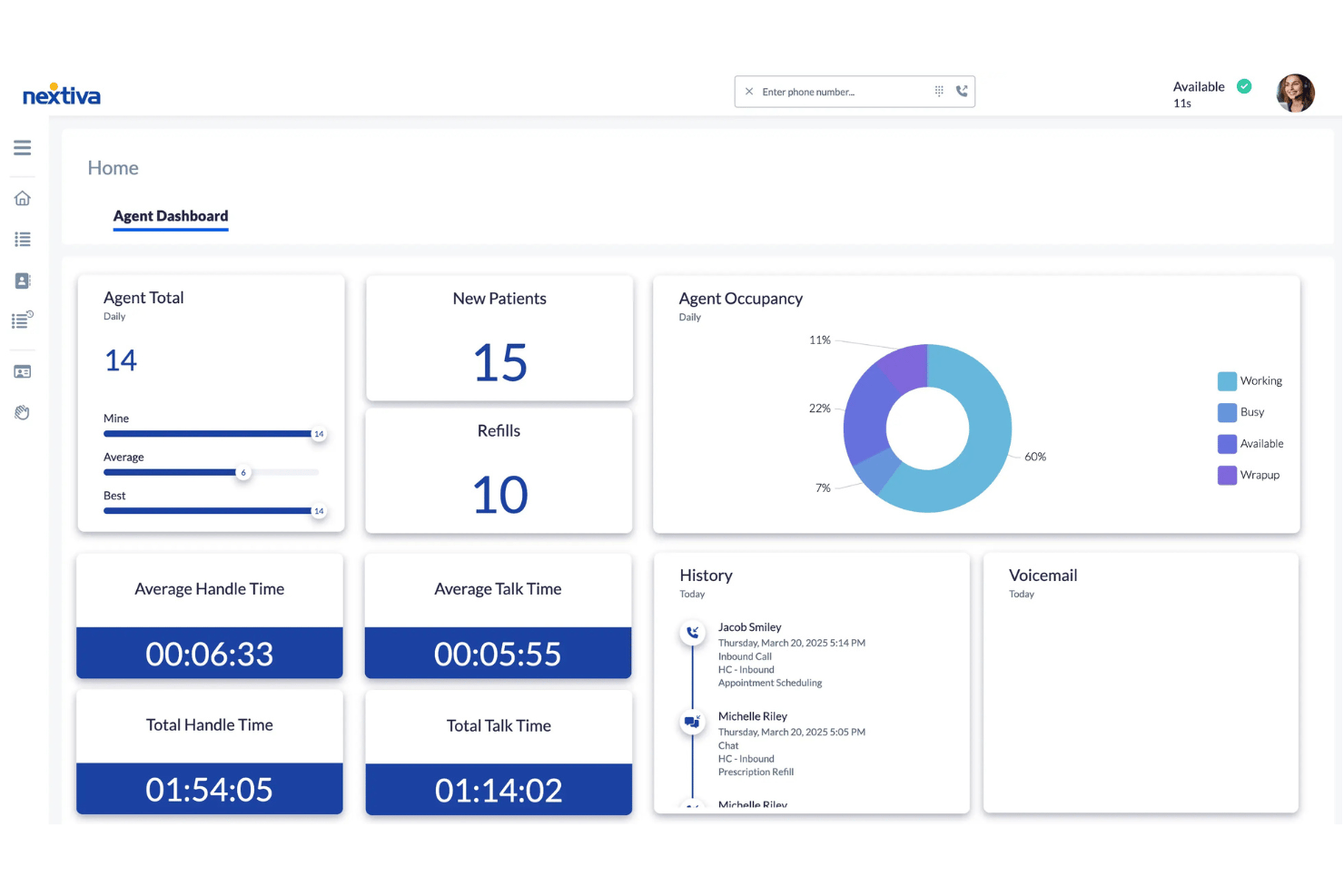
Nextiva is a cloud-based VoIP and unified communications platform that combines softphone calling, SMS, video meetings, team chat, and AI-powered call management across desktop and mobile apps.
Who Is Nextiva Best For?
Nextiva is a strong fit for customer support and contact center teams that need a single platform for voice, messaging, and AI-assisted call handling.
Why I Picked Nextiva
I picked Nextiva as one of the best because the NextivaONE app keeps my whole customer-facing team on voice, SMS, and chat without switching between tools. The AI Voice Agent handles inbound calls 24/7, routing inquiries and answering FAQs before a live agent picks up. I also rely on AI call transcription and summary to review customer interactions quickly, without replaying full recordings.
Nextiva Key Features
- Multi-level auto attendant: Set up advanced call routing menus for different departments or schedules.
- Team presence and status: See real-time availability of colleagues for easier call transfers and coordination.
- Contact center analytics: Access dashboards with live and historical metrics on agent performance and call activity.
- Browser and mobile softphone apps: Make and receive calls from web browsers, Windows, macOS, iOS, and Android devices.
Nextiva Integrations
Nextiva offers native integrations with Salesforce, HubSpot, Microsoft Teams, Google Workspace, Outlook, and Microsoft Dynamics, and provides an API for custom integrations.
Pros and Cons
Pros:
- Reliable HD audio on desktop and mobile clients
- Unified voice, SMS, and chat in one app
- AI call summaries reduce manual post-call documentation
Cons:
- Reporting dashboards have a steep initial learning curve
- Mobile app occasionally drops calls on poor connections

Dialpad
Best for AI-powered call notes
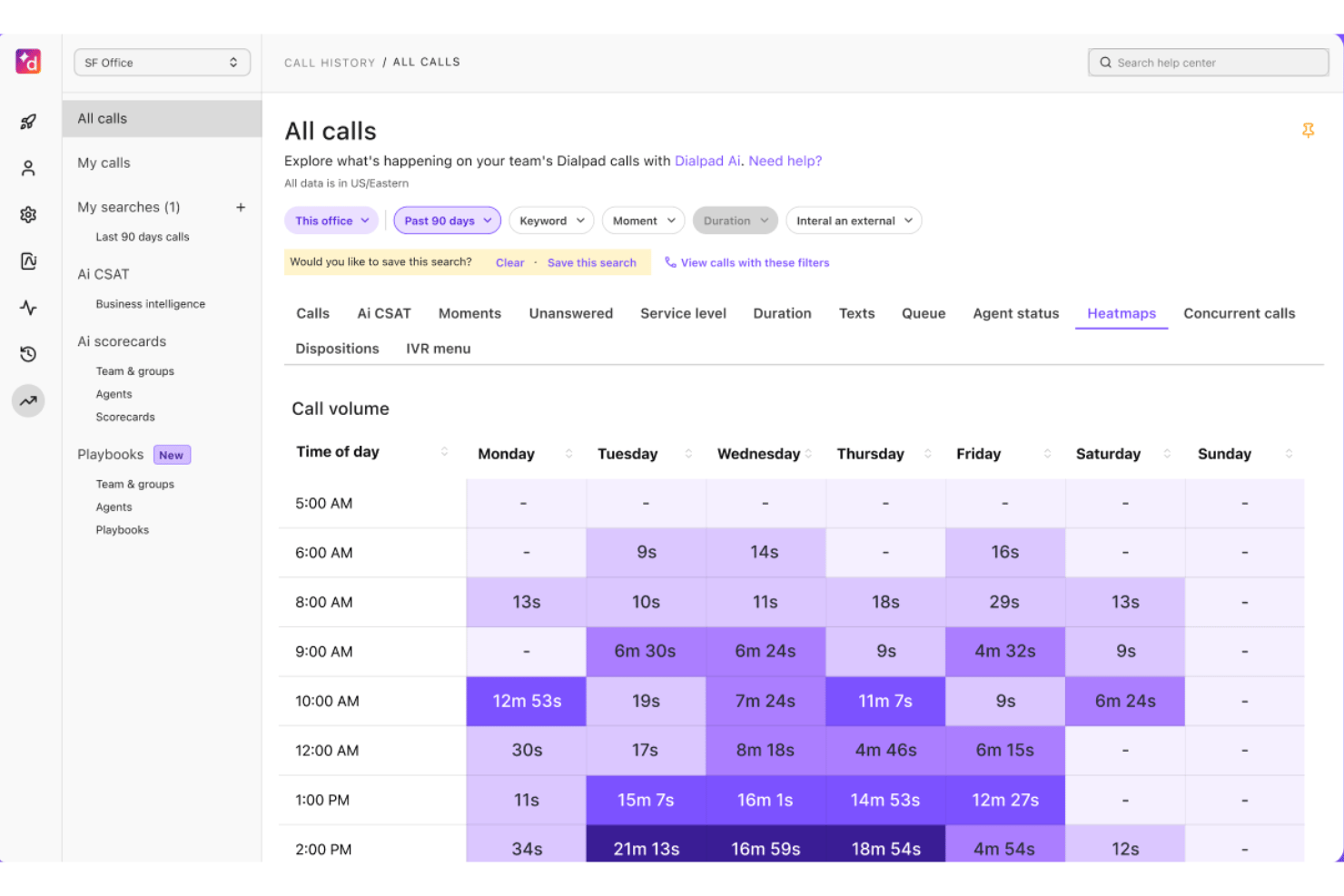
Dialpad is an AI-native cloud communications platform that unifies voice calling, SMS, messaging, and video meetings in a single softphone app built on its own proprietary large language model, DialpadGPT.
Who Is Dialpad Best For?
Dialpad suits small to midsize customer support and sales teams—particularly those running on Google Workspace—who need a cloud phone system with built-in AI call documentation.
Why I Picked Dialpad
Dialpad earns its spot on my shortlist because its AI Recaps feature automatically generates structured call summaries and action items after every conversation, powered by its proprietary DialpadGPT model. Real-time transcription runs live during calls, so nothing gets missed even in fast-moving support interactions. I also like that AI CSAT scoring runs automatically on 91% of calls, giving my team consistent post-call performance data without any manual review process.
Dialpad Key Features
- Multi-device softphone: Make and receive calls on desktop, mobile, tablet, or web.
- Unified team messaging: Chat and share files with coworkers in the same app as calls.
- Native CRM integrations: Connects directly with platforms like Salesforce, HubSpot, and Zendesk.
- Real-time presence: See agent availability and status instantly to streamline call routing and collaboration.
Dialpad Integrations
Dialpad offers native integrations with Salesforce, HubSpot, Zendesk, Google Workspace, Microsoft 365, ServiceNow, Zoho CRM, Okta, Bullhorn, and Clio. An API is available for custom integrations.
Pros and Cons
Pros:
- Works across desktop, mobile, and web browser
- Real-time transcription runs during live calls
- AI-generated call summaries after every conversation
Cons:
- Call quality can drop on weak connections
- AI features locked behind higher-tier plans

Best for multi-device business communications
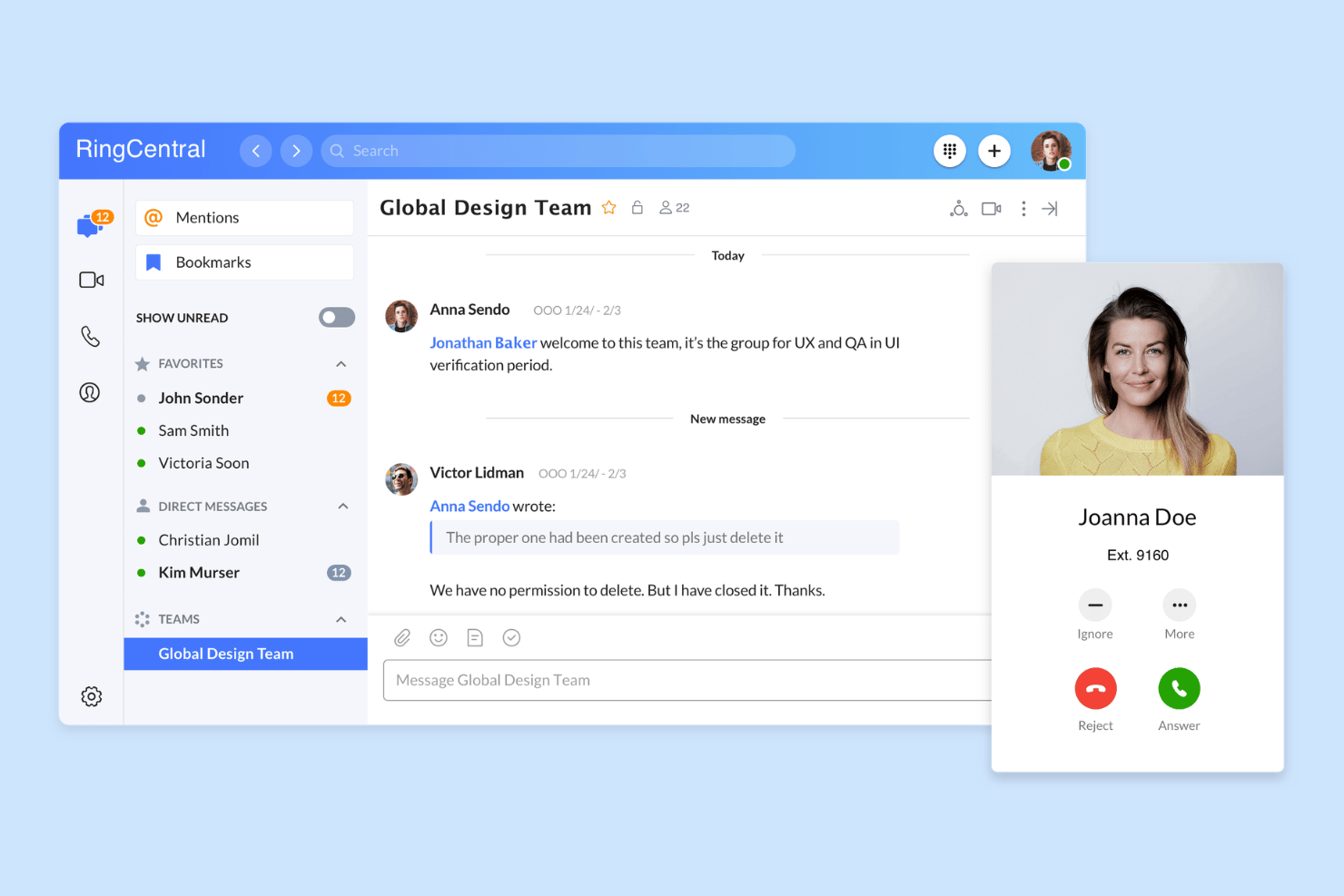
RingCentral is a cloud-based UCaaS platform that combines VoIP calling, video meetings, business SMS, and team messaging into a single softphone app across desktop, mobile, and web.
Who Is RingCentral Best For?
It's a strong fit for mid-sized businesses with distributed or remote teams that need a single platform for managing voice communications across multiple devices and locations.
Why I Picked RingCentral
RingCentral earns its spot on my shortlist because of how consistently it handles voice across every device in my setup. I particularly like the call flip feature, which lets you transfer a live call from your desktop softphone to your mobile app mid-conversation without any interruption. Presence status also syncs in real time across desktop, mobile, and web, so my team always sees accurate availability no matter which device someone is working from.
RingCentral Key Features
- AI-powered call summaries: Automatically generates searchable, AI-driven summaries for every call to speed up review and QA.
- Integrated team messaging: Offers built-in chat and group messaging directly alongside calling functions in the softphone app.
- Omnichannel contact centre: Supports voice, SMS, web chat, and social messaging in one dashboard for CX teams.
- Native CRM integrations: Connects with Salesforce, HubSpot, and Zendesk to pull up customer records and auto-log activities.
RingCentral Integrations
RingCentral offers native integrations with Salesforce, HubSpot, Zendesk, Microsoft Teams, Google Workspace, Slack, and ServiceNow, and provides an API for custom integrations.
Pros and Cons
Pros:
- AI transcription covers every recorded call
- Real-time presence synced across all platforms
- Call flip works live mid-conversation
Cons:
- Interface feels cluttered for call-only users
- Mobile app frequently drains battery faster

JustCall
Best for sales dialers and SMS workflows
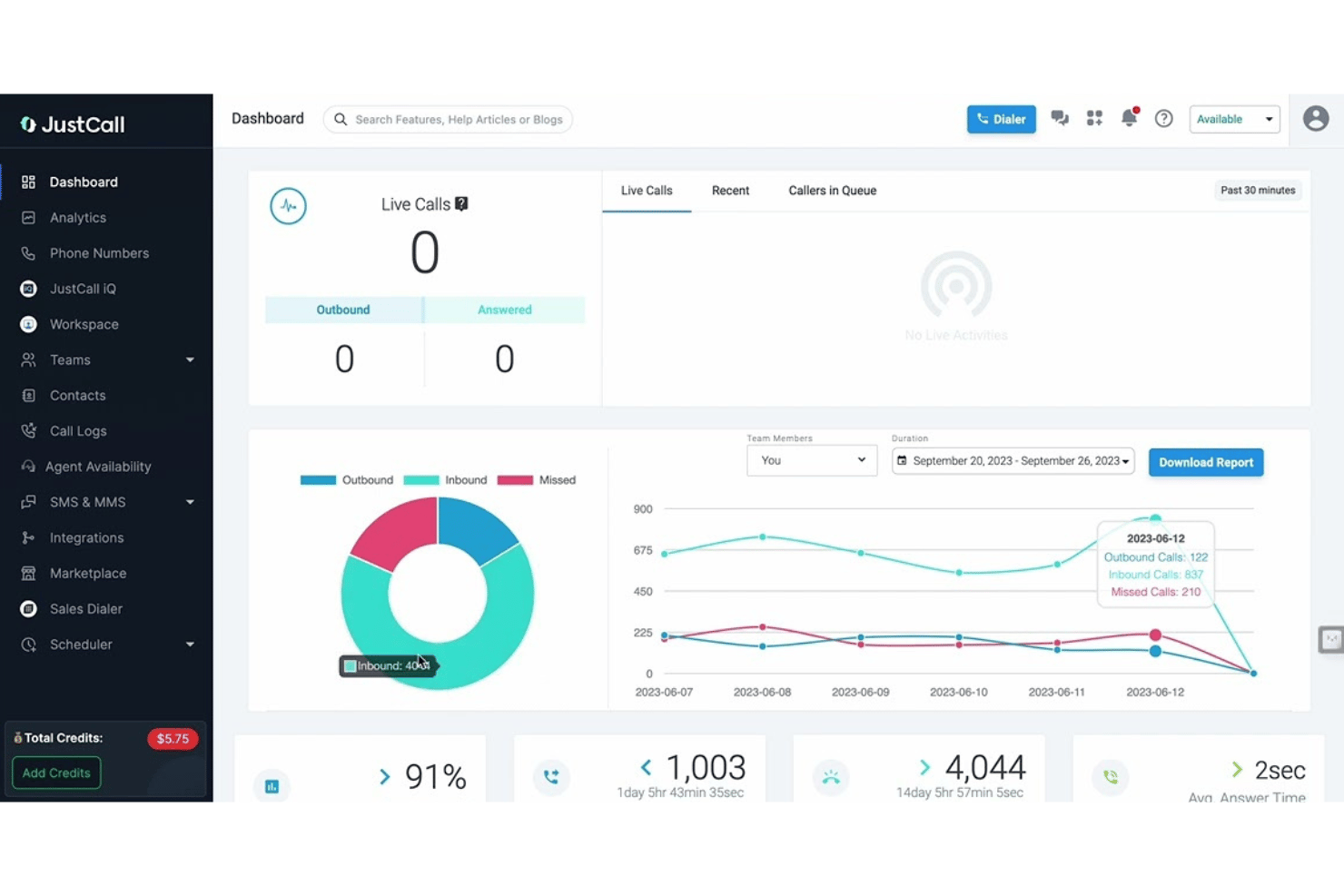
JustCall is a cloud-based VoIP softphone platform combining voice calling, SMS and MMS messaging, AI conversation intelligence, and multi-line auto-dialer capabilities across desktop, mobile, and web.
Who Is JustCall Best For?
JustCall is a strong fit for outbound sales teams and SMB-to-mid-market customer support operations that need voice, SMS, and dialer tools in one place.
Why I Picked JustCall
I picked JustCall as one of the best because its multi-line predictive dialer (up to 10 simultaneous lines) and Dynamic Dialer genuinely set it apart from most softphone apps that only offer basic click-to-dial. I also like how SMS workflows and bots run natively inside the same platform, so my team can trigger automated follow-up sequences without switching tools. The local presence dialing feature, which displays a number matching the prospect's area code, adds a layer of functionality that most standalone softphone apps skip entirely.
JustCall Key Features
- Real-time agent presence: Displays agent availability status across web, desktop, and mobile for efficient routing.
- Native CRM integrations: Connects natively with Salesforce, HubSpot, Zoho, and Zendesk for click-to-dial and automatic call logging.
- Automatic call recording: Captures and stores every call for easy playback and quality assurance.
- Live call monitoring: Lets supervisors listen, whisper, or barge into ongoing calls for coaching and oversight.
JustCall Integrations
JustCall offers 100+ native integrations, including Salesforce, HubSpot, Zoho CRM, Pipedrive, Zendesk, Freshdesk, Intercom, Help Scout, Slack, and Microsoft Teams. An API is available for custom integrations.
Pros and Cons
Pros:
- AI transcription on every recorded call
- SMS workflows and bots run natively
- Predictive dialer supports up to 10 lines
Cons:
- Reporting dashboards offer limited customization options
- Mobile app call quality can be inconsistent

Best for small-business calling and desk phones
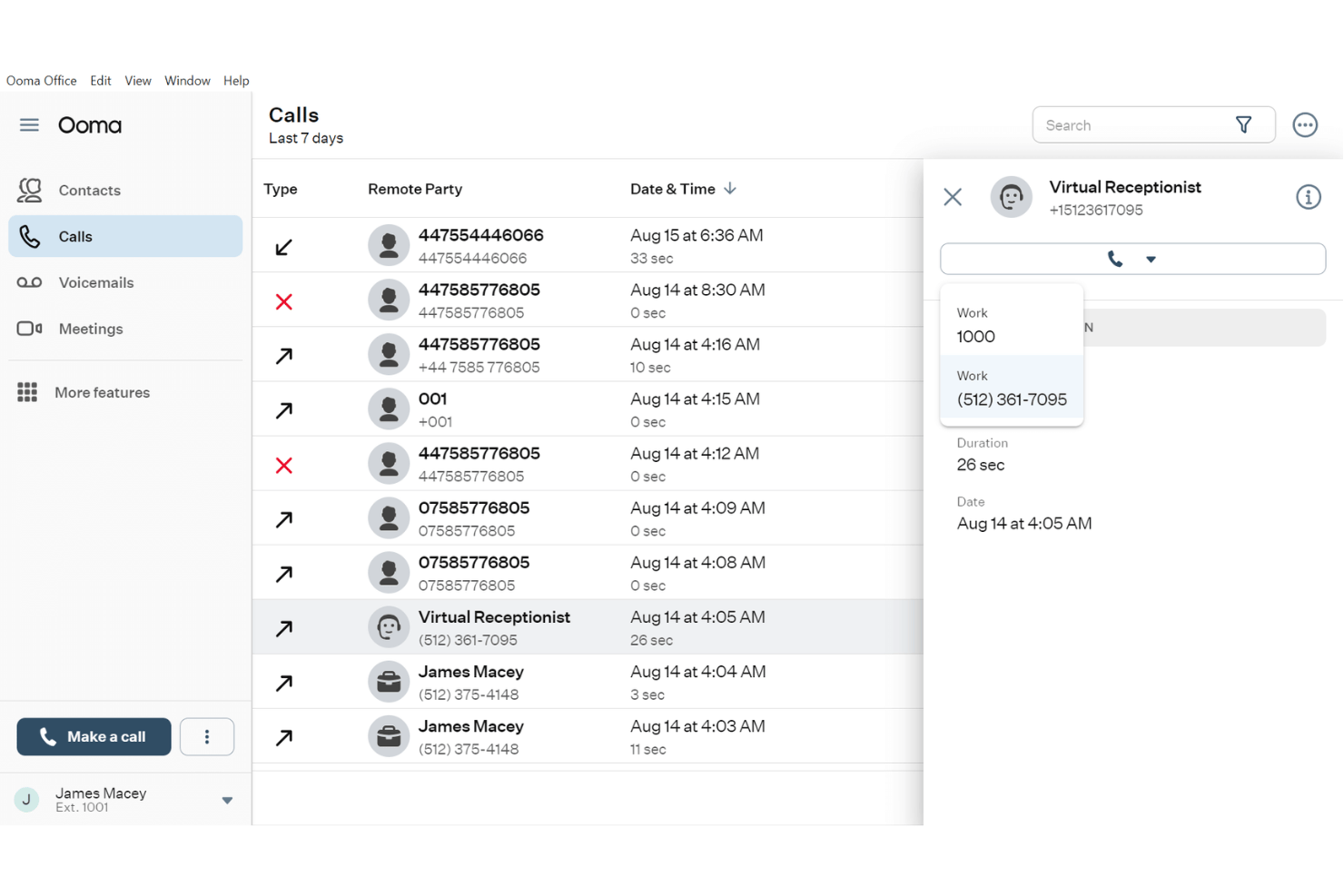
Ooma Office is a cloud-based VoIP phone system for small businesses that combines a desktop and mobile softphone, call management controls, SMS, videoconferencing, and CRM integrations in one platform.
Who Is Ooma Office Best For?
Ooma Office is a strong fit for small and mid-sized businesses that want a full-featured phone system without the complexity or cost of enterprise VoIP platforms.
Why I Picked Ooma Office
I picked Ooma Office as one of the best because it genuinely bridges desk phones and softphone apps in a way few SMB-focused platforms do. Call Flip lets me transfer an active call from my desk phone to the mobile softphone mid-conversation without dropping it. Simultaneous ring means incoming calls hit both the desk phone and the softphone app at once, so my team never misses a call when moving between spaces.
Ooma Office Key Features
- AI call transcription and summaries: AI-powered transcriptions and automated call summaries on Pro Plus plans.
- CRM integration: Connects with platforms like Salesforce, HubSpot, and Zoho to sync contacts and call logs.
- Team chat and presence: Built-in team messaging and real-time presence indicators for improved coordination.
- Call analytics dashboard: Detailed call metrics and leaderboards help you track agent and team activity.
Ooma Office Integrations
Ooma Office offers native integrations with Salesforce, HubSpot, Zendesk, Zoho, Pipedrive, Microsoft Dynamics 365, SugarCRM, and Google and Microsoft 365. It also connects with Zapier and provides an API for custom integrations.
Pros and Cons
Pros:
- Includes built-in video conferencing on mobile
- Call Flip moves live calls between devices
- Supports physical desk phones alongside softphone
Cons:
- AI transcription requires the pricier Pro Plus
- Mobile app stability has frustrated some users

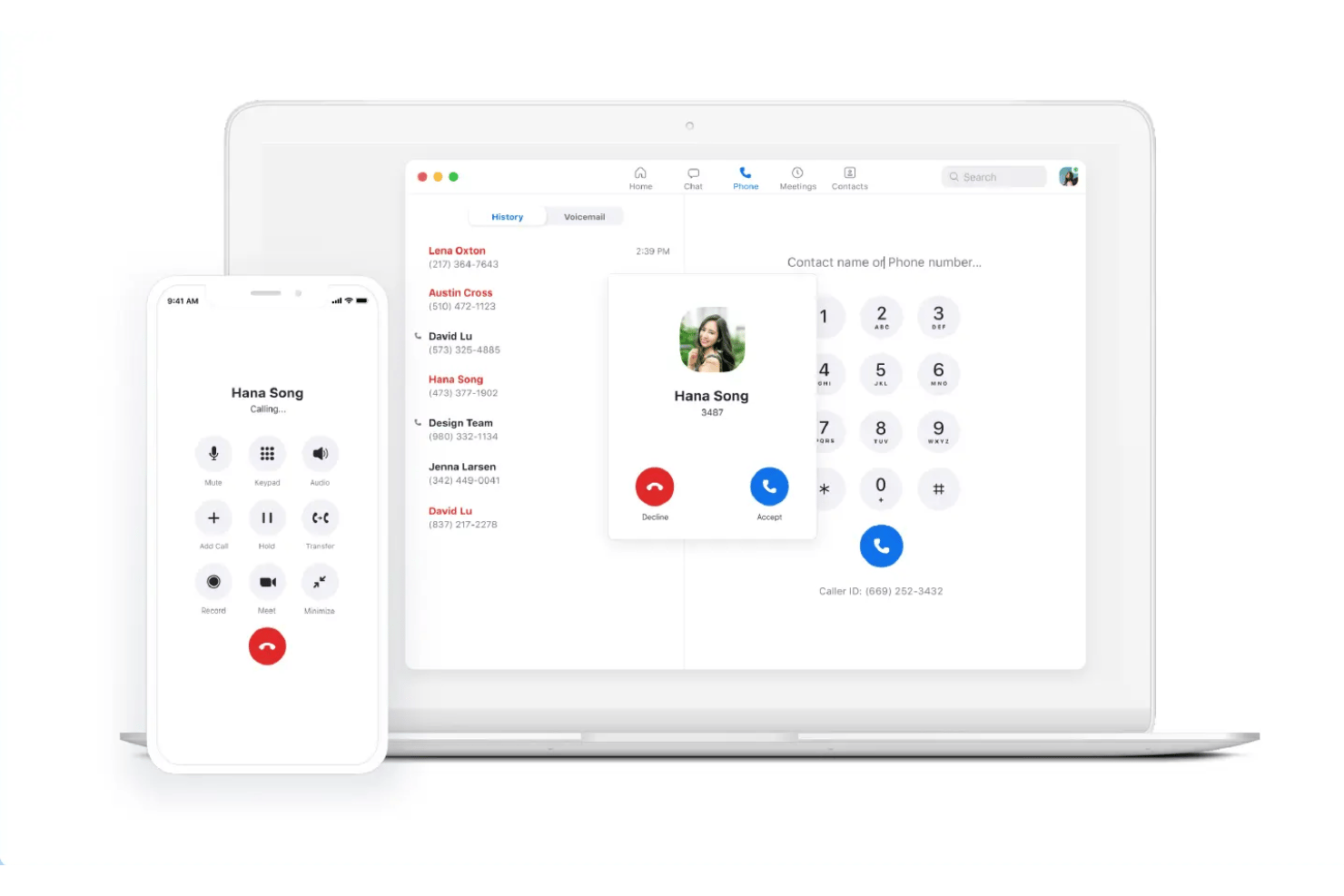
Zoom Phone is a cloud-based VoIP softphone that brings together inbound and outbound PSTN calling, SMS/MMS, voicemail transcription, call routing, and AI-powered call summaries across desktop, mobile, and desk phone clients.
Who Is Zoom Phone Best For?
It's a natural fit for teams already running on Zoom Workplace who want voice calling built into the same platform as their meetings and chat.
Why I Picked Zoom Phone
Zoom Phone earns its spot as one of the best on my shortlist because of how tightly it plugs into the rest of the Zoom Workplace suite. I like that my team can flip an active call from desktop to mobile without dropping it, which matters on days when someone needs to step away from their desk mid-conversation. The AI Companion adds real value too, generating post-call summaries and pulling action items directly from recorded calls.
Zoom Phone Key Features
- CRM and helpdesk integrations: Connects natively with Salesforce, HubSpot, Zendesk, and Microsoft Teams for click-to-dial and auto-logged call activity.
- Presence and team messaging: Real-time presence status and direct chat enable seamless team coordination inside the Zoom app.
- Call queue management: Lets admins set up call queues and routing rules to distribute incoming calls across agents or departments.
- Automatic call recording: Captures and stores calls for quality review, compliance, or performance management.
Zoom Phone Integrations
Zoom Phone offers native integrations with Salesforce, HubSpot, Zendesk, Microsoft Teams, Google Workspace, Slack, ServiceNow, and Okta, and provides an API for custom integrations.
Pros and Cons
Pros:
- Unified with Zoom meetings and chat
- AI call summaries included natively
- Call flip from desktop to mobile
Cons:
- Limited supervisor monitoring without Contact Center add-on
- Requires an existing Zoom Workplace plan
Altre app softphone VoIP
Ecco alcune app softphone VoIP aggiuntive che non sono entrate nel mio elenco ristretto, ma che vale comunque la pena prendere in considerazione:
- 3CX
For self-hosted business phone systems
- Aircall
For CRM-integrated sales calling
- Five9
For outbound contact center campaigns
- Talkdesk
For AI contact center automation
- CloudCall
For CRM-based sales calling
- Genesys Cloud CX
For enterprise experience orchestration
- 8x8 Contact Center
For secure omnichannel contact centers
- Vonage Contact Center
For Salesforce contact center workflows


Come valuto le app per softphone VoIP
Divido la mia valutazione in requisiti fondamentali, come le chiamate tra dispositivi diversi e le integrazioni con i CRM, e fattori distintivi che separano un semplice dialer da uno strumento su cui gli operatori faranno effettivamente affidamento.
Funzionalità fondamentali (requisiti minimi per questo elenco)
Quando seleziono gli strumenti per il mio elenco, assegno a ciascuno un punteggio su una scala da 0 (non offre la funzionalità) a 5 (eccelle in quest'area) per ogni funzionalità fondamentale elencata di seguito. Calcolo quindi il punteggio totale dello strumento in percentuale, utilizzando il 65% come parametro di riferimento per valutarne l'idoneità complessiva per l'elenco.
- Chiamate VoIP: verifico se gli operatori possono effettuare e ricevere chiamate in HD su desktop, dispositivi mobili e web, in modo che i team remoti non siano vincolati a un unico dispositivo.
- Controlli di gestione delle chiamate: messa in attesa, trasferimento assistito, conferenza e passaggio della chiamata sono tutti aspetti importanti. Valuto quanto agevolmente gli operatori possano reindirizzare o inoltrare una chiamata durante la conversazione.
- Integrazioni con CRM e help desk: le connessioni native a piattaforme come Salesforce o Zendesk dovrebbero mostrare schede a comparsa e registrare automaticamente le attività senza inserimento manuale.
- Registrazione delle chiamate e segreteria telefonica: cerco la registrazione automatica con archiviazione consultabile, poiché le revisioni QA e le sessioni di coaching dipendono dal facile recupero delle chiamate passate.
- Stato di presenza e disponibilità: gli indicatori di stato in tempo reale aiutano a instradare le chiamate agli operatori disponibili. Verifico se lo stato di presenza si sincronizza tra i team e si aggiorna automaticamente.
- Analisi e report delle chiamate: i pannelli di controllo dovrebbero includere il volume delle chiamate, le chiamate perse e le metriche a livello di operatore, così i responsabili dei team possono individuare le tendenze e affrontare le lacune nelle prestazioni.
Una volta ottenuto un elenco di strumenti che soddisfano i criteri, valuto ciò che distingue ciascuna piattaforma.
Fattori distintivi (ciò che differenzia i fornitori)
Ecco come confronto e metto a confronto i diversi fornitori:
Funzionalità distintive
La trascrizione delle chiamate tramite IA evita agli operatori di prendere appunti manualmente e offre ai supervisori riepiloghi delle chiamate consultabili, a cui possono fare riferimento durante le revisioni QA. Valuto anche gli strumenti di coaching, come l'ascolto discreto e l'intervento, che consentono ai responsabili dei team di guidare gli operatori durante le chiamate in corso senza che il cliente li senta. Le schede a comparsa del CRM sono un altro elemento distintivo: quando la cronologia di un cliente appare nel momento in cui la chiamata si connette, gli operatori saltano completamente il ripetitivo passaggio di verifica.
Oltre le funzionalità
La qualità della voce è più importante di quanto la maggior parte degli acquirenti si renda conto. Ad esempio, verifico il supporto per i codec HD e le opzioni di failover, perché una chiamata di assistenza interrotta può erodere rapidamente la fiducia del cliente. Oltre alla qualità delle chiamate, la sicurezza è un altro fattore fondamentale. Cerco la crittografia TLS/SRTP e certificazioni di conformità come HIPAA o SOC 2. Infine, confronto i modelli di prezzo, perché alcuni fornitori applicano un costo per utente, mentre altri concedono licenze in base al numero di chiamate simultanee.
Come scegliere le app softphone VoIP
Stai cercando di decidere quale app softphone VoIP offrirà valore alla tua squadra? Inizia considerando quali sono le tue esigenze prioritarie in termini di comunicazione, integrazione o supervisione:
| Se la tua priorità è... | Dai priorità a... |
|---|---|
| Ridurre l'inserimento manuale delle note | Trascrizione delle chiamate basata sull'AI |
| Integrare le chiamate con il tuo CRM | Connettori CRM nativi e finestre informative |
| Flessibilità degli operatori su più dispositivi | Compatibilità multipiattaforma (computer, web, dispositivi mobili) |
| Monitoraggio degli operatori in tempo reale | Funzionalità per supervisori (ascolto, inserimento nella chiamata) |
| Sicurezza e conformità | Crittografia end-to-end, SOC 2, HIPAA |
Come valutare il tuo elenco ristretto
- Richiedi una dimostrazione della trascrizione AI: chiedi un esempio o esegui una trascrizione dal vivo per verificarne l'accuratezza confrontando almeno 2 chiamate reali degli operatori nell'arco di una settimana.
- Collega il tuo CRM durante la prova: utilizza l'ambiente di prova del tuo sistema per verificare le funzionalità di apertura della scheda cliente e registrazione automatica prima della distribuzione con dati reali dei clienti.
- Testa i flussi di trasferimento delle chiamate: esegui esercitazioni affiancate degli operatori (passaggio della chiamata, trasferimento assistito, conferenza) e documenta i tempi di attesa sui diversi dispositivi.
- Richiedi documentazione scritta sulla conformità: chiedi ai team di sicurezza dei fornitori la documentazione relativa alla crittografia TLS/SRTP e la prova di certificazioni come SOC 2 o HIPAA.
- Compromesso per filtrare l’elenco: Decidi se la flessibilità (multipiattaforma, BYOD) è più importante per il tuo team rispetto ad analisi e report avanzati: pochi strumenti eccellono raramente in entrambi gli ambiti.
Cosa sono le app per telefono VoIP?
Le app per telefono VoIP consentono di effettuare e ricevere chiamate telefoniche tramite internet da un computer, un browser web o un dispositivo mobile. Di conseguenza, i team possono effettuare chiamate aziendali senza affidarsi a telefoni fissi fisici. Queste app offrono anche funzionalità come controlli delle chiamate, segreteria telefonica e integrazioni con CRM o sistemi di help desk. In questo modo, gli operatori hanno accesso al contesto del cliente mentre gestiscono le conversazioni da luoghi diversi.
Funzionalità delle app per telefono VoIP
Quando selezioni app per telefono VoIP, presta attenzione alle seguenti funzionalità principali:
- Chiamate VoIP: Effettua e ricevi chiamate tramite internet da qualsiasi computer o dispositivo mobile, eliminando la necessità di un telefono fisico.
- Controlli per la gestione delle chiamate: Accedi a funzioni essenziali come attesa, disattivazione del microfono, trasferimento, inoltro e conferenza per gestire senza problemi ogni conversazione in entrata o in uscita.
- Integrazione con il CRM: Collegati ai sistemi CRM per visualizzare i dettagli del chiamante, registrare automaticamente le attività e fornire agli operatori il contesto immediato durante ogni interazione.
- Registrazione delle chiamate e segreteria telefonica: Archivia chiamate e messaggi vocali per formazione, garanzia della qualità e conformità, con opzioni semplici per recuperarli e riprodurli.
- Presenza e disponibilità: Mostra lo stato dell’operatore in tempo reale, ad esempio disponibile, occupato o impegnato in una chiamata, per instradare i contatti in entrata in modo più efficace ed evitare trasferimenti interrotti.
- Messaggistica del team: Abilita chat e messaggi diretti nell’app, così gli operatori e i supervisori possono coordinarsi rapidamente senza uscire dall’ambiente del telefono software.
- Analisi e report delle chiamate: Monitora metriche come volume delle chiamate, tempi di attesa e chiamate perse tramite dashboard e report, così i responsabili possono controllare le prestazioni del team.
- Sicurezza e crittografia: Proteggi i dati vocali durante il trasferimento e quando sono archiviati con la crittografia TLS o SRTP, supportando i requisiti di conformità del settore per le comunicazioni sensibili.
- Supporto per più dispositivi: Consenti agli utenti di passare facilmente da computer a dispositivo mobile e web, offrendo un’esperienza flessibile ai team remoti e ibridi.
- Controlli per i supervisori: Offri funzionalità come monitoraggio delle chiamate, suggerimenti vocali e inserimento nella chiamata, così i responsabili del team possono formare gli operatori o intervenire durante le chiamate in corso senza che il cliente se ne accorga.
Vantaggi delle app per telefono VoIP
L’implementazione di app per telefono VoIP offre diversi vantaggi al tuo team e alla tua azienda. Ecco alcuni dei benefici che puoi aspettarti:
- Maggiore flessibilità: Gli operatori possono rispondere alle chiamate ovunque utilizzando un computer, un dispositivo mobile o un browser, rendendo possibile il supporto remoto e ibrido.
- Comunicazioni consolidate: Gestisci voce, segreteria telefonica e chat del team su un’unica piattaforma, così gli operatori non devono mai passare da uno strumento all’altro.
- Contesto più completo sul cliente: Le integrazioni con piattaforme CRM e sistemi di help desk mostrano istantaneamente i dettagli del chiamante, consentendo agli operatori di offrire un servizio personalizzato fin dal primo momento.
- Formazione e controllo qualità migliori: Le funzionalità integrate di registrazione, monitoraggio e suggerimenti vocali consentono ai supervisori di rivedere le chiamate e formare gli operatori in tempo reale.
- Visibilità migliorata: Dashboard e analisi in tempo reale offrono ai responsabili una visione dello stato degli operatori, delle code di chiamata e delle prestazioni del team in un unico luogo.
- Maggiore sicurezza dei dati: La crittografia TLS/SRTP e le funzionalità a supporto della conformità contribuiscono a proteggere le chiamate sensibili e i dati dei clienti.
- Risparmio sui costi e sull’hardware: Le app per telefono software eliminano la necessità di telefoni fissi e costosi sistemi PBX, riducendo i costi iniziali e continuativi.
Costi e prezzi delle app per telefono VoIP
La scelta di app per telefono VoIP richiede la conoscenza dei diversi modelli e piani tariffari disponibili. I costi variano in base alle funzionalità, alle dimensioni del team, agli extra e ad altri fattori. La tabella seguente riassume i piani più comuni, i relativi prezzi medi e le funzionalità tipicamente incluse nelle soluzioni di app per telefono VoIP:
Tabella comparativa dei piani per le app di telefonia software VoIP
| Tipo di piano | Prezzo medio | Funzionalità comuni |
|---|---|---|
| Piano gratuito | $0 | Supporta le chiamate di base, offre la segreteria telefonica e fornisce funzionalità limitate di messaggistica istantanea per i team. |
| Piano personale | $5-$15/utente/mese | Aggiunge il supporto per le app mobili e desktop, la gestione semplice delle chiamate e l'integrazione CRM di base. |
| Piano aziendale | $15-$35/utente/mese | Include la registrazione delle chiamate, integrazioni native, pannelli di analisi e controlli sulla disponibilità del team. |
| Piano per grandi aziende | $35-$60/utente/mese | Offre sicurezza avanzata, controlli per i supervisori, accesso all'API aperta e certificazioni di conformità. |
Domande frequenti sulle app softphone VoIP
Ecco alcune risposte alle domande frequenti sulle app softphone VoIP:
È possibile utilizzare le app softphone VoIP su qualsiasi dispositivo?
Sì, la maggior parte delle app softphone VoIP supporta Windows, macOS, iOS, Android e l’accesso tramite browser con notifiche push per le chiamate in arrivo. In questo modo agenti e supervisori possono effettuare e ricevere chiamate da computer desktop, laptop, tablet o smartphone senza hardware aggiuntivo.
Le app softphone VoIP sono sufficientemente sicure per i dati sensibili?
Sì, le soluzioni principali utilizzano protocolli di crittografia come TLS e SRTP per proteggere chiamate e messaggi. Per i settori con requisiti rigorosi di conformità, è consigliabile cercare certificazioni come HIPAA, SOC 2 o il supporto al GDPR.
In che modo le app softphone VoIP si integrano con gli strumenti CRM o di help desk?
La maggior parte delle app offre integrazioni predefinite o API aperte per i CRM e le piattaforme di help desk più diffusi. In questo modo i dati dei clienti e l’attività delle chiamate vengono sincronizzati automaticamente, così gli agenti possono visualizzare la cronologia del chiamante e registrare ogni conversazione.
Quale velocità di Internet è necessaria per chiamate VoIP affidabili?
In genere è necessaria una connessione a banda larga stabile con almeno 100 kbps per chiamata simultanea. Velocità inferiori o reti inaffidabili possono causare interruzioni delle chiamate, audio disturbato o problemi di latenza.
Le app softphone VoIP possono sostituire i telefoni fissi tradizionali?
Sì, sono progettate esattamente per questo: consentono ai team di gestire digitalmente tutte le chiamate in entrata e in uscita. Ciò riduce i costi dell’hardware e offre ai team maggiore flessibilità per il lavoro da remoto o ibrido.