
12 Best Optimizely Alternatives in 2026

Optimizely Alternatives Shortlist
Here’s my shortlist of Optimizely alternatives:


A strong Optimizely alternative gives your team user-friendly A/B testing tools, personalization, and behavioral analytics to manage and improve the digital user experience. If you’re searching for a scalable optimization platform, you’re likely looking for optimization tools that support complex experimentation, integrate with your existing tech stack, and help you make data-driven decisions across web and mobile. This list will help startups and small businesses compare leading options, understand what sets each A/B testing platform apart, and find the right fit for your conversion rate optimization (CRO) goals in 2026.
What Is Optimizely?
Optimizely is a customer experience management platform that offers feature management, personalization, and digital experimentation powered by Bayesian logic. Teams use Optimizely to test website changes, optimize user journeys, and deliver targeted content across channels. The platform supports marketing teams and product managers with robust data analysis, workflow management, and integration with other business systems. Optimizely is widely used by organizations aiming to improve digital experiences and drive measurable business outcomes.
Why Trust Our Software Reviews
We’ve been testing and reviewing software since 2020. As CX leaders ourselves, we know how critical and difficult it is to make the right decision when selecting software.
We invest in deep research to help our audience make better software purchasing decisions. We’ve tested more than 2,000 tools for different CX use cases and written over 1,000 comprehensive software reviews. Learn how we stay transparent & our software review methodology.
Best Optimizely Alternatives Summary
This comparison chart summarizes pricing details for my top Optimizely alternative selections to help you find the best one for your budget and business needs.
| Tool | Best For | Trial Info | Price | ||
|---|---|---|---|---|---|
| 1 | est for AI-driven optimization features | 30-day free trial + free demo available | From $495/month | Website | |
| 2 | Best for rapid campaign deployment | Free demo available | Pricing upon request | Website | |
| 3 | Best for visual A/B testing workflows | Free trial + free demo available | Pricing upon request | Website | |
| 4 | Best for server-side testing capabilities | Free demo available | Pricing upon request | Website | |
| 5 | Best with enterprise-level personalization tools | Free demo available | Pricing upon request | Website | |
| 6 | Best with product analytics integration | Free plan + free demo available | From $150/month | Website | |
| 7 | Best for omnichannel experience management | Free demo available | Pricing upon request | Website | |
| 8 | Best for B2B website personalization | Not available | From $50/month | Website | |
| 9 | Best for privacy-focused experimentation | 15-day free trial + free demo available | Pricing upon request | Website | |
| 10 | Best for custom decisioning algorithms | Free demo available | Pricing upon request | Website |
-

SupportYourApp
Visit WebsiteThis is an aggregated rating for this tool including ratings from Crozdesk users and ratings from other sites.4.7 -
Hiver
Visit WebsiteThis is an aggregated rating for this tool including ratings from Crozdesk users and ratings from other sites.4.7 -
Freshdesk
Visit WebsiteThis is an aggregated rating for this tool including ratings from Crozdesk users and ratings from other sites.4.4





Optimizely Alternatives Reviews
Below are my detailed summaries of the Optimizely alternatives that made it onto my shortlist. My reviews offer a detailed look at the features, best use cases, and integrations of each platform to help you find the best one for your team.


Kameleoon brings AI-driven optimization to teams that want to experiment and personalize digital experiences at scale. This platform is especially useful for digital marketers, product managers, and ecommerce leaders who need to run advanced A/B tests and deliver targeted content based on real-time user behavior. If you’re looking for a solution that combines experimentation with predictive targeting, Kameleoon offers features that go beyond traditional customer experience management platforms like Optimizely.
Why Kameleoon Is a Good Optimizely Alternative
Unlike many platforms, Kameleoon puts AI-driven optimization at the center of its experimentation suite. I picked Kameleoon because its predictive targeting engine uses machine learning to automatically segment visitors and deliver personalized experiences in real time. The platform also supports advanced A/B and multivariate testing, letting you validate changes with statistical rigor. For teams that want to combine experimentation with AI-powered personalization, Kameleoon offers a distinct approach compared to Optimizely.
Kameleoon Key Features
Some other features in Kameleoon help teams manage and optimize digital experiences across channels:
- Visual editor: Make website changes and set up experiments without coding.
- Dynamic allocation: Automatically shifts traffic to higher-performing variations during tests.
- GDPR and CCPA compliance tools: Manage user consent and privacy settings directly within the platform.
- Cross-platform experimentation: Run tests and personalization across web, mobile, and server-side environments.
Kameleoon Integrations
Integrations include Google Analytics, Adobe Analytics, Salesforce, HubSpot, Marketo, Optimizely, Segment, Tealium, Google Tag Manager, and Adobe Target.
Pros and Cons
Pros:
- Unlimited variations
- Great full-stack options
- HIPAA and GDPR compliant
Cons:
- Dashboard can be clunky
- Documentation is sparse

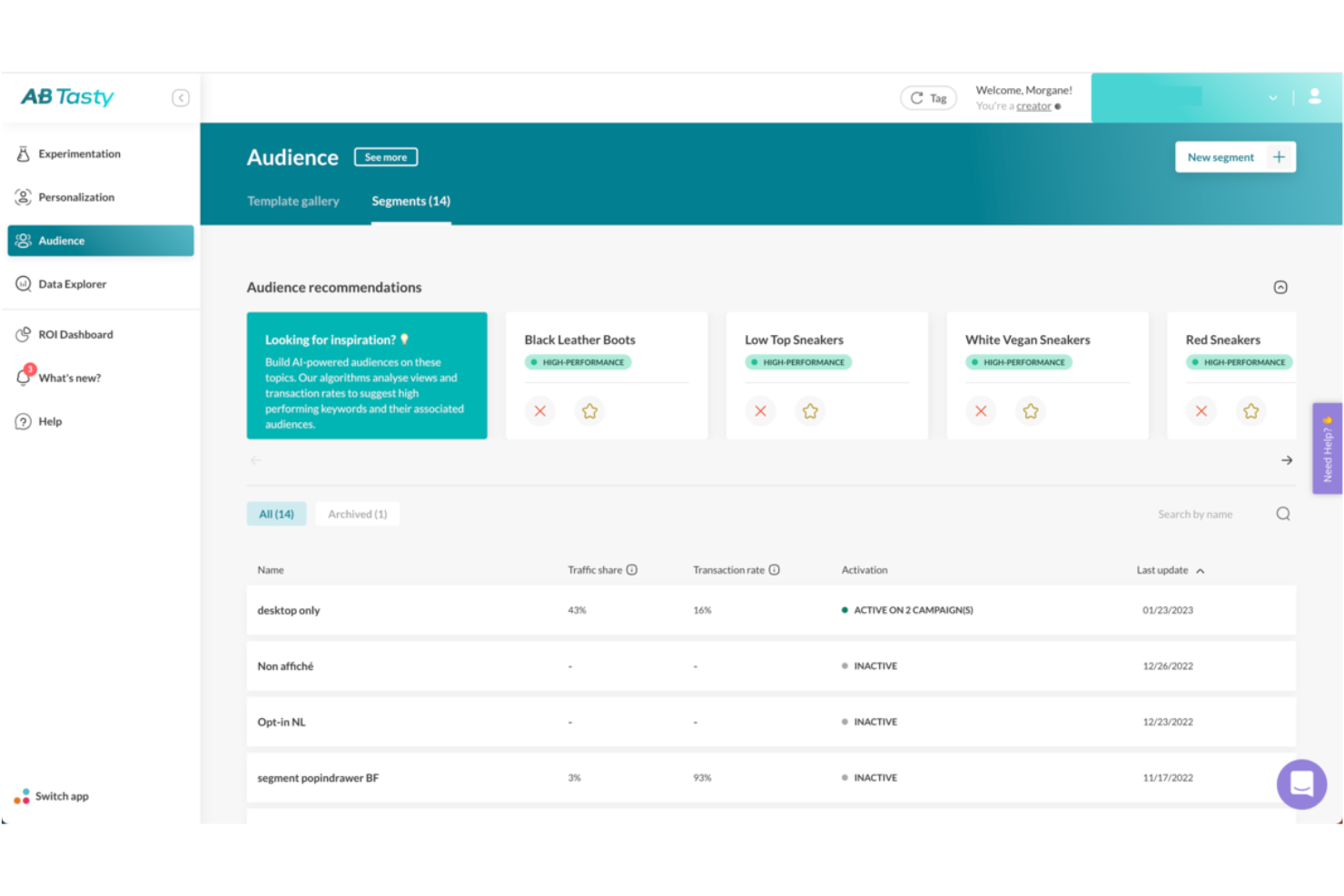
If you need to launch and iterate on digital campaigns quickly, AB Tasty is designed for fast-moving marketing and product teams. The platform appeals to ecommerce, retail, and digital-first businesses that want to test ideas and personalize experiences without heavy development cycles. AB Tasty stands out from Optimizely by making rapid campaign deployment and agile experimentation its core strengths.
Why AB Tasty Is a Good Optimizely Alternative
For teams that need to move fast, AB Tasty is built to help you launch campaigns and experiments with minimal delay. I picked AB Tasty because its visual editor and ready-to-use widget library let you create and deploy tests without waiting on development resources. The platform also offers real-time reporting, so you can monitor results and iterate on campaigns as they run. If rapid campaign deployment is your top priority, AB Tasty offers a more agile approach than Optimizely.
AB Tasty Key Features
Some other features in AB Tasty help teams manage and optimize digital experiences at scale:
- Audience segmentation: Target experiments and campaigns to specific user groups based on behavior, demographics, or custom criteria.
- Server-side testing: Run experiments on the backend for more advanced use cases and performance-sensitive scenarios.
- Personalization engine: Deliver tailored content and experiences to different segments in real time.
- Feature flagging: Roll out new features to select audiences and control releases without code deployments.
AB Tasty Integrations
Integrations include Google Analytics, Adobe Analytics, Salesforce, HubSpot, Marketo, Optimizely, Segment, Tealium, and Shopify.
Pros and Cons
Pros:
- Good client support
- Strong ROI reporting
- Fast campaign launches
Cons:
- Can impact page speed
- Server-side costs extra

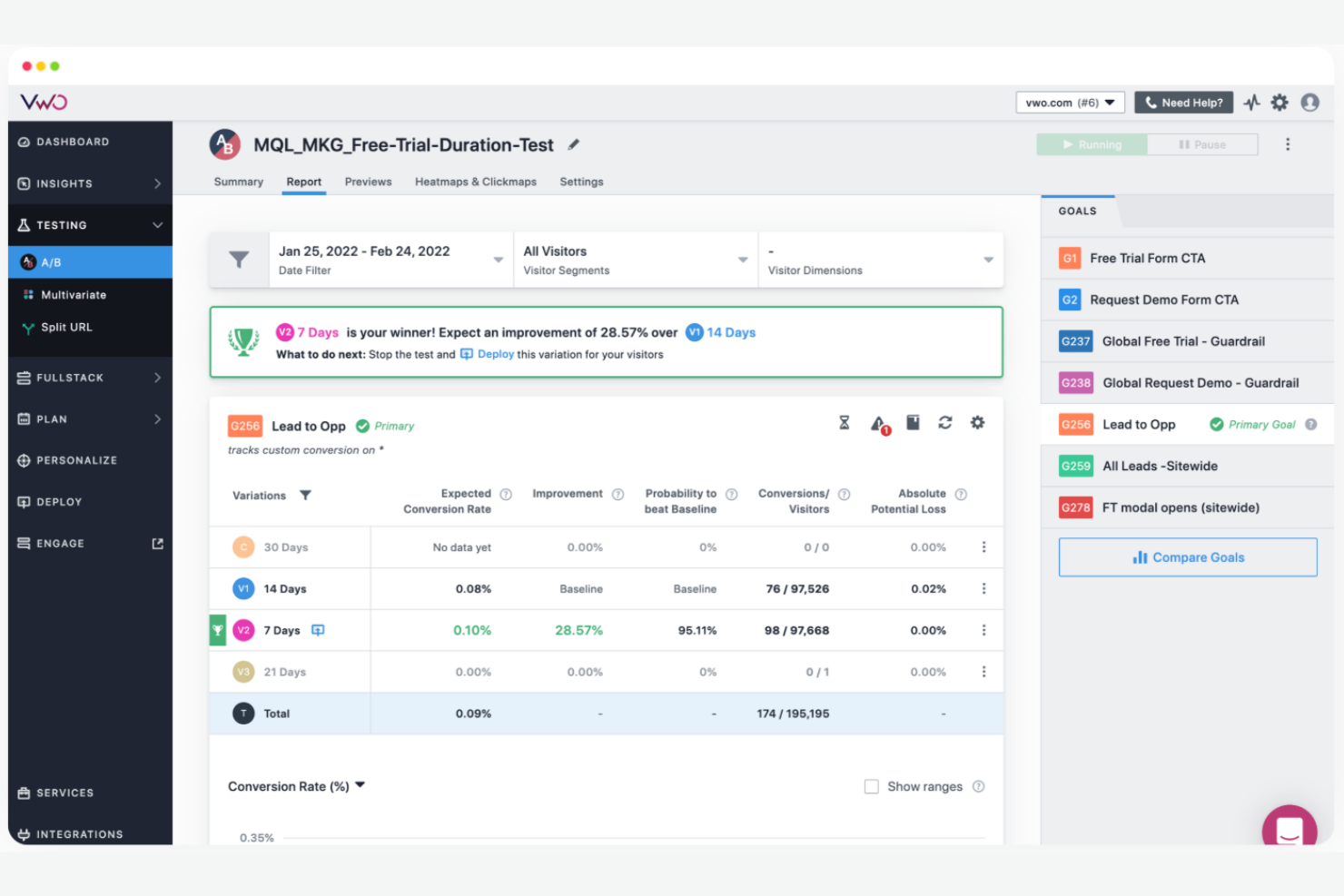
VWO is designed for teams that want a highly visual approach to A/B testing and experimentation. Its drag-and-drop editor and intuitive workflow make it a strong fit for marketers and product managers who need to launch tests without heavy developer involvement. If you’re looking for a platform that simplifies test creation and helps you quickly validate website changes, VWO stands out from more technical or code-heavy alternatives.
Why VWO Is a Good Optimizely Alternative
VWO stands out for its visual A/B testing workflows, making it a strong choice for teams that want to experiment without relying on developers. The platform’s visual editor lets you create and launch tests directly on your website, so you can quickly iterate on design and content changes. I appreciate how VWO’s workflow builder guides you through setting up experiments step by step, reducing the risk of errors. For customer experience teams focused on rapid testing and optimization, these features make VWO a practical alternative to Optimizely.
VWO Key Features
Some other features in VWO support a wide range of customer experience management needs:
- Heatmaps and session recordings: Visualize user behavior and see exactly how visitors interact with your site.
- Surveys and on-site feedback: Collect direct input from users to understand pain points and preferences.
- Personalization engine: Deliver targeted content and experiences to different audience segments.
- Advanced reporting and analytics: Access detailed experiment results and performance metrics to inform decision-making.
VWO Integrations
Integrations include Google Analytics, Mixpanel, HubSpot, Salesforce, and Segment.
Pros and Cons
Pros:
- Fast and easy deployment
- Great for marketing teams
- Built-in heatmaps tools
Cons:
- Can slow down page speed
- Fewer enterprise options

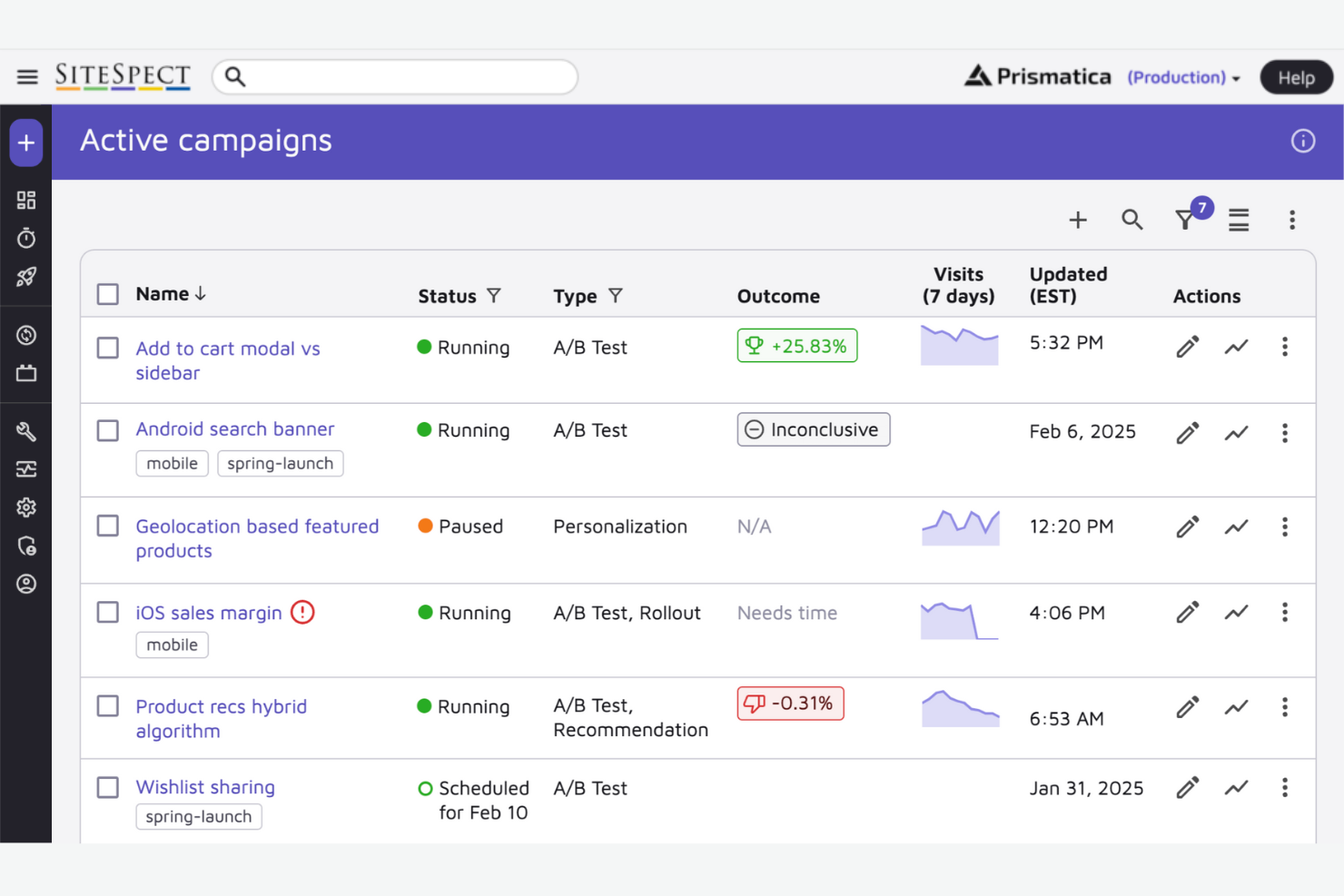
SiteSpect is built for teams that need advanced server-side testing and optimization without relying on client-side scripts. This platform appeals to organizations with strict performance, security, or compliance requirements, such as those in finance, healthcare, or ecommerce. SiteSpect stands out by letting you run experiments and personalize experiences directly at the server level, so you can test changes that impact backend logic, APIs, and even mobile apps.
Why SiteSpect Is a Good Optimizely Alternative
Unlike most experimentation platforms, SiteSpect delivers true server-side testing that doesn’t rely on JavaScript tags or client-side code. This approach lets you test and personalize everything from backend logic to API responses, which I find especially valuable for teams with strict security or performance requirements. SiteSpect also supports testing on mobile apps and across complex digital architectures, making it a strong fit for organizations with advanced technical needs. If you’re looking for an Optimizely alternative that gives you more control over how and where experiments run, SiteSpect is worth considering.
SiteSpect Key Features
Some other features in SiteSpect help teams manage experiments and optimize digital experiences across channels:
- Visual Editor: Make changes to web pages and set up tests without writing code.
- Real-time analytics dashboard: Monitor experiment performance and user behavior as data comes in.
- Audience segmentation tools: Target experiments to specific user groups based on detailed criteria.
- Bot and fraud detection: Identify and filter out non-human traffic from experiment results.
SiteSpect Integrations
Integrations include Google Analytics, Adobe Analytics, Contentsquare, Mixpanel, and Tealium.
Pros and Cons
Pros:
- High security standards
- Great for complex SPAs
- No JavaScript tags needed
Cons:
- UI is not intuitive
- Requires IT involvement

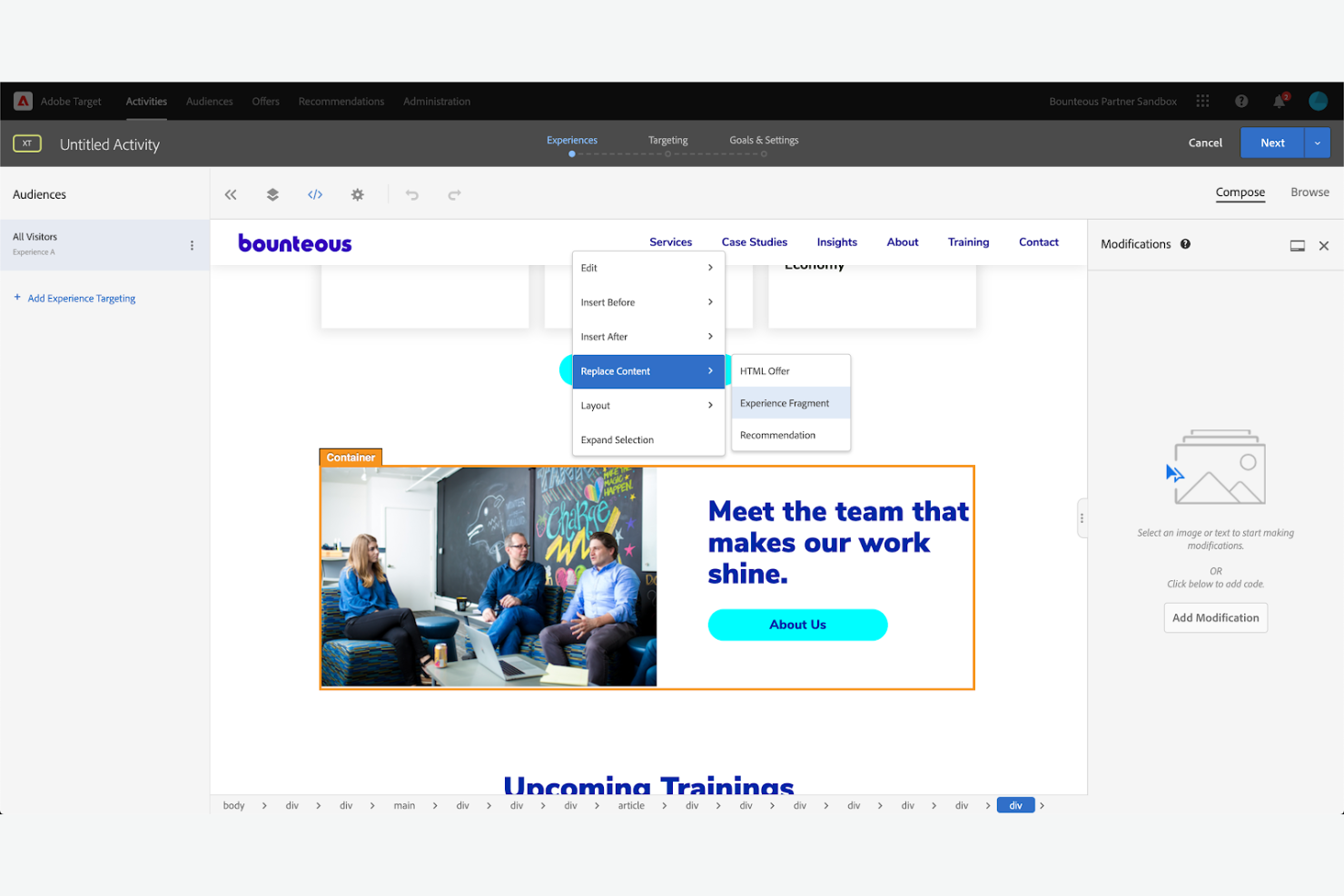
Large organizations looking for advanced personalization and testing capabilities often turn to Adobe Target. This platform is designed for enterprise teams that need to deliver tailored experiences at scale across web, mobile, and other digital channels. Adobe Target stands out for its AI-driven automation and deep integration with the Adobe Experience Cloud, helping you orchestrate complex, data-driven customer journeys that go beyond basic experimentation.
Why Adobe Target Is a Good Optimizely Alternative
If your team needs enterprise-level personalization, Adobe Target offers capabilities that go far beyond basic A/B testing. The platform uses AI-powered automation to deliver individualized content and experiences across multiple channels, which is something I find especially valuable for large organizations. You can set up rules-based targeting, automated personalization, and multivariate testing to fine-tune every aspect of the customer journey. For businesses that want to orchestrate complex, data-driven personalization at scale, Adobe Target is a strong alternative to Optimizely.
Adobe Target Key Features
Some other features in Adobe Target help teams manage and optimize digital experiences at scale:
- Visual Experience Composer: Build and modify tests using a drag-and-drop interface without coding.
- Automated traffic allocation: Dynamically shifts traffic to higher-performing experiences during experiments.
- Mobile app optimization: Run tests and personalize content within native mobile applications.
- Integration with Adobe Analytics: Sync experiment data directly with Adobe Analytics for deeper insights.
Adobe Target Integrations
Integrations include Adobe Analytics, Adobe Experience Manager, Adobe Campaign, Google Analytics, and Salesforce.
Pros and Cons
Pros:
- Omnichannel capabilities
- Complex audience logic
- AI-powered automation
Cons:
- Slow implementation time
- Heavy developer reliance

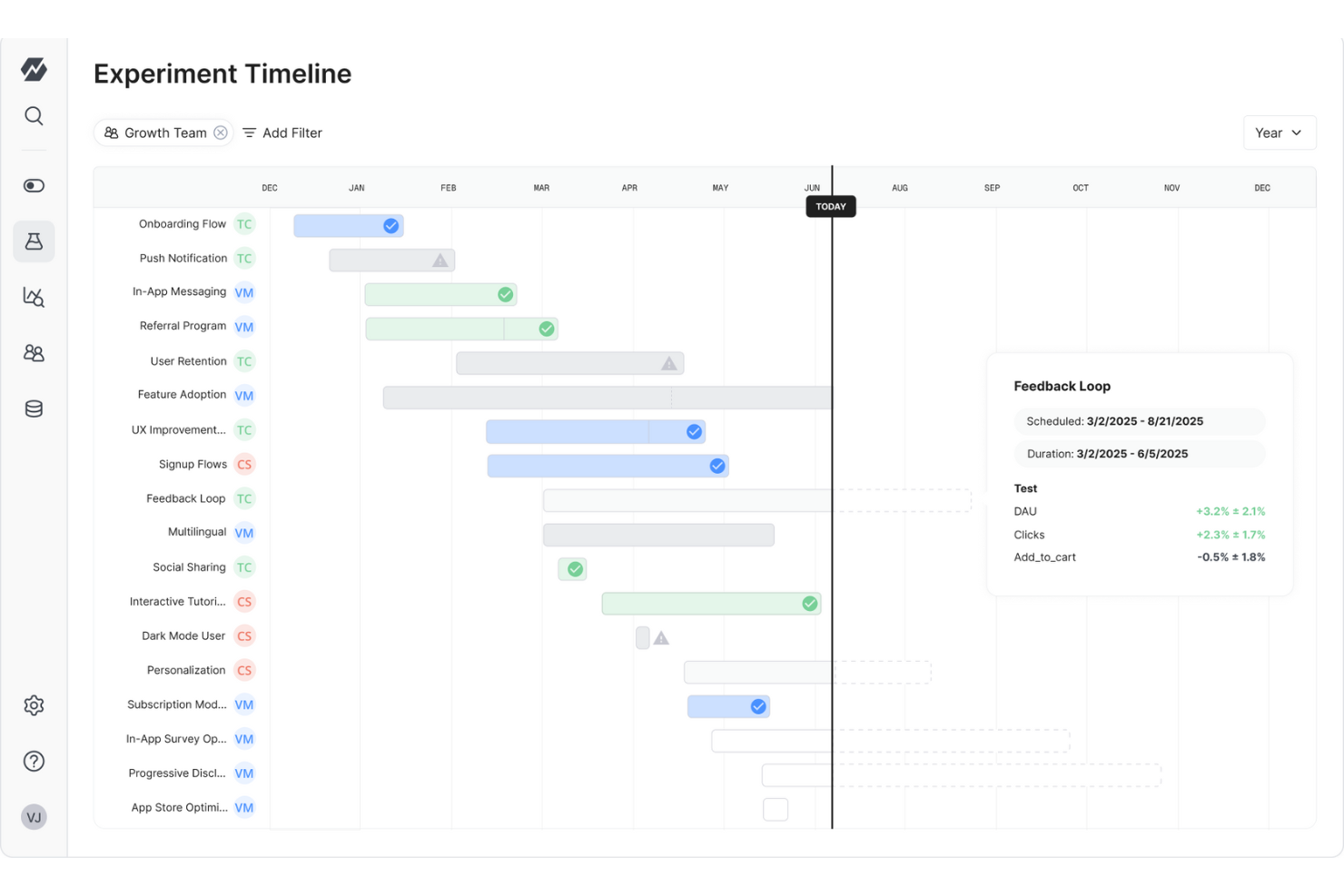
Product teams looking to connect experimentation with deep analytics may find Statsig especially useful. This platform is built for data-driven organizations that want to tie feature releases and A/B tests directly to product metrics. Unlike Optimizely, Statsig stands out for its native product analytics integration, making it easier to measure real business impact from every experiment.
Why Statsig Is a Good Optimizely Alternative
If you want to connect experimentation directly to product analytics, Statsig is built for that purpose. I picked Statsig because it lets you run A/B tests and feature rollouts while automatically tracking the impact on key product metrics. The platform’s unified dashboard brings together experiment results and analytics, so you can see how changes affect user behavior and business outcomes in real time. For teams focused on data-driven customer experience management, Statsig offers a level of analytics integration that Optimizely doesn’t match.
Statsig Key Features
Some other features in Statsig help teams manage experiments and product changes at scale:
- Feature gating: Control access to new features for specific user segments or cohorts.
- Holdout groups: Set aside a portion of users to measure the true impact of experiments over time.
- Automated diagnostics: Surface experiment issues and anomalies automatically for faster troubleshooting.
- SDK support for multiple platforms: Integrate Statsig with web, mobile, and backend applications using dedicated SDKs.
Statsig Integrations
Integrations include Vercel, Amplitude, Bugsnag, Census, Datadog, Discord, Fastly, Fivetran, GitHub, and Google Analytics.
Pros and Cons
Pros:
- Fast developer workflow
- Very generous free tier
- Deep product analytics
Cons:
- Setup can be complex
- Not for non-technical

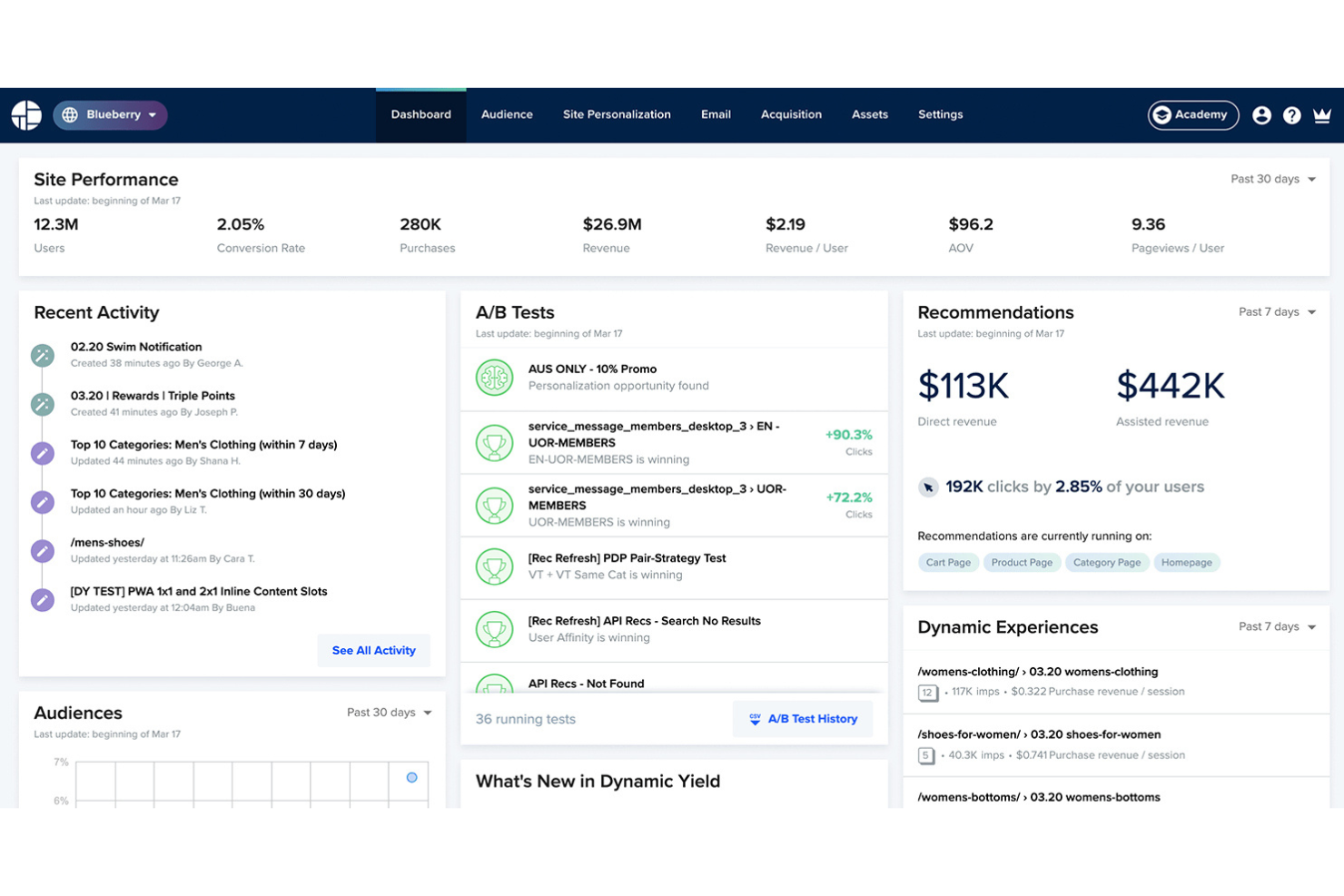
For brands aiming to deliver consistent experiences across web, mobile, and in-store channels, Dynamic Yield offers a unified approach. This platform is designed for retail, hospitality, and enterprise teams that need to personalize content, recommendations, and messaging at every customer touchpoint. Unlike Optimizely, Dynamic Yield specializes in orchestrating omnichannel journeys, helping you manage personalization and experimentation from a single hub.
Why Dynamic Yield Is a Good Optimizely Alternative
Dynamic Yield stands out for teams that need to manage customer experiences across multiple channels, not just digital. I picked Dynamic Yield because it lets you personalize content, offers, and recommendations on web, mobile apps, email, and even in-store devices from one platform. Its Experience OS centralizes audience segmentation and journey orchestration, so you can deliver consistent messaging wherever your customers interact. For businesses focused on true omnichannel experience management, Dynamic Yield offers a level of cross-channel control that Optimizely doesn’t provide.
Dynamic Yield Key Features
Some other features in Dynamic Yield help teams deliver and optimize personalized experiences at scale:
- A/B and multivariate testing: Run controlled experiments to compare different content, layouts, or offers.
- Predictive targeting: Use machine learning to automatically match experiences to the right audience segments.
- Dynamic content blocks: Swap out banners, product recommendations, or messaging in real time based on user data.
- API access for custom integrations: Connect Dynamic Yield with your existing tech stack for advanced use cases.
Dynamic Yield Integrations
Integrations include Salesforce Commerce Cloud, Adobe Analytics, Google Analytics, Tealium, Segment, Shopify, Oracle Responsys, Braze, Mailchimp, and Optimizely.
Pros and Cons
Pros:
- Great for retail brands
- Advanced AI algorithms
- Omnichannel delivery
Cons:
- Heavy IT resources needed
- Overkill for simple tests
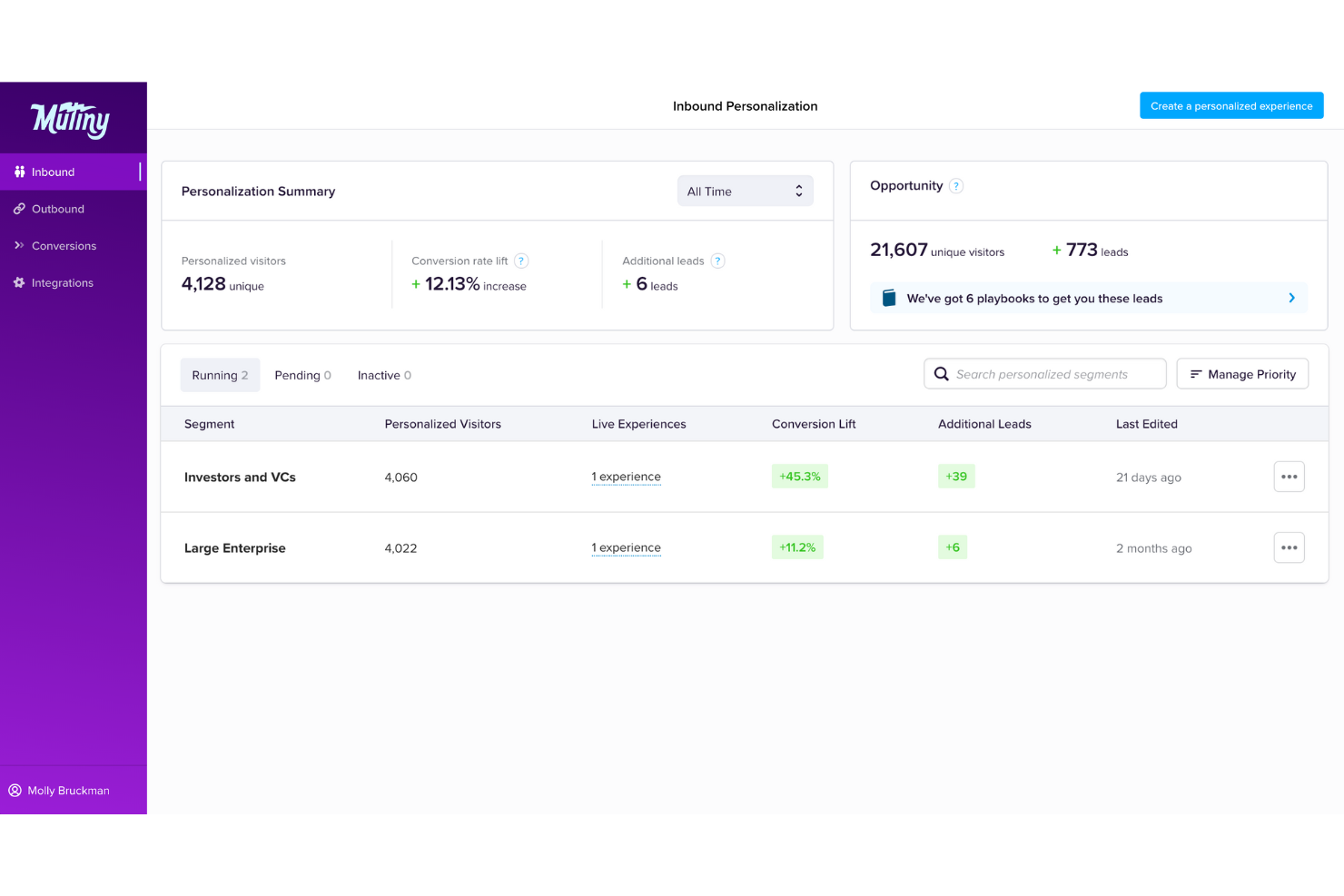
Mutiny is designed for B2B marketing and growth teams that want to personalize website experiences for different accounts and segments. The platform stands out by letting you create targeted content and messaging for specific industries, company sizes, or even individual companies—without relying on developer resources. If you need to drive conversions from high-value B2B prospects by tailoring your site in real time, Mutiny offers capabilities that go beyond what most customer experience management platforms provide.
Why Mutiny Is a Good Optimizely Alternative
For B2B teams focused on website personalization, Mutiny offers capabilities that go deeper than most experimentation platforms. I picked Mutiny because it lets you dynamically change headlines, CTAs, and content for specific accounts, industries, or segments—without needing developer support. The platform’s AI-driven recommendations help you identify high-impact personalization opportunities and quickly launch targeted experiences. If you want to move beyond basic A/B testing and deliver tailored messaging to your most valuable B2B visitors, Mutiny is a strong Optimizely alternative.
Mutiny Key Features
Some other features in Mutiny help teams manage and optimize website personalization at scale:
- Segment builder: Create and manage detailed audience segments using firmographic and behavioral data.
- Performance analytics dashboard: Track the impact of personalization campaigns with real-time metrics.
- Playbooks library: Access pre-built personalization strategies and templates for common B2B use cases.
- Integrations with CRM and marketing tools: Connect Mutiny to platforms like Salesforce and Marketo for unified data and targeting.
Mutiny Integrations
Integrations include HubSpot, Salesforce, Marketo, Pardot, Drift, Slack, Google Analytics, Segment, Intercom, and Outreach.
Pros and Cons
Pros:
- No-code personalization
- Fast visual editor
- AI copy suggestions
Cons:
- B2B focus limits B2C use
- Lacks server-side tools

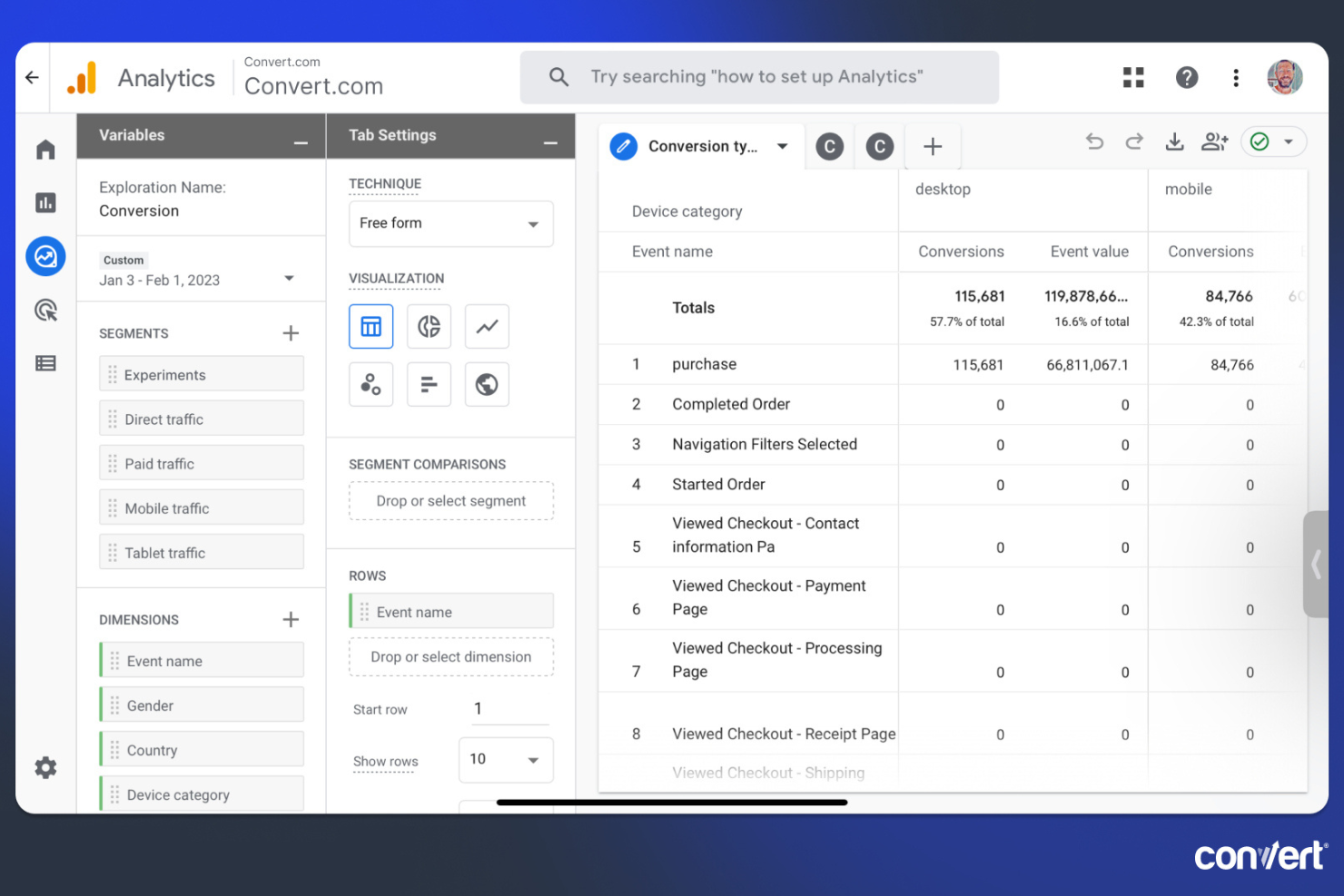
If your team needs to run experiments while meeting strict privacy and compliance standards, Convert is worth a close look. This platform is built for organizations that prioritize GDPR, CCPA, and other privacy frameworks in their customer experience workflows. Convert helps you test and optimize digital experiences without compromising user data or regulatory requirements, setting it apart from many other experimentation tools.
Why Convert Is a Good Optimizely Alternative
For teams that need to prioritize privacy in their experimentation, Convert offers a unique approach compared to Optimizely. The platform is built with privacy-first features like cookieless tracking and full compliance with GDPR, CCPA, and other major data regulations. I appreciate that Convert allows you to run A/B and multivariate tests without storing personal data, which is essential for organizations in regulated industries. If your customer experience strategy depends on strict data protection, Convert’s privacy-focused experimentation tools make it a strong alternative.
Convert Key Features
Some other features in Convert help teams manage and optimize digital experiences at scale:
- Advanced audience targeting: Segment visitors based on behavior, location, device, and custom attributes.
- Multipage and split URL testing: Run experiments across multiple pages or entirely different URLs to compare user journeys.
- Dynamic content replacement: Swap out text, images, or elements on your site without developer involvement.
- Detailed reporting dashboard: Access real-time experiment data and export results for further analysis.
Convert Integrations
Integrations include Google Analytics, Hotjar, Segment, Mixpanel, and HubSpot.
Pros and Cons
Pros:
- Integrates with anything
- Exceptional support team
- Very cost-effective
Cons:
- No native mobile app SDK
- Weaker personalization


If your team needs to build highly tailored decisioning logic into your customer experience, Conductrics is worth a close look. This platform is designed for organizations with complex personalization, experimentation, or targeting requirements that go beyond standard A/B testing. Unlike Optimizely, Conductrics lets you create and deploy custom algorithms for real-time decisioning across web, mobile, and call center channels.
Why Conductrics Is a Good Optimizely Alternative
For teams that need more than standard A/B testing, Conductrics offers a unique approach with its custom decisioning algorithms. I picked Conductrics because it lets you design and deploy your own logic for targeting, personalization, and experimentation, which is ideal for organizations with complex requirements. The platform supports real-time decisioning across digital and offline channels, including web, mobile, and call centers. If you want to move beyond pre-built testing templates and control every aspect of your customer experience logic, Conductrics gives you that flexibility.
Conductrics Key Features
Some other features in Conductrics help teams manage and optimize customer journeys with more control:
- Multi-armed bandit testing: Automatically allocates traffic to the best-performing experiences in real time.
- RESTful API access: Integrate decisioning and experimentation into any digital channel or application.
- User-level reporting: Drill down into individual user interactions and outcomes for detailed analysis.
- Role-based access controls: Set permissions for different team members to manage experiments and data securely.
Conductrics Integrations
Integrations include Google Analytics, Adobe Analytics, Segment, Tealium, and mParticle.
Pros and Cons
Pros:
- Very flexible deployment
- Excellent privacy focus
- Strong API capabilities
Cons:
- Visual editor is basic
- Small community support


Optimizely Alternatives Selection Criteria
When selecting the best Optimizely alternatives to include in this list, I considered common buyer needs and pain points related to customer experience management platform products, like supporting advanced experimentation and enabling real-time personalization. I also used the following framework to keep my evaluation structured and fair:
Core Functionality (25% of total score)
To be considered for inclusion in this list, each solution had to fulfill these common use cases:
- Run A/B and multivariate tests
- Personalize content and experiences
- Collect and analyze user behavior data
- Segment audiences for targeted messaging
- Generate actionable reports and insights
Additional Standout Features (25% of total score)
To help further narrow down the competition, I also looked for unique features, such as:
- AI-driven decisioning or recommendations
- Omnichannel experimentation capabilities
- Advanced targeting and segmentation options
- Real-time data processing and feedback
- Customizable workflow automation
Usability (10% of total score)
To get a sense of the usability of each system, I considered the following:
- Intuitive navigation and interface design
- Clear labeling and accessible menus
- Minimal clicks to complete core tasks
- Responsive design for all device types
- Customizable dashboards and views
Onboarding (10% of total score)
To evaluate the onboarding experience for each platform, I considered the following:
- Availability of step-by-step product tours
- Access to training videos and documentation
- Pre-built templates for common use cases
- Interactive onboarding checklists or guides
- Live chat or chatbot support during setup
Customer Support (10% of total score)
To assess each software provider’s customer support services, I considered the following:
- Multiple support channels including chat and email
- Fast response times to inquiries
- Access to a searchable knowledge base
- Availability of onboarding or implementation specialists
- Community forums or user groups
Value For Money (10% of total score)
To evaluate the value for money of each platform, I considered the following:
- Transparent and flexible pricing options
- Features included at each pricing tier
- No hidden fees or surprise charges
- Discounts for annual or volume commitments
- Free trial or demo availability
Customer Reviews (10% of total score)
To get a sense of overall customer satisfaction, I considered the following when reading customer reviews:
- Consistency of positive feedback across sources
- Specific mentions of feature strengths or gaps
- Reports of customer support experiences
- Feedback on ease of implementation
- Comments on ongoing product updates and improvements
Why Look For an Optimizely Alternative?
While Optimizely is a good choice of customer experience management platform, there are a number of reasons why some users seek out alternative solutions. You might be looking for an Optimizely alternative because…
- You need more advanced custom decisioning logic
- Your team requires native integrations not supported by Optimizely
- You want more transparent or flexible pricing options
- You need support for offline or call center channels
- Your organization has strict data residency requirements
- You prefer a platform with more granular user-level reporting
If any of these sound like you, you’ve come to the right place. My list contains several customer experience management platform options that are better suited for teams facing these challenges with Optimizely and looking for alternative solutions.
Optimizely Key Features
Here are some of the key features of Optimizely, to help you contrast and compare what alternative solutions offer:
- A/B and multivariate testing
- Visual editor for web experiments
- Advanced audience targeting and segmentation
- Real-time analytics and reporting
- Personalization engine for tailored experiences
- Experiment scheduling and management
- Feature flagging and rollout controls
- Omnichannel experimentation support
- Integration with analytics and marketing tools
- Role-based access controls for team management