

10 Best Hosted VoIP in 2026

Best Hosted VoIP Shortlist


Hosted VoIP is a cloud-based voice over internet protocol phone system that lets your team make and receive calls over the internet, with everything managed by an offsite provider. If you’re searching for the best hosted VoIP solutions, you’re likely trying to improve call quality, boost reliability, or support a growing hybrid workforce—without the cost or hassle of managing phone hardware yourself.
This guide highlights the best hosted VoIP service options for 2026, so you can confidently choose a service that fits your business needs, unlocks productivity, and ensures every conversation goes smoothly.
Why Trust Our Software Recommendations
Our team has been testing and reviewing software since 2012. As CX leaders ourselves, we know how difficult—and important—it is to choose the right software.
For this guide, we evaluated tools using hands-on testing and independent research, scoring tools using our selection criteria.
Our reviews reflect our human editorial judgment, not a sales pitch.
Hosted VoIP Comparison Table
This comparison table summarizes pricing details for my top hosted VoIP selections:
| Tool | Best For | Trial Info | Price | ||
|---|---|---|---|---|---|
| 1 | Best for AI-powered speech analytics | 14-day free trial | From $25/user/month (billed annually) | Website | |
| 2 | Best for AI-driven routing for enterprises | Free demo available | From $75/user/month (billed annually) | Website | |
| 3 | Best for advanced workforce management tools | Free demo available | From $110/user/month | Website | |
| 4 | Best for small business simplicity | Not available | From $19.95/user/month | Website | |
| 5 | Best for in-app features for hybrid teams | Free demo available | Pricing upon request | Website | |
| 6 | Best for AI-driven team and customer analytics | Free demo available | From $15/user/month (billed annually) | Website | |
| 7 | Best for built-in AI for call transcription | 14-day free trial + free demo available | Pricing upon request | Website | |
| 8 | Best for omnichannel contact capabilities | Free demo available | From $119/seat/month | Website | |
| 9 | Best for global business communication needs | 14-day free trial | From £18/user/month | Website | |
| 10 | Best for API options for voice integrations | Free plan available | Pricing upon request | Website |
Best Hosted VoIP Reviews
Below are my detailed summaries of the best hosted VoIP that made it onto my shortlist. My reviews offer a detailed look at the features, best use cases, and integrations of each platform to help you find the best one for you.

Best for AI-powered speech analytics
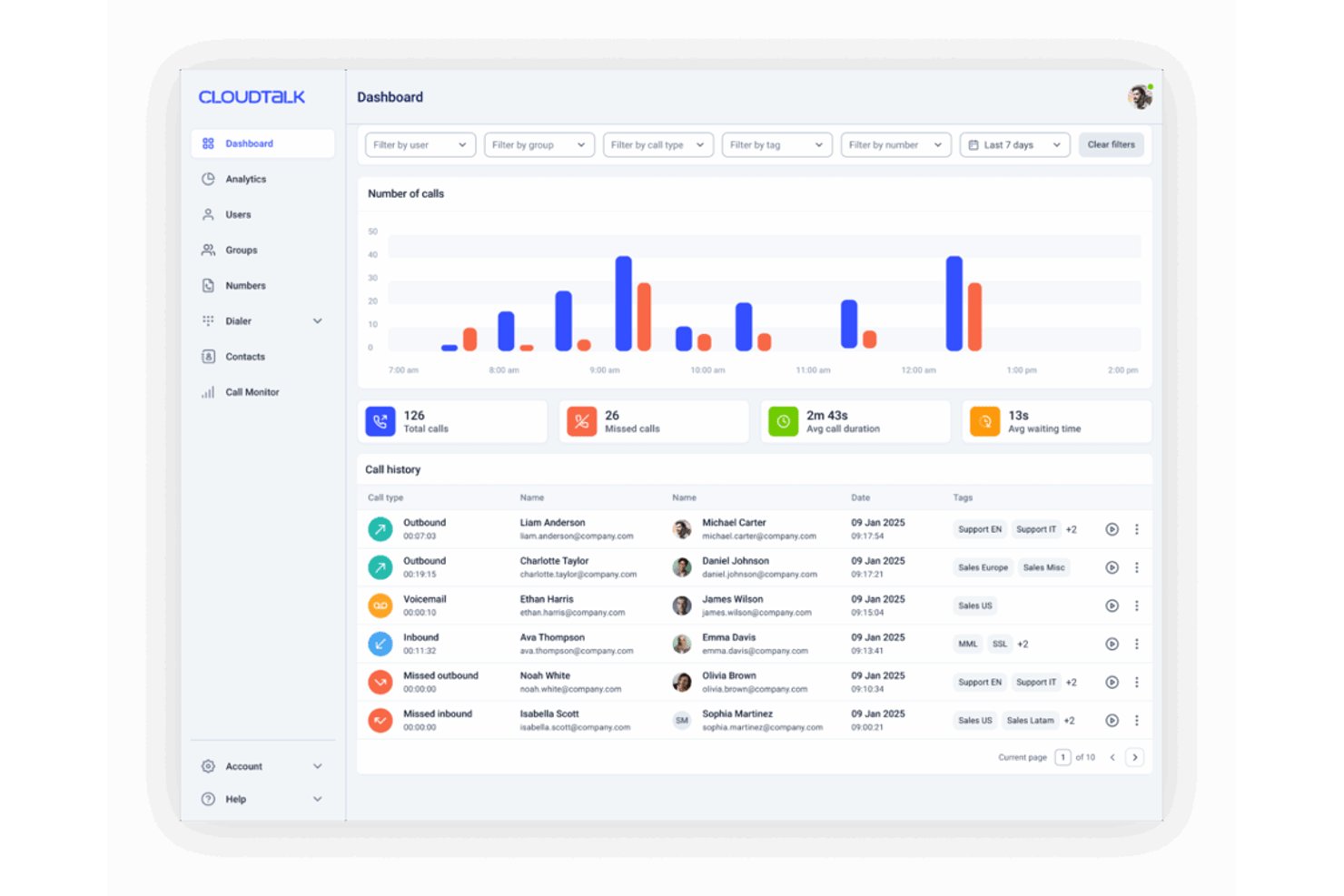
CloudTalk is a cloud-hosted VoIP platform built for sales and support teams, offering business calling, IVR routing, dialers, CRM integrations, and AI-powered conversation analytics across 160+ countries.
Who Is CloudTalk Best For?
CloudTalk is a strong fit for growing SMBs and mid-market teams that run outbound sales or inbound support operations across distributed or remote setups.
Why I Picked CloudTalk
CloudTalk earns its spot on my shortlist because of how its AI Conversation Intelligence layer turns every call into structured coaching data. I like that it automatically surfaces talk/listen ratios, customer sentiment scores, and call scoring without anyone needing to manually review recordings. In practice, that means my team can pinpoint exactly where reps are losing deals or missing customer cues, and act on it the same day.
CloudTalk Key Features
- Visual call flow designer: Build and customize multi-level IVR menus and advanced routing with a drag-and-drop editor.
- Global number provisioning: Instantly purchase, port, and manage local, toll-free, and international numbers from over 160 countries.
- Native workflow integrations: Connect directly with Salesforce, HubSpot, Zendesk, and other CX platforms for real-time data sync and click-to-call.
- Real-time wallboards: Monitor call volume, agent status, and queue performance live with customizable dashboards.
CloudTalk Integrations
CloudTalk offers 95+ native integrations, including Salesforce, HubSpot, Zendesk, Pipedrive, Freshdesk, Intercom, Microsoft Teams, Zoho CRM, Google Workspace, Slack, and provides an open API for custom integrations.
Pros and Cons
Pros:
- Power dialer built in for outbound teams
- Global number coverage across 160+ countries
- AI call scoring surfaces coaching gaps automatically
Cons:
- Occasional call quality issues on international routes
- Reporting customization is limited on lower tiers

Best for AI-driven routing for enterprises
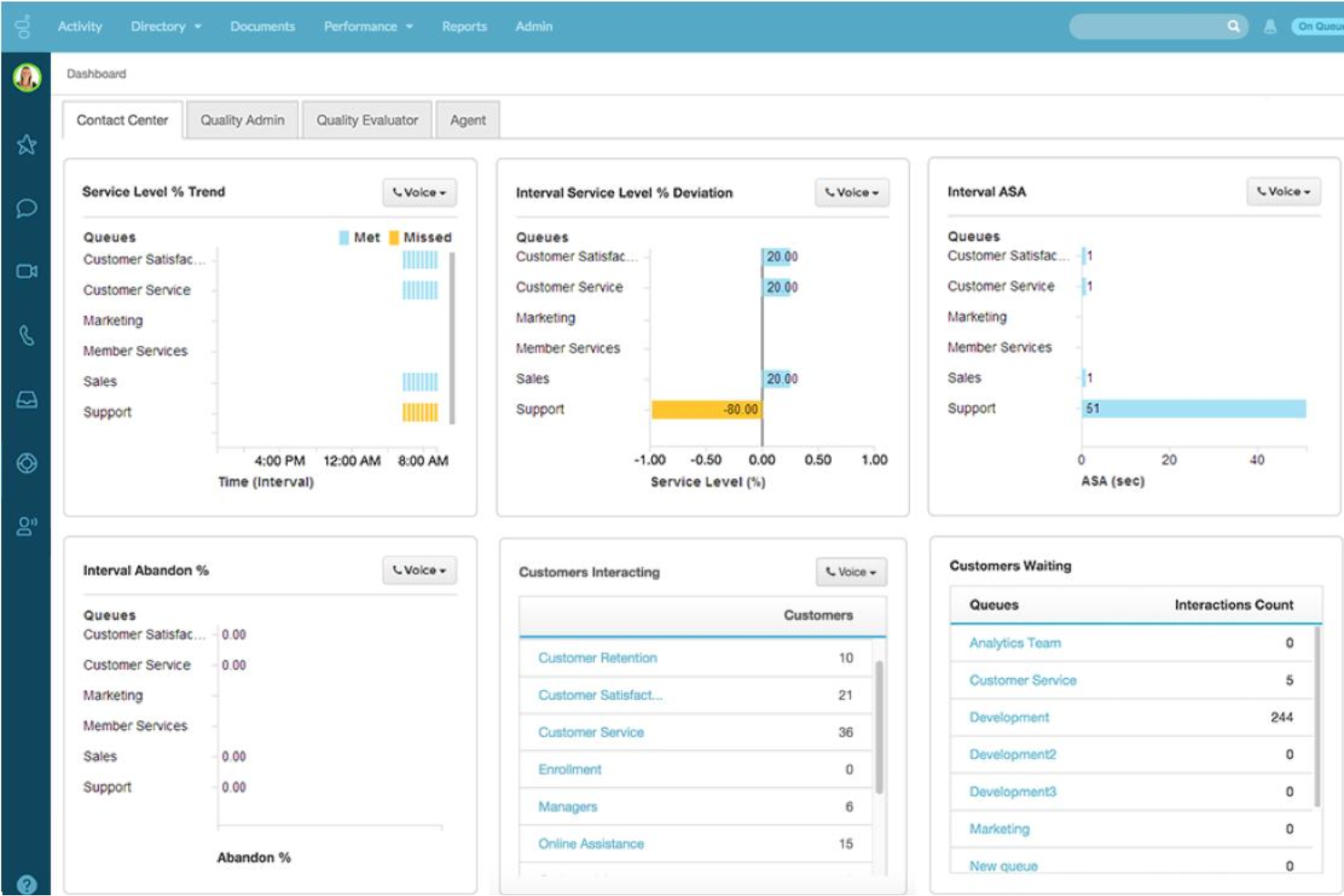
Built for enterprise contact centers, Genesys Cloud CX is a hosted VoIP and omnichannel platform that covers inbound and outbound voice, digital channels, workforce management, and real-time analytics.
Who Is Genesys Cloud CX Best For?
Genesys Cloud CX is a highly cost-effective option well suited to contact center operations teams in regulated industries like financial services and healthcare that need granular control over call routing and compliance.
Why I Picked Genesys Cloud CX
Genesys Cloud CX earns its spot on my shortlist because its AI routing goes beyond agent skills matching. It factors in real-time performance data and predicted customer outcomes to make each individual routing decision. I also like Agent Assist, which surfaces relevant knowledge articles to agents mid-call, cutting handle time without putting customers on hold to search for answers manually.
Genesys Cloud CX Key Features
- Architect flow designer: Build and edit IVR call flows using a visual drag-and-drop interface without writing code.
- Workforce management: Create agent schedules, run forecasts, and manage shift adherence directly in the platform.
- Speech and text analytics: Automatically transcribe voice calls and flag interactions based on keywords or sentiment.
- Callback scheduling: Let callers request a scheduled callback instead of waiting in the queue.
Genesys Cloud CX Integrations
Genesys Cloud CX offers over 600+ integrations, including Salesforce, ServiceNow, Microsoft Dynamics, Power BI, Zoho CRM, Microsoft Teams, Zoom, Okta, and more. The platform is API-first, with over 3,000 public APIs available for custom integrations.
Pros and Cons
Pros:
- Native AWS ecosystem compatibility built in
- API-first architecture enables deep customization
- Flexible skill-based and queue-based routing
Cons:
- The email channel lacks on-premises-level flexibility
- Dashboard and reporting customization is limited

Best for advanced workforce management tools
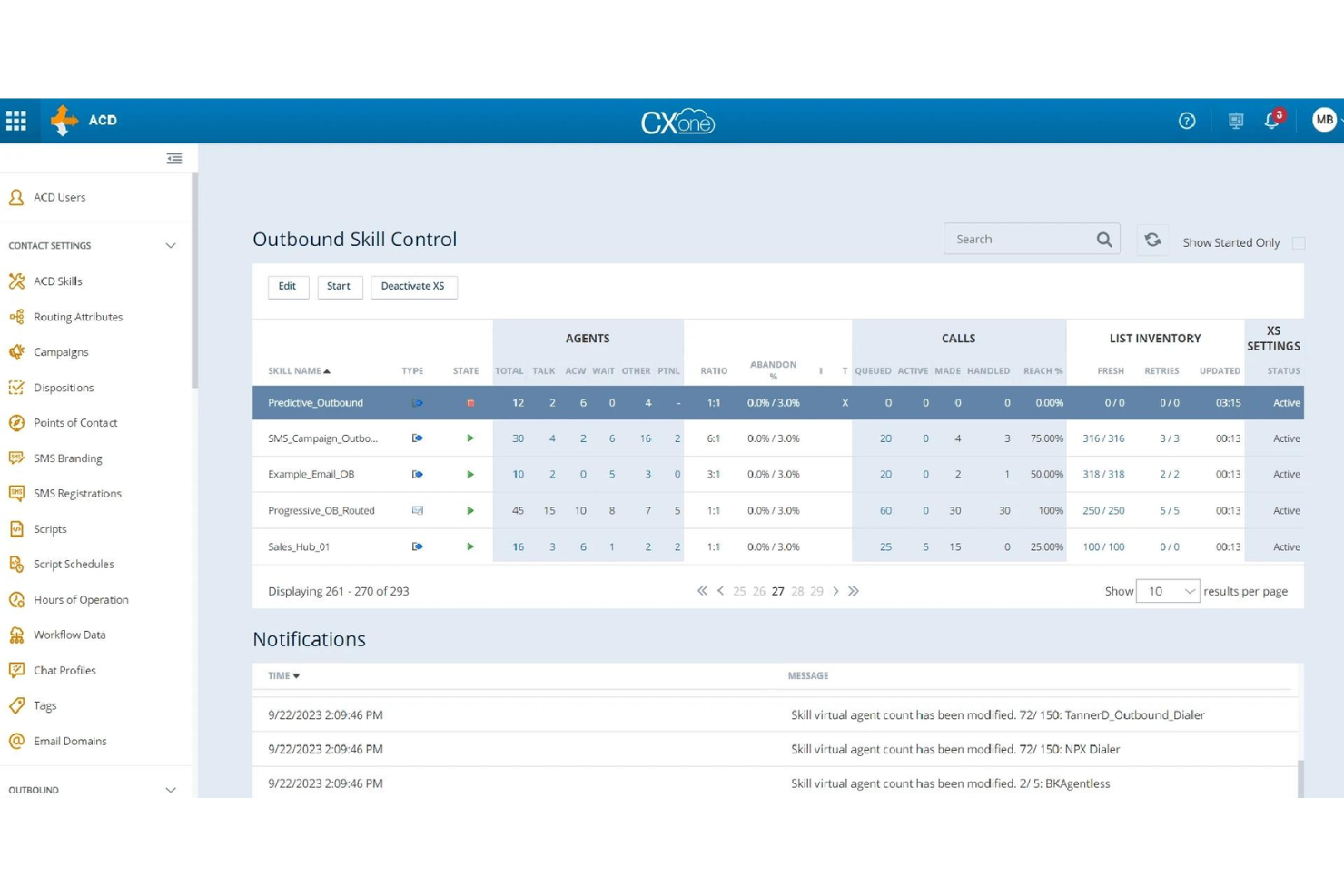
NiCE CXone is a cloud-based contact center platform that combines hosted voice with omnichannel routing, AI-powered virtual agents, workforce management, and interaction analytics.
Who Is NiCE CXone Best For?
NiCE CXone is a strong fit for mid-to-large enterprise contact centers that need to upgrade their legacy PBX system to manage high agent headcounts across multiple channels and shifts.
Why I Picked NiCE CXone
I picked NiCE CXone as one of the best because its workforce management suite goes well beyond basic scheduling. I especially like the intraday management tools, which let me adjust agent schedules in real time based on live call volume. The automated forecasting engine pulls from historical interaction data to build shift plans across channels. Real-time adherence monitoring flags when agents deviate from their scheduled activity, so supervisors can act immediately.
NiCE CXone Key Features
- Omnichannel ACD routing: Automatically routes voice, chat, email, and digital interactions to the right agent based on skills, availability, and customer context.
- AI noise cancellation: Filters background noise from both agent and customer audio in real time during live calls.
- Interaction analytics: Transcribes and analyzes recorded calls to surface trends, sentiment, and compliance flags across your contact center.
- Native IVR and virtual agent: Lets you build self-service call flows and deploy AI-driven virtual agents to handle routine inquiries before escalating to live agents.
NiCE CXone Integrations
NiCE CXone offers 170+ pre-integrated apps, including Salesforce, and UCaaS integrations with Microsoft, RingCentral, Zoom, LogMeIn, and Unify. Many APIs and SDKs are available for custom integrations.
Pros and Cons
Pros:
- Real-time supervisor dashboards and queue visibility
- Supports voice across 150+ countries
- Built-in workforce scheduling and shift management
Cons:
- IVR scripting interface is Windows-only
- Audio quality issues like crackling sound have been reported

Best for small business simplicity
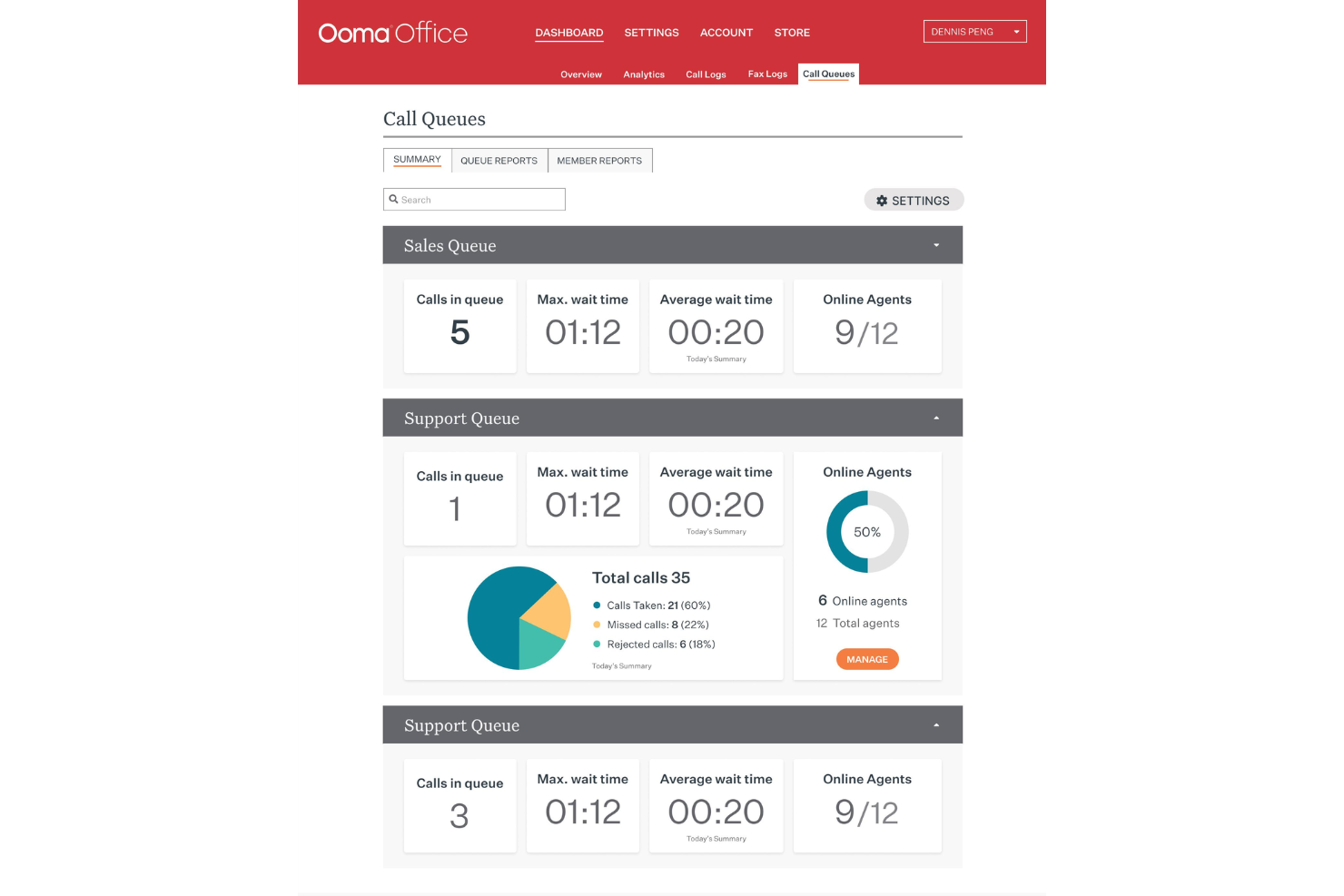
Built for small teams, Ooma Office is a cloud-based business phone system with calling, SMS, a virtual receptionist, video conferencing, and a mobile app that keeps your business number active on any device.
Who Is Ooma Office Best For?
Ooma Office is a natural fit for early-stage and growing small businesses that need a professional phone presence without the overhead of a complex enterprise system.
Why I Picked Ooma Office
Ooma Office earns its spot on my shortlist because the admin portal puts full call management in the hands of whoever runs the business, no IT background required. I configure business hours, set up extensions, and manage call routing entirely from a browser. I also appreciate that multi-party conference calling and music on hold are included at the entry tier, with no plan upgrades needed to access them.
Ooma Office Key Features
- Mobile app: Make and receive calls from your business number on iOS or Android, keeping your personal number separate.
- Call recording: Record inbound and outbound calls on demand and store them for later review or training.
- Video conferencing: Host video meetings directly through the Ooma Office desktop app without a separate video tool.
- Virtual fax: Send and receive faxes digitally through your Ooma account, with no physical fax machine required.
Ooma Office Integrations
Ooma Office offers native integrations with Salesforce, HubSpot, Zoho CRM, Microsoft Dynamics 365, Pipedrive, Clio, Freshdesk, QuickBooks, and more. It also connects with Zapier.
Pros and Cons
Pros:
- 24/7 live phone and chat support included
- Enhanced spam call blocking built in
- Setup takes about fifteen minutes total
Cons:
- Limited IP phone brand compatibility
- All users must share the same plan

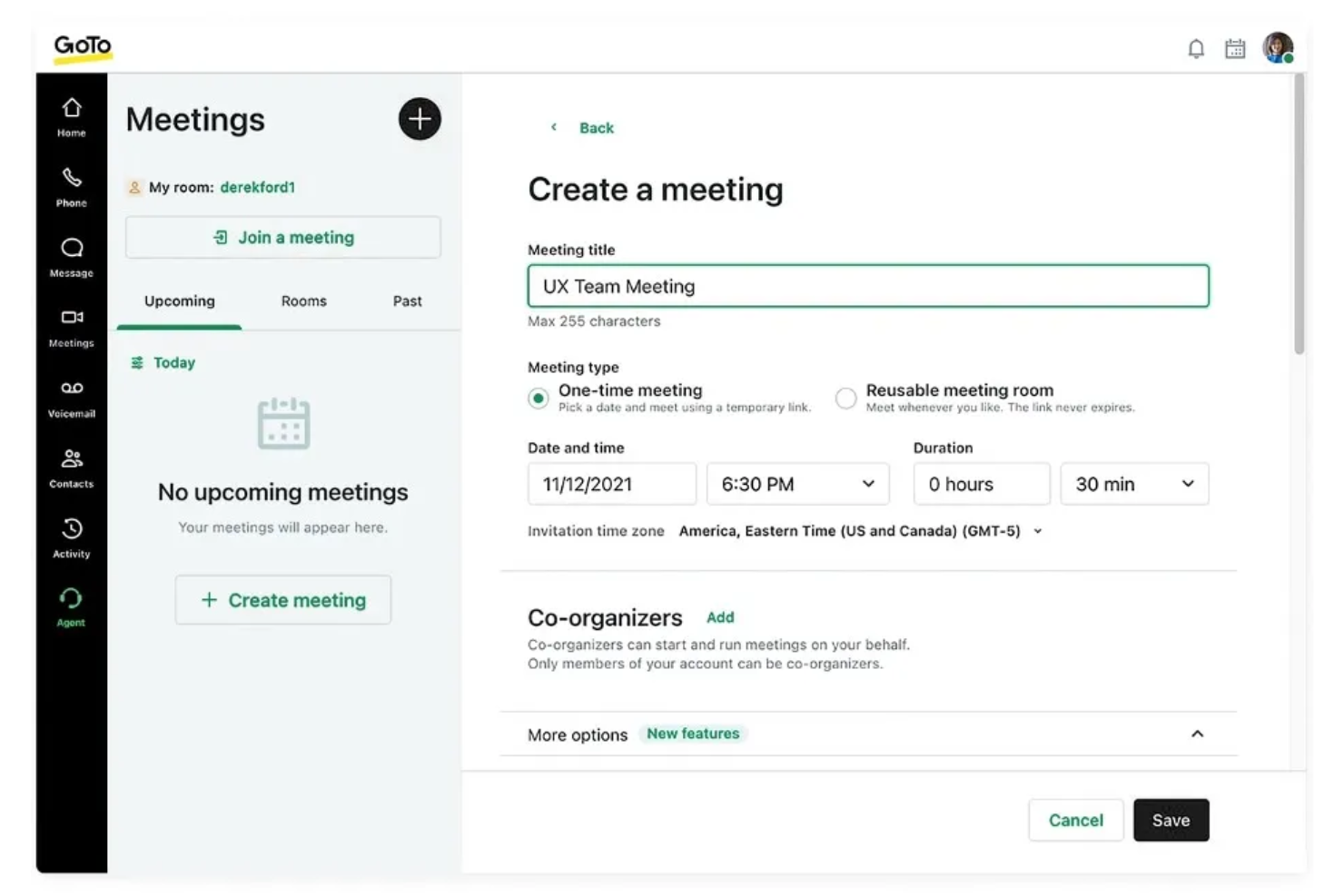
GoTo Connect is a cloud-based hosted VoIP platform that handles standard phone calls, video meetings, team messaging, and call management tools in a single app.
Who Is GoTo Connect Best For?
GoTo Connect is a strong fit for small to mid-sized businesses running distributed or hybrid teams that need calling, messaging, and meetings in one app.
Why I Picked GoTo Connect
I've included GoTo Connect in my top picks because it keeps calling, messaging, and meetings inside a single app your team can run on any device. What I find especially useful is the hot desking feature, which lets employees log in to any desk phone using their own credentials. Combined with one-click call-to-video meeting escalation, it means my team doesn't have to switch tools mid-conversation when a call needs to go visual.
GoTo Connect Key Features
- Voicemail transcription: Automatically converts voicemail messages to text so you can read them without listening.
- Call queues: Hold incoming calls in a queue and play position announcements while agents become available.
- Custom hold music: Upload your own audio files to play for callers placed on hold.
- Business SMS: Send and receive text messages from your business phone number directly in the app.
GoTo Connect Integrations
GoTo Connect offers native integrations through its marketplace, including tools like Salesforce, HubSpot, Microsoft Dynamics, Microsoft Teams, Freshdesk, Freshsales, Pipedrive, SugarCRM, and more. It also connects with Zapier and provides an API for custom integrations.
Pros and Cons
Pros:
- Centralized admin for multi-location management
- Built-in call flow editor with nodes
- AI receptionist handles calls automatically
Cons:
- Call group identification requires complex workarounds
- No Microsoft Teams presence syncing
Nextiva
Best for AI-driven team and customer analytics
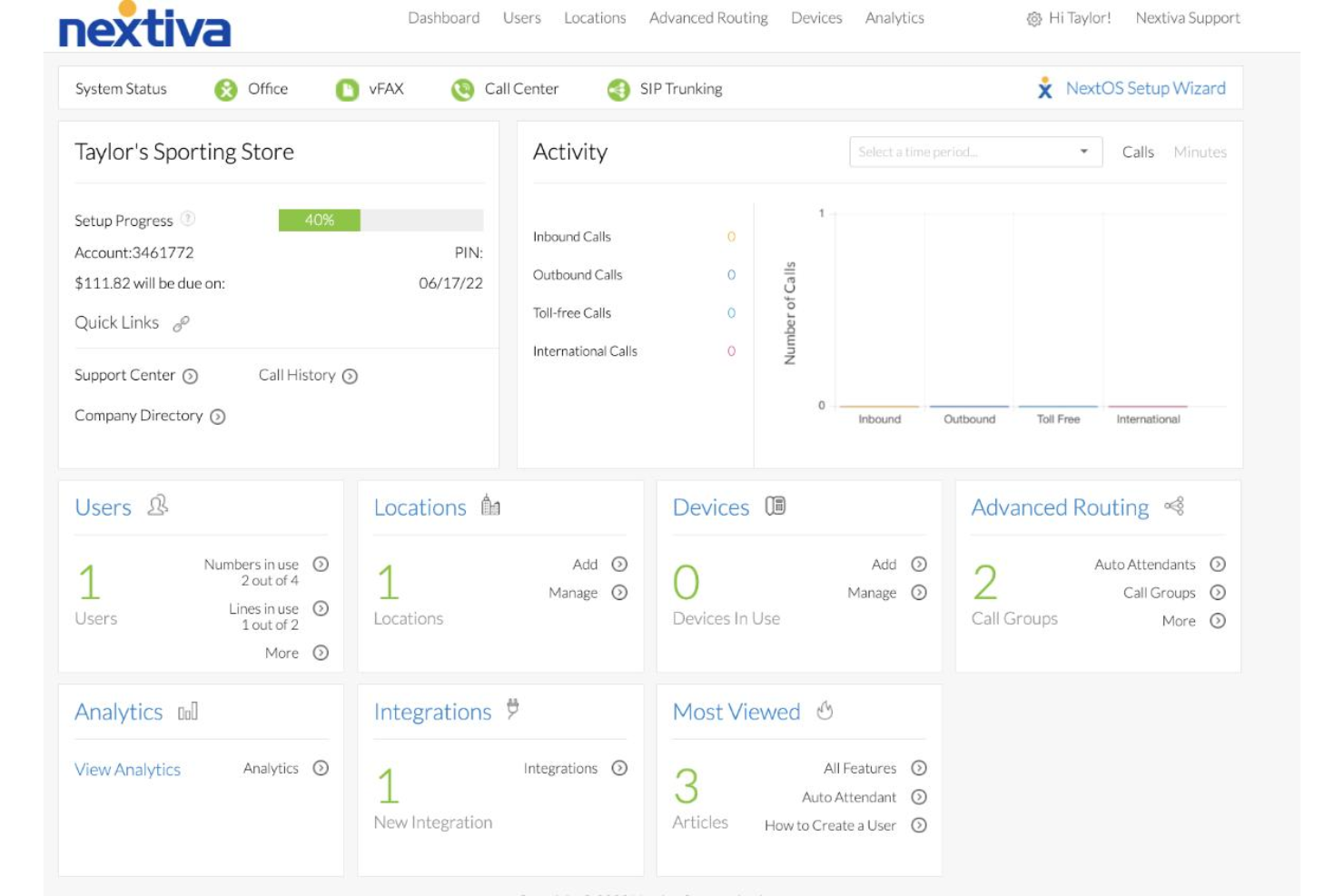
Nextiva is a cloud-hosted VoIP and unified communications platform that brings together voice calling, SMS, video meetings, team chat, contact center tools, and an AI agent (XBert) that handles calls, messages, and customer support interactions.
Who Is Nextiva Best For?
Nextiva is a strong fit for customer support teams that want AI-powered call handling, transcription, and sentiment tracking built into their phone system.
Why I Picked Nextiva
I picked Nextiva as one of the best because XBert brings real AI muscle to call handling, giving you live sentiment tracking and automatic summaries after every conversation. When a customer's tone shifts mid-call, XBert flags it in real time so agents can adjust before the situation escalates. I also love that every call gets transcribed, summarized, and tagged with action items automatically, so your team spends less time on notes and more time acting on what customers actually need.
Nextiva Key Features
- Multi-level IVR and auto attendant: Set up layered phone menus that route callers by number, agent skill, or time of day without any hardware required.
- Cloud call recording: Record and store calls in the cloud for up to six months with no additional hardware needed.
- CRM screen pops: Automatically surface customer account details and open tickets on inbound calls via integrations with tools like Salesforce, HubSpot, and Zendesk.
- Unified communications channels: Combine voice, business SMS, team chat, and HD video meetings in a single platform across desktop and mobile apps.
Nextiva Integrations
Nextiva offers native integrations with Salesforce, HubSpot, Zendesk, ServiceNow, Microsoft Teams, Zoho, and Pipedrive.
Pros and Cons
Pros:
- Porting reportedly takes only a few days
- Call logging saves reps significant time
- AI flags sentiment shifts during calls
Cons:
- Support responses can take days
- Desktop app sometimes requires restarts

Dialpad
Best for built-in AI for call transcription
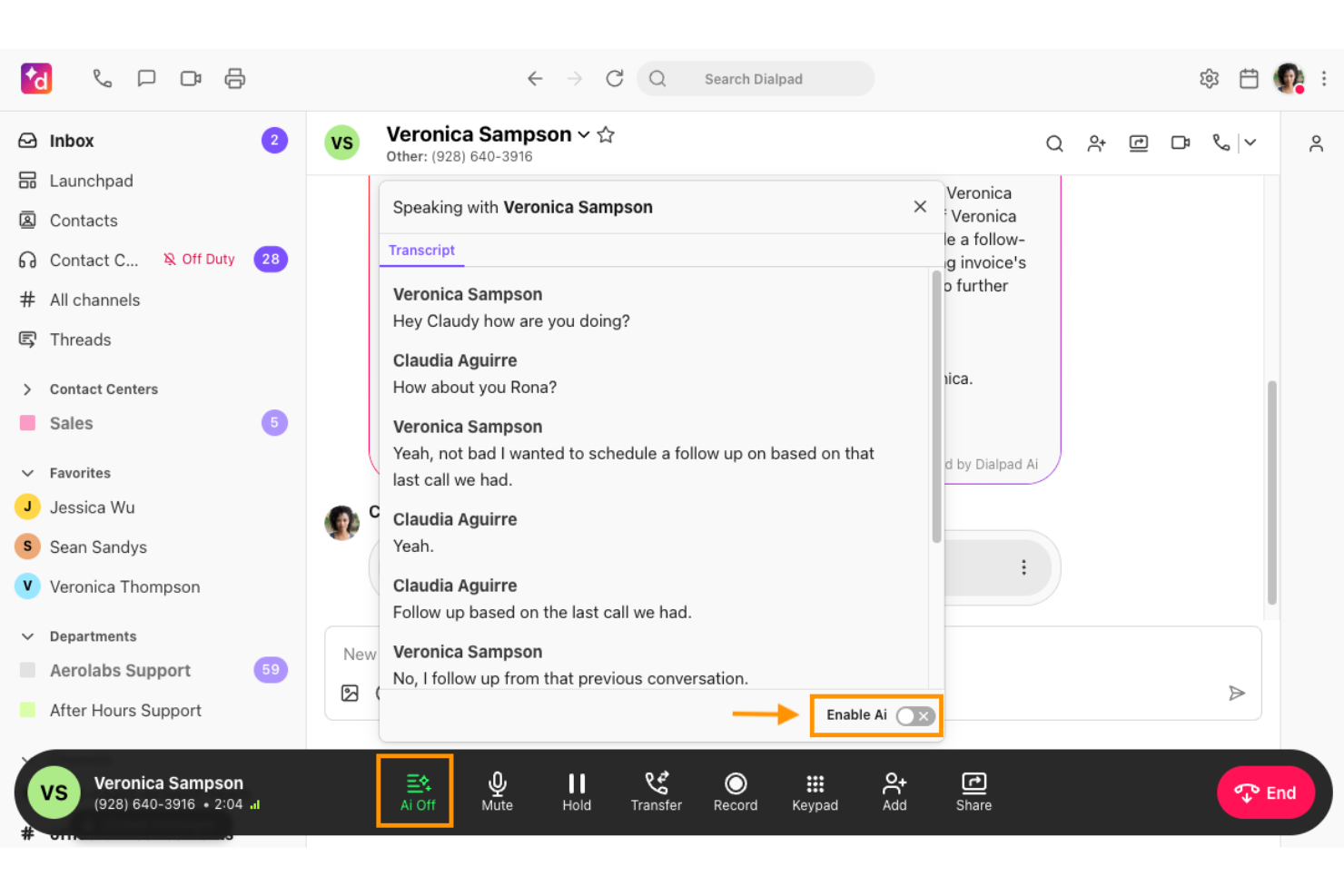
Dialpad is a strong fit for sales and support teams seeking productivity gains and cost savings through real-time call coaching, automatic transcription, and AI-generated call summaries built into their phone system.
Who Is Dialpad Best For?
Dialpad is a strong fit for sales and support teams that need real-time call coaching, automatic transcription, and AI-generated call summaries built into their phone system.
Why I Picked Dialpad
I picked Dialpad as one of the best because its built-in AI transcription runs on every call without add-ons or third-party tools. Every conversation is transcribed in real time, whether you are using a desktop or a mobile phone, and Dialpad's AI automatically surfaces action items and generates post-call summaries. I also rely on its live sentiment analysis, which flags call tone as it shifts so a supervisor can step in before a conversation goes sideways.
Dialpad Key Features
- IVR system: Build multi-level interactive voice response menus to route inbound callers to the right team or extension without agent involvement.
- Power dialer: Automatically dials down a contact list in sequence, so outbound sales reps move from call to call without manual redialing.
- Call pop: Display a caller's CRM record and history on screen the moment an inbound call arrives, before the agent picks up.
- Voicemail transcription: Convert voicemail messages to text so agents can read and prioritize callbacks without listening to each recording.
Dialpad Integrations
Dialpad integrates natively with tools like Microsoft 365, Salesforce, Zendesk, HubSpot, Zoho CRM, Clio, Copper, Google Workspace, and Microsoft Teams. It also connects with Zapier and has an open API for custom integrations.
Pros and Cons
Pros:
- AI coach suggests responses during live calls
- Small team setup takes under an hour
- Real-time transcription captures keywords and sentiment
Cons:
- SMS threads split across views on mobile
- Limited desk phone support favors softphones

Five9
Best for omnichannel contact capabilities
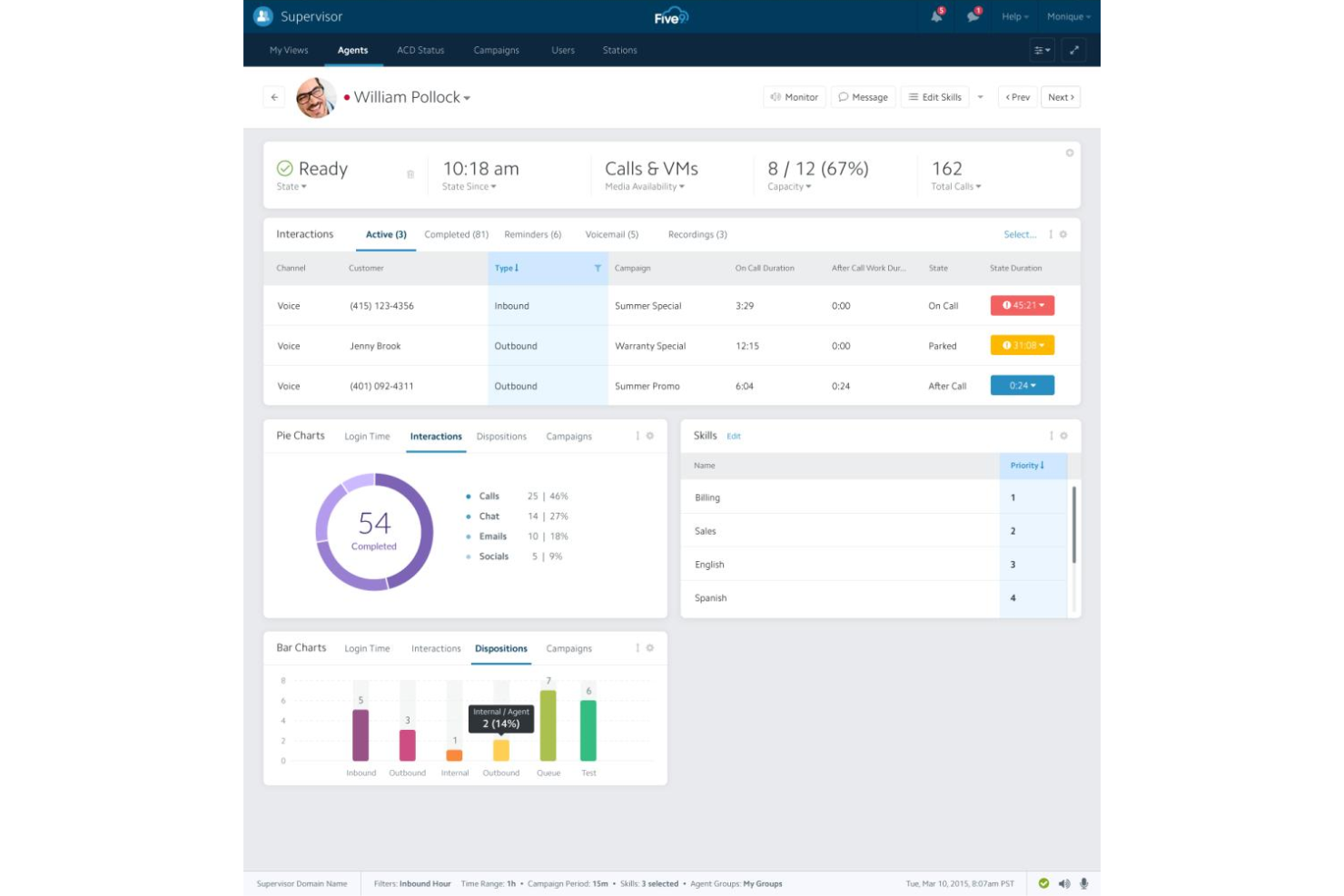
Five9 is a cloud-based call center and contact center platform built for enterprise teams, combining inbound and outbound voice calling, intelligent call routing, and global VoIP infrastructure across regional points of presence.
Who Is Five9 Best For?
Five9 fits contact center leaders in industries like financial services, healthcare, and retail who need seamless connectivity and carrier-grade voice reliability across multiple regions.
Why I Picked Five9
Five9 earns its spot on my shortlist because of how it handles omnichannel contact at scale. It supports voice, email, chat, SMS, social, video, and mobile within a single platform, so agents aren't toggling between disconnected tools to follow a customer's journey. I also like its intelligent routing, which matches customers to the most qualified agent regardless of channel. On the voice side, Five9 routes calls through the nearest regional point of presence, which keeps audio quality consistent whether your agents are in one country or spread across several.
Five9 Key Features
- Intelligent Virtual Agent (IVA): Automates routine customer inquiries using conversational AI, so live agents spend less time on repetitive interactions.
- Agent Assist: Surfaces real-time AI guidance and automated call summaries during live interactions, reducing after-call work for agents.
- Workforce Management (WFM): Forecasts staffing needs and schedules agents across your contact center to balance coverage with interaction volume.
- Interaction analytics: Analyzes recorded customer interactions across voice and digital channels to surface trends in customer behavior and agent performance.
Five9 Integrations
Five9 offers pre-built integrations with Salesforce, ServiceNow, Microsoft, Oracle, and Zendesk. Five9 also provides APIs and SDKs for custom integrations with internal systems like ERP, billing, and reporting platforms.
Pros and Cons
Pros:
- STIR/SHAKEN and TCPA compliance built in
- 99.999% uptime SLA for always-on availability
- Strong outbound dialing with high call volume
Cons:
- Minimum seat counts exclude smaller teams
- Weeks-long implementation with professional services required

Best for global business communication needs
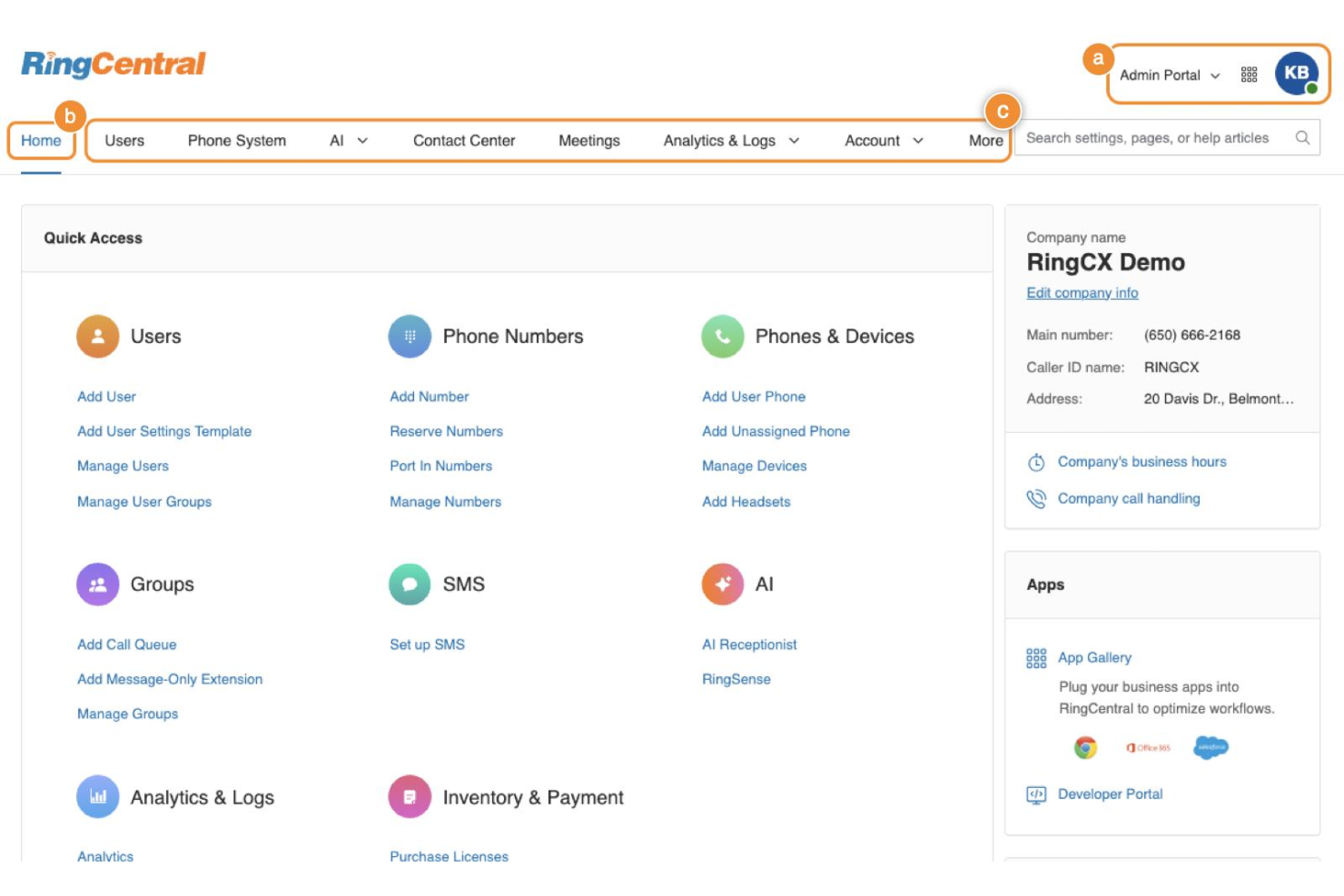
RingCentral is a cloud-based unified communications platform that brings together VoIP calling, SMS, team chat, video meetings, and AI-powered tools across a single system.
Who Is RingCentral Best For?
RingCentral is a strong fit for mid-to-large businesses that need a unified phone, messaging, and video system across multiple locations or countries.
Why I Picked RingCentral
RingCentral is one of my top picks because I love its Global Office feature, which handles long-distance communication smoothly by letting distributed teams share one phone system across 40+ countries with local number support. I've used the multi-site management tools to keep call routing, IVR menus, and user settings consistent across international offices from a single admin console. The built-in AI also handles real-time call transcription and post-call summaries, which I find genuinely useful when coordinating across time zones.
RingCentral Key Features
- Team messaging: Send direct messages and group chats within the same app as your voice calls.
- Video meetings: Host HD video conferences with screen sharing for up to 200 participants.
- Call recording: Record inbound and outbound calls automatically or on demand for quality review.
- Analytics dashboard: Track call volume, wait times, and agent performance across your entire phone system.
RingCentral Integrations
RingCentral offers over 500 integrations through its App Gallery, including Salesforce, Microsoft Teams, Google Workspace, Jira, HubSpot, Slack, Zendesk, Microsoft 365, Google Sheets, and Zoho CRM. It also provides APIs for voice, SMS, messaging, video, and analytics to support custom integrations, and it connects with Zapier.
Pros and Cons
Pros:
- Add numbers across locations and devices easily
- Multilingual IVR with automatic language support
- 99.995% uptime for call reliability
Cons:
- Complex call handling rules take time to configure
- CRM integrations locked behind higher-tier plans

Vonage
Best for API options for voice integrations
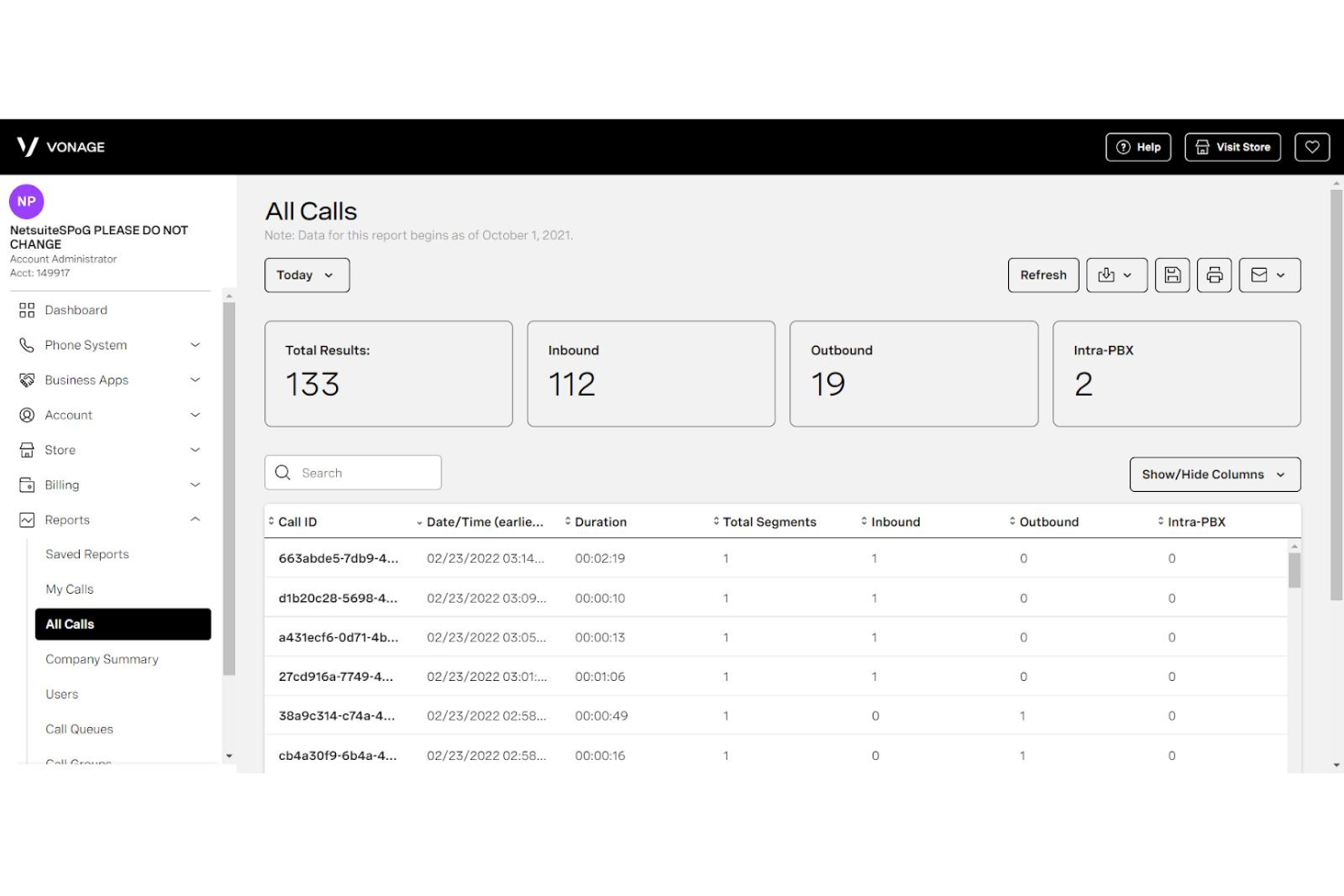
Built on a global carrier network, Vonage is a cloud communications platform with programmable voice APIs covering advanced features like WebRTC calling, PSTN routing, IVR, text-to-speech, and call recording.
Who Is Vonage Best For?
Vonage is best suited to SaaS companies and telecom-focused businesses that require reliable bandwidth to build voice features directly into their own customer-facing products.
Why I Picked Vonage
Vonage earns its spot on my shortlist because the breadth of its voice API options is genuinely unmatched for teams building custom VoIP-driven products. I rely on the number masking feature to anonymize caller identities in marketplace apps, and the branded calling display puts my company name and logo on the recipient's screen before they even pick up. Both features go well beyond what standard hosted VoIP packages offer out of the box.
Vonage Key Features
- WebRTC calling: Enables browser-based voice calls without requiring additional hardware or software downloads
- SIP trunking: Connects your existing PBX infrastructure to the Vonage network for inbound and outbound calling
- Call whisper: Plays a short audio message to the agent before the caller connects, providing context before pickup
- Voicemail detection: Automatically identifies when a call reaches an answering machine and triggers a separate response flow
Vonage Integrations
Vonage offers native integrations with Salesforce, Microsoft Teams, Microsoft Dynamics, Slack, Zendesk, and ServiceNow. Vonage's communications platform is fully programmable, with an API available for custom integrations across voice, video, messaging, and more.
Pros and Cons
Pros:
- Automatic speech recognition in 120 languages
- Phone numbers available in 80+ countries
- Developer APIs cover voice, SMS, and video
Cons:
- Android app has inconsistent call notifications
- Call recording sold as a paid add-on
Other Hosted VoIP
Here are some additional hosted VoIP options that didn’t make it onto my shortlist, but are still worth checking out:
- Zoom Phone
For integration with video meetings
- Aircall
For quick setup and onboarding
- 8x8
For distributed remote teams
- Ringover
For call collaboration tools
- 3CX
For on-premise/cloud deployment flexibility
- JustCall
For CRM integration options
- AVOXI
For global virtual number coverage
- Freshworks
For multi-level IVR for call routing
- Twilio Flex
For customizable programmability


How I Evaluate Hosted VoIP
I split my evaluation into two layers: the core capabilities a CX team needs to handle inbound call routing and recording, and the differentiators that separate one platform from another.
Core Functionality (Table Stakes For This List)
When I'm selecting tools for my list, I rank each one on a scale from 0 (does not offer the functionality) to 5 (excels in this area) for each core functionality listed below. Then, I calculate the tool's total score into a percentage. Each tool needs to achieve a minimum total score of 65% to be considered for inclusion.
- Cloud-hosted PBX: I look for providers that fully manage the phone system in the cloud, so your team avoids maintaining on-site servers or session border controllers.
- VoIP calling: Each tool should support voice across desktop apps, mobile devices, and desk phones with flexible domestic and international calling plans.
- Call routing and IVR: Configurable call flows, multi-level auto-attendants, and queue management matter here, especially for teams handling high inbound volumes.
- CRM and helpdesk integrations: I check for native connections to tools like Salesforce, Zendesk, or HubSpot that surface customer history during a live call.
- Call recording and analytics: Automatic recording paired with dashboards for metrics like wait times, handle times, and call volume helps supervisors run QA reviews.
- Number management: Provisioning local, toll-free, and international numbers plus porting existing ones should all be handled within the platform's admin portal.
Once I have a list of tools that meet this criteria, I consider what sets each platform apart.
Differentiating Factors (What Sets Vendors Apart)
Here's how I compare and contrast different vendors:
Standout Features
Real-time analytics dashboards are where I see the biggest gaps between vendors. I look for live views into queue depth, agent status, and call quality metrics like MOS and jitter so managers can catch service issues before they spiral. Mobile and desktop softphones also matter for distributed teams because agents can take business calls on personal devices without exposing personal numbers. AI call intelligence adds another layer by generating transcriptions and sentiment scores that surface coaching opportunities across hundreds of daily interactions.
Beyond Features
The integration ecosystem is a major differentiator. I evaluate whether a provider offers native connectors to tools like Salesforce, Zendesk, or Microsoft Teams alongside open APIs for custom workflows like click-to-dial from internal apps. Implementation support also varies widely. Some vendors include pre-deployment network assessments and dedicated porting assistance, while others leave setup largely self-service. Pricing structure deserves scrutiny too. I compare per-user versus per-line models and check for hidden fees around porting, hardware, or add-on features that inflate the total cost.
How to Choose Hosted VoIP
It’s easy to get bogged down in long feature lists and complex pricing structures. To help you stay focused as you work through your unique software selection process, here’s a checklist of factors to keep in mind:
| Factor | What to Consider |
| Scalability | Will the platform handle seasonal spikes, team growth, or new locations without costly upgrades or contract limits? |
| Integrations | Are there plug-and-play connectors for your CRM and helpdesk, or will you need custom development and maintenance? |
| Customizability | Can you easily adjust call flows, IVR menus, and analytics to match evolving workflows as your support needs grow? |
| Ease of use | Is everyday administration—like adding agents or changing routing—simple enough for non-technical staff to manage? |
| Implementation and onboarding | How much guidance does the vendor provide for setup, porting, and staff training? Are there migration tools or checklists? |
| Cost | What’s included in monthly fees? Watch for hidden charges like number porting, international calling, or support tiers. |
| Security safeguards | How do vendors handle encryption, admin controls, and secure access? Ask about SSO, MFA, and regulatory certifications. |
| Support availability | Does the vendor offer true 24/7 support by phone, chat, or email? Is urgent help accessible outside local business hours? |
What is Hosted VoIP?
Hosted VoIP is a cloud-based phone service where a provider manages all the network infrastructure, letting your team make business calls over the internet. You get access to features like call routing, IVR, call recording, and analytics without needing on-premise hardware. It’s a flexible solution that supports distributed teams, remote work, and integration with other business platforms.
Features of Hosted VoIP
When selecting hosted VoIP, keep an eye out for the following key features:
- Cloud-hosted PBX: A virtual phone system that replaces traditional on-premise hardware, allowing centralized management from a secure online portal.
- Mobile and desktop apps: Software for smartphones and computers lets your team place and receive business calls anywhere, keeping work and personal lines separate.
- Call routing and IVR: Automation that directs incoming calls to the right person or department using menus, schedules, or dial-by-name directories.
- Call recording: Records inbound and outbound calls for quality assurance, training, and regulatory compliance, with easy playback and storage options.
- Voicemail-to-email: Automatically delivers voicemail messages and transcriptions to your email inbox so no customer inquiry goes unnoticed.
- Real-time analytics: Dashboards show live and historical call data, including volumes, wait times, and agent performance to help identify patterns and address issues.
- Integrations with business tools: Connects directly to CRM or helpdesk systems, syncing call activity, contact histories, and notes to improve customer context.
- Secure communication: Provides data encryption, access controls, and compliance features to safeguard calls and sensitive information.
- Number management: Enables adding, porting, and assigning local, toll-free, or international numbers as business needs change.
- Automated call distribution: Balances inbound call load among available agents to prevent missed calls and long wait times, improving team productivity.
Benefits of Hosted VoIP
Implementing hosted VoIP provides several benefits for your team and your business. Here are a few you can look forward to:
- Flexible remote work support: Teams can make and receive business calls from any location using mobile and desktop apps.
- Reduced hardware costs: All infrastructure is managed in the cloud, eliminating the need for traditional analog configurations, on-site PBX equipment, and ongoing maintenance.
- Advanced call management: Features like call routing, IVR, and automated distribution ensure customers reach the right person quickly.
- Better insights and reporting: Real-time analytics and call recording provide data for continuous service improvement and compliance tracking.
- Easy integrations: Native connectors and APIs allow you to link your VoIP system with CRM, helpdesk, and other key business tools.
- Enhanced security and compliance: Built-in encryption and regulatory features help protect sensitive data and meet industry requirements.
- Scalable as you grow: Add or remove users, numbers, or features to match business needs without lengthy setup or big investments.
Costs and Pricing of Hosted VoIP
Selecting hosted VoIP requires an understanding of the various pricing models and plans available. Costs vary based on features, team size, add-ons, and more. The table below summarizes common plans, their average prices, and typical features included in hosted VoIP solutions:
Plan Comparison Table for Hosted VoIP
| Plan Type | Average Price | Common Features |
| Free Plan | $0 | Limited calling minutes, basic user access, voicemail, and user-to-user calling. |
| Personal Plan | $5-$15/user/month | Local number, mobile and desktop apps, voicemail-to-email, and call history. |
| Business Plan | $20-$35/user/month | Unlimited domestic calling, IVR menus, call recording, integrations, reporting, and number porting. |
| Enterprise Plan | $40-$65/user/month | Global numbers, advanced analytics, call monitoring, custom SLAs, APIs, and enhanced security controls. |
Hosted VoIP FAQs
Here are some answers to common questions about hosted VoIP:
Can hosted VoIP work with my existing business phone numbers?
Yes, most hosted VoIP providers support number porting so you can keep your current business numbers when switching. This process usually involves submitting a request to your new provider and may take several days to complete.
Is an internet connection required for hosted VoIP?
Yes, hosted VoIP requires a reliable internet connection since all calls are routed through the cloud instead of traditional phone lines. For the best quality, a steady broadband connection is recommended.
What security measures are in place for hosted VoIP calls?
Hosted VoIP platforms use encryption protocols like TLS and SRTP, along with admin controls such as multi-factor authentication, to protect communications and sensitive data from unauthorized access.
Can I manage users and settings without IT help?
Yes, most hosted VoIP systems offer intuitive admin dashboards, so you can add users, assign numbers, and adjust call routing without technical support. This self-service approach helps you adapt quickly as your team grows.
Does hosted VoIP support integration with CRM or helpdesk tools?
Yes, many solutions provide native integrations with software like Salesforce, HubSpot, and Zendesk, letting you sync call records, surface customer details, and automate repetitive tasks for your team.