

10 Best AI Call Agents Reviewed in 2026

10 Best AI Call Agent Shortlist


AI call agents help CX leaders manage high call volumes without burning out their teams. They automate routine conversations, offer multilingual support, and provide 24/7 coverage so your agents can focus on the interactions that really need a human touch. The right solution improves efficiency, reduces wait times, and ensures customers get consistent, high-quality service.
I’ve reviewed and tested leading AI call agent platforms based on functionality, usability, integrations, compliance, and overall value. In this guide, I’ll walk you through the top options, what makes each one stand out, and how to choose the best fit for your business needs.
Why Trust Our Software Recommendations
Our team has been testing and reviewing software since 2012. As CX leaders ourselves, we know how difficult—and important—it is to choose the right software.
For this guide, we evaluated tools using hands-on testing and independent research, scoring tools using our selection criteria.
Our reviews reflect our human editorial judgment, not a sales pitch.
AI Call Agent Comparison Table
This comparison table summarizes pricing details for my top AI call agent selections:
| Tool | Best For | Trial Info | Price | ||
|---|---|---|---|---|---|
| 1 | Best with scalable support team options | No free trial available | Pricing upon request | Website | |
| 2 | Best for agent performance coaching | Free demo available | Pricing upon request | Website | |
| 3 | Best for real-time collaboration | Free trial available | From $30/license/month (billed annually) | Website | |
| 4 | Best for Shopify e-commerce call handling | Free trial available | From $60/month | Website | |
| 5 | Best for lead-driven call handling | Free demo available | Pricing upon request | Website | |
| 6 | Best for personalized conversations | 14-day free trial | From $25/user/month (billed annually) | Website | |
| 7 | Best for communication task automation | Free demo available | From $25/user/month | Website | |
| 8 | Best for real-time analytics | 14-day free trial | From $49/month | Website | |
| 9 | Best for small business teams | 14-day free trial | From $29/user/month (billed annually) | Website | |
| 10 | Best for global reach | Free demo available | Pricing upon request | Website |

Best AI Call Agent Reviews
Below are my detailed summaries of the best AI call agents that made it onto my shortlist. My reviews offer a detailed look at the key features, pros & cons, integrations, and ideal use cases of each tool to help you find the best one for you.

Best with scalable support team options
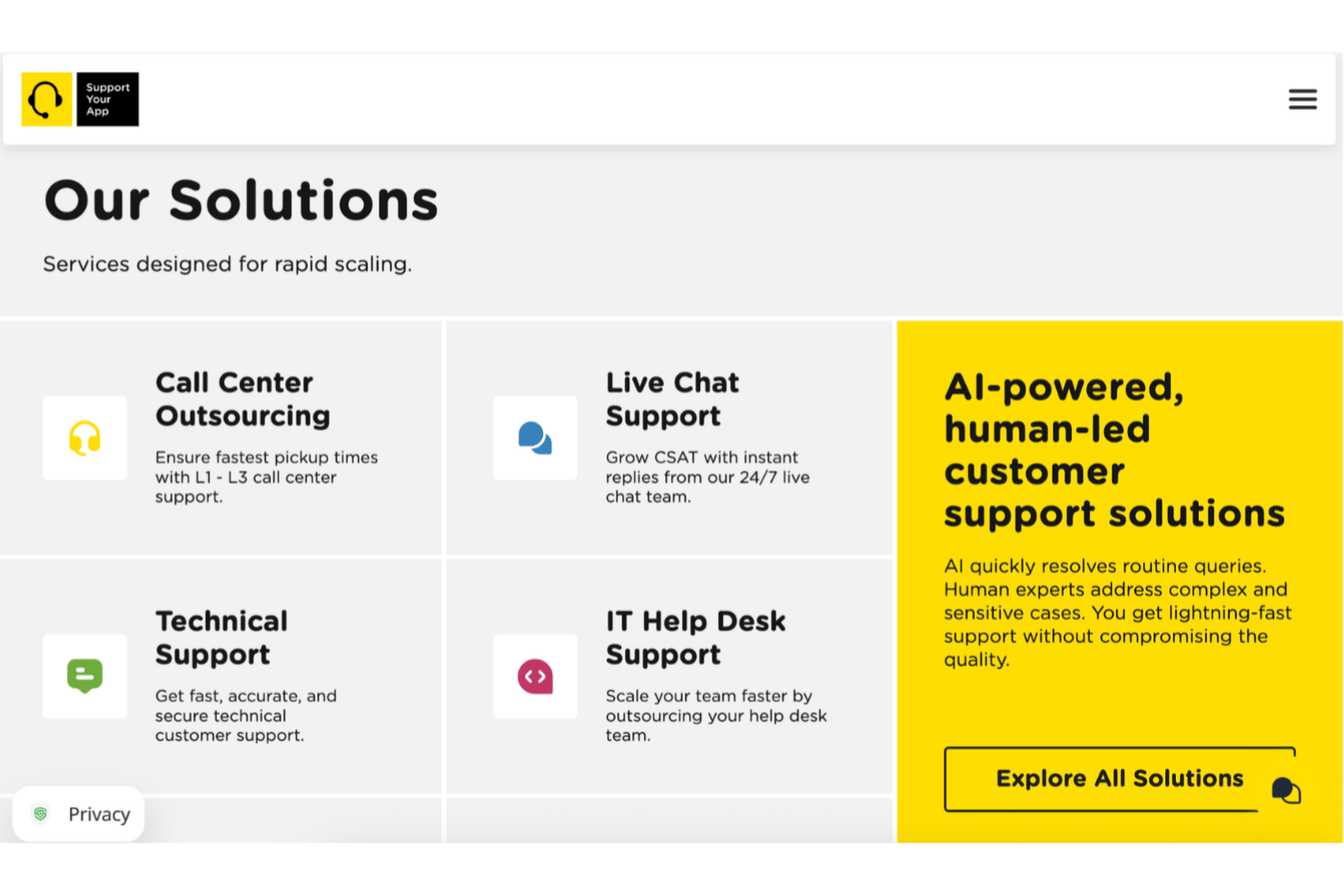
SupportYourApp offers AI-powered customer support solutions designed to help you scale voice-based service without expanding internal teams. Its AI voice agent handles inbound calls in real time, resolves routine requests, and escalates complex issues to live agents with full context preserved. The service integrates with your existing CRM and help desk tools, allowing you to automate call handling while maintaining consistent customer experiences.
Who Is SupportYourApp Best For?
SupportYourApp is best for SaaS, fintech, gaming, eCommerce, healthcare, and travel companies that want to implement AI voice agents to manage high call volumes, provide 24/7 coverage, and support multilingual customers without increasing headcount.
Why I Picked SupportYourApp
I picked SupportYourApp because it combines human-like AI voice interactions with end-to-end call handling and seamless escalation to live agents. Its AI voice agent understands caller intent through speech recognition, retrieves answers from your knowledge base, processes actions like bookings or order updates, and routes complex issues with full context preserved. I also value its direct integrations with platforms like Salesforce, Zendesk, Intercom, and Gorgias, along with support for 32+ languages, real-time translation, and accent neutralization, which make it well suited for global teams that need scalable, always-on voice support.
SupportYourApp Key Services
Some other services that make SupportYourApp relevant for businesses seeking ai call agent solutions include:
- Omnichannel customer support: Handles voice, live chat, email, and social media inquiries with trained agents aligned to your brand guidelines.
- 24/7 global coverage: Provides round-the-clock support across time zones to maintain consistent availability.
- Multilingual support teams: Delivers customer communication in multiple languages to support international audiences.
- Performance reporting and analytics: Supplies customized reports and service metrics to track response times, resolution rates, and quality benchmarks.
SupportYourApp Target Industries
SaaS, fintech, gaming, ecommerce, healthcare, and travel and hospitality.
SupportYourApp Specialties
AI voice agent deployment, 24/7 automated call handling, CRM and help desk integrations, multilingual customer communication, and compliance-focused support operations.
Pros and Cons
Pros:
- Supports 32+ languages with real-time translation
- Integrates with major CRM and help desk platforms
- Escalates complex calls with full context preserved
Cons:
- Pricing not publicly disclosed
- Primarily focused on tech-driven support use cases

Cresta
Best for agent performance coaching
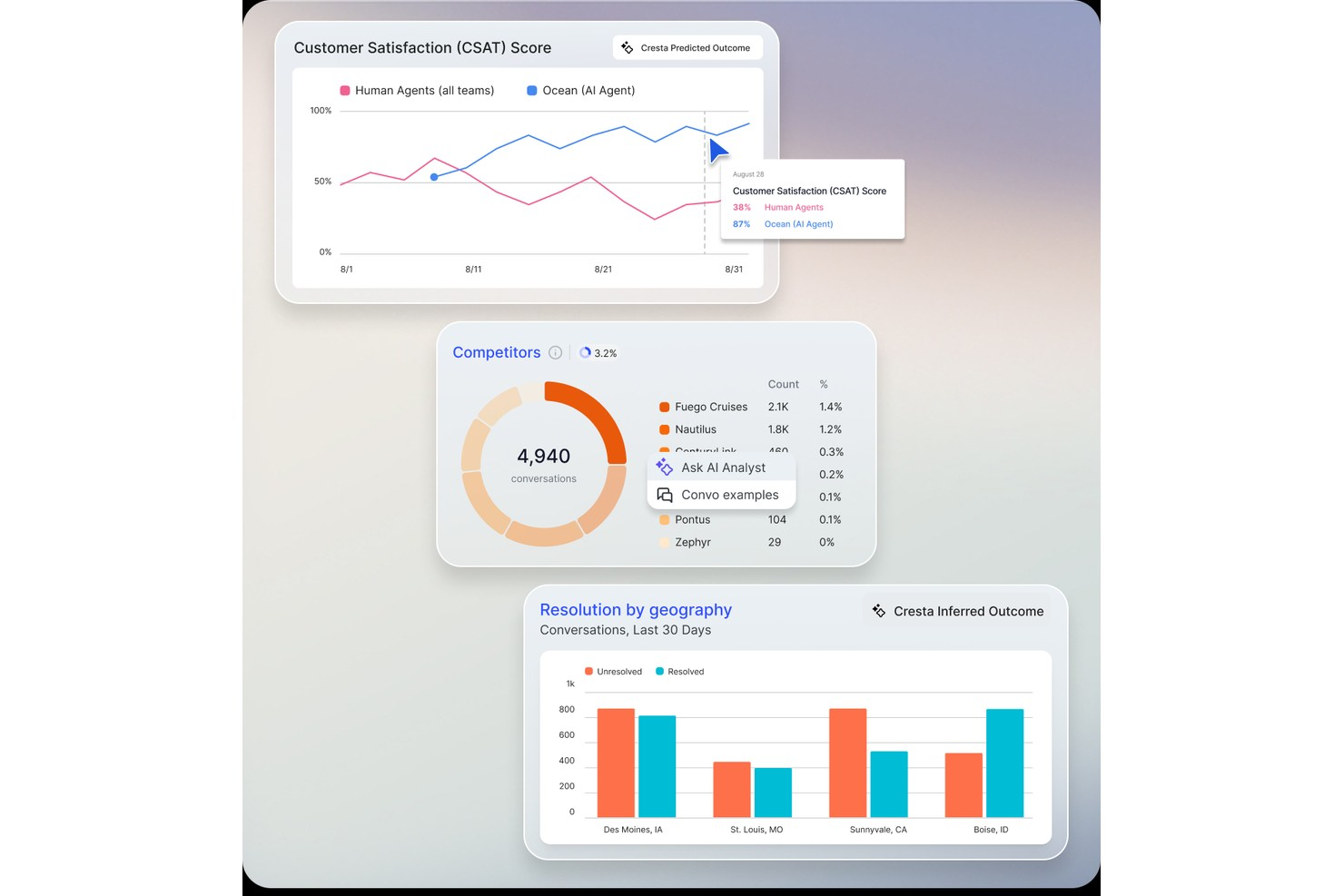
Cresta is an AI platform built for enterprise contact centers, combining autonomous AI agents, real-time agent assist, conversation intelligence, and quality management across voice and chat channels.
Who Is Cresta Best For?
Cresta works well for large enterprise contact centers with high interaction volumes that use AI in both agent-assisted and fully automated customer conversations.
Why I Picked Cresta
I've included Cresta in my top picks because of how it connects real-time coaching to actual business outcomes rather than activity metrics. Most coaching tools flag moments for supervisor review, but Cresta's Outcome Insights use AI to identify which specific agent behaviors correlate with results like CSAT, first call resolution, and sales conversion. From there, Cresta Coach builds structured, personalized coaching plans for each agent based on 100% of their interactions, not a small sample batch. The real-time behavioral hints in Agent Assist then reinforce those same behaviors during live conversations, so coaching doesn't stop between sessions.
Cresta Key Features
- AI Agent: Autonomous voice and chat agent that handles customer interactions end-to-end, resolving queries across more than 30 languages without human involvement.
- Smart Compose: AI-generated response suggestions for chat and email that agents can review and send with a single click.
- Auto-summarization: Generates structured call summaries and after-call work notes at the end of every conversation.
- Knowledge Assist: Surfaces relevant answers, policies, and scripts to agents in real time based on what's happening in the live conversation.
Cresta integrates with telephony and chat solutions like Five9, Amazon Connect, and Genesys, as well as CRM and customer engagement platforms such as Salesforce and Zendesk. It also connects with NICE CXone and Twilio. Additional integrations span marketing tools like HubSpot and Marketo and data platforms including Databricks. Cresta offers an API for custom integrations.
Pros and Cons
Pros:
- Deploys in four to six weeks
- Scores every interaction, not just samples
- Real-time coaching during live calls
Cons:
- Requires dedicated staff to tune AI
- Heavy dependency on clean data
Aircall
Best for real-time collaboration

Aircall is a cloud-based phone system designed for modern businesses to efficiently manage their customer interactions. It serves sales and support teams, helping them improve communication and collaboration across global operations.
Why I picked Aircall: Aircall excels in real-time collaboration, enabling teams to work together seamlessly during calls. It offers features like shared call inboxes to keep track of customer interactions.
With real-time call monitoring, your team can provide immediate feedback and support. The platform's easy integration with other tools enhances workflow efficiency.
Standout features & integrations:
Features include real-time call monitoring to enhance team support, shared call inboxes for effective communication tracking, and call tagging to organize customer interactions. The platform also offers call whispering to assist team members during live calls.
Integrations include Salesforce, HubSpot, Slack, Zendesk, Intercom, Microsoft Teams, Zoho CRM, Pipedrive, Shopify, and Freshdesk.
Pros and Cons
Pros:
- Call whispering feature
- Shared call inboxes
- Real-time call monitoring
Cons:
- Some calls drop during peak hours
- Mobile app misses some desktop tools

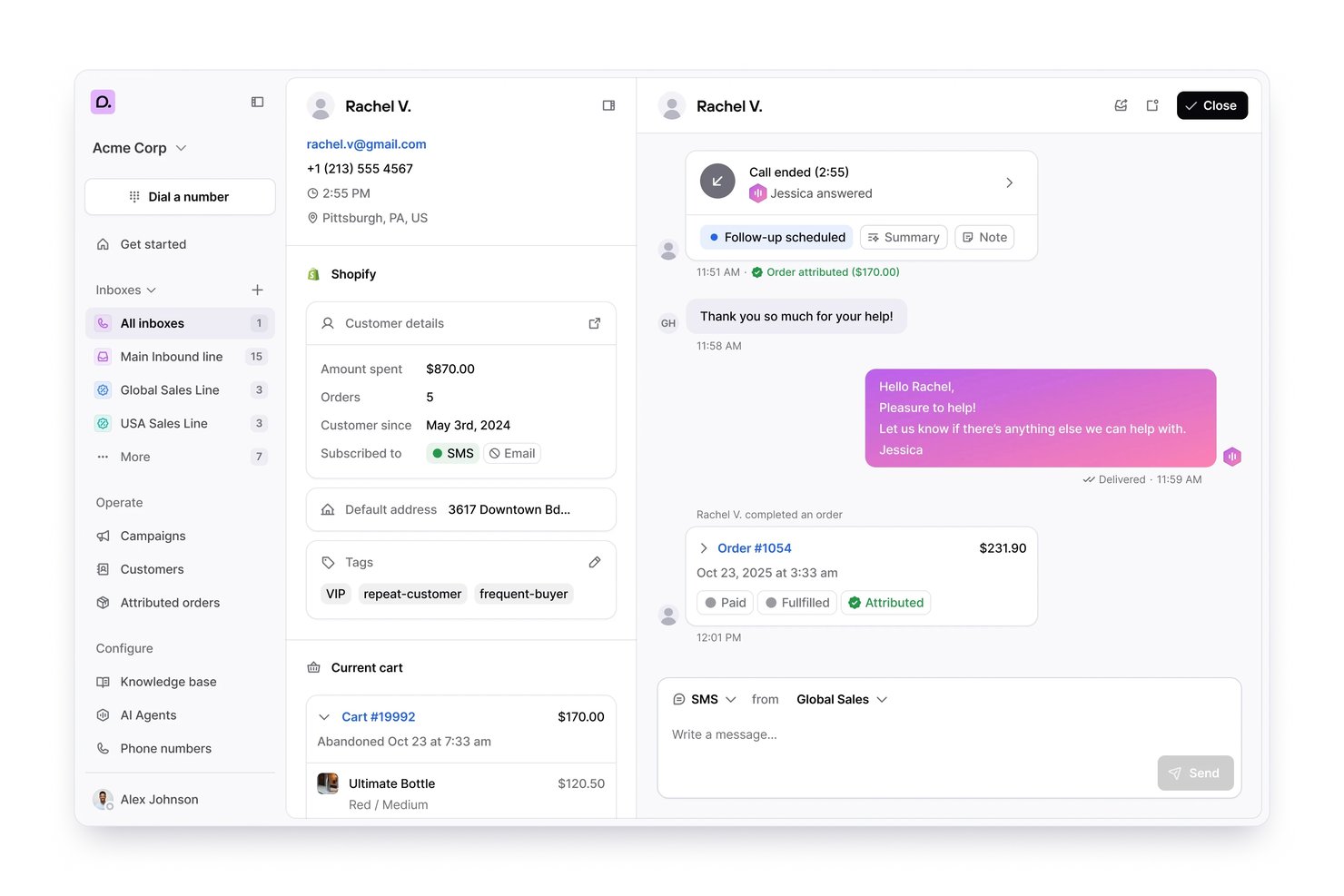
Consio AI is an AI call agent platform built for Shopify e-commerce brands that handles inbound and outbound voice calls, SMS, order actions, and revenue attribution in one workspace.
Who Is Consio AI Best For?
Consio AI is built for Shopify e-commerce brands whose support teams need to automate high-volume inbound calls around order tracking, returns, and cancellations without adding headcount.
Why I Picked Consio AI
I picked Consio AI as one of the best because it's the only AI call agent I've seen built natively around Shopify order data, which makes a real operational difference for e-commerce support teams. During a live inbound call, the AI can check order status, initiate a return, cancel an order, or text a customer a tracking link without any human involvement. I also love the outbound capability: the agent autonomously calls Klaviyo segments like abandoned checkouts or churn-risk customers, pulling cart and purchase history before dialing.
Consio AI Key Features
- ElevenLabs voice cloning: Record 5–10 minutes of speech and Consio builds a custom voice clone for your AI agent within 2–3 business days.
- Five-mode inbound call routing: Route calls to human agents, the AI agent, an external number, voicemail, or a keypad IVR menu based on intent or business hours.
- Order-level revenue attribution: Every call, voicemail, and SMS is attributed to the exact order it influenced, broken down by agent and campaign.
- Power dialer with AI cue cards: Human reps can run outbound campaigns with voicemail drops and AI-generated cue cards surfaced during live calls.
Consio AI Integrations
Consio AI offers documented integrations with Shopify, Klaviyo, Gorgias, Zendesk, Kustomer, eDesk, Richpanel, and Re:amaze. Its public REST API and webhooks support custom connections.
Pros and Cons
Pros:
- Context-rich transfers preserve customer history
- Natural voice handles complex troubleshooting calls
- Shopify-native order actions reduce support volume
Cons:
- Conversation design relies on plain-text guidelines
- Language support remains poorly documented
Phonexa
Best for lead-driven call handling
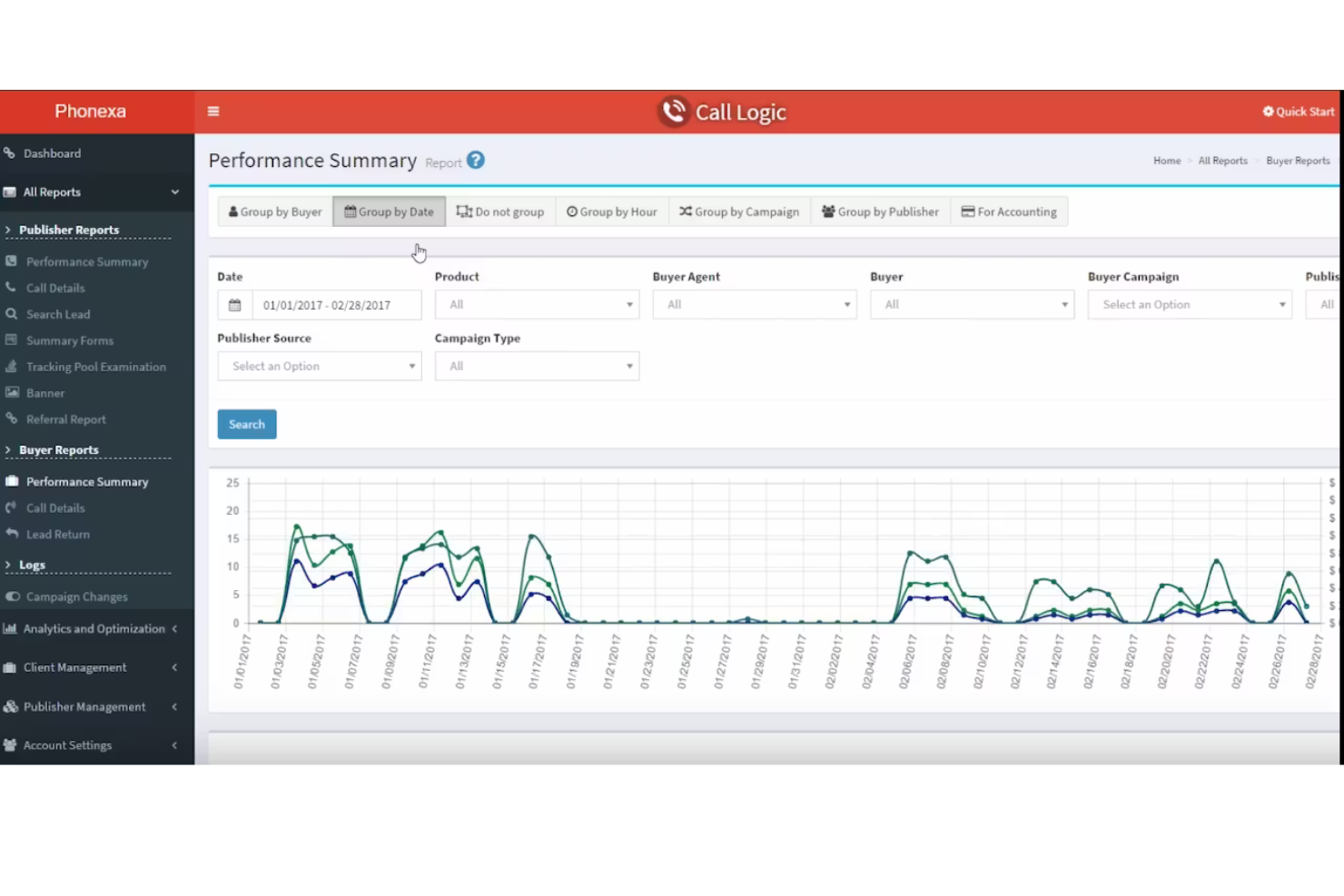
Phonexa is an AI-powered call management platform built for businesses that handle high volumes of inbound calls and leads. It helps marketing teams, call centers, and lead generation businesses reduce manual routing work by automating call tracking, lead distribution, and qualification workflows. Its standout strength is combining AI call handling with pay-per-call tracking and customizable routing in one system.
Who Is Phonexa Best For?
Phonexa is a good fit for marketing teams and call centers at mid-sized to large businesses that need advanced call management and analytics.
Why I Picked Phonexa
I picked Phonexa because it is best for lead-driven call handling. You can build custom call routing rules based on caller data, time of day, and campaign source, which gives your team more control over how inbound calls are handled. I like that it supports multi-step routing flows, so you can prioritize high-value leads and send calls to the right agent or buyer faster. This makes it easier to match call handling to your sales process instead of forcing your team to work within fixed routing rules.
Phonexa Key Features
Beyond its AI call automation and routing capabilities, Phonexa includes several supporting features that help teams monitor performance and manage call operations more effectively.
- AI-powered call tracking: Tracks inbound and outbound calls with attribution data to help teams measure performance by source and campaign.
- Lead management dashboard: Centralizes leads from multiple sources so users can review, organize, and manage them in one place.
- Call recording and playback: Stores call recordings for quality assurance, team training, and review of customer interactions.
- Automated reporting: Generates real-time reports on call activity, agent performance, and campaign results.
Phonexa Integrations
Integrations include Salesforce, HubSpot, Mailchimp, Google Analytics, Stripe, SendGrid, Zoho CRM, Pipedrive, Twilio, and PayPal.
Pros and Cons
Pros:
- Supports customizable AI scripts and guardrails for focused conversations
- Provides real-time call analytics for routing and campaign optimization
- Handles routine voice interactions with conversational AI and IVR routing
Cons:
- Pricing adds per-minute AI usage costs on top of plans
- Advanced setup is geared toward complex call flows and campaigns
New Product Updates from Phonexa

Phonexa Expands Automated Traffic and Offer Routing
Phonexa adds tag-based publisher distribution, fallback bidding for Ping Post Calls, and Logic Links for smarter offer routing. These updates reduce manual traffic management and help route leads and calls to better available options. For more information, visit Phonexa’s official site.
 .
.
Best for personalized conversations

CloudTalk’s AI voice agents are intelligent virtual assistants designed to handle inbound and outbound calls for businesses around the clock. Built into CloudTalk’s global phone system, these agents can speak in over 60 languages, respond naturally, and manage real conversations that feel human.
Why I picked CloudTalk: I picked CloudTalk because its AI call agents, known as CeTe, go beyond simple automation by combining natural language understanding, real-time personalization, and multi-language support to create realistic and useful interactions. CeTe can listen, interpret, and respond contextually, using live CRM data to personalize every conversation.
Its global coverage across 160+ countries ensures you can deploy AI agents anywhere your customers are. Built-in number reputation management helps avoid spam labels, while features like multiple concurrent calls, automatic follow-ups, and intelligent routing let you handle both routine and complex call workflows without human delay.
Standout features & integrations:
Features include dynamic number rotation, which helps your AI agents maintain a trusted caller ID reputation while making high volumes of outbound calls. The workflow automation builder also allows you to set triggers and actions across tools—like sending reminders or routing qualified leads directly to human agents.
Integrations include HubSpot, Pipedrive, Zoho CRM, Salesforce, MS Dynamics, OdooCRM, Intercom, Zendesk, Salesloft, Outreach, Bullhorn, and monday.com.
Pros and Cons
Pros:
- Supports 60+ languages and accents
- Realistic, human-sounding voice quality (
- Handles inbound and outbound calls automatically
Cons:
- AI may misinterpret complex or emotional queries
- Only one concurrent call in entry plan
New Product Updates from CloudTalk
CloudTalk Adds Campaign Statistics to MCP
CloudTalk adds campaign statistics to MCP with funnel, call, conversion, disposition, and duration metrics. This helps reporting assistants review campaign performance using read-only aggregate data. For more information, visit CloudTalk’s official site.
 .
.
Best for communication task automation
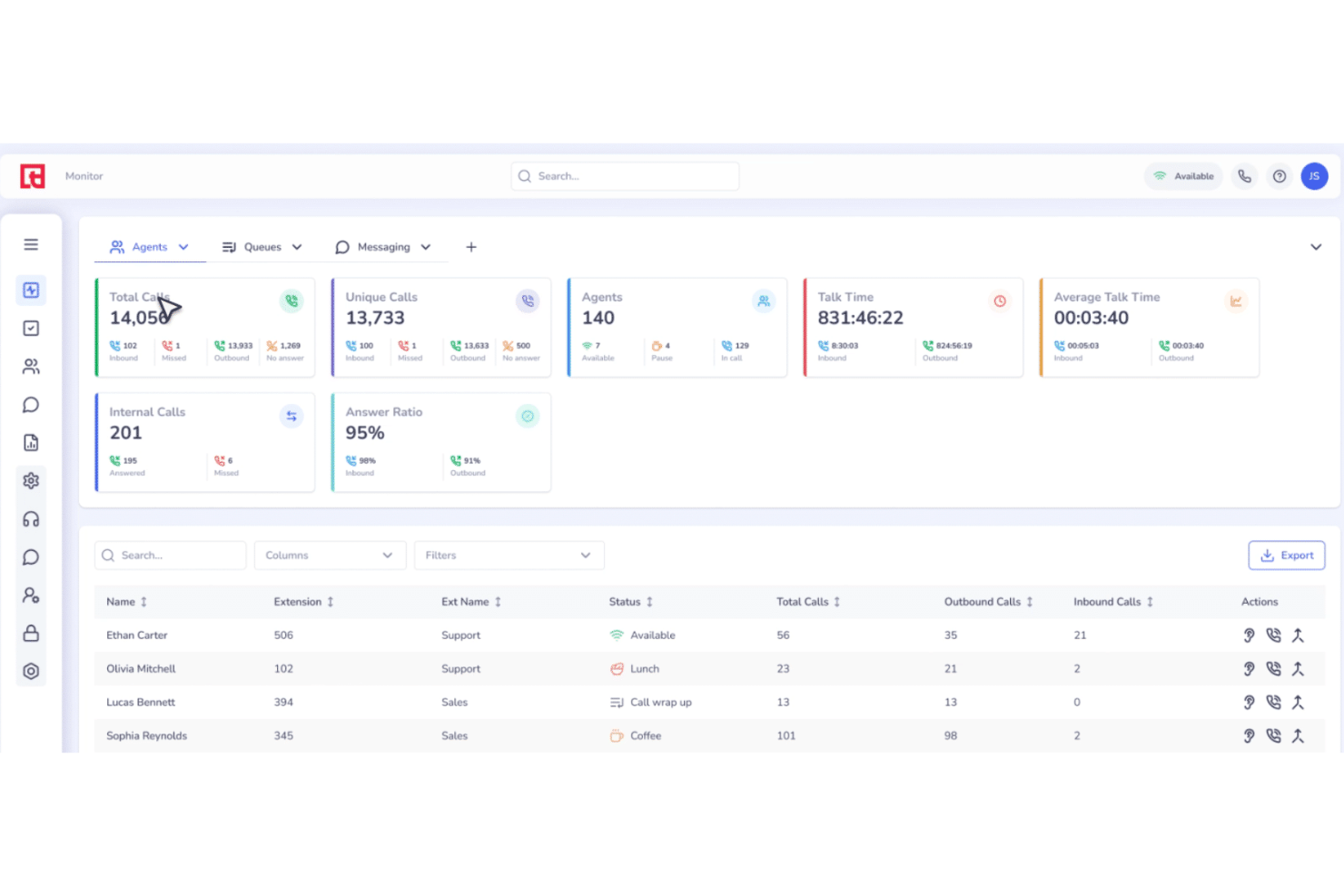
Squaretalk is an AI call agent platform built for handling phone-based tasks that would otherwise require a live agent. It can support use cases like outbound lead calls, inbound call handling, appointment scheduling, and multilingual conversations. Teams in finance, healthcare, and ecommerce may use it to reduce manual calling workload and keep responses consistent across high call volumes.
Why I Picked Squaretalk
I picked Squaretalk for its AI Voice Agents, which handle call tasks like lead qualification, appointment scheduling, and inbound call routing. It also supports multilingual conversations, which helps teams cover off-hours and multiple regions. For CRM-connected calling, Squaretalk offers integrations for Zoho and Salesforce so call activity can be logged and managed in the CRM.
Squaretalk Key Features
In addition to communication task automation, Squaretalk offers:
- Instant Workflow Builder: Enables you to design and automate communication workflows quickly, reducing the time spent on manual call handling.
- Customizable Voice Options: Allows you to tailor the voice of AI agents to align with your brand's identity, providing a personalized customer experience.
- Real-Time Analytics: Offers insights into customer interactions, helping you make data-driven decisions to improve service quality.
- IVR for After-Hours Support: Ensures your customers can access support anytime, enhancing satisfaction and loyalty.
Squaretalk Integrations
Integrations include Zoho, Salesforce, Freshworks CRM, Pipedrive, Antelope CRM, and WhatsApp Business.
Pros and Cons
Pros:
- Automation reduces manual follow-ups through integrated call and data flows
- Offers AI-powered transcripts, summaries, sentiment analysis
- Predictive dialers boost agent productivity and efficiency
Cons:
- Advanced workflows take time to set up correctly
- Customization options still limited compared to full-scale CI platforms
New Product Updates from Squaretalk
Squaretalk Adds TradeCore Integration for Brokerage Workflows
Squaretalk adds a TradeCore integration that connects customer conversations with BrokerIQ CRM workflows. This helps brokerage teams trigger AI-driven follow-ups, tasks, and other actions from calls and messages. For more information, visit Squaretalk’s official site.
 .
.
Best for real-time analytics

Synthflow AI is an AI Voice Platform designed to automate phone conversations, offering 24/7 customer support. It primarily serves industries like BPO, healthcare, and real estate, focusing on enhancing call management and customer satisfaction.
Why I picked Synthflow AI: Synthflow AI excels in real-time analytics, providing insights into call performance and customer interactions. It includes features like automated voice support and smart scheduling that streamline operations.
The platform’s advanced call menus and multilingual capabilities cater to the diverse needs of customers. Synthflow AI also offers no-code deployment, making it accessible for teams without technical expertise.
Standout features & integrations:
Features include sentiment analysis to gauge customer emotions during calls, customizable AI agents tailored to specific business needs, and compliance with data regulations such as HIPAA and GDPR. The platform's built-in analytics tools provide detailed reports for performance tracking.
Integrations include Salesforce, HubSpot, Zoho CRM, Microsoft Dynamics, Slack, Zendesk, Intercom, Google Calendar, Twilio, and Freshdesk.
Pros and Cons
Pros:
- Compliance with data regulations
- No-code deployment tools
- Real-time call analytics
Cons:
- Basic features on entry plans
- May need technical support

JustCall
Best for small business teams

JustCall is a cloud-based communication platform that helps businesses improve customer interactions through voice and messaging. It primarily serves small business teams seeking to improve customer service and sales processes.
Why I picked JustCall: JustCall is tailored for small business teams, offering features like AI-driven call handling and automated workflows. The AI Voice Agent can handle calls and perform lead qualification, saving your team time and effort.
JustCall also provides CRM integrations that simplify tracking customer interactions. Its focus on small teams means you get a solution that fits your specific needs without unnecessary complexity.
Standout features & integrations:
Features include real-time call transcription, sentiment analysis, and smart dialers. The AI Voice Agent can handle routine calls, allowing your team to focus on more complex tasks. JustCall also offers automated call distribution and SMS bots for efficient communication.
Integrations include Salesforce, HubSpot, Zoho CRM, Pipedrive, Slack, Zapier, Intercom, Freshdesk, Shopify, and Zendesk.
Pros and Cons
Pros:
- AI-driven call summaries
- Real-time language translation
- Customizable call workflows
Cons:
- Requires stable internet connection
- Occasional call quality issues

Sierra
Best for global reach

Sierra is a voice AI platform designed to enhance customer interactions across various industries, including retail, finance, and telecommunications. It serves businesses that require effective communication solutions to support global operations.
Why I picked Sierra: Sierra is ideal for global reach, offering multilingual support that helps your team communicate with customers worldwide. It features advanced call routing to ensure efficient customer service.
The platform's analytics tools provide valuable insights into call performance, enabling you to improve your strategies. Its compliance with international data regulations ensures your operations remain secure.
Standout features & integrations:
Features include advanced call routing for efficient service, multilingual support for global communication, and detailed analytics tools for performance insights. The platform also offers compliance with international data regulations to safeguard your operations.
Integrations include Salesforce, Microsoft Dynamics, HubSpot, Twilio, Slack, Zendesk, Intercom, Google Calendar, Zoho CRM, and Freshdesk.
Pros and Cons
Pros:
- Compliance with data regulations
- Advanced call routing
- Multilingual support for global communication
Cons:
- Advanced features on premium plans
- Initial setup may require time
Other AI Call Agents
Here are some additional AI call agent options that didn’t make it onto my shortlist, but are still worth checking out:
- Retell AI
For retail industry
- T-Mobile for Business
For real-time translation in calls
- Bland
For GDPR compliance
- Thoughtly
For personalized caller interactions
- Autocalls
For automated scheduling
- Calldesk
For call deflection
- Call Agent AI
For multilingual support
- Pod AI
For natural voice interactions
- Jotform
For form integration
- CallPage
For lead response time
- Regal.ai
For customer re-engagement
- Lindy
For healthcare providers
- Voiceflow
For custom voice apps
- ElevenLabs
For text-to-speech synthesis
- NiCE Cognigy.AI
For conversational IVR
- Deepgram
For speech recognition accuracy
- PolyAI
For contact center automation
- Vapi
For API-driven voice services
- Goodcall
For call tracking analytics
- Sendbird
For in-app voice interactions


How I Evaluate AI Call Agents
Any tool on this list needs to go beyond scripted IVR trees—I look for AI that can hold natural, multi-turn voice conversations and resolve real issues like billing inquiries or appointment changes without a human stepping in. I split my evaluation into core functionality every vendor must meet and differentiating factors that separate the best fits from the rest.
Core Functionality (Table Stakes For This List)
When I'm selecting tools for my list, I rank each one on a scale from 0 (does not offer the functionality) to 5 (excels in this area) for each core functionality listed below. Then, I calculate the tool's total score into a percentage. Each tool needs to achieve a minimum total score of 65% to be considered for inclusion.
- Conversational Voice AI: I evaluate whether the agent can hold natural, multi-turn voice conversations—like walking a caller through a return policy while answering follow-up questions mid-flow.
- Speech Recognition & Text-to-Speech: The ASR needs to handle real-world caller speech accurately, and the TTS voice should sound natural enough that callers stay engaged rather than hanging up.
- Telephony & Channel Integration: I check whether the platform connects to existing phone infrastructure via SIP, PSTN, or VoIP and plugs into contact center platforms like Genesys or Five9.
- CRM & Business System Connectors: Each tool should pull live customer data from CRMs or helpdesks during a call—like retrieving an order status from Salesforce to answer a "where's my package?" question.
- Conversation Flow & Intent Management: I look for visual builders or prompt-configuration tools that let CX teams design and update call flows without relying on engineering for every change.
- Human Handoff & Escalation: A warm transfer with full context matters here—I evaluate whether the AI passes along the transcript, detected intent, and customer details when routing to a live agent.
Once I have a list of tools that meet this criteria, I consider what sets each platform apart.
Differentiating Factors (What Sets Vendors Apart)
Here's how I compare and contrast different vendors:
Standout Features
Real-time sentiment analysis is a big differentiator—I look for agents that detect caller frustration mid-conversation and adjust their tone or trigger an escalation before the situation spirals. Barge-in handling matters just as much, since callers naturally interrupt, and the AI needs to recover without restarting its response. I also evaluate post-call analytics like automated summaries, topic clustering, and QA scoring, which help CX leaders spot emerging trends without manually reviewing call recordings.
Beyond Features
Latency is one of the first things I check—response delays beyond a second make conversations feel robotic, and callers disengage fast. Compliance also weighs heavily, especially for teams handling payment details or health information, where PCI-DSS or HIPAA certification is required. I evaluate time-to-value too, looking at whether vendors offer pre-built templates for common CX scenarios like order tracking or appointment scheduling so teams can move from pilot to production quickly without months of custom development.
How to Choose an AI Call Agent
It’s easy to get bogged down in long feature lists and complex pricing structures. To help you stay focused as you work through your unique software selection process, here’s a checklist of factors to keep in mind:
| Factor | What to Consider |
|---|---|
| Scalability | Can the tool grow with your business? Consider future call volumes and whether the solution can handle increased demand without degrading performance. |
| Integrations | Does it work with your current systems? Check if the tool integrates with your CRM, helpdesk, or other essential software to ensure smooth workflows. |
| Customizability | Can you tailor it to your needs? Look for customization options that allow you to adjust call scripts, routing, and user interfaces to fit your processes. |
| Ease of use | Is it user-friendly for your team? Evaluate the interface and navigation to ensure team members can use it without requiring extensive training or experiencing frustration. |
| Implementation and onboarding | How quickly can you get started? Assess the time and resources needed for setup, including any training materials and support provided by the vendor. |
| Cost | Does it fit your budget? Compare pricing plans, check for hidden fees, and consider the value offered relative to the price. |
| Security safeguards | Are your data protected? Ensure the tool complies with industry standards for data security and offers features like encryption and access controls. |
| Support availability | Will you have help when needed? Look for 24/7 support options and check user reviews for feedback on responsiveness and effectiveness of the support team. |
What Is an AI Call Agent?
An AI call agent is software that automates phone conversations by answering routine questions, routing calls, and providing multilingual support. These tools reduce wait times, free up human agents for complex issues, and deliver consistent, around-the-clock customer service.
Features of AI Call Agents
When selecting an AI call agent, keep an eye out for the following key features:
- Automated responses: This feature handles routine inquiries, freeing up your team to focus on more complex tasks.
- Call routing: Efficiently directs calls to the appropriate agents, improving customer service and reducing wait times.
- Multilingual support: Enables communication with a diverse customer base by supporting multiple languages.
- Call recording and transcription: Provides accurate records of calls for training and quality assurance.
- Integration capabilities: Connects with existing CRMs and other systems to streamline workflows and data management.
- Customizable scripts: Allows you to tailor interactions to meet specific business needs and enhance customer experience.
- Real-time analytics: Offers insights into call performance, helping you refine strategies and improve service.
- Security safeguards: Ensures data protection through features such as encryption and access controls.
- Interactive Voice Response (IVR): Guides callers through menu options to quickly resolve issues or reach the right department.
- Scalability: Adapts to growing business needs by handling increased call volumes without compromising performance.
Benefits of an AI Call Agent
Implementing an AI call agent provides several benefits for your team and your business. Here are a few you can look forward to:
- Improved efficiency: Automated responses and call routing reduce the workload on your team, allowing them to focus on complex issues.
- Enhanced customer satisfaction: Multilingual support and IVR ensure customers get the help they need quickly and in their preferred language.
- Cost savings: By automating routine tasks, you can lower operational costs and allocate resources more effectively.
- Better decision-making: Real-time analytics provide insights into call performance, enabling you to make informed adjustments to your strategies.
- Increased security: Security safeguards protect sensitive customer data, maintaining trust and compliance with regulations.
- Scalability: The ability to handle growing call volumes ensures your system can adapt as your business expands.
- Consistent quality: Call recording and transcription help maintain service quality and support training efforts.
Costs and Pricing of an AI Call Agent
Selecting an AI call agent requires an understanding of the various pricing models and plans available. Costs vary based on features, team size, add-ons, and more. The table below summarizes common plans, their average prices, and typical features included in AI call agent solutions:
Plan Comparison Table for AI Call Agents
| Plan Type | Average Price | Common Features |
|---|---|---|
| Free Plan | $0/user/month | Basic call management, limited integrations, and basic reporting. |
| Personal Plan | $10-$30/user/month | Automated responses, call routing, and standard analytics. |
| Business Plan | $40-$70/user/month | Multilingual support, advanced call analytics, and customizable scripts. |
| Enterprise Plan | $80-$150/user/month | Full integration capabilities, real-time analytics, dedicated support, and enhanced security features. |
AI Call Agent FAQs
Here are some answers to common questions about the AI call agent:
Are AI calls illegal?
AI calls aren’t illegal, but they must comply with regulations. In many regions, you need written consent from users before using AI-generated voices. Violations can lead to penalties under robocall laws. Always check local laws to ensure compliance and avoid legal issues.
What are the limitations of AI agents?
AI agents excel at resolving issues and reducing queue times, but they can’t build rapport or understand nuanced customer emotions. They may miss opportunities for upselling or feedback. Consider combining AI with human agents or sales teams for tasks requiring empathy and complex decision-making.
How do AI phone calls work?
AI phone calls use voice-based AI agents that converse naturally. They rely on speech recognition to listen, natural language processing (NLP) to understand, and text-to-speech (TTS) to respond. This allows them to handle inquiries without human intervention, streamlining communication.
What are the four main rules for an AI agent?
AI agents must perceive their environment, use observations to make informed decisions, ensure that these decisions lead to actions, and take rational actions. These rules guide AI agents in processing information and interacting effectively with users, ensuring their responses align with user needs.
How secure are AI call agents?
AI call agents generally include security features like encryption and access controls to protect data. However, it’s crucial to evaluate each tool’s security measures to ensure they comply with industry standards and protect customer information from unauthorized access.
Can AI call agents handle multilingual support?
Yes, many AI call agents offer multilingual support, allowing businesses to communicate with diverse customer bases. This feature can enhance customer satisfaction by providing assistance in customers’ preferred languages, making it a valuable asset for global operations.