

10 Best Auto Attendant Phone Systems in 2026

Best Auto Attendant Phone Systems Shortlist


Auto attendant phone systems automatically route incoming calls based on data like caller ID, greet callers, and direct them to the right person or department without a live receptionist. If you’re looking into the best auto attendant phone systems, you’re probably dealing with high call volumes, missed calls, or inconsistent caller experiences.
Choosing the right solution will help your team deliver prompt service, control costs, and ensure every call reaches the right place—all essential for keeping customers happy and the business running smoothly. In this guide, you’ll find a clear breakdown of the top options, highlighting key features so you can confidently pick the best fit for your needs.
Why Trust Our Software Recommendations
Our team has been testing and reviewing software since 2012. As CX leaders ourselves, we know how difficult—and important—it is to choose the right software.
For this guide, we evaluated tools using hands-on testing and independent research, scoring tools using our selection criteria.
Our reviews reflect our human editorial judgment, not a sales pitch.
Auto Attendant Phone Systems Comparison Table
The table below compares pricing details for my top auto attendant phone system selections.
| Tool | Best For | Trial Info | Price | ||
|---|---|---|---|---|---|
| 1 | Best for real-time AI conversation analytics | 14-day free trial | From $25/user/month (billed annually) | Website | |
| 2 | Best for fast deployment of intelligent call flows | Free demo available | Pricing upon request | Website | |
| 3 | Best for integrated voice and chat automation | 14-day free trial + free demo available | Pricing upon request | Website | |
| 4 | Best for flexible business hour configurations | Free plan available | Pricing upon request | Website | |
| 5 | Best for small business-friendly phone menus | Not available | From $19.95/user/month | Website | |
| 6 | Best for intuitive self-service call handling | Free demo available | From $15/user/month (billed annually) | Website | |
| 7 | Best for unified digital and voice workflows | Free trial available | From $75/user/month (billed annually) | Website | |
| 8 | Best for scalable automation in large deployments | Not available | From $110/agent/month | Website | |
| 9 | Best for AI-powered conversational workflows | Free demo available | From $119/seat/month | Website | |
| 10 | Best for multi-location call routing customization | 14-day free trial | From £18/user/month | Website |
Best Auto Attendant Phone Systems Reviews
Below are my detailed summaries of the best auto attendant phone systems that made it onto my shortlist. My reviews offer a detailed look at the features, best use cases, and integrations of each system to help you find the best one for you.

Best for real-time AI conversation analytics
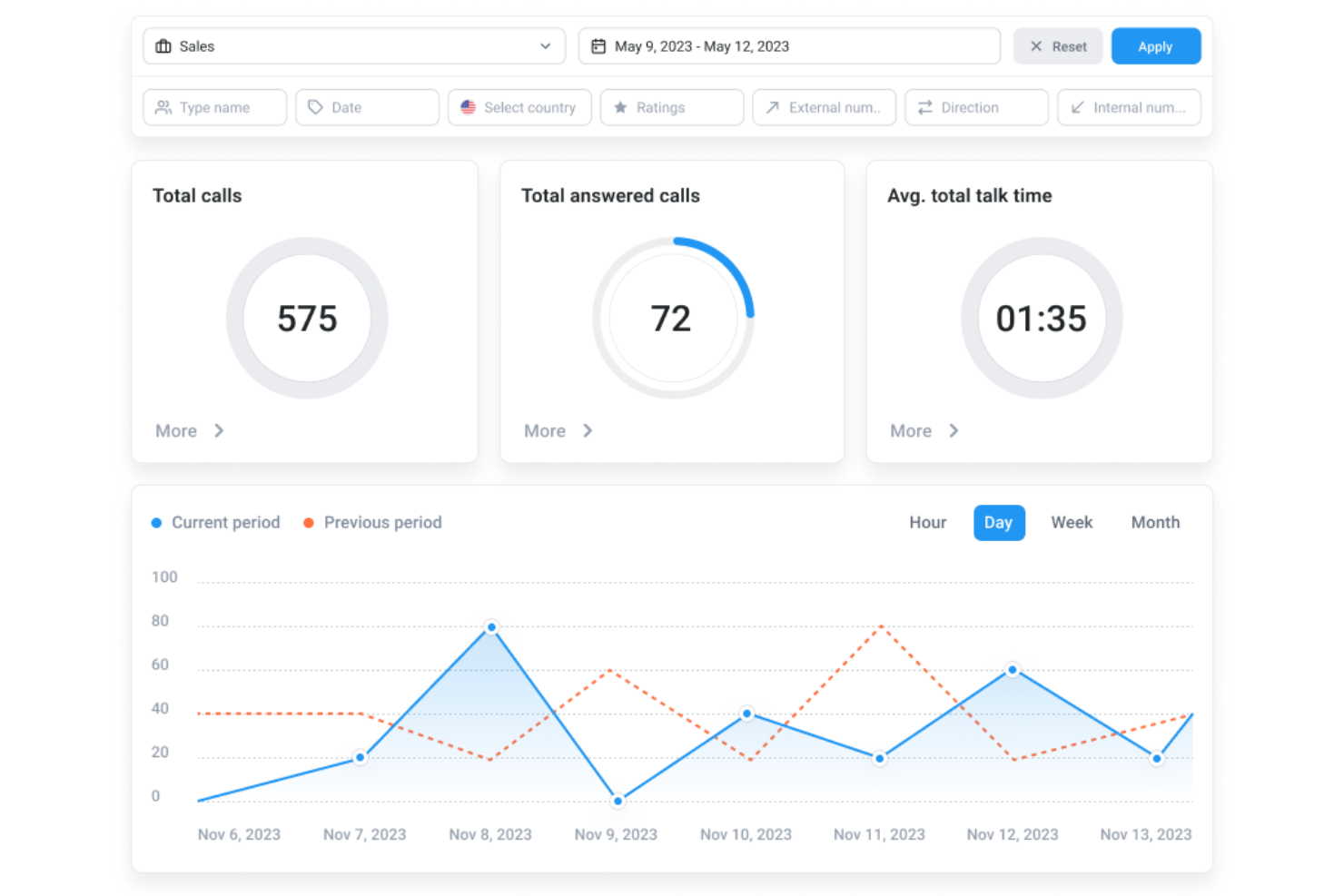
CloudTalk is a cloud call center platform with a built-in auto attendant, multi-level IVR, drag-and-drop call flow designer, AI-powered routing, and real-time conversation analytics.
Who Is CloudTalk Best For?
CloudTalk is a strong fit for scaling SMBs and mid-market customer support teams that rely heavily on CRM integrations to manage inbound call routing.
Why I Picked CloudTalk
CloudTalk earns its spot on my shortlist because the AI Conversation Intelligence layer gives you data that most auto attendant systems simply don't surface. I particularly like that sentiment analysis and topic extraction run in real time, so I can see exactly which IVR paths are frustrating callers before it shows up in CSAT scores. Pair that with call scoring and searchable transcripts, and I'm able to continuously tune routing logic based on actual conversation data, not just call volume.
CloudTalk Key Features
- Drag-and-drop call flow designer: Customize multi-level IVR menus visually to create nested routing paths.
- Business hours and holiday scheduling: Set up different inbound call flows for regular hours, after-hours, and holidays.
- Voicemail-to-email functionality: Automatically sends voicemail recordings to specified email addresses for easy access.
- CRM and helpdesk integration: Connects with platforms like HubSpot, Salesforce, and Zendesk for synced contact and call data.
CloudTalk Integrations
CloudTalk offers native integrations with HubSpot, Salesforce, Zendesk, Pipedrive, Intercom, Freshdesk, Zoho CRM, and Microsoft Dynamics 365. An API is available for custom integrations.
Pros and Cons
Pros:
- Multi-level IVR supports unlimited nested menu routing
- Drag-and-drop call flow builder is highly visual
- Real-time AI analytics surface IVR friction points
Cons:
- Call quality issues reported on international numbers
- Advanced AI features locked behind higher-tier plans

Talkdesk
Best for fast deployment of intelligent call flows
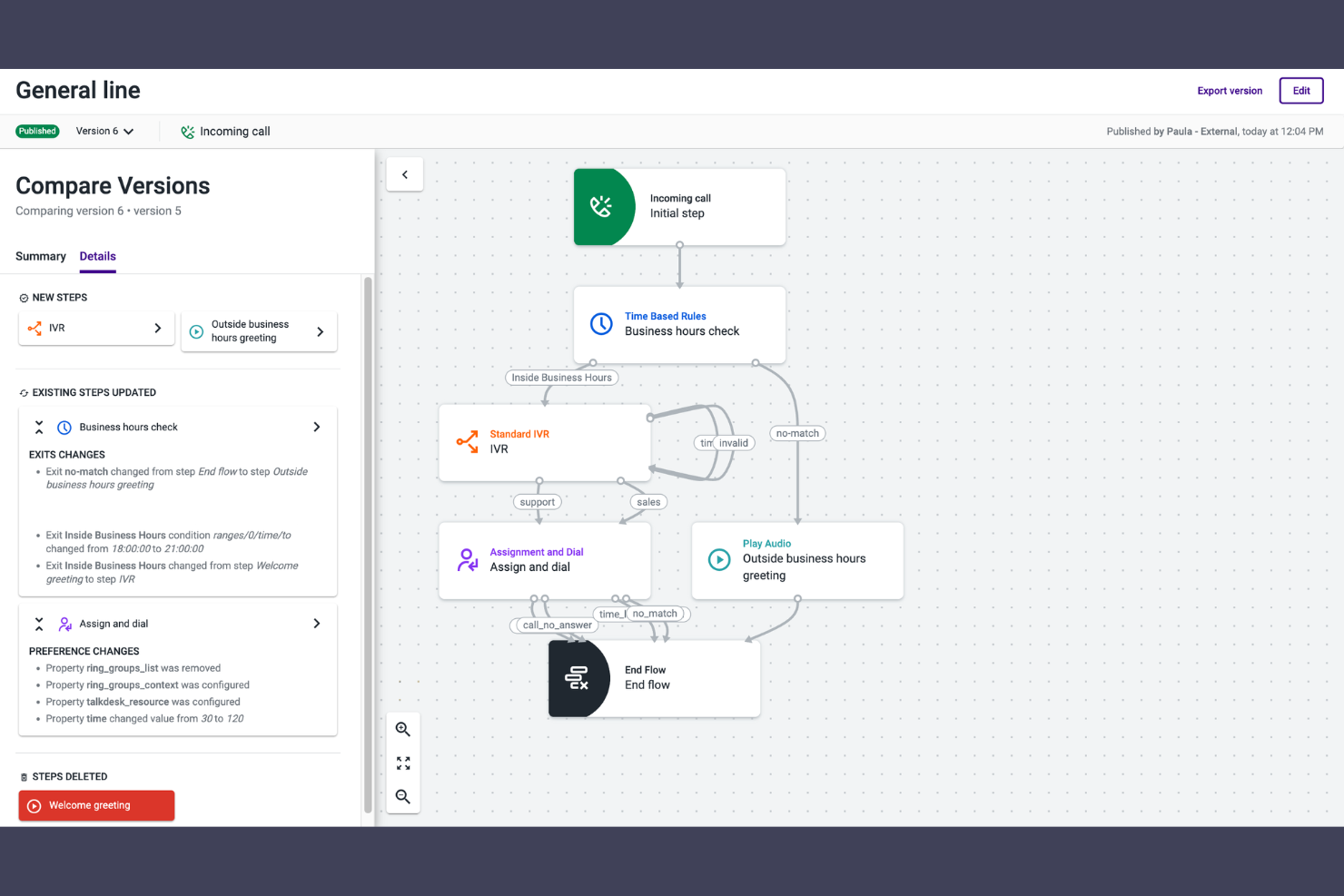
Talkdesk is a cloud contact center platform with a built-in AI autopilot that handles call routing, self-service IVR flows, and virtual agent interactions across voice and digital channels.
Who Is Talkdesk Best For?
Talkdesk is a strong fit for mid-sized to enterprise contact centers that need to deploy AI-driven self-service call flows without heavy IT involvement.
Why I Picked Talkdesk
I've included Talkdesk in my top picks because its CXA Operations Center gives my team real-time visibility into every live AI interaction, so I can monitor execution behavior and enforce guardrails without needing data science support. I also rely on the session monitoring feature, which surfaces archived transcripts, sentiment scores, and escalation data in one view. For teams building auto attendant flows, the default conversation settings let me configure branded greetings and fallback responses globally, so every entry point stays consistent.
Talkdesk Key Features
- Pre-built flow templates: Ready-made templates for common auto attendant scenarios let you launch call flows without building from scratch.
- Proactive outbound notifications: Autopilot can trigger automated outbound voice messages for reminders, alerts, and follow-ups.
- Knowledge base connector: Autopilot pulls answers directly from connected knowledge sources to resolve caller questions mid-flow.
- AI-generated call summaries: After each interaction, Autopilot produces an automated transcript summary for agent review.
Talkdesk Integrations
Talkdesk offers 60+ native integrations with tools like Salesforce, Zendesk, Microsoft Teams, Slack, Zoom, and Zoho, as well as ServiceNow, HubSpot, and Microsoft Dynamics 365. An API, webhooks, and Talkdesk Connections builder are available for custom integrations.
Pros and Cons
Pros:
- Highly flexible call routing configurations
- 27 languages with multiple AI voice types
- No-code flow builder for routing changes
Cons:
- AI settings are scattered across multiple admin areas
- Occasional slowdowns during peak call volume

Dialpad
Best for integrated voice and chat automation
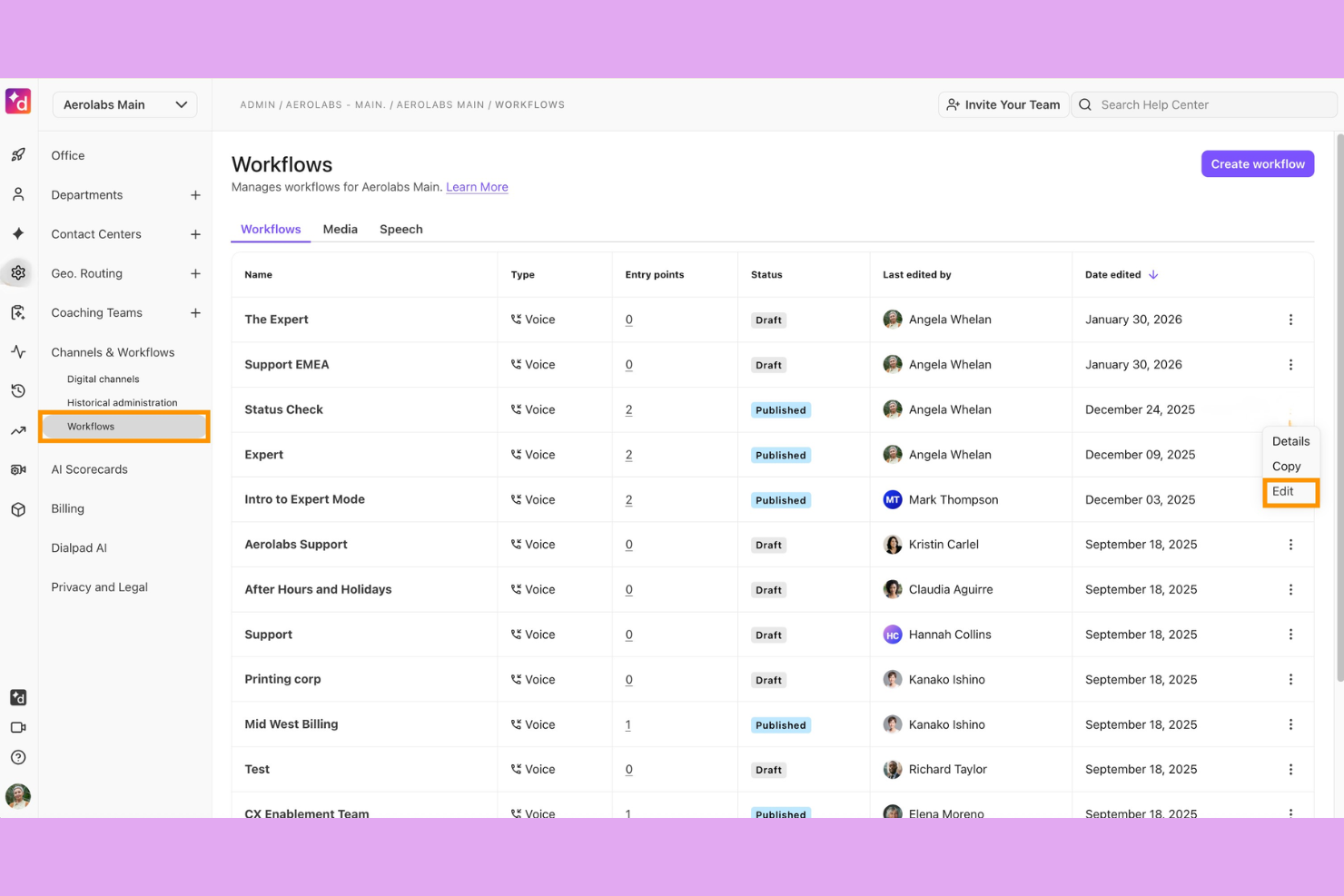
Dialpad AI Agent is a cloud-based auto attendant and virtual agent platform that manages inbound call routing, self-service voice interactions, and digital messaging through a single AI engine.
Who Is Dialpad Best For?
Dialpad AI Agent is a strong fit for customer support and contact center operations teams that need to automate high call volumes without building AI workflows from scratch.
Why I Picked Dialpad
Dialpad AI Agent earns its spot on my shortlist because it's one of the few platforms where voice routing and chat automation run through the same underlying AI, not two separate products stitched together. I like that Agent Studio lets my team build call flows and chat workflows from a single no-code interface. The out-of-the-box agentic playbooks for tasks like order status lookups mean my team isn't starting from a blank canvas every time.
Dialpad Key Features
- Skill Mining: Analyzes historical call and chat data to identify which customer interactions are strong candidates for AI automation.
- Context carry: Transfers the full conversation transcript and customer history to a live agent when an AI-handled call or chat escalates.
- Proving Ground: A pre-launch testing environment that simulates real customer interactions to validate AI agent behavior before going live.
- Multi-channel routing: Directs inbound contacts across voice, chat, and SMS through a unified routing engine.
Dialpad Integrations
Dialpad integrates natively with tools like Microsoft 365, Salesforce, Zendesk, HubSpot, Zoho CRM, Clio, Copper, Google Workspace, and Microsoft Teams. It also connects with Zapier and has an open API for custom integrations.
Pros and Cons
Pros:
- AI pre-tests auto attendant flows before launch
- Built-in call context transfers during escalations
- No-code AI agent builder for call routing
Cons:
- Voicemail notifications don't display contact names
- CRM integrations locked behind higher-tier plans

Vonage
Best for flexible business hour configurations
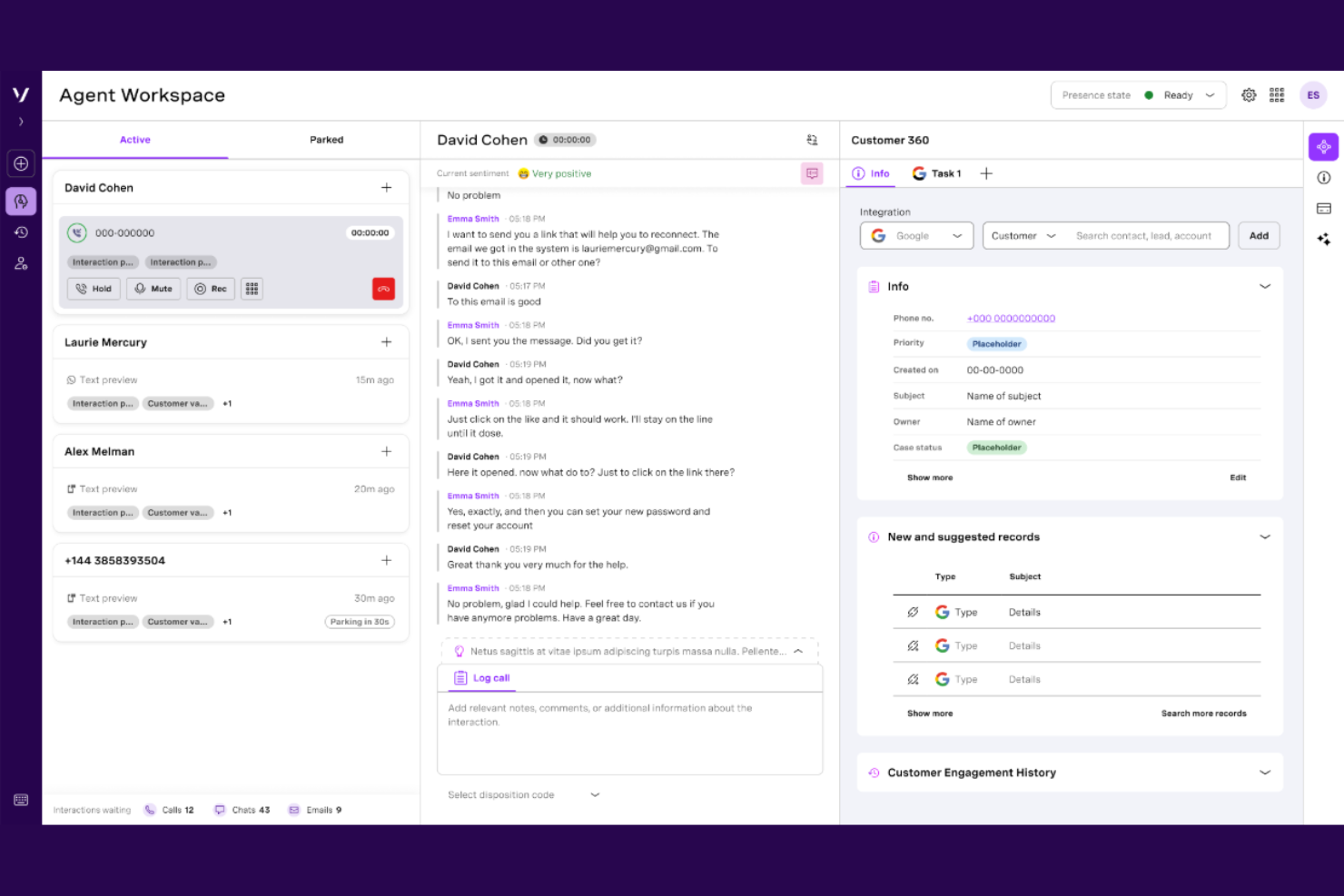
Vonage is a cloud-based unified communications platform with a built-in virtual receptionist that handles multi-level auto attendant menus, schedule-based call routing, and custom greetings across multiple locations.
Who Is Vonage Best For?
Vonage is a strong fit for multi-location businesses in retail, healthcare, or professional services that field high call volumes across varied operating hours.
Why I Picked Vonage
I rate Vonage highly for auto attendant use because the recurring schedule feature handles holiday routing automatically once it's configured. I've set up yearly recurring closures so the correct after-hours greeting plays without anyone adjusting settings in advance. The priority override system is also practical: marking a new schedule as "Always in Front" temporarily reroutes calls without disturbing the permanent configuration underneath.
Vonage Key Features
- Ring group routing: Route a menu selection to a group of extensions that ring simultaneously or in sequence until someone picks up.
- External number routing: Forward auto attendant selections directly to a mobile phone or outside line, not just internal extensions.
- Voicemail routing: Send callers to a designated voicemail box when no one is available to take the call.
- Mobile app call handling: Receive auto attendant-routed calls through the Vonage mobile app on any device.
Vonage Integrations
Vonage offers native integrations with Salesforce, Microsoft Teams, Microsoft Dynamics, Slack, Zendesk, and ServiceNow. Vonage's communications platform is fully programmable, with an API available for custom integrations across voice, video, messaging, and more.
Pros and Cons
Pros:
- Free number porting to keep existing numbers
- Auto attendant is easy to set up
- Greetings change by time, day, and holiday
Cons:
- Uploading custom auto attendant recordings can fail
- Multi-level auto attendant locked to Premium

Best for small business-friendly phone menus
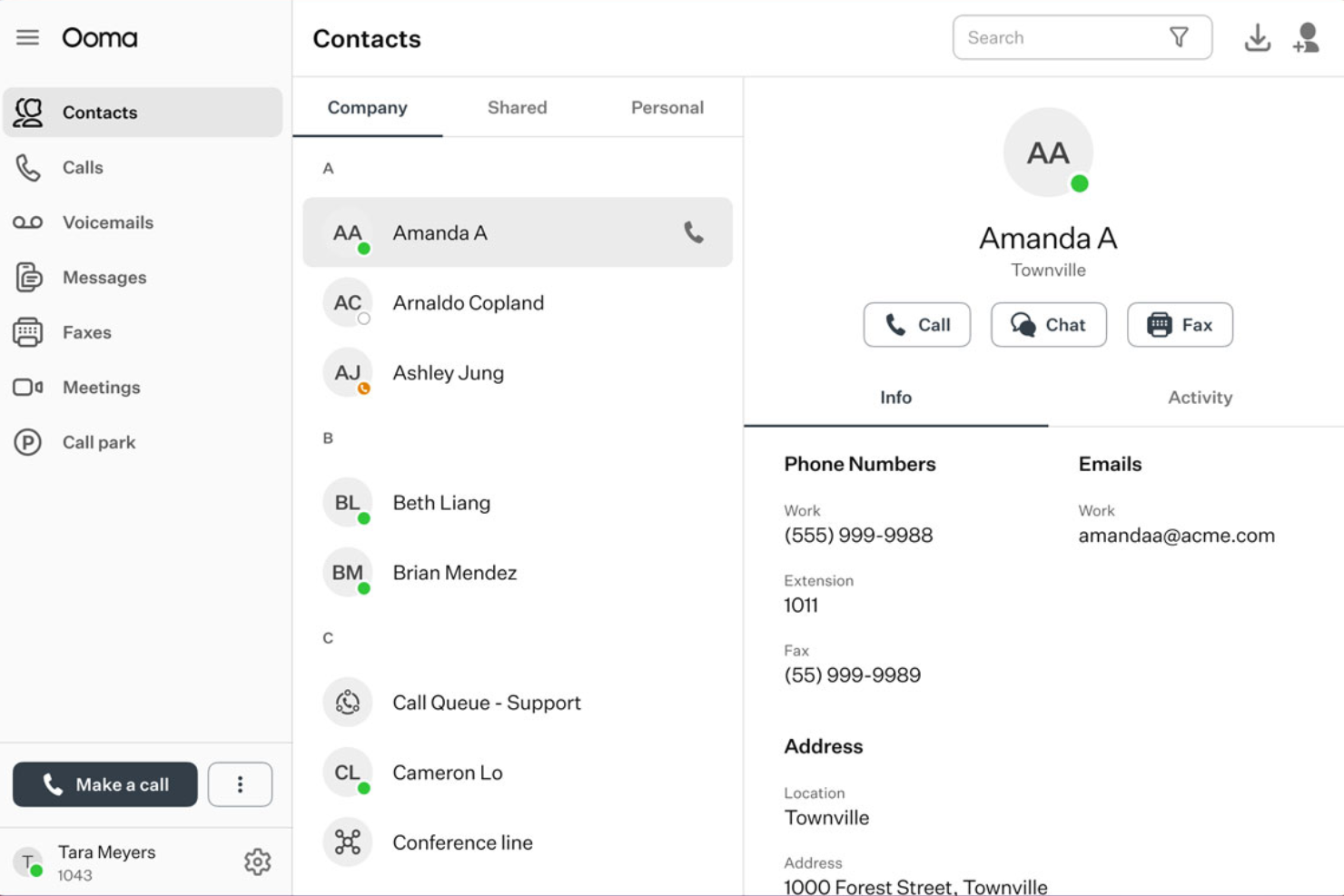
Built for small businesses, Ooma Office is a VoIP phone system with a virtual receptionist that handles call routing, custom greetings, ring groups, and multi-mode scheduling across extensions.
Who Is Ooma Office Best For?
Ooma Office is well-suited to small businesses with fewer than 20 employees that need a phone system with a built-in auto attendant from day one.
Why I Picked Ooma Office
Ooma Office earns its spot on my shortlist because the virtual receptionist gives you up to 10 dial options per menu, and each one can route to a specific extension, a ring group, or a voicemail box. I also like the dial-by-name directory, which lets callers reach any team member by spelling their name. Both features are included on every plan, so even the smallest team gets a call routing setup that works like a much larger operation.
Ooma Office Key Features
- Multi-mode scheduling: Set separate call flows for business hours, after-hours, and holidays, each with its own routing rules.
- Text-to-speech greetings: Type your greeting text and generate audio instantly, without recording or uploading a file.
- Ring groups: Route incoming calls to a defined group of extensions simultaneously or in a sequence until someone answers.
- Call blocking: Create a list of numbers to block outright, sending unwanted callers directly to voicemail or a rejection message.
Ooma Office Integrations
Ooma Office offers 19 native integrations, including Salesforce, HubSpot, Microsoft Dynamics 365, Zoho CRM, Pipedrive, Freshdesk, Zendesk, QuickBooks, Google Chrome, and Square. It also connects with Zapier.
Pros and Cons
Pros:
- Built-in call blocking reduces robocall interruptions
- Virtual receptionist includes a dial-by-name directory
- Can be set up in about 15 minutes
Cons:
- Admin dashboard interface feels outdated
- Auto attendant options feel limited
Nextiva
Best for intuitive self-service call handling
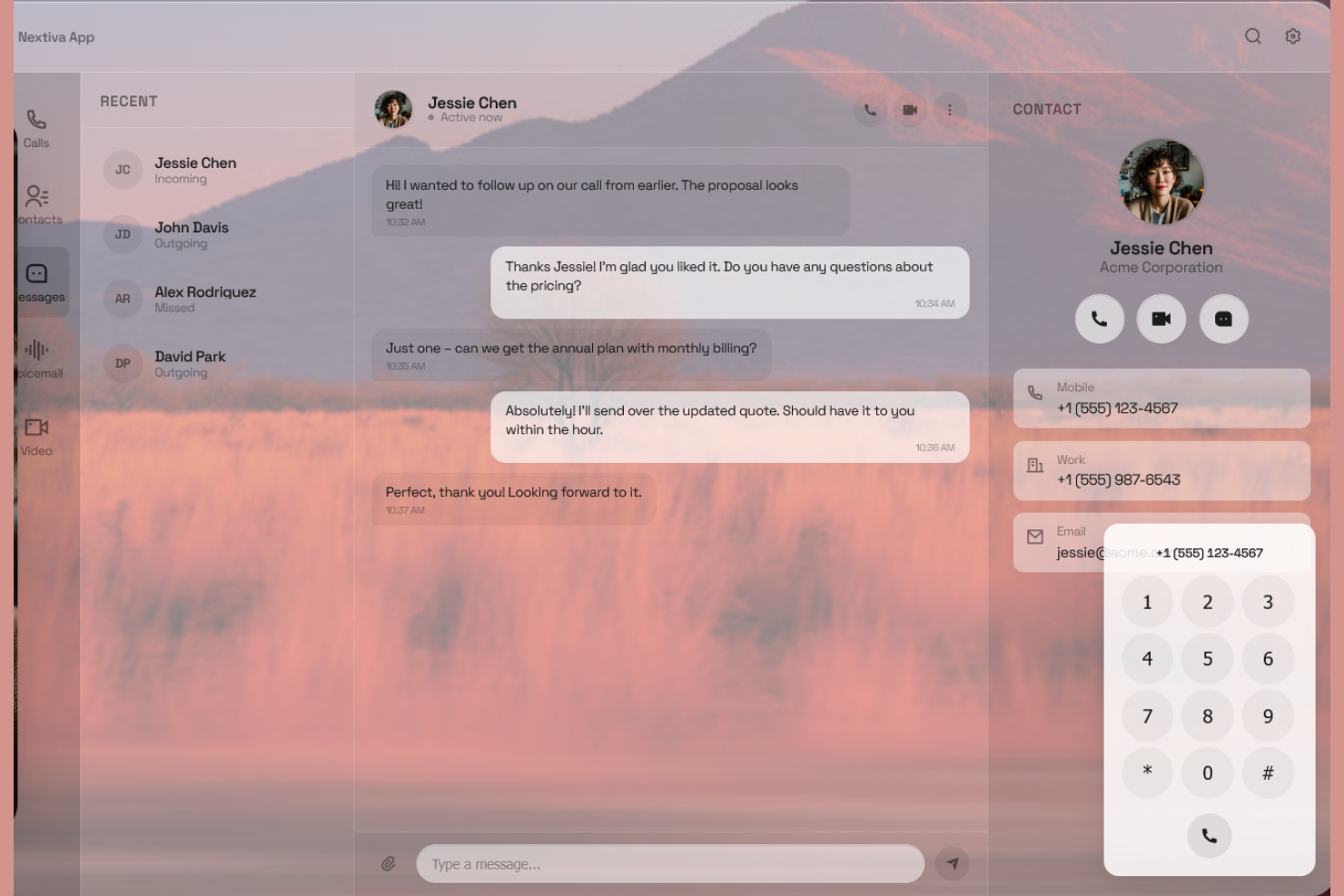
Nextiva is a VoIP platform that bridges the gap between a legacy landline and unified communications with a built-in auto attendant, multi-level IVR, and a drag-and-drop call flow builder.
Who Is Nextiva Best For?
Nextiva is a strong fit for small to mid-sized businesses that need non-technical staff to set up and manage call routing without IT support.
Why I Picked Nextiva
I've included Nextiva in my top picks because its drag-and-drop call flow builder genuinely makes self-service call handling accessible without any technical background. My team can configure multi-level auto attendant menus, set business hours routing, and create holiday greetings all from the Nextiva Voice portal. I also like that it supports a dial-by-name directory and keypad-based submenu navigation, so callers can find the right person or department without involving a live operator at any point.
Nextiva Key Features
- Customizable greeting recordings: Record and upload professional greetings that play on every inbound call, including unique messages for holidays and after-hours.
- Toll-free number routing: Route calls from dedicated toll-free numbers directly to specific teams or call queues, separate from your main line.
- Hold music: Configure hold music to play for callers waiting to be connected through the auto attendant.
- HIPAA and SOC-2 compliance: Built-in security standards that make Nextiva viable for healthcare and professional services teams handling sensitive caller data.
Nextiva Integrations
Nextiva offers 30+ native integrations, including Salesforce, HubSpot, Microsoft Teams, Microsoft Dynamics, Zendesk, Zoho, Oracle NetSuite, ServiceNow, Pipedrive, Shopify, and more.
Pros and Cons
Pros:
- Simultaneous ring across multiple devices
- Custom greetings per location and schedule
- Dial-by-name directory for caller self-service
Cons:
- No built-in speech recognition routing
- Limited call flow templates out-of-box

Best for unified digital and voice workflows

Genesys Cloud CX functions as an advanced automated attendant and cloud-based contact center platform that combines inbound voice routing, IVR, AI-powered virtual agents, and digital channel management.
Who Is Genesys Cloud CX Best For?
Genesys Cloud CX is a natural fit for mid-to-large enterprises managing contact center operations across multiple digital and voice channels from a single platform.
Why I Picked Genesys Cloud CX
I've included Genesys Cloud CX in my top picks because it genuinely unifies voice and digital channels in a way that most auto attendant platforms don't. What I like is the single flow builder: you design IVR menus, digital routing logic, and bot escalation paths in one place, so voice and chat callers follow consistent, connected journeys. I also appreciate that predictive routing uses real-time customer data to match callers to the right agent, not just the next available one.
Genesys Cloud CX Key Features
- Speech-enabled IVR: Callers can speak menu selections naturally instead of pressing keypad inputs.
- Queue callback: Lets callers request a callback rather than waiting on hold, with their place in queue preserved.
- Call recording and transcription: Automatically records and transcribes voice interactions for quality review and compliance.
- Real-time analytics dashboard: Displays live queue activity, agent status, and interaction volumes across all active channels.
Genesys Cloud CX Integrations
Genesys Cloud CX offers over 600+ integrations, including Salesforce, ServiceNow, Microsoft Dynamics, Power BI, Zoho CRM, Microsoft Teams, Zoom, Okta, and more. The platform is API-first, with over 3,000 public APIs available for custom integrations.
Pros and Cons
Pros:
- Skills-based routing across all channels
- Weekly feature releases and platform updates
- Drag-and-drop IVR flow builder in Architect
Cons:
- Email channel trails voice in flexibility
- Reporting dashboards lack sorting and customization

Best for scalable automation in large deployments
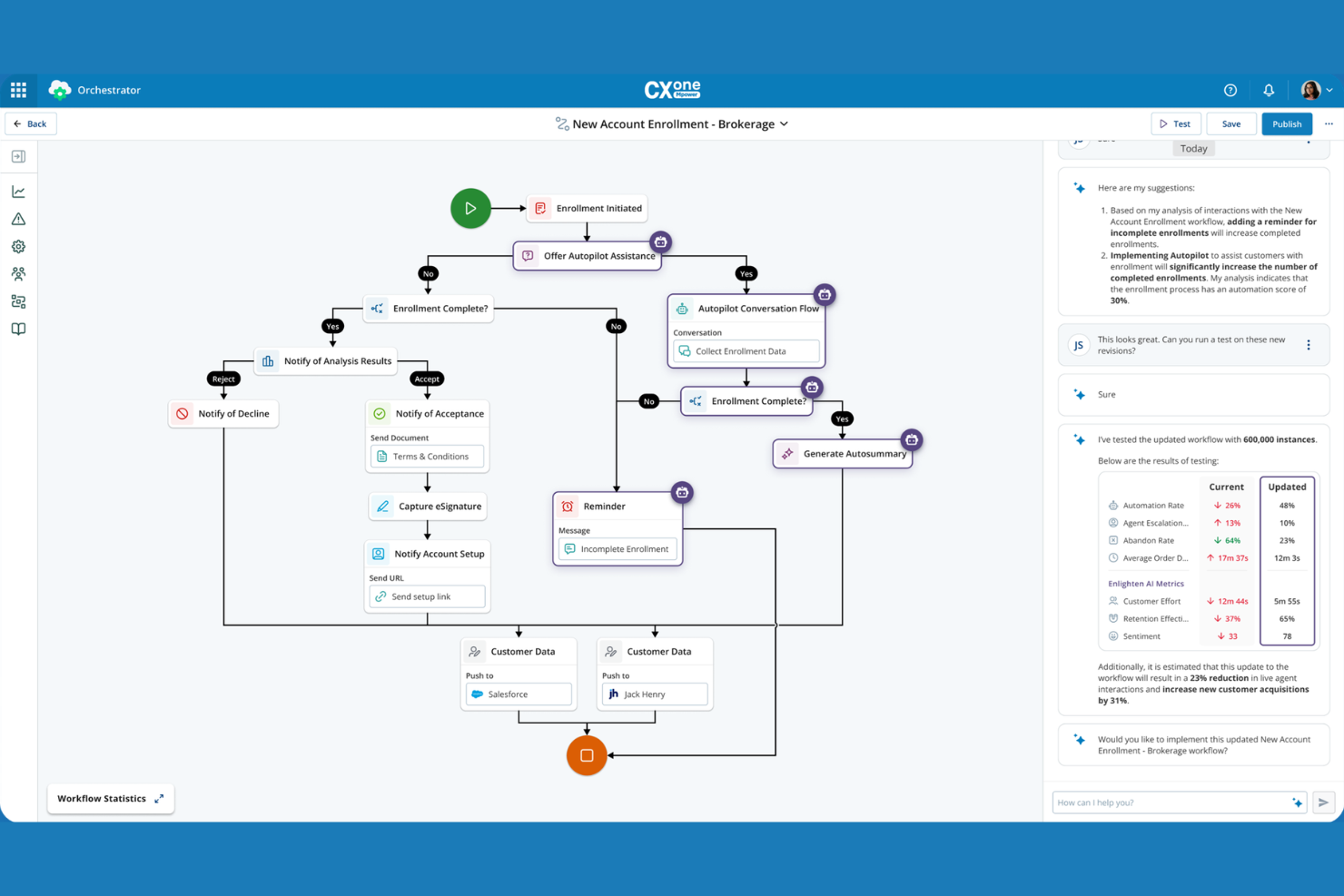
Built for enterprise contact centers, NiCE CXone is an AI-native cloud platform that combines auto attendant, IVR, intelligent virtual agents, omnichannel routing, and workforce engagement management.
Who Is NiCE CXone Best For?
NiCE CXone suits large enterprises and multi-site contact centers whose CX operations teams need centralized control over high-volume, automated voice and digital interactions.
Why I Picked NiCE CXone
NiCE CXone earns its spot on my shortlist because of its Enlighten AI layer, which scores and routes every inbound call automatically without manual rule-building. I also like that CXone Studio lets my team build and deploy auto attendant flows across hundreds of queues from a single no-code canvas. When call volume spikes, the platform scales routing logic across sites without reconfiguring each location individually.
NiCE CXone Key Features
- Skills-based routing: Directs inbound calls to agents based on predefined skills, language, or team assignment.
- IVR self-service menus: Lets callers navigate options and resolve requests without reaching a live agent.
- Omnichannel routing: Extends auto attendant logic across voice, chat, email, and digital channels from one unified queue.
- Real-time queue monitoring: Displays live call volume, wait times, and agent availability across all active contact queues.
NiCE CXone Integrations
NiCE CXone offers 170+ pre-integrated apps, including Salesforce, and UCaaS integrations with Microsoft, RingCentral, Zoom, LogMeIn, and Unify. Many APIs and SDKs are available for custom integrations.
Pros and Cons
Pros:
- Scales routing and automation across multiple sites from one platform
- No-code CXone Studio simplifies enterprise IVR workflow creation
- AI-powered routing with Enlighten AI for smarter call distribution
Cons:
- Better suited to large enterprises than small support teams
- Higher starting price than many contact center platforms
Five9
Best for AI-powered conversational workflows

Five9 is a cloud-based contact center platform with an Intelligent Virtual Agent (IVA) that handles inbound voice, chat, SMS, and social messaging interactions using no-code workflow builders and AI-driven natural language understanding.
Who Is Five9 Best For?
Five9 is a strong fit for enterprise contact centers in healthcare, financial services, and retail that handle high inbound call volumes and need AI-driven self-service at scale.
Why I Picked Five9
Five9 earns its spot on my shortlist because its Intelligent Virtual Agent handles AI-powered conversational workflows across voice, chat, SMS, and social in a single no-code platform. I particularly like the drag-and-drop task library with pre-built templates for industry-specific scenarios like PCI-compliant card payments and appointment scheduling. The IVA also transfers full interaction context to live agents on handoff, so callers never have to repeat themselves.
Five9 Key Features
- Natural language processing (NLP): Interprets caller intent from spoken or typed input using AI-trained speech recognition models.
- Omnichannel routing: Directs inbound interactions across voice, email, chat, and SMS to the right queue based on configured rules.
- Skills-based routing: Matches callers to agents based on defined skill sets, language, and availability.
- Real-time reporting dashboard: Monitors live call queue activity, IVA containment rates, and agent performance from a single view.
Five9 Integrations
Five9 offers pre-built integrations with Salesforce, ServiceNow, Microsoft, Oracle, and Zendesk. Five9 also provides APIs and SDKs for custom integrations with internal systems like ERP, billing, and reporting platforms.
Pros and Cons
Pros:
- Supervisor whispers and barges during calls
- IVA handles self-service across multiple channels
- AI auto-summarization reduces after-call work
Cons:
- Dropped calls reported during high volume
- Admin console is still transitioning from legacy Java

RingCentral
Best for multi-location call routing customization
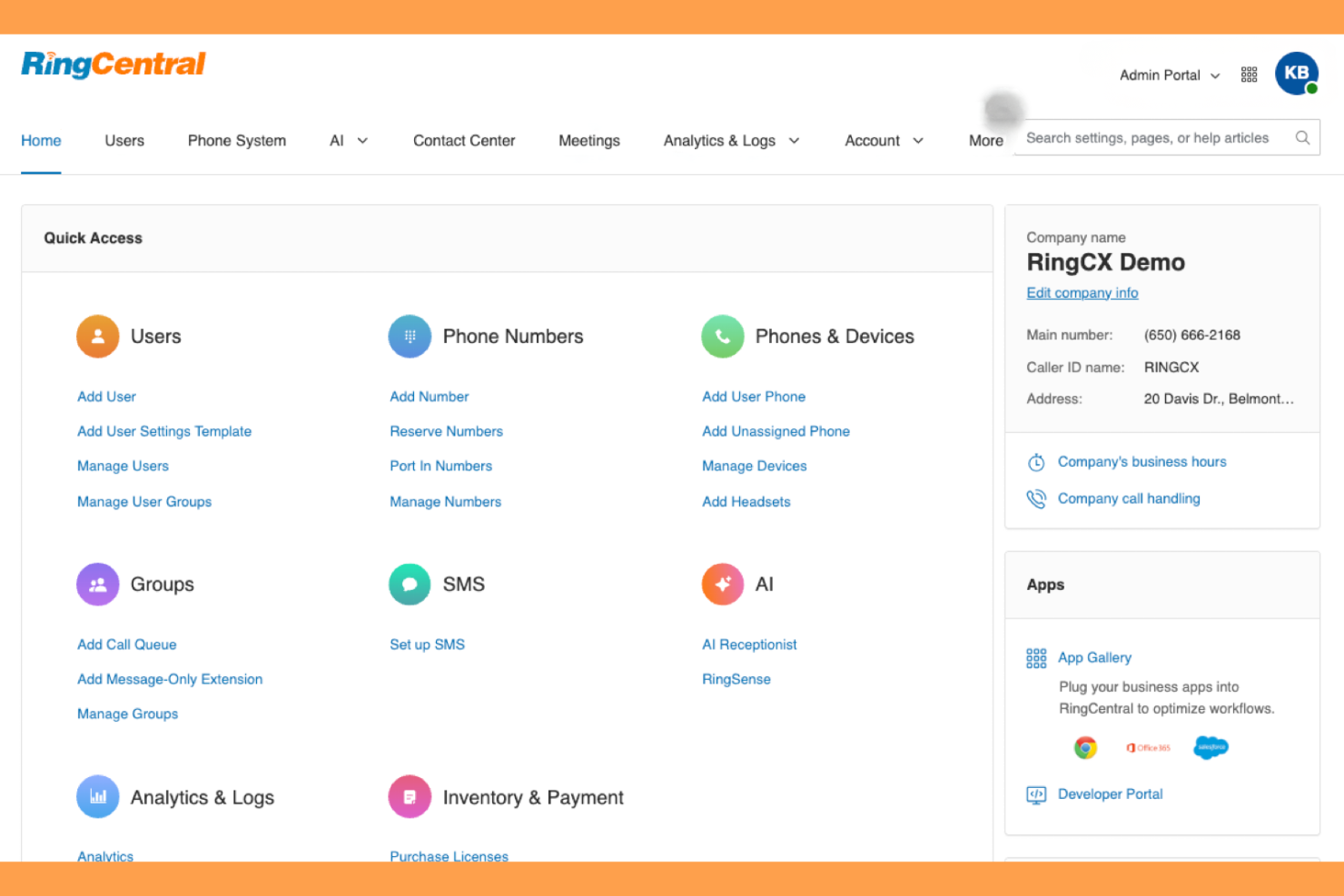
RingCentral is a cloud-based business phone system and communications platform that includes a multi-level auto attendant, call routing, IVR menus, and voice-over-IP across desktop and mobile.
Who Is RingCentral Best For?
RingCentral is a strong fit for mid-sized to enterprise businesses managing call flows across multiple offices or locations.
Why I Picked RingCentral
RingCentral is one of my top picks because I love how its multi-level IVR handles complex, multi-location call routing without requiring a separate system per site. In practice, my team can configure location-specific IVR menus, custom business hours, and regional settings all from a single admin portal. The dial-by-name directory and per-extension answering rules make it easy to manage routing across departments that span different offices or time zones.
RingCentral Key Features
- Call recording: Record live calls and custom greetings directly within the platform for quality monitoring and compliance.
- AI Receptionist: An AI-powered attendant that handles routine caller questions and appointment scheduling without live agent involvement.
- Company call handling: Configure top-level IVR menu options to manage inbound calls differently during and after business hours.
- Company fax/SMS recipient: Assign dedicated phone numbers to receive fax and SMS messages alongside voice calls.
RingCentral Integrations
RingCentral offers over 500 integrations through its App Gallery, including Salesforce, Microsoft Teams, Google Workspace, Jira, HubSpot, Slack, Zendesk, Microsoft 365, Google Sheets, and Zoho CRM. It also provides APIs for voice, SMS, messaging, video, and analytics to support custom integrations, and it connects with Zapier.
Pros and Cons
Pros:
- 99.999% uptime SLA for reliability
- Supports time zone-based routing rules
- Multi-level IVR with visual call flow editor
Cons:
- IVR setup has a steep learning curve
- Advanced AI features gated to higher tiers
Other Auto Attendant Phone Systems
Here are some additional auto attendant phone system options that didn’t make it onto my shortlist, but are still worth checking out:
- GoTo Connect
For easy setup with remote teams
- Zoom Phone
For smooth platform integration with video
- 8x8
For omnichannel integration options
- Aircall
For collaborative team call handling
- Twilio
For developer-friendly voice APIs
- Webex
For integration with enterprise tools
- MightyCall
For visual call flow management
- 3CX
For customizable digital receptionist flows
- JustCall
For easy drag-and-drop menu setup
- Sangoma
For advanced call queue management


How I Evaluate Auto Attendant Phone Systems
I evaluate systems across two layers: the core call routing and menu capabilities every tool must cover, and the differentiators like AI speech recognition or analytics depth that set vendors apart.
Core Functionality (Table Stakes For This List)
When I'm selecting tools for my list, I rank each one on a scale from 0 (does not offer the functionality) to 5 (excels in this area) for each core functionality listed below. Then, I calculate the tool's total score into a percentage. Each tool needs to achieve a minimum total score of 65% to be considered for inclusion.
- Multi-level IVR menus: I check whether the system supports nested menus deep enough for callers to reach specialized queues, like billing disputes or technical support tiers, without hitting dead ends.
- Call routing rules: Each tool should let admins set routing by time of day, department, or caller attributes so after-hours calls land in the right voicemail or on-call queue automatically.
- Custom greetings and prompts: I look for the ability to upload recorded audio or use text-to-speech, especially when teams need to update seasonal greetings or add new language options quickly.
- Business hours handling: The system should support separate call flows for open hours, holidays, and emergencies, so a caller on a public holiday hears the right message instead of sitting in a dead queue.
- Voicemail and call forwarding: I evaluate whether voicemail includes email notifications and whether forwarding covers mobile devices and external numbers for distributed or remote teams.
- Call analytics and reporting: Reports should go beyond basic call logs to include menu selection trends, abandonment rates, and peak volume periods that help admins spot routing bottlenecks.
Once I have a list of tools that meet this criteria, I consider what sets each platform apart.
Differentiating Factors (What Sets Vendors Apart)
Here's how I compare and contrast different vendors:
Standout Features
AI speech recognition is a big differentiator here. Systems that let callers say "I need to check my order status" instead of pressing through three menus dramatically cut misroutes and caller frustration. I also look at how well a platform's call analytics dashboard surfaces actionable data like menu drop-off points and peak volume windows, since that's what helps admins actually improve call flows over time. Text-to-speech greetings matter too, especially for teams managing multilingual caller bases who need to swap or add prompts without scheduling a recording session.
Beyond Features
Integration with your existing tech stack is one of the first things I check. If your team lives in Salesforce or Zendesk, the auto attendant should push call data there without manual exports. Compliance also matters more than people realize—teams in healthcare or finance need HIPAA or PCI-DSS coverage baked in, not bolted on. I also evaluate pricing transparency closely, since some vendors bundle auto attendant into base plans while others charge extra for each IVR menu or toll-free number, which can significantly inflate your total cost.
How to Choose Auto Attendant Phone Systems
It’s easy to get bogged down in long feature lists and complex pricing structures. To help you stay focused as you work through your unique software selection process, here’s a checklist of factors to keep in mind:
| Factor | What to Consider |
|---|---|
| Scalability | Can the system handle growth in users, locations, or call volume without major upgrades or new contracts? |
| Integrations | Does the platform connect with your current CRM, helpdesk, or collaboration tools without custom development? |
| Customizability | How easily can you adapt menus, greetings, and routing rules to reflect changes in departments or CX workflows? |
| Ease of use | Can admins and end users manage settings, greetings, and reporting without specialized training or IT support? |
| Implementation and onboarding | How much time and internal expertise will it take to get up and running? Do you get guided setup or tutorials? |
| Cost | Is pricing clear about what’s included, what’s extra, and how add-ons, seats, or usage may affect your budget? |
| Security safeguards | Does the system offer encryption, strong authentication, and restrict admin access to sensitive call data? |
| Compliance requirements | Will the system keep you covered for regulations relevant to your industry, like GDPR, HIPAA, or PCI-DSS? |
What are Auto Attendant Phone Systems?
Auto attendant phone systems are telephony platforms that answer incoming calls and route them to the appropriate department, extension, or message using voice prompts or menu options. These systems reduce manual call handling, provide 24/7 coverage, and offer a consistent first point of contact for callers, making them a core solution for customer-centric organizations.
Features
When selecting auto attendant phone systems, keep an eye out for the following key features:
- Multi-level IVR menus: Let callers navigate structured menu trees to find the right department, team, or resource without needing a live agent for basic routing.
- Call routing rules: Automatically direct calls based on factors like time of day, caller input, language preference, or business unit for optimized handling.
- Custom greetings and prompts: Create and update audio greetings or menu prompts—often with text-to-speech options—for consistent, branded caller experiences.
- Business hours scheduling: Set distinct call flows for open hours, after hours, holidays, and emergencies, so callers always get contextually appropriate responses.
- Voicemail and call forwarding: Enable callers to leave messages or redirect calls to specific extensions, mobiles, or external numbers when agents are unavailable.
- Call analytics and reporting: Access data on call volumes, menu selections, drop-off rates, and peak times to inform workflow improvements and staffing.
- Speech recognition: Accept spoken responses from callers to reduce menu fatigue and optimize routing for more natural caller experiences.
- Multi-language support: Offer menus, greetings, and prompts in multiple languages to better serve global, regional, or diverse caller bases.
- Self-service options: Let callers access information or complete simple tasks—like checking balances or order status—without waiting for an agent.
- Administration dashboard: Manage system settings, users, greetings, and call flows in a centralized interface for easier day-to-day administration.
Benefits
Implementing auto attendant phone systems provides several benefits for your team and your business. Here are a few you can look forward to:
- Faster call routing: Automated menus and smart routing rules connect callers to the right person or department without unnecessary transfers or wait times.
- 24/7 accessibility: Callers can interact with your system and get answers or leave messages any time, even outside of standard business hours.
- Consistent brand experience: Custom greetings, multilingual options, and standardized prompts ensure every caller receives polished, on-brand communication.
- Reduced manual workload: By handling common questions and routing tasks automatically, your agents have more time for complex or high-value interactions.
- Improved analytics: Built-in reporting dashboards let you spot call trends, bottlenecks, and menu performance issues so you can optimize your workflows.
- Scalable support: Systems easily expand with your business, supporting new departments, locations, or staff without major infrastructure upgrades.
- Improved customer satisfaction: Callers experience less frustration and shorter wait times, leading to higher satisfaction and better overall impressions of your service.
Costs and Pricing
Selecting auto attendant phone systems requires an understanding of the various pricing models and plans available. Costs vary based on features, team size, add-ons, and more. The table below summarizes common plans, their average prices, and typical features included in auto attendant phone system solutions:
Plan Comparison Table for Auto Attendant Phone Systems
| Plan Type | Average Price | Common Features |
|---|---|---|
| Free Plan | $0 | Basic call routing, single-level IVR, limited greetings, and basic voicemail. |
| Personal Plan | $5-$15/user/month | Single-user access, call forwarding, voicemail to email, and basic scheduling. |
| Business Plan | $20-$40/user/month | Multi-level IVR menus, call analytics, team management, integrations, and advanced routing rules. |
| Enterprise Plan | $45-$100/user/month | Unlimited IVR nesting, AI speech recognition, custom SLAs, API access, compliance tools, and priority support. |
Auto Attendant Phone Systems FAQs
Here are some answers to common questions about auto attendant phone systems:
Can auto attendant phone systems work with my existing phone infrastructure?
Yes, many auto attendant phone systems integrate with on-premise PBX systems, VoIP platforms, or SIP trunks. Always verify compatibility and ask vendors if additional hardware or configuration is required before switching.
How flexible are auto attendant menus if my business changes?
Systems typically offer admin portals for updating menu trees, greetings, and routing logic in real time. This flexibility makes it easy to add new departments, adjust schedules, or launch seasonal options without outside help.
Are these systems suitable for remote or distributed teams?
Yes, most modern auto attendant solutions are cloud-based and support call routing, forwarding, and access across multiple locations or remote agents, enabling distributed teams to function as a unified call center.
What security practices should I look for in an auto attendant solution?
Look for call encryption, administrator access controls, and audit logging. If you handle sensitive data, choose systems with compliance certifications like SOC 2, HIPAA, or PCI-DSS.
Can auto attendant systems handle multiple languages?
Yes, many platforms provide multilingual menu and greeting support, either through text-to-speech in various languages or by uploading custom audio for different caller preferences. This ensures you can serve diverse customer bases effectively.