
24 Best Genesys Competitors for 2026

Genesys Competitors Shortlist
Here's my pick of the 10 best software from the 24 tools reviewed.


A strong Genesys alternative offers advanced omnichannel support, flexible integrations, and reliable scalability for complex customer experience operations. If you’re searching for a replacement or supplement to Genesys, you likely need a platform that can handle high interaction volumes, connect with your existing tools, and adapt as your business grows.
This list will help you compare leading Genesys competitors, highlighting their unique features and strengths so you can make an informed decision for your team’s customer experience strategy.
What Is Genesys?
Genesys is a customer experience platform that helps businesses manage and optimize customer interactions across channels like voice, chat, email, and social media. It offers tools for contact center management, workforce optimization, and analytics. Genesys is used by support, success, and service teams to deliver consistent, high-quality experiences and improve customer satisfaction. Its integrations and automation features support complex workflows and large-scale operations.
Best Genesys Alternatives Summary
This comparison chart summarizes pricing details for my top Genesys alternative selections to help you find the best one for your budget and business needs.
| Tool | Best For | Trial Info | Price | ||
|---|---|---|---|---|---|
| 1 | Best for instant global number provisioning | Free trial + free demo available | From $19/user/month (billed annually) | Website | |
| 2 | Best for workflow automation tools | Free demo available | From $15/user/month (billed annually) | Website | |
| 3 | Best for real-time voice transcription | Free trial available | From $15/user/month (billed annually) | Website | |
| 4 | Best for mobile-first customer support | Free demo available | From $65/user/month | Website | |
| 5 | Best for AI-powered call routing | Free demo available | From $119/user/month | Website | |
| 6 | Best for unified communications integration | Free demo available | Pricing upon request | Website | |
| 7 | Best for AWS ecosystem integration | Free plan available | Pay-as-you-go model | Website | |
| 8 | Best for developer customization | Free trial + free demo available | From $150/user/month | Website | |
| 9 | Best for rapid deployment needs | Free demo available | From $85/user/month | Website | |
| 10 | Best for hybrid cloud environments | Free demo available | Pricing upon request | Website |
Why Trust Our Software Reviews
We’ve been testing and reviewing software since 2020. As CX leaders ourselves, we know how critical and difficult it is to make the right decision when selecting software.
We invest in deep research to help our audience make better software purchasing decisions. We’ve tested more than 2,000 tools for different CX use cases and written over 1,000 comprehensive software reviews. Learn how we stay transparent & our software review methodology.
-

SupportYourApp
Visit WebsiteThis is an aggregated rating for this tool including ratings from Crozdesk users and ratings from other sites.4.7 -
Freshdesk
Visit WebsiteThis is an aggregated rating for this tool including ratings from Crozdesk users and ratings from other sites.4.4 -
Zendesk
Visit WebsiteThis is an aggregated rating for this tool including ratings from Crozdesk users and ratings from other sites.4.3




Genesys Alternatives Reviews
Below are my detailed summaries of the Genesys alternatives that made it onto my shortlist. My reviews offer a detailed look at the features, integrations, and best use cases of each platform to help you find the best one for your needs.

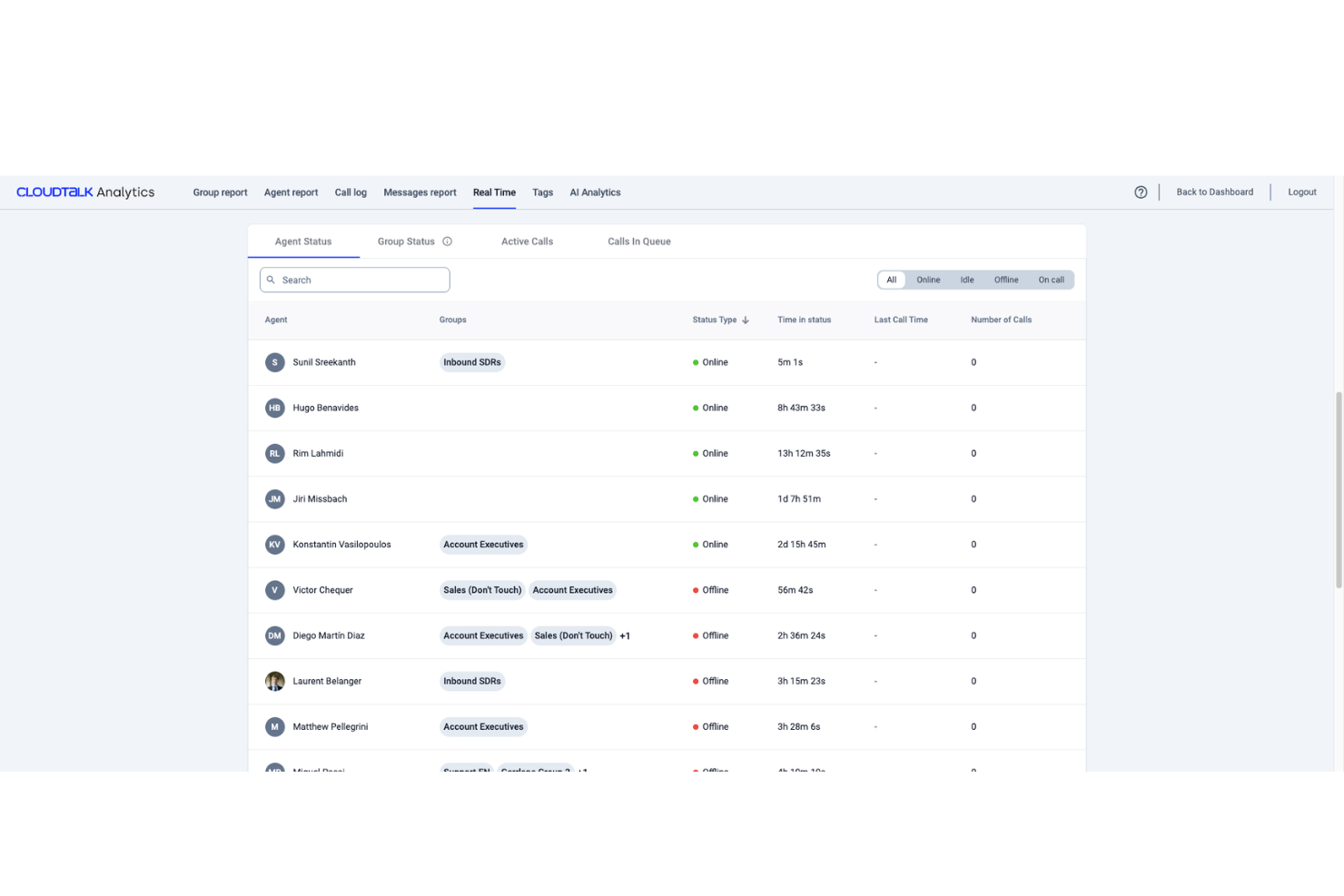
CloudTalk is a cloud-based contact center platform built for businesses that need flexible, scalable voice solutions. If you’re looking to modernize your customer support or sales operations with advanced call routing and global reach, CloudTalk is worth a look as a Genesys alternative.
Who Is CloudTalk Best For?
CloudTalk is a good fit for global customer support teams that need to quickly provision local and international phone numbers.
Why CloudTalk Is a Good Genesys Competitor
I picked CloudTalk because my team can instantly provision local and international phone numbers in over 160 countries, which is something Genesys doesn’t make as simple. I appreciate how we can activate numbers for new markets in minutes without lengthy approval processes. The platform’s number management dashboard lets us assign, port, or retire numbers as our needs change. For global support teams, this flexibility is a huge advantage.
CloudTalk Key Features
- Call flow designer: Build custom call routing paths with a visual drag-and-drop editor.
- Real-time analytics: Monitor live call metrics and agent performance dashboards.
- Click-to-call browser extension: Place calls directly from your CRM or helpdesk with one click.
- Call recording and storage: Automatically record and securely store inbound and outbound calls.
CloudTalk Integrations
CloudTalk offers native integrations with Salesforce, HubSpot, Zendesk, Pipedrive, Intercom, Zoho CRM, Microsoft Teams, and Shopify. An API is available for custom integrations.
Pros and Cons
Pros:
- Enterprise-grade voice encryption and security
- Strong CRM and helpdesk native integrations
- Advanced call flow designer with visual interface
Cons:
- No built-in outbound campaign management
- Call quality can vary by region
Why Nextiva Is a Good Genesys Alternative
For teams that want to automate and orchestrate customer interactions, Nextiva offers workflow automation tools that go beyond what many competitors provide. I picked Nextiva because its visual workflow builder lets you design, test, and deploy automated processes without coding. You can set up triggers, actions, and conditions to handle everything from routing tickets to sending follow-up messages. This focus on automation helps customer experience teams reduce manual work and deliver more consistent service compared to Genesys.
Nextiva Key Features
Some other features in Nextiva that may interest customer experience teams include:
- Omnichannel Communication: Manage voice, email, chat, and SMS interactions from a single user-friendly interface.
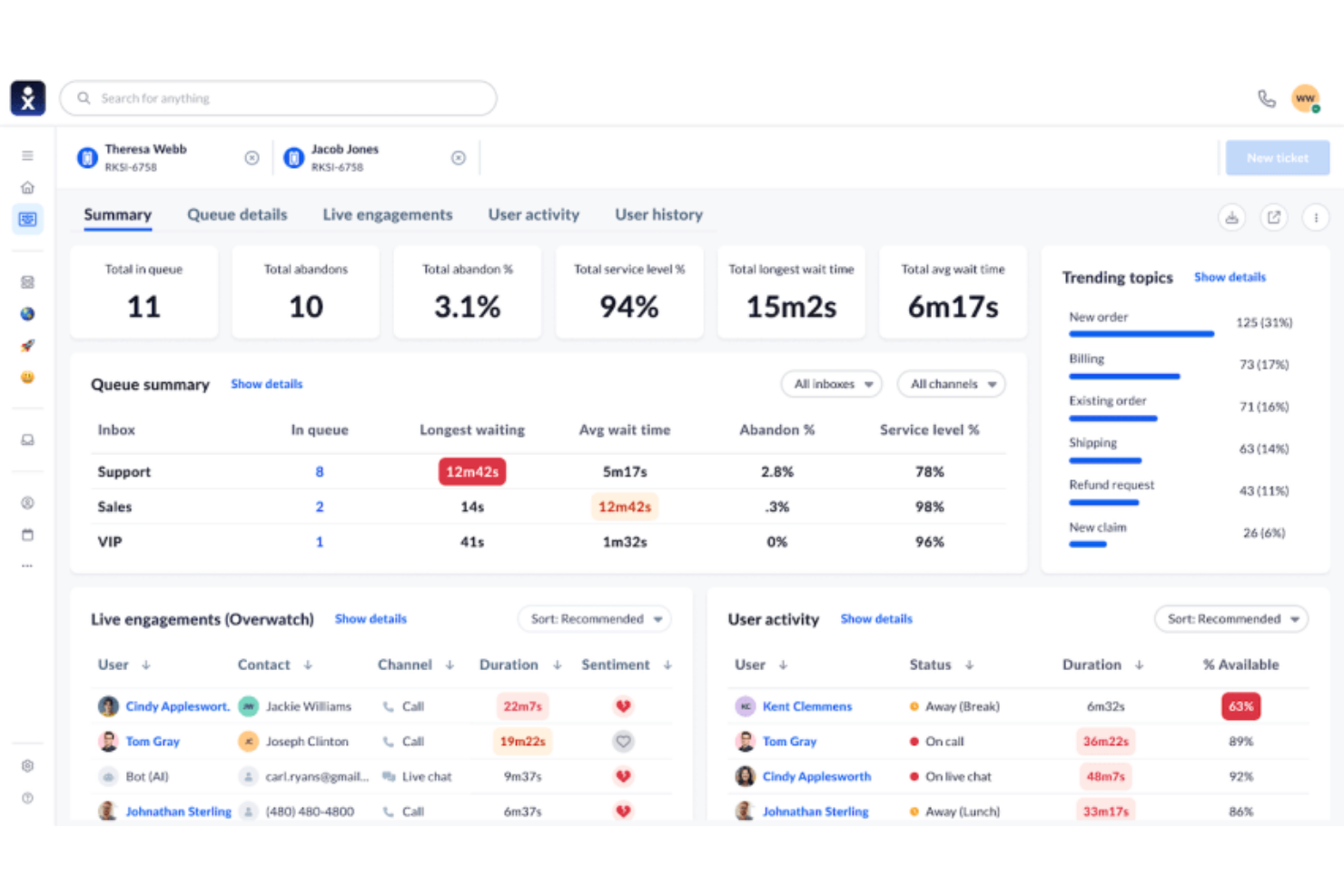
- Real-Time Analytics Dashboard: Monitor key metrics and agent performance with live data visualizations.
- Call Recording and Monitoring: Record, review, and monitor calls for quality assurance and training.
- CRM Integration: Connect customer data and interaction history directly within the platform.
Nextiva Integrations
Integrations include Salesforce, Microsoft Teams, Zendesk, HubSpot, ServiceNow, Microsoft Dynamics 365, and Zoho CRM.
Pros and Cons
Pros:
- Affordable intelligent virtual agents
- Native social media review management
- Unified multichannel agent dashboard
Cons:
- Integration access requires add-on fees
- No standalone phone system subscription

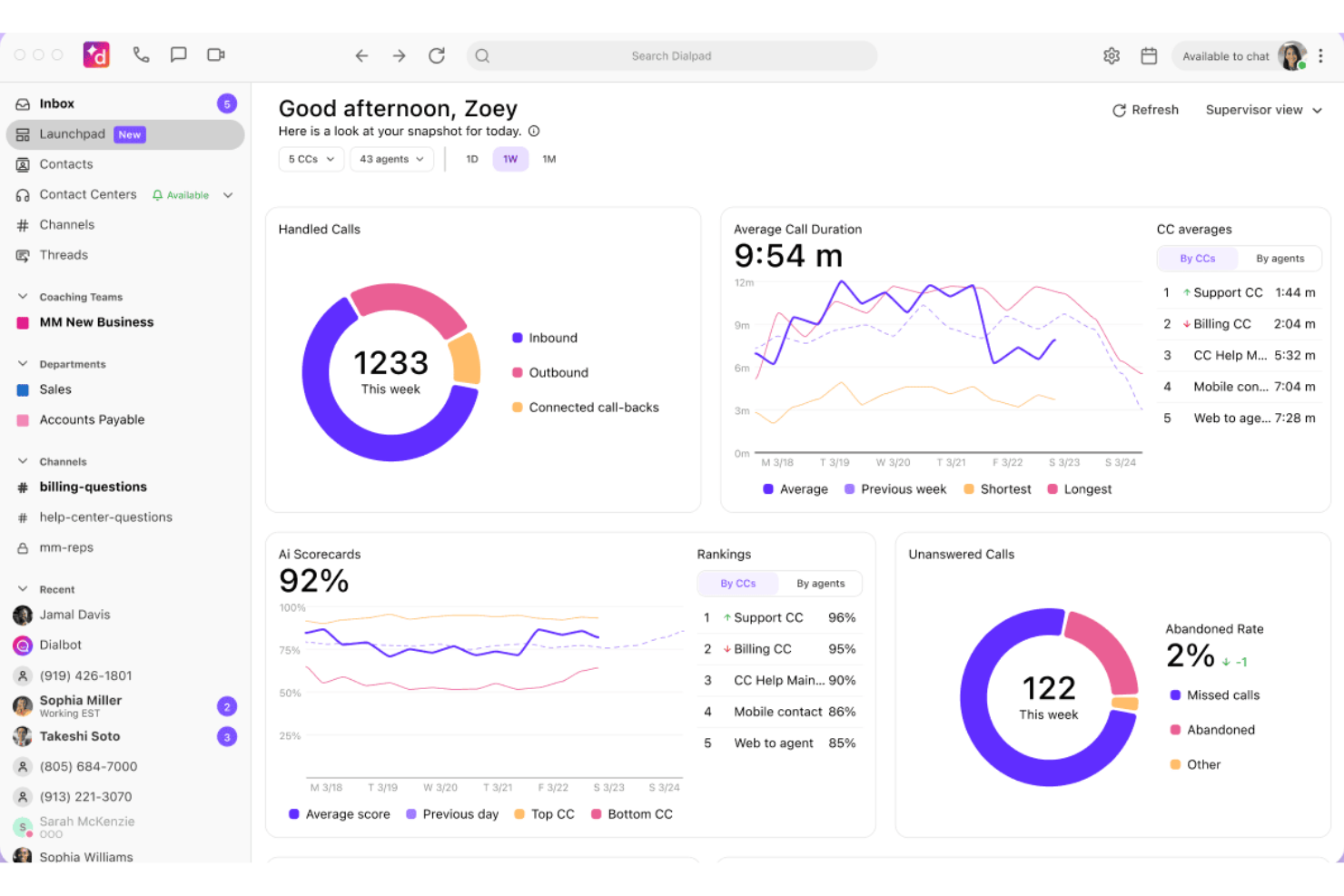
Teams looking for advanced voice intelligence in their customer experience platform may want to consider Dialpad. This tool appeals to businesses that need real-time voice transcription and AI-powered call insights to support high-volume customer interactions. Dialpad stands out from Genesys by offering live transcription and sentiment analysis during calls, helping agents respond quickly and accurately.
Why Dialpad Is a Good Genesys Alternative
For teams that need real-time voice transcription, Dialpad offers capabilities that set it apart from Genesys. I picked Dialpad because it provides live call transcription and AI-powered voice analysis, allowing agents to see what’s being said as it happens. The platform also highlights key moments and action items during calls, which helps teams capture important details without manual note-taking. These features make Dialpad a strong choice for businesses that rely on accurate, immediate voice data to support customer experience.
Dialpad Key Features
Some other features in Dialpad that may be useful for customer experience teams include:
- Call Routing: Route incoming calls to the right agent or department based on custom rules.
- Voicemail Transcription: Automatically transcribe voicemails so agents can quickly review messages.
- Team Messaging: Communicate with colleagues through built-in team chat and messaging tools.
- Call Recording: Record calls for quality assurance, training, and compliance purposes.
Dialpad Integrations
Integrations include Salesforce, Microsoft Teams, Slack, Google Workspace, Zendesk, HubSpot, ServiceNow, Okta, and Intercom.
Pros and Cons
Pros:
- Instant no-code call queue setup
- Automated post-call interaction summaries
- Real-time AI agent speech coaching
Cons:
- Complex admin management at scale
- Inconsistent international calling coverage

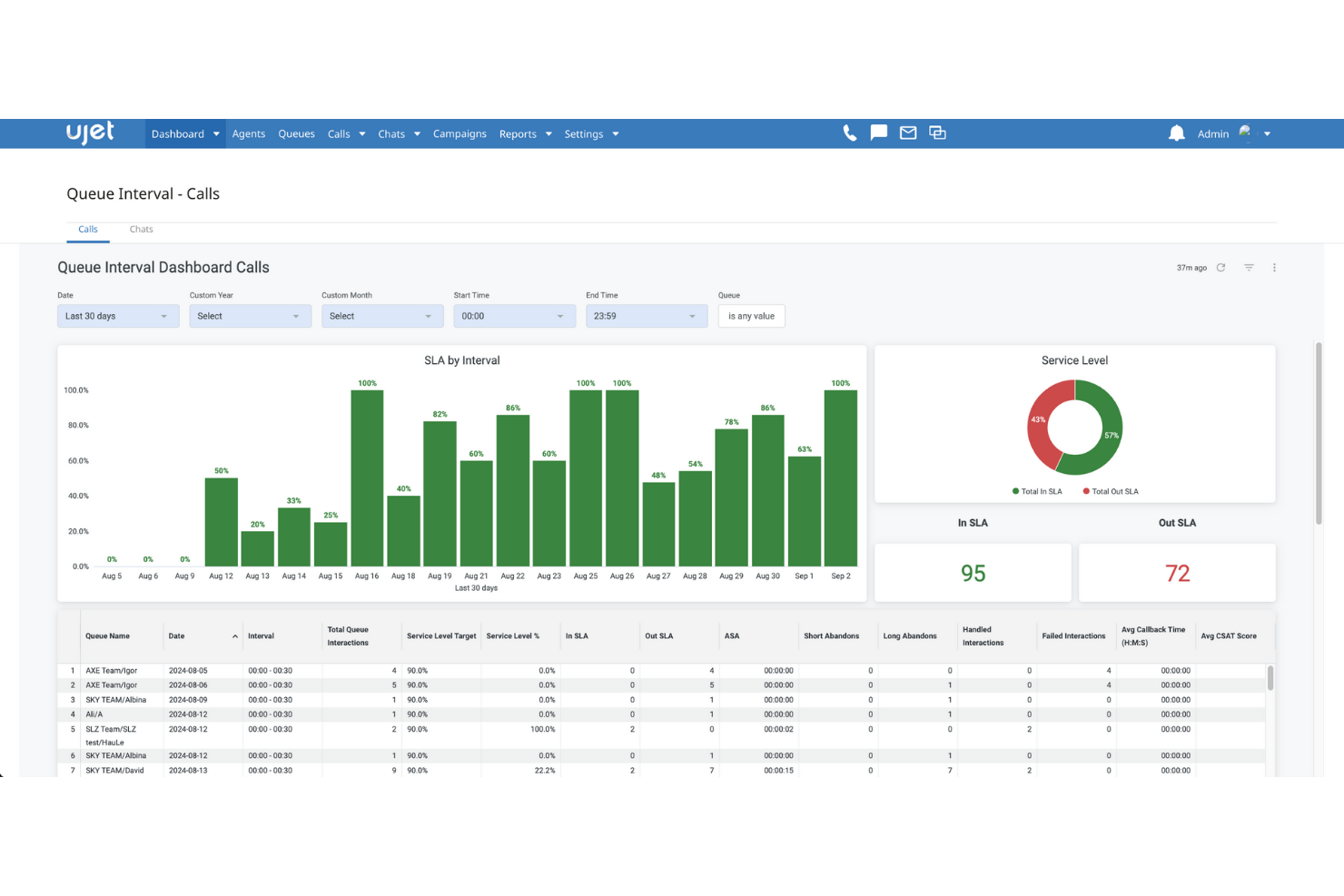
If your team needs a customer experience platform built for mobile-first support, UJET is worth a close look. This tool is designed for businesses that want to meet customers where they are—on their smartphones—by offering in-app messaging, multimedia sharing, and easy transitions between channels. Unlike Genesys, UJET focuses on delivering a modern, app-centric support experience that’s tightly integrated with mobile workflows.
Why UJET Is a Good Genesys Alternative
Unlike Genesys, UJET is purpose-built for businesses that want to deliver customer support directly within mobile apps. I picked UJET because it lets your team offer in-app messaging, voice, and video support without forcing customers to leave their mobile experience. You can also use features like real-time photo and file sharing to resolve issues faster and more visually. This mobile-first approach helps you meet customers’ expectations for fast, convenient, and modern support.
UJET Key Features
Some other features in UJET that may be valuable for customer experience teams include:
- Virtual Agent Automation: Automate routine customer interactions using AI-powered virtual agents.
- Real-Time Sentiment Analysis: Monitor customer sentiment during live interactions to help agents respond appropriately.
- Customizable IVR: Design and manage interactive voice response flows tailored to your business needs.
- Workforce Management (WFM) Tools: Schedule, forecast, and monitor agent performance within the same platform.
UJET Integrations
Integrations include Salesforce, Zendesk, Microsoft Dynamics 365, ServiceNow, Microsoft Teams, Oracle, and more.
Pros and Cons
Pros:
- Real-time smartphone image sharing
- Visual IVR for intuitive navigation
- Mobile-first smartphone-centric design
Cons:
- Limited native advanced analytics
- Inconsistent adapter feature performance
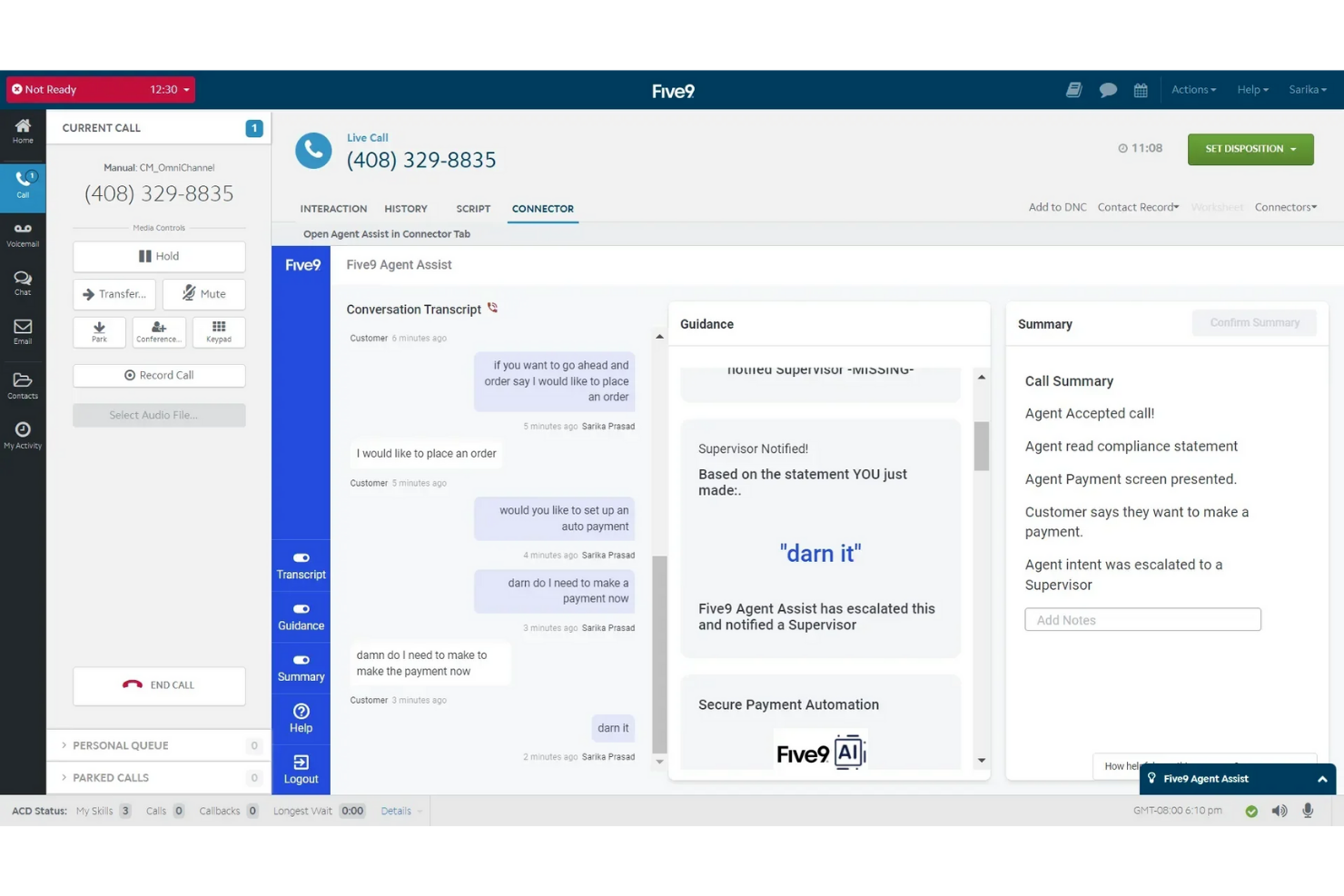
Five9 is a cloud-based customer experience platform designed for teams that need advanced call routing and automation. It’s a strong fit for call centers looking to use AI to manage high call volumes and improve agent productivity. If your business relies on intelligent voice interactions and real-time analytics, Five9 offers AI capabilities that set it apart from Genesys and other platforms.
Why Five9 Is a Good Genesys Alternative
What sets Five9 apart as a Genesys alternative is its focus on AI-powered call routing. I picked Five9 for teams that need intelligent routing features like real-time speech recognition and predictive analytics to match callers with the right agents. The platform’s AI can analyze caller intent and sentiment, then automatically direct calls to the most qualified team member. This approach helps businesses handle complex call flows and deliver more personalized customer experiences.
Five9 Key Features
Some other features in Five9 that may interest customer experience teams include:
- Omnichannel Engagement: Manage customer interactions across voice, chat, email, SMS, and social media from a single interface.
- Workforce Management: Forecast demand, schedule agents, and track performance with built-in workforce planning tools.
- Quality Management: Use the integrated dialer to monitor, record, and review customer interactions to support coaching and compliance.
- CRM Integrations: Connect Five9 with platforms like Salesforce, Zendesk, and Microsoft Dynamics to unify customer data and workflows.
Five9 Integrations
Integrations include Salesforce, Zendesk, Microsoft Dynamics 365, ServiceNow, Oracle, NetSuite, Zoom, Microsoft Teams, and more.
Pros and Cons
Pros:
- In-region voice for global quality
- Pre-built deep CRM desktop adapters
- Unified inbound and outbound blending
Cons:
- Occasional audio latency during updates
- Advanced reporting requires extra fees

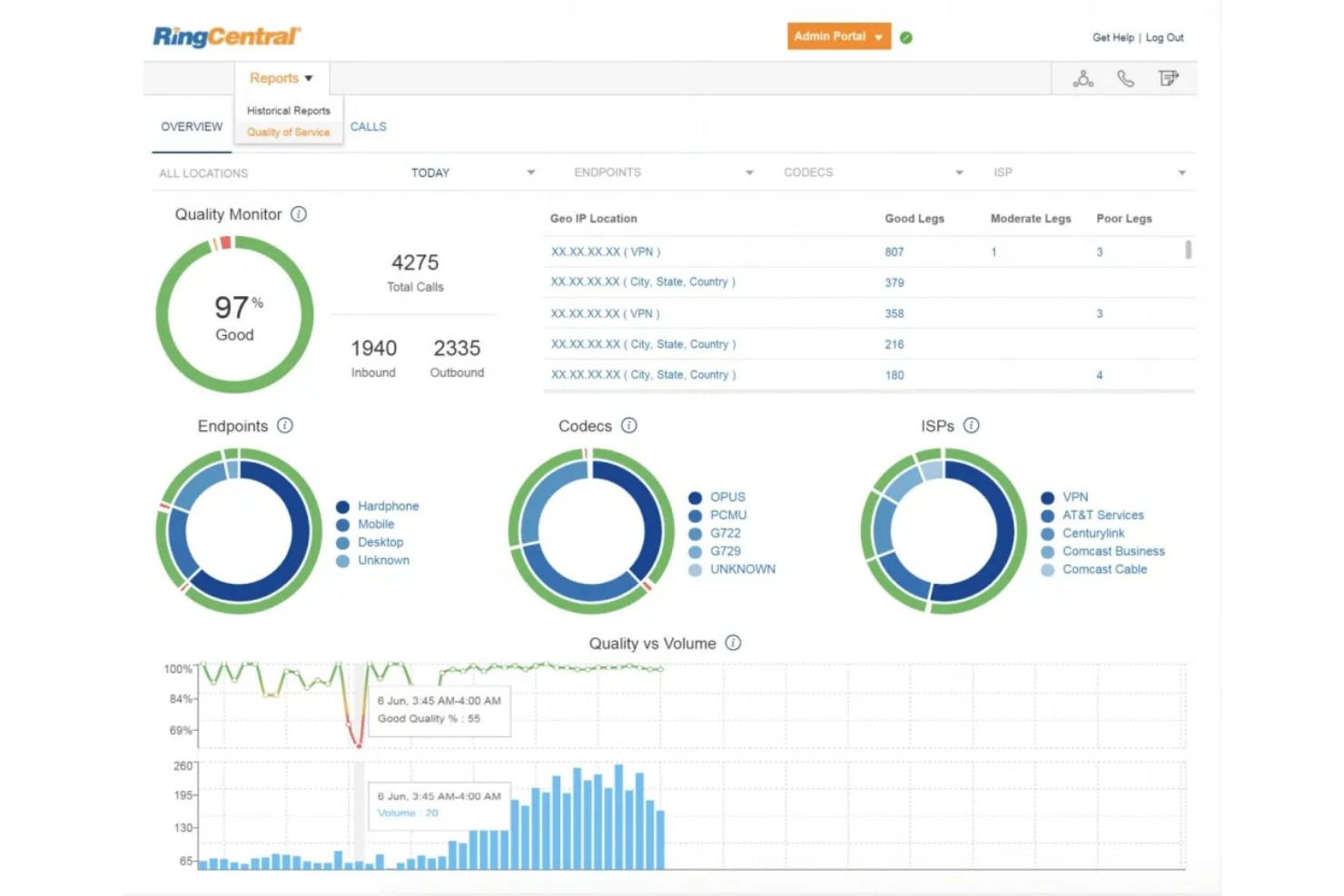
For teams that want to unify voice, video, messaging, and contact center in one place, RingCentral offers a single platform approach. This solution is especially useful for organizations that need to connect customer experience with internal communications and collaboration. Unlike Genesys, RingCentral’s unified communications integration lets you manage customer and employee interactions together, reducing silos and simplifying workflows.
Why RingCentral Is a Good Genesys Alternative
When you need to bring customer communications and internal collaboration together, RingCentral stands out for its unified communications integration. I picked RingCentral because it combines contact center, business phone, team messaging, and video meetings in a single communications platform. This lets customer experience teams switch between channels and collaborate with colleagues without leaving the app. For organizations looking to reduce tool sprawl and connect every part of the customer journey, RingCentral is a strong Genesys alternative.
RingCentral Key Features
Some other features in RingCentral that may interest customer experience teams include:
- AI-Powered Transcription: Automatically transcribe calls and meetings for easy reference and compliance.
- Omnichannel Customer Engagement: Manage customer interactions across voice, chat, SMS, and social media from one dashboard.
- Advanced Call Routing: Set up rules to direct calls based on agent skills, availability, or customer needs.
- Analytics and Reporting: Access real-time and historical data on call volumes, agent performance, and customer interactions.
RingCentral Integrations
Integrations include Salesforce, Microsoft Teams, Slack, Zendesk, HubSpot, ServiceNow, Okta, Box, and Dropbox.
Pros and Cons
Pros:
- Shared customer context across digital channels
- Native internal peer-to-peer video collaboration
- In-built transcription and call analytics
Cons:
- SMS character limits on basic tiers
- Outbound calls occasionally flagged spam

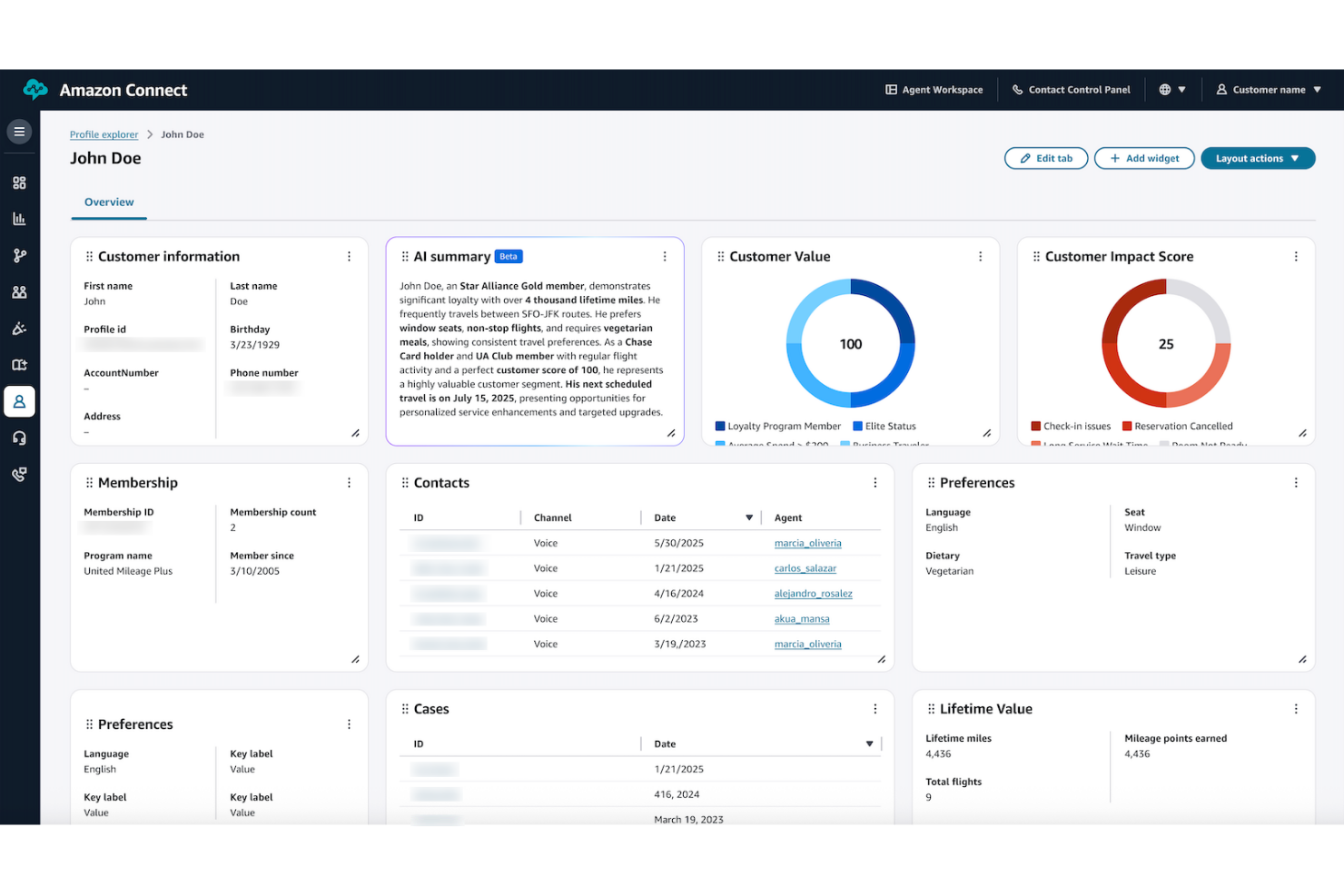
For teams already using AWS services, Amazon Connect offers a customer experience platform that fits right into your existing cloud environment. It’s a strong choice for IT leaders and operations teams who want to build custom contact center workflows using AWS tools and data. If you need deep integration with the AWS ecosystem and flexible, pay-as-you-go pricing, Amazon Connect stands out from Genesys and other platforms.
Why Amazon Connect Is a Good Genesys Alternative
Amazon Connect stands out for organizations that want to leverage the full AWS ecosystem in their customer experience platform. I picked Amazon Connect because it lets you build custom contact center workflows using AWS Lambda, Amazon Lex, and other AWS services. This approach gives you direct access to AWS data, AI, and analytics tools within your contact center environment. If your team already relies on AWS, Amazon Connect offers a level of integration and flexibility that Genesys can’t match.
Amazon Connect Key Features
Some other features in Amazon Connect that may interest customer experience teams include:
- Omnichannel Routing: Direct customer contacts across voice, chat, and tasks to the right agent based on rules you set.
- Contact Lens for Amazon Connect: Analyze conversations in real time for sentiment, compliance, and trends using built-in speech analytics.
- Automated Chatbots: Deploy chatbots and call monitoring powered by Amazon Lex to handle routine customer inquiries.
- Call Recording and Playback: Record and review customer interactions for quality assurance and training purposes.
Amazon Connect Integrations
Integrations include Salesforce, Zendesk, ServiceNow, Microsoft Dynamics 365, Amazon Lex, Amazon Lambda, Amazon S3, Amazon Kinesis, Amazon QuickSight, and Amazon Polly.
Pros and Cons
Pros:
- Programmable JSON-based contact flow exports
- Usage-based pay-as-you-go pricing model
- Deep integration with AWS services
Cons:
- No guaranteed uptime service level
- Manual contact flow editing complexity

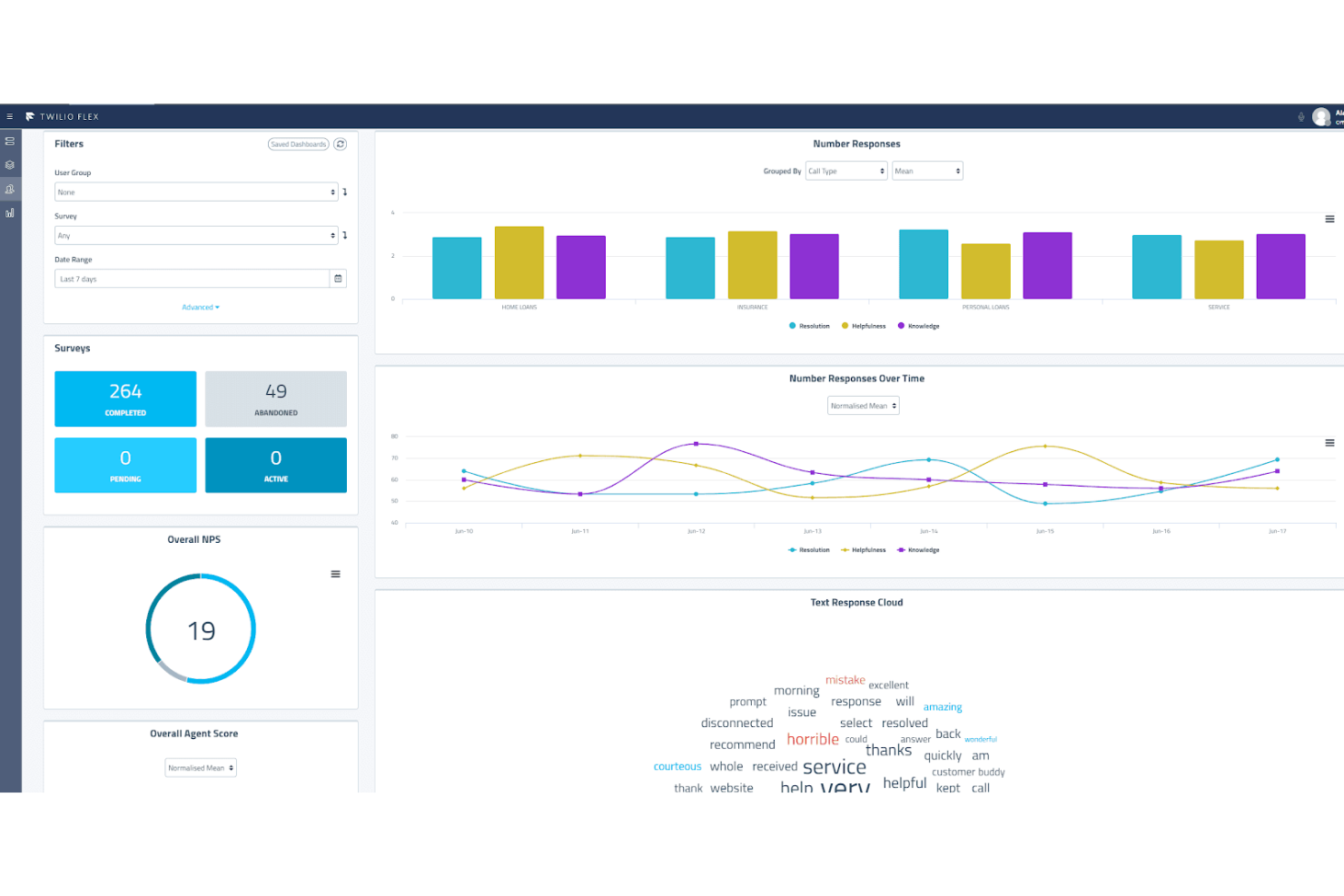
Twilio Flex stands out for teams that want to build a fully custom contact center experience. This platform is designed for businesses with in-house development resources that need to tailor every aspect of their customer interactions. Unlike Genesys, Twilio Flex gives you direct control over the interface, workflows, and integrations through its open APIs and developer tools.
Why Twilio Flex Is a Good Genesys Alternative
If your team needs a contact center software you can fully customize, Twilio Flex is built for developer control at every level. I picked Twilio Flex because it lets you design custom agent desktops, build unique workflows, and create tailored customer journeys using its open APIs and SDKs. You can modify the UI, automate processes, and connect with any backend system to fit your exact requirements. This level of flexibility is ideal for organizations that want to differentiate their customer experience beyond what Genesys typically allows.
Twilio Flex Key Features
Some other features in Twilio Flex that may interest customer experience teams include:
- Omnichannel Routing: Direct customer interactions across voice, chat, SMS, and email from a single platform.
- Real-Time Reporting: Access live dashboards and analytics to monitor agent and queue performance.
- Prebuilt Integrations: Connect with popular CRMs and workforce management tools using available connectors.
- Programmable Voice and Messaging: Customize call flows and messaging experiences with Twilio’s programmable APIs.
Twilio Flex Integrations
Integrations include Salesforce, Zendesk, Microsoft Dynamics 365, ServiceNow, Microsoft Teams, and more.
Pros and Cons
Pros:
- Scalable consumption-based pricing model
- Granular API-driven interface customization
- Fully programmable contact center architecture
Cons:
- Longer deployment and setup timelines
- Requires dedicated developer resources

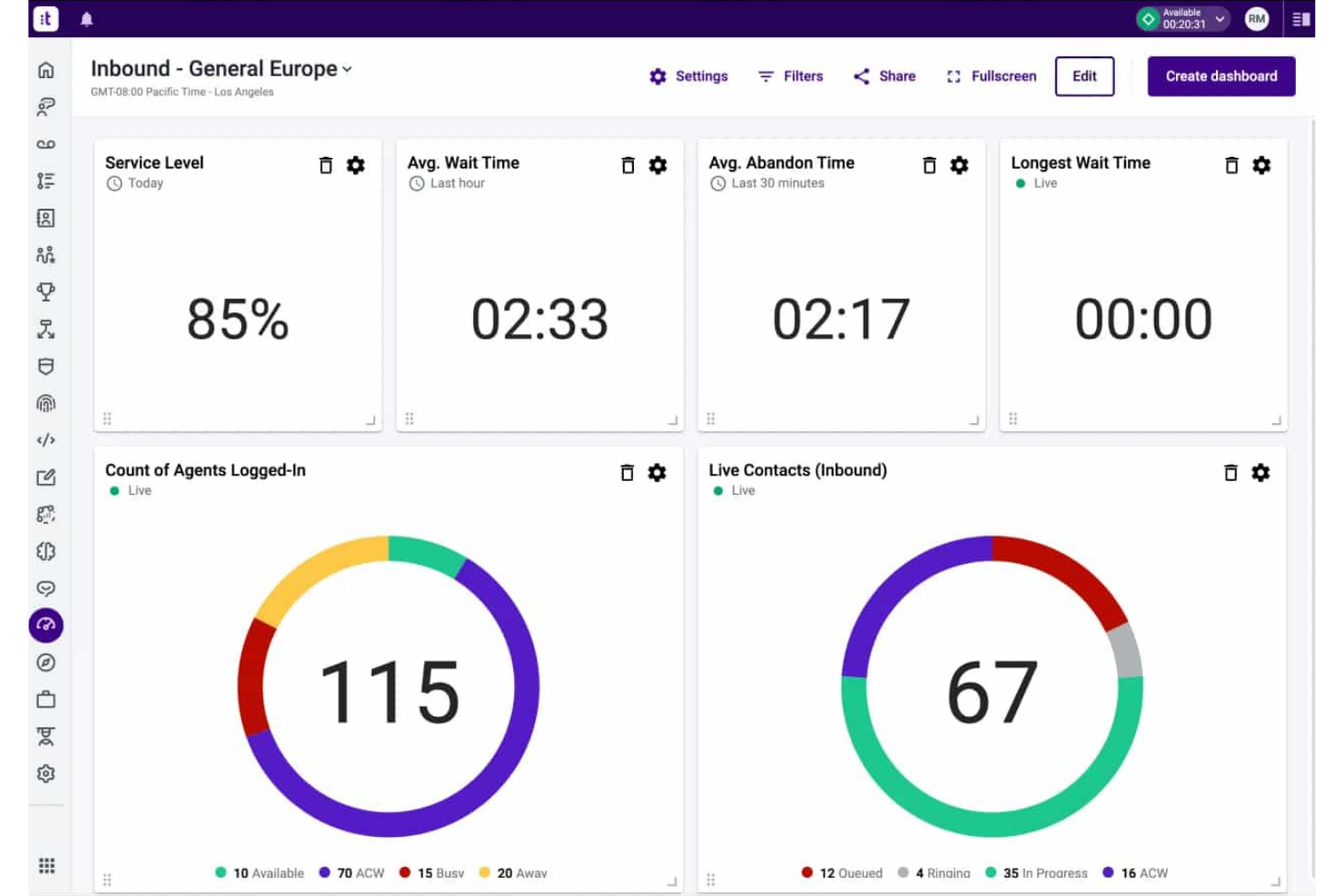
If you need a customer experience platform that can be up and running quickly, Talkdesk is worth a close look. It’s designed for teams that want to launch or scale cloud contact center operations without long implementation timelines or heavy IT involvement. For businesses facing rapid growth or seasonal spikes, Talkdesk’s prebuilt workflows and low-code setup help you adapt fast—something that sets it apart from Genesys Cloud and other platforms.
Why Talkdesk Is a Good Genesys Alternative
For teams that need to get a contact center up and running fast, Talkdesk offers a clear advantage over Genesys. I picked Talkdesk because its rapid deployment tools, like prebuilt industry templates and low-code automation, let you launch new workflows in days instead of weeks. The platform’s guided setup and out-of-the-box configurations help businesses respond quickly to changing customer needs. This makes Talkdesk a strong choice for organizations that can’t afford long implementation cycles.
Talkdesk Key Features
Some other features in Talkdesk that may interest customer experience teams include:
- AI Virtual Agent: Automate routine customer interactions with conversational AI bots.
- Omnichannel Engagement: Handle voice, chat, SMS, email, and social media from a unified workspace.
- Quality Management Suite: Record, monitor, and evaluate agent interactions for training and compliance.
- Workforce Management: Forecast demand, schedule agents, and track adherence within the platform.
Talkdesk Integrations
Integrations include Salesforce, Zendesk, Microsoft Teams, Slack, ServiceNow, HubSpot, Shopify, Zoom, and more.
Pros and Cons
Pros:
- Automated post-engagement CRM data updates
- Native industry-specific cloud compliance kits
- Clicks-not-code automation for specialized workflows
Cons:
- High bandwidth requirements for recording
- No native mobile agent application

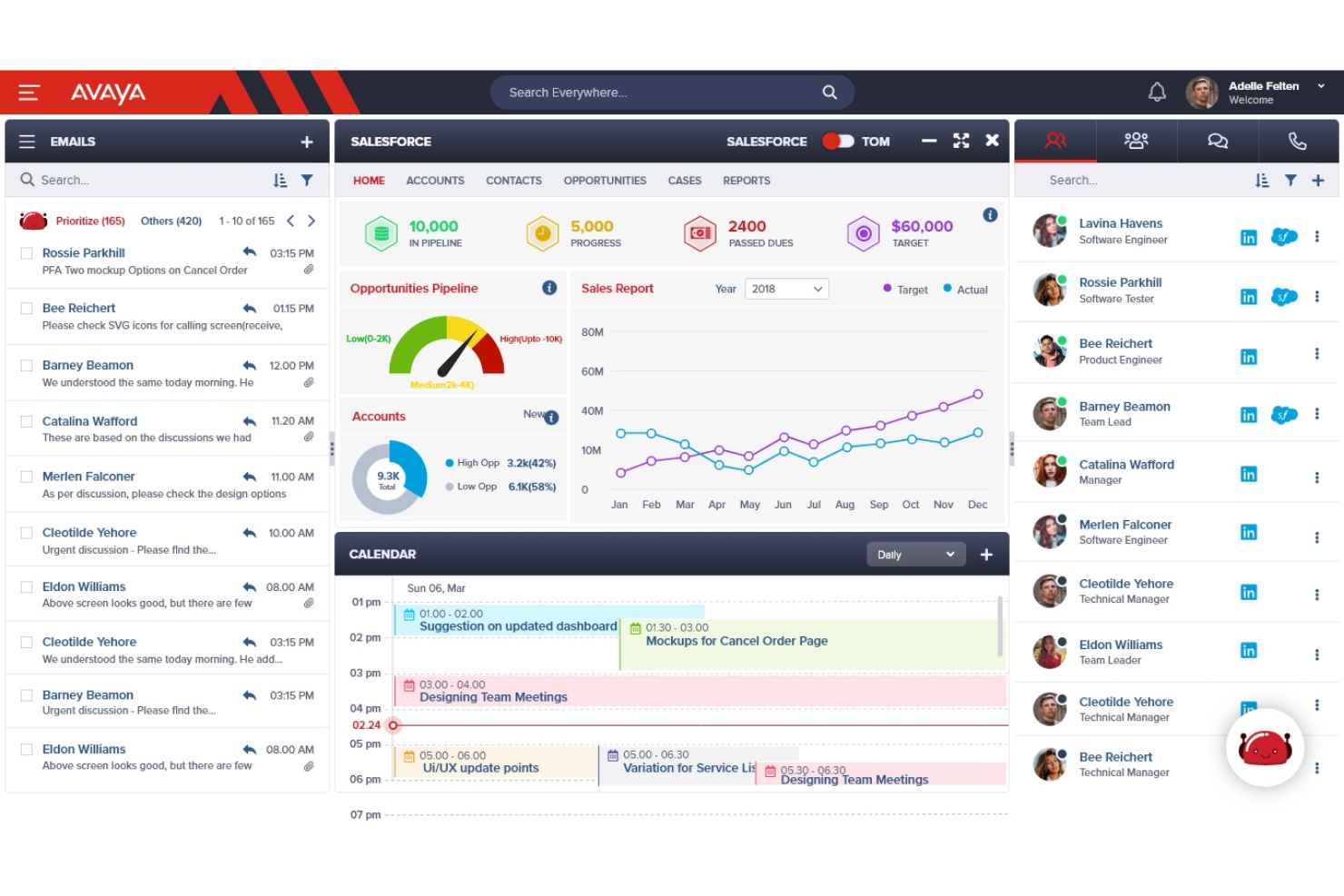
If your business needs to support both on-premises and cloud-based contact centers, Avaya offers a flexible solution for hybrid environments. This platform is a strong fit for IT leaders and operations teams in industries with strict data residency or compliance requirements. Avaya stands out from Genesys by letting you blend legacy infrastructure with modern cloud capabilities, so you can transition at your own pace.
Why Avaya Is a Good Genesys Alternative
For organizations that need to operate across both on-premises and cloud environments, Avaya offers a level of deployment flexibility that’s hard to match. I picked Avaya because it lets you maintain existing telephony infrastructure while layering on cloud-based features like digital channels and AI-powered routing. This hybrid approach is especially valuable for businesses with strict compliance needs or gradual migration plans. If you’re looking for a customer experience platform that supports a phased transition to the cloud, Avaya is a strong Genesys alternative.
Avaya Key Features
Some other features in Avaya that may interest customer experience teams include:
- Visual Workflow Designer: Build and modify self-service customer interaction flows using a drag-and-drop interface.
- Social Media Integration: Manage customer conversations from platforms like Facebook, Twitter, and WhatsApp within the same environment.
- Speech Analytics: Analyze voice interactions for sentiment, keywords, and compliance triggers.
- Agent Desktop Customization: Tailor the agent interface to fit specific workflows and business requirements.
Avaya Integrations
Integrations include Salesforce, Microsoft Teams, ServiceNow, Zendesk, and more.
Pros and Cons
Pros:
- Graphical drag-and-drop workflow visualization tool
- Provide high-density global voice trunking
- Hybrid-cloud path for legacy hardware
Cons:
- Inconsistent interface across legacy modules
- Lengthy implementation and deployment timelines
Other Genesys Competitors
Here are some additional Genesys competitors that didn’t make it onto my shortlist, but are still worth checking out:
- Salesforce Agentforce Service
With CRM data connectivity
- CXone
With omnichannel analytics
- 8x8
For global telephony coverage
- Ozonetel
For API-driven contact centers
- CallHippo
For startup scalability
- JustCall
For sales team integrations
- Zendesk
For integrated ticketing workflows
- Ringover
For browser-based calling
- Aircall
For easy VoIP setup
- Calabrio ONE
For workforce optimization tools
- LiveAgent
For multichannel ticket management
- Vonage
For programmable voice solutions
- Sprinklr
For social media engagement
- Jotform AI Agents
For AI-powered form automation


Genesys Alternatives Selection Criteria
When selecting the best Genesys alternatives to include in this list, I considered common buyer needs and pain points related to customer experience platform products, like managing high volumes of customer interactions and coordinating across multiple channels. I also used the following framework to keep my evaluation structured and fair:
Core Functionality (25% of total score)
To be considered for inclusion in this list, each solution had to fulfill these common use cases:
- Manage customer support tickets
- Route calls and messages to the right agent
- Track customer interaction history
- Provide real-time reporting and analytics
- Support multiple communication channels
Additional Standout Features (25% of total score)
To help further narrow down the competition, I also looked for unique features, such as:
- Real-time voice transcription
- AI-powered sentiment analysis
- Automated workflow triggers
- Integrated knowledge base
- Omnichannel conversation threading
Usability (10% of total score)
To get a sense of the usability of each system, I considered the following:
- Simple and intuitive user interface
- Customizable dashboards and layouts
- Minimal clicks to complete common tasks
- Responsive design for mobile and desktop
- Clear navigation and labeling
Onboarding (10% of total score)
To evaluate the onboarding experience for each platform, I considered the following:
- Availability of step-by-step product tours
- Access to training videos and documentation
- Pre-built templates for common workflows
- In-app chatbots for onboarding support
- Live or recorded onboarding webinars
Customer Support (10% of total score)
To assess each software provider’s customer support services, I considered the following:
- 24/7 live chat or phone support
- Fast response times to support requests
- Access to a searchable help center
- Availability of dedicated account managers
- Community forums for peer support
Value For Money (10% of total score)
To evaluate the value for money of each platform, I considered the following:
- Transparent and cost-effective pricing plans
- Features included at each pricing tier
- No hidden fees or surprise charges
- Discounts for annual or volume commitments
- Free trial or demo availability
Customer Reviews (10% of total score)
To get a sense of overall customer satisfaction, I considered the following when reading customer reviews:
- Consistent positive feedback on reliability
- Reports of responsive customer support
- User comments on feature usefulness
- Feedback on ease of implementation
- Overall satisfaction with platform updates and improvements
Why Look For a Genesys Alternative?
While Genesys is a good choice of customer experience platform, there are a number of reasons why some users seek out competitors. You might be looking for a Genesys Cloud CX alternative because…
- You need more affordable pricing for smaller teams
- You want a simpler setup and faster onboarding
- You require deeper integrations with specific business tools
- You need better support for remote or distributed teams
- You want more flexible omnichannel capabilities
- You operate in regions where Genesys has limited availability
If any of these sound like you, you’ve come to the right place. My list contains several customer experience platform options that are better suited for teams facing these challenges with Genesys and looking for alternatives.
Genesys Key Features
Here are some of the key features of Genesys, to help you contrast and compare what alternative solutions offer:
- Omnichannel routing for voice, chat, email, and social media
- AI-powered virtual agents and chatbots
- Real-time and historical analytics dashboards
- Workforce engagement management (WEM) tools
- Automated call recording and quality monitoring
- Integrated knowledge base for agents and customers
- Customer journey mapping and analytics
- Customizable IVR (interactive voice response) systems
- Advanced reporting and performance metrics
- Native CRM integrations for unified customer data
What’s Next:
If you're in the process of researching Genesys competitors, connect with a SoftwareSelect advisor for free recommendations.
You fill out a form and have a quick chat where they get into the specifics of your needs. Then you'll get a shortlist of software to review. They'll even support you through the entire buying process, including price negotiations.