

Recensione di Kayako: pro, contro, funzionalità e prezzi
Kayako si distingue per il suo design intuitivo e le solide integrazioni, rendendolo una scelta eccellente per migliorare le esperienze di assistenza clienti.

Recensiamo gli strumenti in modo indipendente e le commissioni aiutano a finanziare i nostri test. Consulta la nostra politica di trasparenza, la nostra metodologia o suggerisci uno strumento.
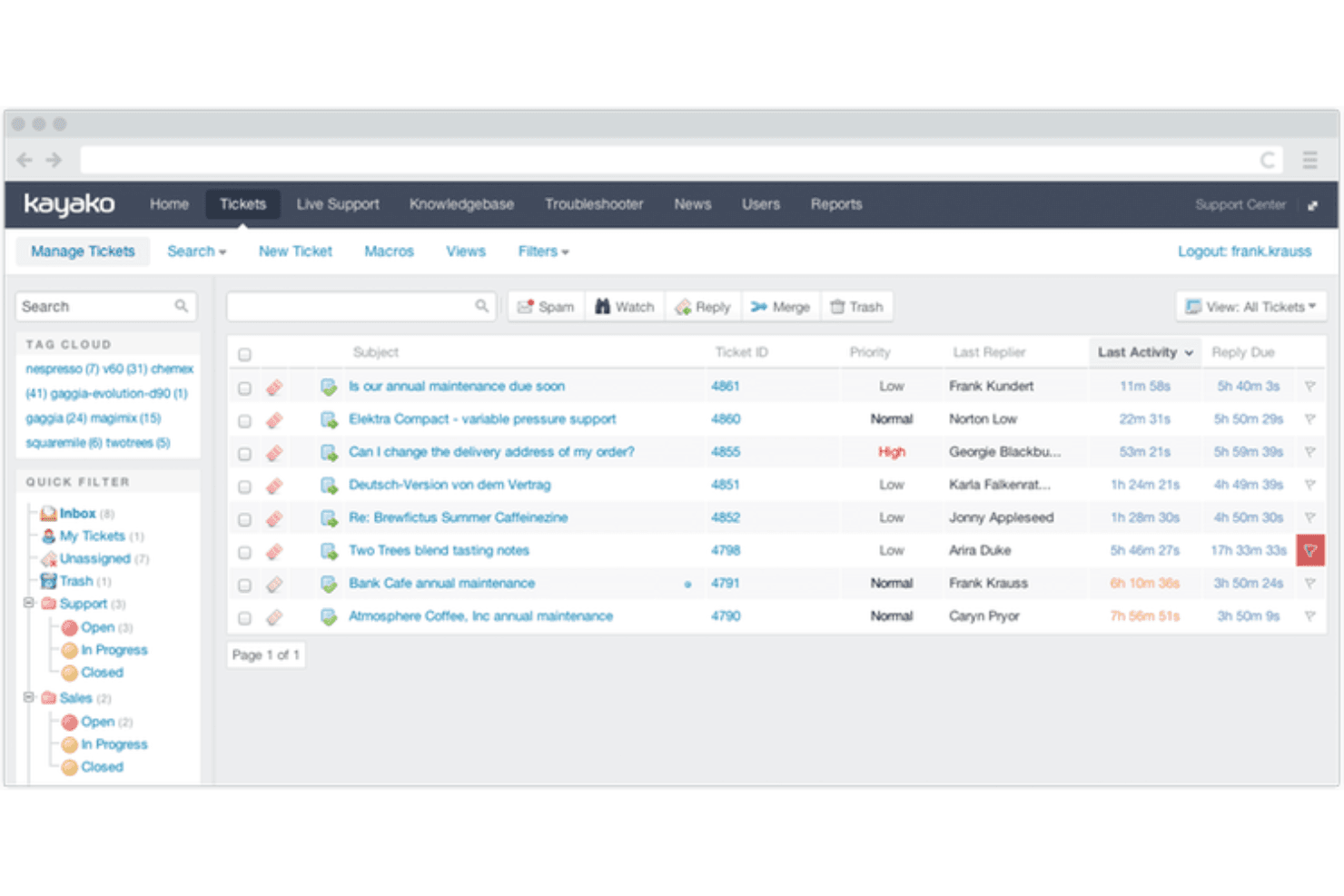
Kayako is a customer service software for teams that need to manage customer conversations across email, live chat, and social channels from one place. What sets it apart from a tool like Freshdesk is how it surfaces the full customer journey inside every conversation. Where Freshdesk focuses on ticket management, Kayako's SingleView feature gives agents a complete history of every interaction a customer has had—making it the stronger pick if your team wants context-first support rather than a ticket-first workflow.
Kayako Evaluation Summary
4/5
- From $1/resolved ticket
- Not available
Perché fidarsi dei nostri consigli sui software
6,700+
Reviews
20
Industry experts
16+
Evaluation factors
14
Years
Il nostro team testa e recensisce software dal 2012. In quanto leader CX noi stessi, sappiamo quanto sia difficile — e importante — scegliere il software giusto.
Per questa guida, abbiamo valutato gli strumenti attraverso test pratici e ricerche indipendenti, assegnando un punteggio agli strumenti in base ai nostri criteri di selezione.
Le nostre recensioni riflettono il nostro giudizio editoriale umano, non un discorso di vendita.
 Gui DrusinaCreative Director
 Tim FisherVP of AI
Kayako Overview
In my opinion, Kayako is a solid choice as help-desk software for teams looking for a customer service platform that balances essential features with user-friendly operation. Its standout features, such as robust ticket management and live chat, make it particularly useful for support teams that handle high volumes of customer interactions. While Kayako’s pricing might be a bit steep for smaller companies, the comprehensive support, and onboarding processes justify the investment for larger teams. The interface is generally intuitive, though some users might find the navigation slightly cumbersome. Compared to competitors like Zendesk, Freshdesk, and Zoho, Kayako's real strength lies in its responsive customer support and integration capabilities. If your team values these aspects, Kayako could be an excellent fit for your customer service needs.
Is Kayako Right For Your Needs?
Who Would be a Good Fit for Kayako?
Kayako is a solid choice for small to medium-sized businesses that prioritize customer support and engagement. Its robust ticketing system, friendly user interface, routing, and multi-channel communication capabilities make it ideal for teams handling a high volume of customer queries. If your team values collaboration, AI-powered automation of repetitive tasks, automated SLA notifications, and needs a tool to manage support tickets efficiently, Kayako's shared inbox and real-time collaboration features will support your work well.
- Small BusinessesKayako offers an affordable solution with essential features like live chat and email integration, perfect for small businesses looking to enhance customer service and make the workflow efficient without breaking the bank.
- E-commerce CompaniesIf you're in e-commerce, Kayako's integration with various platforms ensures seamless order tracking and customer communication, helping you manage customer inquiries effectively.
- Support TeamsSupport teams benefit from Kayako's robust ticketing system, which helps manage and prioritize customer issues efficiently, ensuring quick and effective responses.
- StartupsFor startups, Kayako provides scalability with essential features like self-service portals and knowledge bases, enabling you to grow your customer support operations as your business expands.
- Healthcare ProvidersHealthcare providers can use Kayako's secure and compliant communication features to manage patient inquiries and support, ensuring patient confidentiality and efficient service.
- Educational InstitutionsEducational institutions can leverage Kayako's omni-channel support to handle student and faculty queries across different platforms, providing timely and organized responses.
Who Would be a Bad Fit for Kayako?
If your team needs advanced analytics or robust CRM capabilities, Kayako might not be the best fit. It focuses on customer service and support, lacking in-depth analytics and CRM features that some businesses require. For instance, if you're in a data-driven industry needing comprehensive reporting tools, Kayako's offering might fall short. Additionally, for large enterprises requiring extensive customization, Kayako's feature set may be too limited.
- Large EnterprisesKayako's features may not scale well for large enterprises needing extensive customization and integrations.
- Data-Driven CompaniesIf your work relies heavily on advanced analytics, Kayako's lack of comprehensive reporting tools could be a limitation.
- Sales TeamsFor those needing robust CRM functionalities, Kayako's focus on customer support might not meet your requirements.
- E-commerce BusinessesIf your business needs detailed transaction tracking and customer purchase history, Kayako might not suffice.
- IT DepartmentsFor IT service management requiring specialized tools, Kayako's general customer service focus may not align with your needs.
- Marketing AgenciesIf your agency needs tools for managing campaigns and client relationships, Kayako's limited CRM features might not support your work.
Come Testiamo e Valutiamo gli Strumenti
Abbiamo passato anni a costruire, perfezionare e migliorare il nostro sistema di valutazione e testing dei software. Il nostro schema è progettato per cogliere tutte le sfumature nella selezione del software e per valutare ciò che rende uno strumento efficace, concentrandosi sugli aspetti critici nel processo decisionale. Qui sotto puoi vedere esattamente come funziona il nostro processo di testing e valutazione su sette criteri. Ci permette di offrire una valutazione imparziale del software basata su funzionalità principali, caratteristiche distintive, facilità d’uso, onboarding, supporto clienti, integrazioni, recensioni clienti e rapporto qualità/prezzo.
Funzionalità Principali (25% del punteggio finale)
Il punto di partenza della nostra valutazione sono sempre le funzionalità fondamentali dello strumento. Possiede le funzioni di base che un utente si aspetta? Alcune di queste funzionalità sono disponibili solo con piani più costosi? In sostanza, ci aspettiamo che uno strumento sia competitivo rispetto ai suoi concorrenti principali.
Caratteristiche Distintive (25% del punteggio finale)
Successivamente, valutiamo le funzionalità particolari e distintive che vanno oltre le funzionalità standard solitamente presenti in strumenti simili. Un punteggio elevato riflette funzionalità specializzate o uniche che rendono il prodotto più veloce, efficiente o che offrono valore aggiunto all’utente. Valutiamo anche quanto sia facile integrare lo strumento con altri strumenti tipicamente presenti nel tech stack, per ampliare le funzionalità e l’utilità del software. Ottengono il punteggio migliore gli strumenti che offrono numerose integrazioni native, connessioni di terze parti e accesso API per creare integrazioni personalizzate.
Facilità d’Uso (10% del punteggio finale)
Consideriamo quanto sia rapido e intuitivo eseguire le attività core usando lo strumento. Un software con un alto punteggio è ben progettato, intuitivo all’uso, offre app mobili, mette a disposizione modelli e semplifica attività relativamente complesse.
Onboarding (10% del punteggio finale)
Sappiamo quanto sia importante l’adozione rapida da parte del team per una nuova piattaforma, quindi valutiamo la facilità di apprendimento e utilizzo dello strumento con una formazione minima. Valutiamo quanto velocemente un membro del team può iniziare a usare lo strumento senza esperienza. Le soluzioni con punteggio elevato richiedono poco o nessun supporto.
Supporto Clienti (10% del punteggio finale)
Valutiamo quanto sia semplice ricevere assistenza via telefono, chat dal vivo o knowledge base. Gli strumenti e le aziende che offrono supporto in tempo reale ottengono il punteggio migliore, mentre i chatbot hanno il punteggio più basso.
Recensioni Clienti (10% del punteggio finale)
Oltre alla nostra valutazione interna, prendiamo in considerazione il net promoter score dei clienti attuali e passati. Analizziamo la probabilità che, potendo scegliere, selezionino di nuovo lo strumento per le sue funzionalità core. Un software con punteggio elevato riflette un alto net promoter score dai clienti attuali o passati.
Rapporto Qualità/Prezzo (10% del punteggio finale)
Infine, tenendo conto di tutti gli altri criteri, analizziamo il prezzo medio dei piani entry level rispetto alle funzionalità principali e consideriamo il valore delle altre metriche di valutazione. Il software che offre di più, a meno, otterrà un punteggio maggiore.
Core Features
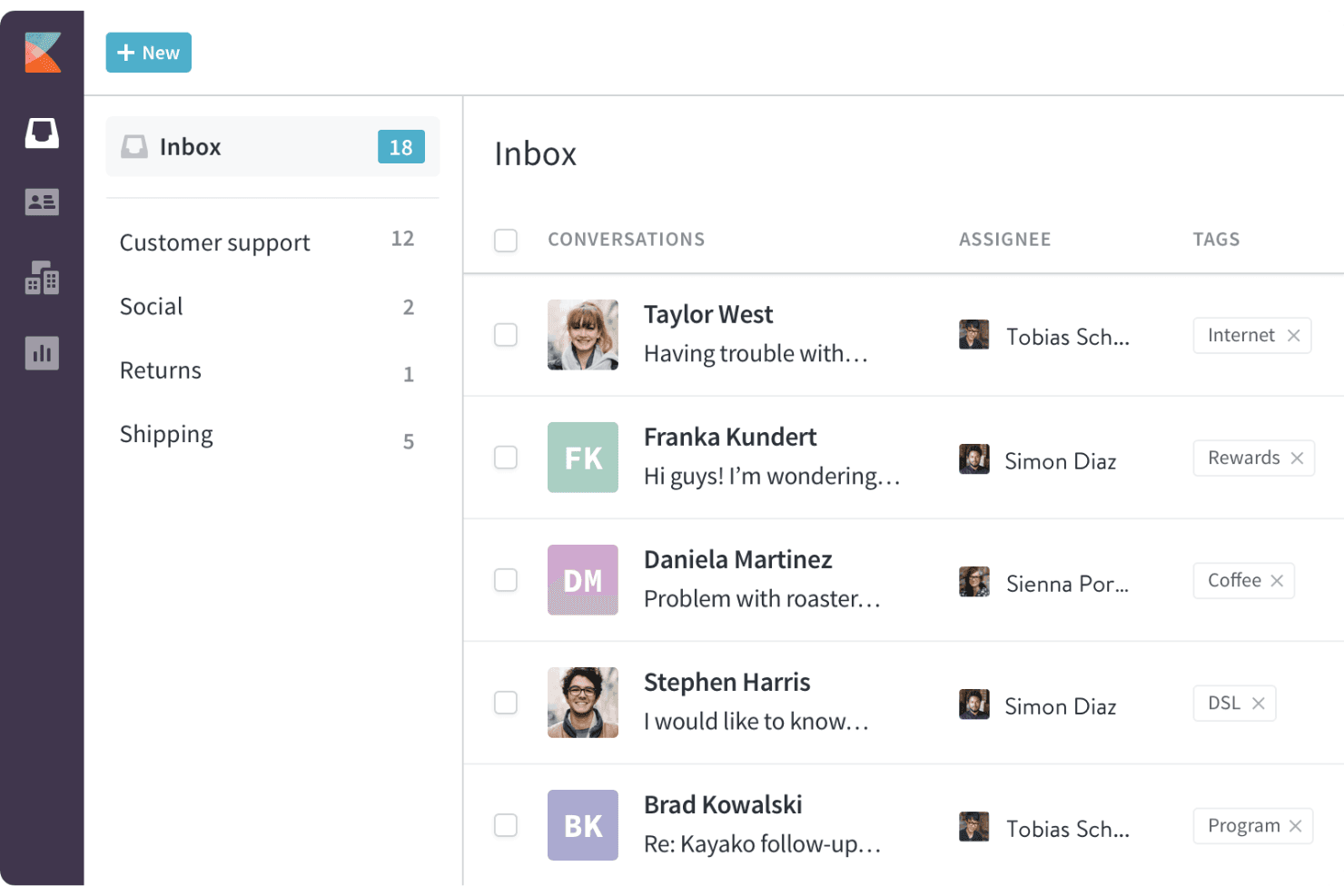
Unified Inbox: Kayako consolidates multiple communication channels such as email, live chat, and social media into one interface. This helps your team manage inquiries efficiently without switching tools.
Customer Identity Management: Automatically merges customer identities across channels, so your team gets a complete view of each customer. This feature ensures all interactions are personalized and informed.
AI-Powered Automation: Automates repetitive support tasks, freeing up your team to focus on complex issues. This boosts efficiency and allows faster response times.
Customizable Help Center: Offers a self-service help center that you can tailor to your brand's needs. It empowers customers to find answers on their own, reducing support tickets.
Real-Time Collaboration: Enables your team to work together on customer issues in real-time. This feature ensures quick resolution and enhances team communication.
Detailed Analytics: Provides insights into team performance and customer satisfaction. You can use these analytics to improve service quality and identify training needs.
Ease of Use
Kayako might not be the most intuitive customer service software out there, but its robust support system makes up for it. Users often find navigating its layers challenging, yet the customer service team is dedicated and thorough, guiding you through any complexities. While some features may seem redundant or hard to find, Kayako's detailed support ensures your team can still make the most of it. Remember, patience with the interface can lead to mastering its full potential.
.png&w=3840&q=75)
Integrations
Kayako integrates with Slack, Salesforce, Jira, Trello, Shopify, Magento, BigCommerce, Google Analytics, and Facebook.
Kayako also has a REST API that allows for custom integrations and connects with third-party integration tools such as Zapier.
Kayako Specs
- Analytics: No
- API: Yes
- Batch Permissions & Access: No
- Call Integration: No
- Chat: Yes
- Contact Management: No
- Contact Sharing: No
- CRM Integration: No
- Customer Management: Yes
- Customer Service: No
- Dashboard: Yes
- Data Export: No
- Data Import: No
- Data Visualization: No
- Email Integration: Yes
- Escalation Management: No
- External Integrations: No
- Instant Chat Integration: No
- Knowledge Base: No
- Lead Management: No
- Lead Scoring: No
- Multi-User: No
- Notifications: Yes
- Real-time Alerts: No
- Scheduling: Yes
- Self-service Portal: No
- Social Media Integration: No
- Support Forum: No
- Third-Party Plugins/Add-Ons: No
- Ticket Management: No
- Workflow Management: No


