
40 Best Customer Success Software of 2026

20 Customer Success Software Shortlist
Here's my pick of the 20 best software from the 40 tools reviewed.


Customer success software helps your team proactively manage accounts, reduce churn, and identify growth opportunities. If you’re struggling with fragmented data, inconsistent onboarding, reactive customer management, or limited visibility into account risk and renewal potential, the right customer success software can address most of those issues.
In this article, I’ll review the best customer success software on the market that can help you scale customer retention efforts and enhance satisfaction.
Why Trust Our Reviews
We’ve been testing and reviewing customer success software since 2021. As CX professionals ourselves, we know how critical and difficult it is to make the right decision when selecting software.
We invest in deep research to help our audience make better software purchasing decisions. We’ve tested more than 2,000 tools for different customer experience use cases and written over 1,000 comprehensive software reviews. Learn how we stay transparent & our software review methodology.
The Best Customer Success Software Solutions Summary Table
Here’s a side-by-side comparison of my top 20 picks:
| Tool | Best For | Trial Info | Price | ||
|---|---|---|---|---|---|
| 1 | Best for AI-powered customer support | Free demo + 14-day free trial available | From $19/user/month (billed annually) | Website | |
| 2 | Best for tracking customer health scores | Free demo available | Pricing upon request | Website | |
| 3 | Best for AI-driven sentiment insights | Free 14-day trial + free demo available | Pricing upon request | Website | |
| 4 | Best for closed-loop customer issue resolution | Free trial + free plan + free demo available | From $39/month (billed annually) | Website | |
| 5 | Best for proactive customer engagement | Free plan + free trial available | From $25/user/month (billed annually) | Website | |
| 6 | Best for lifecycle automation features | Free demo available | From $45/month (billed annually) | Website | |
| 7 | Best for collecting detailed customer onboarding feedback | Free trial + free demo available | From $111/month (billed annually) | Website | |
| 8 | Best for preventing silent churn | Free trial available | From $115/month | Website | |
| 9 | Best for delivering enhanced customer experiences | Free plan available | From $25/user/month (billed annually) | Website | |
| 10 | Best for unified customer interactions | Free trial + free demo available | From $19/agent/month (billed annually) | Website | |
| 11 | Best for managing customer communication | 14-day free trial + free demo available | From $25/user/month (billed annually) | Website | |
| 12 | Best for its customer behavior analysis | 7-day free trial and free plan available | From $24.17/month (billed annually) | Website | |
| 13 | Best for collaborative customer communication | 30-day free trial + free plan available | From $14/user/month (billed annually) | Website | |
| 14 | Best for cross-team workflow coordination | 14-day free trial + free demo available | From $25/seat/month (billed annually) | Website | |
| 15 | Best for client-facing workspaces | Free plan available | From $350/month | Website | |
| 16 | Best for managing customer churn risks | Free demo available | Pricing upon request | Website | |
| 17 | Best for creating how-to videos with AI | Free 7-day trial + free plan + free demo available | From $18/creator/month (billed annually) | Website | |
| 18 | Best multichannel customer success software | Free demo available | Pricing upon request | Website | |
| 19 | Best for customer & client onboarding | Free demo available | Pricing upon request | Website | |
| 20 | Best customer success software for SMS & text marketing | Free demo available | Pricing upon request | Website |


-

SupportYourApp
Visit WebsiteThis is an aggregated rating for this tool including ratings from Crozdesk users and ratings from other sites.4.7 -
Freshdesk
Visit WebsiteThis is an aggregated rating for this tool including ratings from Crozdesk users and ratings from other sites.4.4 -
Zendesk
Visit WebsiteThis is an aggregated rating for this tool including ratings from Crozdesk users and ratings from other sites.4.3


Best Customer Success Software Reviews
Here’s a brief description of each customer success app to showcase each tool’s best use case, some noteworthy features, and screenshots to give a snapshot of the user interface.


Freshdesk is a cloud-based customer success platform designed for CX teams who need to manage support requests, automate workflows, and deliver consistent service across channels like email, chat, and social media.
Who Is Freshdesk Best For?
Freshdesk is a good fit for small to mid-sized businesses that need a scalable, multichannel support platform without heavy IT overhead.
Why I Picked Freshdesk
Freshdesk earns its spot on my shortlist because its Freddy AI suite handles the full support lifecycle, not just one stage. I particularly like Freddy AI Copilot, which gives agents real-time reply suggestions, live translations, and ticket summaries so they can respond faster without sacrificing accuracy. Freddy AI Agent autonomously resolves repetitive queries around the clock, freeing my team from answering the same questions repeatedly. Freddy AI Insights rounds it out by surfacing proactive alerts and answering leadership questions about support trends on demand.
Freshdesk Key Features
- Omnichannel shared inbox: Manage customer conversations from email, chat, phone, and social media in a single unified inbox.
- Skill-based ticket assignment: Automatically route incoming tickets to agents based on their specific skills or expertise areas.
- SLA policy management: Set and enforce multiple SLA policies to track response and resolution time targets across different customer segments.
- Knowledge base: Build a multilingual self-service portal where customers can find answers without contacting your support team.
Freshdesk Integrations
Freshdesk offers 1,000+ native integrations, including Salesforce, HubSpot, Jira, Slack, Shopify, Mailchimp, Google Workspace, Microsoft Teams, WhatsApp, Zoom, and Zapier. An API is available for custom integrations.
Pros and Cons
Pros:
- Strong reporting and analytics tools for performance insights
- Intuitive interface supports fast adoption
- AI chatbots and automation reduce repetitive tasks
Cons:
- Advanced AI features require additional setup and training
- Customisation capabilities limited
New Product Updates from Freshdesk

Freshdesk Enhances Contact Data Management and Social Identity Fields
Freshdesk now lets you manage social handles and handle large contact lists with ease, streamlining customer profiles and data tasks. For more information, visit Freshdesk’s official site.


Velaris gives CX teams and customer success managers a unified platform to monitor customer journeys, automate workflows, and surface actionable insights that help reduce churn and drive account growth.
Who Is Velaris Best For?
Velaris is a strong fit for B2B SaaS companies with dedicated customer success teams looking to move from reactive support to proactive account management.
Why I Picked Velaris
I picked Velaris as one of the best because of how much control it gives you over health score configuration. Most tools give you a fixed formula—Velaris lets you build health scores from scratch using the exact metrics that matter to your business, whether that's product usage, support ticket volume, NPS ratings, or any custom data point you pull in. I also like that scores roll up across the organization, account, and contact level, so my team can spot a struggling contact within an otherwise healthy account. Additionally, the CSM Pulse feature lets CSMs layer in their own manual ratings, which means the score reflects both the data and the human judgment that no algorithm fully replaces.
Velaris Key Features
- Playbooks: Build standardized, step-by-step playbooks that trigger automatically based on customer behavior or lifecycle stage.
- Visual workflow builder: Design automated workflows using custom triggers to send comms, update records, or alert your team.
- Surveys: Create and send NPS, CSAT, and CES surveys directly within the platform to collect structured customer feedback.
- AI account intelligence: Generate instant historical overviews of any account, pulling together activity, comms, and context in one view.
Velaris Integrations
Velaris offers native integrations with Salesforce, HubSpot, Intercom, Zendesk, Slack, Microsoft Teams, Google Workspace, Jira, and Zapier. An API is available for custom integrations.
Pros and Cons
Pros:
- Automation workflows reduce manual tracking and outreach
- Dynamic health scoring adapts to lifecycle changes
- Centralized view combines usage, sentiment, and engagement
Cons:
- Fewer integrations available
- Smaller orgs may underuse the platform’s full scope


SurveySparrow gives CX teams a way to collect, analyze, and act on customer feedback using conversational surveys and automation, helping businesses in any industry understand customer needs and improve satisfaction.
Who Is SurveySparrow Best For?
SurveySparrow is a strong fit for mid-sized to enterprise businesses that run ongoing customer feedback programs and need a dedicated tool for survey design, distribution, and analysis.
Why I Picked SurveySparrow
SurveySparrow earns its spot on my shortlist because of CogniVue, its AI-powered text analytics engine that offers more than basic sentiment scoring. CogniVue automatically extracts and categorizes topics from open-ended responses, so my team doesn't have to tag hundreds of comments to determine what customers are talking about. The key driver analysis is particularly useful—it surfaces the root causes behind CX metrics like NPS, so I can see not just that satisfaction dropped, but which topics are driving it. The topic monitoring feature tracks sentiment shifts in real time, allowing me to catch emerging issues before they become patterns.
SurveySparrow Key Features
- Ticket management: Converts survey responses into assignable, trackable tickets so your team can follow up on customer issues directly from the platform.
- Recurring surveys: Schedules and automates surveys to go out at set intervals, keeping a continuous pulse on customer satisfaction without manual effort.
- Omnichannel feedback collection: Distributes surveys via email, web embed, QR code, SMS, and social media to capture feedback across every customer touchpoint.
- Visual workflows: Triggers automated actions based on survey responses using a no-code workflow builder with conditional logic.
SurveySparrow Integrations
SurveySparrow offers 40+ native integrations, including Salesforce, HubSpot, Slack, Google Sheets, Intercom, Zendesk, Mailchimp, Freshdesk, Microsoft Teams, Shopify, and Zapier. An API is also available for custom integrations.
Pros and Cons
Pros:
- Ideal for tracking satisfaction across CX programs
- AI analyzes text feedback for tone and emotion
- Conversational surveys increase response and engagement rates
Cons:
- Limited depth in custom analytics and reporting
- Complex logic setup can challenge non-technical users


Sogolytics gives CX teams in service-driven businesses a way to capture, analyze, and act on customer feedback with advanced survey tools and automated follow-up workflows that improve customer relationships and drive measurable outcomes.
Who Is Sogolytics Best For?
Sogolytics is a strong fit for mid-size to enterprise organizations with dedicated CX or customer insights teams that need structured feedback programs tied to action.
Why I Picked Sogolytics
Sogolytics earns its spot as one of the best on my shortlist because of how well it handles the full arc of a customer issue—from the moment feedback comes in to the moment it's resolved. I love that SogoConnect, its help desk ticketing module, automatically routes incoming feedback to the right team and starts a response timer, so nothing sits unacknowledged. When an issue needs urgent attention, my team can manually or automatically escalate it to "Critical" status, triggering alerts to the right people. The alerts and action plans feature in SogoCX adds another layer, letting my team set up automated notifications when CX metrics dip below a threshold and build structured follow-up plans tied directly to those signals.
Sogolytics Key Features
- Omnichannel survey distribution: Send feedback requests via email, SMS, web, QR codes, and in-app channels from a single platform.
- Key driver analysis: Identify which specific touchpoint variables have the greatest statistical impact on NPS, CSAT, or CES scores.
- Customer journey mapping: Visualize CX data across multiple touchpoints in a single view, using tags to group and compare stages or segments.
- NLP-powered text analysis: Automatically categorize and extract sentiment from open-ended responses without manually reviewing each one.
Sogolytics Integrations
Sogolytics offers native integrations with Salesforce, HubSpot, Microsoft Teams, Slack, Zendesk, Google Sheets, Mailchimp, and Zapier. An API is also available for custom integrations.
Pros and Cons
Pros:
- Good for both employee and customer feedback
- Strong template library speeds survey creation
- Easy charting and export of feedback results
Cons:
- Older data format compatibility can cause issues
- Interface requires scrolling and feels cluttered
New Product Updates from Sogolytics

Sogolytics Launches AI-Powered Experience Navigator
Sogolytics introduces Experience Navigator, an AI-powered tool for building strategy and action plans. This update helps teams turn goals into tailored execution plans with relevant metrics and projects in minutes. For more information, visit Sogolytics’ official site.
 .
.

Help Scout gives CX teams in SaaS, ecommerce, and service-based businesses a shared inbox, customer profiles, and automation tools to manage conversations, deliver personalized support, and keep customer relationships on track.
Who Is Help Scout Best For?
Help Scout is a strong fit for small to mid-sized teams that handle high volumes of customer conversations and need a straightforward, collaborative tool without a steep learning curve.
Why I Picked Help Scout
Help Scout earns its spot as one of the best on my shortlist because of how well it handles proactive customer engagement without requiring a separate tool. I particularly like the Messages feature, which lets my team send targeted in-app or on-site messages triggered by specific customer behaviors—like time on page, URL, or number of visits—so we can reach customers at exactly the right moment during onboarding or a critical product step. Help Scout's built-in NPS and sentiment surveys let me measure how customers are feeling without adding another platform. The Beacon widget ties it all together by surfacing knowledge base articles in-app before a customer even thinks to reach out.
Help Scout Key Features
- Shared inbox: Manage email, chat, phone, and social conversations from a single inbox, with automatic conversation assignment to the right team member.
- Customer profiles: Pull in customer data and full conversation history from connected apps directly into each support thread, without switching tools.
- Workflow automation: Set up rule-based workflows to auto-assign, tag, and route conversations based on conditions like sender, subject line, or keyword.
- Saved replies: Store and reuse pre-written responses to common questions so agents can reply to repeat inquiries without drafting from scratch.
Help Scout Integrations
Help Scout offers 90+ native integrations, including Salesforce, HubSpot, Slack, Jira, Shopify, Mailchimp, Google Workspace, Trello, Intercom, Aircall, and Zapier. An API is available for custom integrations.
Pros and Cons
Pros:
- Strong analytics for tracking team performance
- Proactive messaging reduces churn and boosts engagement
- Centralized inbox simplifies communication management
Cons:
- Customization options for knowledge base are limited
- Some advanced chat features only in higher tiers
New Product Updates from Help Scout

Help Scout Enhances Support Management With AI and Integrations
Help Scout introduces smarter routing, WhatsApp and Aircall integrations, and new AI enhancements to help teams manage conversations, automate workflows, and support customers across more channels. For more information, visit Help Scout’s official site.
 .
.
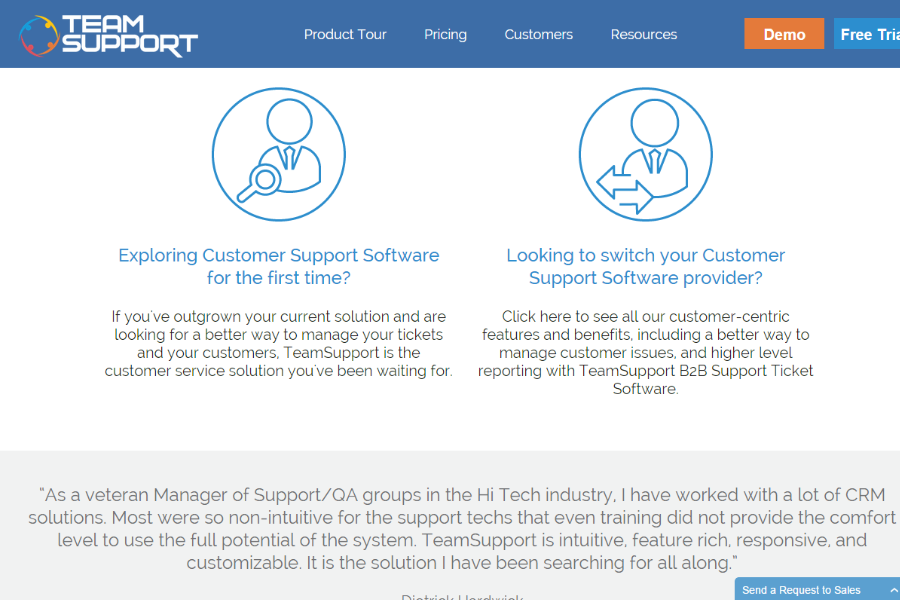
TeamSupport is a customer success platform built for B2B support and CX teams who need to manage complex client relationships, streamline communication, and proactively address customer needs throughout the entire lifecycle.
Who Is TeamSupport Best For?
TeamSupport is a strong fit for B2B companies with dedicated customer support or success teams managing ongoing client relationships across multiple accounts.
Why I Picked TeamSupport
I picked TeamSupport as one of the best because its Playbooks feature handles lifecycle automation end-to-end. Playbooks covers onboarding, churn prevention, renewals, and upsell motions in a single workflow layer—no external tools or manual checklists required. When a deal closes in Salesforce or HubSpot, Playbooks automatically creates a new customer record and kicks off an onboarding workflow. It also triggers churn prevention flows when a health score drops, so my team responds to risk signals before they escalate.
TeamSupport Key Features
- Customer Distress Index: A proprietary scoring system that monitors engagement patterns and sentiment across all customer touchpoints to flag at-risk accounts.
- AI agent: An AI-powered agent that handles routine support questions, gathers information, and hands off complex issues to human agents.
- Unified task view: A single view of all open items organized by customer, user, ticket, or product across your entire account portfolio.
- Advanced analytics dashboard: Pre-built and customizable reporting templates with real-time metrics alerting to track account-level performance.
TeamSupport Integrations
TeamSupport offers native integrations with Salesforce, HubSpot, Jira, Slack, Mailchimp, Microsoft Teams, and QuickBooks, and connects with Zapier. An API is available for custom integrations.
Pros and Cons
Pros:
- Customizable customer self service hub
- Real time sentiment insights
- AI powered ticket automation
Cons:
- Limited mobile app functionality
- Knowledge base lacks configurability

Best for collecting detailed customer onboarding feedback

Product Fruits helps CX teams and SaaS businesses create interactive onboarding flows, gather user feedback, and deliver in-app guidance to improve customer success and product adoption.
Who Is Product Fruits Best For?
Product Fruits is a strong fit for SaaS companies that want to guide new users through onboarding and collect in-app feedback without relying on engineering resources.
Why I Picked Product Fruits
I picked Product Fruits as one of the best because of how it combines in-app survey triggering with contextual feedback collection during the onboarding journey. I love that the NPS and surveys feature uses Elvin AI to generate targeted surveys based on a goal you describe—so instead of building a survey from scratch, you tell it what you want to learn (e.g., why users drop off after step three of onboarding) and it creates the questions, targeting, and timing automatically. The feedback widget goes a step further by capturing screenshots, screen recordings, and technical context like browser and OS details automatically, so your team gets the full picture without chasing users for more information. The branching logic is useful: different user roles see different questions, which means the feedback you collect during onboarding is segmented and actionable rather than a generic mix of responses.
Product Fruits Key Features
- Onboarding checklists: Break down the onboarding process into a visible, step-by-step task list that guides users through key actions inside your product.
- In-app announcements: Deliver pop-ups, banners, and newsfeed updates to notify users about new features or changes directly within the product.
- User segmentation: Target specific onboarding flows and messages to users based on their behavior, profile attributes, or lifecycle stage.
- Analytics: Track engagement data across tours, announcements, hints, and checklists to see exactly how users interact with onboarding content.
Product Fruits Integrations
Product Fruits offers native integrations with Intercom, HubSpot, Segment, Google Analytics, Mixpanel, Amplitude, Slack, and Zapier. An API is available for custom integrations.
Pros and Cons
Pros:
- Helps teams spot friction in activation journeys
- Supports text, ratings, and segmentation questions
- In-app surveys capture contextual onboarding feedback
Cons:
- Branding and logic customization somewhat restricted
- Limited reporting and analytics depth for insights
New Product Updates from Product Fruits
New Generation Onboarding with Elvin AI
Product Fruits has launched its AI-driven onboarding with Elvin AI, offering personalized guidance to boost user activation. For more information, visit Product Fruits's official site.
 .
.
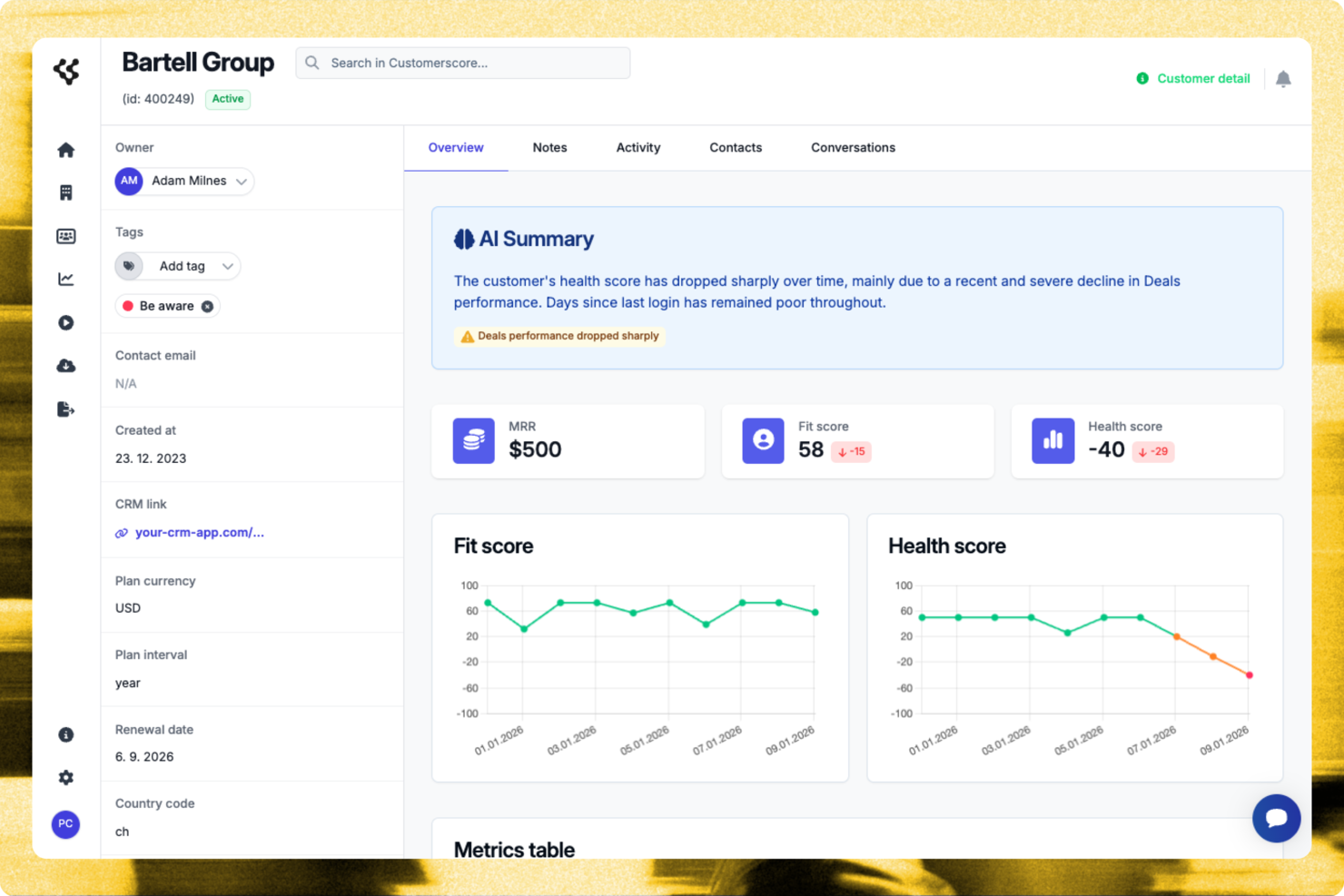
Customerscore.io lets CX teams and SaaS businesses track customer health, predict churn, and automate engagement so they can focus on the accounts that need attention most.
Who Is Customerscore.io Best For?
Customerscore.io is a strong fit for SaaS companies with dedicated customer success teams who need to monitor account health and act on churn signals before they escalate.
Why I Picked Customerscore.io
Customerscore.io earns its spot on my shortlist because it directly tackles the problem of silent churn—customers who quietly disengage and cancel without ever raising a support ticket. I like how its AI-based health scoring pulls signals from across your stack (usage data, billing, support activity) and triggers automated workflows the moment a score drops, so no at-risk account slips through unnoticed. That means my team can run a churn prevention playbook that fires a personalized check-in email when a health score falls below 60, without anyone manually reviewing a dashboard. The renewal protection workflow is another feature I find genuinely useful—it flags low-usage accounts 30 days before renewal and kicks off proactive outreach automatically.
Customerscore.io Key Features
- Expansion workflow automation: Triggers an upsell email automatically when a customer's usage hits 80% of their plan limit.
- Onboarding activation triggers: Sends a tutorial email on day 14 if a key feature hasn't been adopted yet.
- Multi-source signal detection: Pulls engagement, billing, and support data from tools like Mixpanel, Stripe, and Intercom into a single health view.
- Impact measurement dashboard: Tracks at-risk accounts detected, save rate, and ARR protected so you can see exactly what's working.
Customerscore.io Integrations
Customerscore.io offers native integrations with Intercom, Mixpanel, Stripe, HubSpot, Salesforce, Segment, and Zapier. An API is available for custom integrations.
Pros and Cons
Pros:
- Strong native CRM integrations
- Actionable upsell opportunity insights
- Clear churn risk visibility
Cons:
- Learning curve for analytics
- Pricing not publicly disclosed


Hiver brings customer success tools right into Gmail, helping CX teams at service-focused businesses manage customer conversations, assign tasks, and track performance without switching platforms.
Who Is Hiver Best For?
Hiver is a strong fit for small to mid-sized teams that run customer support operations primarily through Gmail.
Why I Picked Hiver
Hiver earns its spot on my shortlist because it's one of the few customer success tools built directly inside Gmail, which means my team delivers support without ever leaving the inbox. I particularly like the customer satisfaction (CSAT) survey feature, which lets us collect feedback right after a conversation closes—no third-party survey tool needed. Hiver's SLA alerts also help my team stay on top of response times, flagging conversations that are at risk of breaching before they do.
Hiver Key Features
- AI sentiment analysis: Scans incoming customer emails to detect emotional tone, helping your team prioritize urgent or frustrated conversations before they escalate.
- Collision alerts: Flags when two agents are viewing or replying to the same conversation at the same time, preventing duplicate responses.
- Knowledge base: Lets your team build and publish help articles that customers can self-serve, or keep internal for agent reference.
- Workload distribution: Gives managers a visual overview of each agent's open conversations so you can rebalance assignments in real time.
Hiver Integrations
Hiver offers ~10 native integrations, including Slack, WhatsApp, Asana, Jira, Salesforce, Okta, Aircall, and Zapier. An API is also available for custom integrations.
Pros and Cons
Pros:
- Strong internal collaboration features
- Customer support from real humans available 24/7 via chat or email, across all plans (including free one)
- AI-features embedded at all stages of customer support journey
Cons:
- Mobile experience isn’t as strong as the desktop one
- Compared to some other platforms, Hiver offers fewer third party integrations
New Product Updates from Hiver

Hiver Introduces Custom Objects for Workflow Automation
Hiver introduces Custom Objects, allowing teams to import external data from CRMs or spreadsheets. This enables more dynamic and personalized workflow automation. For more information, visit Hiver's official site.


Zendesk gives CX teams in businesses of all sizes a single platform to manage customer conversations, support tickets, and engagement across channels, helping teams deliver fast, consistent service and resolve issues promptly.
Who Is Zendesk Best For?
Zendesk is a strong fit for mid-size to enterprise CX and support teams that handle high volumes of customer interactions across multiple channels.
Why I Picked Zendesk
Zendesk earns its spot on my shortlist because of how well it brings every customer interaction into one place—email, chat, voice, social, and messaging all feed into a single agent workspace. I like that agents can see the full conversation history across channels without switching tools, so they can pick up where a previous interaction left off. My team also relies on Zendesk's unified customer profiles, which surface account details, past tickets, and interaction context right alongside the conversation. That kind of visibility cuts down on the back-and-forth customers hate and helps agents respond with real context from the start.
Zendesk Key Features
- AI-powered ticket routing: Automatically assigns incoming tickets to the right agent based on availability, skills, and workload across all channels.
- Omnichannel routing: Directs conversations from email, voice, messaging, and social into a single queue so agents never have to manually sort incoming requests.
- Knowledge base builder: Lets teams create, manage, and surface self-service articles using generative AI to turn historical tickets into help center content.
- Custom reporting dashboards: Gives CX teams prebuilt and fully customizable dashboards to track ticket volume, agent performance, and service trends.
Zendesk Integrations
Zendesk offers 1,500+ native integrations through its marketplace, including Salesforce, Slack, Jira, Shopify, Mailchimp, HubSpot, Google Workspace, Microsoft Teams, Zoom, Trello, and Zapier. An API is available for custom integrations.
Pros and Cons
Pros:
- Extensive integrations with CRM, telephony and social systems
- Automates routing and response workflows, reducing manual tasks
- Brings email, chat, phone and social into one workspace
Cons:
- Advanced features locked behind higher-tier add-ons or customisation
- Setup and configuration are complex and resource-intensive


Front brings all your customer conversations into one collaborative inbox, making it easier for CX teams in fast-paced businesses to manage high volumes of messages, coordinate responses, and keep every customer interaction organized.
Who Is Front Best For?
Front is a strong fit for mid-sized to enterprise CX and support teams that handle large volumes of customer messages across multiple channels.
Why I Picked Front
Front earns its spot on my shortlist because of how well it handles the real complexity of customer communication across multiple channels. I picked it specifically for its shared inbox model, which lets my team collaborate on messages from email, SMS, WhatsApp, and social media without ever leaving one workspace. What I really like is the internal @mention and comment system—I can loop in a teammate on a tricky customer email, coordinate a response behind the scenes, and the customer only ever sees a clean, polished reply. Front's AI-powered message categorization and routing routes incoming conversations to the right person, preventing messages from sitting unanswered in a shared queue.
Front Key Features
- Knowledge base: Build and manage a library of help articles that agents can reference and share directly within conversations to resolve issues faster.
- Smart QA: Reviews every support ticket using customizable scorecards to identify quality gaps across your team's interactions.
- Smart CSAT: Get AI-inferred customer satisfaction scores on conversations without sending manual surveys to customers.
- Ticketing system: Track, manage, and resolve customer requests with a flexible ticketing system that handles complex, multi-step issues across teams.
Front Integrations
Front offers 100+ native integrations, including Salesforce, HubSpot, Jira, Asana, Slack, Shopify, Aircall, Twilio, Google Workspace, Microsoft 365, and Zapier. An API is available for custom integrations.
Pros and Cons
Pros:
- Supports metrics on team response time and engagement
- Automation and workflows reduce response time significantly
- Unified inbox for email, chat, SMS and social
Cons:
- Advanced filtering and analytics require familiarisation
- Interface redesigns have frustrated some long-time users


Tidio gives CX teams in ecommerce and online businesses a way to connect with customers through live chat, AI chatbots, and multichannel messaging, helping them resolve issues with faster responses and personalize support at scale.
Who Is Tidio Best For?
Tidio is a strong fit for small to mid-sized ecommerce businesses that need a combined live chat, automation, and customer support solution without a heavy enterprise setup.
Why I Picked Tidio
I picked Tidio as one of the best because I love how its analytics dashboard gives my team a real window into customer behavior, not just support metrics. The live visitor list shows exactly which pages visitors are browsing in real time, so my team can reach out with context before a customer even asks a question. I also use the Flows performance analytics to spot where users drop off in automated conversation paths, which reveals where the experience breaks down. The conversation-related metrics, like missed conversations and first response time, help me identify patterns in when customers need us most and adjust scheduling accordingly.
Tidio Key Features
- Lyro AI chatbot: Tidio's AI agent handles customer questions automatically by pulling answers from your support content.
- Multichannel inbox: Manage conversations from live chat, email, and social channels in one shared inbox.
- Canned responses: Create and store pre-written replies that agents can quickly insert during live chat conversations.
- Ticketing system: Convert customer conversations into tickets and assign them to specific agents for follow-up.
Tidio Integrations
Tidio offers 20+ native integrations, including Shopify, WooCommerce, Wix, BigCommerce, Mailchimp, HubSpot, Zendesk, Google Analytics, Facebook Messenger, Instagram, and Zapier. An API is available for custom integrations.
Pros and Cons
Pros:
- Simple setup with highly rated customer support
- Visitor monitoring reveals engagement and drop-off points
- AI chatbots and live chat track behavior
Cons:
- Chatbot triggers can deplete usage limits quickly
- Some users report lag under heavy usage


Missive brings CX teams a unified platform for managing customer conversations across email, chat, SMS, and social channels, helping businesses that prioritize teamwork deliver faster, more coordinated support.
Who Is Missive Best For?
Missive is a strong fit for small to mid-sized teams that handle customer communication collaboratively across shared inboxes and multiple channels.
Why I Picked Missive
Missive earns its spot on my shortlist because of how naturally it supports collaborative customer communication across a shared inbox. I like that my team can leave internal comments directly inside a customer email thread, so context stays attached to the conversation rather than scattered across Slack or separate notes. Missive also lets us assign conversations to specific teammates, set statuses, and create rules that automatically route incoming messages—so nothing slips through the cracks during busy periods.
Missive Key Features
- Canned responses: Create pre-written reply templates with variable fields to personalize responses for common customer inquiries.
- Workload balancing: Distribute incoming conversations across teammates using round-robin, least-busy-first, or random assignment methods.
- Analytics: Track reply time, handle time, and messages received to monitor team performance across customer conversations.
- AI-powered conversation summaries: Automatically summarize long email threads so teammates can get up to speed without reading every message.
Missive Integrations
Missive offers 20+ native integrations, including HubSpot, Salesforce, Pipedrive, Asana, Trello, Todoist, ClickUp, Dropbox, Google Drive, Google Calendar, and Zapier. An API is also available for custom integrations.
Pros and Cons
Pros:
- Integrates with 25+ major tools
- Turns emails into actionable tasks
- Centralized team inbox collaboration
Cons:
- Slight learning curve for beginners
- Offline functionality is limited


Front is a customer communication platform designed for CX teams who need to manage high volumes of email, chat, and SMS while keeping every customer conversation organized and visible across departments.
Who Is Front Best For?
Front is a strong fit for mid-sized customer service and success teams that handle shared inboxes across multiple channels and need clear ownership of every customer conversation.
Why I Picked Front
Front earns its spot on my shortlist because of how well it handles cross-team coordination without pulling conversations out of the inbox. I particularly like the shared inbox model, where teammates can leave internal comments, assign threads, and see who's handling what—all without sending a single internal email. My team also uses Front's workflow automation to route incoming messages to the right person or team based on rules we define, which cuts down on the manual triage that slows most CX teams down. That combination of visibility and automated routing is what makes Front genuinely useful for teams where support, success, and account management all touch the same customer.
Front Key Features
- Multi-channel inbox: Manage email, SMS, live chat, and social messages from a single unified inbox.
- Customer history view: See a full timeline of past conversations and interactions alongside any open thread.
- Canned responses: Create and share saved reply templates that any team member can insert into a response.
- Analytics dashboard: Track team response times, message volume, and resolution rates across channels.
Front Integrations
Front offers 100+ native integrations, including Salesforce, HubSpot, Jira, Asana, Slack, Google Workspace, Microsoft 365, Shopify, Aircall, Twilio, and Zapier. An API is available for custom integrations.
Pros and Cons
Pros:
- Internal comments keep customer context visible
- Analytics track team and customer engagement
- Workflow rules automate message routing and tagging
Cons:
- No built-in customer health scoring tools
- Limited customization for customer-facing portals


Dock gives CX teams a dedicated platform to manage customer onboarding, share resources, and track project progress in one place, making it easier for SaaS companies and service providers to deliver a consistent, organized client experience.
Who Is Dock Best For?
Dock is a strong fit for SaaS customer success and onboarding teams that need a structured, client-facing workspace to manage post-sale engagement.
Why I Picked Dock
Dock earns its spot on my shortlist because of how well it handles client-facing workspaces for post-sale customer engagement. I like that you can build branded, shareable workspaces that bring together onboarding plans, mutual action plans, and resource hubs in a single link you send to the customer. My team uses Dock to keep customers on track during onboarding by assigning tasks with due dates directly inside the workspace, so nothing gets lost in email threads. The workspace analytics also show me exactly which resources customers have viewed, which helps prioritize follow-up conversations.
Dock Key Features
- White-label client portals: Customize portals with your logo, brand colors, and custom domain to deliver a branded experience to each customer.
- Workspace engagement analytics: Track which client contacts have viewed your workspace, clicked links, downloaded files, and how much time they've spent on specific content.
- Internal-only tasks: Create tasks visible only to your internal team within the same project plan your customers see, keeping internal coordination separate from the client view.
- Renewal and e-signature support: Share pricing tables, collect e-signatures, and sign order forms directly inside a client workspace without switching tools.
Dock Integrations
Dock offers ~15 native integrations with HubSpot, Salesforce, Gong, Zoom, Slack, Notion, Confluence, Google Drive, SharePoint, Jira, and Zapier. It also supports embedded content from a wide range of apps and provides an API for custom integrations.
Pros and Cons
Pros:
- Analytics track onboarding progress and engagement clearly
- Shared workspaces improve collaboration between customer and team
- Personalized customer portals centralize onboarding and renewal tasks
Cons:
- Custom branding and workflow flexibility less intuitive
- Some loading and performance delays during high usage


ChurnZero customer success software is a cloud-based customer success platform that helps you manage churn risks. It's designed to help you identify your most at-risk customers, engage them, and retain them.
Why I picked ChurnZero: ChurnZero uses data science to identify at-risk customers based on what they've done in the past and what they're doing now. The software then uses machine learning to predict which customers are likely to leave, so you can take action before they do. ChurnZero customers can use the platform's features to identify their most at-risk customers; set up automated messages to encourage engagement with these customers; and use a predictive model to reach out to these customers before they leave.
ChurnZero is a simple, easy-to-use customer success software that helps you avoid customer attrition. The tool provides actionable insights into your customer behaviour and lets you track their activities across many online platforms at once. It also offers an automated retention process for keeping an eye on your users and ensuring they don't leave.
ChurnZero Standout Features & Integrations
Features include automated customer journeys that adapt to real-time data, providing timely interventions when customers show signs of disengagement. Real-time alerts notify your team of significant changes in customer behavior, allowing for quick responses. The platform also offers in-depth analytics to track customer health scores, helping you identify at-risk customers.
Integrations include Salesforce, Hubspot, Netsuite, Close.io, Spiro, Zoho CRM, Chargebee, Microsoft Dynamics CRM, Pipedrive, Copper, Freshsales, Zendesk Sell, Teamwork CRM, Helpscout, Jira, Segment, Pendo, and other tools. ChurnZero also offers a REST API if you would like to integrate your data into a system not listed.
Pros and Cons
Pros:
- Excellent automation for proactive outreach and expansion
- Rich segmentation based on usage, communications and journeys
- Real-time health scoring identifies at-risk customers early
Cons:
- Dashboard customisation and advanced reports limited
- Initial configuration can feel complex and time-intensive


Guidde is the generative AI platform for customer success teams to create how-to video guides. It enables your team to capture workflows in seconds, leveraging AI to generate detailed step-by-step guides in multiple formats that customers will understand.
Why I Picked Guidde: Guidde's AI simplifies the video creation process, from text-to-voice with translation in 100+ languages to adding professional-looking visual effects. You can even share your guides as a link, MP4, PDF, or HTML file, allowing your team to tailor your content to diverse audiences.
The platform's easy-to-use interface enables your team to incorporate your brand elements, such as logos and colors, into your video guides. This ensures that all your documentation aligns with your company's visual identity, enhancing brand consistency.
Guidde Standout Features & Integrations
Features include video editing tools, customizable branding, and analytics that help you track engagement with your content. You can also utilize integrations with platforms like Slack and Salesforce to streamline your workflow. Additionally, the platform's security features, such as role-based access and authentication options, ensure your content remains protected.
Integrations include Salesforce, Google Drive, Microsoft OneDrive, Slack, Zoom, Zendesk, ServiceNow, Notion, Chrome, Confluence and more.
Pros and Cons
Pros:
- Offers voice-over and multi-language narration support
- Great for onboarding, support, and feature walkthroughs
- AI auto-generates tutorials from screen recordings
Cons:
- Limited integrations with customer success ecosystems
- Browser extension can struggle with complex UIs


Planhat is an all-in-one customer success software solution that allows users to easily and accurately manage customer relationships, track customers’ usage of their products, identify areas of improvement, and create personalized support services.
Why I Picked Planhat: What makes Planhat stand out from other customer success solutions is its ability to collect data from multiple sources such as email, web analytics, social media channels, and CRM systems. This data is used to create tailored analytics dashbaordcs and reports to inform strategies for improving customer engagement and loyalty.
Planhat also offers detailed analytics reports that provide insights into customers’ behavior and preferences. With its intuitive interface, Planhat makes it easy for users to navigate the program and make informed decisions about how best to interact with their customers.
Planhat enables users to tailor their customers’ experiences according to their preferences, creating an environment that encourages loyalty. There are also detailed customer profiles, which provide an in-depth look into each user’s journey. This allows users to adjust strategies easily to meet cutomer needs.
Planhat Standout Features & Integations
Features include advanced data transformation that allows your team to convert complex data into actionable insights without coding. Customizable object configurations let you tailor the platform to fit your specific business needs. Granular access control ensures that your team has the right level of access to sensitive customer information, enhancing security.
Integations include Aircall, Pendo, Segment, SatisMeter, Stitch, Pipedrive, Salesforce, Outlook, Complete CSM, Jira, Mixpanel, Inercom, Mailchimp, Snowflake, Slack, Delighted, Chili Piper, Gmail, Promoter, Ctrl,Zendewsk, Hubspot, FReshdesk, Mandrill, and more if you have a separate account with Zaperi (may incur additional costs).
Pros and Cons
Pros:
- Custom dashboards support proactive success management
- Tracks customer health scores and engagement signals
- Combines product usage, support, and financial data
Cons:
- Onboarding and data setup can take time
- Full feature suite may overwhelm small teams


GuideCX is a customer experience management platform that provides a centralized location for managing customer interactions and improving customer satisfaction.
Why I Picked GuideCX: GuideCX is used for customer and client onboarding as a means of improving customer satisfaction and success. The platform provides a centralized location for managing customer interactions, making it easy to ensure that customers receive a consistent and positive experience. GuideCX provides tools for automating onboarding processes, reducing manual tasks, and improving efficiency.
GuideCX also provides tools for monitoring customer engagement and usage, making it easy to identify potential issues and take action to address them. The platform integrates with other tools and systems, such as CRM and marketing automation platforms, which helps to provide a complete view of the customer experience. By using GuideCX for customer and client onboarding, organizations can improve the customer experience, increase customer satisfaction, and drive customer success.
GuideCX Standout Features & Integrations
Features include the ability to automate task assignments, providing real-time updates on project status, and offering a client-facing portal for transparency. You can customize templates to fit your specific onboarding needs, making the process more efficient for both your team and your clients.
Integrations include Salesforce, Hubspot, Microsoft Dynamics, Marketo, Pardot, Zendesk, Freshdesk, Stripe, Recurly, Jira, Trello, and other common apps.
Pros and Cons
Pros:
- Users praise intuitive UI and responsive support
- Client portal increases transparency and engagement
- Streamlines onboarding with task automation and timelines
Cons:
- Advanced setup requires admin time and resources
- Reporting customization options remain fairly limited


Podium is a customer success software that helps organizations manage customer engagement, communication, and feedback to improve customer satisfaction and retention.
Why I Picked Podium: Podium customer success software is a comprehensive platform for SMS marketing and text marketing. With Podium, organizations can send personalized text messages to customers, such as appointment reminders, promotional offers, and other important updates.
Podium also automates routine tasks and workflows, including SMS marketing campaigns. For example, Podium can be used to automate the sending of promotional offers and appointment reminders via SMS. Podium provides tools for personalizing SMS marketing messages based on customer data, such as location, behavior, and preferences. This makes it possible to create targeted SMS marketing campaigns that are more relevant and effective.
Podium Standout Features & Integrations
Features include AI-driven campaign generation that helps craft targeted messages, and robust review management tools that allow you to manage your online reputation across platforms like Google and Facebook. The platform's contact management centralizes customer interactions, providing an all-in-one inbox for various communication channels. Additionally, its video chat feature supports real-time customer interactions, enhancing engagement.
Integrations include Salesforce, Hubspot, Zoho CRM, Marketo, Pardot, Stripe, PayPal, Facebook, Twitter, Instagram, Zendesk, Freshdesk, Yelp, and TripAdvisor.
Pros and Cons
Pros:
- Review invites and text-to-pay boost retention
- Unified inbox simplifies text, webchat, and reviews
- SMS campaigns drive quick customer engagement and replies
Cons:
- Some automation paths need manual configuration
- Heavy focus on messaging, not full lifecycle
Other Customer Success Software
Here are a few more that didn’t make the top list.
- Catalyst
Customer success software for upselling & retention
- Skilljar
Customer success software for customer education
- Nextiva
For personalized customer journey orchestration
- Sprout Social
For centralizing social inboxes
- Guru
For AI customer response suggestions
- Akita
For reducing customer churn
- eDesk
For ecommerce support teams
- Custify
Customer success software for SaaS-centric companies.
- LiveAgent
Customer support software with a ticket management system.
- Accelo
Professional services automation software for handling customer tickets.
- Gainsight
Customer success and product experience software to help increase product adoption and reduce churn.
- UserGuiding
For no-code onboarding tools
- CustomerSuccessBox
AI-powered customer success platform for driving product adoption.
- ClientSuccess
Customer success platform for building healthy customer relationships.
- Vitally
Customer success platform for identifying trends and leveraging insights towards improved customer health scores.
- Conversica
Cloud-based software for attracting new customers and retaining existing ones with the help of virtual assistants.
- Totango
For tracking & managing customer health scores
- Rocketlane
Customer onboarding platform.
- Paddle
Subscription software for customer success and revenue growth.
- Front
For customized customer issue escalation paths


Related CX Software
If you still haven't found what you're looking for here, check out these related customer experience management tools that we've tested and evaluated.
- Customer Service Software
- Help Desk Software
- Call Center Software
- Customer Messaging Platform
- Digital Experience Platform
- Sentiment Analysis Tools
What is Customer Success Software?
Customer success software is a platform that helps businesses track customer health, engagement, and outcomes to proactively drive retention and growth. It’s used to monitor usage, identify risks, and ensure customers receive ongoing value from your product or service.
Selection Criteria for the Best Customer Success Software
Having tried and researched various customer success platforms, I've identified the essential features and use cases that any customer success software must support to be considered effective. Here’s a summary of the evaluation criteria I used to make my final selections for the best customer success software:
Core Functionality (25% of score):
- Customer Onboarding
- Feedback Collection and Analysis to drive improvements
- Customer Support Management to resolve issues and inquiries
- Proactive Customer Health Monitoring
- Reporting and Analytics
Additional Standout Features (25% of score):
- Leveraging AI for predictive analytics to forecast customer behaviors and needs.
- Integration with broader CRM and ERP systems for a unified approach to customer data.
- Advanced personalization in customer interactions to enhance engagement and retention.
Usability (10% of score):
- Intuitive interfaces, such as drag-and-drop functionality in workflow management.
- Clear, user-friendly dashboard designs.
- Minimal learning curve.
Onboarding (10% of score):
- Comprehensive training materials such as videos, interactive tours, and templates.
- Easy setup processes that allow teams to quickly adopt and integrate the tool into their daily operations.
- Immediate access to support resources to assist new users in leveraging the tool to its full potential.
Customer Support (10% of score):
- Multi-channel support, including live chat, email, and phone.
- Speed and effectiveness of the support team in resolving issues.
- Proactive support measures like regular check-ins and updates.
Value For Money (10% of score):
- Comparative analysis of pricing versus the breadth and depth of features offered.
- Flexibility in pricing plans to accommodate different sizes and types of businesses.
- Overall return on investment through enhanced customer retention and satisfaction.
Customer Reviews (10% of score):
- Consistency in customer satisfaction across various dimensions like usability, support, and functionality.
- Specific feedback on how the tool has improved customer relationships and business outcomes.
- Positive trends in reviews over time, indicate the tool's evolution and improvement.
How to Choose Customer Success Software
It’s easy to get bogged down in long feature lists and complex pricing structures. To help you stay focused as you work through your unique software selection process, here’s a checklist of factors to keep in mind:
| Factor | What to Consider |
|---|---|
| Scalability | Ensure the software can grow with your business. Look for solutions that handle increased customer data and more users without sacrificing performance. |
| Integrations | Check if it connects seamlessly with your existing tools like CRMs and communication platforms to streamline processes. |
| Customizability | You need software that can be tailored to your specific workflows and customer touchpoints for maximum efficiency. |
| Ease of Use | Choose software that's intuitive for your team to learn and use daily, minimizing training time and increasing productivity. |
| Budget | Align the software's pricing with your financial constraints. Consider both upfront costs and ongoing fees to avoid surprises. |
| Security Safeguards | Ensure robust data protection measures are in place to protect customer information and comply with regulations. |
Trends in Customer Success Software
It is crucial for customer success managers and customer support teams to stay aware of trends in customer success software to optimize their strategies and enhance customer experiences. By keeping up with the latest advancements, CSMs can leverage innovative features and functionalities offered by software solutions to drive customer success.
Additionally, staying informed about emerging trends allows CSMs to adapt their workflows, streamline processes, and stay ahead of the competition in the rapidly evolving landscape of customer success. Here are four recent trends to be aware of in 2026:
AI-Driven Analytics for Comprehensive Customer Insights
AI is revolutionizing how customer data is analyzed and utilized, allowing CSMs to collect and view comprehensive customer data easily. AI can also help track customer interactions and provide customer insights using several features, including automated data processing, predictive analytics, and personalization.
Try implementing AI-driven analytics tools to gain deeper customer insights. This will not only save time but also help in tailoring your services to meet customer needs more effectively.
Want to know more about collecting and storing data for customer success? Check out our article on free customer database software.
Unified Communication Platforms
Unified communication platforms are becoming essential for closing communication and collaboration gaps among different teams. Through customer success software, this can offer benefits such as centralized communication, integration with other CRM tools, and real-time collaboration for problem-solving among teams.
Adopt a unified communication platform to enhance team collaboration, ensuring that everyone is on the same page and working towards a common goal, such as maximizing customer success and satisfaction.
Mobile Accessibility and Cloud-Based Solutions
By adopting mobile and cloud-based solutions, you can efficiently manage high volumes of customer interactions with features like remote access, allowing team members to access customer data from anywhere for quicker remote support, and real-time updates via mobile applications, ensuring that all team members are consistently informed and aligned with the latest customer interactions. This approach enhances flexibility and scalability in customer interaction management.
Advanced Reporting and Dashboard Customization
This trend highlights the shift towards enhancing efficiency by reducing manual processes through features like customizable reports that can be tailored to focus on business-critical metrics, automated report generation to save time, and interactive dashboards that facilitate quick, informed decision-making.
Investing in customer success software with these advanced features allows for better automation and customization of data analysis, freeing up time for more strategic tasks and addressing key challenges in customer success operations.
Features of Customer Success Software
When selecting customer success software, keep an eye out for the following key features:
- Comprehensive customer profiles: Collect and organize all essential customer data in a single, easy-to-navigate overview. This holistic perspective lets you personalize customer interactions and quickly understand each client’s journey, so no one ever feels like just another ticket in your system.
- Automated communication tools: Schedule emails, set up reminders, and trigger alerts to streamline how you reach out to customers. By automating these touchpoints, you can keep communication consistent and friendly—no more “Oops, forgot to follow up!” moments.
- Usage tracking: Monitor how customers are engaging with your product in real time. This feature spots trends in customer behavior, so you can jump in with timely support or spot opportunities for upgrades long before someone thinks about churning.
- Health scoring metrics: Calculate and update customer health scores based on their usage patterns, support interactions, and overall satisfaction. Think of these scores as your early warning system, alerting you to customers who might need a helping hand before things go south.
- Task and workflow automation: Let the software handle repetitive tasks like assigning follow-ups or updating status fields. Automating these workflows frees you up to strategize and build meaningful relationships, instead of wrestling with spreadsheets.
- Success planning tools: Set up individualized goals and milestones for each customer. You’ll be able to track progress, celebrate wins together, and guide customers toward getting the most out of your product—all while building loyalty that sticks.
- Feedback collection mechanisms: Send out surveys or prompt customers for in-app feedback. Having direct channels for gathering insights means you can adapt quickly to changing needs and demonstrate that you genuinely care about their input.
- Reporting and analytics: Dive into dashboards that translate your customer success efforts into data you can act on. These analytics make it easy to spot what’s working, adjust your approach, and show off your team’s impact.
- Integration capabilities: Connect seamlessly with CRM, marketing, and help desk tools so that all customer info stays up to date and accessible from one place. These integrations help you deliver smooth, coordinated service without breaking a sweat.
- Onboarding support: Offer new users interactive guides, tutorials, and resources right within the software. Solid onboarding sets the stage for long-term customer happiness and reduces those pesky “How do I get started?” support tickets.
Common Customer Success Software AI Features
Beyond the standard customer success software features listed above, many of these solutions are incorporating AI with features like:
- Predictive churn analysis: AI analyzes patterns in customer behavior to forecast which users are most likely to churn. This lets you proactively reach out with tailored retention strategies before it’s too late.
- Automated sentiment analysis: The software scans emails, chats, and feedback to detect customer sentiment in real time. You get a quick read on who’s thrilled and who’s frustrated, so you can prioritize your outreach accordingly.
- Personalized content recommendations: AI suggests relevant articles, tutorials, or product updates based on each customer’s usage and preferences. This keeps users engaged with tips and resources that actually matter to them.
- Automated case prioritization: With a little AI magic, support tickets and requests get sorted and prioritized according to urgency, likelihood of escalation, or customer value—so you always tackle the most important issues first.
- Intelligent customer journey mapping: AI draws from customer interactions and product use to map out the ideal journey for each account. You can then step in at just the right time, turning “meh” users into raving fans.
- Dynamic health score adjustments: Instead of relying solely on static metrics, AI recalibrates health scores on the fly as new data comes in, which helps you stay laser-focused on at-risk customers as things change.
Benefits of Customer Success Software
Customer success software offers a wide range of benefits that can have a ripple effect throughout your entire organization. After all, a 2021 study from Forrester found that companies with a customer-led approach to investing in technology grew 1.8 times faster than their competitors.
By choosing the right customer success software, you can expect the following benefits:
1. Enhanced Customer Retention: This software helps your team proactively address customer needs and concerns, leading to higher satisfaction rates and reduced churn. By identifying at-risk customers early, retention strategies can be implemented effectively.
2. Data-Driven Insights: Customer success software provides analytics and reporting tools that offer deep insights into customer behavior and preferences. This data enables you make informed decisions that improve customer loyalty, experiences and outcomes.
3. Increased Operational Efficiency: Automating routine tasks such as follow-ups, ticketing, and customer queries with customer success software frees up team members to focus on more strategic activities. This boosts productivity and optimizes resource utilization.
4. Personalized Customer Interactions: The software allows for tracking and understanding the customer journey to customize communication and services based on individual customer data. Personalized interactions are more likely to increase customer engagement and loyalty.
5. Scalable Customer Engagement: As your business grows, managing increasing volumes of customer interactions becomes challenging. Customer success software scales to handle this growth, maintaining the quality of customer service without requiring proportional increases in staffing.
The strategic use of this technology not only enhances the customer journey but also drives sustainable business growth by keeping customer satisfaction at the forefront.
Costs & Pricing for Customer Success Software
Customer success software offers a variety of pricing and plan options, each tailored to cater to different business needs and sizes. Familiarizing yourself with these plans and their features is crucial for choosing a software solution that aligns with your organization's goals and budget constraints. Here's a snapshot of typical plan options you might encounter:
| Plan Type | Average Price | Common Features |
|---|---|---|
| Free | $0 | Basic analytics, limited customer profiles, email support |
| Basic | $25 per user/month | Enhanced customer profiles, email & chat support, basic reporting |
| Professional | $75 per user/month | Full customer lifecycle tracking, advanced reporting, integrations, priority support |
| Enterprise | $150 per user/month | Custom features, dedicated account manager, 24/7 support, AI capabilities |
When selecting a plan, consider the complexity of your customer relationships, the scale of your customer base, and the level of support and customization you anticipate needing. The right customer success software should not only meet your current needs but also scale with your organization, ensuring a good balance between functionality and cost to maximize value and effectively support your business's customer success objectives.
FAQs About Customer Success
Here are some answers to FAQs about customer success software that CX teams use.
What are customer success software types?
Customer success software typically falls into three main types: all-in-one platforms, specialized tools, and analytics solutions. All-in-one platforms combine onboarding, health scoring, and engagement in a single tool. Specialized tools focus on a specific need, like surveys, feedback, or renewals. Analytics solutions provide deep insights into customer data for tracking retention and upsell opportunities. Choosing the right type depends on your team’s goals, current pain points, and how well a tool integrates with your workflow.
How can I measure the ROI of customer success software?
You can measure ROI by tracking metrics such as customer retention rates, expansion revenue, reduction in churn, and improvements in Net Promoter Score (NPS). Compare these before and after software implementation. Account for time saved by automating manual tasks, improved team productivity, and increased upsell opportunities. Reporting these concrete results will help justify your investment to stakeholders.
What integrations should I prioritize when choosing customer success software?
Prioritize integrations with your CRM (like Salesforce or HubSpot), support ticketing systems, and communication tools such as Slack or email platforms. Seamless integration with your existing stack ensures customer data is always up to date and reduces manual work. For customer success leaders, strong integrations with analytics and billing tools are especially valuable for full-lifecycle visibility and reporting.
How do customer success platforms help reduce churn?
Customer success platforms help reduce churn by delivering early warning signals with health scores, automating follow-up processes, and surfacing at-risk accounts. Features like usage tracking, automated check-ins, and personalized engagement make it easier to intervene proactively. This helps your team build stronger relationships and resolve issues before customers consider leaving.
What are common mistakes to avoid when implementing customer success software?
Common mistakes include skipping the needs assessment, underestimating data migration challenges, and not involving frontline users in setup. Don’t neglect to train your team or set clear success criteria. Avoid over-customizing workflows at the start—get quick wins with core features first, then iterate. Change management is key for high adoption.
Can customer success software improve cross-functional collaboration?
Yes, customer success software can improve collaboration by centralizing customer data and making it easy to share insights with sales, product, and support teams. Features like shared notes, task assignments, and executive dashboards keep everyone aligned. This helps you break down silos and drive a unified customer experience.
What do you think about this list?
Customers who get what they need from products and services are happy customers and will continue to bring revenue to your company. Attracting new customers is more costly and time-consuming than retaining current ones. So companies need to focus on customer success.
Customer success software is an excellent tool to help you address customer concerns and deliver exceptional services to help turn casual customers into loyal fans.
Aside from customer success software, there are other useful tools your company can use to grow your business and attract new customers, and you can read about them when you subscribe to The CX Lead.